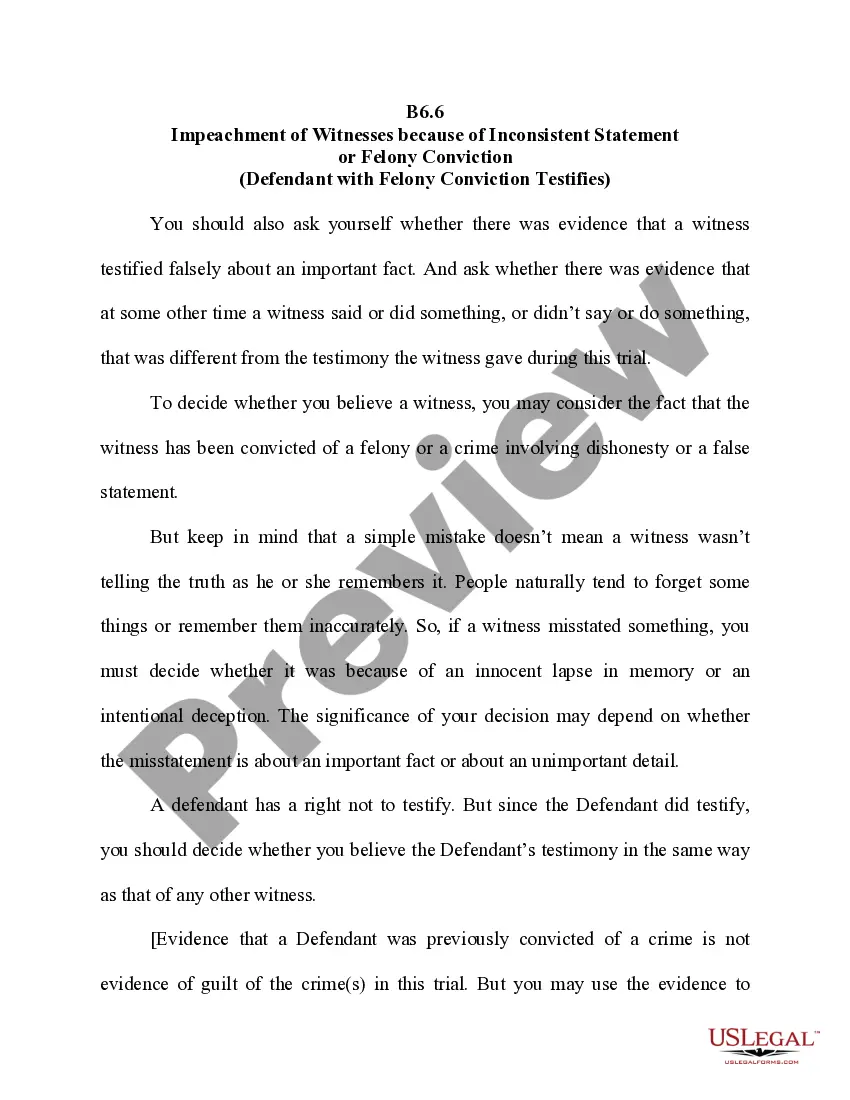
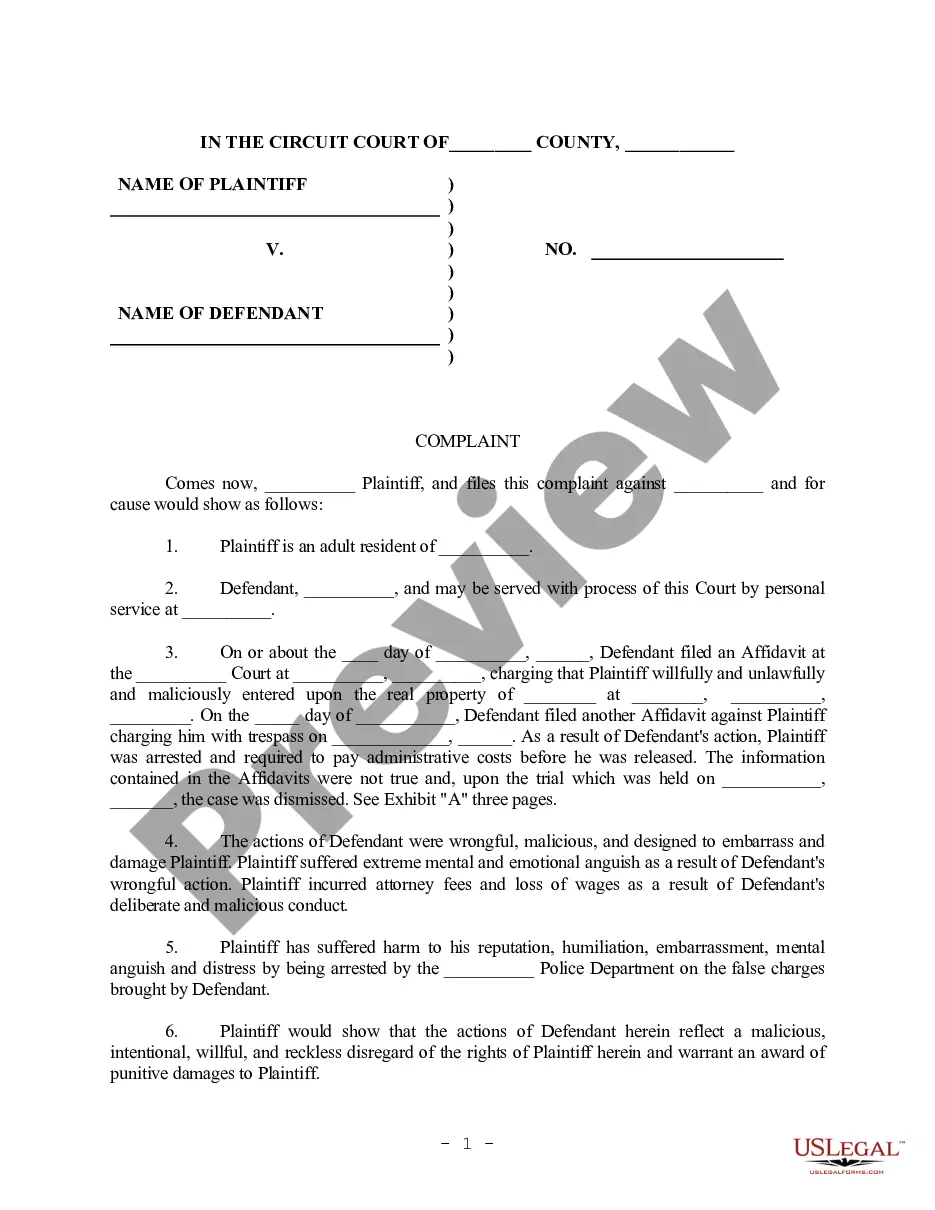
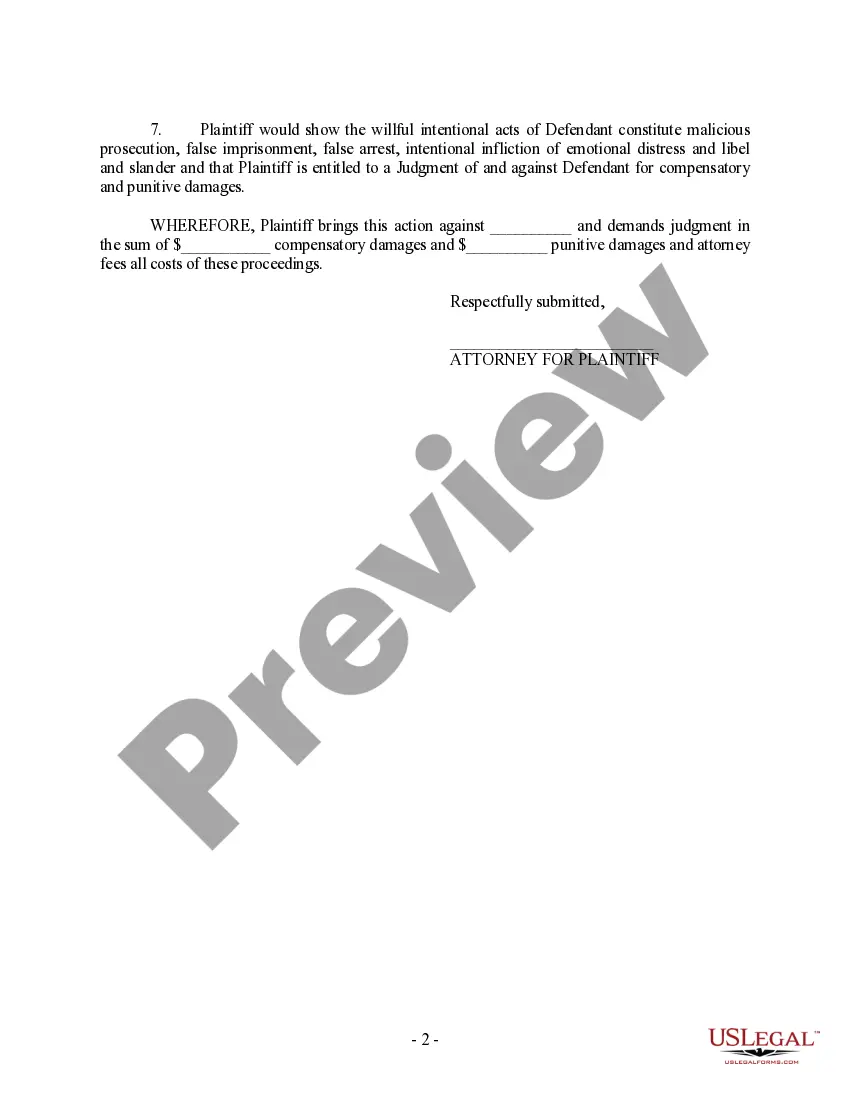
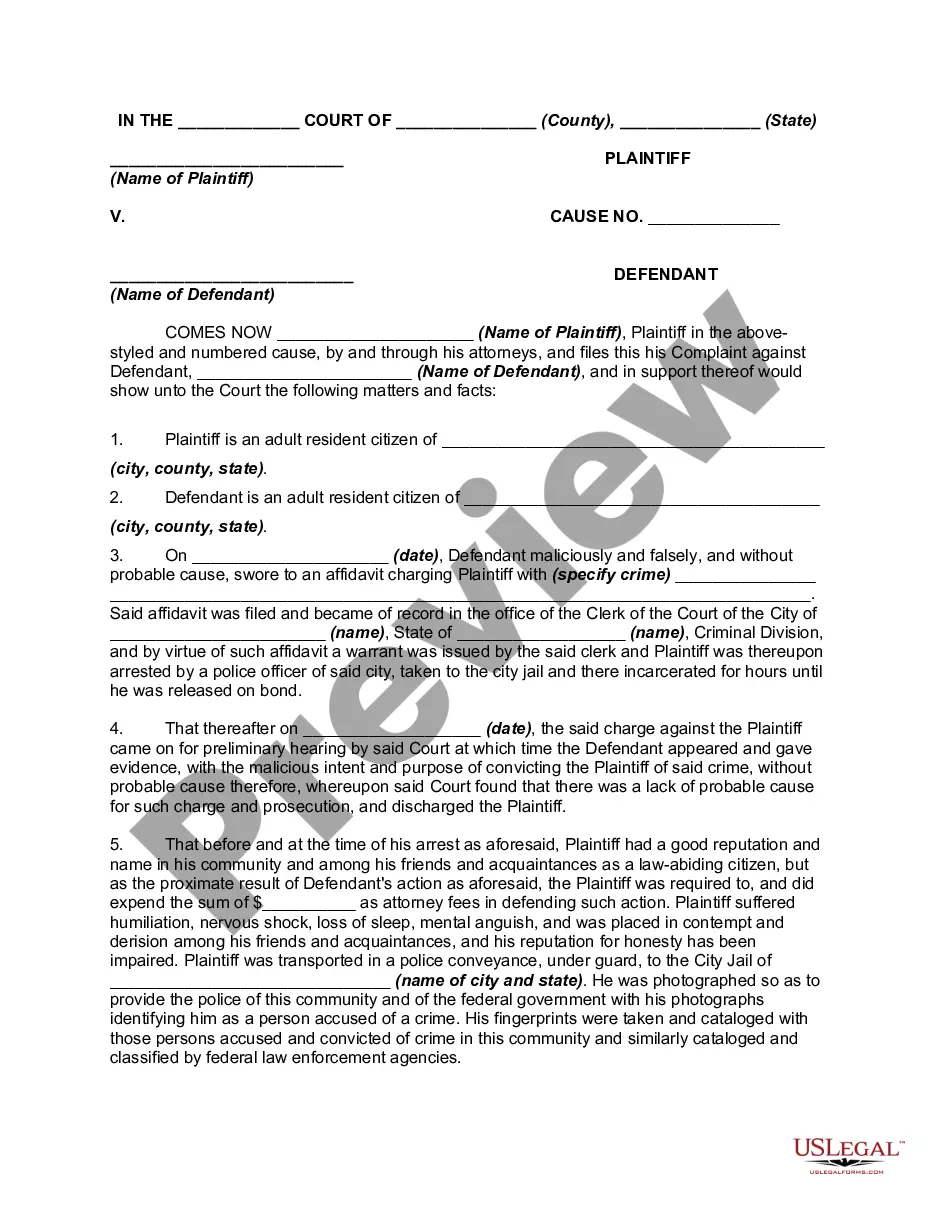
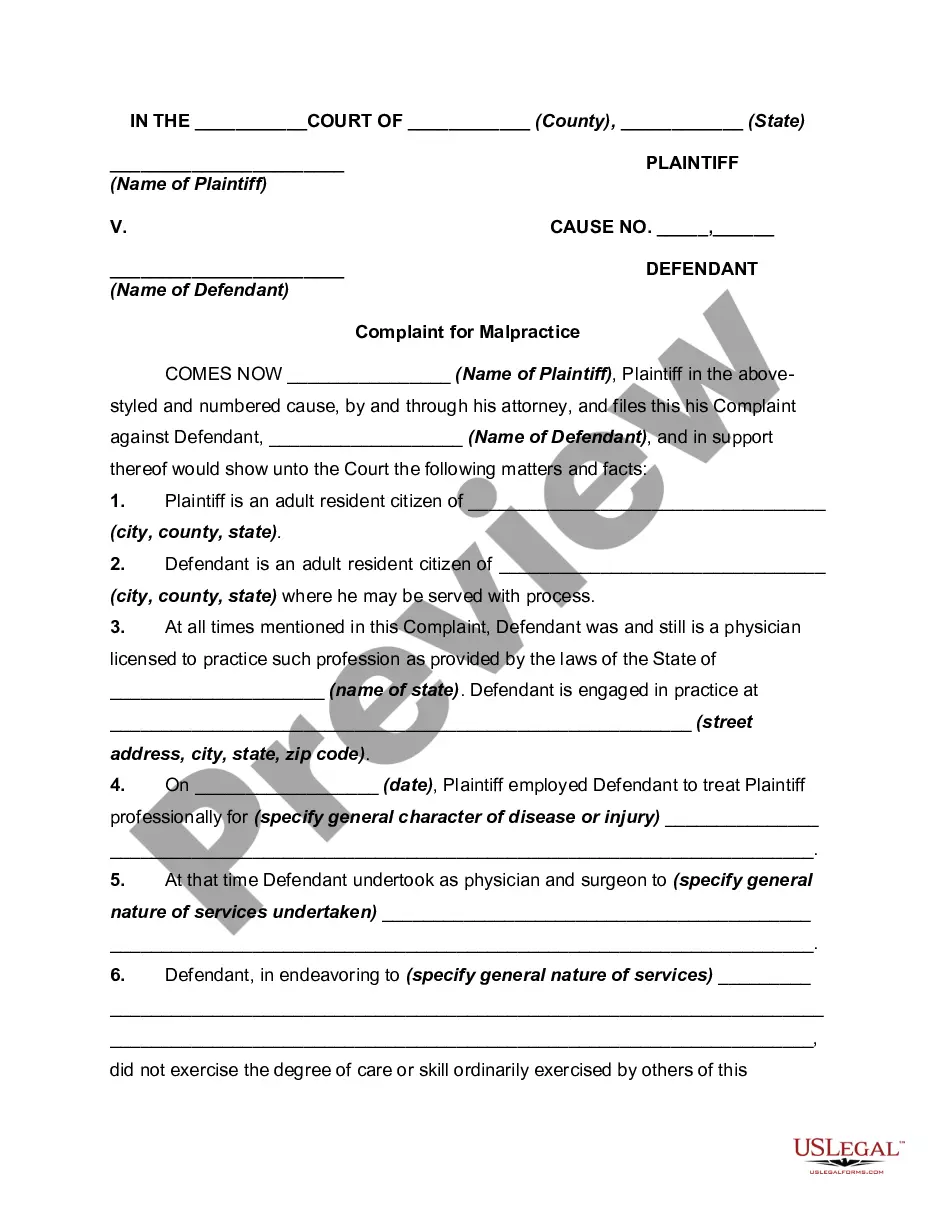
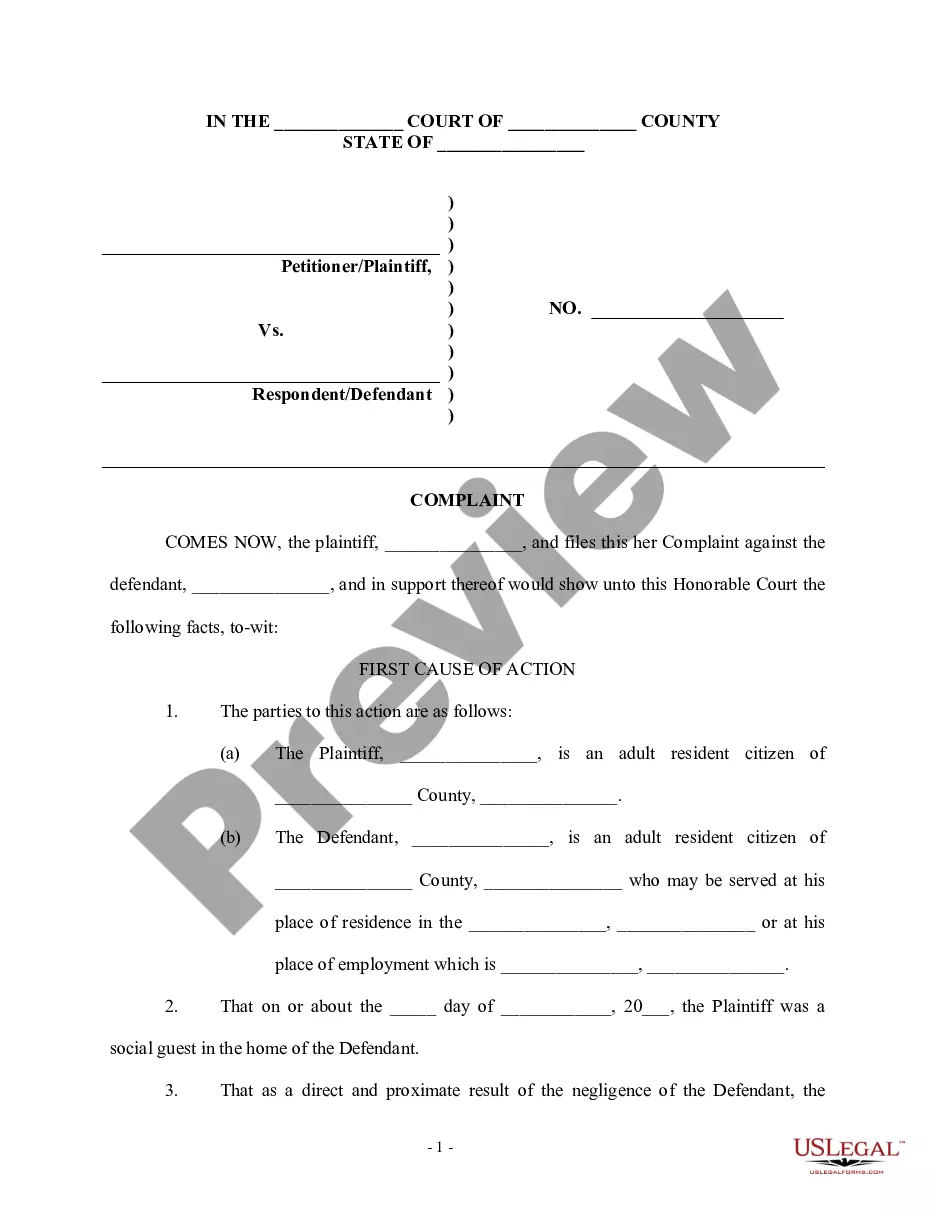
Connecticut Complaint for malicious prosecution
Description


Get your form ready online
Our built-in tools help you complete, sign, share, and store your documents in one place.
Make edits, fill in missing information, and update formatting in US Legal Forms—just like you would in MS Word.
Download a copy, print it, send it by email, or mail it via USPS—whatever works best for your next step.
Sign and collect signatures with our SignNow integration. Send to multiple recipients, set reminders, and more. Go Premium to unlock E-Sign.
If this form requires notarization, complete it online through a secure video call—no need to meet a notary in person or wait for an appointment.
We protect your documents and personal data by following strict security and privacy standards.

Make edits, fill in missing information, and update formatting in US Legal Forms—just like you would in MS Word.

Download a copy, print it, send it by email, or mail it via USPS—whatever works best for your next step.

Sign and collect signatures with our SignNow integration. Send to multiple recipients, set reminders, and more. Go Premium to unlock E-Sign.

If this form requires notarization, complete it online through a secure video call—no need to meet a notary in person or wait for an appointment.

We protect your documents and personal data by following strict security and privacy standards.
Looking for another form?





How to fill out Complaint For Malicious Prosecution?
US Legal Forms - one of the largest collections of legal documents in the USA - offers a broad selection of legal templates that you can download or print. By utilizing the website, you can access thousands of forms for business and personal purposes, organized by categories, states, or keywords.
You can obtain the latest versions of documents such as the Connecticut Complaint for malicious prosecution in just minutes. If you already have an account, Log In and download the Connecticut Complaint for malicious prosecution from the US Legal Forms library. The Download button will be available on every document you view. You can find all previously acquired documents under the My documents section of your account.
If you are using US Legal Forms for the first time, here are simple steps to get you started: Ensure you have selected the correct form for your city/state. Click the Preview button to review the content of the form. Check the form details to confirm that you have selected the right document. If the form does not meet your needs, use the Search field at the top of the page to find one that does. If you are satisfied with the form, confirm your selection by clicking the Download now button. Then, choose the payment plan you prefer and provide your information to register for an account.
Utilize a vast array of professional and state-specific templates that meet your business or personal needs and requirements.
- Process the payment. Use a credit card or PayPal account to complete the transaction.
- Select the format and download the form to your device.
- Make modifications. Fill out, edit, and print and sign the downloaded Connecticut Complaint for malicious prosecution.
- Every template you add to your account has no expiration date and is yours indefinitely.
- So, if you want to download or print another copy, simply go to the My documents section and click on the form you need.
- Access the Connecticut Complaint for malicious prosecution through US Legal Forms, the most extensive collection of legal document templates.
Form popularity
FAQ
Federal Rule of Civil Procedure 11 provides that a district court may sanction attorneys or parties who submit pleadings for an improper purpose or that contain frivolous arguments or arguments that have no evidentiary support.
Case law and field research indicate that the primary goals of sanctions imposed under Rule 11 include deterrence and compensation. Satellite litigation occurred primarily in cases involving large compensatory sanction awards, not in those involving modest monetary or nonmonetary sanctions.
(1) "Sanctions" means a monetary fine or penalty ordered by the court. (2) "Person" means a party, a party's attorney, a law firm, a witness, or any other individual or entity whose consent is necessary for the disposition of the case.
Rule 11 - Signing of Pleadings, Motions, and Other Papers; Representations to Court; Sanctions (a) Signature. Every pleading, motion, and other paper shall be signed by at least 1 attorney of record in the attorney's individual name, or, if the party is not represented by an attorney, shall be signed by the party.
These grounds can include, but are not limited to: forum non conveniens, meaning it is more appropriate for another court to hear the case; prior pending action, meaning a case between the parties on the same matter is already happening; or in a medical malpractice case the Certificate of Good Faith not being properly ...