Connecticut Complaint By Debtor For Harassment in Attempting to Collect a Debt, Using Harassing and Malicious Information, and Violating the Federal Fair Debt Collection Practices Act

State:
Multi-State
Control #:
US-01422BG
Format:
Word; 
Rich Text
Instant download

Description

The Fair Debt Collection Practices Act (FDCPA) prohibits harassment or abuse in collecting a debt such as threatening violence, use of obscene or profane language, publishing lists of debtors who refuse to pay debts, or even harassing a debtor by repeatedly calling the debtor on the phone. This Act also sets out strict rules regarding communicating with the debtor. The FDCPA applies only to those who regularly engage in the business of collecting debts for others -- primarily to collection agencies. The Act does not apply when a creditor attempts to collect debts owed to it by directly contacting the debtors. It applies only to the collection of consumer debts and does not apply to the collection of commercial debts. Consumer debts are debts for personal, home, or family purposes.


The collector is restricted in the type of contact he can make with the debtor. He can't contact the debtor before 8:00 a.m. or after 9:00 p.m. He can contact the debtor at home, but cannot contact the debtor at the debtor's club or church or at a school meeting of some sort. The debtor cannot be contacted at work if his employer objects.


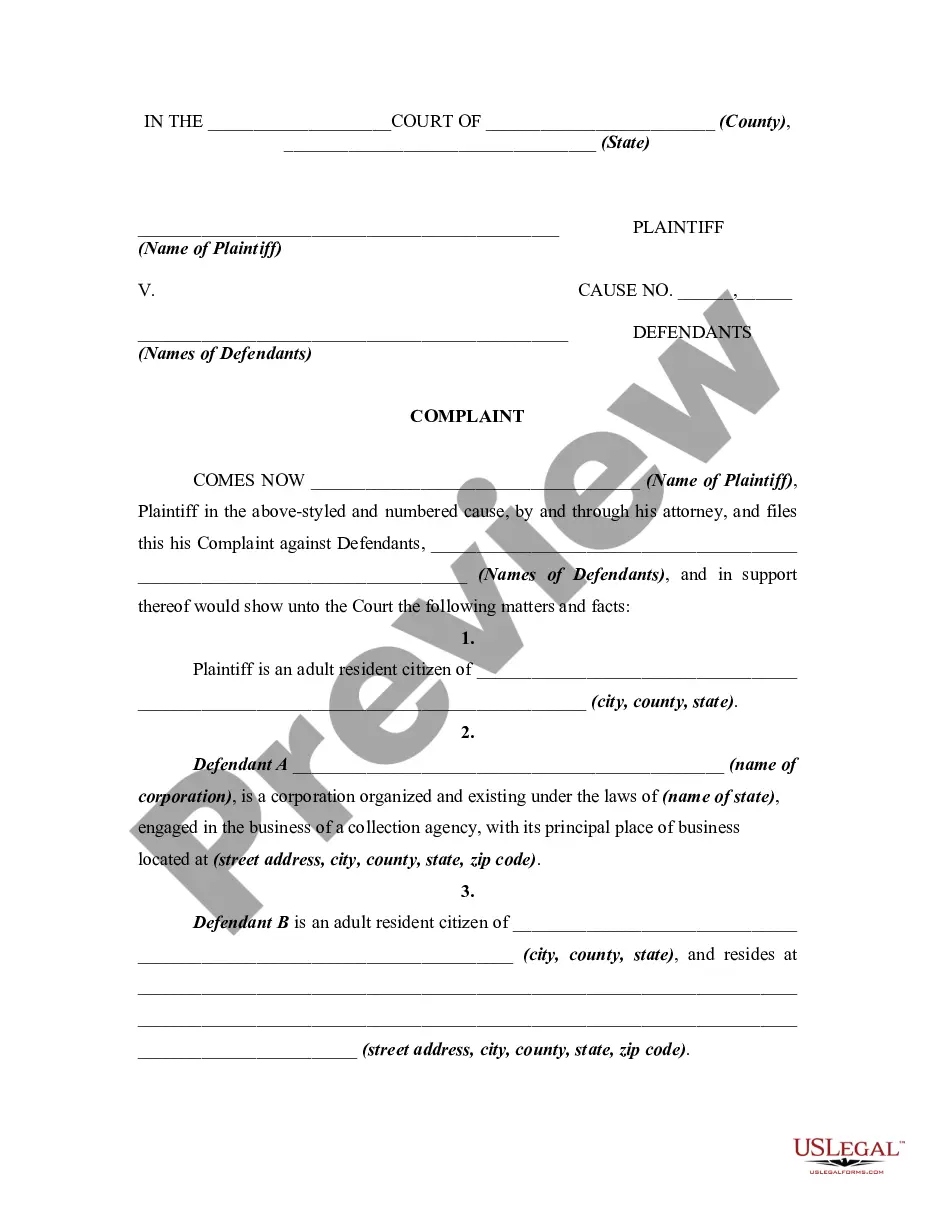
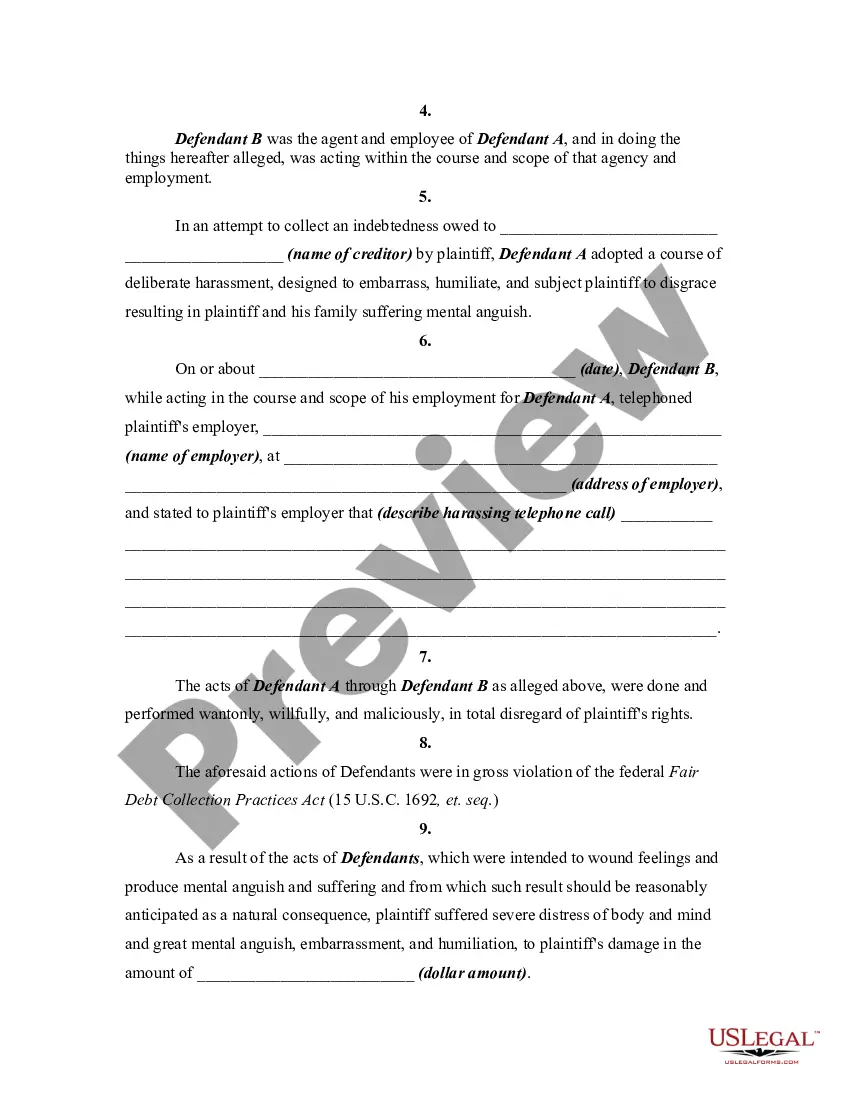
This form is a generic complaint and adopts the "notice pleadings" format of the Federal Rules of Civil Procedure, which have been adopted by most states in one form or another. This form is for illustrative purposes only. Local laws should be consulted to determine any specific requirements for such a form in a particular jurisdiction.
Free preview
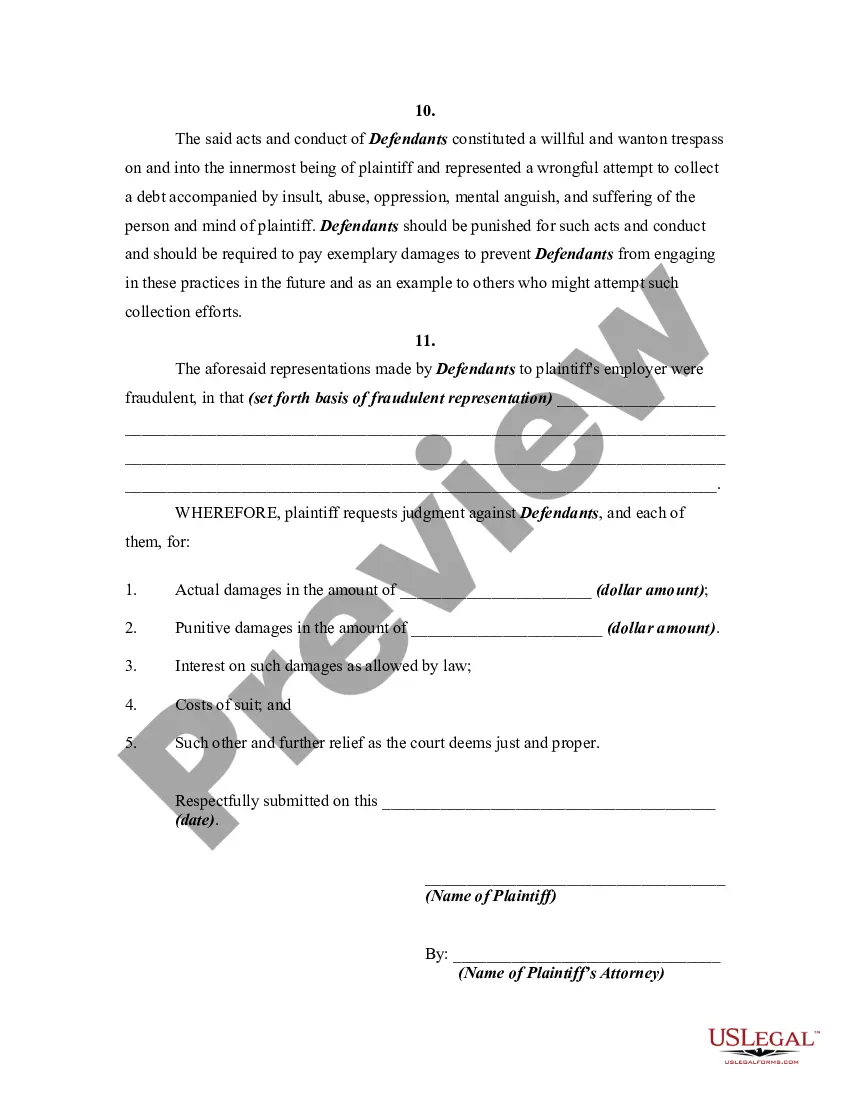
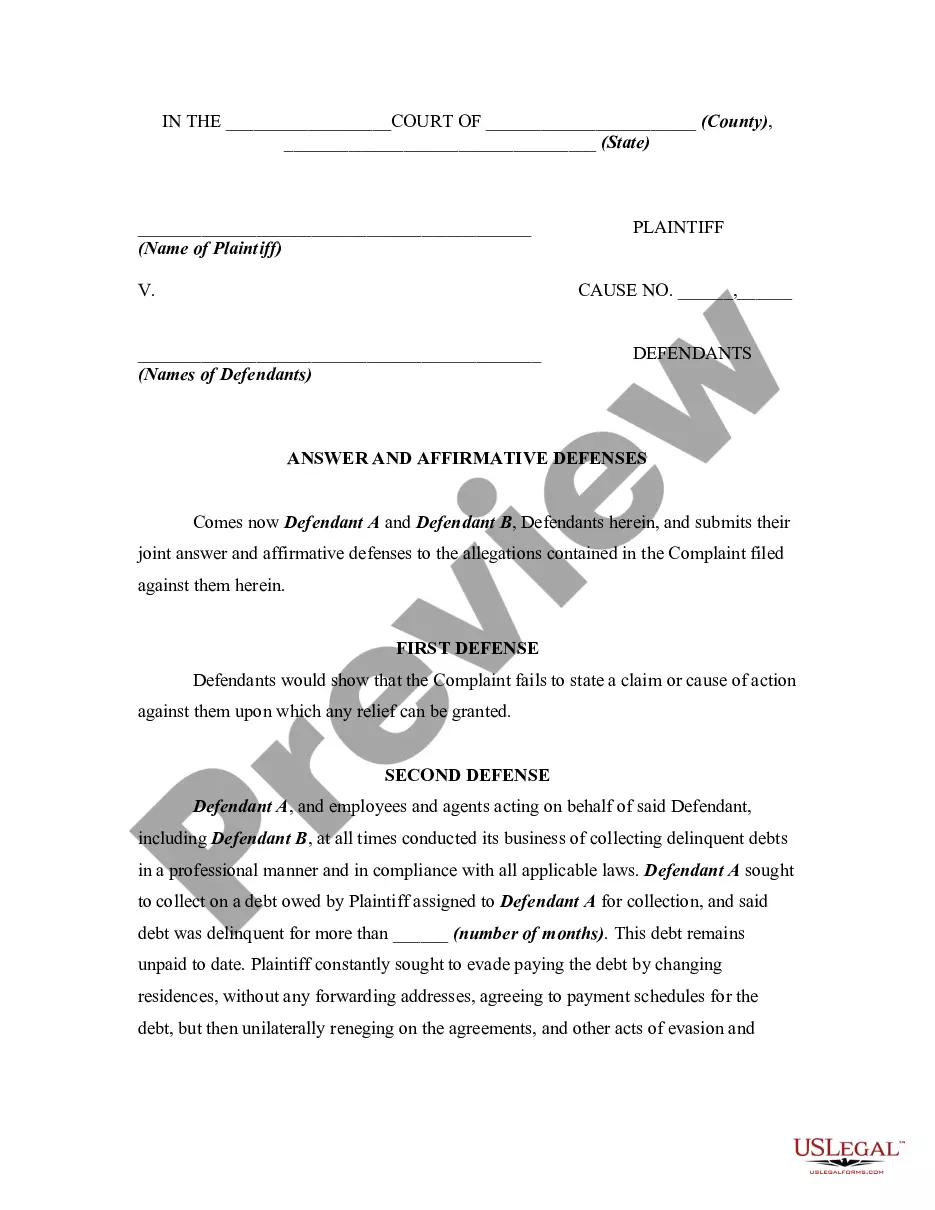
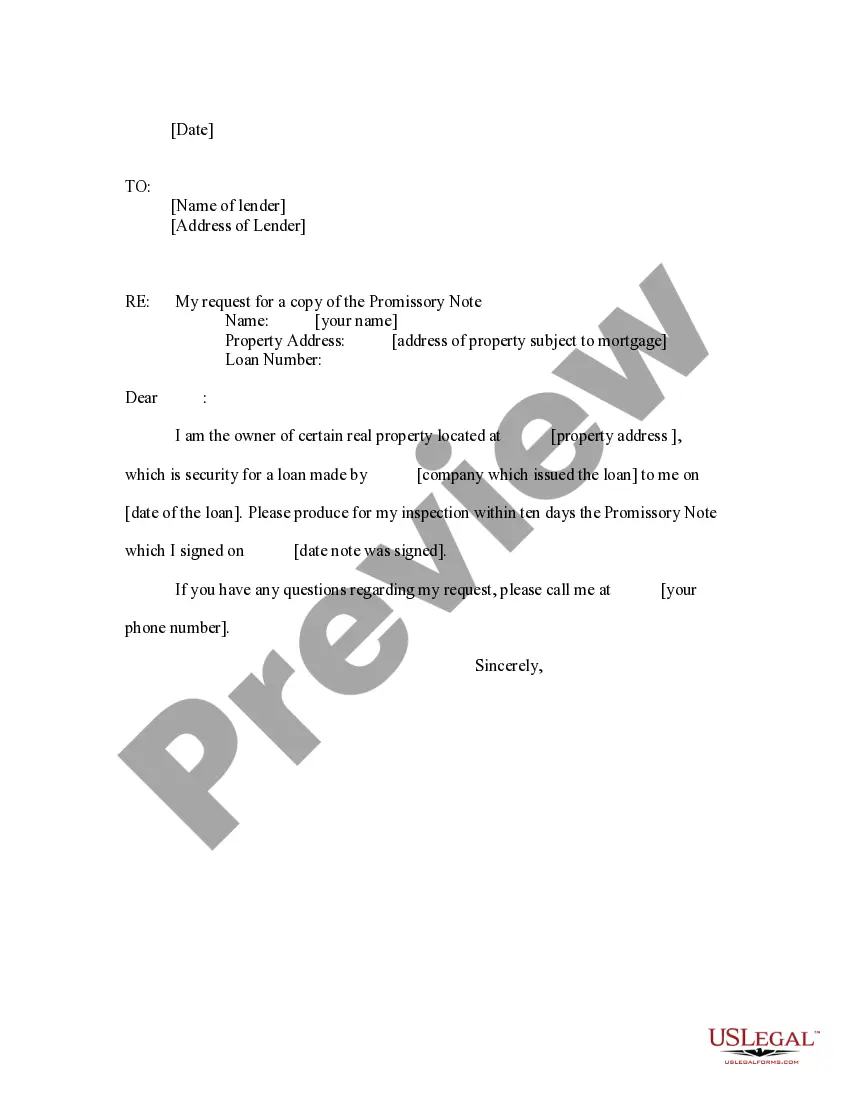
  • Preview Complaint By Debtor For Harassment in Attempting to Collect a Debt, Using Harassing and Malicious Information, and Violating the Federal Fair Debt Collection Practices Act
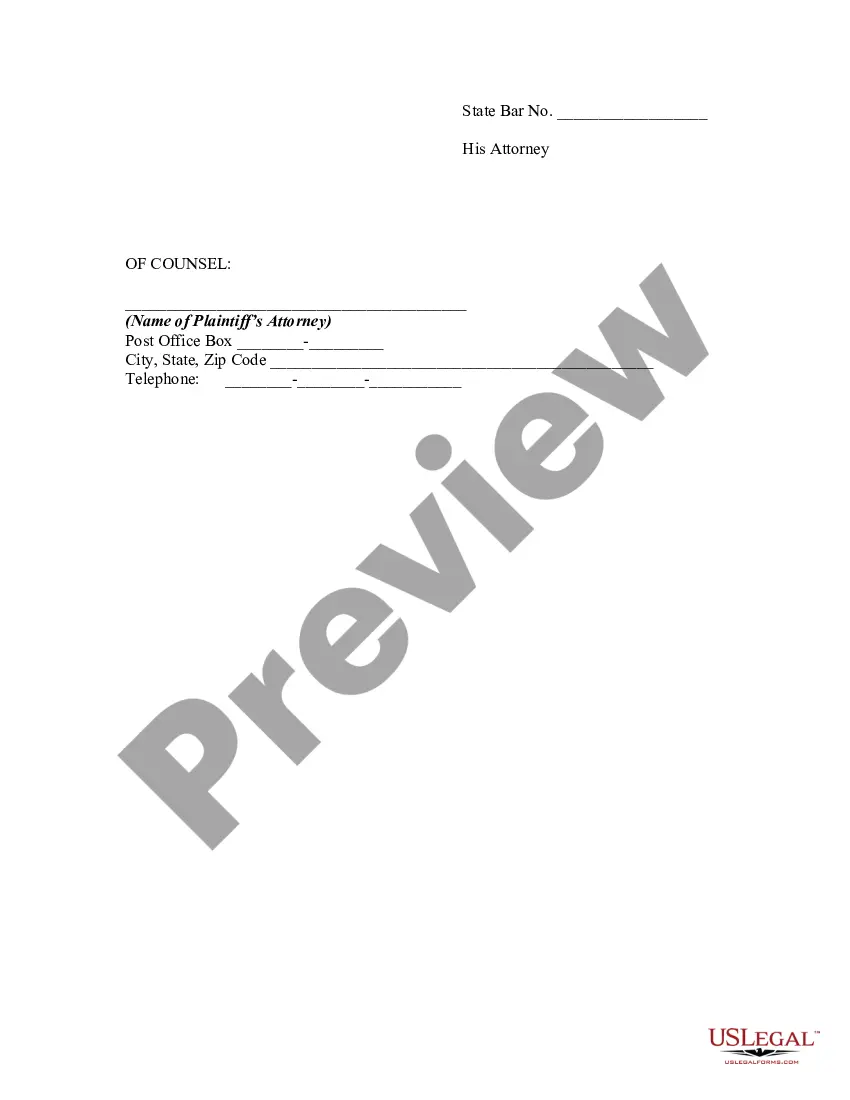
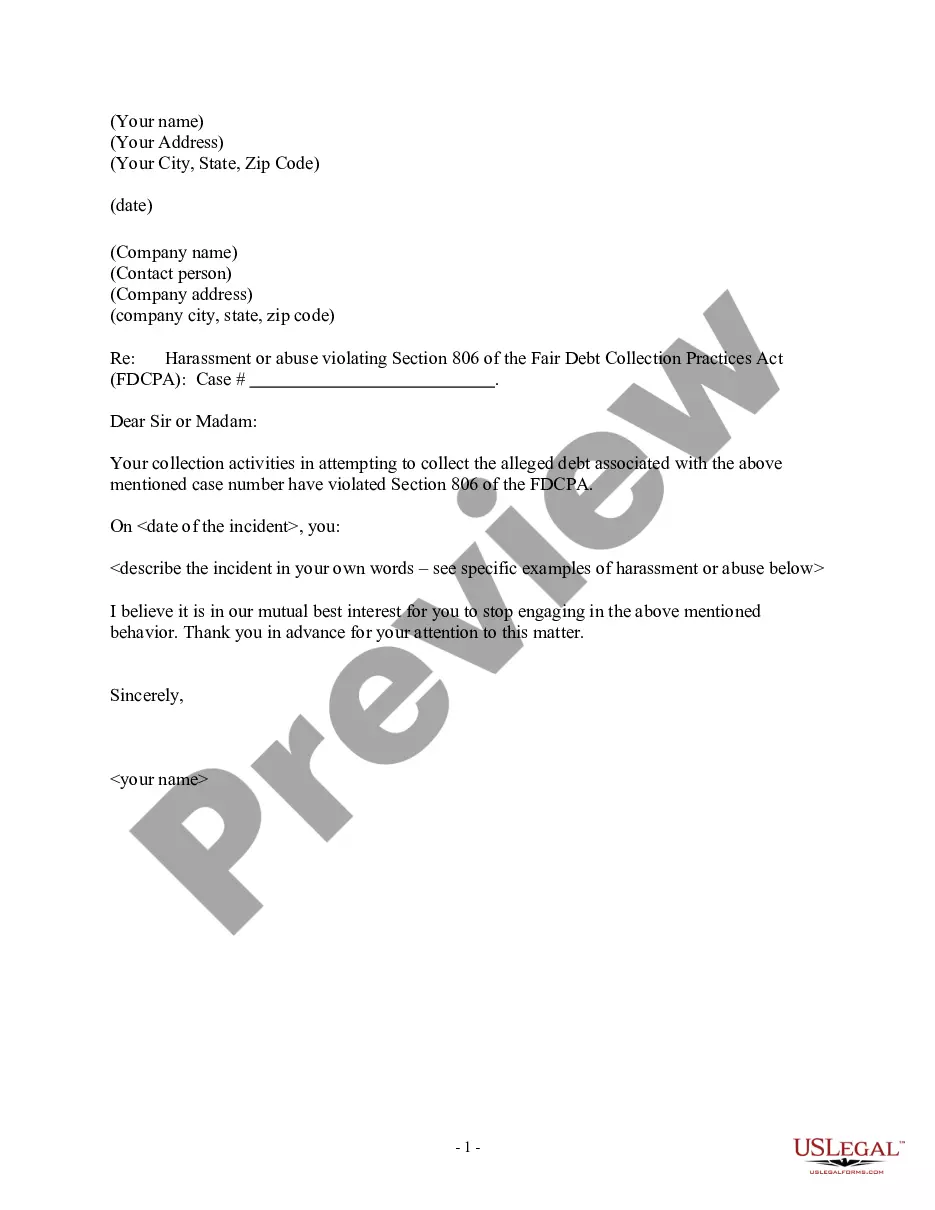
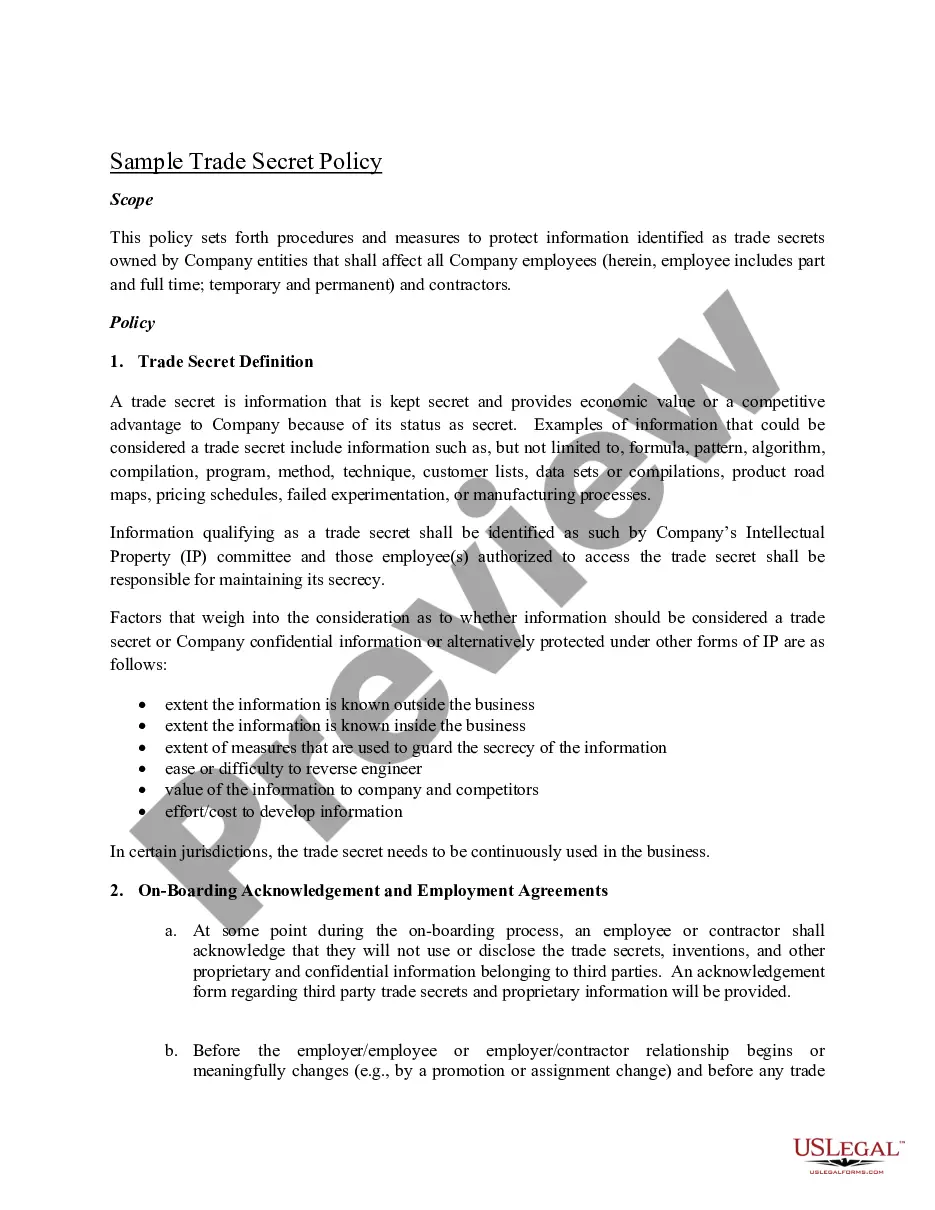
  • Preview Complaint By Debtor For Harassment in Attempting to Collect a Debt, Using Harassing and Malicious Information, and Violating the Federal Fair Debt Collection Practices Act
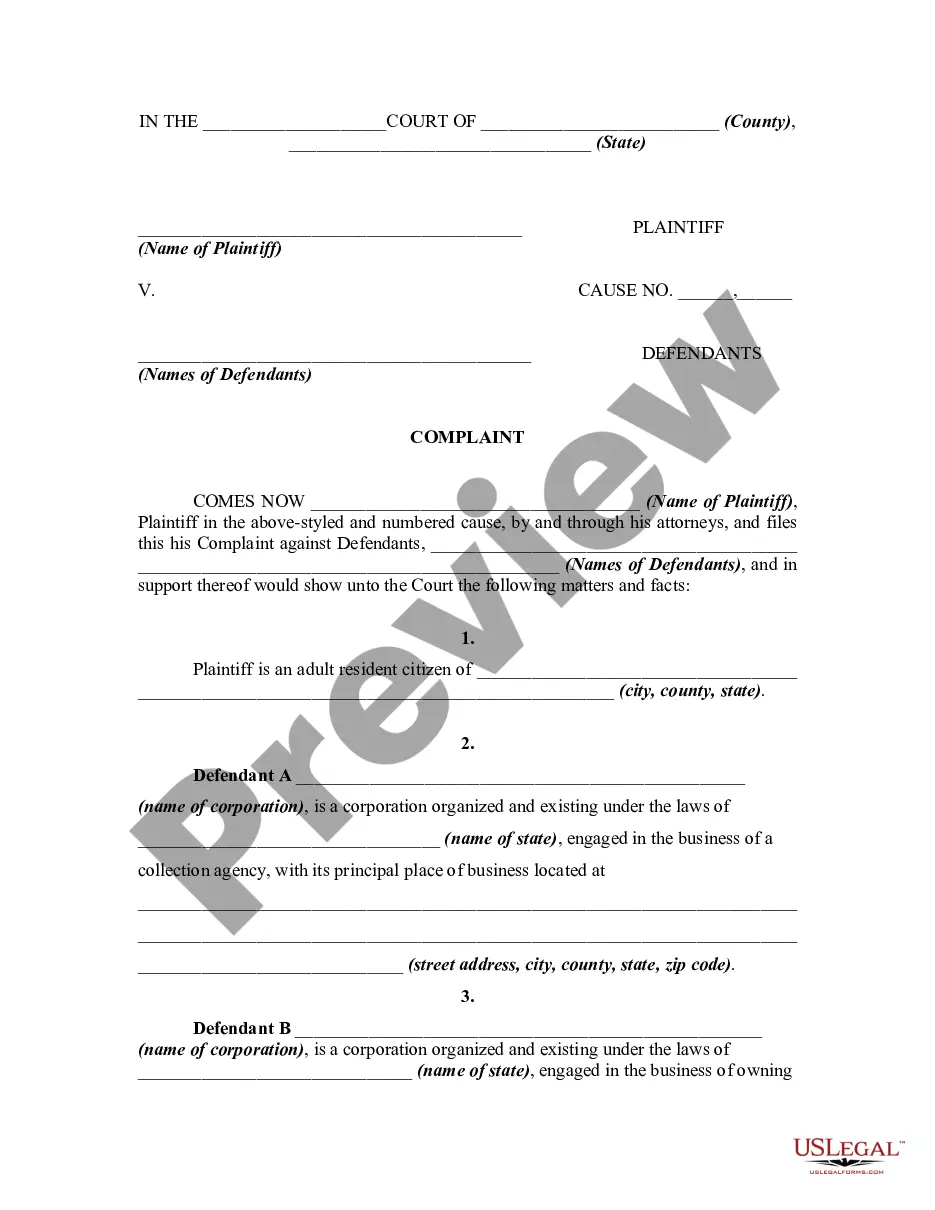
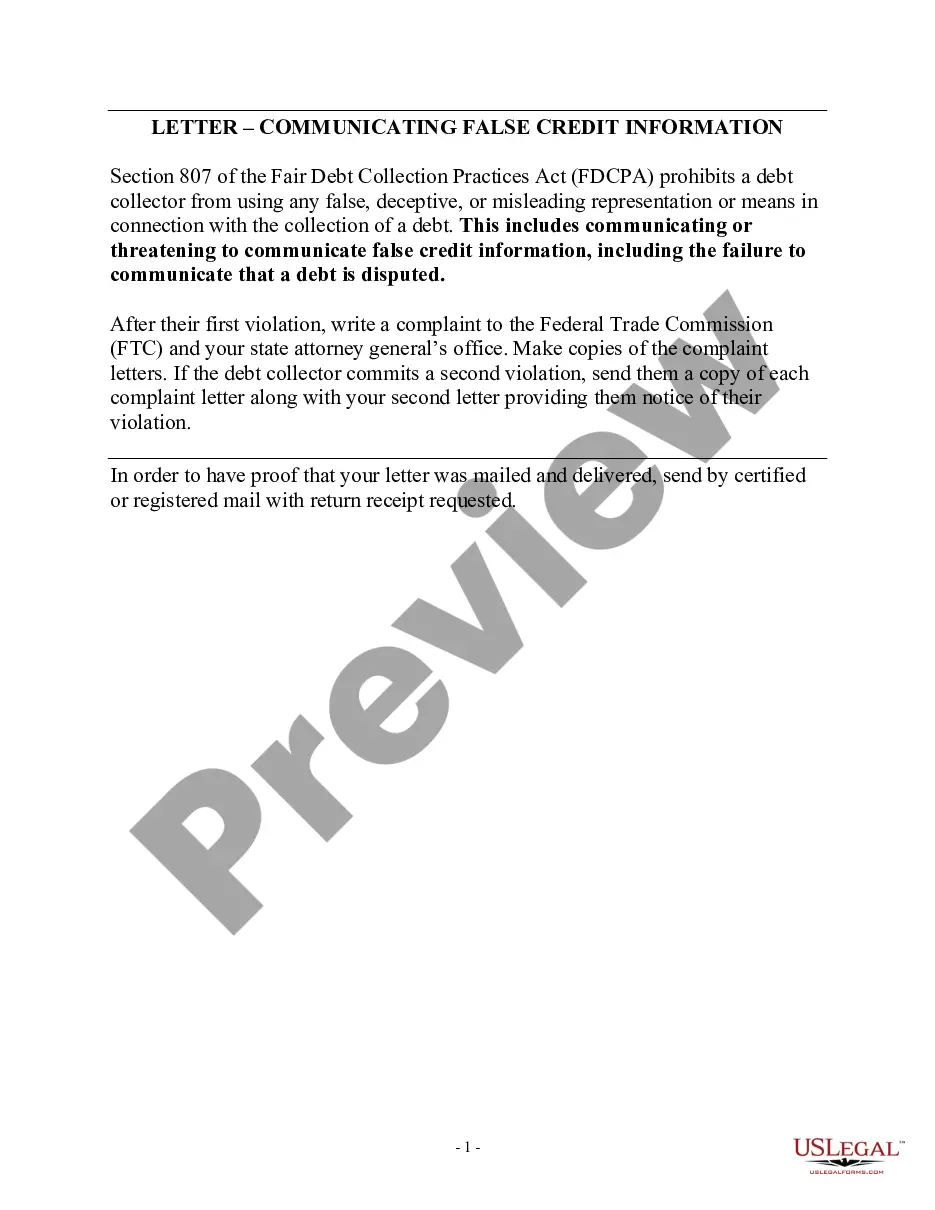
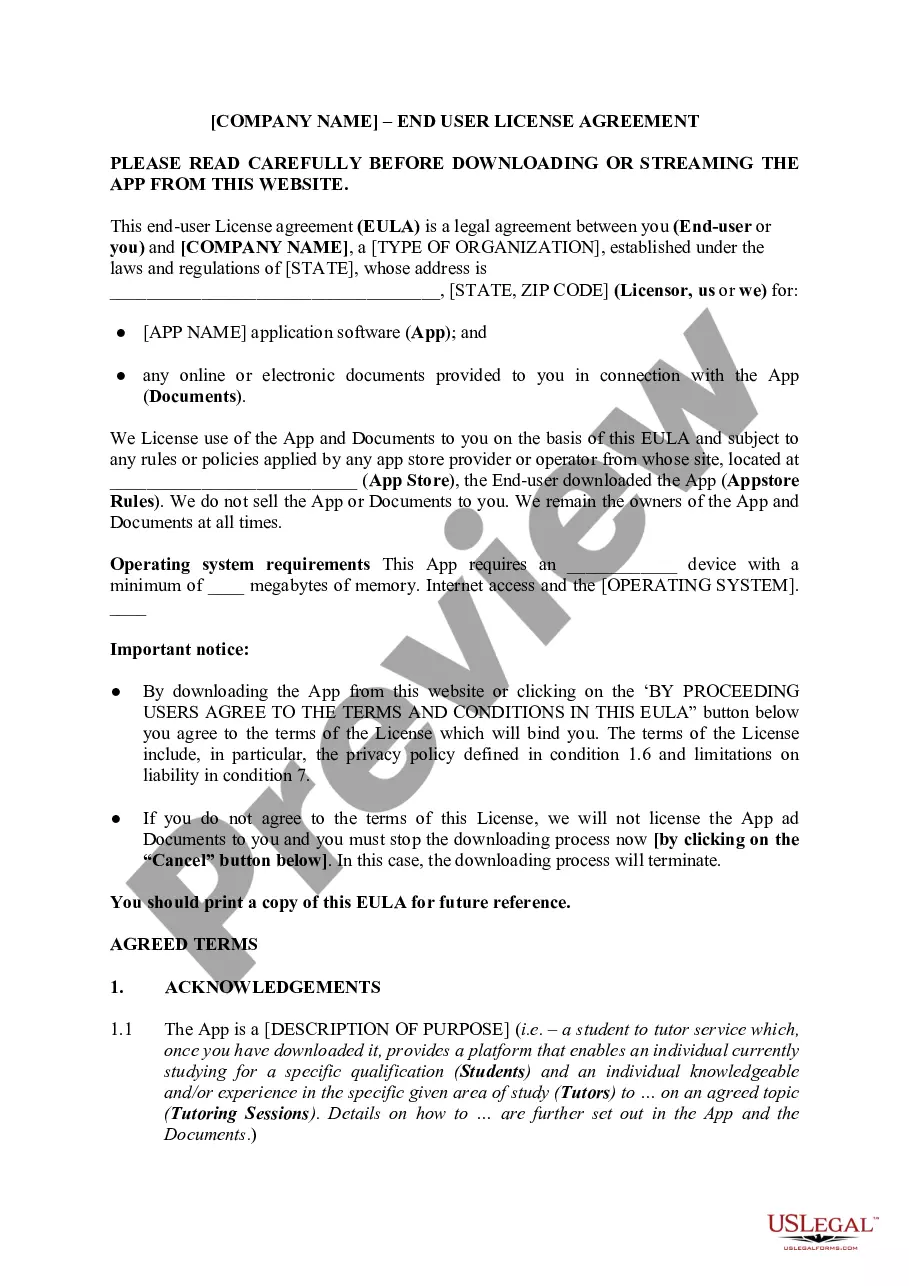
  • Preview Complaint By Debtor For Harassment in Attempting to Collect a Debt, Using Harassing and Malicious Information, and Violating the Federal Fair Debt Collection Practices Act
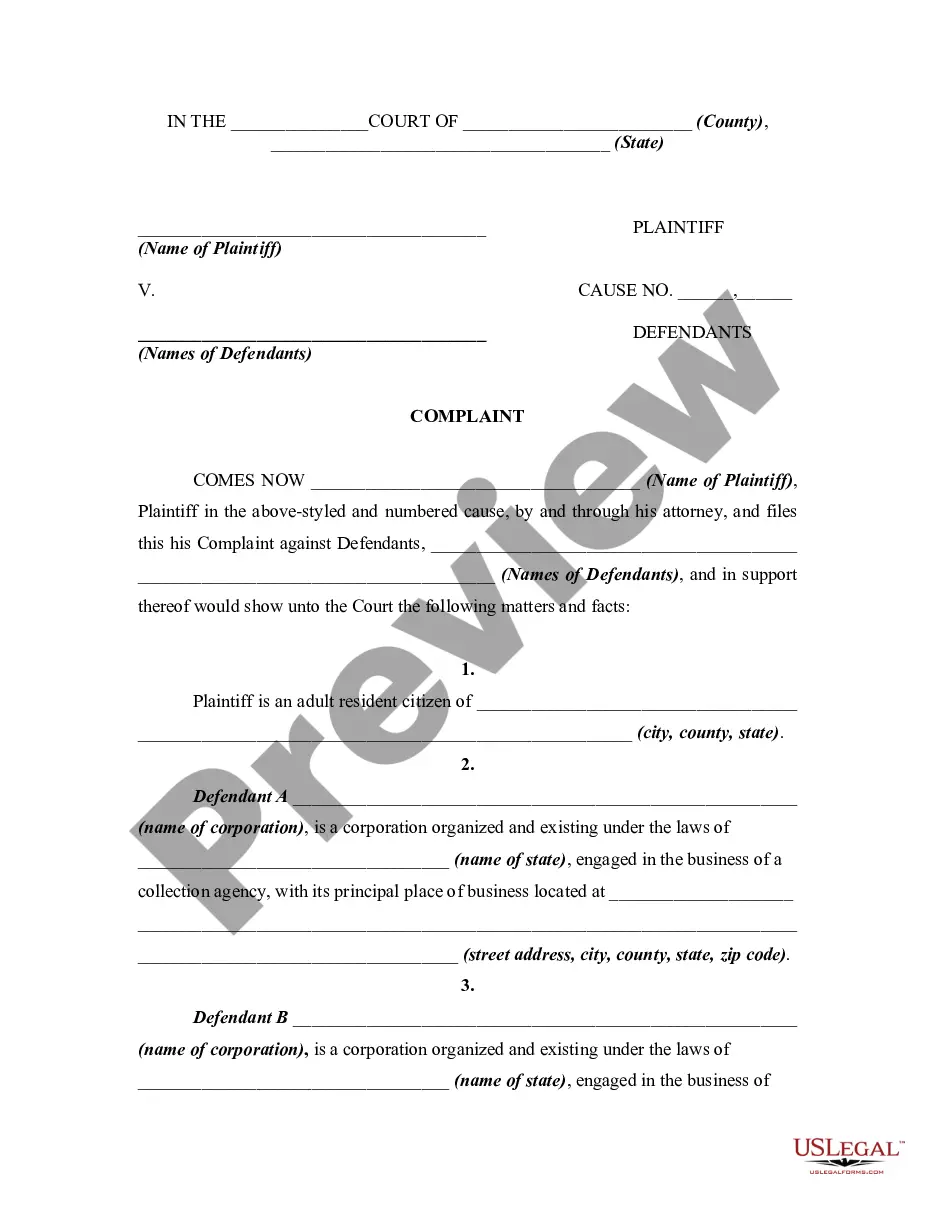
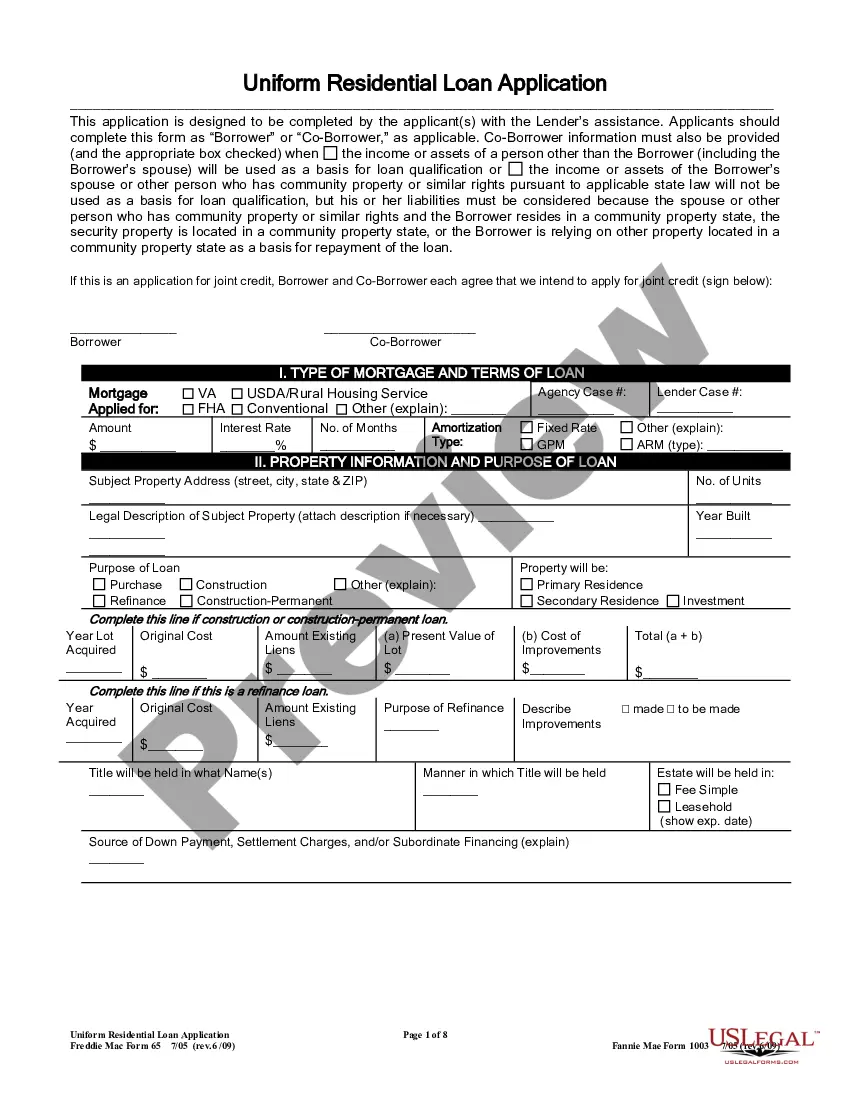
  • Preview Complaint By Debtor For Harassment in Attempting to Collect a Debt, Using Harassing and Malicious Information, and Violating the Federal Fair Debt Collection Practices Act

Related forms

form-preview
Connecticut Complaint by Debtor for Harassing and Malicious Telephone Calls Regarding Debt, Invasion of Right to Privacy and Violation of the Federal Fair Debt Collection Practices Act

Connecticut Complaint by Debtor for Harassing and Malicious Telephone Calls Regarding Debt, Invasion of Right to Privacy and Violation of the Federal Fair Debt Collection Practices Act

View this form
form-preview
Connecticut Complaint by Debtor For Posting of Notices of Indebtedness in and Around Plaintiff's House, Causing Intentional Infliction of Mental Anguish, and Violating the Federal Fair Debt Collection Practices Act

Connecticut Complaint by Debtor For Posting of Notices of Indebtedness in and Around Plaintiff's House, Causing Intentional Infliction of Mental Anguish, and Violating the Federal Fair Debt Collection Practices Act

View this form
form-preview
Connecticut Answer of Defendants to Complaint by Debtor For Harassment in Attempting to Collect a Debt, Using Harassing and Malicious Information, and Violating the Federal Fair Debt Collection Practices Act

Connecticut Answer of Defendants to Complaint by Debtor For Harassment in Attempting to Collect a Debt, Using Harassing and Malicious Information, and Violating the Federal Fair Debt Collection Practices Act

View this form
form-preview
Connecticut Notice letter to debt collector of Section 806 violation - harassment

Connecticut Notice letter to debt collector of Section 806 violation - harassment

View this form
form-preview
Connecticut Notice of Violation of Fair Debt Act - False Information Disclosed

Connecticut Notice of Violation of Fair Debt Act - False Information Disclosed

View this form

How to fill out Complaint By Debtor For Harassment In Attempting To Collect A Debt, Using Harassing And Malicious Information, And Violating The Federal Fair Debt Collection Practices Act?

Are you in the situation where you will require documents for occasional business or personal purposes nearly every day? There are numerous legal document templates available online, but finding ones you can rely on is challenging.

US Legal Forms offers a vast array of document templates, such as the Connecticut Complaint By Debtor For Harassment in Attempting to Collect a Debt, Using Harassing and Malicious Information, and Violating the Federal Fair Debt Collection Practices Act, that are designed to fulfill state and federal regulations.

If you are already familiar with the US Legal Forms website and have an account, simply Log In. After that, you can download the Connecticut Complaint By Debtor For Harassment in Attempting to Collect a Debt, Using Harassing and Malicious Information, and Violating the Federal Fair Debt Collection Practices Act template.

Choose a convenient file format and download your copy.

Access all the document templates you have purchased in the My documents section. You can obtain an additional copy of the Connecticut Complaint By Debtor For Harassment in Attempting to Collect a Debt, Using Harassing and Malicious Information, and Violating the Federal Fair Debt Collection Practices Act anytime, if needed. Just click on the desired form to download or print the document template. Use US Legal Forms, one of the most extensive collections of legal forms, to save time and avoid errors. The service provides professionally crafted legal document templates that you can use for various purposes. Create an account on US Legal Forms and start simplifying your life.

  1. If you do not have an account and wish to start using US Legal Forms, follow these steps.
  2. Locate the form you need and ensure it is for your specific city/state.
  3. Utilize the Review option to evaluate the document.
  4. Check the description to confirm you have selected the correct form.
  5. If the document is not what you need, use the Search box to find the form that fits you and your requirements.
  6. Once you find the appropriate form, click on Buy now.
  7. Select the pricing plan you want, fill in the necessary information to create your account, and pay for the order using your PayPal or credit card.

Form popularity

FAQ

The Fair Debt Collection Practices Act (FDCPA) (15 USC 1692 et seq.), which became effective in March 1978, was designed to eliminate abusive, deceptive, and unfair debt collection practices.

A debt collector may not use any false, deceptive, or misleading representation or means to collect or attempt to collect a debt.

Debt collectors violate the Fair Debt Collection Practices Act (FDCPA) when they harass, oppress, or abuse you. It's harassment when debt collectors: Place repetitious phone calls or use electronic communications ? such as text, email, and social media messages ? intended to harass, oppress, or abuse you or any person.

Falsely represent or imply that documents are not legal process or do not require action by the consumer. Falsely represent or imply that the debt collector operates or is employed by a consumer reporting agency.

Debt collectors cannot harass or abuse you. They cannot swear, threaten to illegally harm you or your property, threaten you with illegal actions, or falsely threaten you with actions they do not intend to take. They also cannot make repeated calls over a short period to annoy or harass you.

Debt collectors cannot make false or misleading statements. For example, they cannot lie about the debt they are collecting or the fact that they are trying to collect debt, and they cannot use words or symbols that falsely make their letters to you seem like they're from an attorney, court, or government agency.

When It's Not Your Debt Write a letter disputing the debt. You have 30 days after receiving a collection notice to dispute a debt in writing. ... Dispute the debt on your credit report. ... Lodge a complaint. ... Respond to a lawsuit. ... Hire an attorney.

A debt collector is also not allowed to harass, oppress, or abuse you or anyone else they contact. This includes repetitious phone calls with the intent to harass, use of obscene or profane language, and threats of violence or harm.

Trusted and secure by over 3 million people of the world’s leading companies

Connecticut Complaint By Debtor For Harassment in Attempting to Collect a Debt, Using Harassing and Malicious Information, and Violating the Federal Fair Debt Collection Practices Act