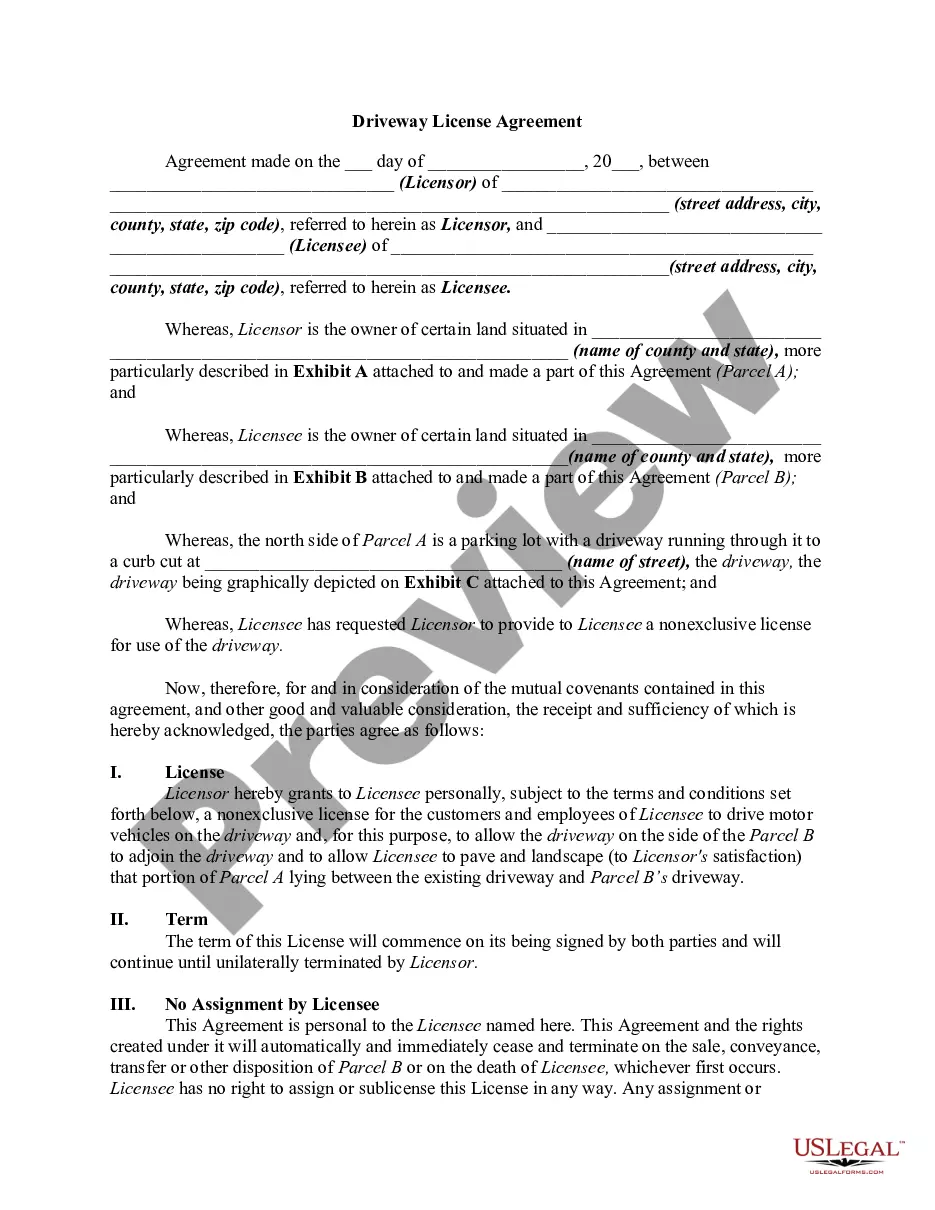
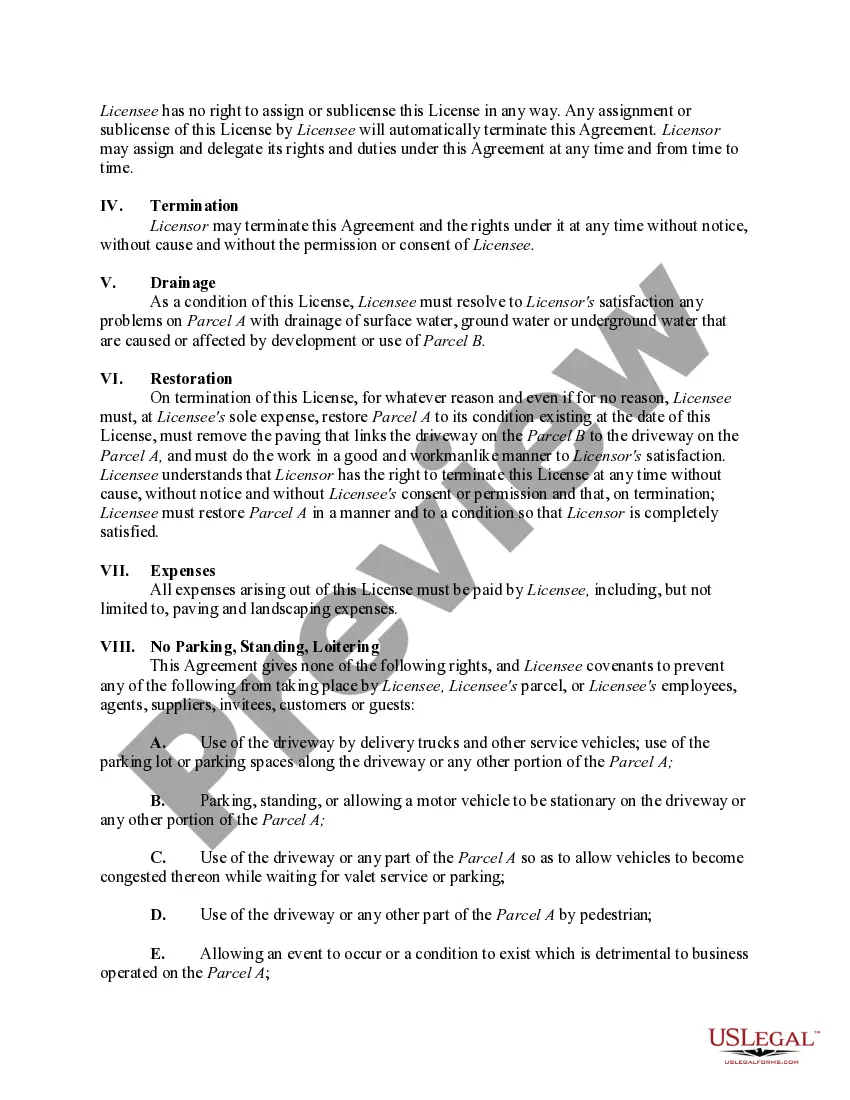
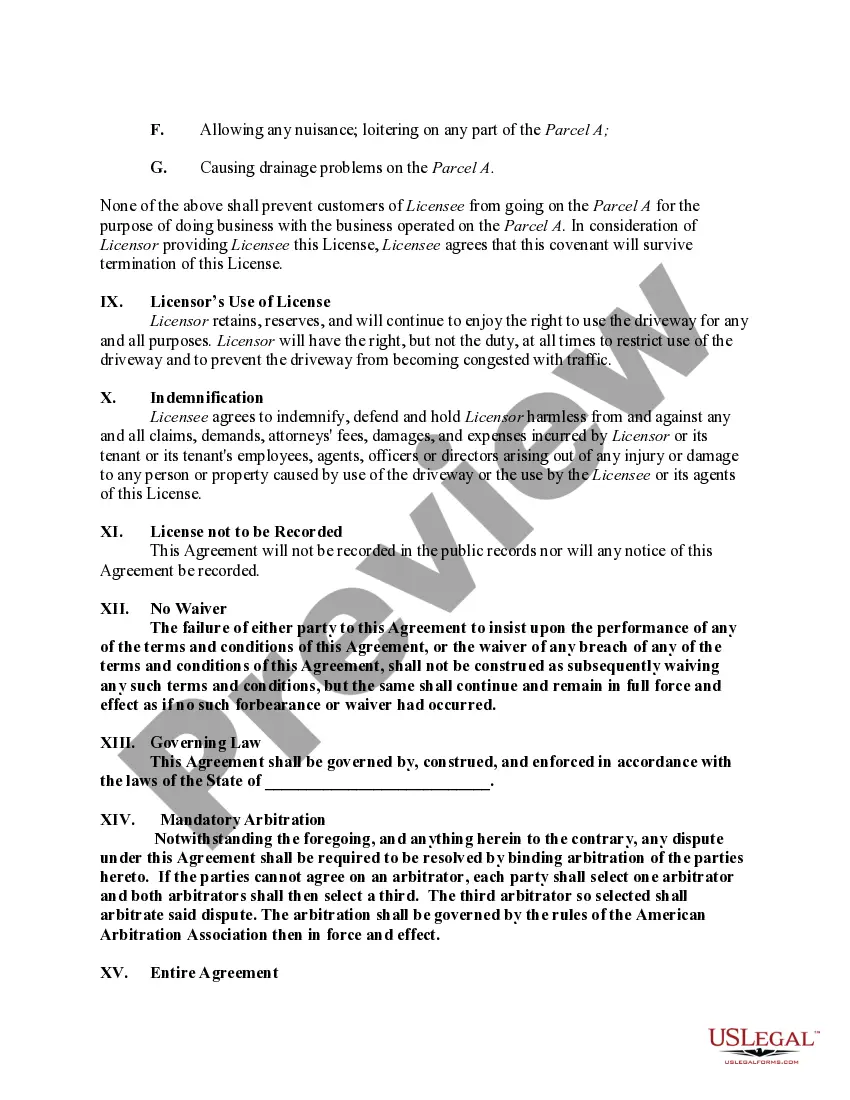
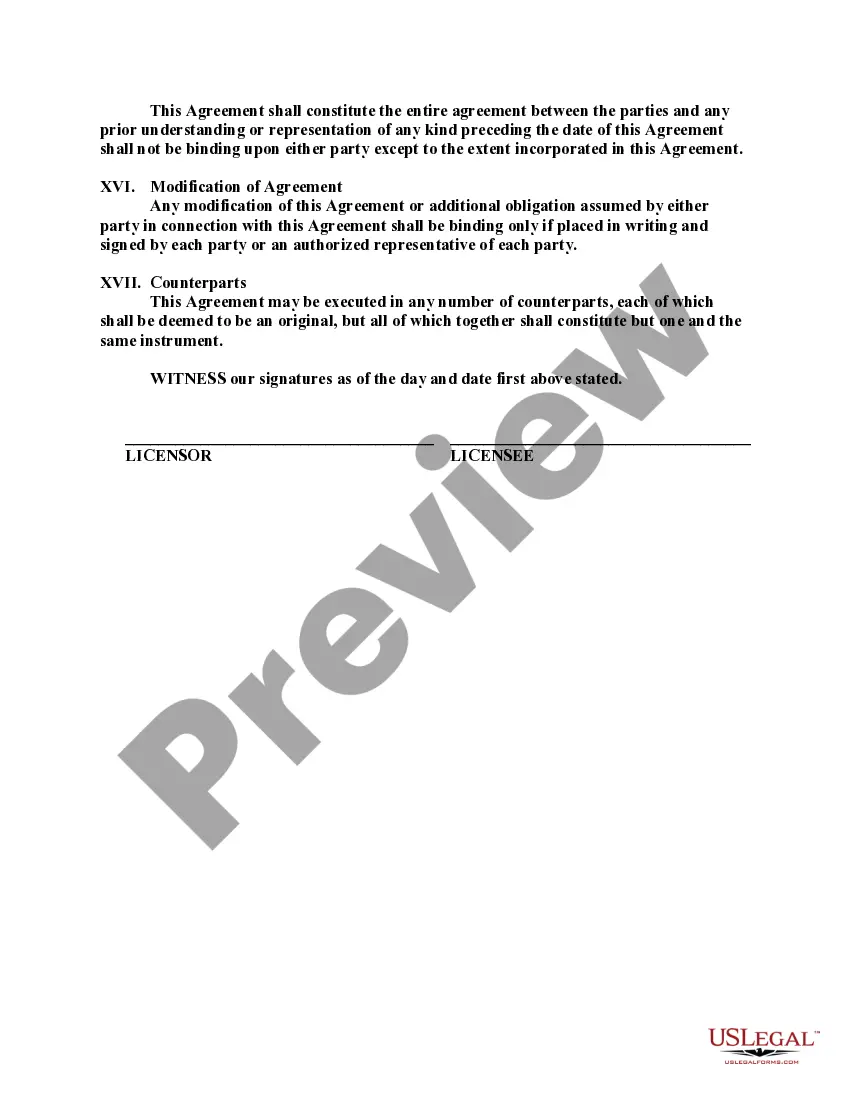
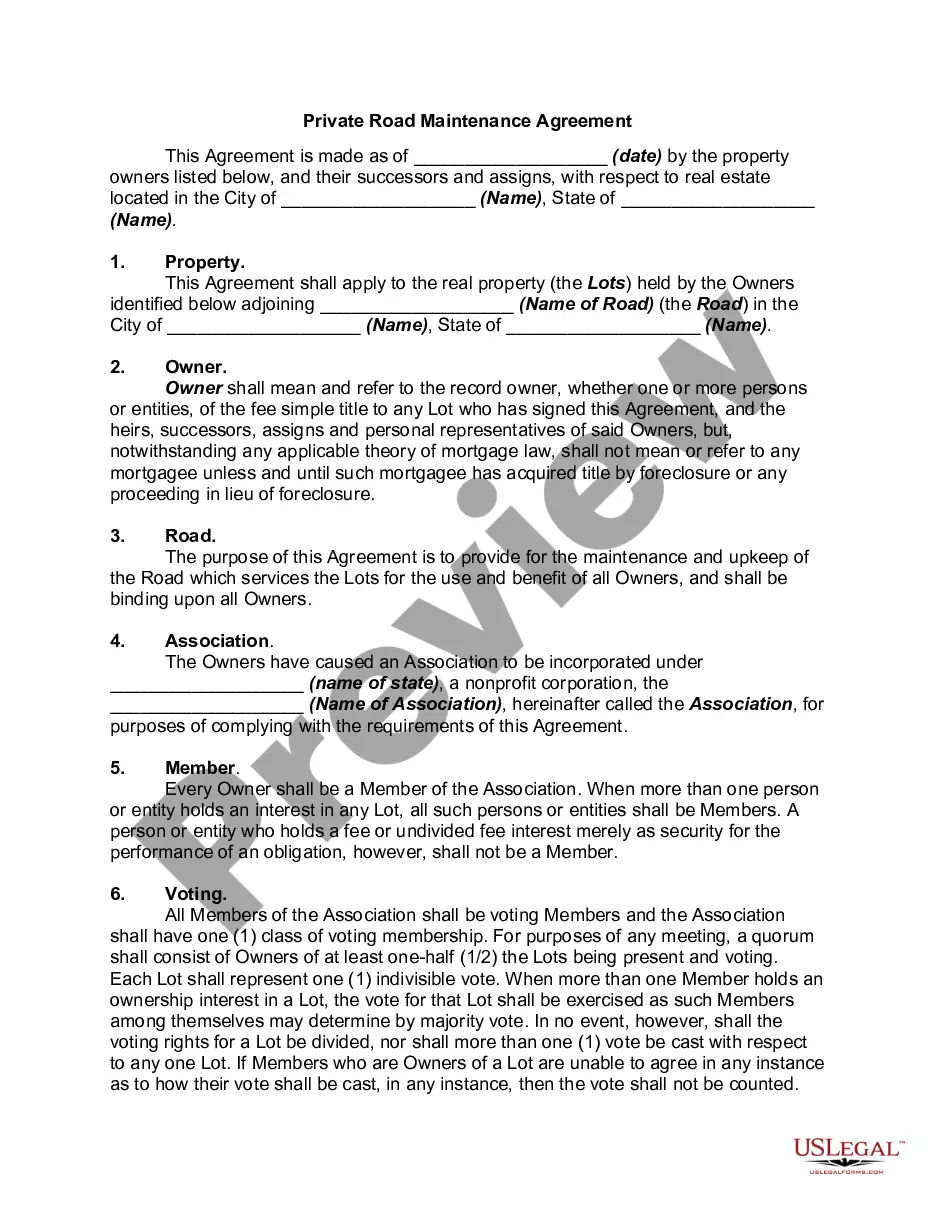
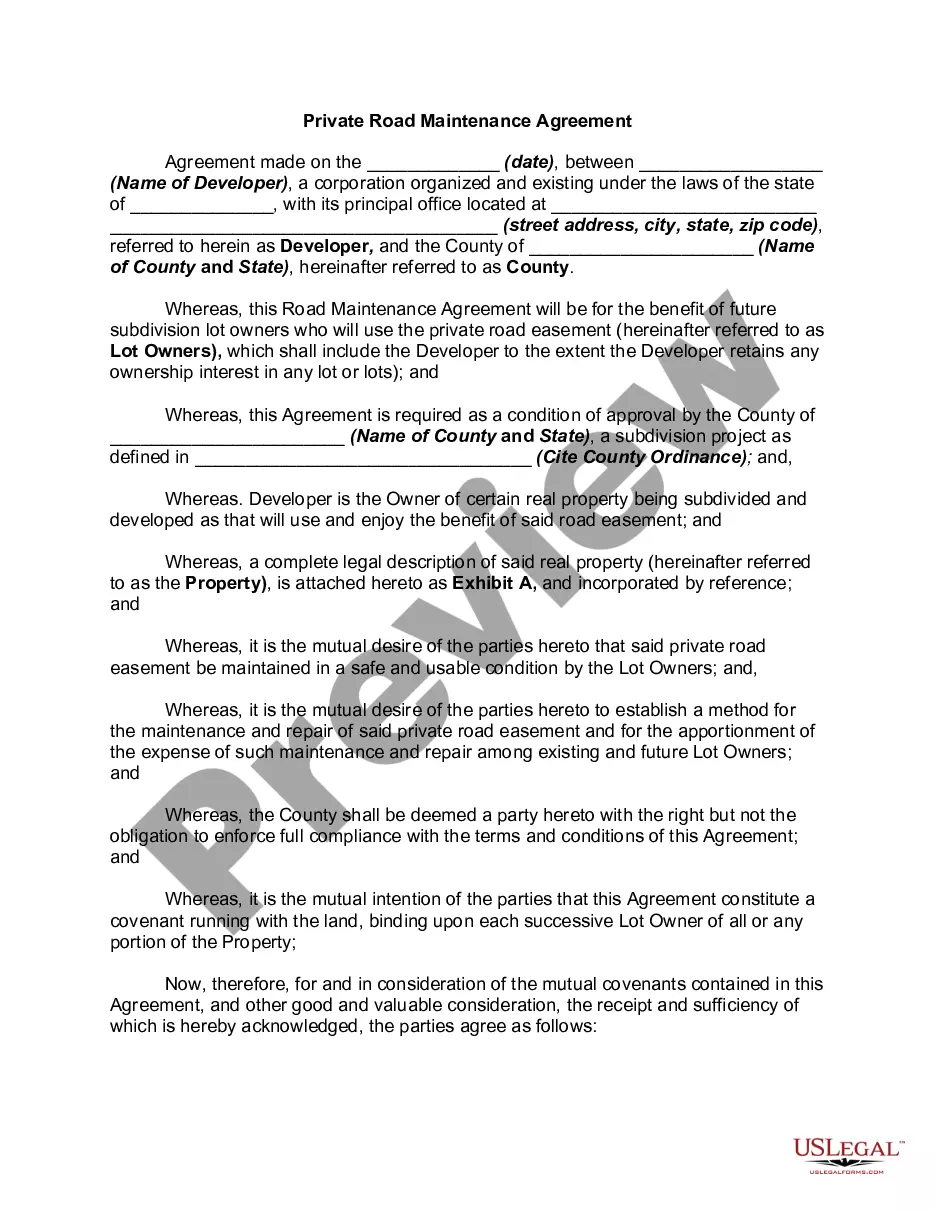
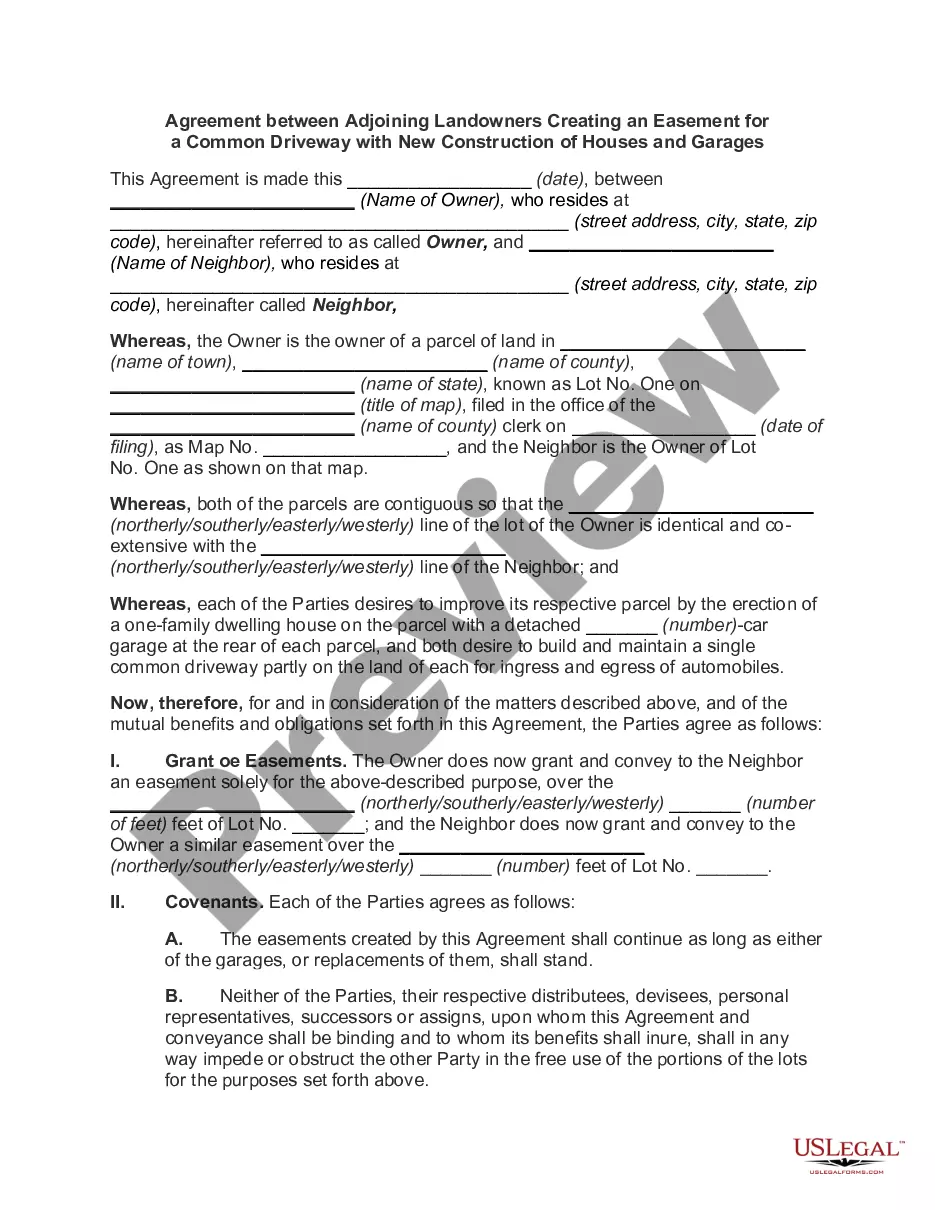
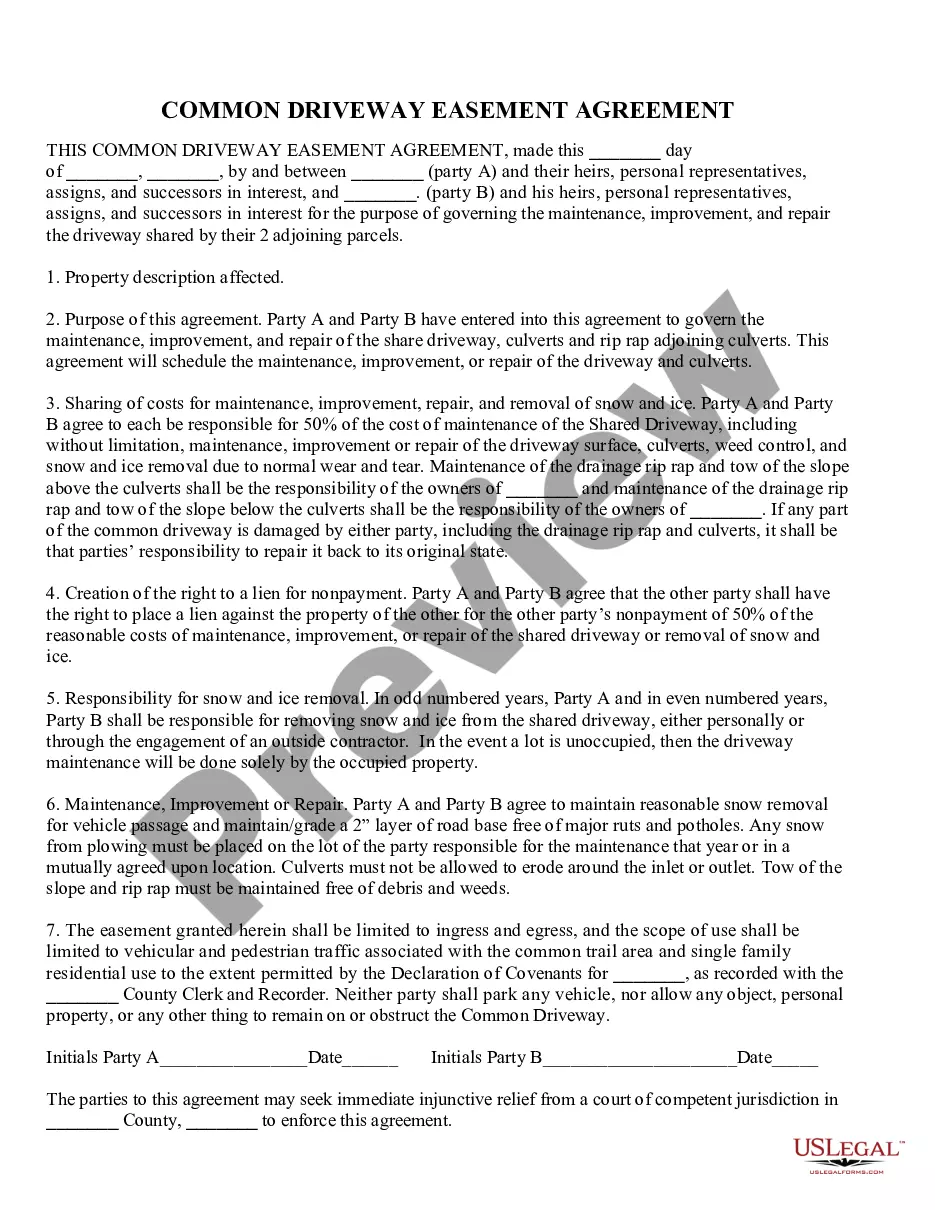
In this form, a licensor grants to a licensee a nonexclusive license for the customers and employees of licensee to drive motor vehicles on the driveway and to allow the licensee to pave and landscape certain property.
Connecticut Driveway License Agreement
Instant download
Description
Free preview
Get your form ready online
Our built-in tools help you complete, sign, share, and store your documents in one place.
Built-in online Word editor
Make edits, fill in missing information, and update formatting in US Legal Forms—just like you would in MS Word.
Export easily
Download a copy, print it, send it by email, or mail it via USPS—whatever works best for your next step.
E-sign your document
Sign and collect signatures with our SignNow integration. Send to multiple recipients, set reminders, and more. Go Premium to unlock E-Sign.
Notarize online 24/7
If this form requires notarization, complete it online through a secure video call—no need to meet a notary in person or wait for an appointment.
Store your document securely
We protect your documents and personal data by following strict security and privacy standards.

Make edits, fill in missing information, and update formatting in US Legal Forms—just like you would in MS Word.

Download a copy, print it, send it by email, or mail it via USPS—whatever works best for your next step.

Sign and collect signatures with our SignNow integration. Send to multiple recipients, set reminders, and more. Go Premium to unlock E-Sign.

If this form requires notarization, complete it online through a secure video call—no need to meet a notary in person or wait for an appointment.

We protect your documents and personal data by following strict security and privacy standards.
Looking for another form?




How to fill out Driveway License Agreement?
Finding the appropriate authorized document template can be a challenge.
Certainly, there are numerous designs available online, but how do you locate the legal form you need.
Use the US Legal Forms website. The service provides a multitude of templates, such as the Connecticut Driveway License Agreement, which you can utilize for business and personal purposes.
If the form does not meet your needs, utilize the Search box to find the appropriate document. Once you confirm that the form is correct, click the Get now button to obtain the form. Choose the payment plan you want and enter the required details. Create your account and complete the purchase using your PayPal account or credit card. Select the document format and download the legal document template to your device. Complete, edit, print, and sign the acquired Connecticut Driveway License Agreement. US Legal Forms is the largest collection of legal forms where you can find various document templates. Use the service to download well-crafted files that adhere to state regulations.
- All the forms are reviewed by experts and comply with state and federal requirements.
- If you are already registered, Log In to your account and click on the Download button to get the Connecticut Driveway License Agreement.
- Use your account to check the legal forms you have purchased previously.
- Visit the My documents section of your account to obtain another copy of the document you need.
- If you are a new user of US Legal Forms, here are simple steps to follow.
- First, make sure you have selected the correct form for your city/state. You can preview the form using the Review button and read the form details to ensure it is suitable for you.
Form popularity
FAQ
If your neighbor parks too close to your driveway, the first step is to have a friendly conversation with them about the issue. If this doesn't resolve the problem, you may need to refer to local laws and the Connecticut Driveway License Agreement for regulations on parking distances. These documents can serve as valuable tools to promote understanding and resolve conflicts amicably.
Typically, a single-car driveway in Connecticut needs to be at least 10 feet wide and around 20 to 25 feet long. This allows for sufficient access for vehicles and adheres to zoning regulations. A well-documented Connecticut Driveway License Agreement can provide guidance on dimensions and requirements specific to your area.
Parking too close to a driveway generally refers to parking within five feet of the driveway entrance. Doing so can obstruct access for residents and emergency vehicles. To avoid potential issues, refer to the Connecticut Driveway License Agreement for details on legal parking distances.
In Connecticut, the law typically requires that you park at least five feet from a driveway. This distance helps ensure that drivers can access their driveways without obstruction. Understanding the Connecticut Driveway License Agreement can help clarify local regulations and ensure compliance.
To obtain a General Contractor (GC) license in Connecticut, you must first complete the necessary training and pass the state exam. After that, submit your application along with any required documentation. If your work relates to managing construction or renovations involving driveways, understanding the Connecticut Driveway License Agreement can be beneficial for compliance and success.
Yes, remodeling your bathroom typically requires a building permit in Connecticut. This ensures that the work complies with safety and building codes. Additionally, if your remodeling project affects the accessibility of your driveway or entrance, remember to review the Connecticut Driveway License Agreement for any relevant regulations.
In Connecticut, basic electrical work may not require a permit, such as changing light fixtures or outlets. However, any significant work must be done according to state codes. Always consider the implications of the Connecticut Driveway License Agreement when undertaking any construction that involves electrical components near your driveway.
In Connecticut, certain projects do not require a building permit. These include minor repairs such as painting, replacing roofs, and fences under a specific height. However, if you plan to create or change driveways, consider the Connecticut Driveway License Agreement to ensure compliance with local regulations.
Obtaining a driver's license in Connecticut begins with meeting age and identification requirements. You'll need to complete a driver education program, pass a written exam, and take a road test. After successfully completing these steps, submit your application at the DMV. A Connecticut Driveway License Agreement can offer you useful insights and resources to guide you through each stage of this process.
only permit in Connecticut allows individuals without a full driver's license to legally drive. This permit is often available to individuals who may need to drive for work or personal reasons but do not qualify for a standard license. It's an important option for those seeking mobility while navigating the licensing process. You can explore the Connecticut Driveway License Agreement for comprehensive details on obtaining a driveonly permit.