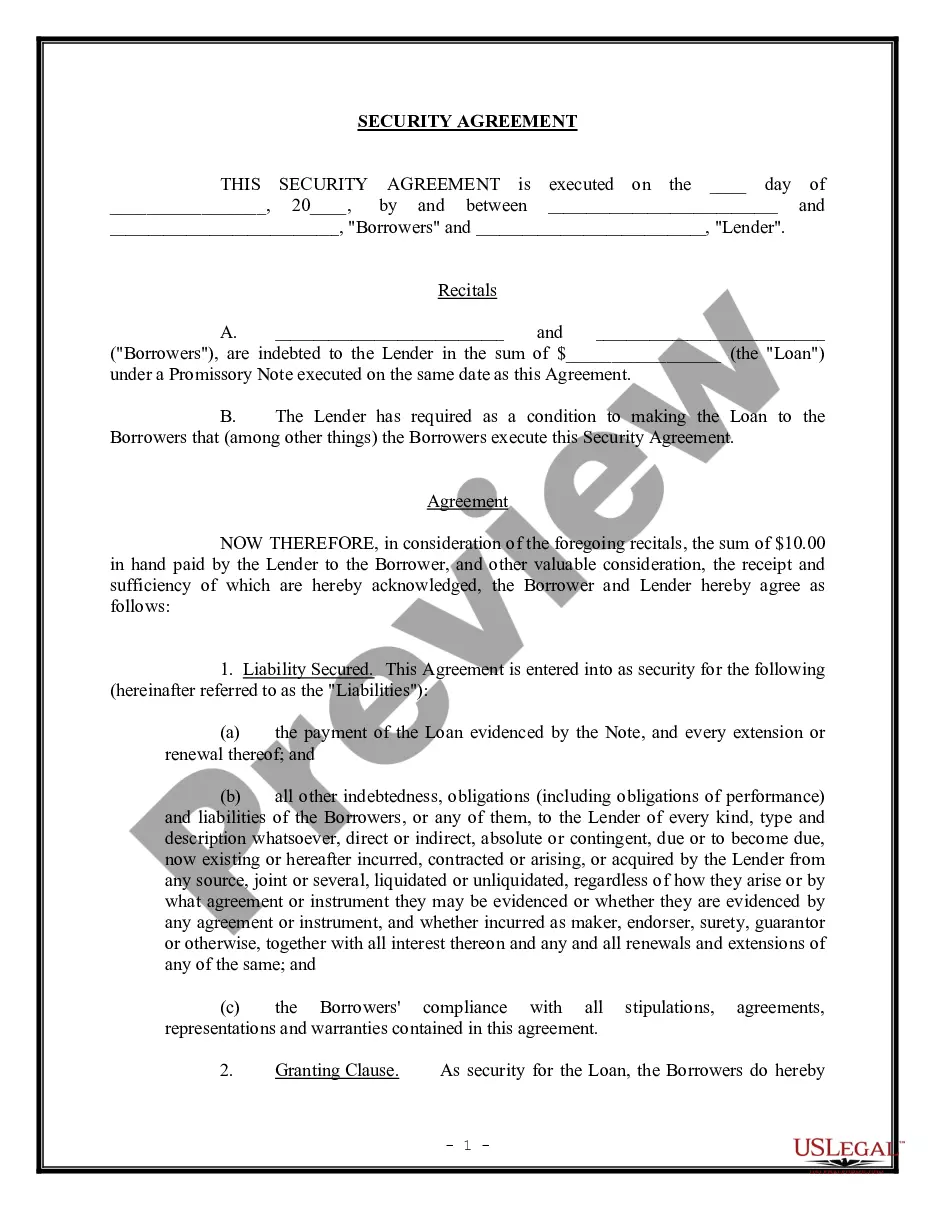
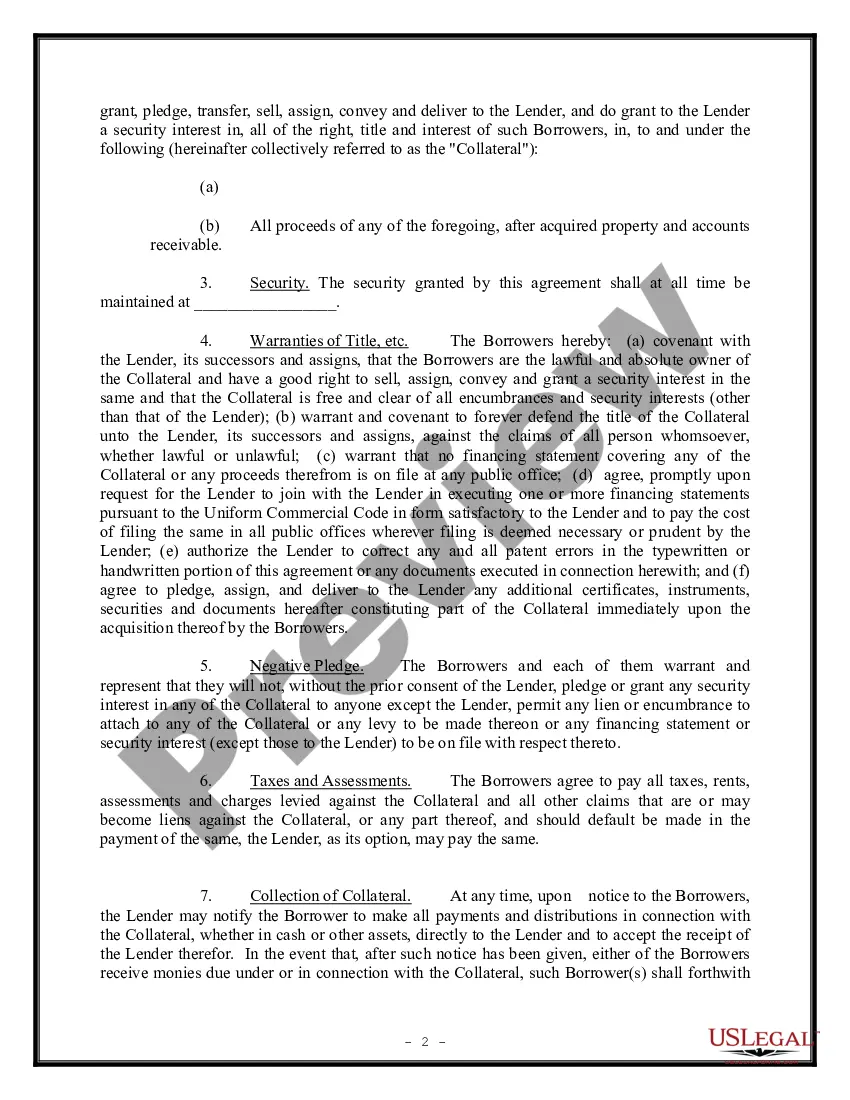
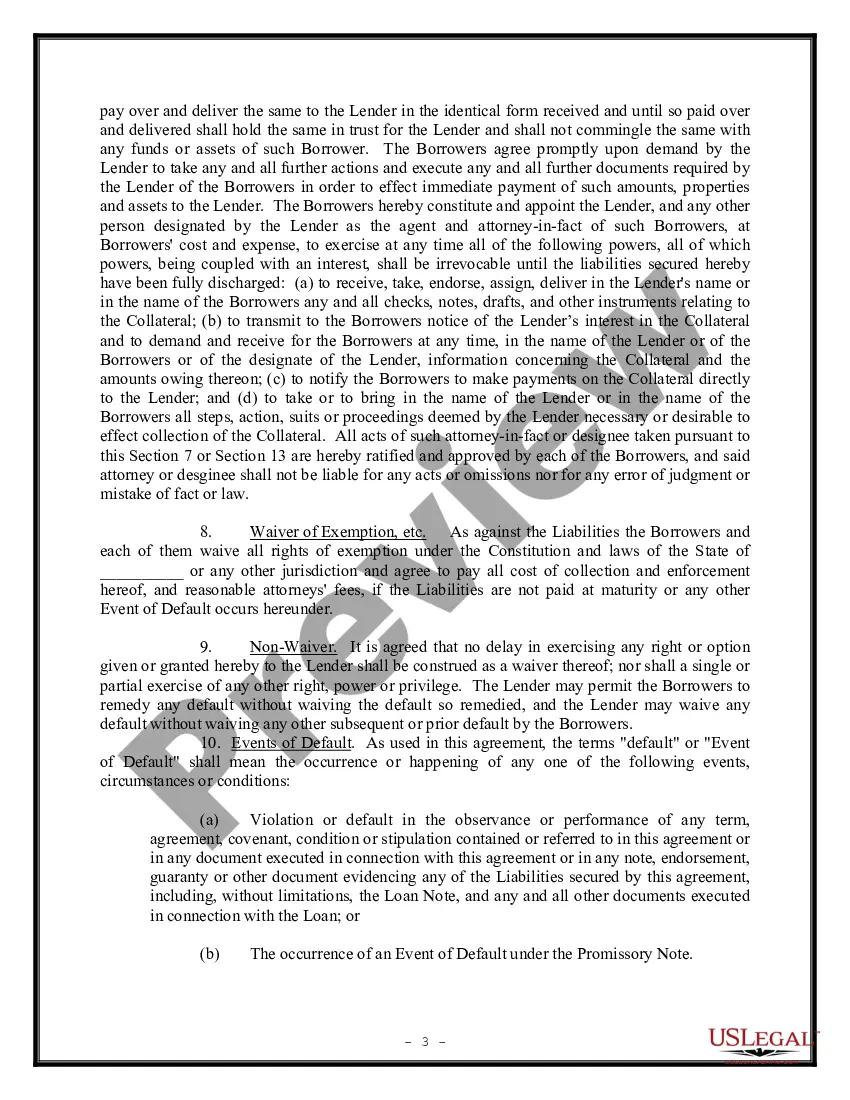
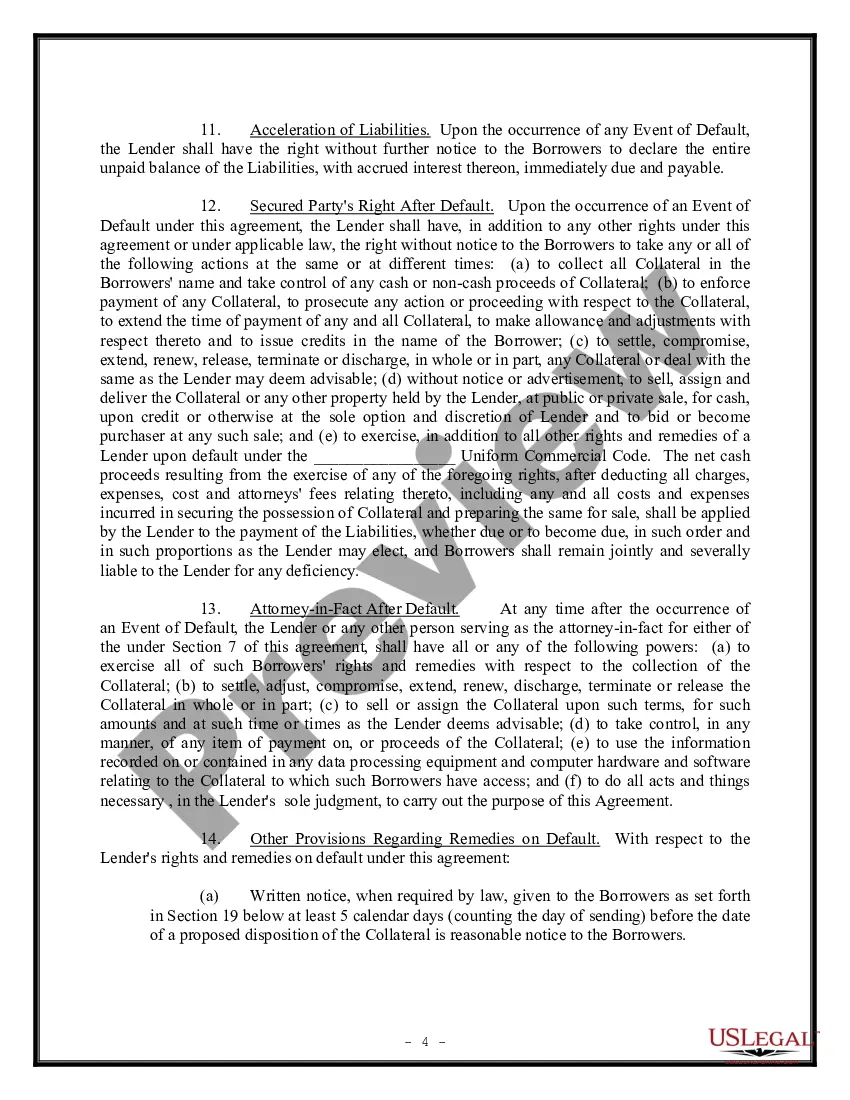
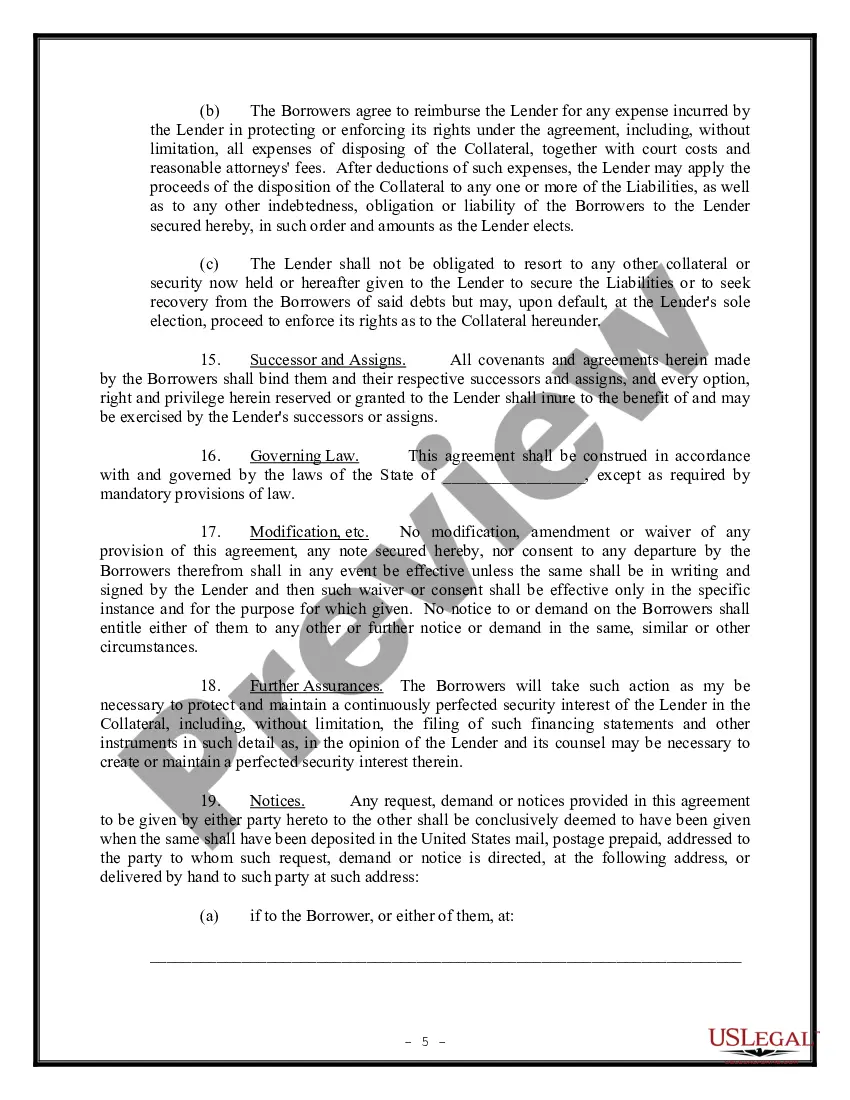
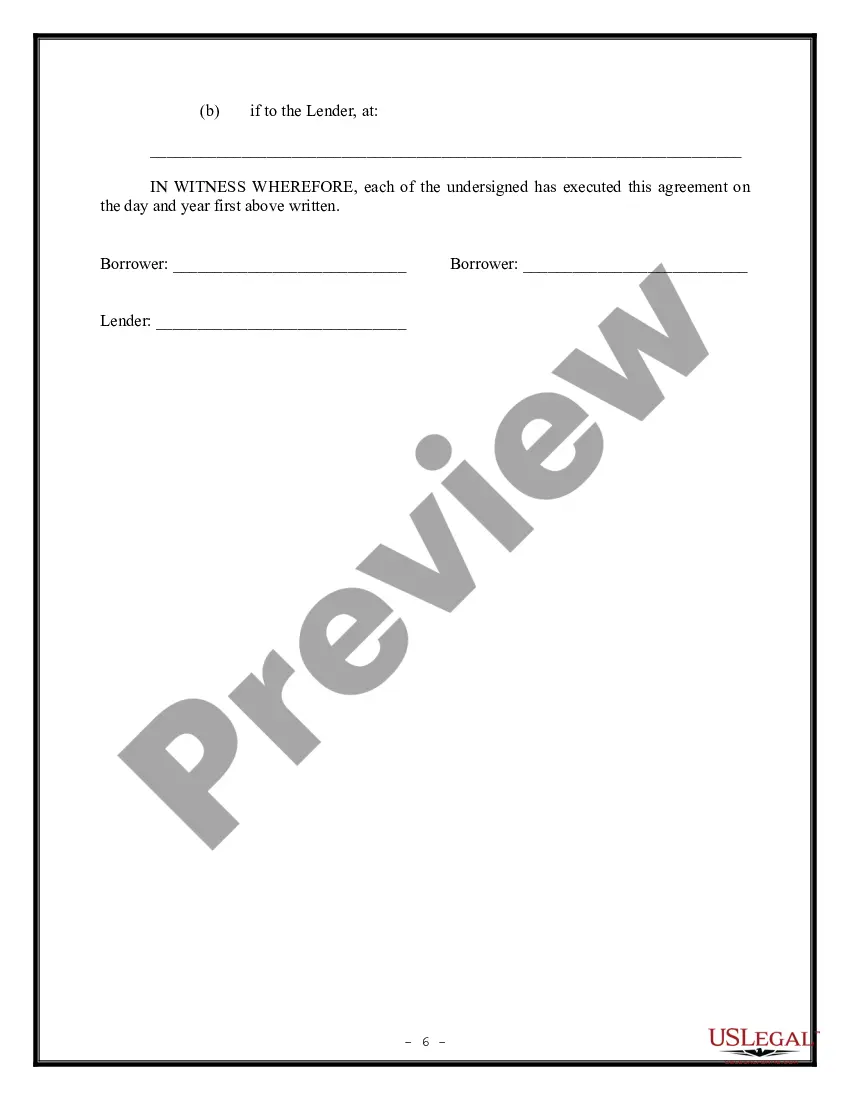
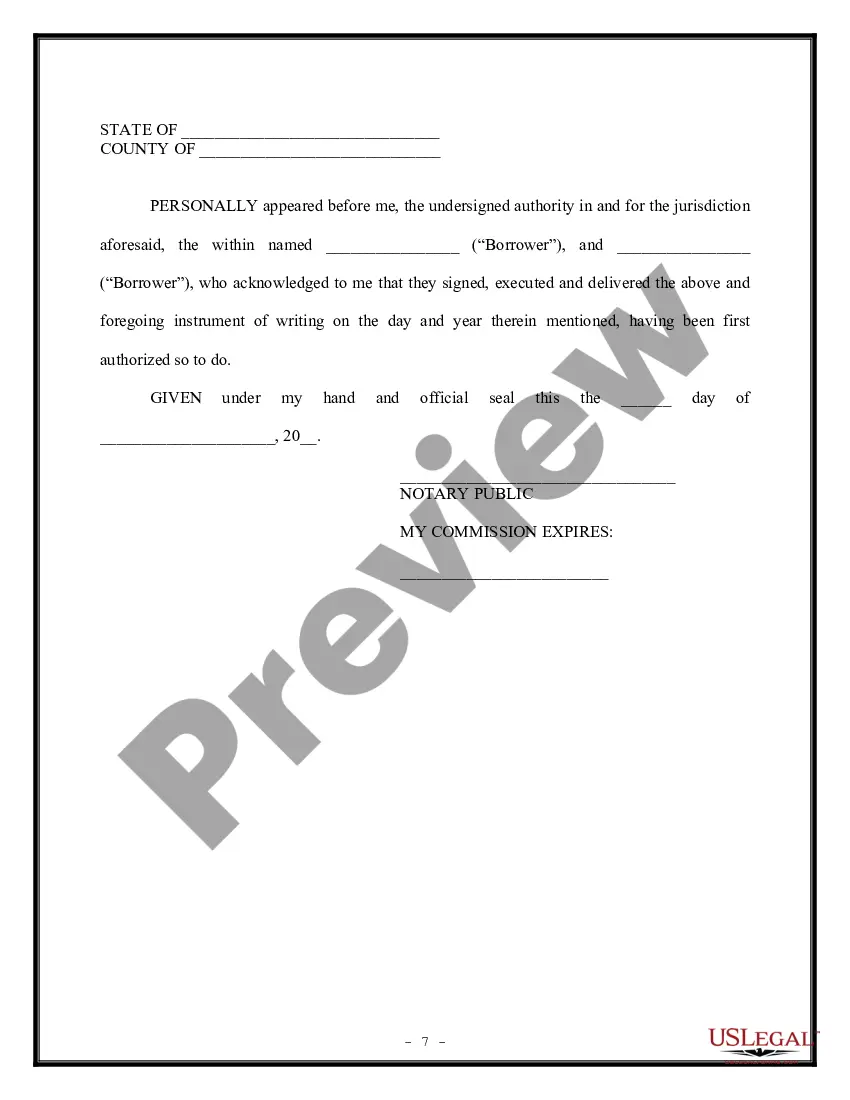
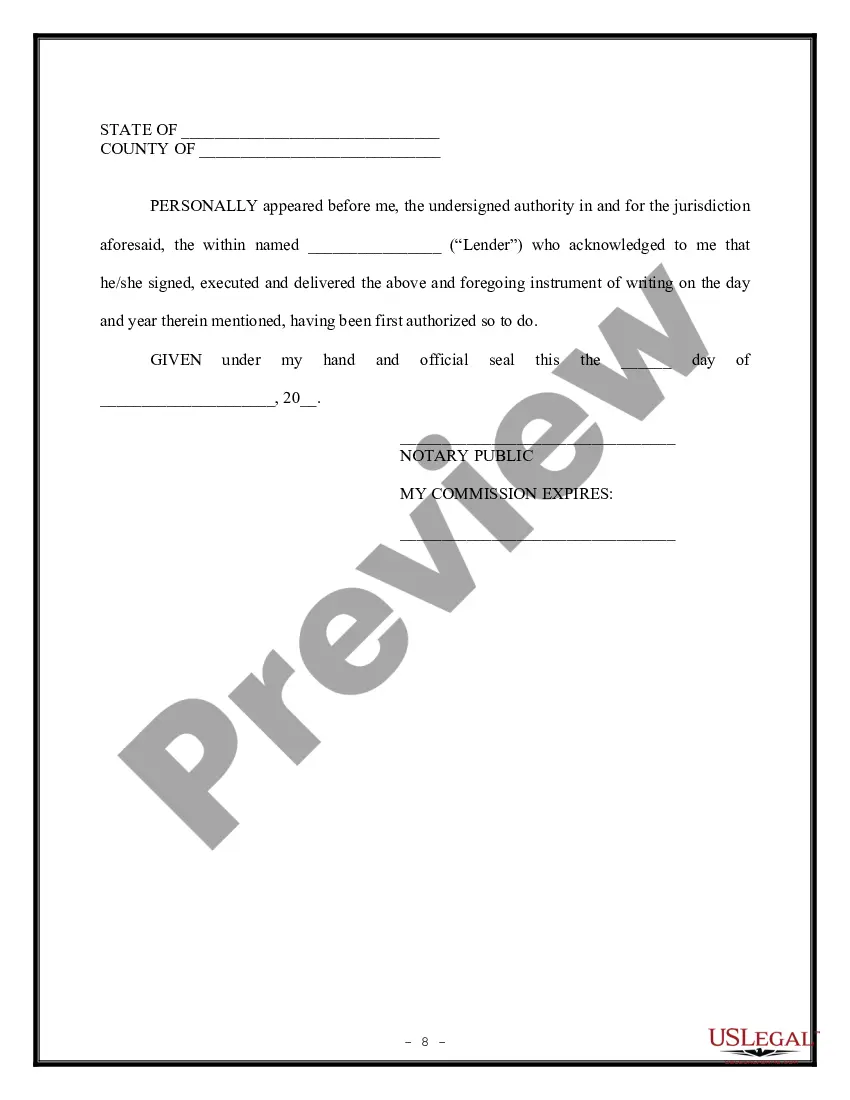
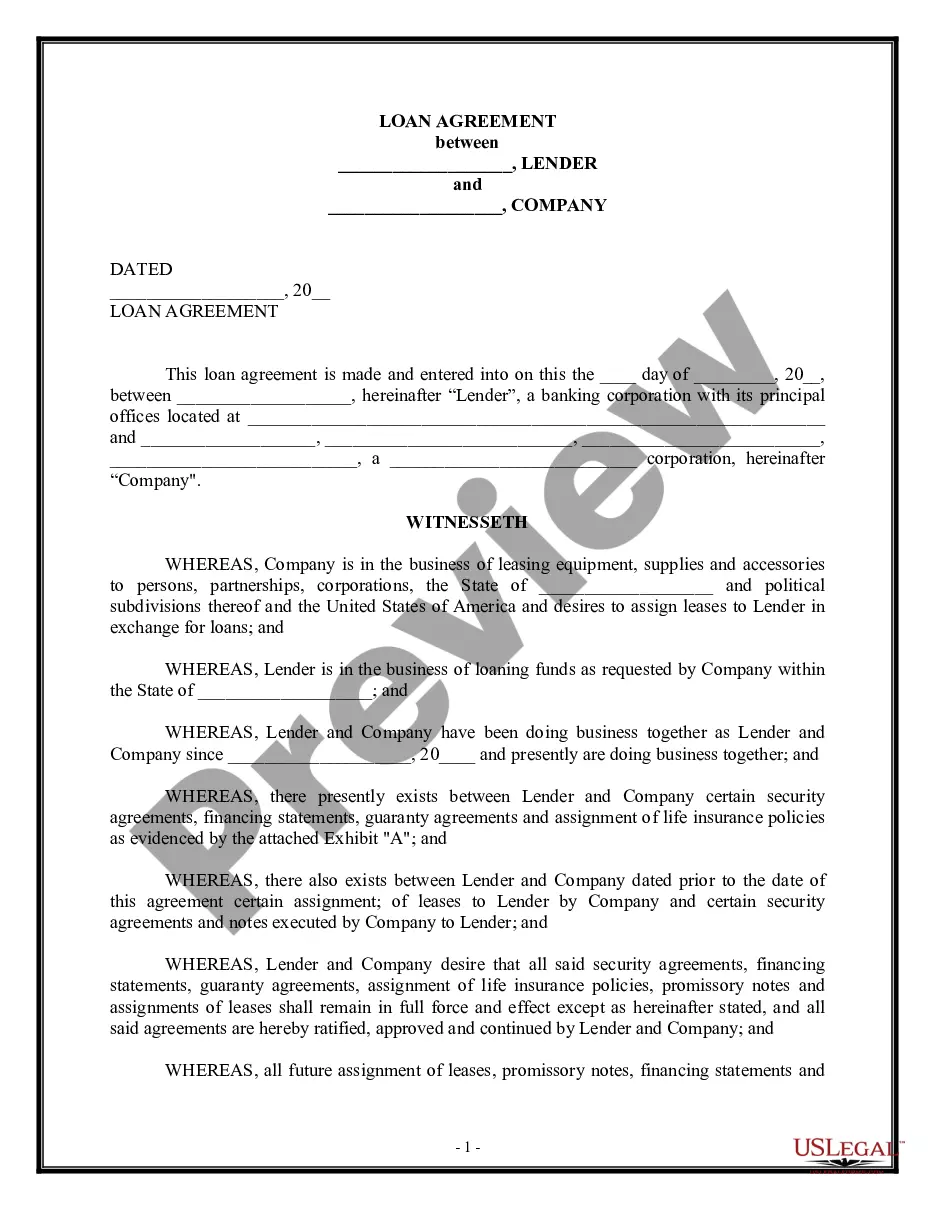
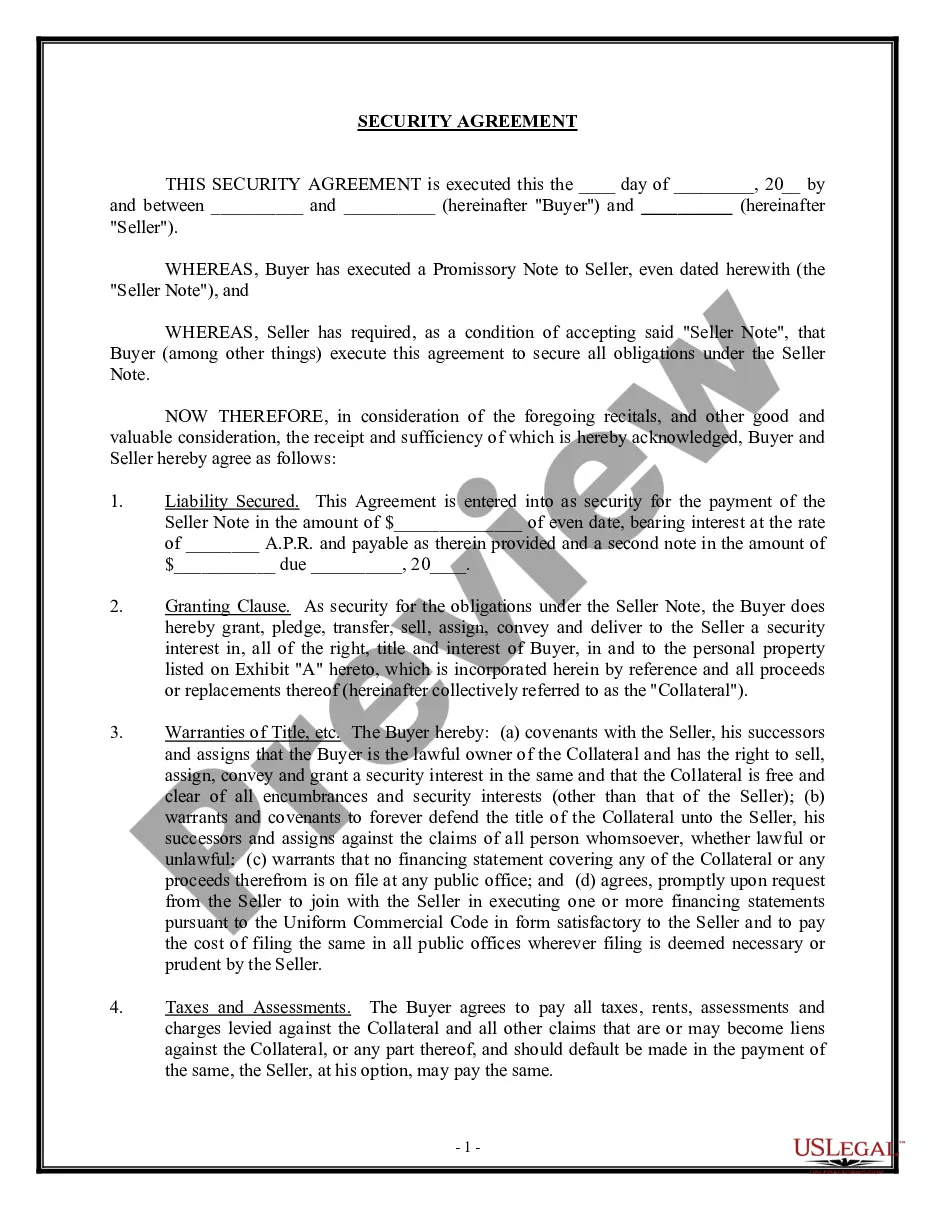
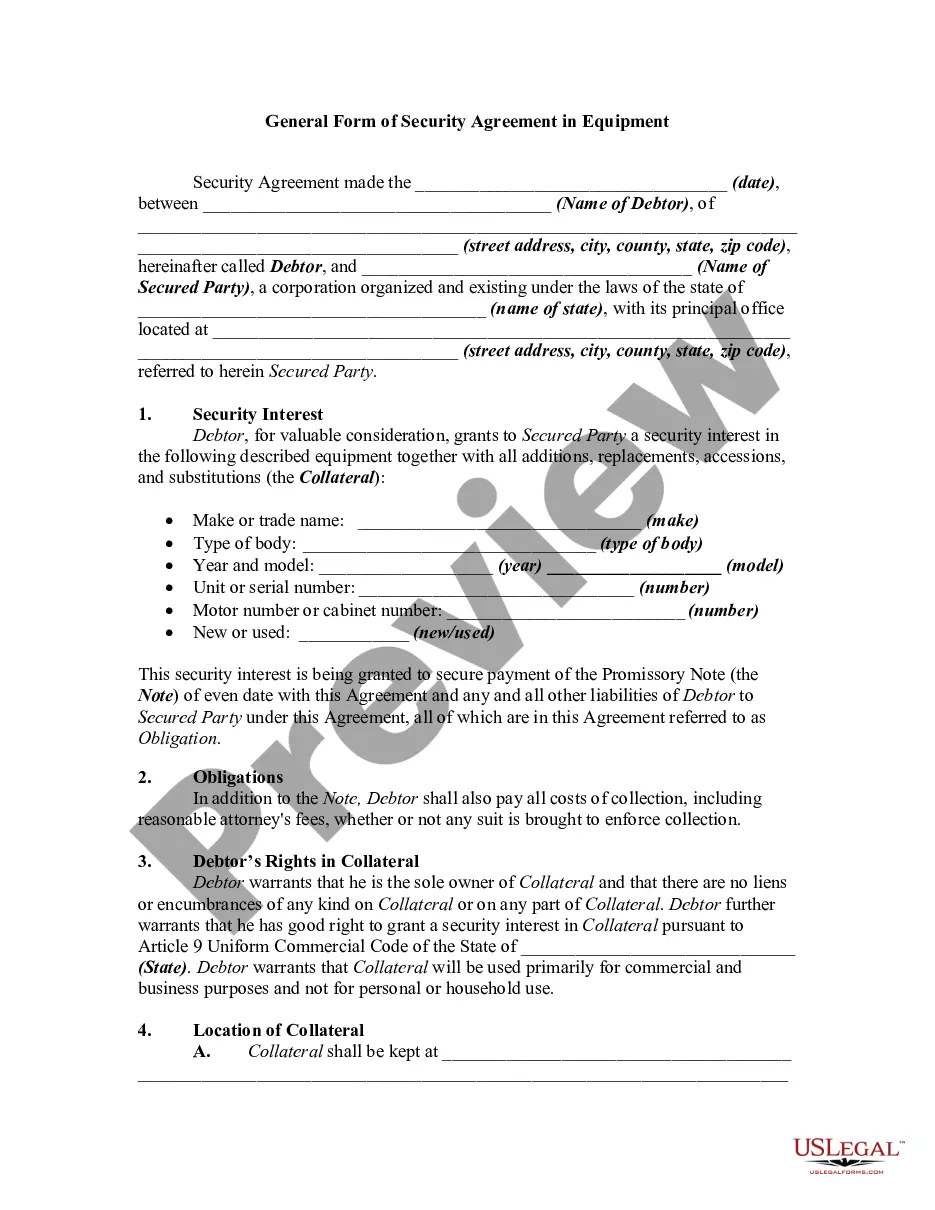
This form is a Security Agreement. This security agreement is entered into as security for a loan given to the borrower(s). The agreement also contains provisions concerning: warranties, collection of collateral, and events of default.
Connecticut Security Agreement - Long Form
Category:
State:
Multi-State
Control #:
US-00627
Format:
Word;
Rich Text
Instant download
Description
Free preview
Get your form ready online
Our built-in tools help you complete, sign, share, and store your documents in one place.
Built-in online Word editor
Make edits, fill in missing information, and update formatting in US Legal Forms—just like you would in MS Word.
Export easily
Download a copy, print it, send it by email, or mail it via USPS—whatever works best for your next step.
E-sign your document
Sign and collect signatures with our SignNow integration. Send to multiple recipients, set reminders, and more. Go Premium to unlock E-Sign.
Notarize online 24/7
If this form requires notarization, complete it online through a secure video call—no need to meet a notary in person or wait for an appointment.
Store your document securely
We protect your documents and personal data by following strict security and privacy standards.

Make edits, fill in missing information, and update formatting in US Legal Forms—just like you would in MS Word.

Download a copy, print it, send it by email, or mail it via USPS—whatever works best for your next step.

Sign and collect signatures with our SignNow integration. Send to multiple recipients, set reminders, and more. Go Premium to unlock E-Sign.

If this form requires notarization, complete it online through a secure video call—no need to meet a notary in person or wait for an appointment.

We protect your documents and personal data by following strict security and privacy standards.
Looking for another form?


How to fill out Security Agreement - Long Form?
Are you in a situation where you will require documents for occasional commercial or particular purposes almost every time.
There are numerous legal document templates accessible online, but locating ones you can rely on is not easy.
US Legal Forms provides thousands of template documents, such as the Connecticut Security Agreement - Long Form, designed to comply with federal and state regulations.
Choose the pricing plan you prefer, provide the necessary details to create your account, and pay for your order using your PayPal or credit card.
Select a convenient file format and download your copy. Access all the document templates you have purchased in the My documents menu. You can obtain another copy of the Connecticut Security Agreement - Long Form at any time if needed. Just select the desired document to download or print the template. Use US Legal Forms, the most extensive collection of legal documents, to save time and avoid errors. The service offers professionally crafted legal document templates that you can use for various purposes. Create your account on US Legal Forms and start simplifying your life.
- If you are already familiar with the US Legal Forms site and have your account, simply Log In.
- Then, you can download the Connecticut Security Agreement - Long Form template.
- If you do not possess an account and want to start using US Legal Forms, follow these steps.
- Locate the document you require and ensure it is for your specific area/region.
- Utilize the Review button to evaluate the document.
- Check the description to confirm you have chosen the correct document.
- If the document is not what you are looking for, use the Search field to find the document that meets your needs and requirements.
- If you find the correct document, simply click Get now.
Form popularity
FAQ
The debtor must authenticate the security agreement by signing a statement that announces the intention to grant a security interest in the property specifically outlined in the security agreement.
Hear this out loud PauseA type of security interest in which a lender takes possession of personal property as security for an obligation. The personal property involved is also called a pledge.
Hear this out loud PauseA security agreement is a document that provides a lender a security interest in a specified asset or property that is pledged as collateral. Security agreements often contain covenants that outline provisions for the advancement of funds, a repayment schedule, or insurance requirements.
Hear this out loud PauseA type of security: the delivery of possession of an asset as security until payment. Possession may be actual or constructive, for example, handing over the keys to the store where the pledged goods are kept. Ownership remains with the pledgor.
Under the UCC, a pledge agreement is a security agreement. The nature of the pledged assets means that a pledge agreement may contain different representations and warranties and covenants than a security agreement over business assets (for example, voting rights).
Creating a security agreement Some key provisions in a security agreement include: Describing the collateral as accurately and as detailed as possible, so both the borrower and the lender agree upon the secured property. How to determine whether and when the borrower is in default under the loan.
Hear this out loud PauseThe security agreement must: be signed (or authenticated) by the debtor and the owner of the property, contain a description of the collateral and. make it clear that a security interest is intended.
Under a security deed, the lender is automatically able to foreclose or sell the property when the borrower defaults. Foreclosing on a mortgage, on the other hand, involves additional paperwork and legal requirements, thus extending the process.