Connecticut Lease for Storage of Goods
Description
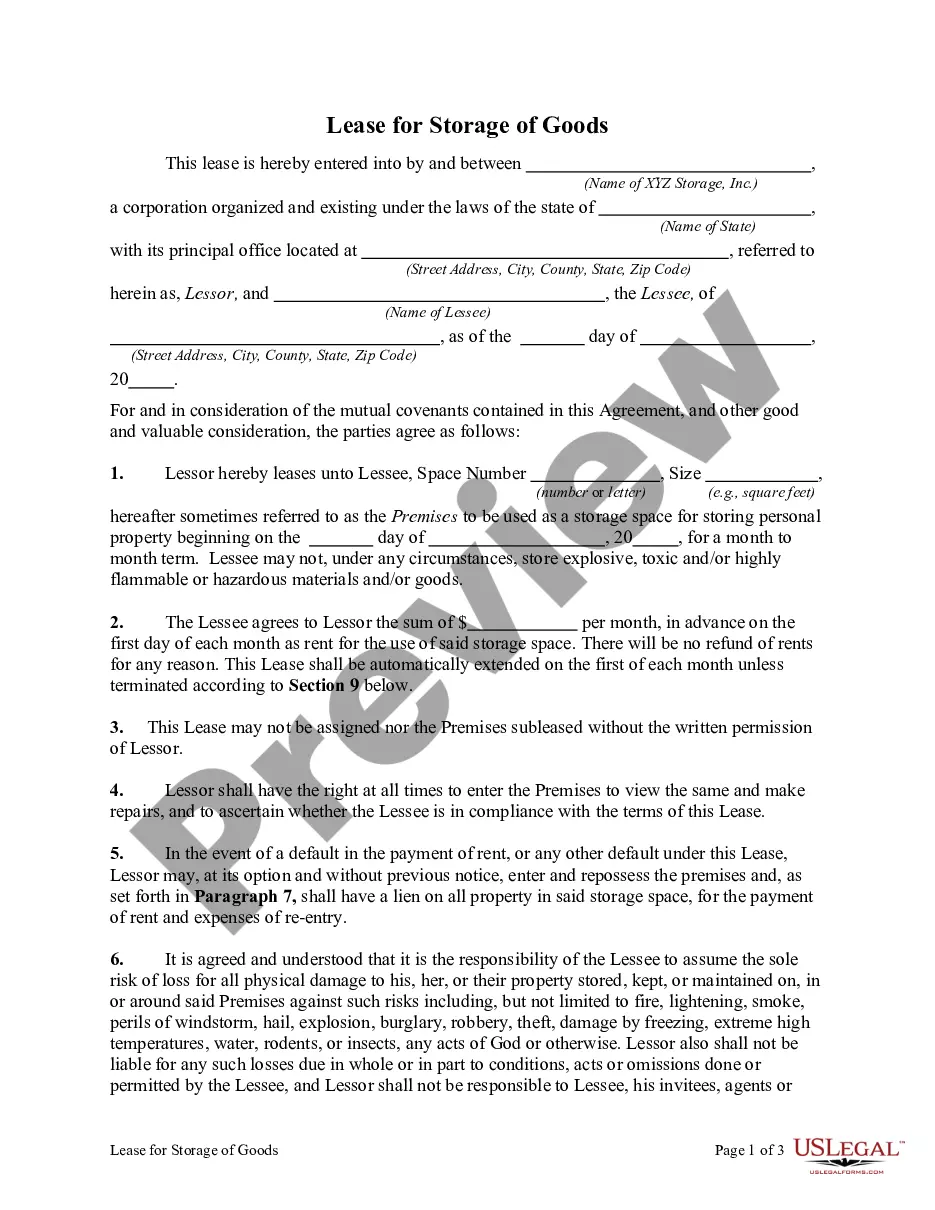
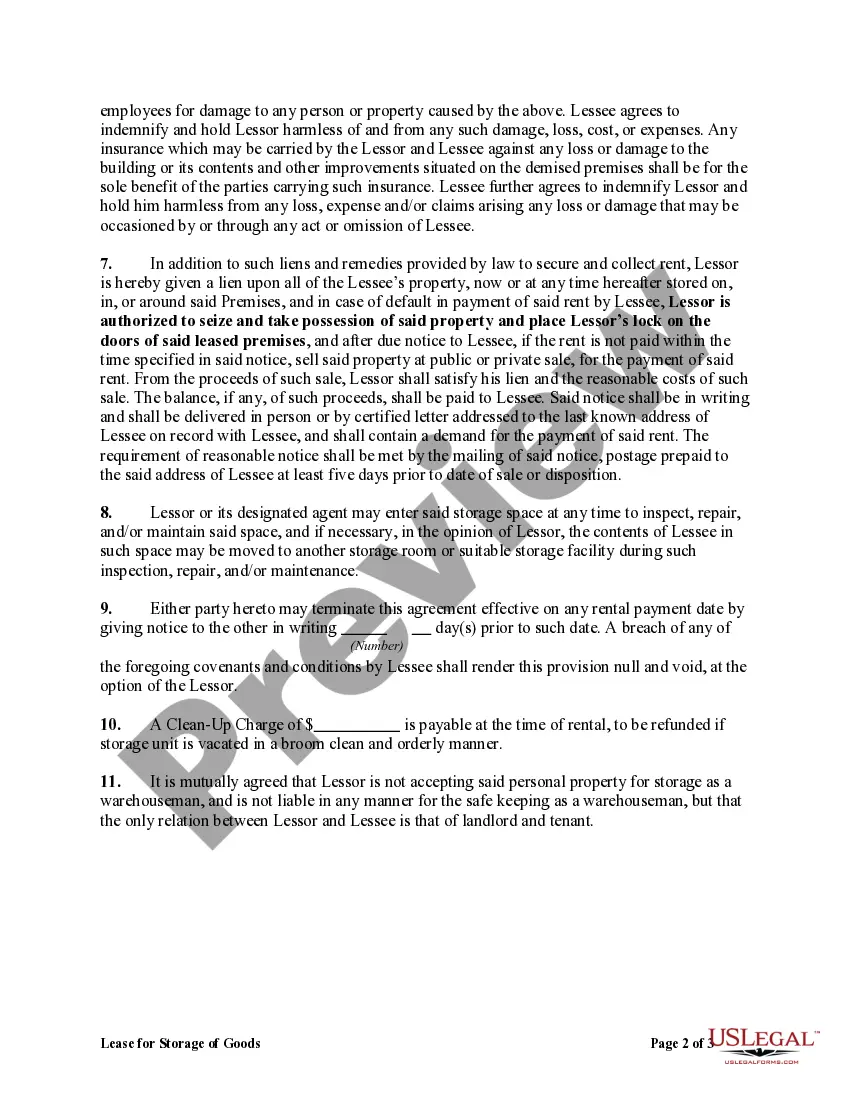
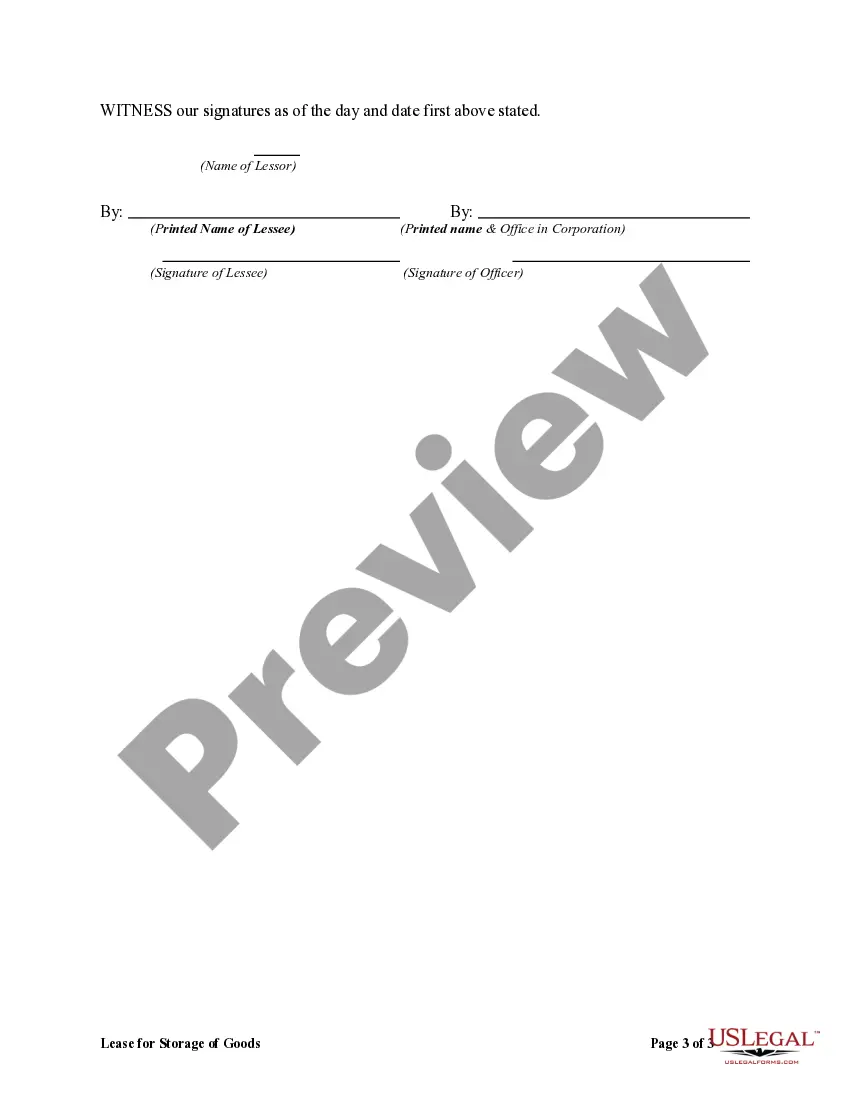
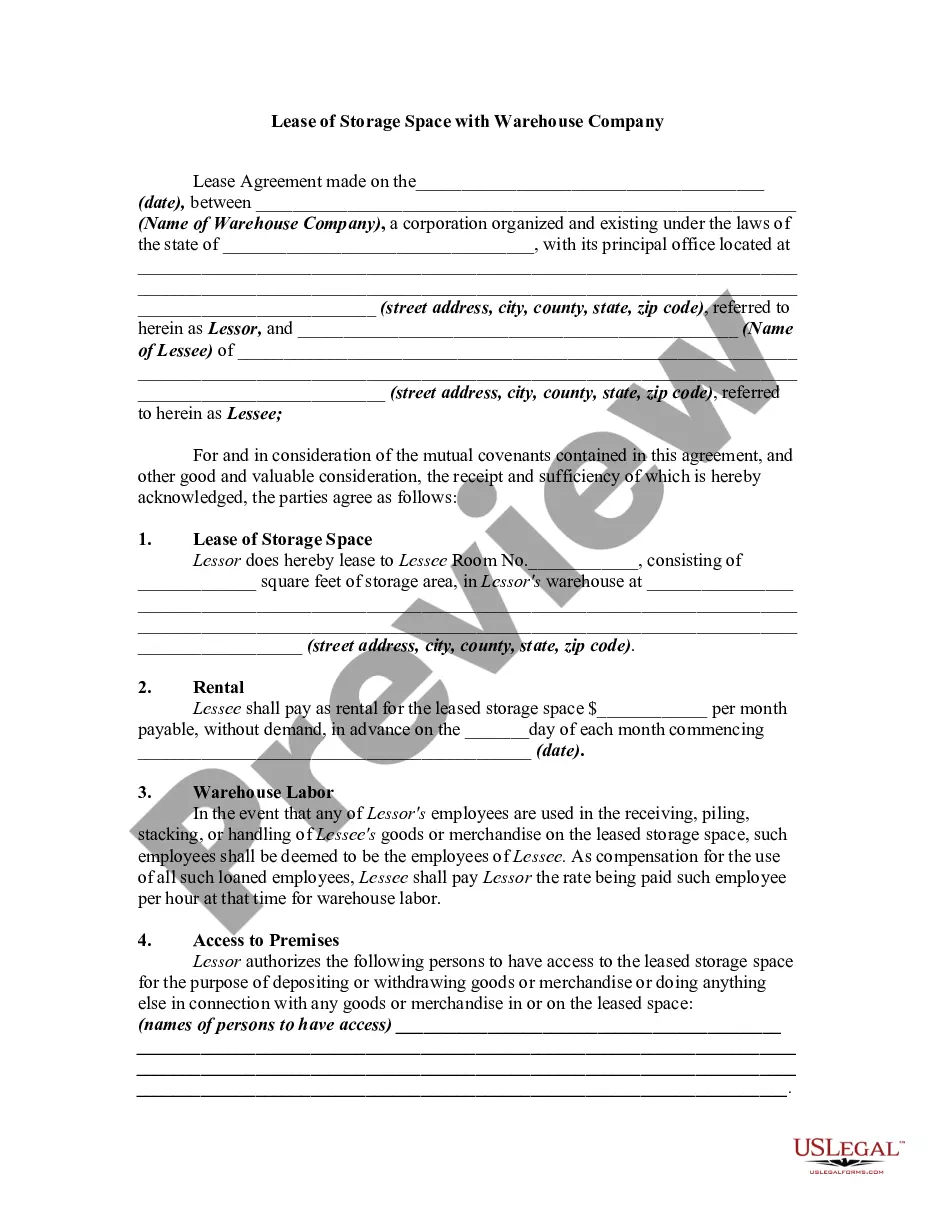
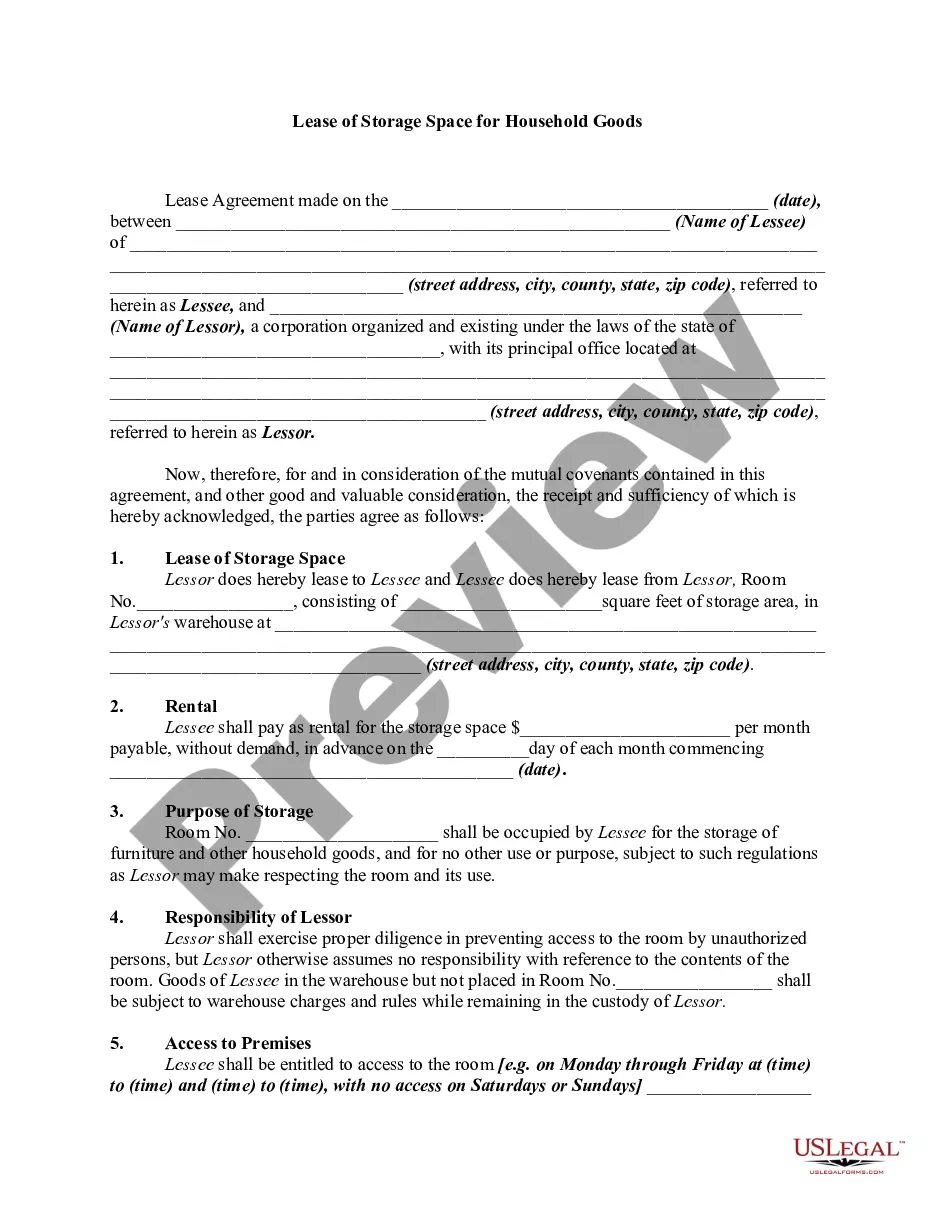
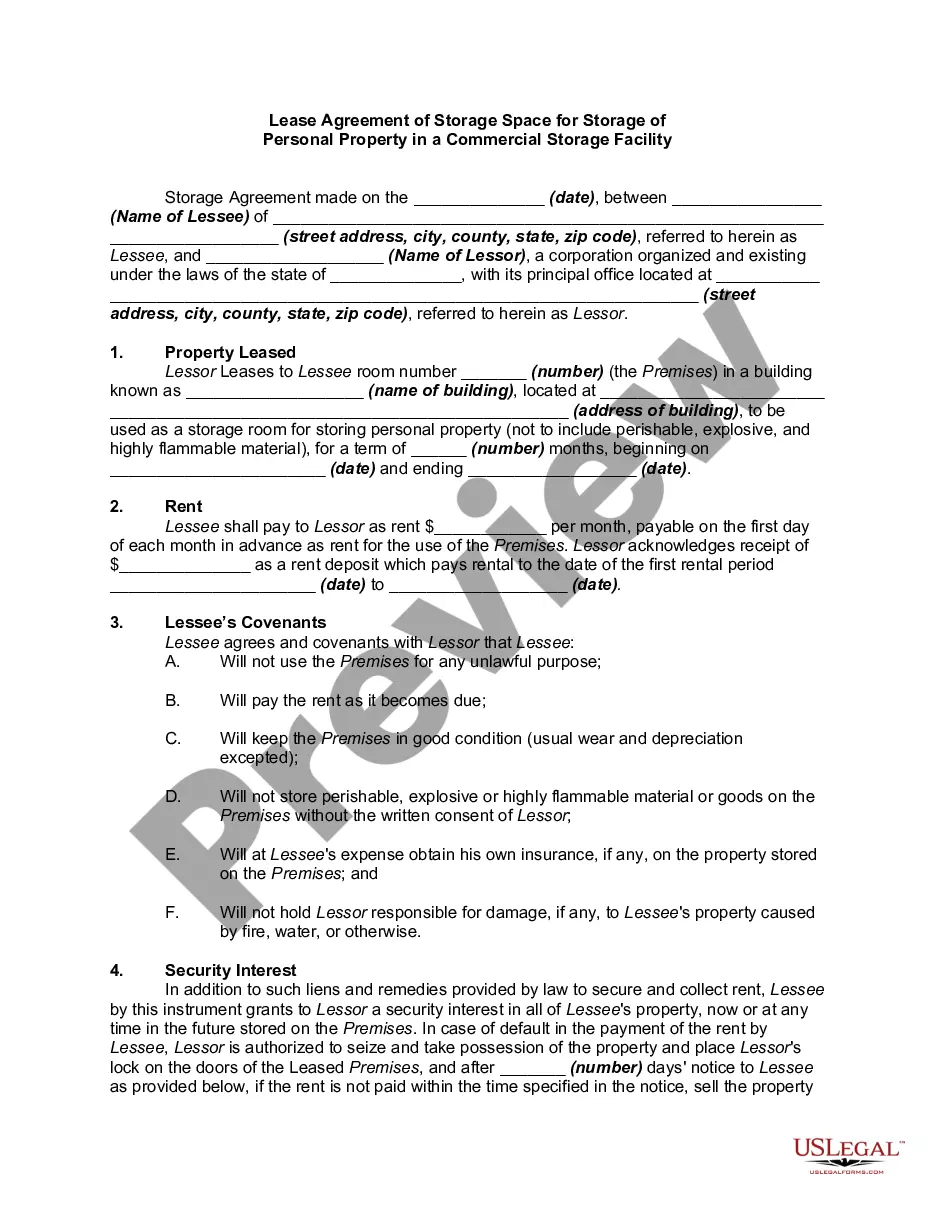
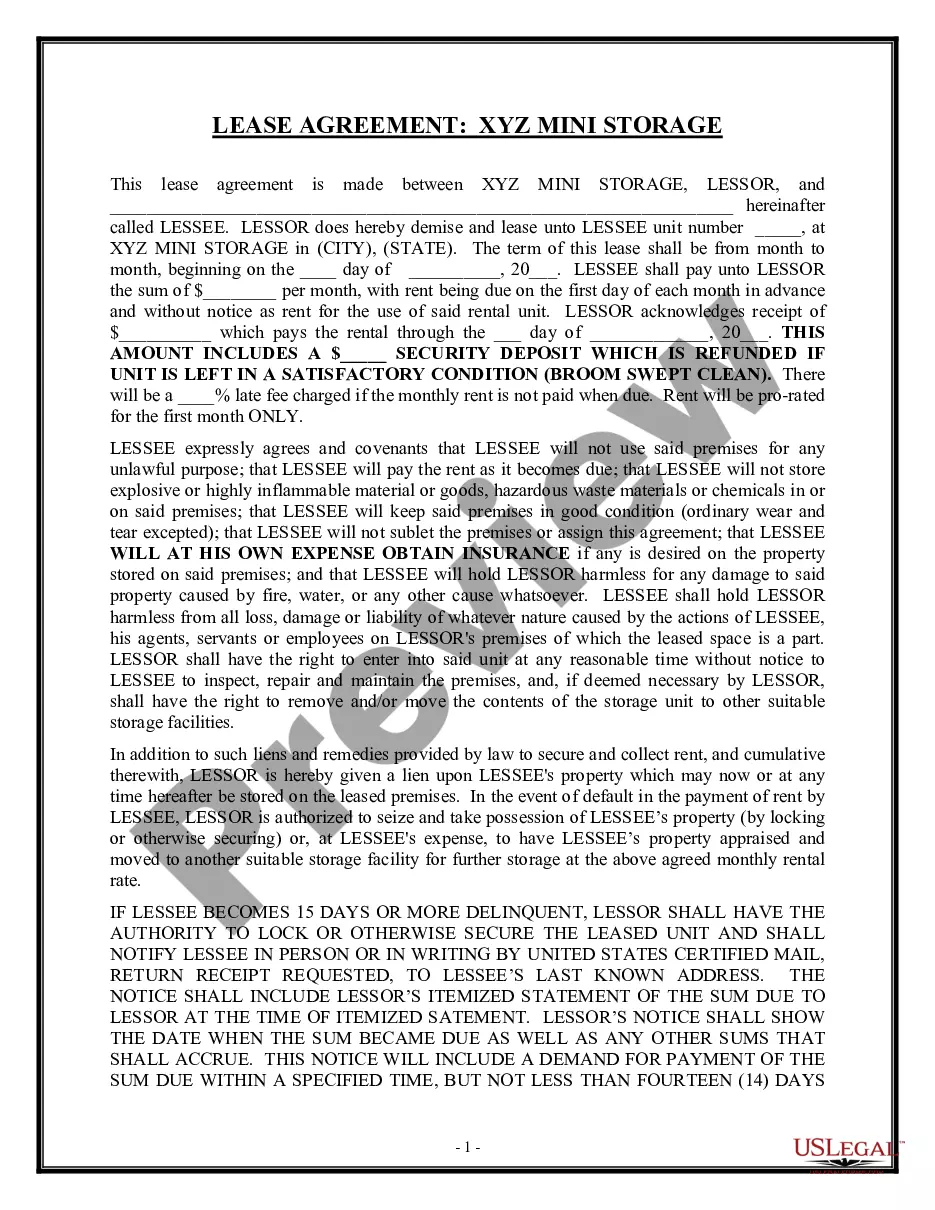
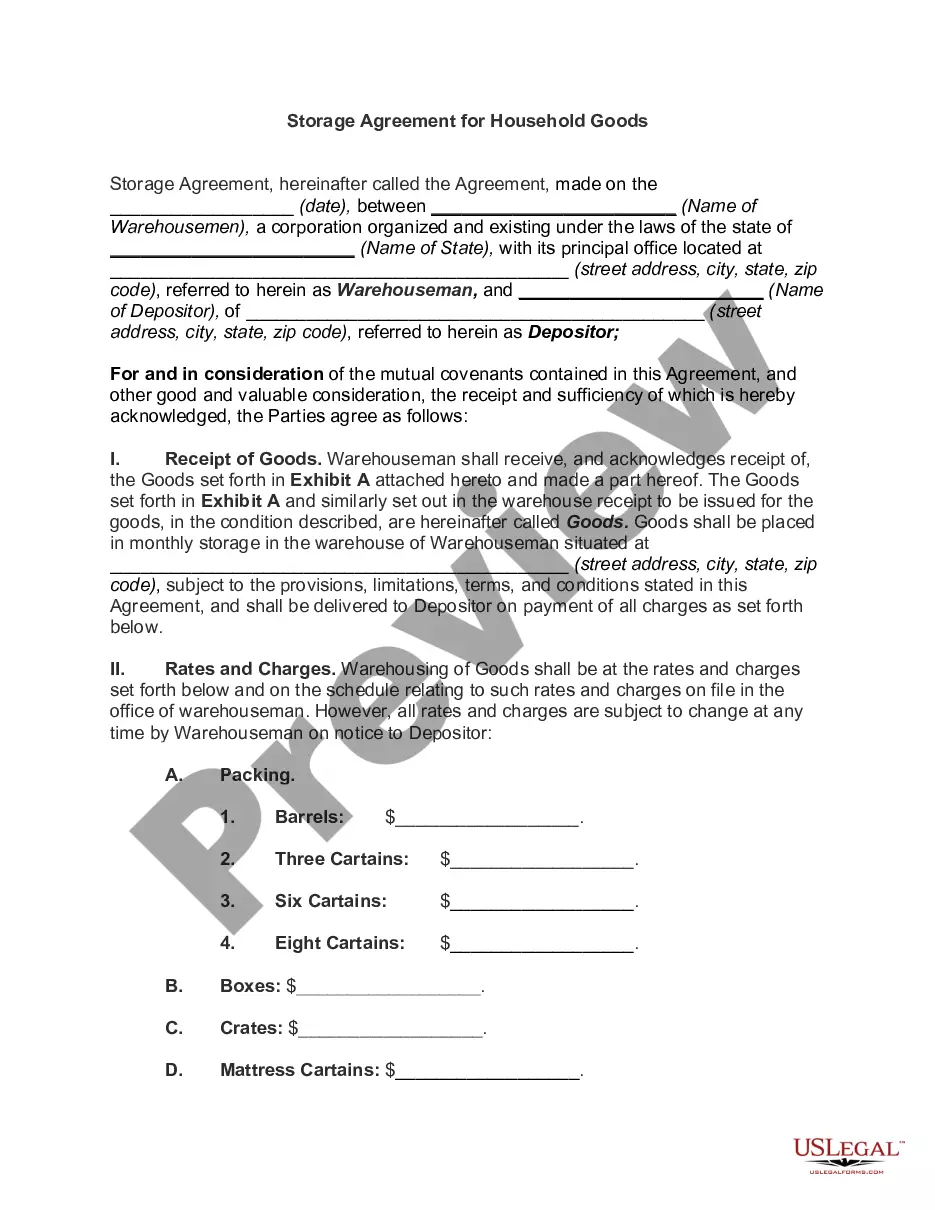

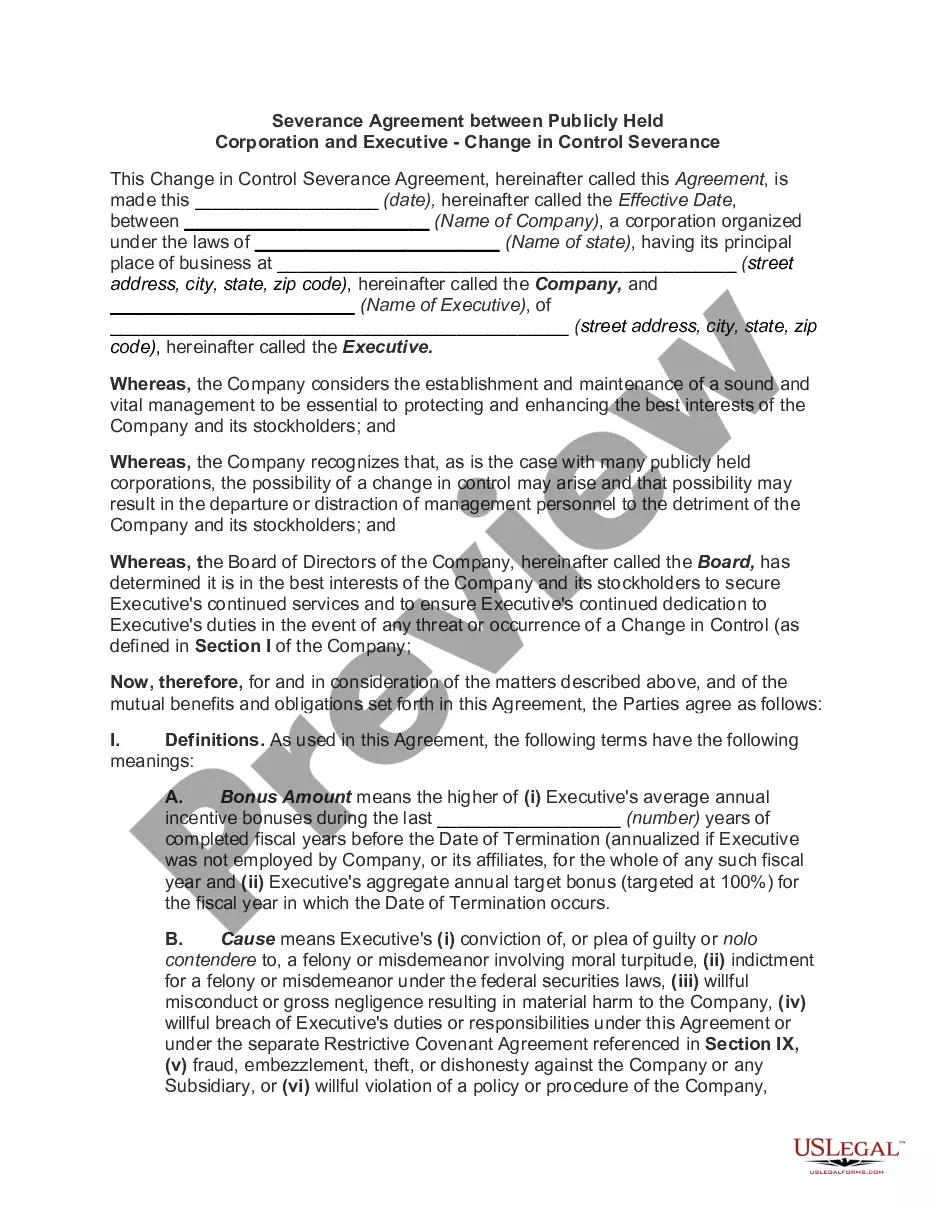
How to fill out Lease For Storage Of Goods?
You can dedicate hours online looking for the legal document template that meets the federal and state standards you require.
US Legal Forms offers numerous legal forms that are verified by professionals.
You can easily acquire or create the Connecticut Lease for Storage of Goods from this service.
Review the form description to confirm you have chosen the correct form. If available, use the Preview button to examine the document template as well.
- If you possess a US Legal Forms account, you may Log In and click the Obtain button.
- Following that, you can complete, modify, print, or sign the Connecticut Lease for Storage of Goods.
- Each legal document template you purchase is your property indefinitely.
- To get another copy of any purchased form, navigate to the My documents tab and click the appropriate button.
- If you are visiting the US Legal Forms website for the first time, follow the simple instructions below.
- First, ensure you have selected the right document template for the state/region of your choice.
Form popularity
FAQ
Strongly prohibited hazardous and combustible materials that cannot be stored inside a storage unit include: fuels, chemicals, acids, gases, pesticides, liquor, fireworks, and medical waste. If you are unsure about the items you are storing, always inquire with your storage company first.
In many cases, owning a storage facility can be a profitable business venture. Extra space is a commodity many people will pay for. Also, it is a reliable recurring income should you attract enough business.
A storage unit provides a place to store data. In the storage unit, people can assemble the data in the single unit at one place of a device or in a computer. The data can be called on whenever you want to access it. The data storage is an electromagnetic place where the computer processors can access it.
Eight Types of Self StorageDrive Up Storage.Climate Controlled Storage.Business Storage.Student Storage.Military Storage.24 Hour Storage.Vehicle Storage.
Profit margin of a self-storage business According to one estimate, a self-storage facility generates a typical profit margin of 41%.
Storage facilities are cheaper than apartments/houses. Investments can be undertaken with a small amount of money to buy a storage place and gradually develop it. Self-storage can be an excellent investment choice.
Instead of just making due with the items and space that you already have, a storage unit can actually cause you to spend more money. This is because you will be hoarding more and more things, and then you'll just continue to put things in your storage unit because you have that extra space.
Self storage (a shorthand for "self-service storage," and also known as "device storage") is an industry that rents storage space (such as rooms, lockers, containers, and/or outdoor space), also known as "storage units," to tenants, usually on a short-term basis (often month-to-month).
Can You Sleep In A Storage Unit? No, you cannot sleep in a storage unit. Storage units don't qualify as habitable living spaces, as they do not have a bathroom or other necessary amenities to maintain a safe and healthy lifestyle.
Can You Live in a Storage Unit? No. Living in a storage unit is prohibited by various local and federal housing laws. Storage facilities must evict any person they find living on the premises to comply with the law and most insurance policies.