Connecticut Quitclaim Deed from Individual to LLC
What is this form?
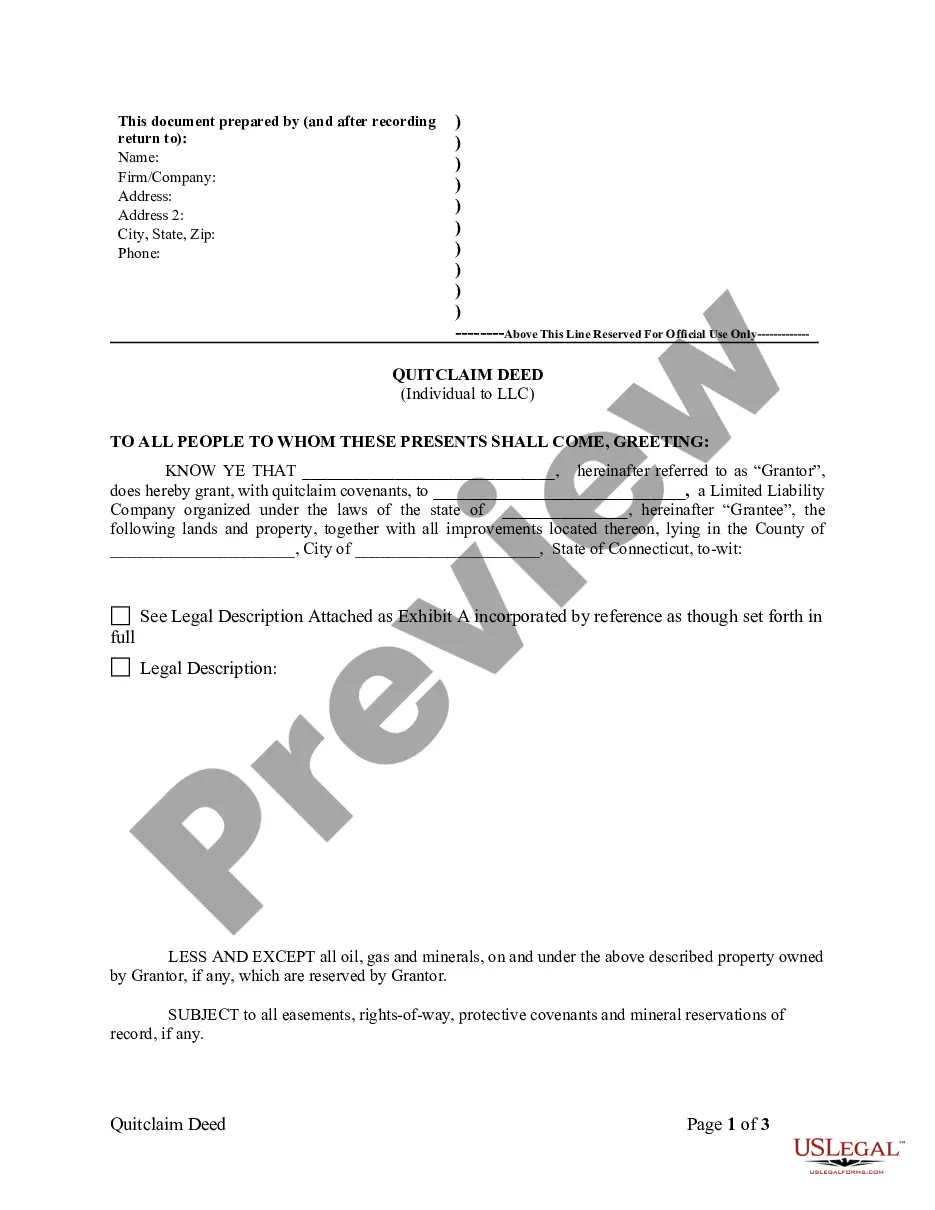
The Quitclaim Deed from Individual to LLC is a legal document that allows an individual (the grantor) to transfer their property rights to a limited liability company (the grantee). This form does not guarantee that the grantor owns the property free and clear; instead, it simply transfers whatever interest the grantor has in the property. This differs from warranty deeds, which provide a guarantee of clear title.
Key parts of this document
- Identification of the grantor and grantee.
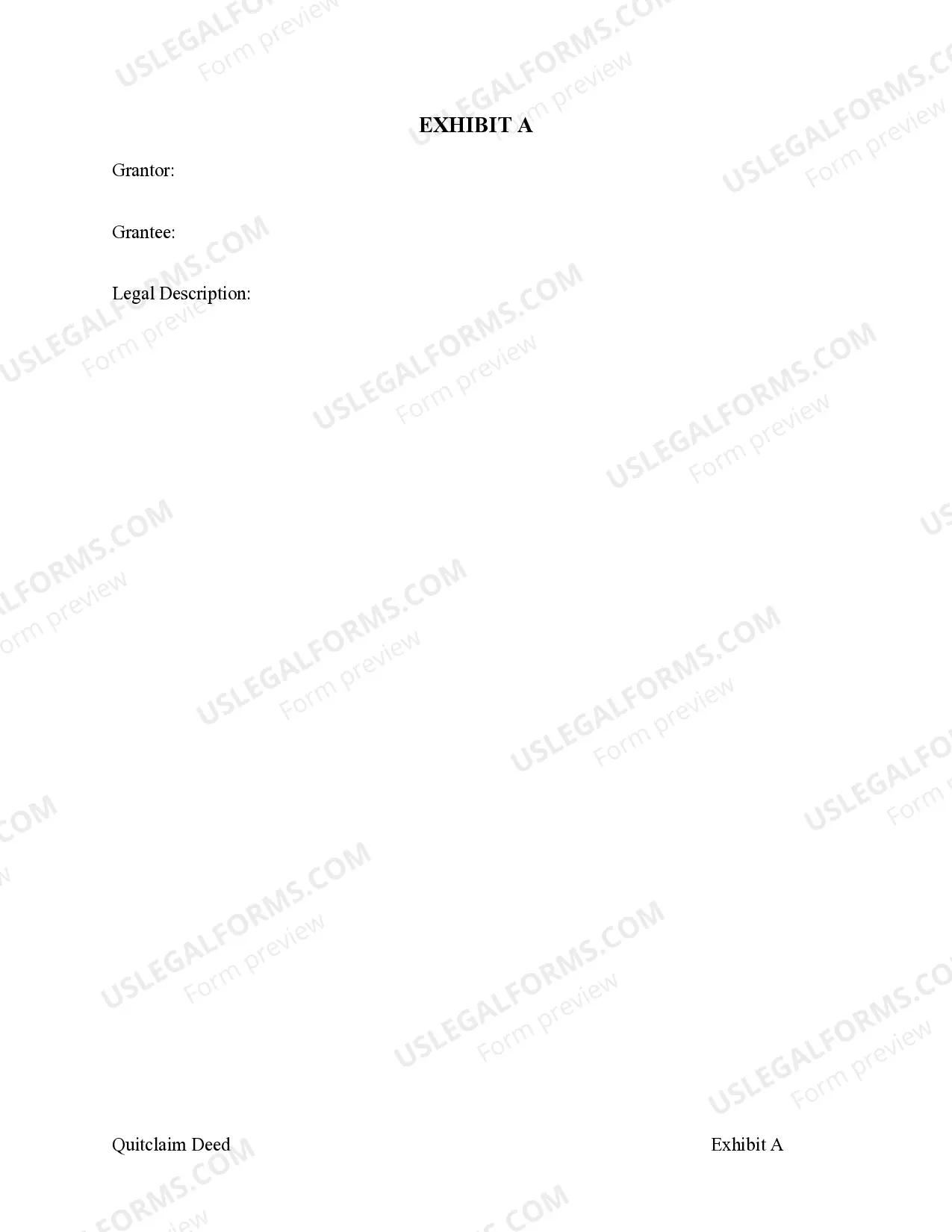
- Description of the property being transferred.
- Reservation of rights regarding oil, gas, and minerals.
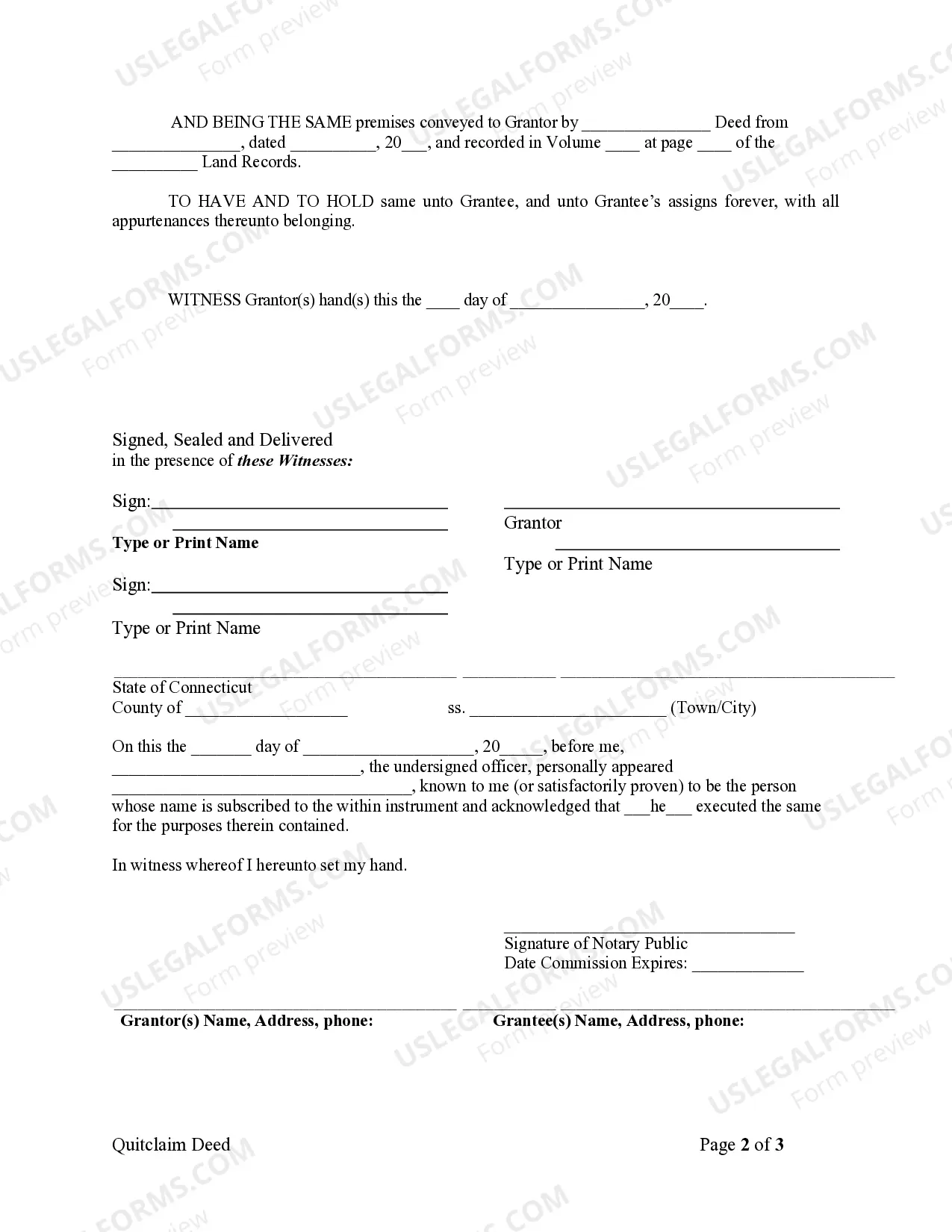
- Warranties and declarations made by the grantor.
- Signature and dating by the grantor in the presence of witnesses.




When to use this document
This form is needed when an individual wishes to transfer their ownership interest in a property to a limited liability company. This may be applicable in situations where the owner wants to consolidate ownership under the company for liability protection or tax purposes, or when the property is being placed into a business structure for operations.
Who can use this document
- Individuals transferring property they own to their business entity, such as an LLC.
- Real estate investors looking to put properties into an LLC for clarity and liability purposes.
- Property owners aiming to simplify their ownership structure.
Completing this form step by step
- Identify the grantor (individual) and the grantee (LLC) in the appropriate fields.
- Provide a detailed description of the property being conveyed.
- Specify any rights or interests that are being reserved by the grantor, such as mineral rights.
- Have the grantor sign and date the document in front of witnesses.
- Ensure that all required paperwork is filed according to local regulations.
Notarization requirements for this form
Notarization is required for this form to take effect. Our online notarization service, powered by Notarize, lets you verify and sign documents remotely through an encrypted video session, available 24/7.
Get your form ready online
Our built-in tools help you complete, sign, share, and store your documents in one place.
Make edits, fill in missing information, and update formatting in US Legal Forms—just like you would in MS Word.
Download a copy, print it, send it by email, or mail it via USPS—whatever works best for your next step.
Sign and collect signatures with our SignNow integration. Send to multiple recipients, set reminders, and more. Go Premium to unlock E-Sign.
If this form requires notarization, complete it online through a secure video call—no need to meet a notary in person or wait for an appointment.
We protect your documents and personal data by following strict security and privacy standards.

Make edits, fill in missing information, and update formatting in US Legal Forms—just like you would in MS Word.

Download a copy, print it, send it by email, or mail it via USPS—whatever works best for your next step.

Sign and collect signatures with our SignNow integration. Send to multiple recipients, set reminders, and more. Go Premium to unlock E-Sign.

If this form requires notarization, complete it online through a secure video call—no need to meet a notary in person or wait for an appointment.

We protect your documents and personal data by following strict security and privacy standards.
Mistakes to watch out for
- Failing to provide complete property descriptions.
- Not having the deed signed in the presence of required witnesses.
- Omitting reservations of rights, which can lead to misunderstandings later.
- Not checking state-specific recording requirements before submission.
Benefits of completing this form online
- Convenience of downloading and filling out the form at your own pace.
- Access to templates drafted by licensed attorneys, ensuring legal compliance.
- Quick updates to any information as needed, without extensive paperwork.
Main things to remember
- A Quitclaim Deed transfers property from an individual to an LLC without warranties.
- Properly filling out the deed is crucial for legal verification.
- State laws may impact the use and effectiveness of the deed.
- Consider potential tax or legal implications of property transfers.
Looking for another form?
Form popularity
FAQ
Yes, you can prepare a quitclaim deed yourself. However, it's important to ensure that you follow all required steps and include necessary information. Using the templates available on US Legal Forms can help simplify the process. Just remember to record the deed to make the transfer official and protect your interests.
You can obtain a quitclaim deed in Connecticut by visiting the US Legal Forms platform, where you can find templates and specific instructions. Ensure that you complete the form accurately, including all essential details about the property and the parties involved. Once filled out, have it notarized and file it with your relevant county clerk's office.
In Ohio, a quitclaim deed operates similarly to the Connecticut Quitclaim Deed from Individual to LLC. It allows a property owner to transfer any interest they have in the property without making any guarantees about its validity. Ensure that both parties understand the implications and, if necessary, consult with a legal professional.
To transfer a deed from an individual to an LLC in Connecticut, you need to draft a Connecticut Quitclaim Deed from Individual to LLC. This deed must include specific details about the property and the LLC. After completing the deed, sign it before a notary public and record it with your local land records office to finalize the transfer.
Filing a quitclaim deed in Connecticut is a straightforward process. Once you fill out the Connecticut Quitclaim Deed from Individual to LLC form, take it to the town clerk’s office where the property is located. Submit the completed deed along with any required filing fees. It’s essential to keep a copy for your records, as this maintains proof of the ownership transfer.
To transfer a title from an individual to an LLC, you will need to complete a quitclaim deed that specifies the transfer of ownership. This deed should clearly state the names of both the individual and the LLC, as well as the property description. After filling out the Connecticut Quitclaim Deed from Individual to LLC, ensure all parties sign the document. Finally, file the signed deed with the appropriate county office to formalize the transfer.
To fill out a quitclaim deed form, first gather the necessary information about the transfer, including the names of the parties involved and the legal description of the property. Utilize the Connecticut Quitclaim Deed from Individual to LLC template, which ensures that you include all required details. After completing the form, both the individual transferring the property and a witness or notary public should sign it. Make sure to check local requirements to ensure compliance.
You can certainly file a quit claim deed yourself, as long as you follow the necessary procedures and requirements. It's important to ensure that the Connecticut Quitclaim Deed from Individual to LLC is correctly filled out and filed in accordance with local laws. Consider using online resources for guidance and templates to streamline the process.
In California, a quitclaim deed may be prepared by the property owner or an attorney. When dealing with complex property issues or the transition of a Connecticut Quitclaim Deed from Individual to LLC, professional assistance can ensure all legalities are addressed. Utilizing a user-friendly platform like uslegalforms can also make this process easier.
To file a quitclaim deed in Connecticut, prepare the document with required details, including the property description and the parties involved. Then, execute the deed in front of a notary public. Finally, submit the completed deed to your local town clerk for recording, finalizing the Connecticut Quitclaim Deed from Individual to LLC.