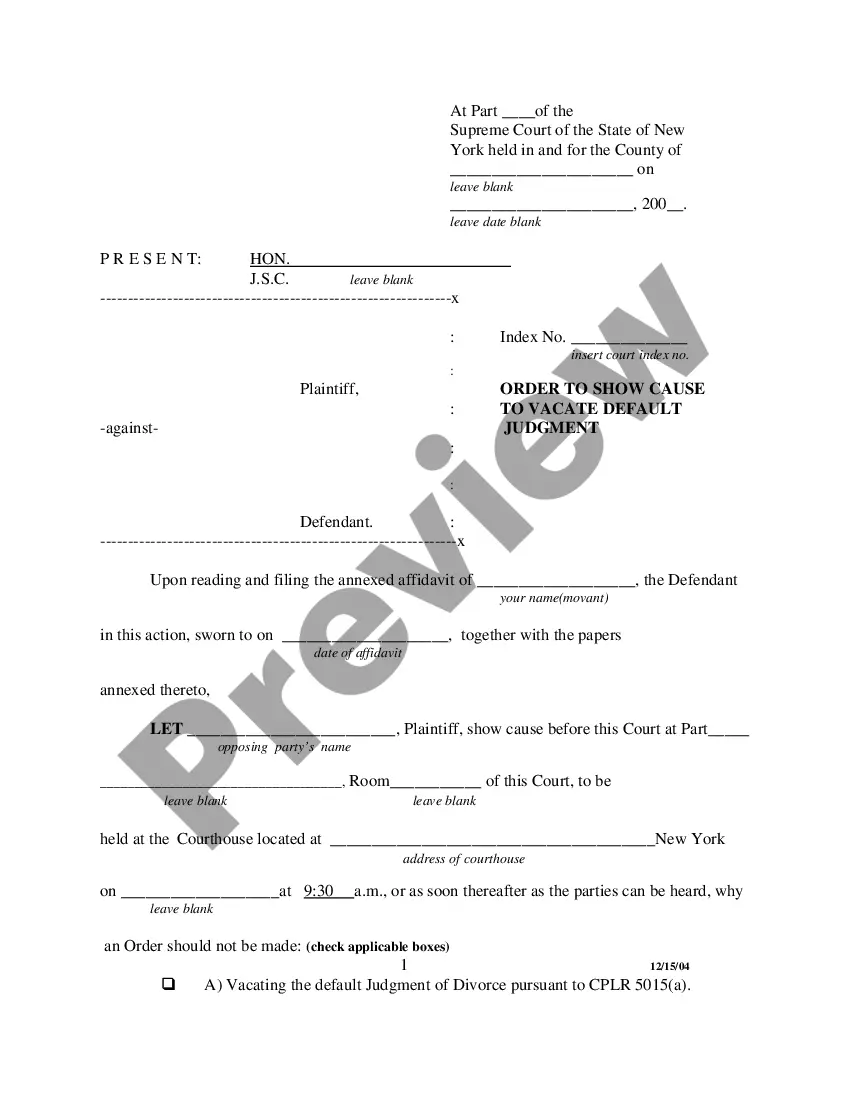
Connecticut Decree Allowing Appeal from Probate
What this document covers
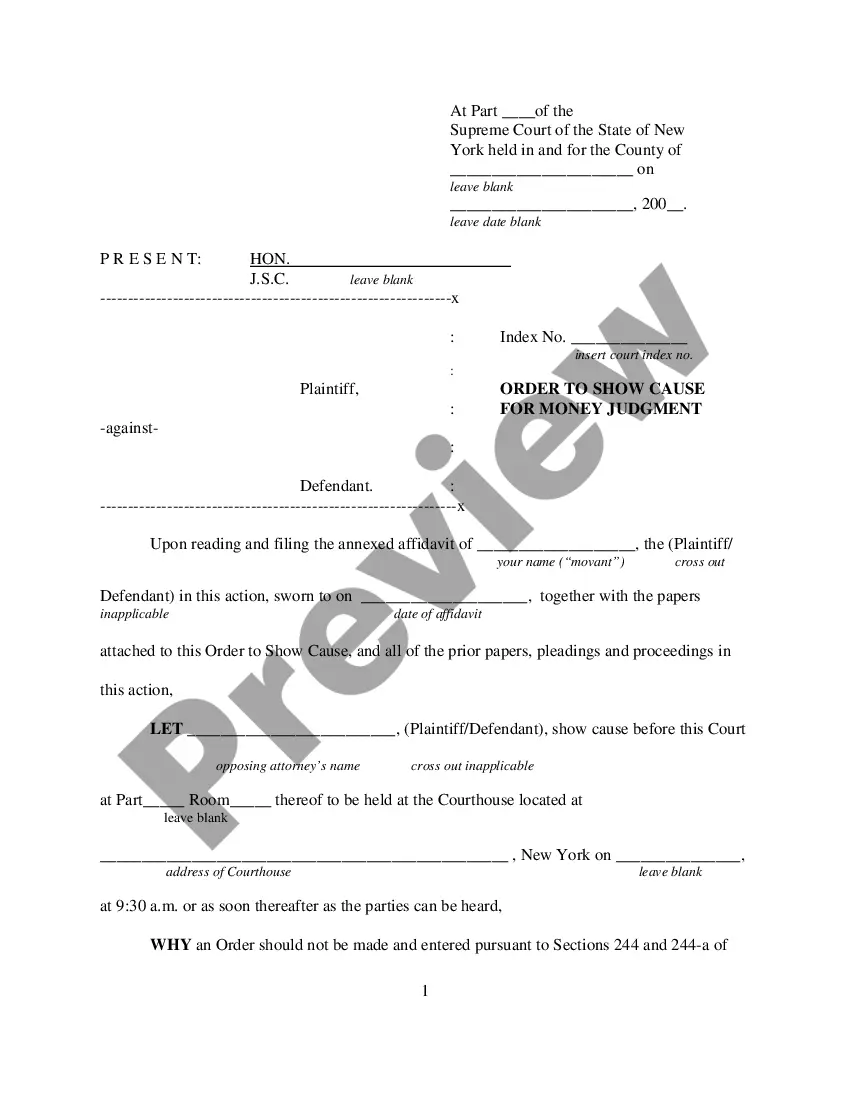
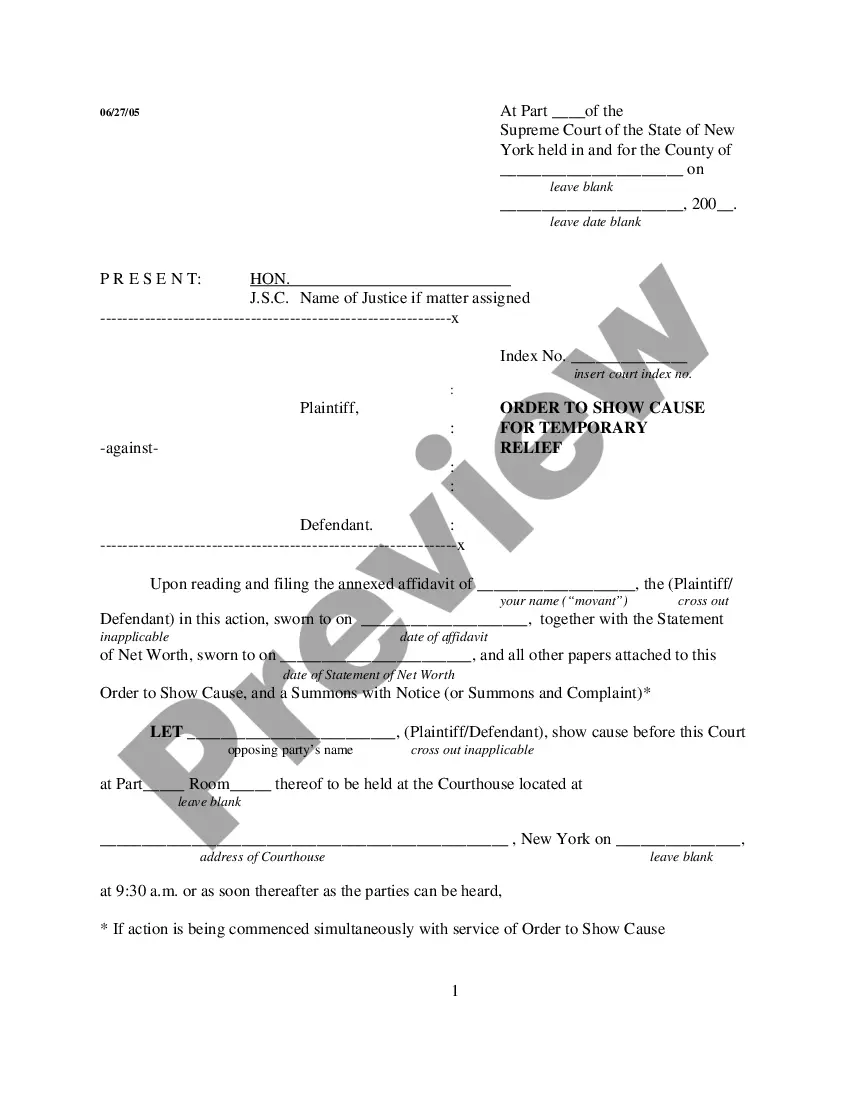
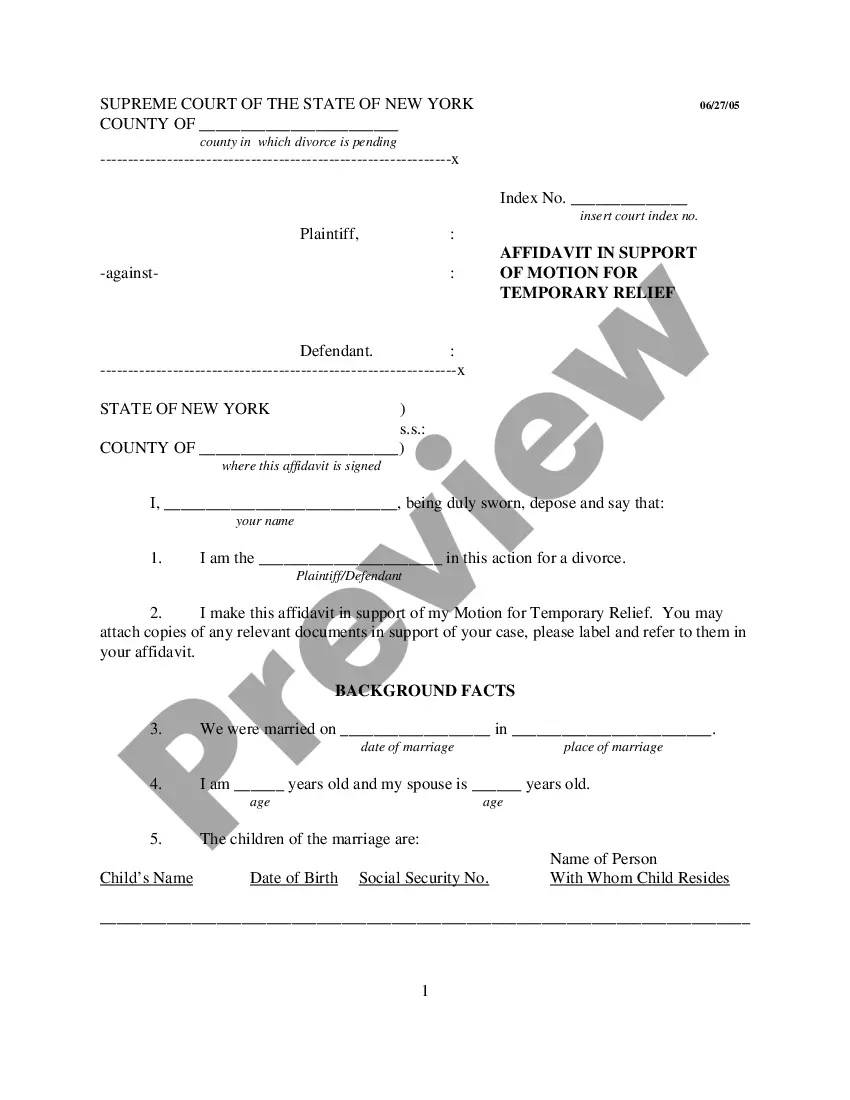
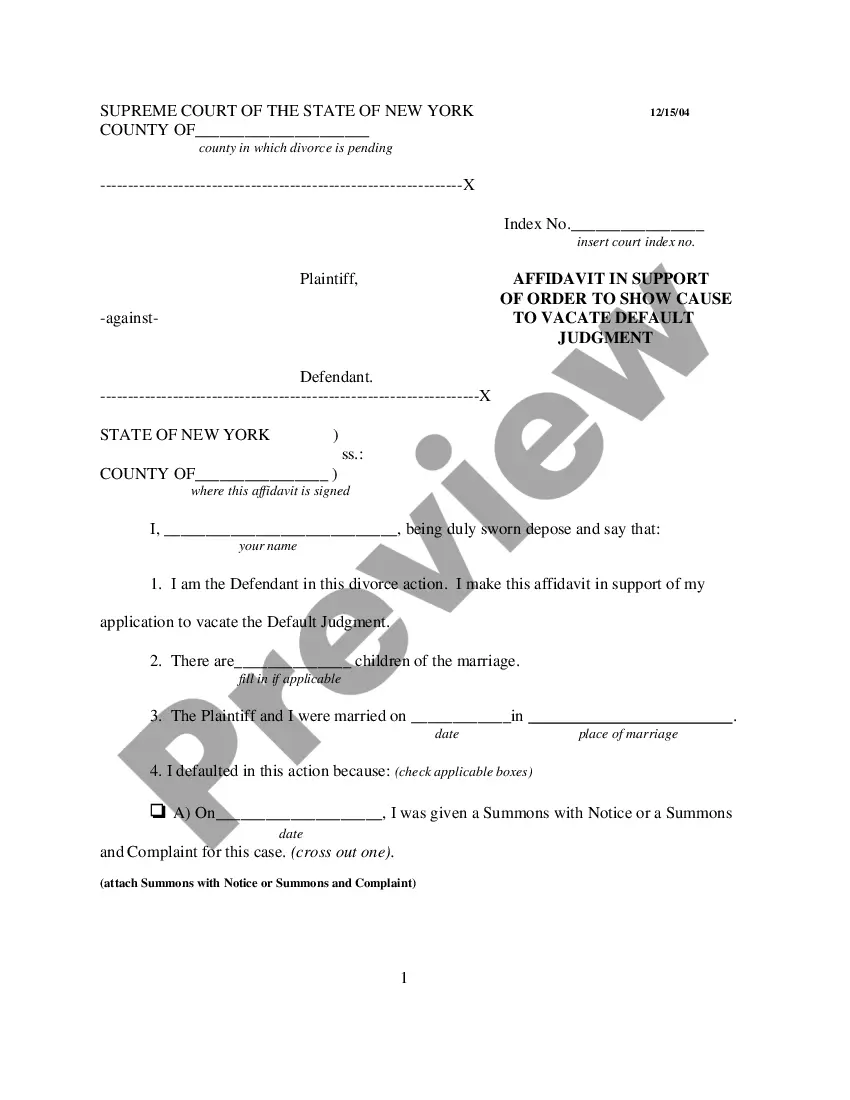
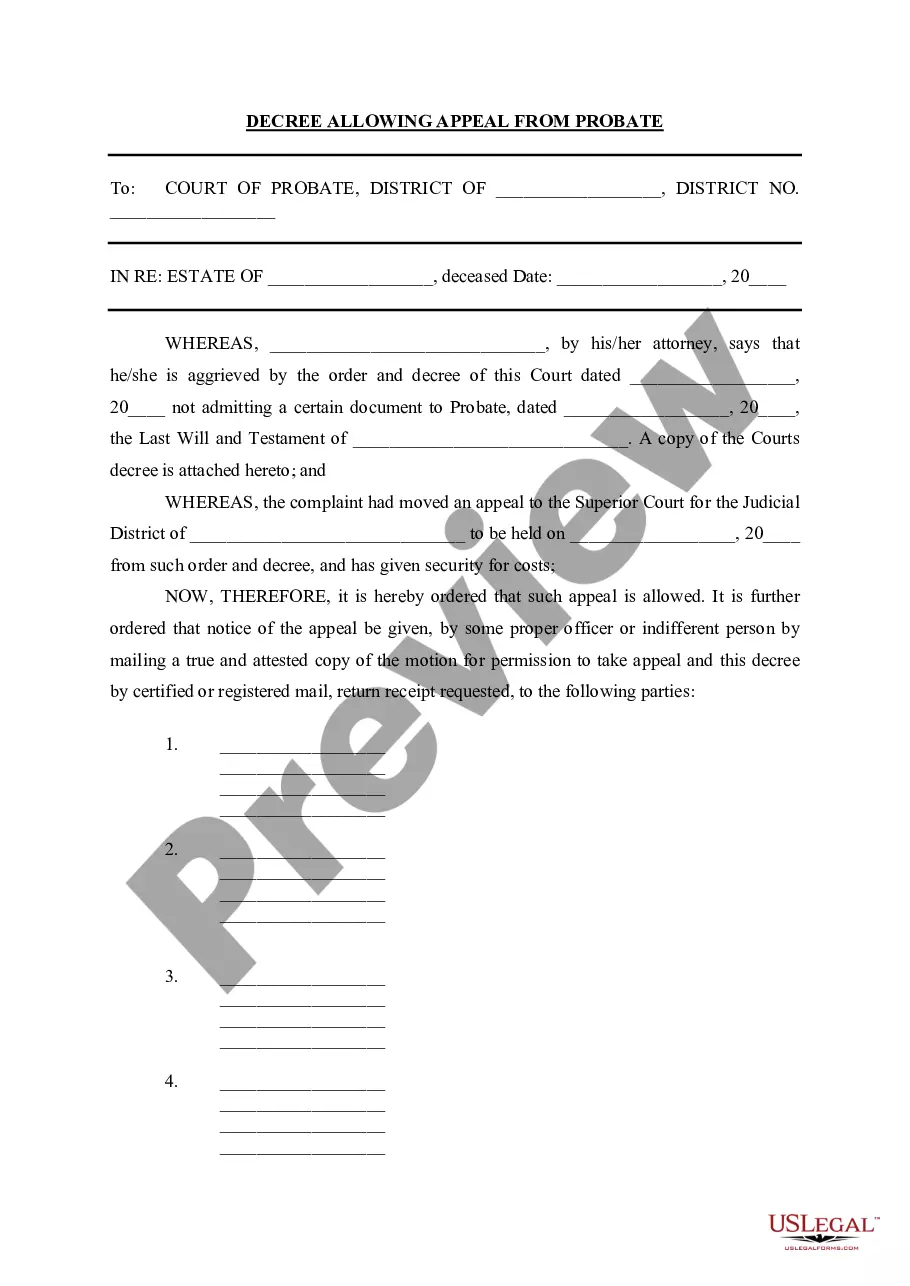
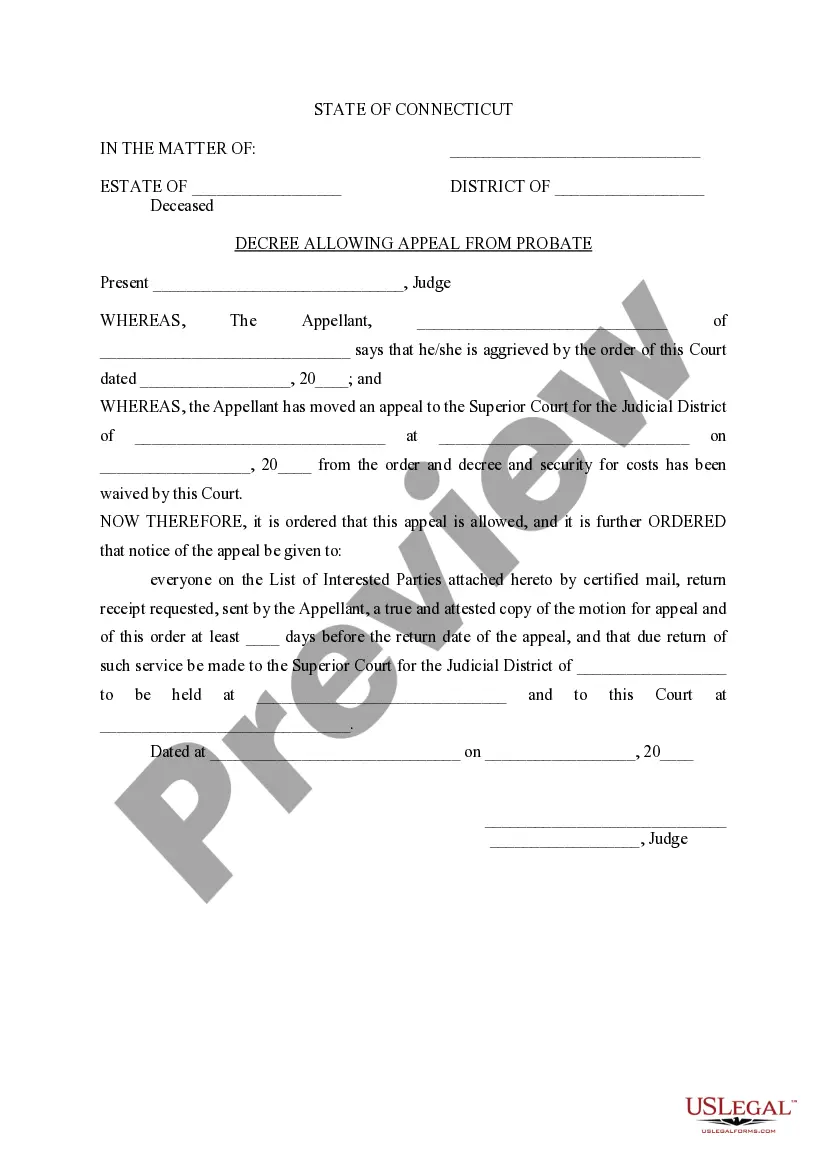
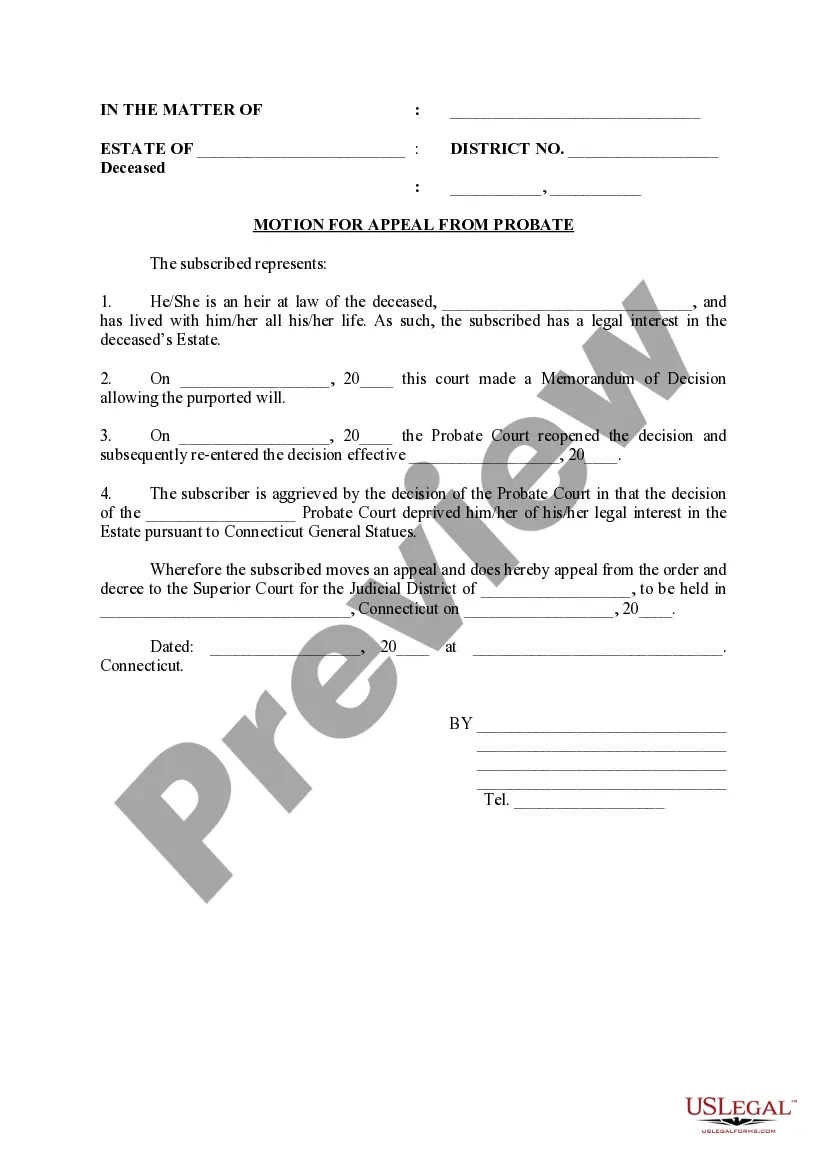
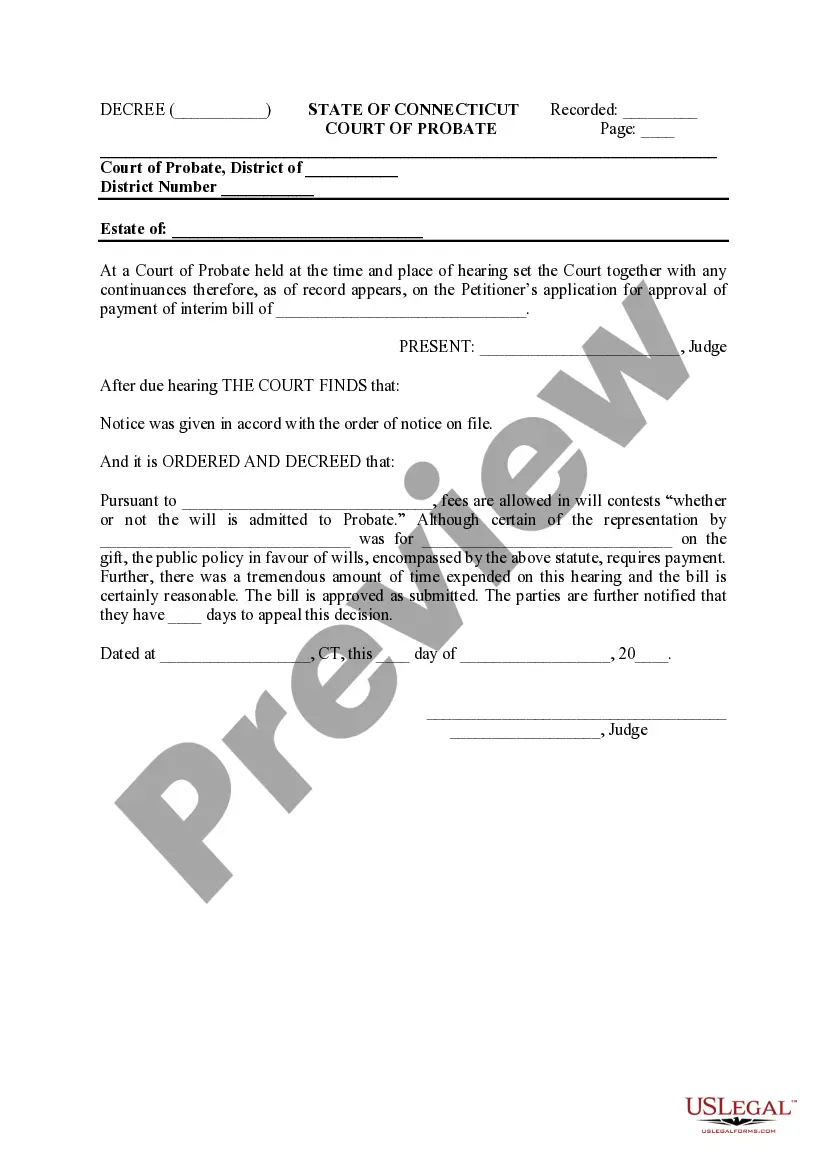
The Decree Allowing Appeal from Probate is a legal document that enables a party to request a review of a probate court's decision by a higher court. This form is essential when an individual believes that an error occurred in a probate judgement, such as the refusal to admit a last will and testament. Unlike other probate forms, this decree specifically facilitates the appeal process, ensuring that all necessary parties are notified and that the appeal is formally recognized by the court.
Key components of this form
- The court information and district where the probate case is filed.
- Details about the estate and the deceased individual.
- Specific allegations regarding the aggrievement caused by the probate court's order.
- Information about the appeal, including dates and the judicial district where it will be held.
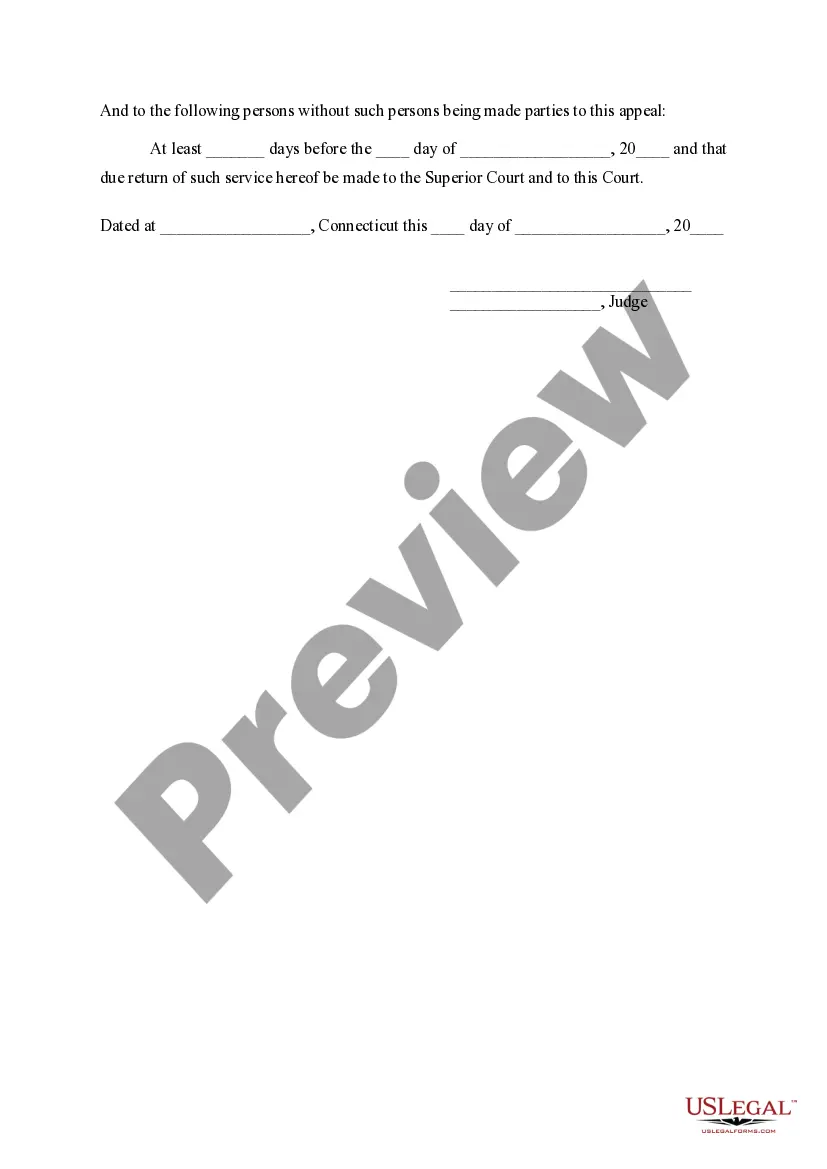
- Notification requirements for all parties involved in the appeal process.
Situations where this form applies
This form should be used when a party wishes to contest a decision made by a probate court. It is often necessary in cases where the court has rejected a will or other important document, and the party feels that the decision was unjust or based on incorrect legal interpretations. Utilizing this form is crucial to initiate the appeal process properly and ensure that the concerns are addressed in a higher court.
Who can use this document
This form is intended for individuals or heirs who have standing in a probate case and feel aggrieved by a ruling made by a probate court. It is generally used by:
- Executors or personal representatives of an estate.
- Beneficiaries of a will or interested parties in the estate.
- Individuals contesting the validity of a will or the distribution of assets.
Completing this form step by step
- Fill in the court and district information at the top of the form.
- Provide details about the estate and the deceased including their names and dates.
- Clearly state the reasons for the appeal and reference the specific decree being contested.
- List all parties who need to be notified of the appeal in accordance with court rules.
- Sign and date the form in the designated areas.
Does this document require notarization?
This form does not typically require notarization unless specified by local law. However, it is essential to check with the specific jurisdiction's requirements to ensure compliance.
Get your form ready online
Our built-in tools help you complete, sign, share, and store your documents in one place.
Make edits, fill in missing information, and update formatting in US Legal Forms—just like you would in MS Word.
Download a copy, print it, send it by email, or mail it via USPS—whatever works best for your next step.
Sign and collect signatures with our SignNow integration. Send to multiple recipients, set reminders, and more. Go Premium to unlock E-Sign.
If this form requires notarization, complete it online through a secure video call—no need to meet a notary in person or wait for an appointment.
We protect your documents and personal data by following strict security and privacy standards.

Make edits, fill in missing information, and update formatting in US Legal Forms—just like you would in MS Word.

Download a copy, print it, send it by email, or mail it via USPS—whatever works best for your next step.

Sign and collect signatures with our SignNow integration. Send to multiple recipients, set reminders, and more. Go Premium to unlock E-Sign.

If this form requires notarization, complete it online through a secure video call—no need to meet a notary in person or wait for an appointment.

We protect your documents and personal data by following strict security and privacy standards.
Common mistakes
- Failing to include all necessary parties for notification.
- Not adhering to the required timeframes for filing the appeal.
- Neglecting to provide sufficient details regarding the grounds for the appeal.
- Forgetting to sign and date the form before submission.
Advantages of online completion
- Convenient access to legal forms whenever needed.
- Edit and personalize the form as required for your situation.
- Reliable templates vetted by licensed attorneys.
- Easy download and printing for immediate use.
Legal use & context
- The form must be filled out accurately to ensure that the appeal is valid.
- Failure to follow procedural rules may result in dismissal of the appeal.
- This decree establishes a formal record of the appeal, which is necessary for further proceedings in a higher court.
Summary of main points
- The Decree Allowing Appeal from Probate is necessary for contesting probate court decisions.
- Accurate and timely completion of the form is crucial for a successful appeal.
- Proper notification of all concerned parties is a key requirement.
Looking for another form?
Form popularity
FAQ
Probate rule 30.12 in Connecticut discusses the procedures for appealing a probate court decision. This rule sets forth guidelines on how individuals can challenge a ruling that affects their interests. Familiarity with the Connecticut Decree Allowing Appeal from Probate can empower you to take appropriate action if you find yourself needing to appeal a probate decision.
In Connecticut, an executor typically has 18 months to settle an estate, although this period can vary based on specific circumstances. It is important for the executor to manage the estate efficiently to minimize delays for beneficiaries. Knowledge of the Connecticut Decree Allowing Appeal from Probate can assist in understanding your rights and responsibilities throughout this process.
Certain assets avoid the probate process in Connecticut, such as life insurance policies, retirement accounts, and assets held in trust. These assets pass directly to designated beneficiaries, saving time and unnecessary legal complications. Understanding this can help you effectively plan your estate and optimize it according to the Connecticut Decree Allowing Appeal from Probate.
Yes, you can appeal a probate decision in Connecticut under specific circumstances. Generally, the Connecticut Decree Allowing Appeal from Probate outlines the process and requirements for filing an appeal. It is crucial to be aware of the deadlines and procedural rules to ensure your appeal is valid and properly submitted.
Probate rule 30.6 in Connecticut allows certain orders made by a probate court to be appealed. This rule is essential for ensuring that individuals can challenge decisions that may affect their rights or interests. By understanding the Connecticut Decree Allowing Appeal from Probate, you can navigate your legal options if you believe a probate decision is unjust.
The duration of an appeal in Connecticut can vary significantly depending on several factors. Generally, a Connecticut Decree Allowing Appeal from Probate may take several months to process, but complexities in the case can extend this timeframe. Court schedules, the nature of the appeal, and the necessary documentation all play critical roles in determining how long it will take. Therefore, staying engaged with your legal representative throughout the process is essential to ensure you understand each step.
To appeal a probate decision in Connecticut, you must file a notice of appeal with the appropriate probate court. This notice should include grounds for the appeal and any required documentation. It's wise to review the court's rules carefully, as each step is critical for a successful appeal. Engage with the concept of a Connecticut Decree Allowing Appeal from Probate to navigate this process confidently.
Joint bank accounts typically do not go through probate in Connecticut. When one account holder passes away, the account generally transfers directly to the surviving holder, bypassing the probate process. This is crucial for preserving assets and ensuring a smooth transition. However, understanding how the Connecticut Decree Allowing Appeal from Probate might affect contested joint accounts is essential.
Rule 30.12 in Connecticut Probate Court pertains to the appeals process from the court's decision. This rule outlines the procedure for filing an appeal, ensuring that individuals understand their rights and the necessary steps to challenge a ruling. Familiarizing yourself with this rule can help if you are considering a Connecticut Decree Allowing Appeal from Probate.
Not all estates in Connecticut must go through probate. For instance, if an estate's total value falls below a set threshold or if assets are held in a joint account or a trust, probate may not be necessary. It's essential to understand the specific circumstances of each estate. Consulting legal resources can clarify how a Connecticut Decree Allowing Appeal from Probate might apply.