Colorado Last Will and Testament for a Domestic Partner with No Children
About this form
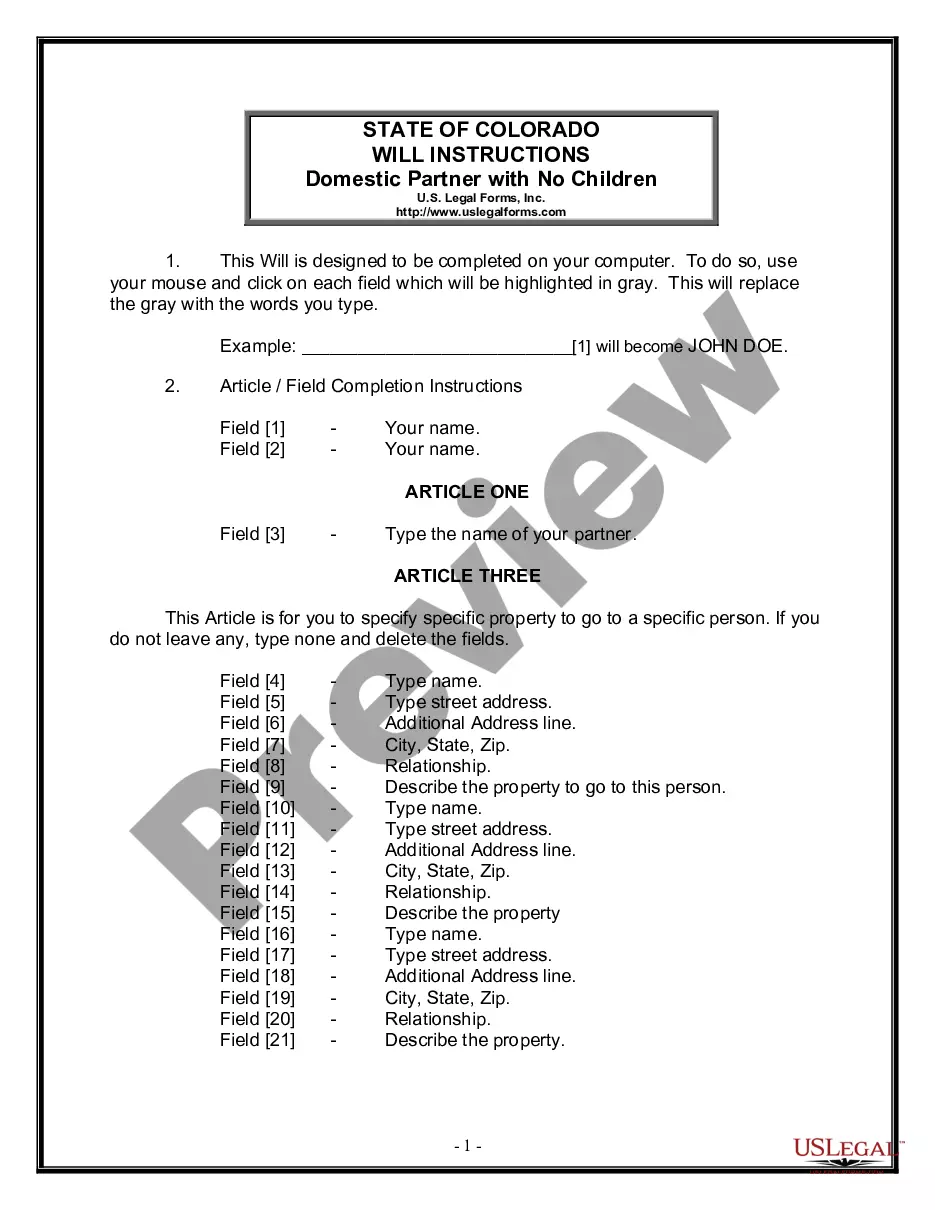
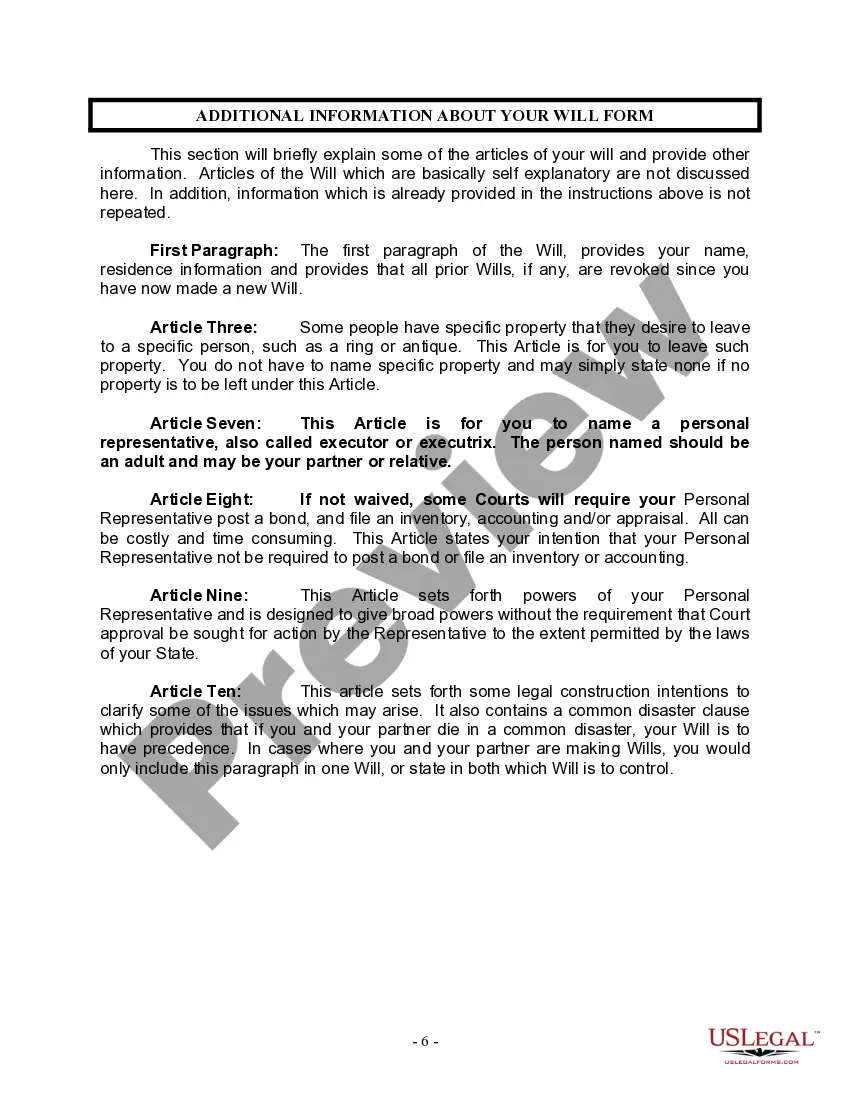
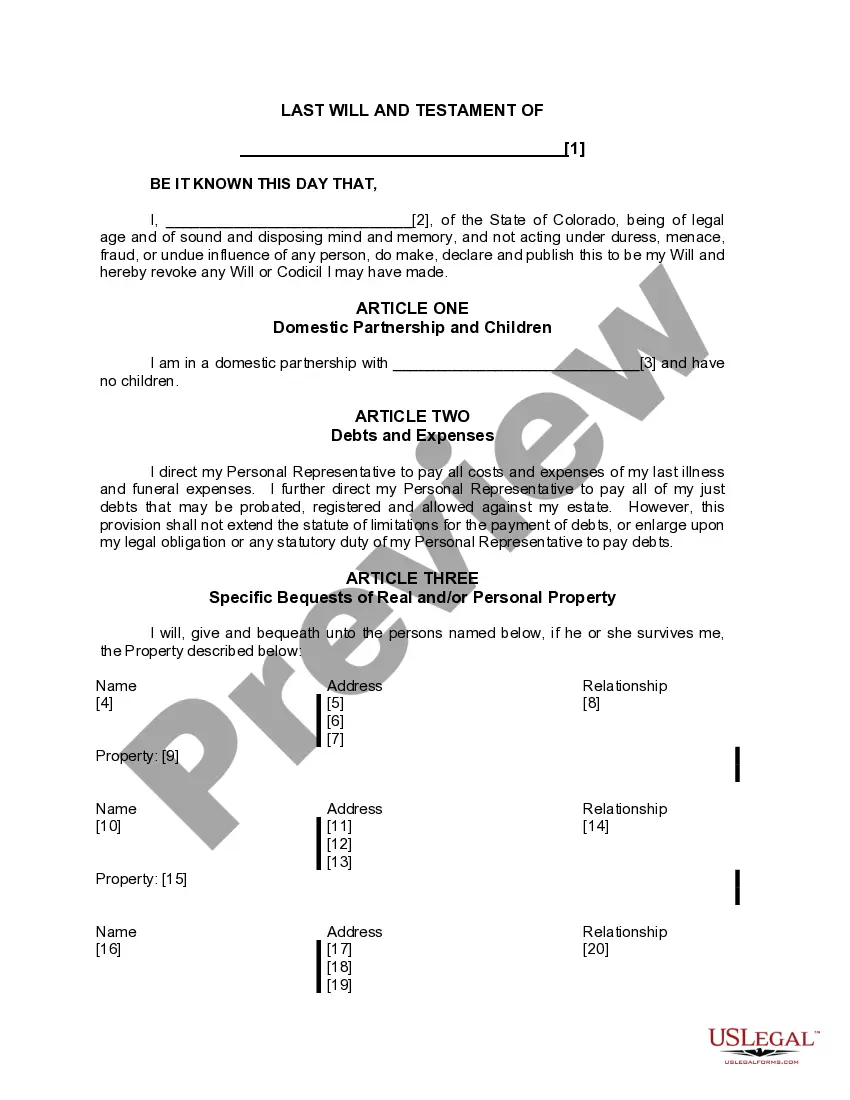
The Last Will and Testament for a Domestic Partner with No Children is a legal document that outlines your wishes regarding the distribution of your property after your death. This form specifically caters to individuals in domestic partnerships without children, allowing them to designate their partner as the primary beneficiary and appoint an executor to manage their estate. Unlike other wills that may include children or multiple beneficiaries, this will focuses solely on the domestic partner relationship.
What’s included in this form
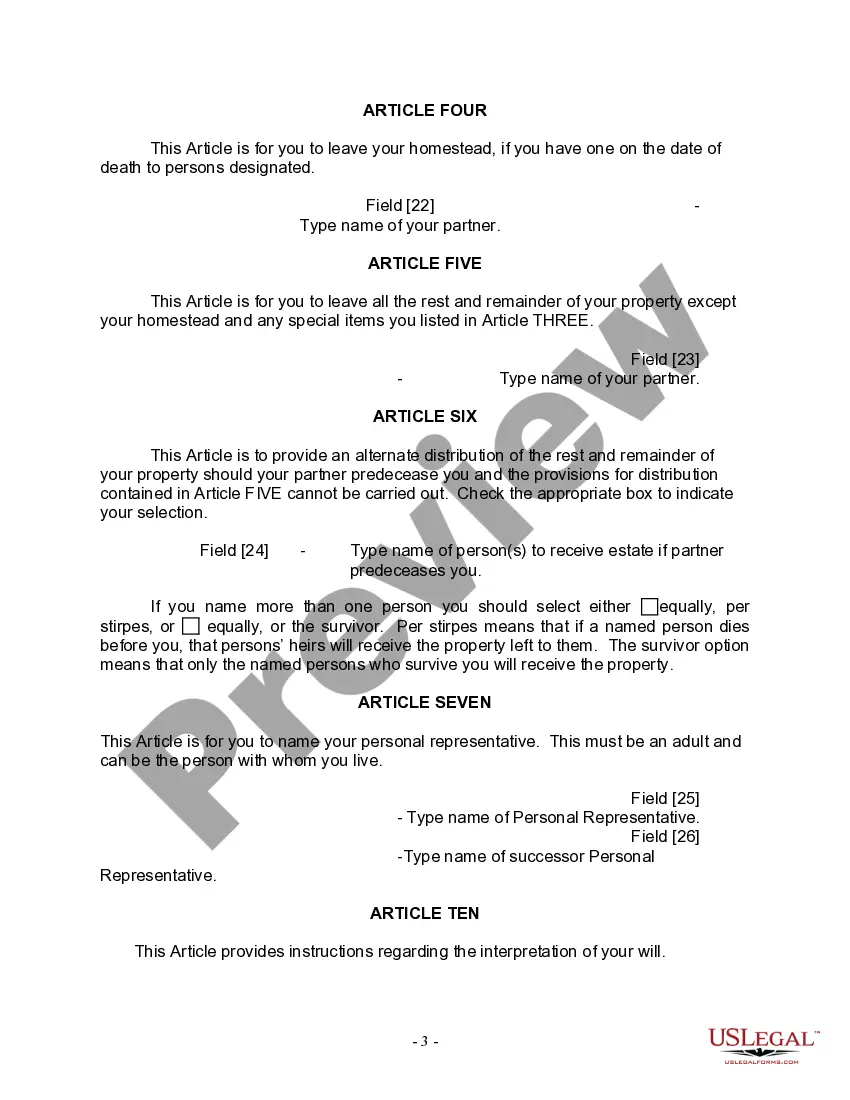
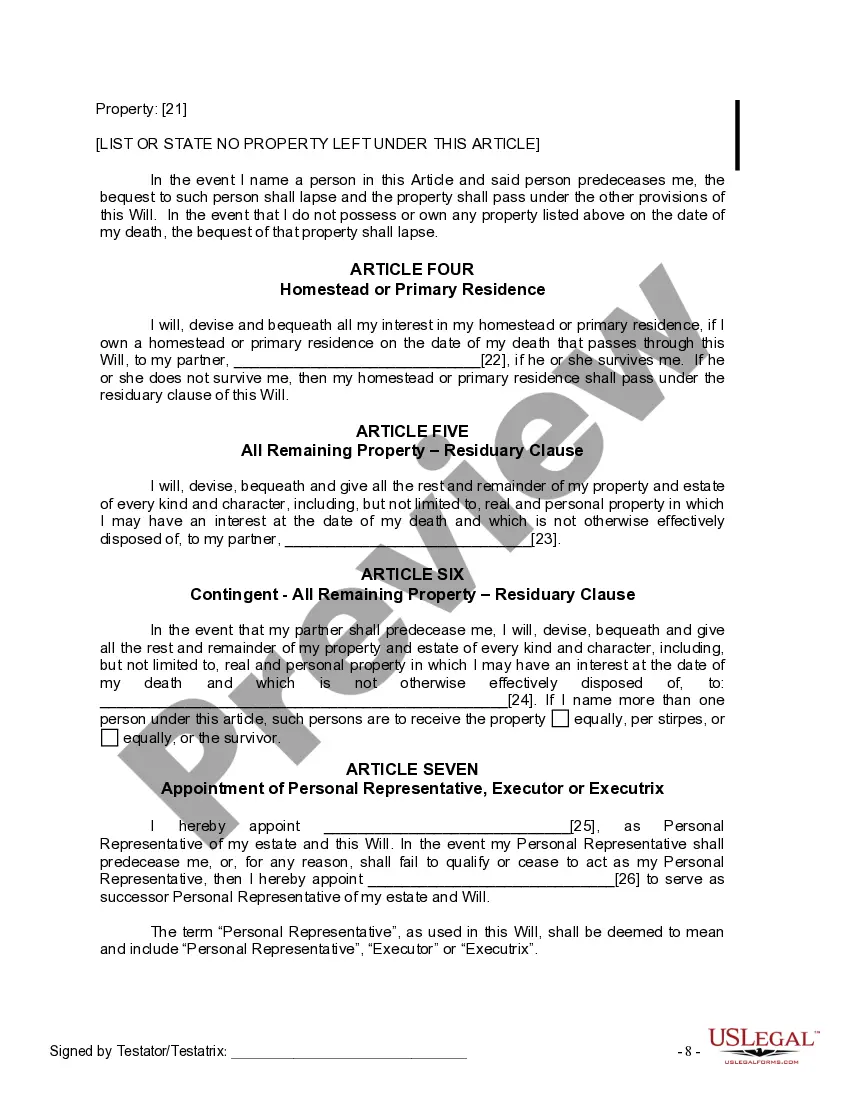
- Personal representative appointment: Designate who will manage your estate.
- Asset distribution: Specify how your property, including specific gifts and your homestead, will be allocated.
- Contingent beneficiaries: Outline who receives your estate if your partner predeceases you.
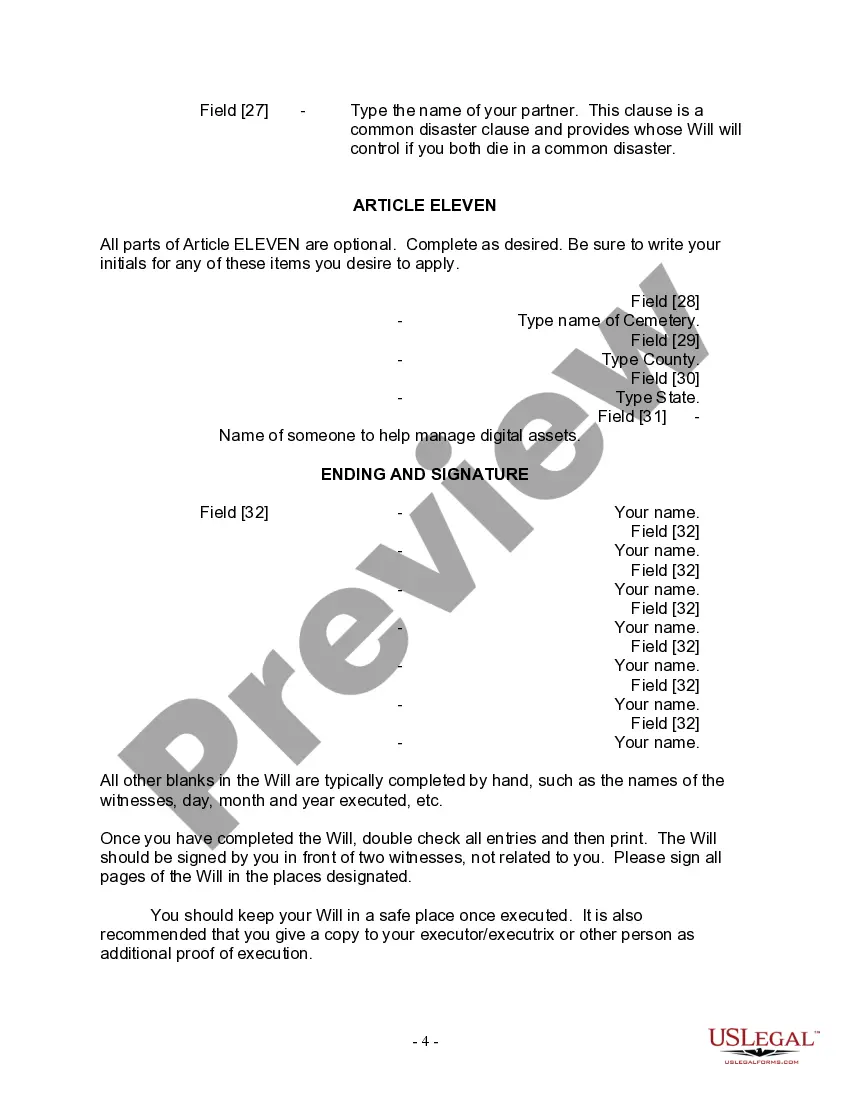
- Witness requirements: Legal requirements for signing the will in the presence of witnesses.
- Self-proving affidavit: Option to simplify the probate process.




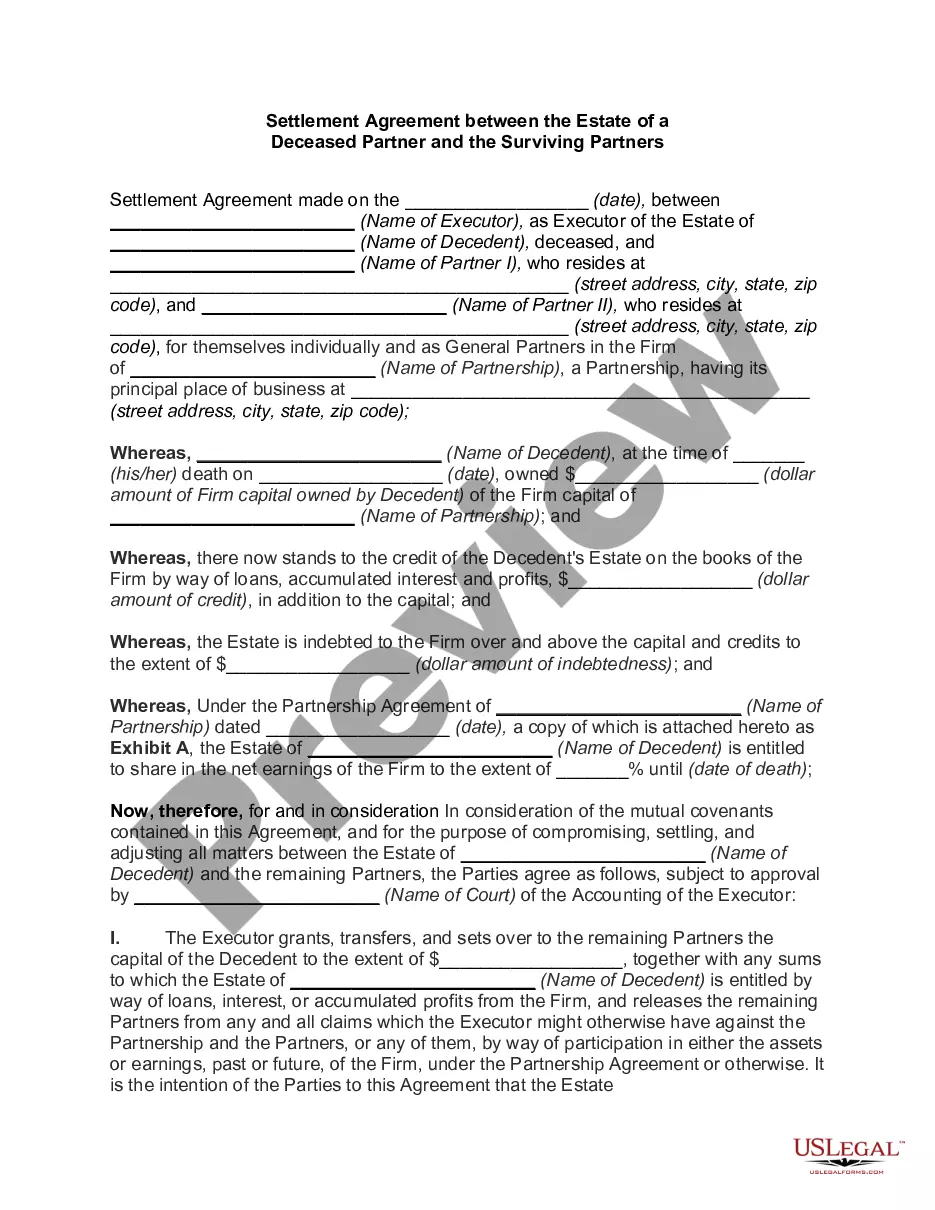
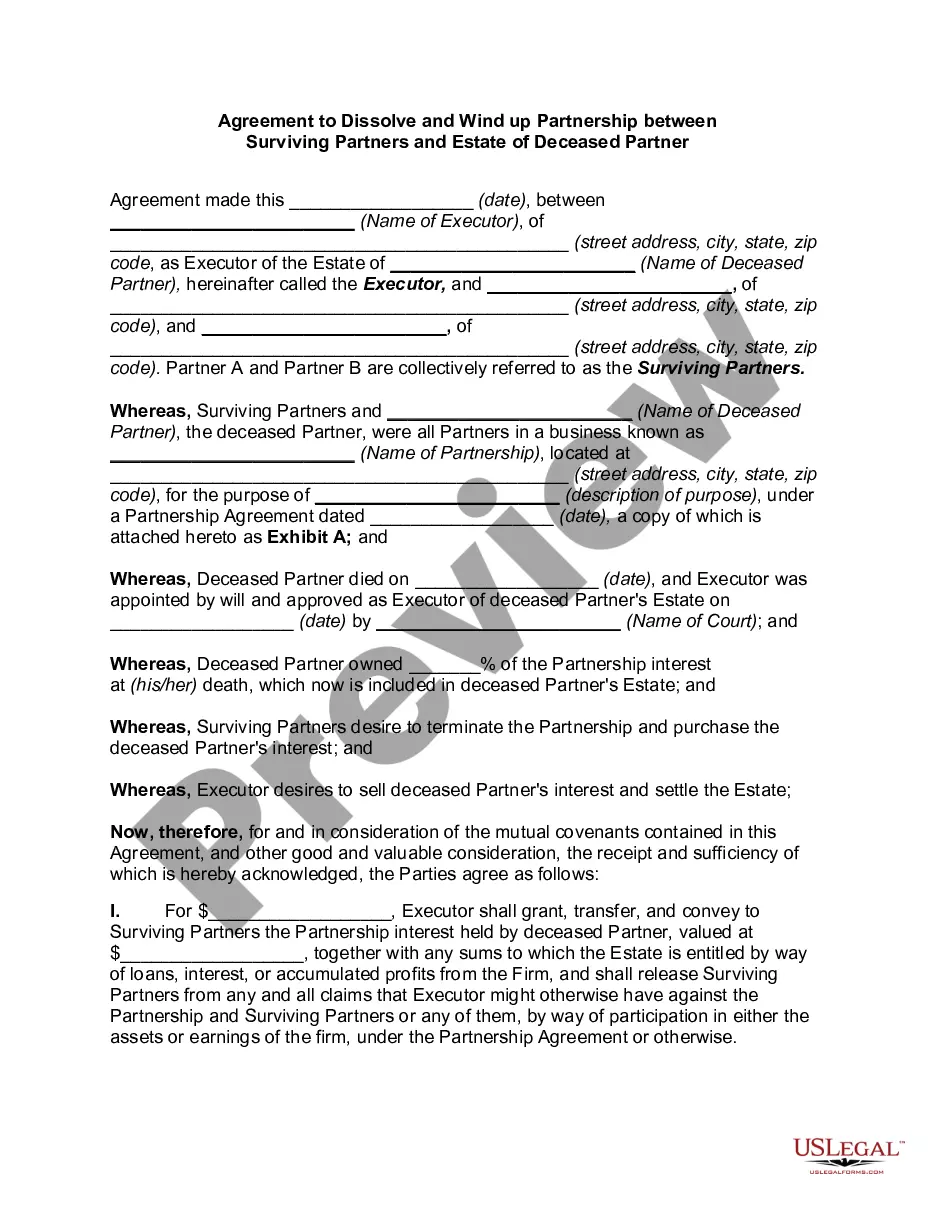


Common use cases
This form is suitable when you want to ensure your domestic partner receives your assets upon your passing, especially if you have no children. It is beneficial for anyone wishing to clarify their desires regarding asset distribution and to appoint a trusted individual to manage their estate, minimizing disputes among surviving family members or friends. If you have specific property to leave to your partner or others, this will allows for such designations.
Who can use this document
- Individuals in domestic partnerships without children.
- Persons looking to ensure their partner is the main beneficiary of their estate.
- Those who want to designate a personal representative for their estate management.
- Anyone who wishes to avoid intestacy laws governing asset distribution in the absence of a will.
Steps to complete this form
- Enter your name and residential information in the specified sections.
- Designate your partnerâs name as the primary beneficiary.
- Detail any specific property you wish to bequeath to your partner or others.
- Choose your personal representative and a successor if needed.
- Sign in the presence of two witnesses who are not mentioned in your will.
Is notarization required?
Yes, this form must be notarized to be legally valid. A notary public needs to sign the will if your stateâs law requires notarization, particularly if it includes a self-proving affidavit. US Legal Forms offers an integrated online notarization service to simplify this process, providing secure video calls with a notary 24/7.
Get your form ready online
Our built-in tools help you complete, sign, share, and store your documents in one place.
Make edits, fill in missing information, and update formatting in US Legal Forms—just like you would in MS Word.
Download a copy, print it, send it by email, or mail it via USPS—whatever works best for your next step.
Sign and collect signatures with our SignNow integration. Send to multiple recipients, set reminders, and more. Go Premium to unlock E-Sign.
If this form requires notarization, complete it online through a secure video call—no need to meet a notary in person or wait for an appointment.
We protect your documents and personal data by following strict security and privacy standards.

Make edits, fill in missing information, and update formatting in US Legal Forms—just like you would in MS Word.

Download a copy, print it, send it by email, or mail it via USPS—whatever works best for your next step.

Sign and collect signatures with our SignNow integration. Send to multiple recipients, set reminders, and more. Go Premium to unlock E-Sign.

If this form requires notarization, complete it online through a secure video call—no need to meet a notary in person or wait for an appointment.

We protect your documents and personal data by following strict security and privacy standards.
Typical mistakes to avoid
- Failing to have the will signed in front of the required witnesses.
- Not updating the will after significant life changes, such as marriage or separation.
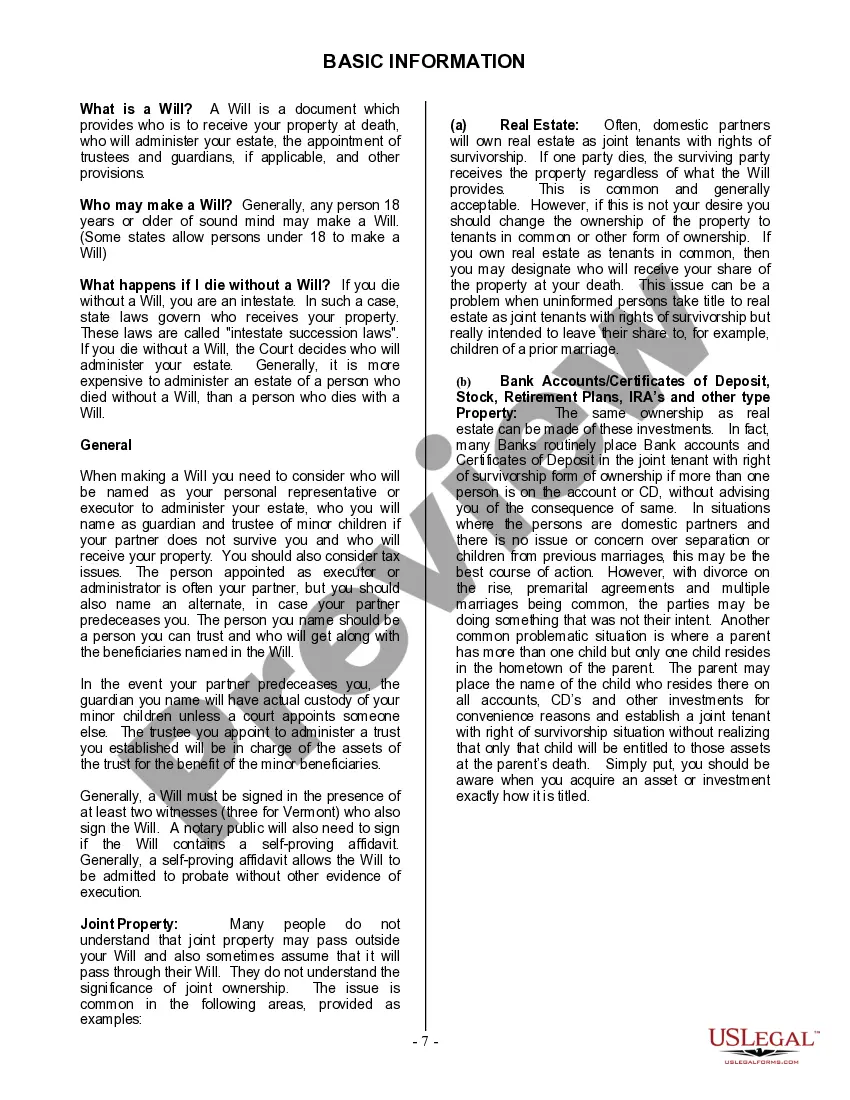
- Assuming joint property is covered by the will, rather than passing outside of it.
Why complete this form online
- Convenience of filling out the form on your computer at your own pace.
- Editability to customize sections according to your specific wishes.
- Designed by licensed attorneys to ensure legal compliance.
Main things to remember
- This will is specifically for domestic partners without children, ensuring that your partner receives your assets.
- It is crucial to follow proper signing and witnessing requirements for validity.
- This form allows for clarity in asset distribution and can prevent disputes among heirs.
Looking for another form?

Form popularity
FAQ
A domestic partnership can offer some level of asset protection, but it is not as comprehensive as marriage. It becomes crucial to establish a Colorado Last Will and Testament for a Domestic Partner with No Children to clearly outline your wishes regarding asset distribution. This legal document helps secure the financial future of your partner and ensures your assets go to the right individuals. Therefore, it is wise to consult with legal resources to navigate these decisions effectively.
A domestic partner as a beneficiary means that your partner receives specific benefits or assets upon your passing. In Colorado, designating your domestic partner as a beneficiary can ensure they inherit your estate, provided you have arranged this through legal documents like a Colorado Last Will and Testament for a Domestic Partner with No Children. It is essential to have these decisions documented clearly to avoid potential disputes. This designation can provide peace of mind regarding your wishes.
You can prove a domestic partnership in Colorado through a legal declaration filed with the state. This document indicates you are in a committed relationship, sharing a home and life together. Additionally, having a Colorado Last Will and Testament for a Domestic Partner with No Children can serve as further proof, showcasing your intention to protect each other's assets. Remember to keep records that highlight shared responsibilities and obligations.
For your girlfriend to be recognized as a domestic partner in Colorado, your relationship must align with state regulations concerning domestic partnerships. These regulations typically require mutual commitment and sharing of a domestic life similar to marriage. If you wish to formalize your relationship and secure legal protections, consider creating a Colorado Last Will and Testament for a Domestic Partner with No Children. This can further clarify your intentions regarding asset distribution.
Yes, a domestic partnership generally affects survivor benefits, but the impact can vary by state. In Colorado, domestic partners may have entitlement to benefits similar to those granted to married couples, but it is crucial to document this through a Colorado Last Will and Testament for a Domestic Partner with No Children. Ensuring all benefits are assigned correctly can prevent complications during difficult times. You should always check specific eligibility requirements for your situation.
One downside of a domestic partnership is that it may not provide the same legal recognition as marriage. This can affect access to benefits like health insurance or social security survivor benefits. Additionally, if a couple does not create a Colorado Last Will and Testament for a Domestic Partner with No Children, their assets might not be allocated as intended. It's essential to understand these limitations when choosing this form of relationship.
For a will to be valid in Colorado, it must be in writing, signed by the individual creating the will, and properly witnessed. Colorado law requires at least two witnesses to sign the will at the same time as the testator. When you are creating your Colorado Last Will and Testament for a Domestic Partner with No Children, ensure that you follow these guidelines for it to be recognized legally.
A married man can make a will without his wife’s knowledge and does not require her signature to draft one. However, it’s important to consider the potential implications for community property rights and family dynamics. In your Colorado Last Will and Testament for a Domestic Partner with No Children, making your intentions clear can help in managing these relationships.
Yes, you can create a will without informing your spouse, as long as you are capable of making legal decisions. However, transparency can prevent future disputes and misunderstandings. If you are developing a Colorado Last Will and Testament for a Domestic Partner with No Children, consider discussing your decisions with your partner for peace of mind.
Several factors determine the validity of a will in Colorado, including the testator’s mental capacity and whether the will is signed correctly. It must be written, signed by the individual, and witnessed as required by law. When creating a Colorado Last Will and Testament for a Domestic Partner with No Children, focusing on these elements can help ensure your wishes are legally upheld.