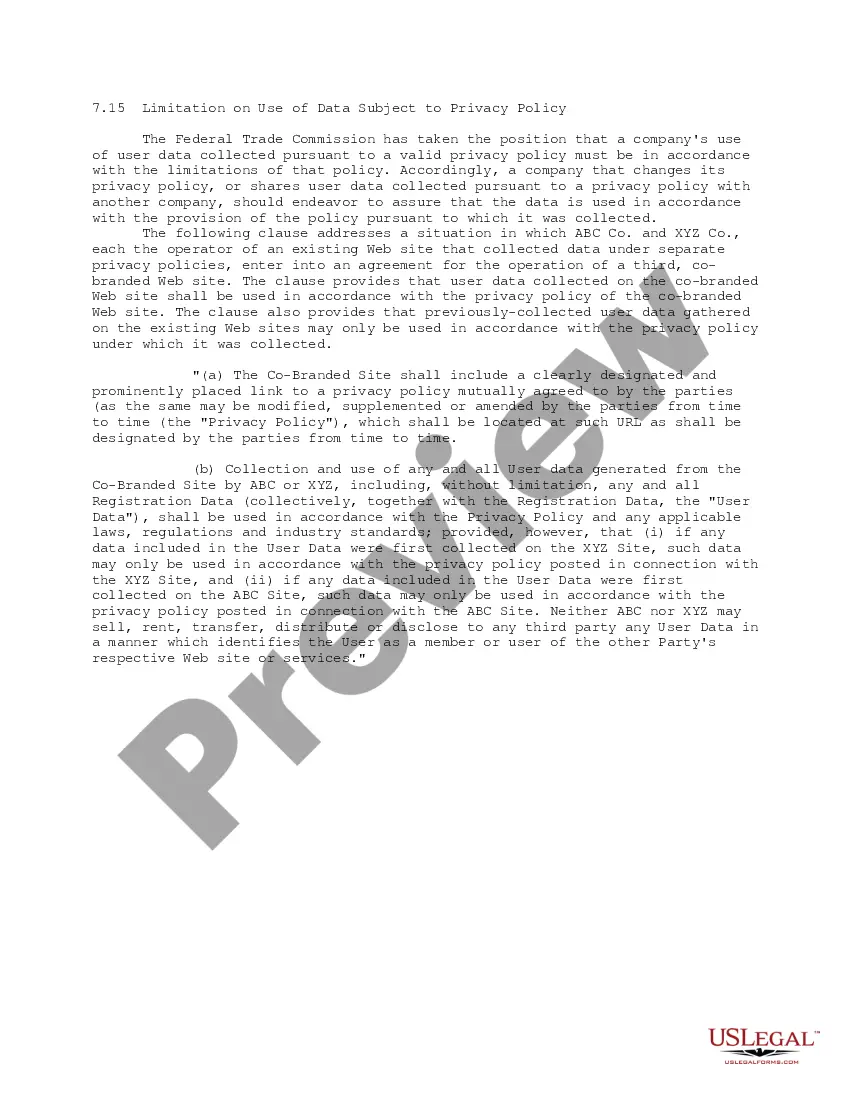
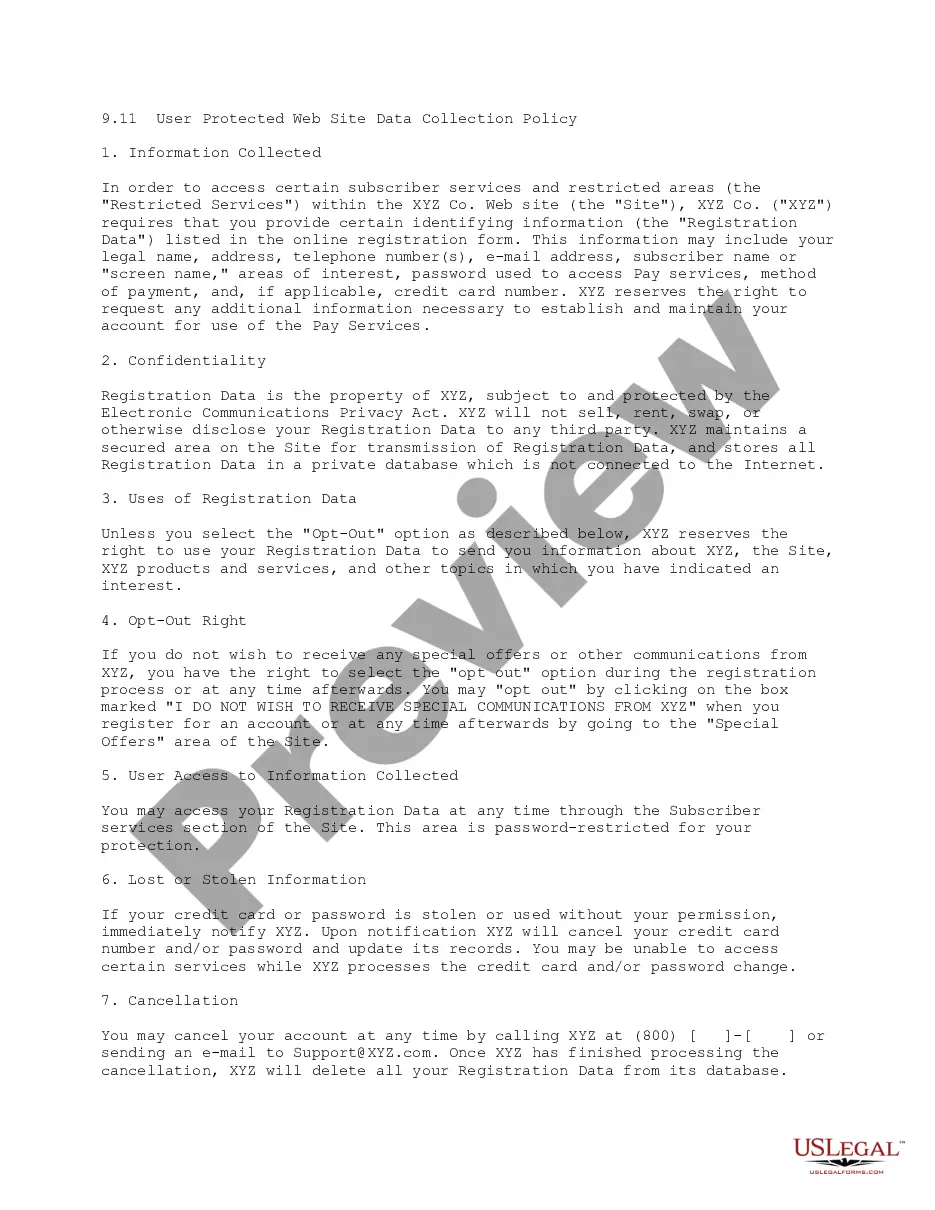
This form is a Limitation on Use of Data Subject to Privacy Policy that enables a company that changes its privacy policy, or shares user data collected pursuant to a privacy policy with another company, to endeavor to assure that the data is used in accordance with the provision of the privacy policy pursuant to which it was collected.
Colorado Limitation on Use of Data Subject to Privacy Policy
Category:
State:
Multi-State
Control #:
US-IP0715
Format:
Word;
PDF;
Rich Text
Instant download
Description

How to fill out Limitation On Use Of Data Subject To Privacy Policy?
Are you in a situation where you require documents for various company or personal activities nearly every business day.
There are numerous legal document templates accessible online, but locating reliable ones isn’t easy.
US Legal Forms offers thousands of form templates, such as the Colorado Limitation on Use of Data Subject to Privacy Policy, designed to comply with federal and state regulations.
If you obtain the correct form, click on Purchase now.
Choose the pricing plan you want, complete the necessary information to create your account, and pay for the transaction using your PayPal or Visa or Mastercard.
- If you are already acquainted with the US Legal Forms website and have an account, simply Log In.
- After that, you can download the Colorado Limitation on Use of Data Subject to Privacy Policy template.
- If you do not have an account and want to start using US Legal Forms, follow these instructions.
- Find the form you require and verify that it is for the correct city/region.
- Use the Review button to examine the form.
- Check the details to make sure you have selected the right form.
- If the form isn’t what you are looking for, utilize the Search field to find the form that meets your needs.
Form popularity
FAQ
Your privacy policy should clearly outline how you collect, use, and share personal data. It must address the Colorado limitation on use of data subject to privacy policy by specifying users' rights and how they can exercise them. Include details about data retention, security measures, and contact information for inquiries. For comprehensive guidance, you might find the resources available on the US Legal Forms platform helpful in drafting a compliant and effective privacy policy.
Certain entities are exempt from the Colorado Privacy Act, including government agencies and certain non-profit organizations. Additionally, businesses that manage personal data under federal regulations may also fall outside this law. It's important to understand these exemptions to ensure compliance with the Colorado limitation on use of data subject to privacy policy. If you’re unsure about your status, consider consulting with legal experts to clarify your obligations.
The Colorado Privacy Act sets forth several key requirements, including providing clear disclosures to consumers and offering options for data access and deletion. Businesses must also implement data protection measures to safeguard personal information in accordance with the Colorado Limitation on Use of Data Subject to Privacy Policy. Ensuring compliance can be simplified with tools and resources from USLegalForms, which can guide you through the necessary steps.
To comply with the Colorado Privacy Act, your business must ensure that you inform users about data collection and its purpose. Implement measures to obtain explicit consent before processing personal data, adhering to the Colorado Limitation on Use of Data Subject to Privacy Policy. Regularly review your practices and consider consulting with experts or using USLegalForms for legal documentation and compliance solutions.
Yes, Colorado has enacted data privacy laws, including the Colorado Privacy Act, which outlines specific requirements for businesses that handle personal data. This law emphasizes the importance of privacy and provides individuals with rights regarding their data. Understanding the Colorado Limitation on Use of Data Subject to Privacy Policy is essential for compliance. Staying informed on these regulations will help you protect both your business and your customers.
Complying with privacy legislation requires a structured approach to data handling and protection. Start by familiarizing yourself with the laws that impact your operations, particularly the Colorado Limitation on Use of Data Subject to Privacy Policy. Implement necessary measures, such as data audits and staff training, to ensure adherence. Consider using platforms like USLegalForms to access templates and legal guidance tailored to your needs.
To comply with privacy regulations, you must first understand the specific laws applicable to your business. Follow best practices for data management, including obtaining consent from data subjects and ensuring transparency in your data usage. Regularly review and update your privacy policy to align with the Colorado Limitation on Use of Data Subject to Privacy Policy. Utilizing resources like USLegalForms can help you navigate the complexities of compliance.
The primary data privacy statute in Colorado is the Colorado Privacy Act (CPA), which outlines regulations for data protection and privacy. This act emphasizes the Colorado Limitation on Use of Data Subject to Privacy Policy, ensuring that personal data is handled with care and respect. Organizations must comply with these regulations to protect consumer rights and maintain trust. For comprehensive guidance on compliance, consider using platforms like uslegalforms to access resources tailored to the CPA.
The Colorado Privacy Act does not provide a private right of action for individuals. Instead, enforcement is handled by the Colorado Attorney General. This means that if you believe your rights under the Colorado Limitation on Use of Data Subject to Privacy Policy have been violated, you must report it to the Attorney General's office. Understanding this framework can help you navigate your rights and responsibilities under the law.