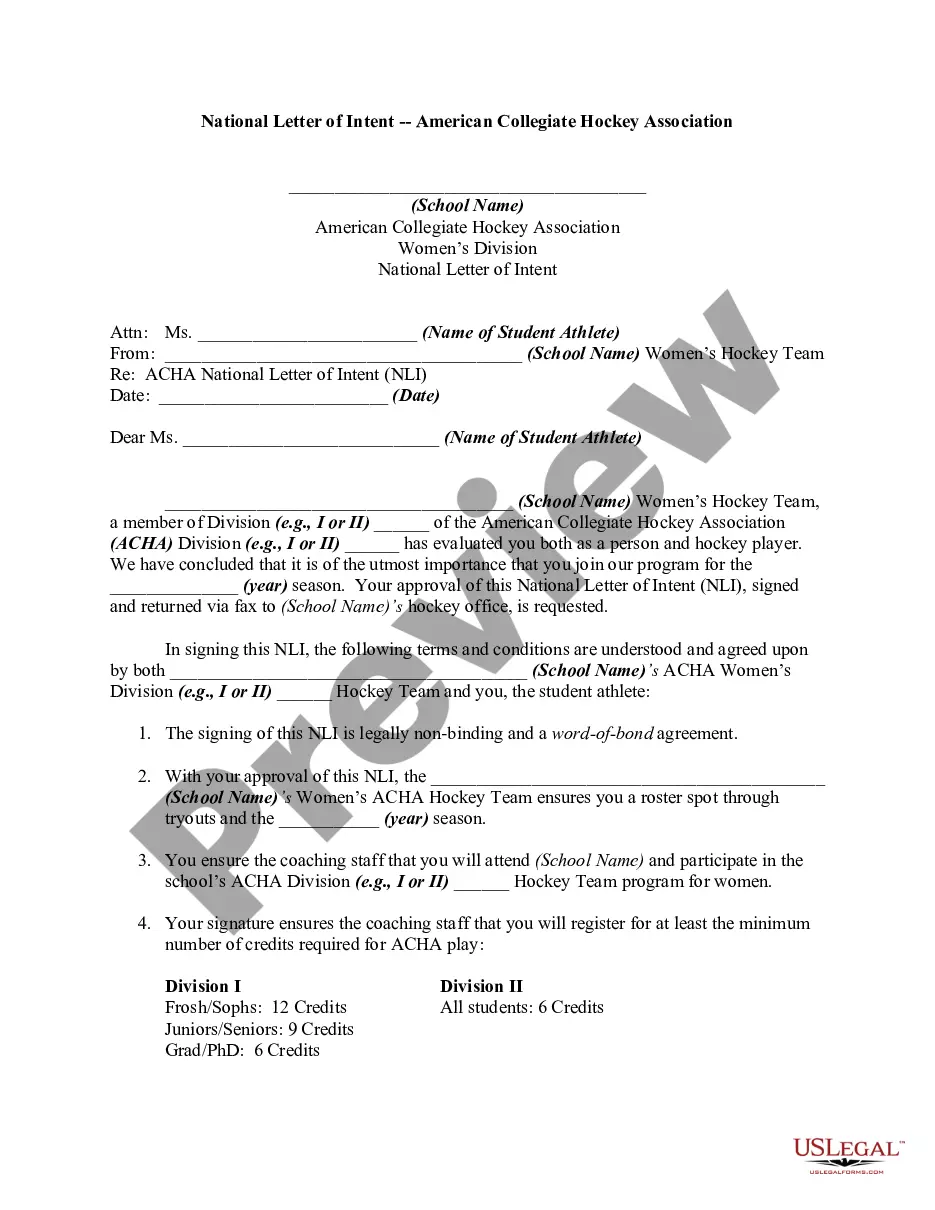
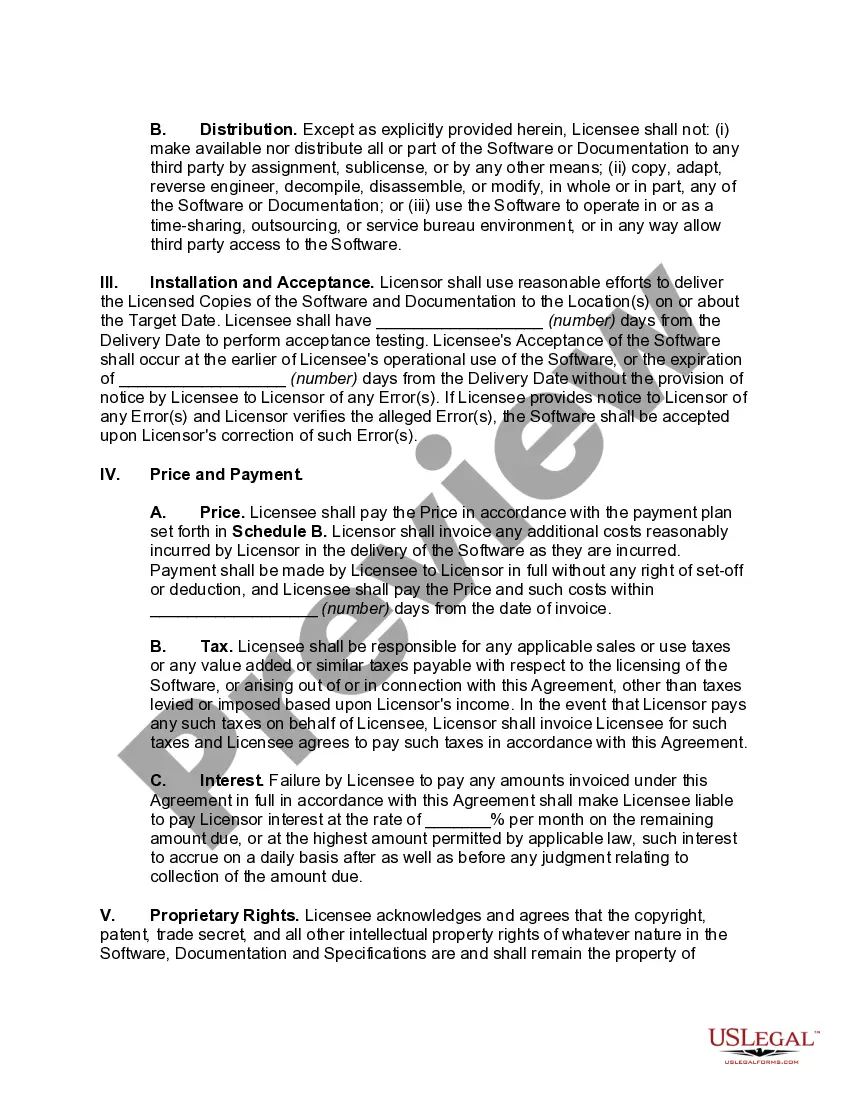
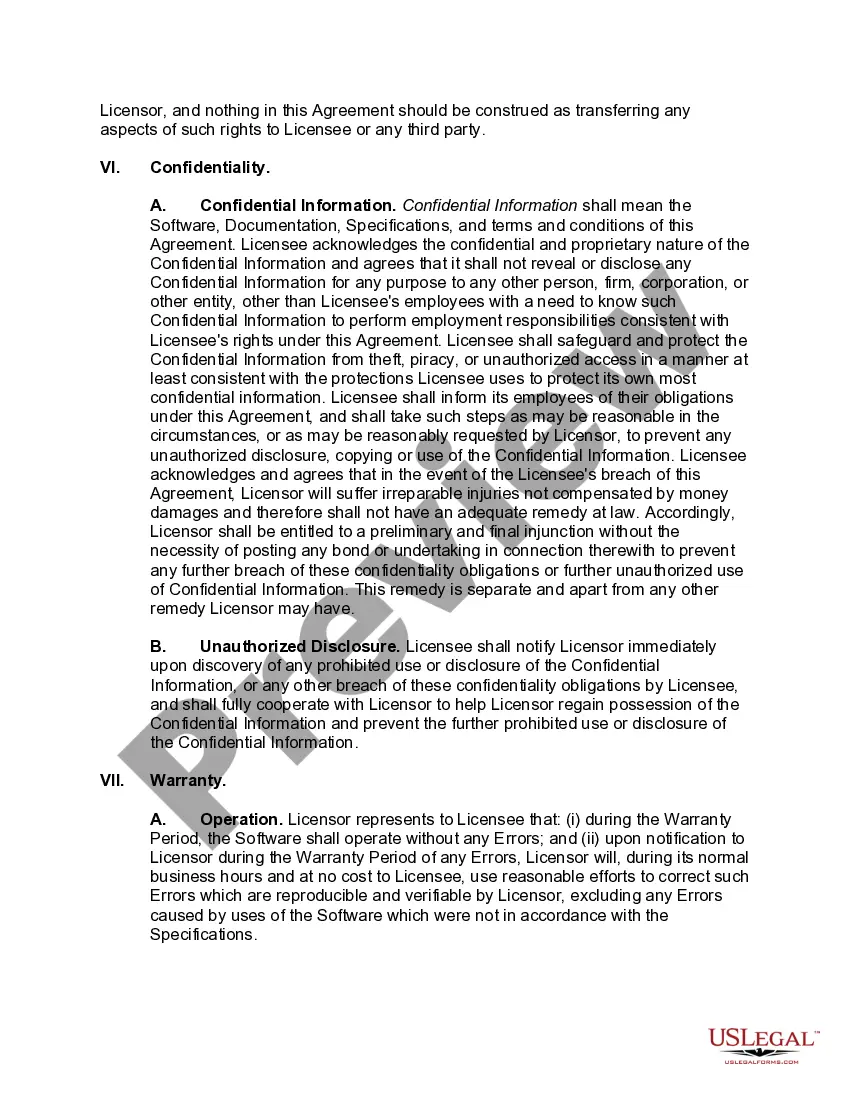
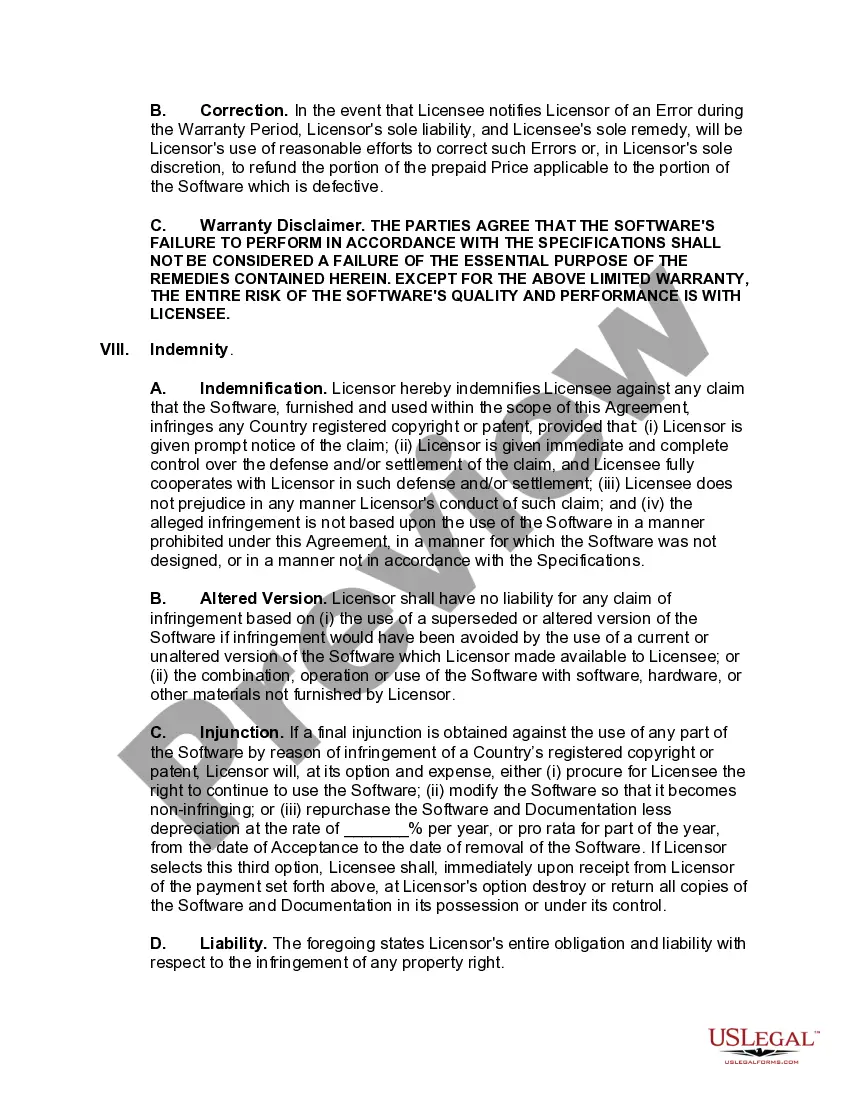
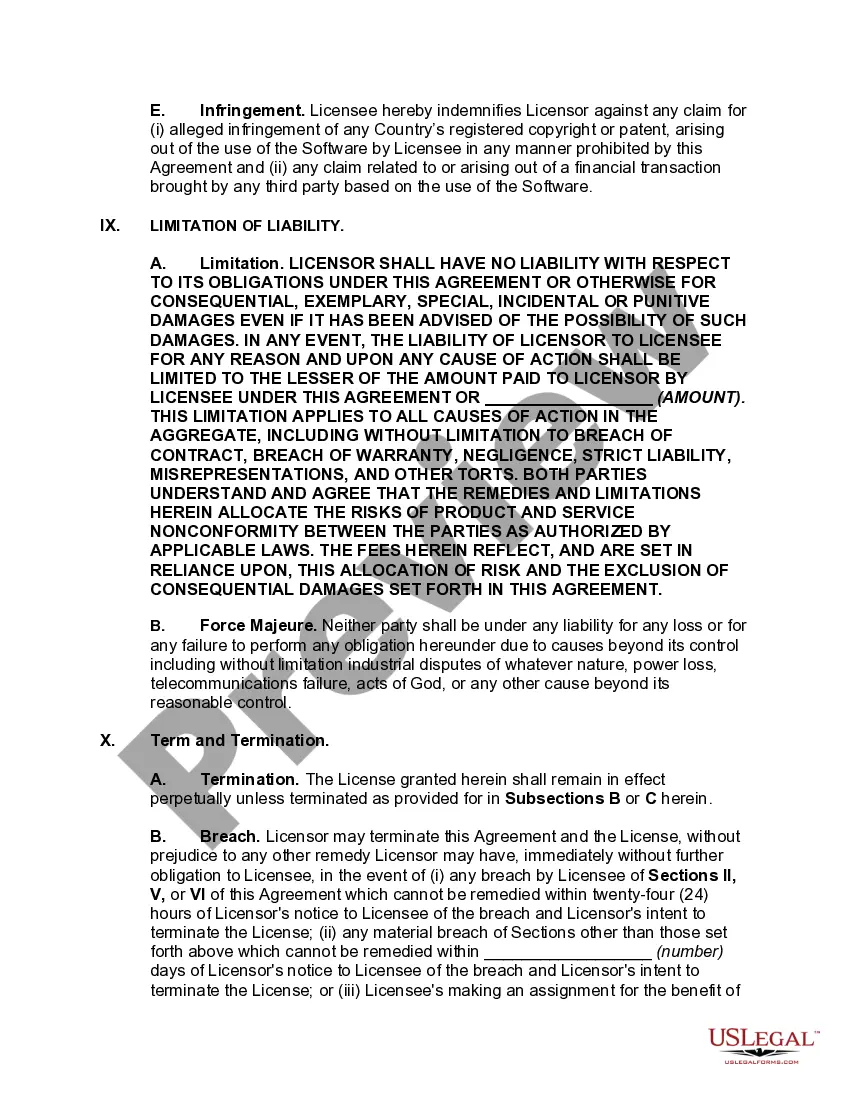
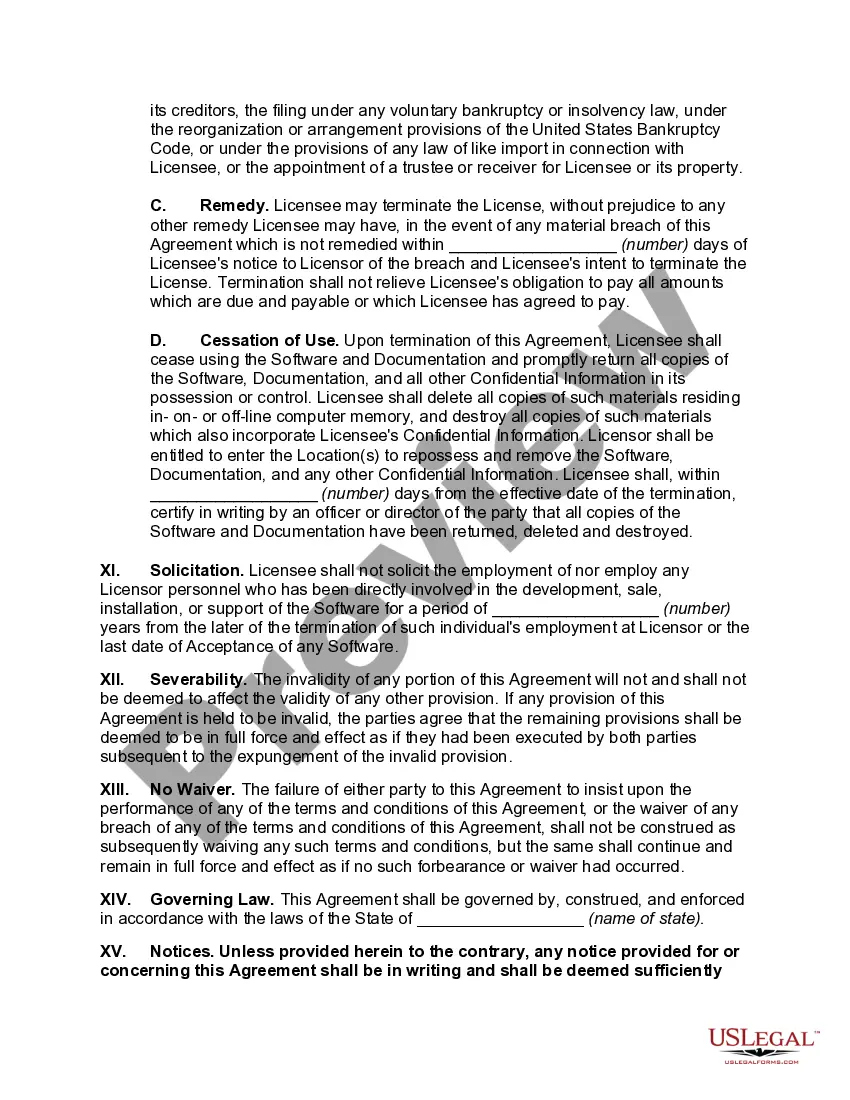
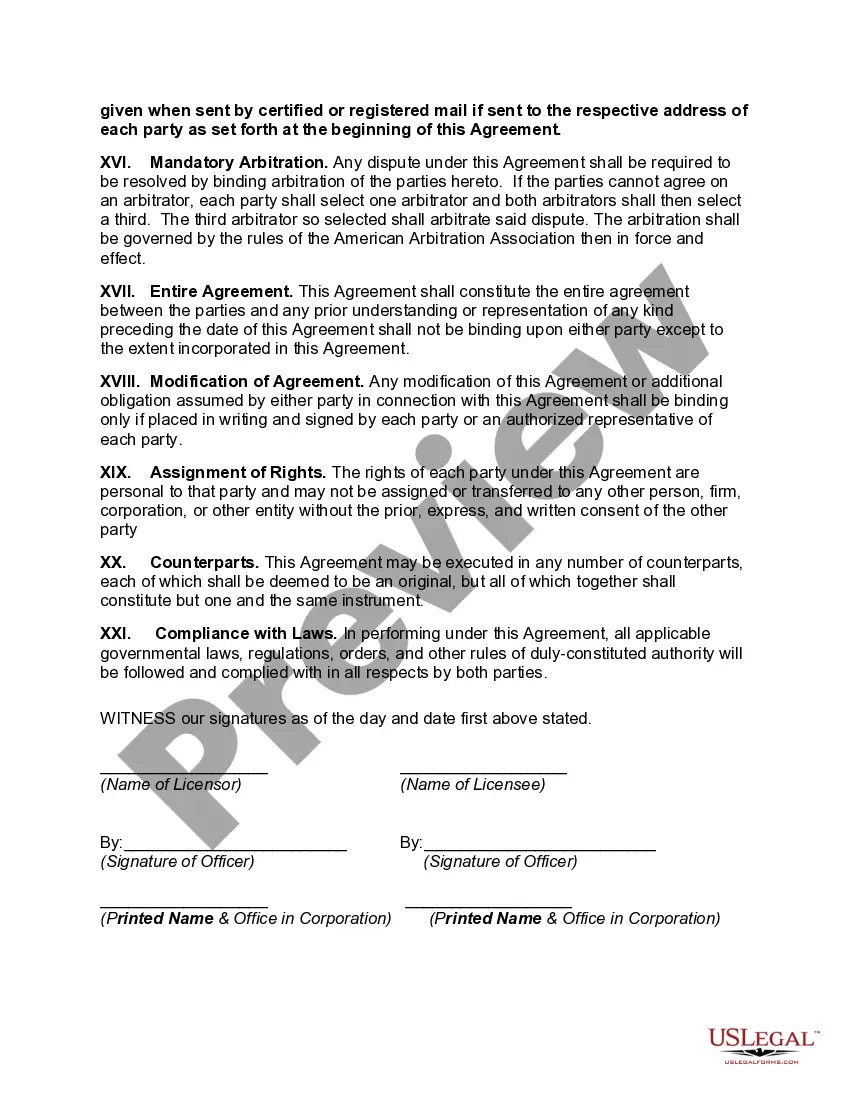
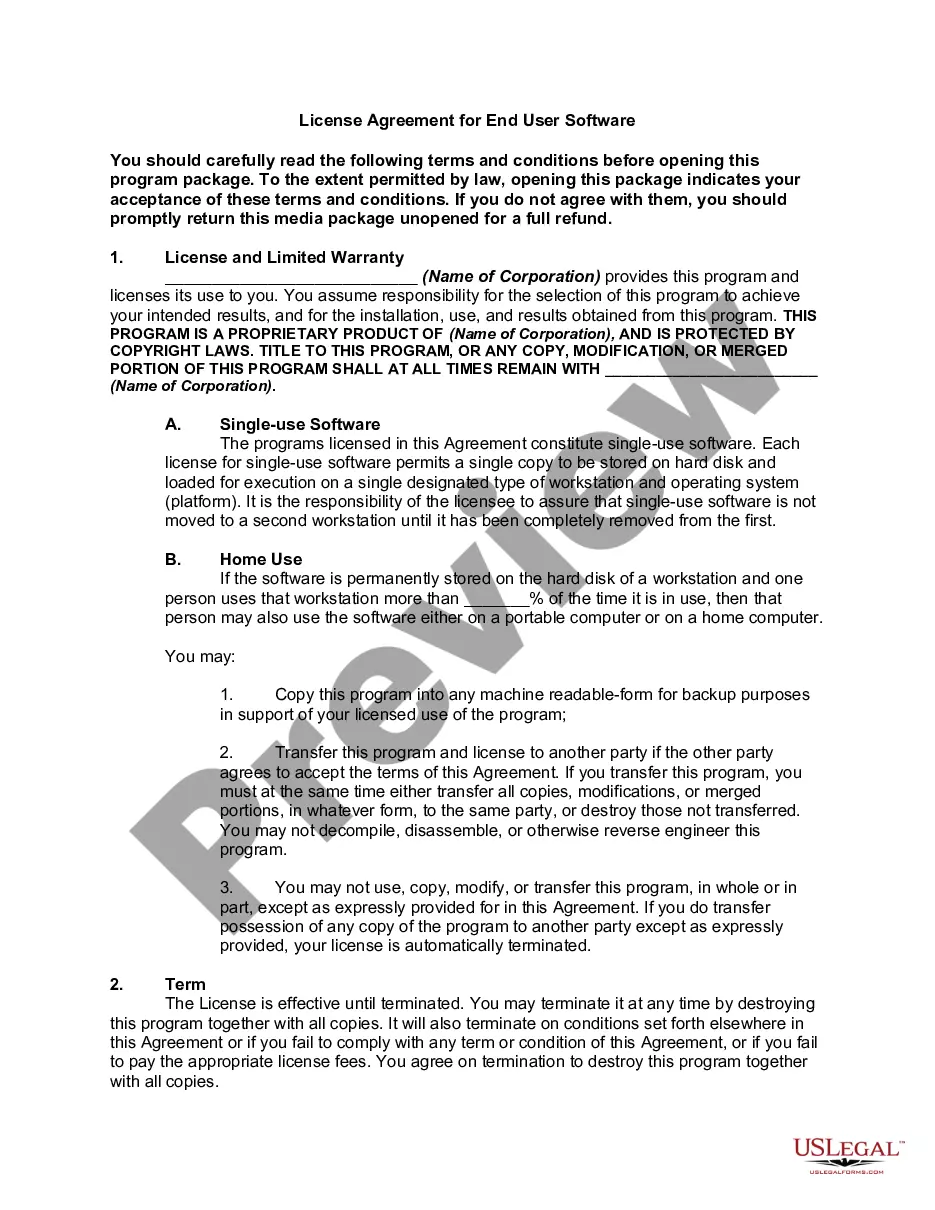
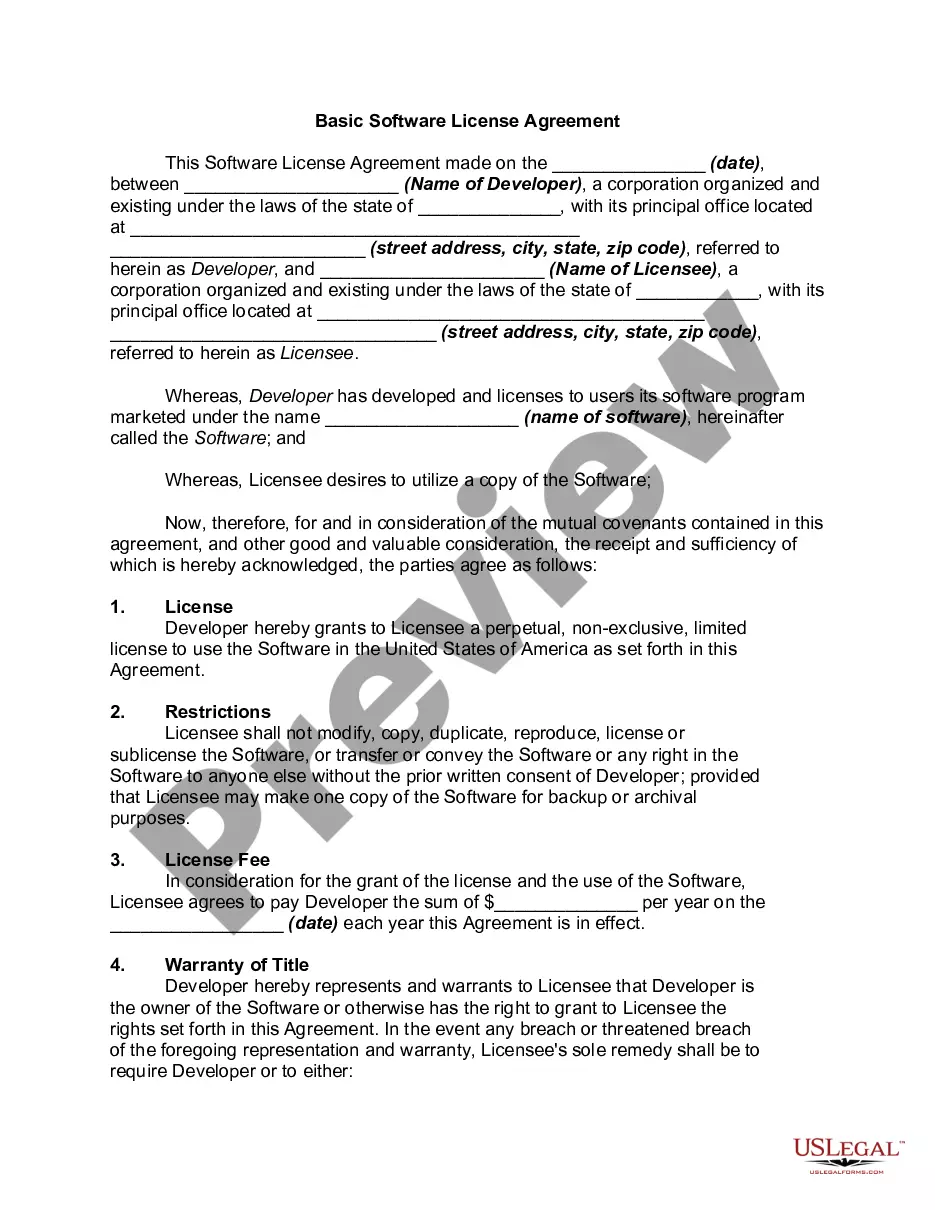
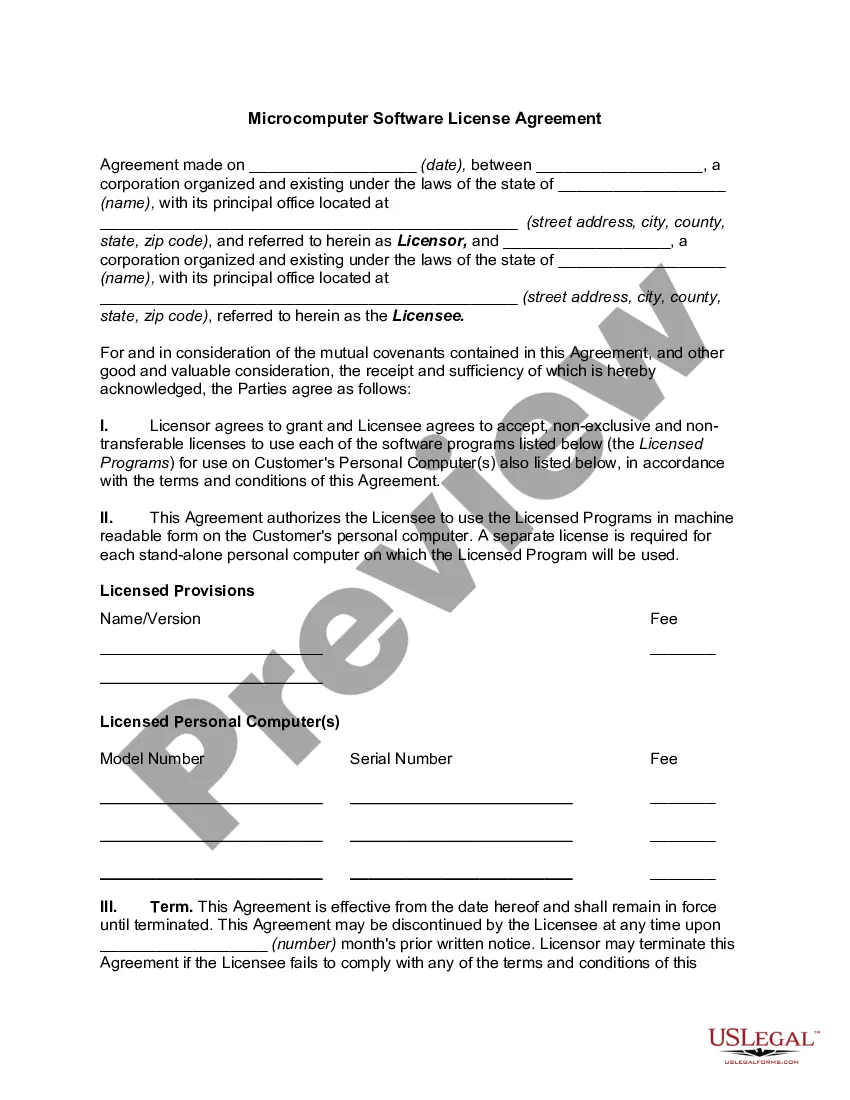
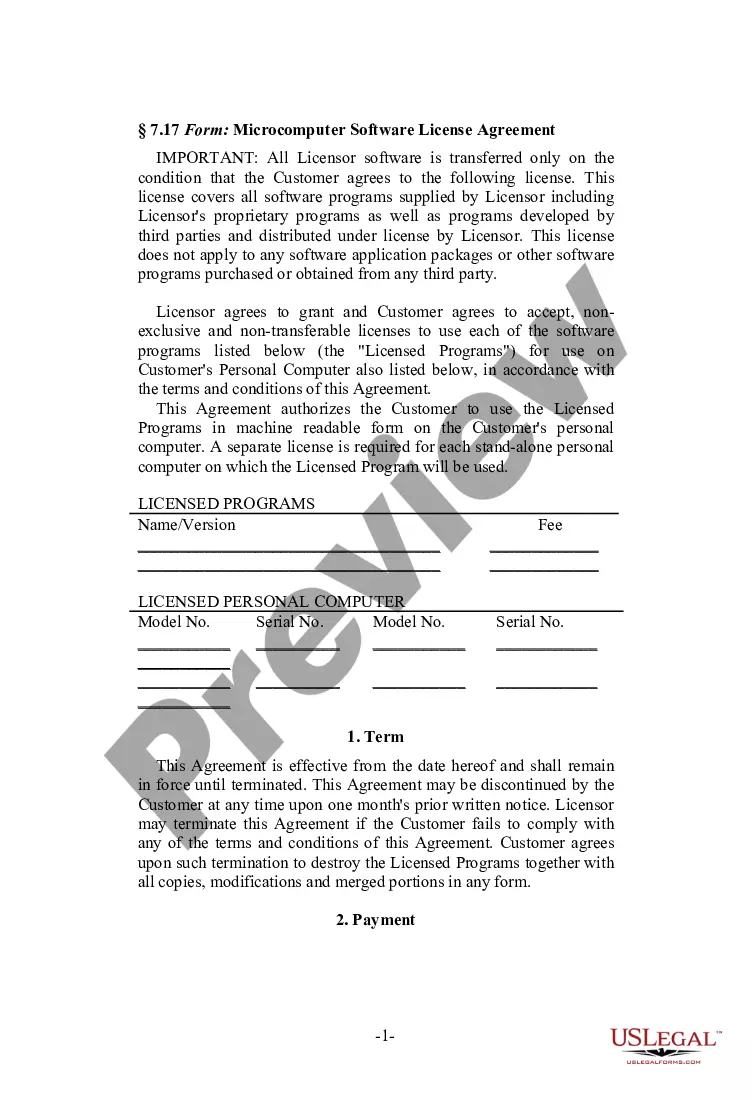
Colorado Software License Agreement for Certain Computer Programs
Description

Get your form ready online
Our built-in tools help you complete, sign, share, and store your documents in one place.
Make edits, fill in missing information, and update formatting in US Legal Forms—just like you would in MS Word.
Download a copy, print it, send it by email, or mail it via USPS—whatever works best for your next step.
Sign and collect signatures with our SignNow integration. Send to multiple recipients, set reminders, and more. Go Premium to unlock E-Sign.
If this form requires notarization, complete it online through a secure video call—no need to meet a notary in person or wait for an appointment.
We protect your documents and personal data by following strict security and privacy standards.

Make edits, fill in missing information, and update formatting in US Legal Forms—just like you would in MS Word.

Download a copy, print it, send it by email, or mail it via USPS—whatever works best for your next step.

Sign and collect signatures with our SignNow integration. Send to multiple recipients, set reminders, and more. Go Premium to unlock E-Sign.

If this form requires notarization, complete it online through a secure video call—no need to meet a notary in person or wait for an appointment.

We protect your documents and personal data by following strict security and privacy standards.
Looking for another form?

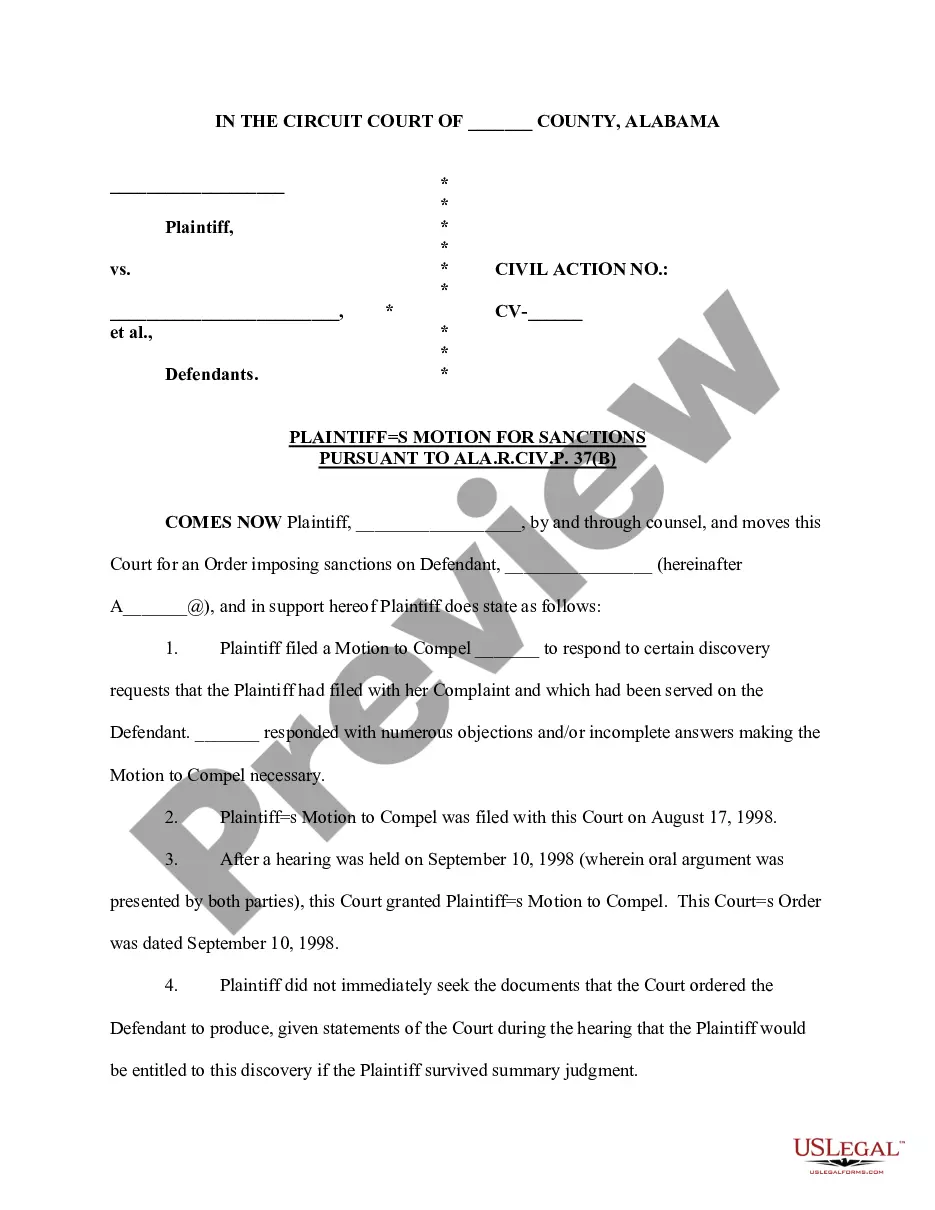



How to fill out Software License Agreement For Certain Computer Programs?
It is feasible to spend hours online looking for the legal document template that meets your state and federal requirements.
US Legal Forms provides a vast array of legal forms that are reviewed by specialists.
You can obtain or print the Colorado Software License Agreement for Certain Computer Programs from the platform.
If available, use the Review option to examine the document template as well.
- If you have a US Legal Forms account, you can sign in and click the Download option.
- You can then complete, edit, print, or sign the Colorado Software License Agreement for Certain Computer Programs.
- Every legal document template you obtain is yours permanently.
- To retrieve an additional copy of any downloaded form, go to the My documents section and click the appropriate option.
- If you are using the US Legal Forms website for the first time, follow the simple guidelines below.
- First, ensure that you have selected the correct document template for your chosen region/area.
- Review the form description to confirm that you have selected the correct template.
Form popularity
FAQ
Additionally, software subscriptions services are considered tangible property and are subject to sales and use taxes.
Colorado: Electronically delivered software, SaaS, and backup service not subject to sales tax.
How to decide between types of licensing agreementsPatent Licensing. Patents cover science and innovation.Trademark Licensing. Trademarks are signifiers of commercial source, namely, brand names and logos or slogans.Copyright Licensing.Trade Secret Licensing.Exclusive.Non-exclusive.Sole.Perpetual.More items...?
What are the different types of software licenses?Public domain. This is the most permissive type of software license.Permissive. Permissive licenses are also known as Apache style or BSD style. They contain minimal requirements about how the software can be modified or redistributed.LGPL.Copyleft.Proprietary.
These encompass a wide spectrum of licensing scenarios, from free software (public domain) to paid commercial software (proprietary). Between these two extremes, there are also three categories (GNU/LGPL, permissive, and copyleft) that apply to various forms of open-source projects.
What Are the Different Software License Types?Open Source Software Licenses.Public Domain License.Permissive License.Restrictive Licenses.LGPL.Proprietary Software License Types.Subscription vs Perpetual Licensing.User Licensing: Named Users vs Concurrent Users.More items...?
The Bill codified those changes, which specify that the "method of delivery does not impact the taxability of a sale of tangible personal property." The Bill also (1) included examples of methods used to deliver tangible personal property under current technology, including electronic downloads and internet streaming,
Colorado defines digital goods as taxable tangible personal property, regardless of the means of delivery. On June 23, 2021, Colorado's Governor signed legislation adding digital goods to the statutory definition of tangible personal property subject to sales and use tax.
Requirements for prewritten software are still subject to sales and use tax regardless of the method of delivery (whether with a physical medium, downloadable or accessed via the Internet) or if possession or control is given.
These encompass a wide spectrum of licensing scenarios, from free software (public domain) to paid commercial software (proprietary). Between these two extremes, there are also three categories (GNU/LGPL, permissive, and copyleft) that apply to various forms of open-source projects.