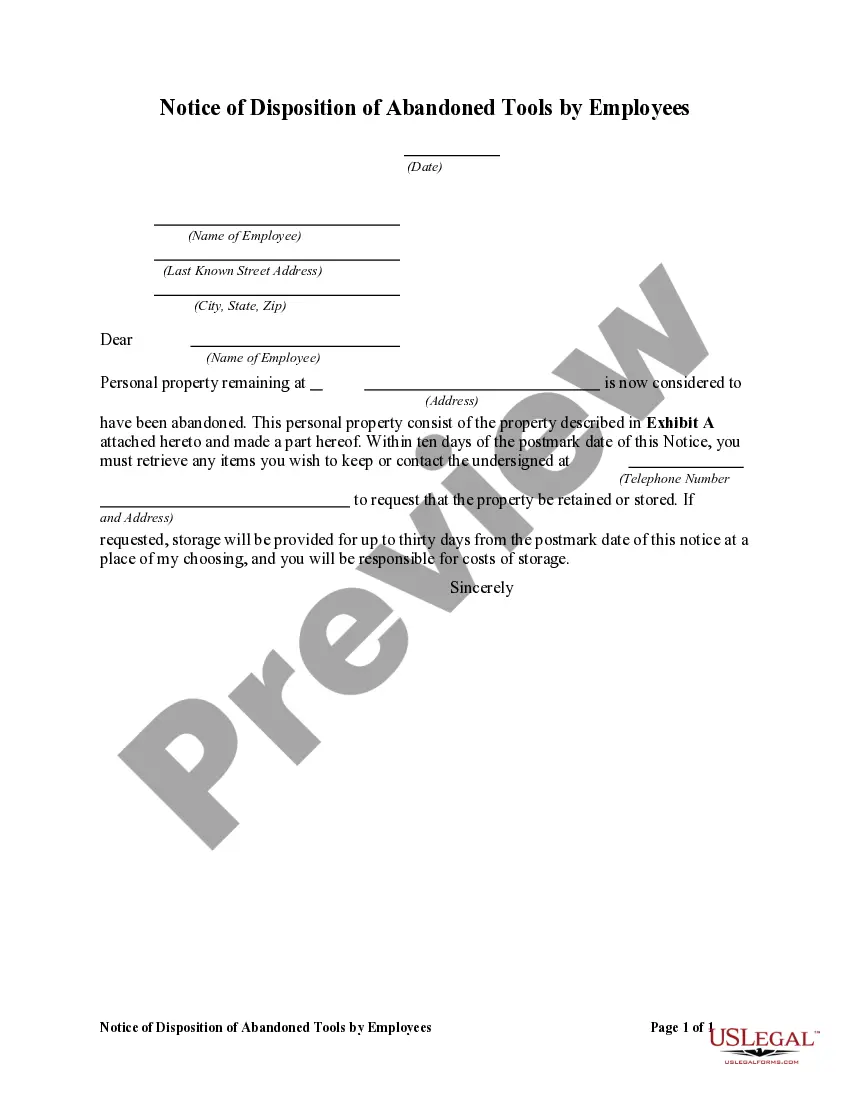
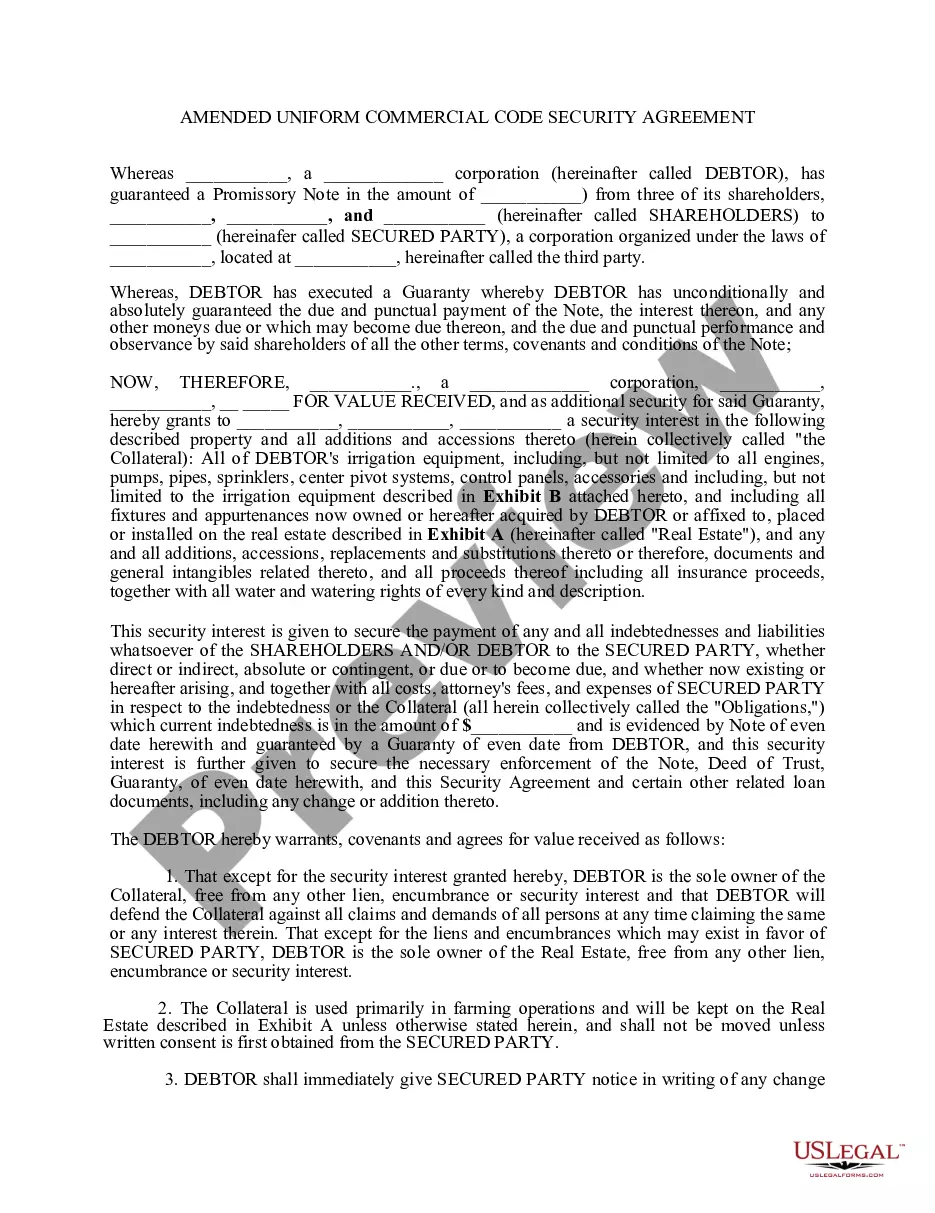
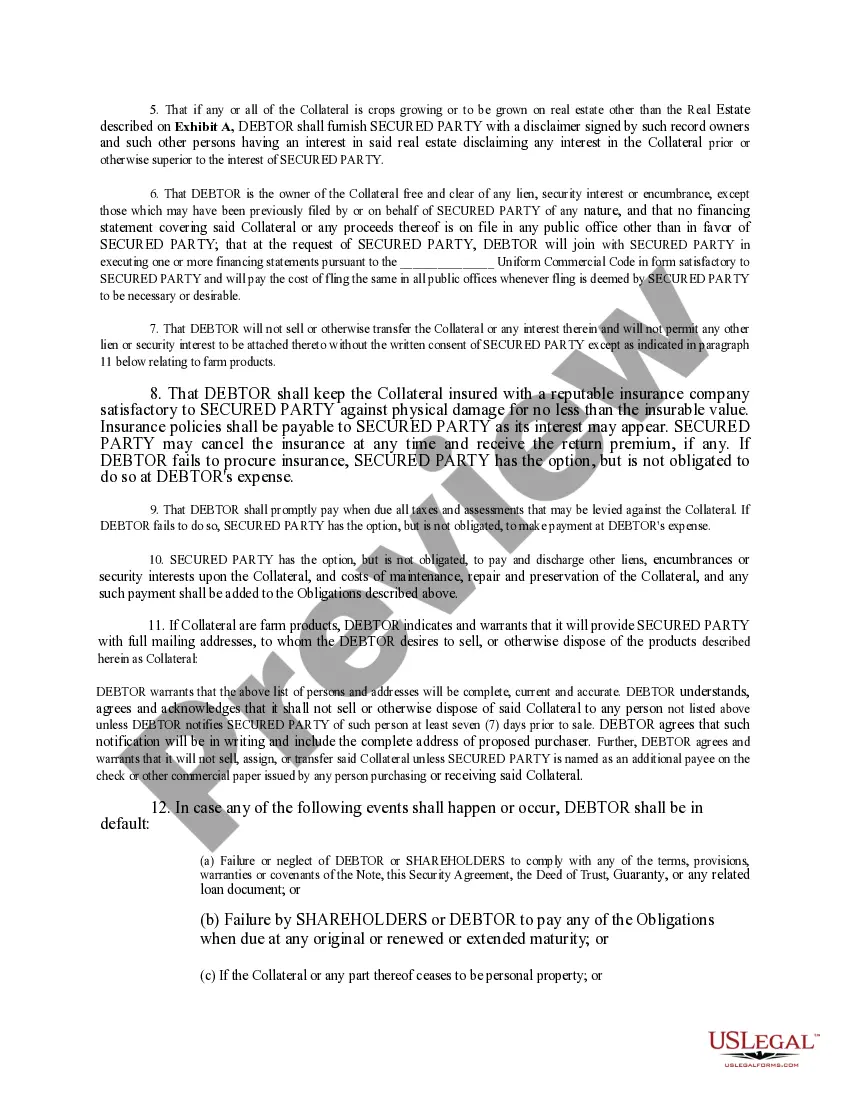
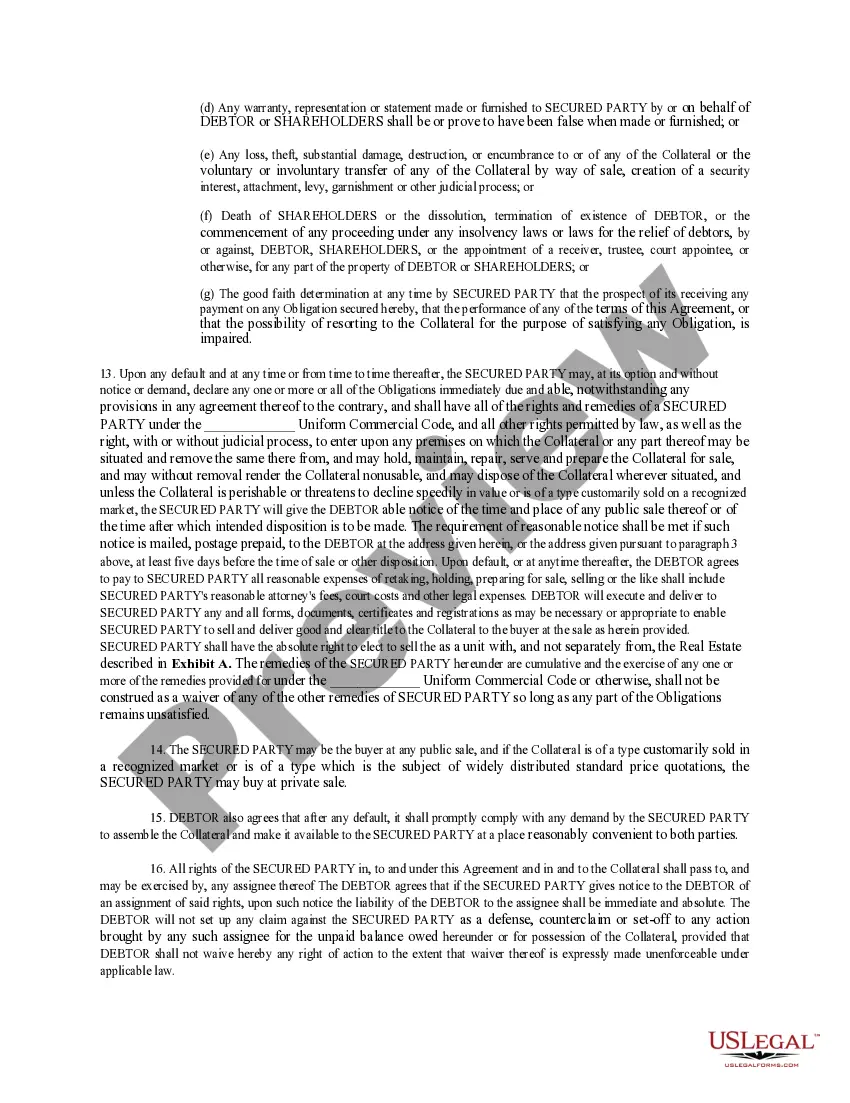
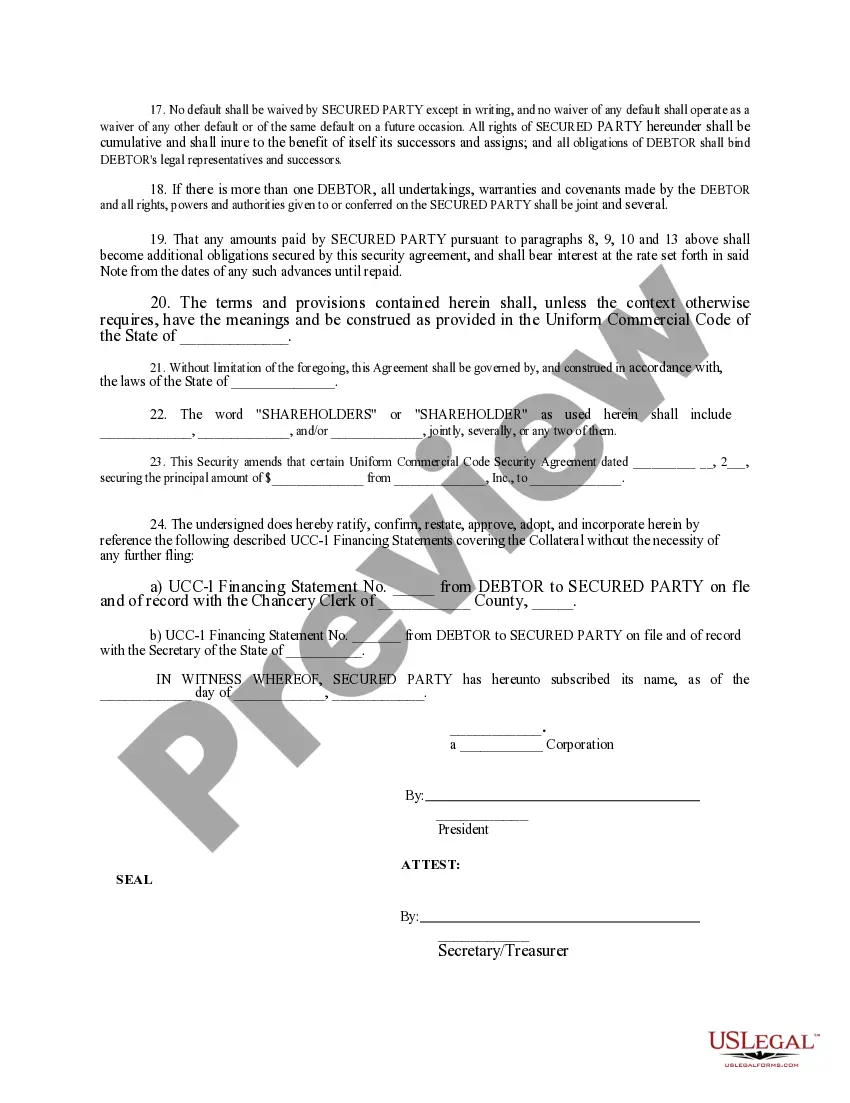
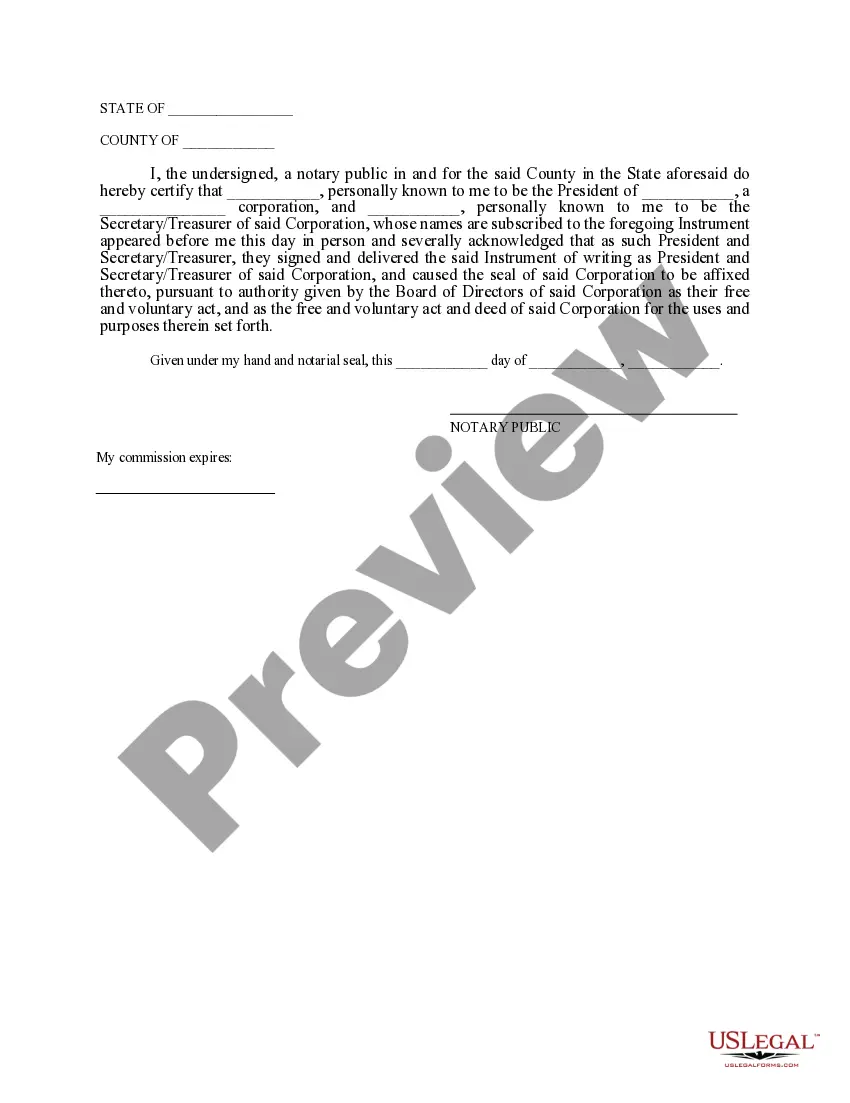
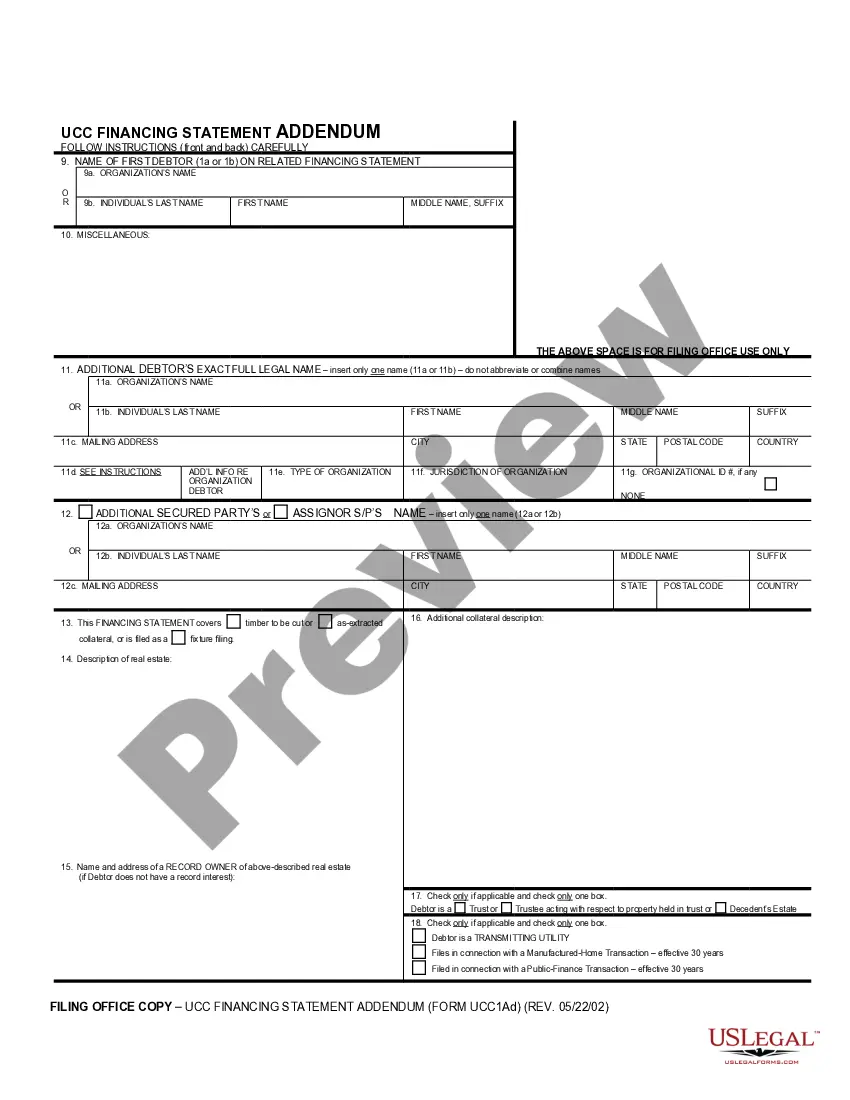
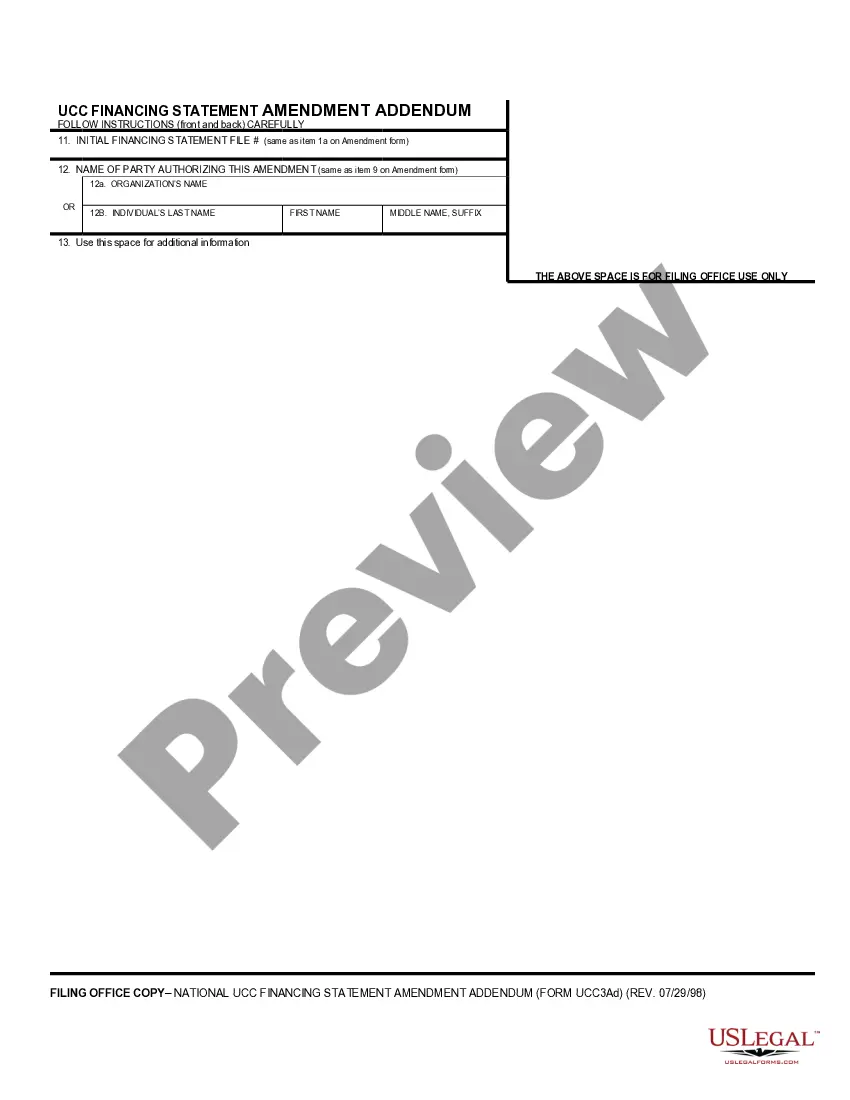
Colorado Amended Uniform commercial code security agreement
Description

Get your form ready online
Our built-in tools help you complete, sign, share, and store your documents in one place.
Make edits, fill in missing information, and update formatting in US Legal Forms—just like you would in MS Word.
Download a copy, print it, send it by email, or mail it via USPS—whatever works best for your next step.
Sign and collect signatures with our SignNow integration. Send to multiple recipients, set reminders, and more. Go Premium to unlock E-Sign.
If this form requires notarization, complete it online through a secure video call—no need to meet a notary in person or wait for an appointment.
We protect your documents and personal data by following strict security and privacy standards.

Make edits, fill in missing information, and update formatting in US Legal Forms—just like you would in MS Word.

Download a copy, print it, send it by email, or mail it via USPS—whatever works best for your next step.

Sign and collect signatures with our SignNow integration. Send to multiple recipients, set reminders, and more. Go Premium to unlock E-Sign.

If this form requires notarization, complete it online through a secure video call—no need to meet a notary in person or wait for an appointment.

We protect your documents and personal data by following strict security and privacy standards.
Looking for another form?

How to fill out Amended Uniform Commercial Code Security Agreement?
If you want to full, acquire, or print out legitimate papers layouts, use US Legal Forms, the largest selection of legitimate varieties, that can be found online. Use the site`s basic and practical look for to discover the documents you want. Numerous layouts for business and personal uses are sorted by types and says, or search phrases. Use US Legal Forms to discover the Colorado Amended Uniform commercial code security agreement within a handful of clicks.
Should you be currently a US Legal Forms client, log in in your account and click the Acquire button to find the Colorado Amended Uniform commercial code security agreement. You can even access varieties you earlier saved in the My Forms tab of your account.
If you use US Legal Forms the very first time, follow the instructions under:
- Step 1. Be sure you have selected the form for your correct area/region.
- Step 2. Make use of the Preview choice to examine the form`s content material. Never forget to learn the explanation.
- Step 3. Should you be unhappy together with the type, take advantage of the Lookup industry towards the top of the screen to discover other variations of the legitimate type format.
- Step 4. Upon having identified the form you want, select the Get now button. Opt for the rates prepare you prefer and add your references to sign up on an account.
- Step 5. Process the financial transaction. You may use your bank card or PayPal account to complete the financial transaction.
- Step 6. Choose the format of the legitimate type and acquire it on your own device.
- Step 7. Full, modify and print out or sign the Colorado Amended Uniform commercial code security agreement.
Every single legitimate papers format you buy is your own property forever. You have acces to every type you saved inside your acccount. Click on the My Forms segment and select a type to print out or acquire once more.
Contend and acquire, and print out the Colorado Amended Uniform commercial code security agreement with US Legal Forms. There are thousands of specialist and state-certain varieties you can use for your personal business or personal needs.
Form popularity
FAQ
Article 9, Secured Transactions Uniform Commercial Code Article 9 provides a statutory framework that governs secured transactions--transactions that involve the granting of credit secured by personal property.
The document granting the security interest can be called by different names, but the most common names are "Mortgage" or "Deed of Trust."
To put it in simple terms, the secured party is the creditor on the UCC loan. The creditor is the secured party because they have a financial interest in the collateral which the lien is on.
Every U.S. state and the District of Columbia have adopted at least part of the UCC (though it has not been adopted as federal law). Each jurisdiction, however, may make its own modifications (Louisiana has never adopted Article 2), and may organize its version of the UCC differently.
Uniform Commercial Code (UCC)
Security interest is an enforceable legal claim or lien on collateral that has been pledged, usually to obtain a loan. The borrower provides the lender with a security interest in certain assets, which gives the lender the right to repossess all or part of the property if the borrower stops making loan payments.
The secured transaction always involves a debtor, a secured party, a security agreement, a security interest, and collateral. Article 9 applies to any transaction ?that creates a security interest.? The UCC in Section 1-201(35) defines security interest.
A security interest arises when, in exchange for a loan, a borrower agrees in a security agreement that the lender (the secured party) may take specified collateral owned by the borrower if he or she should default on the loan.