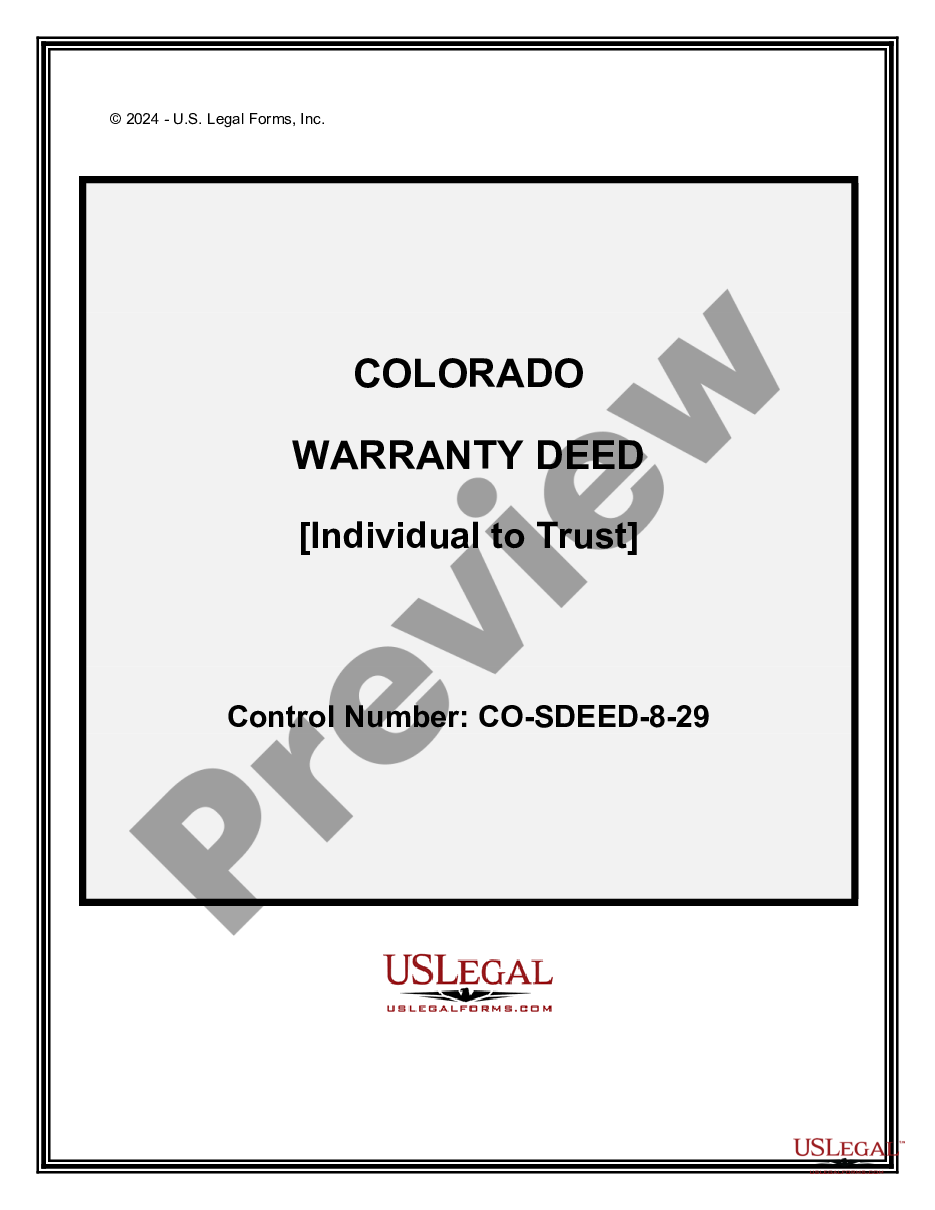
Colorado Warranty Deed - Individual to a Trust
What this document covers
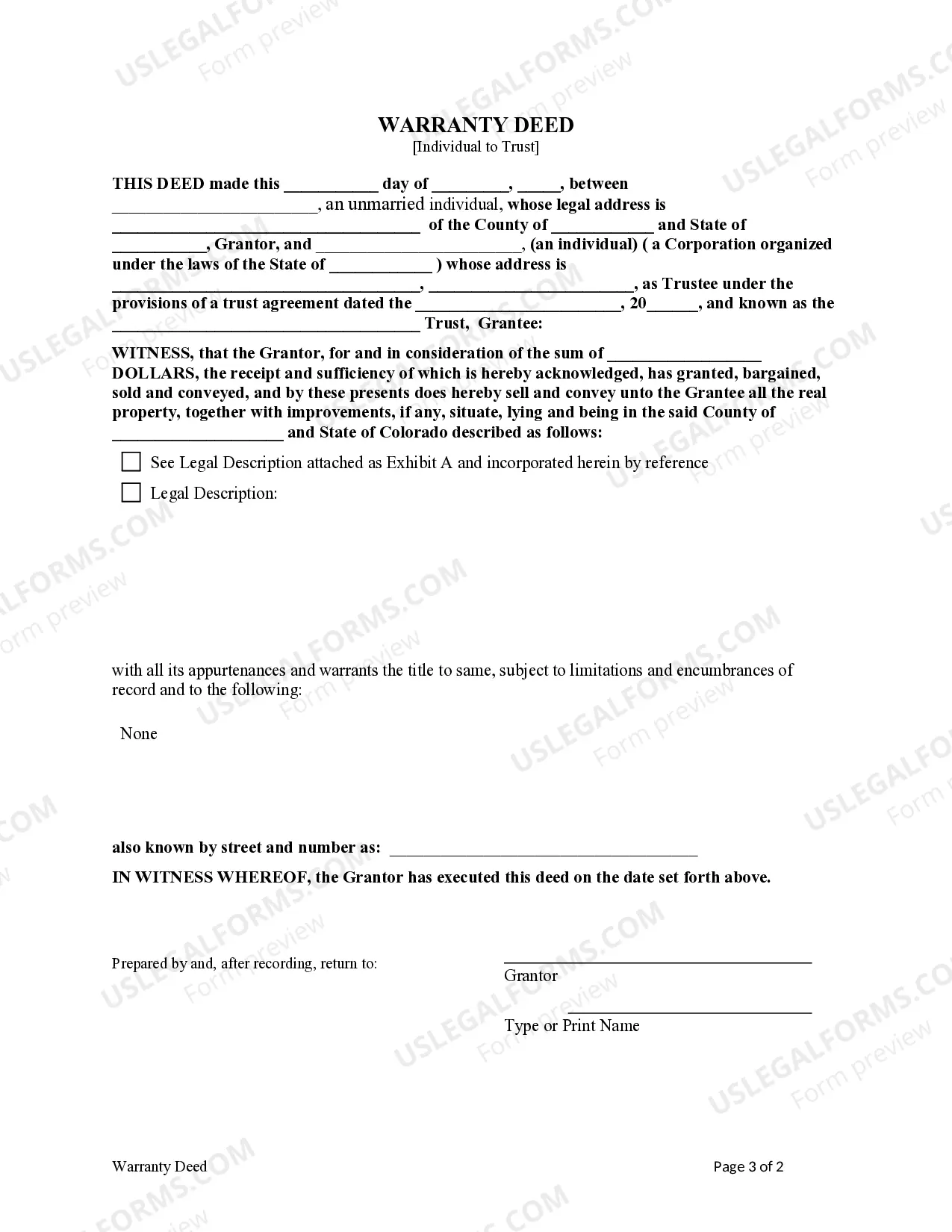
The Warranty Deed - Individual to a Trust is a legal document used to transfer ownership of real estate from an individual (the Grantor) to a Trust (the Grantee). This form ensures that the Grantor conveys and warrants the property to the designated trustee of the Trust, complying with state law. This type of deed is distinct from other deeds, such as quitclaim deeds, as it provides a guarantee of clear title to the property being transferred.
Key components of this form
- Grantor and Grantee Information: Includes the names and addresses of both the individual transferring the property and the Trustee of the Trust.
- Consideration Statement: Acknowledges the receipt of payment or value exchanged for the property.
- Legal Description: Specifies the exact location and boundaries of the property being conveyed, often attached as an exhibit.
- Signatures: Requires the signature of the Grantor and may need the signature of the Trustee.
- Date: Indicates when the transaction takes place, crucial for legal timing of the transfer.





Common use cases
This Warranty Deed form is needed when an individual wishes to transfer property into a Trust for estate planning purposes. It is commonly used to protect assets and specify how property will be managed after the Grantor's passing. This deed can also be used to facilitate organized transfer of property within family trusts or other types of trusts.
Who needs this form
Eligible users of this form include:
- Individuals looking to place their real estate into a Trust for estate planning.
- Trustees who require documentation to establish official ownership of property under a Trust.
- Lawyers and real estate professionals assisting clients with property transfers to Trusts.
- Anyone managing assets intended to be held in a Trust for future beneficiaries.
How to complete this form
To complete this Warranty Deed form, follow these steps:
- Identify the parties involved: Enter the legal name and address of the Grantor and the Trustee.
- Specify the property details: Fill in the legal description of the property being conveyed.
- Enter the consideration amount: Provide the monetary value exchanged for the property.
- Include the date of the transaction: Specify when the transfer is occurring.
- Sign the document: Ensure all necessary parties sign the deed for it to be valid.
Notarization guidance
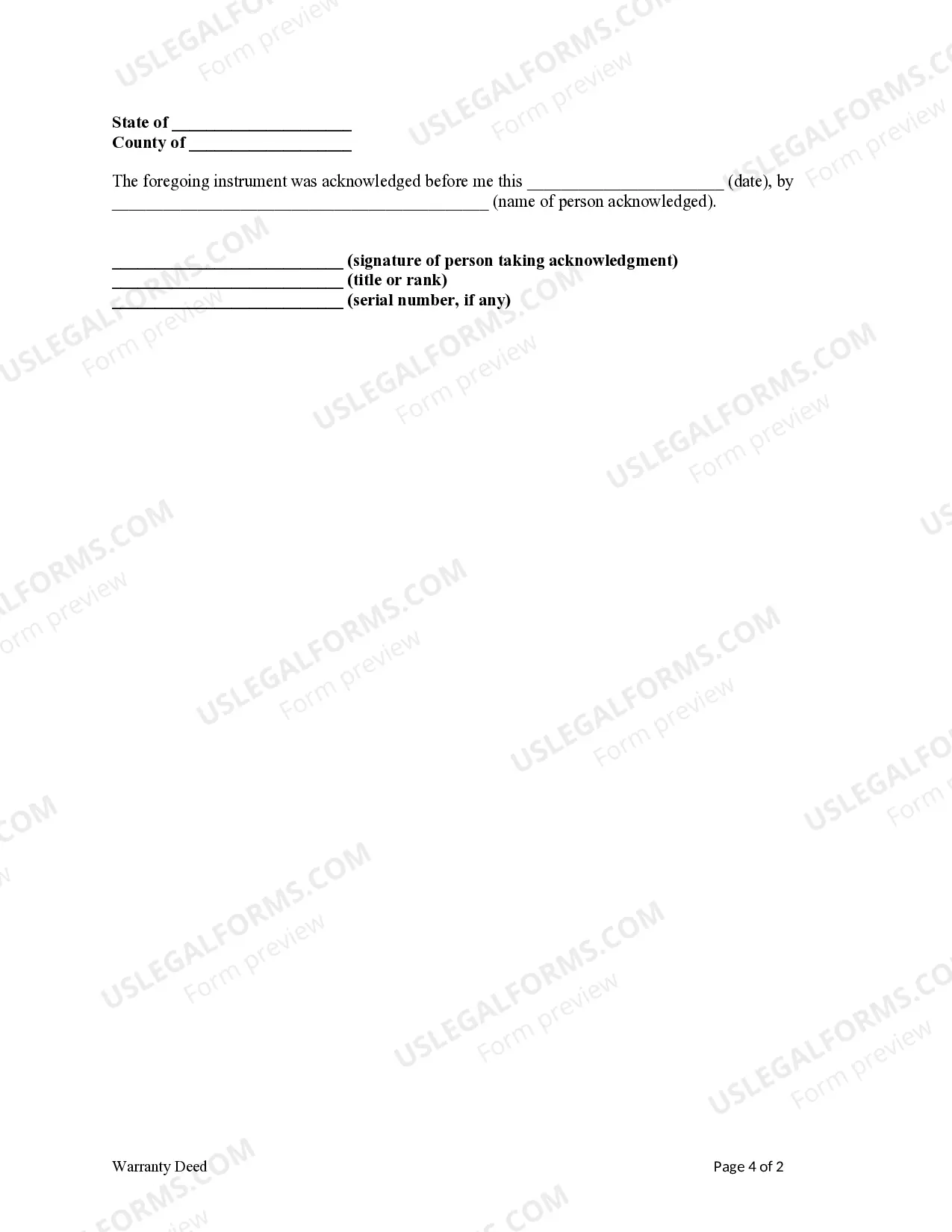
This form does not typically require notarization unless specified by local law. However, having it notarized can provide additional legal assurance and facilitate the recording of the deed with the county clerk.
Get your form ready online
Our built-in tools help you complete, sign, share, and store your documents in one place.
Make edits, fill in missing information, and update formatting in US Legal Forms—just like you would in MS Word.
Download a copy, print it, send it by email, or mail it via USPS—whatever works best for your next step.
Sign and collect signatures with our SignNow integration. Send to multiple recipients, set reminders, and more. Go Premium to unlock E-Sign.
If this form requires notarization, complete it online through a secure video call—no need to meet a notary in person or wait for an appointment.
We protect your documents and personal data by following strict security and privacy standards.

Make edits, fill in missing information, and update formatting in US Legal Forms—just like you would in MS Word.

Download a copy, print it, send it by email, or mail it via USPS—whatever works best for your next step.

Sign and collect signatures with our SignNow integration. Send to multiple recipients, set reminders, and more. Go Premium to unlock E-Sign.

If this form requires notarization, complete it online through a secure video call—no need to meet a notary in person or wait for an appointment.

We protect your documents and personal data by following strict security and privacy standards.
Avoid these common issues
- Failing to include the complete legal description of the property.
- Not signing the form in the presence of a notary when required.
- Leaving out the consideration amount, which may impact the validity of the deed.
- Incorrectly identifying the Grantee as a Trustee or not specifying the Trust accurately.
Advantages of online completion
- Convenience: Easily fill out this form using your computer or print it for manual completion.
- Editability: The form's digital format allows for easy corrections and adjustments.
- Legal compliance: This form adheres to the lawful requirements of the State of Colorado, ensuring validity.
- Quick access: Download the form instantly and complete it at your convenience.
Legal use & context
- Warranty deeds provide legal assurance to the Grantee that the property is free from claims.
- They are widely accepted in real estate transactions involving trusts.
- Ensure compliance with state laws governing property transfers to avoid disputes.
Summary of main points
- The Warranty Deed - Individual to a Trust facilitates the transfer of property into a trust.
- Accurate completion is essential for legal validity.
- Consult local laws to ensure all requirements are met for your specific state.
Looking for another form?

Form popularity
FAQ
One downside of placing assets in a trust is the potential for increased administrative complexity. Managing a trust typically requires ongoing attention to ensure compliance with legal requirements. Moreover, while a Colorado Warranty Deed - Individual to a Trust can facilitate asset protection, it may limit your access to those assets in certain situations. Therefore, it’s vital to weigh the benefits and challenges before making this commitment.
To move assets into a trust, you must retitle the assets under the name of the trust. This often involves filling out specific forms, such as a Colorado Warranty Deed - Individual to a Trust for real estate matters. Each asset class may have its own set of documentation, so it's essential to be thorough. Using a platform like uslegalforms can simplify this process, providing you with the necessary templates and guidelines.
Transferring accounts to a trust is a straightforward process. First, you need to establish the trust and identify all the accounts you wish to transfer. Typically, you will fill out a Colorado Warranty Deed - Individual to a Trust, which helps change the title of these accounts into the name of the trust. Always ensure you work with a legal professional to avoid any pitfalls during this transition.
Filling out a warranty deed form requires some essential steps. First, identify the granter and grantee along with the property details, including its legal description. Remember to include the statement that clarifies it is a Colorado Warranty Deed - Individual to a Trust, which helps specify the transfer into a trust. To simplify the process, consider using platforms like USLegalForms for templates and guidance to ensure accuracy.
A significant disadvantage of a warranty deed is the potential liability it imposes on the grantor. If any ownership disputes or title issues arise after the deed transfer, the grantor may be held responsible. Therefore, in the context of a Colorado Warranty Deed - Individual to a Trust, ensuring accurate title verification is essential.
Yes, a trust can indeed gift property to an individual, depending on the trust's terms and the assets within it. This can be a strategic way to transfer property, preserve wealth, and reduce taxes. For those looking at a Colorado Warranty Deed - Individual to a Trust, establishing clear terms in the trust enhances the gifting process.
One drawback of a trust deed can be the complexity involved in its management and establishment. Understanding the trust's terms and ensuring compliance with legal requirements is crucial. If you consider a Colorado Warranty Deed - Individual to a Trust, it’s wise to consult professionals to navigate these complexities effectively.
A trust deed serves to transfer property ownership to a trust, managing the asset for beneficiaries. In the context of a Colorado Warranty Deed - Individual to a Trust, it ensures that the trust controls the property while properly reflecting the owner's intentions. By using a trust deed, you can secure your assets for future generations or fulfill specific financial objectives.
Transferring property into a trust in Colorado starts with establishing the trust in a legal document. Next, use a Colorado Warranty Deed - Individual to a Trust to officially transfer property ownership to the trust. This deed must be signed, notarized, and recorded with the local clerk's office to create a public record. Engaging with a legal expert can streamline the process and provide additional guidance.
While placing property in a trust offers various benefits, there are some disadvantages to consider. For instance, transferring property may involve upfront costs related to legal fees and possible transfer taxes. Additionally, setting up the trust can complicate your estate planning if not done correctly. It's important to weigh these aspects and consult with a professional to ensure the decision aligns with your long-term goals.