Colorado Revocation Health Care Directive
What is this form?
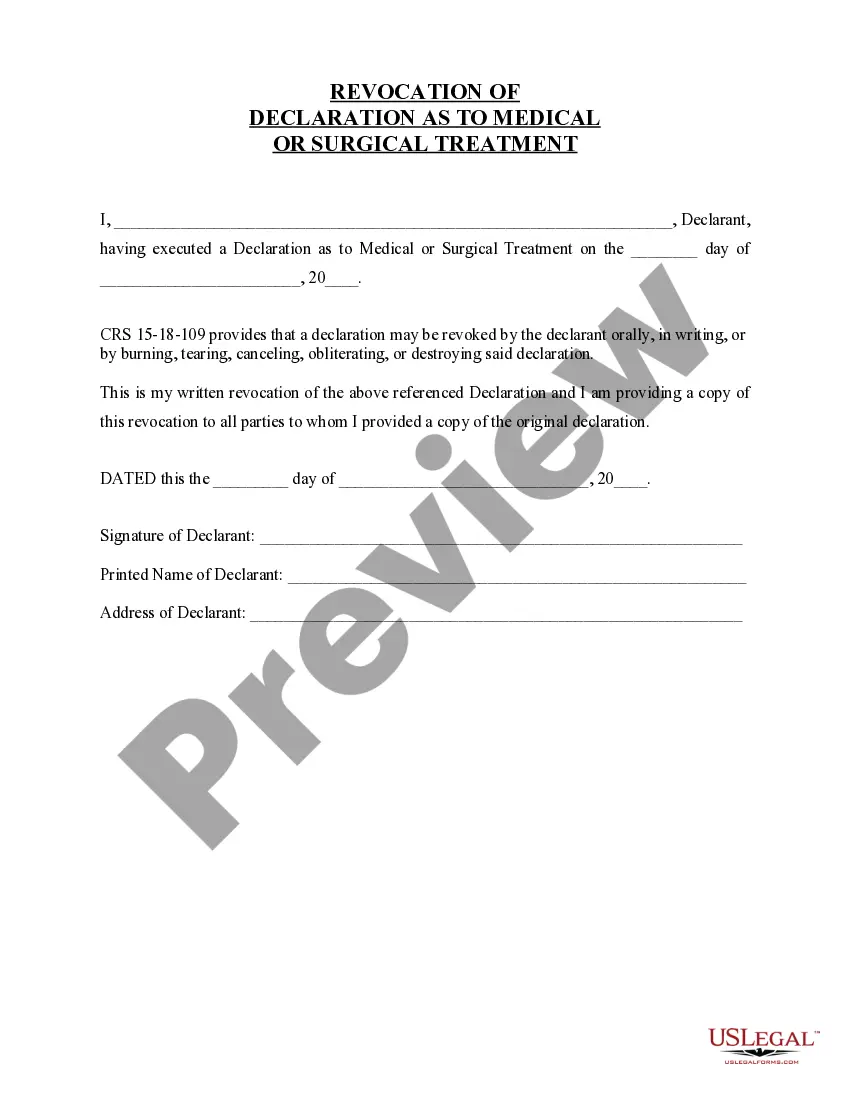
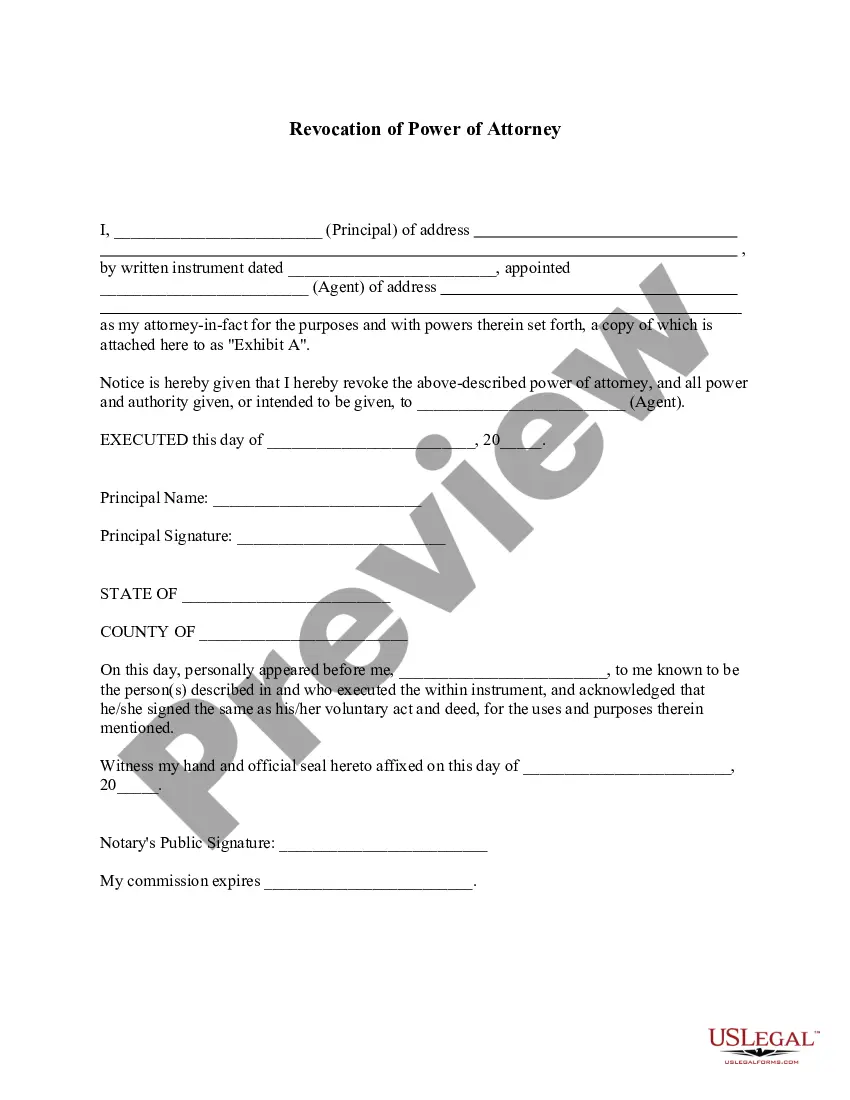
The Revocation Health Care Directive is a legal document used to cancel a previously established Health Care Directive. This form allows an individual to explicitly revoke their wishes regarding medical treatment and the use of artificial means to prolong life, as well as any anatomical gifts made after death. Unlike the original directive, this revocation ensures that medical professionals and family members are informed of the updated intentions of the Declarant, making it a crucial tool for maintaining personal autonomy in health care decisions.
Main sections of this form
- Declarant's name and address
- Date of execution of the original Health Care Directive
- Explicit statement of revocation
- Signature of the Declarant
- Provision for distribution of copies to relevant parties
Common use cases
This form should be used when an individual wishes to change or nullify the decisions made in their existing Health Care Directive. Situations that may prompt the use of this form include changes in personal beliefs, health status, or family dynamics, or if the individual has decided to appoint a different agent for health care decisions.
Who can use this document
- Individuals who have previously executed a Health Care Directive
- People who wish to revoke their prior decisions regarding medical treatment
- Anyone looking to ensure their current health care preferences are respected
How to prepare this document
- Fill in your name and address in the designated section.
- Indicate the date when you originally executed your Health Care Directive.
- Clearly state that you are revoking your previous directive.
- Sign the document to confirm your revocation.
- Distribute copies of this revocation to all parties who received the original directive.
Does this document require notarization?
Notarization is not commonly needed for this form. However, certain documents or local rules may make it necessary. Our notarization service, powered by Notarize, allows you to finalize it securely online anytime, day or night.
Get your form ready online
Our built-in tools help you complete, sign, share, and store your documents in one place.
Make edits, fill in missing information, and update formatting in US Legal Forms—just like you would in MS Word.
Download a copy, print it, send it by email, or mail it via USPS—whatever works best for your next step.
Sign and collect signatures with our SignNow integration. Send to multiple recipients, set reminders, and more. Go Premium to unlock E-Sign.
If this form requires notarization, complete it online through a secure video call—no need to meet a notary in person or wait for an appointment.
We protect your documents and personal data by following strict security and privacy standards.

Make edits, fill in missing information, and update formatting in US Legal Forms—just like you would in MS Word.

Download a copy, print it, send it by email, or mail it via USPS—whatever works best for your next step.

Sign and collect signatures with our SignNow integration. Send to multiple recipients, set reminders, and more. Go Premium to unlock E-Sign.

If this form requires notarization, complete it online through a secure video call—no need to meet a notary in person or wait for an appointment.

We protect your documents and personal data by following strict security and privacy standards.
Typical mistakes to avoid
- Not signing the revocation document.
- Failing to provide copies to all parties involved.
- Not dating the revocation properly.
- Using vague language instead of clear statements of revocation.
Why complete this form online
- Convenience of immediate access and download from anywhere.
- Editability to customize the form to reflect your specific needs.
- Reliability of forms drafted by licensed attorneys.
Main things to remember
- The Revocation Health Care Directive allows you to cancel your previous health care preferences.
- It is essential for ensuring your current wishes are respected by medical professionals.
- Proper completion and distribution of the revocation are critical to its validity.
Looking for another form?
Form popularity
FAQ
While a Colorado Revocation Health Care Directive is a powerful tool for expressing your healthcare wishes, it does come with some disadvantages. One challenge is that it may not cover every possible medical scenario, leaving room for ambiguity. Additionally, if your advance directive is not regularly reviewed or updated, it might not accurately reflect your current preferences. To address these issues, using a platform like USLegalForms can help you create, store, and easily update your documents as needed.
Executing a Colorado Revocation Health Care Directive involves a systematic approach ensuring that your healthcare preferences are legally recognized. First, you need to complete the advance directive form, which usually includes your instructions for medical care and the designation of your healthcare agent. After that, you must sign the document in front of witnesses or a notary, depending on state requirements. Finally, distribute copies to your chosen healthcare providers and your loved ones to ensure everyone is informed about your wishes.
In the context of a Colorado Revocation Health Care Directive, it's crucial to know the role of a Power of Attorney (POA). A POA can indeed override certain aspects of advance directives, especially if the appointed agent has the authority to make healthcare decisions on your behalf. However, the POA should always act in accordance with your wishes as outlined in the advance directive. To avoid confusion, it’s advisable to clearly document your preferences when creating these legal documents.
When considering the Colorado Revocation Health Care Directive, it’s essential to understand the difference between an advance directive and a living will. An advance directive encompasses both the living will and medical power of attorney, providing broader choices for your healthcare decisions. In contrast, a living will focuses solely on your wishes regarding medical treatments. Therefore, if you want a more comprehensive approach to protecting your healthcare preferences, an advance directive is generally the better option.
Typically, a court order or a legally appointed guardian can supersede an advance directive. Additionally, if a person has a legal Power of Attorney, that individual may influence health care choices as long as they align with the actual intent of the advance directive. When navigating these complexities, the Colorado Revocation Health Care Directive serves as an invaluable resource. It is essential for ensuring your wishes are prioritized.
In Colorado, an advance medical directive allows individuals to express their health care preferences and appoint a proxy to make decisions on their behalf. This document becomes crucial when someone cannot communicate their wishes due to illness or injury. Understanding the Colorado Revocation Health Care Directive can help in making appropriate changes to these preferences. It is vital for anyone planning for their health care future.
In most cases, a POA must adhere to the wishes specified in an advance directive. If the advance directive is valid, the POA cannot override it. However, the Colorado Revocation Health Care Directive outlines conditions where decisions may be revisited. It’s essential to ensure both documents are aligned for clear ethical and legal direction.
A legal Power of Attorney cannot make decisions regarding certain medical procedures, sign a will, or make decisions that conflict with the principal's established wishes. These limitations are in place to protect the individual’s autonomy. For a clearer understanding, refer to the Colorado Revocation Health Care Directive. It helps outline where a POA can and cannot act.
A DNR is a specific instruction that prevents health care providers from resuscitating you if your heart stops. In contrast, an advance directive outlines a broader range of health care preferences, including end-of-life decisions and appointing a POA. Both documents serve to communicate your medical wishes. Utilizing a Colorado Revocation Health Care Directive ensures you address both types adequately.
A Power of Attorney can generally make health care decisions based on the directives set forth in an advance directive. If you have appointed someone as your POA, they should follow the intentions expressed in your advance directive. However, when there are conflicting wishes, the Colorado Revocation Health Care Directive can provide clarity. It's essential to design these documents thoughtfully.