Colorado Legal Separation and Property Settlement Agreement with Adult Children - Marital - Parties May have Joint Property or Debts - Divorce Action Filed
What this document covers
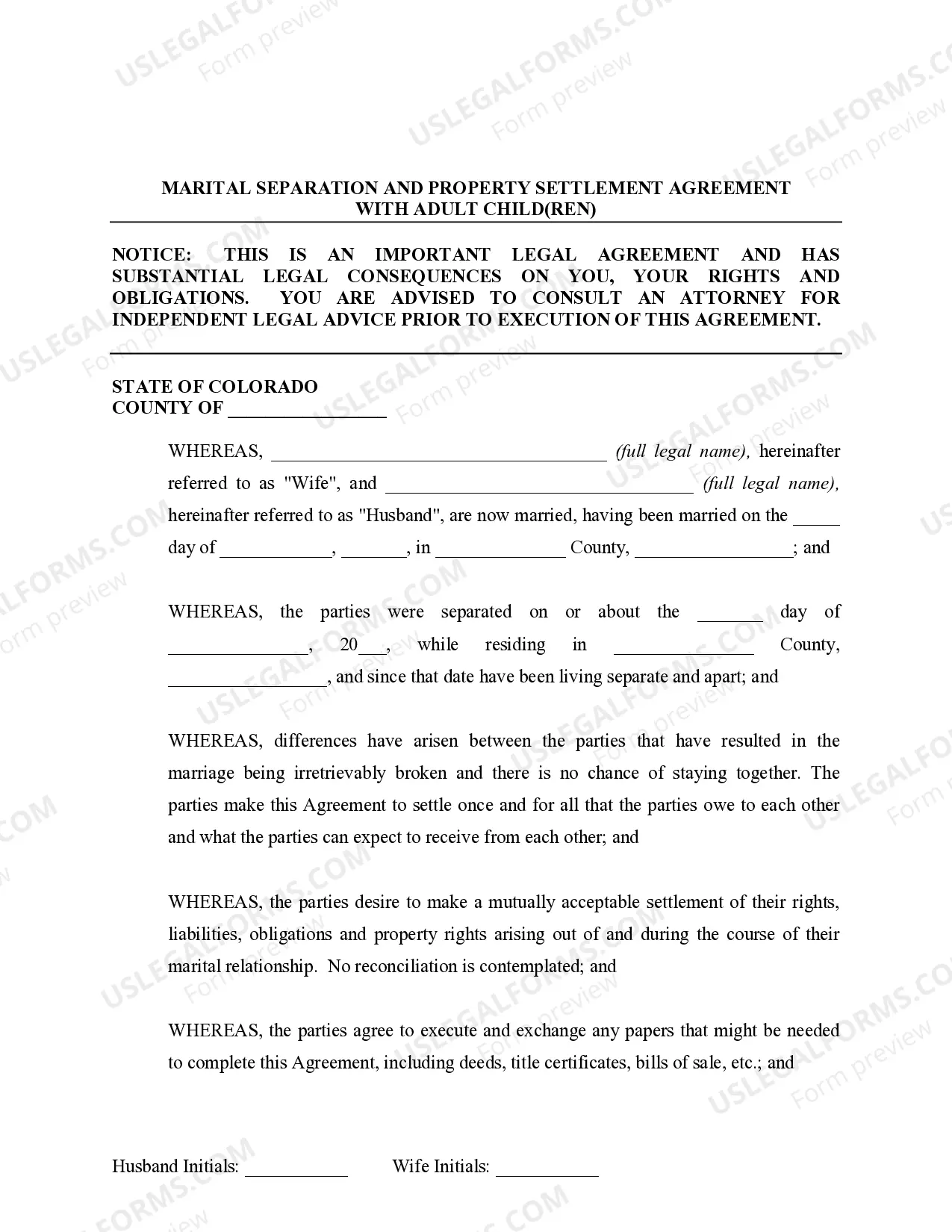
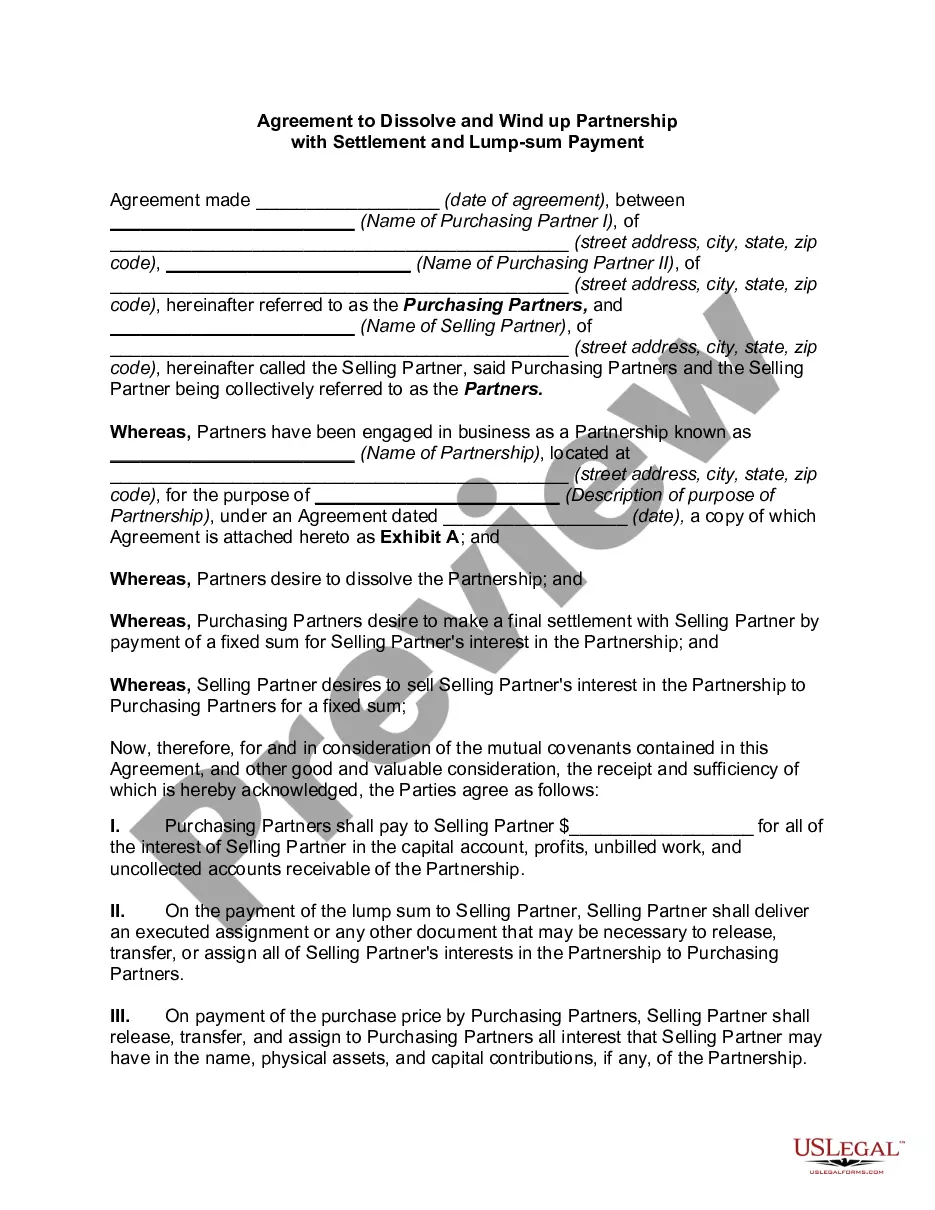
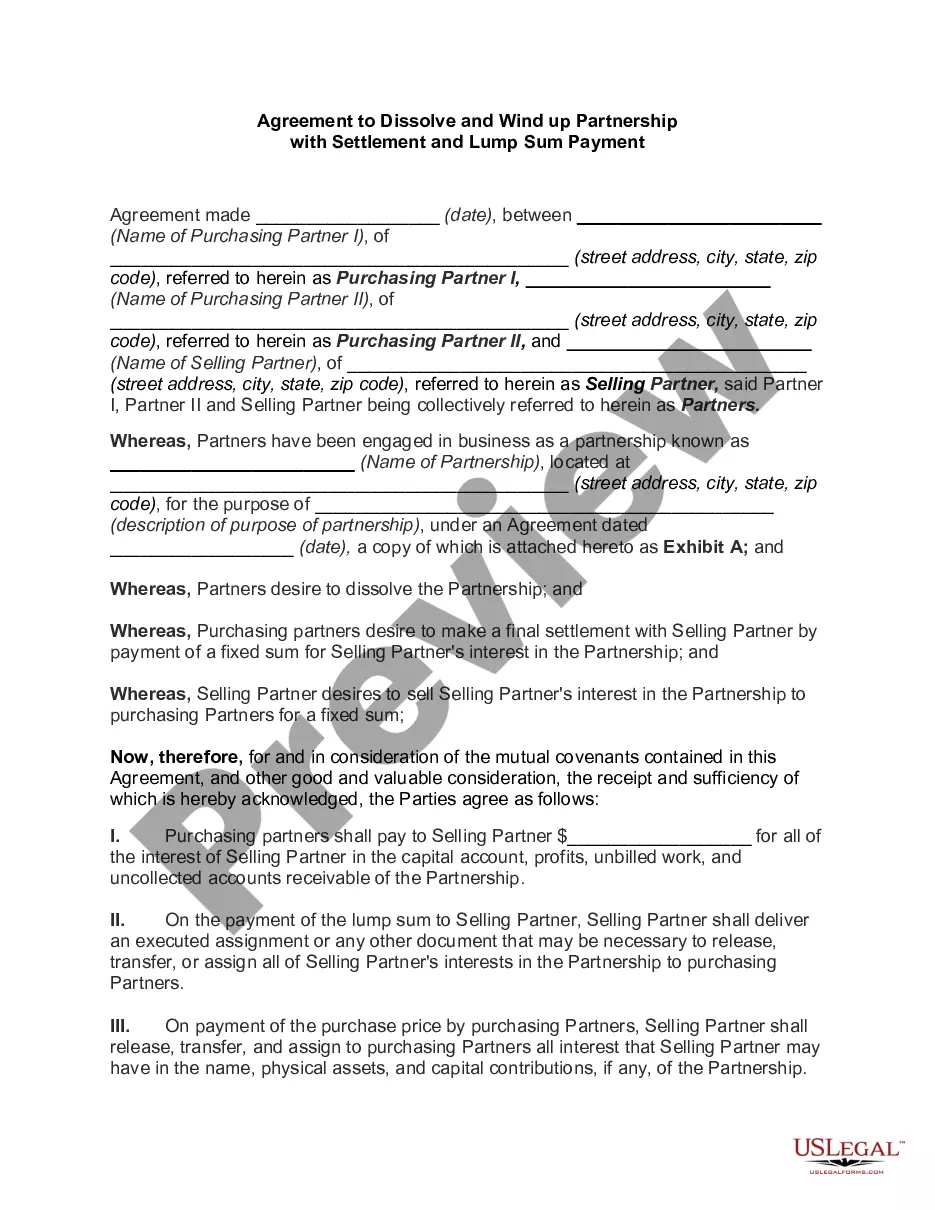
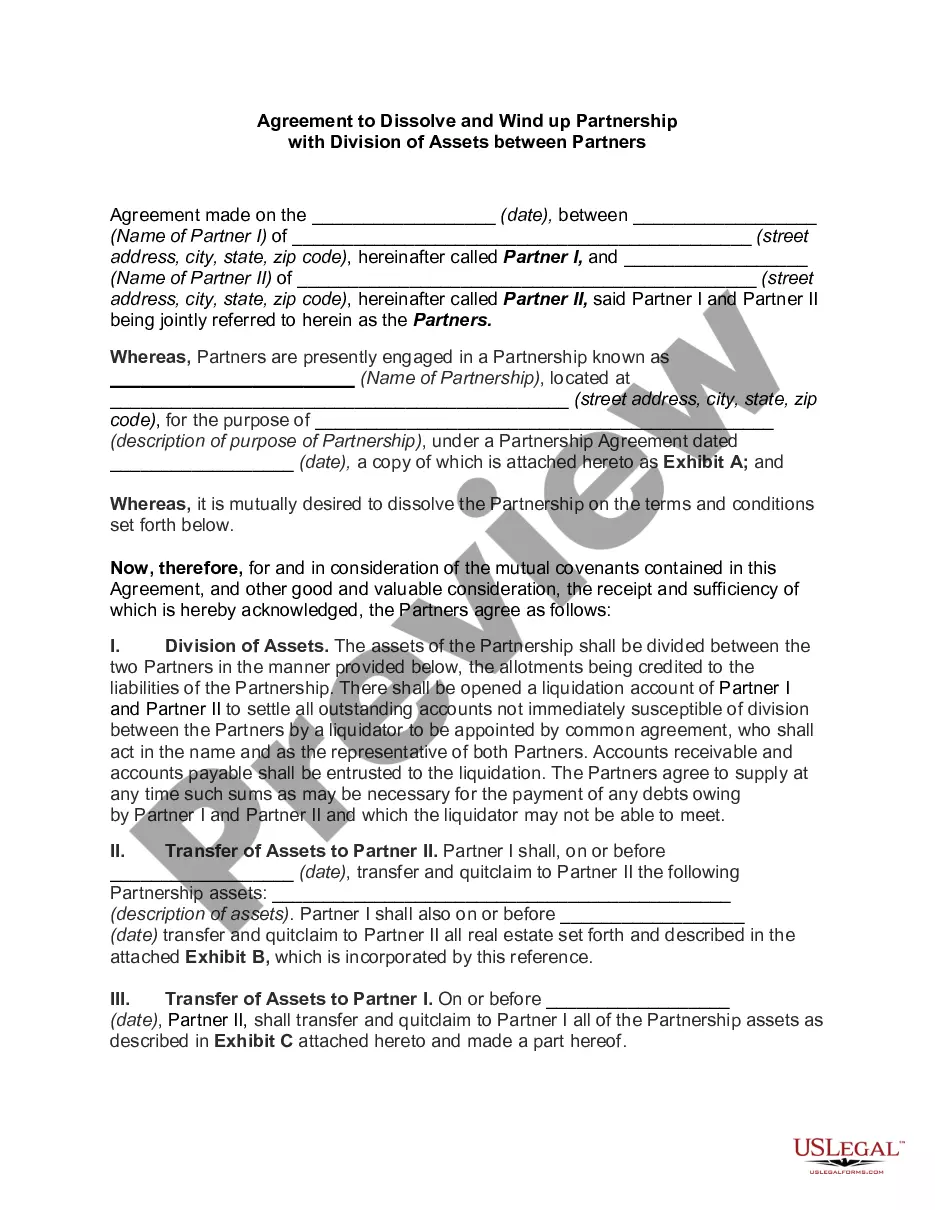
The Legal Separation and Property Settlement Agreement with Adult Children is a legal document used by married couples with adult children who wish to formalize their separation and address the division of marital property and debts. This agreement outlines the rights, obligations, and property rights of each party in the context of an ongoing divorce action. Unlike other separation agreements, this form specifically addresses situations where the parties have adult children and may possess joint property or debts.
Key components of this form
- Identification of the parties involved (Husband and Wife).
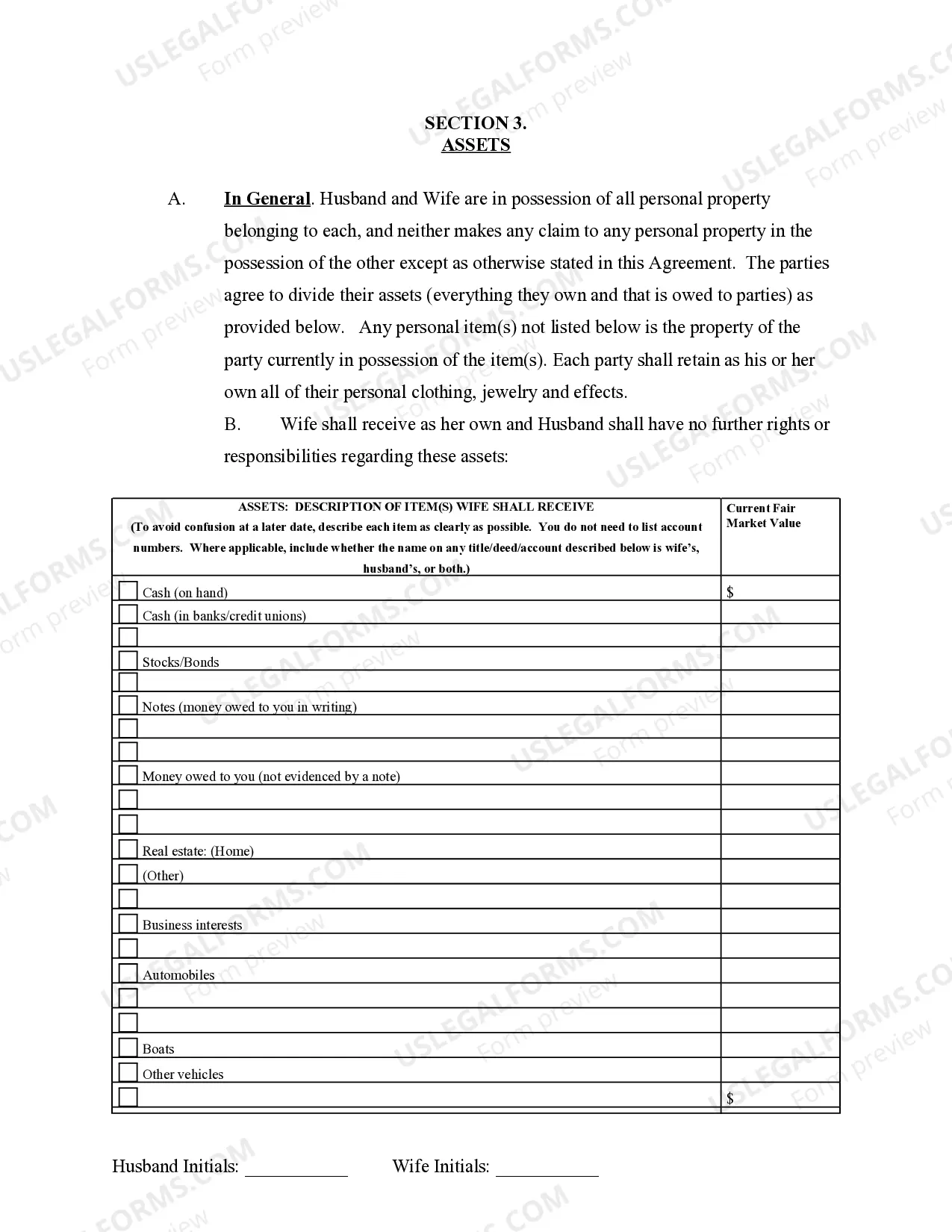
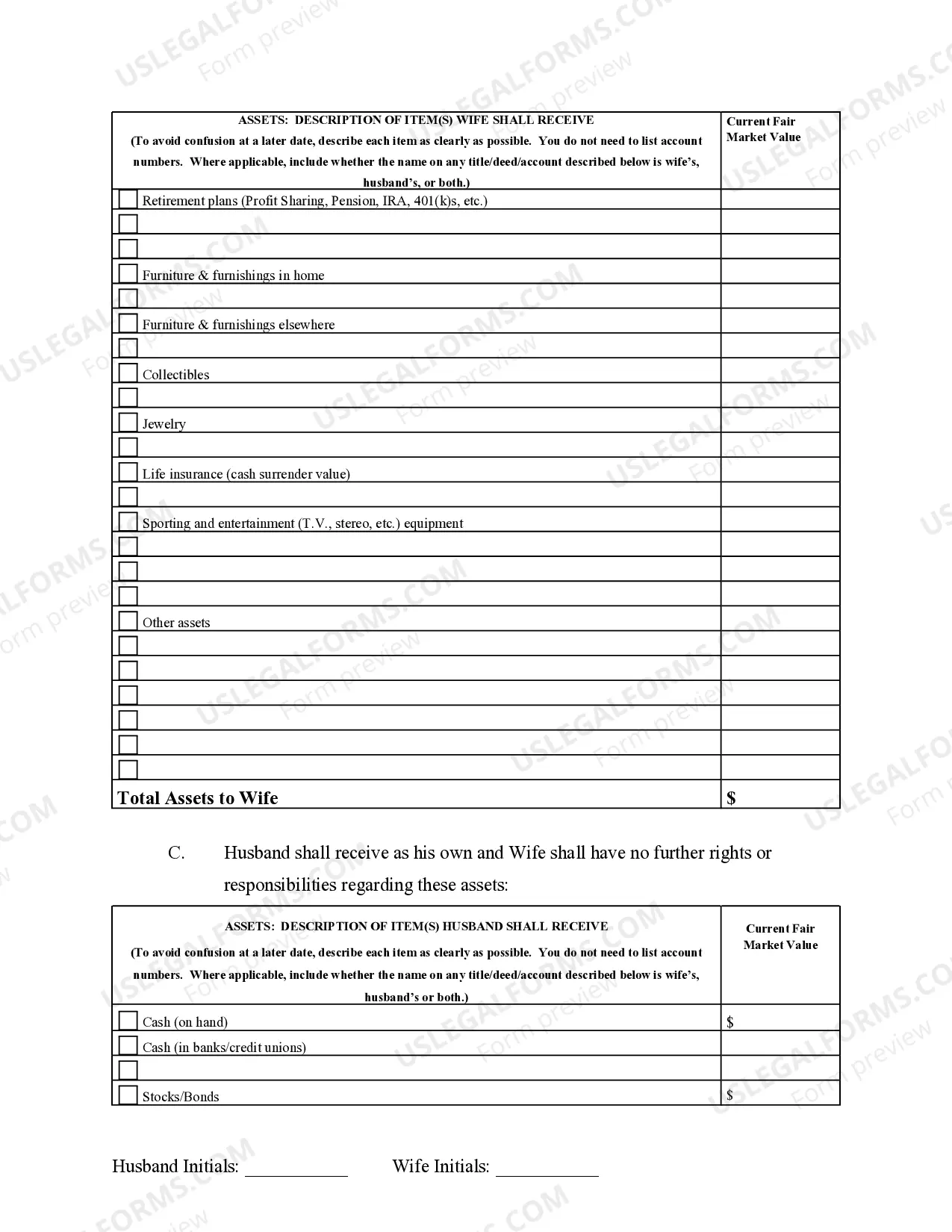
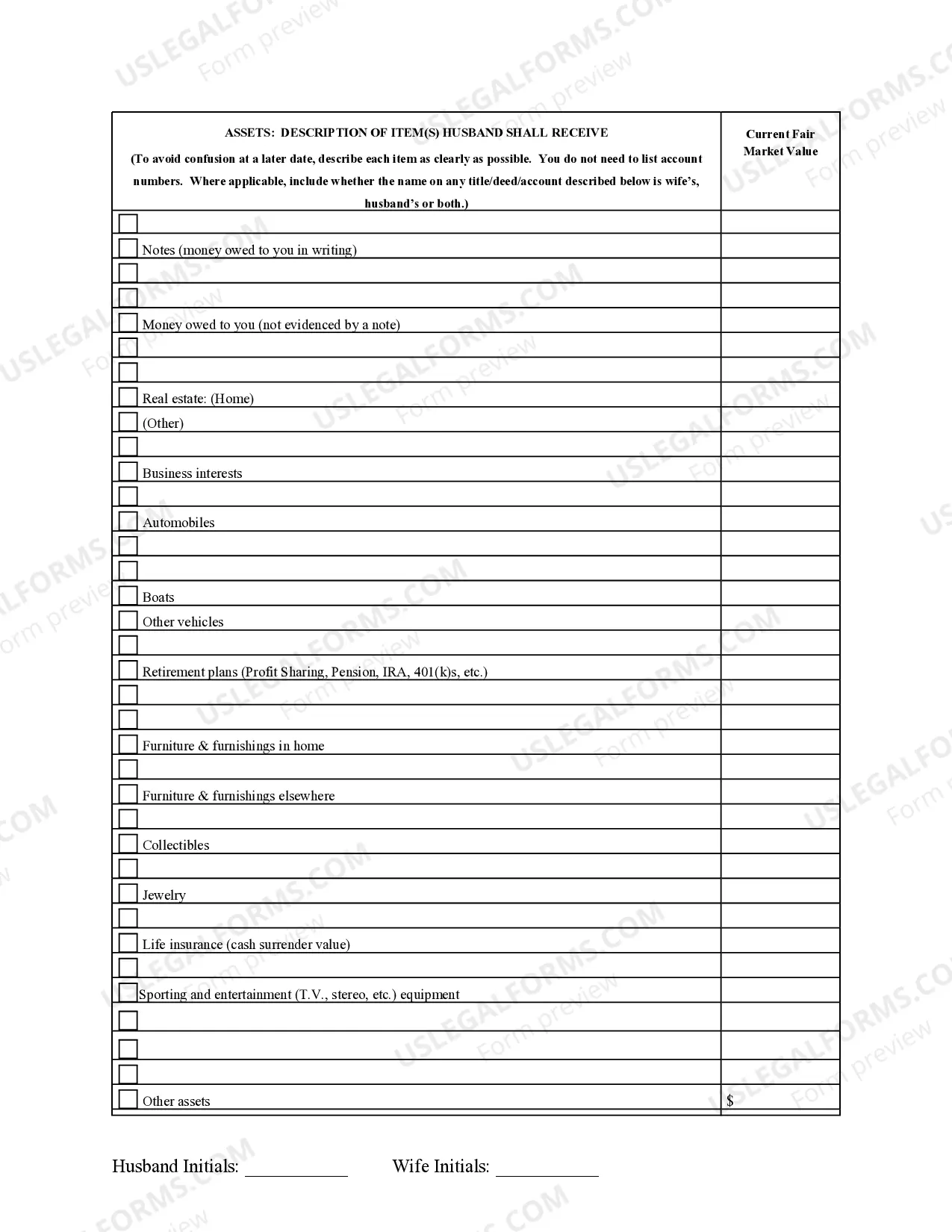
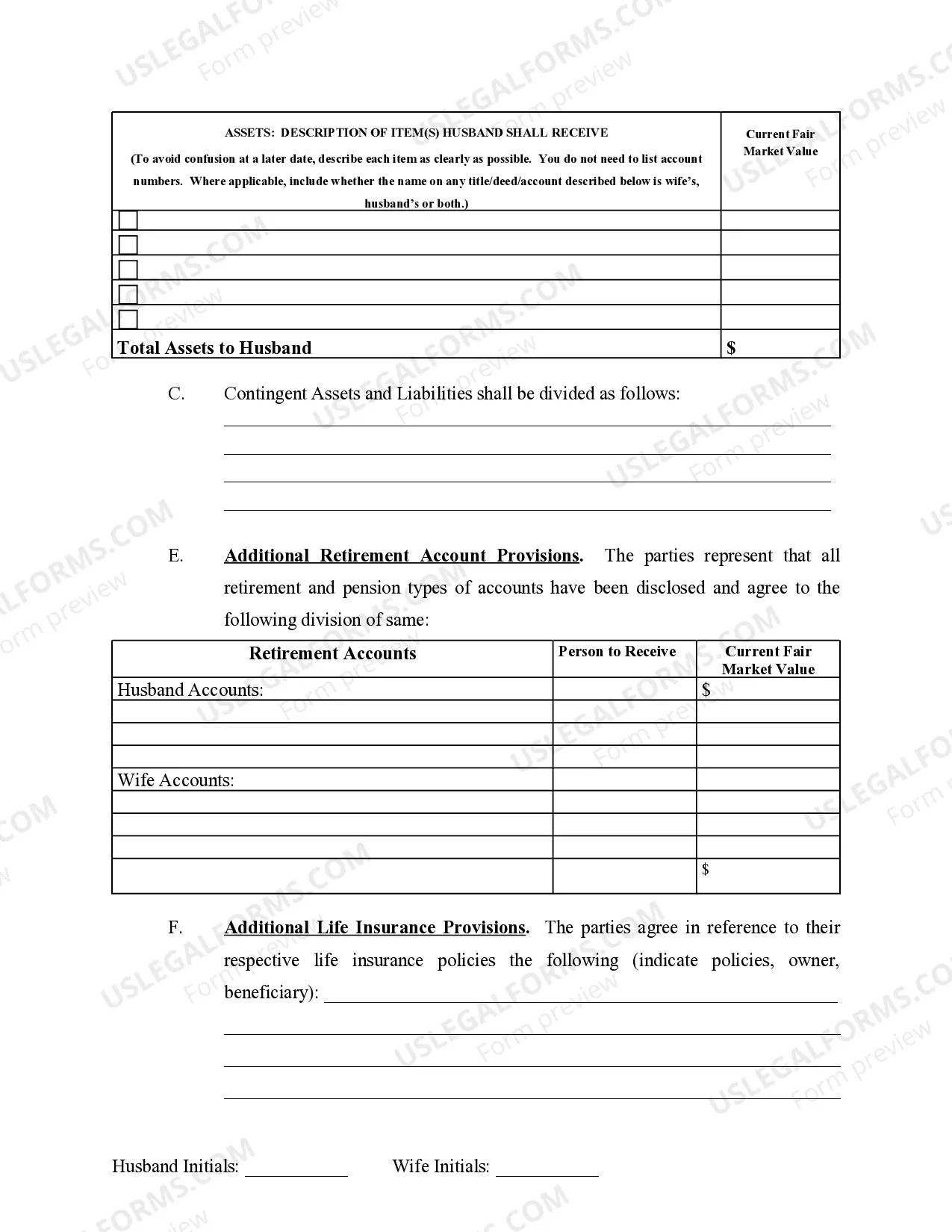
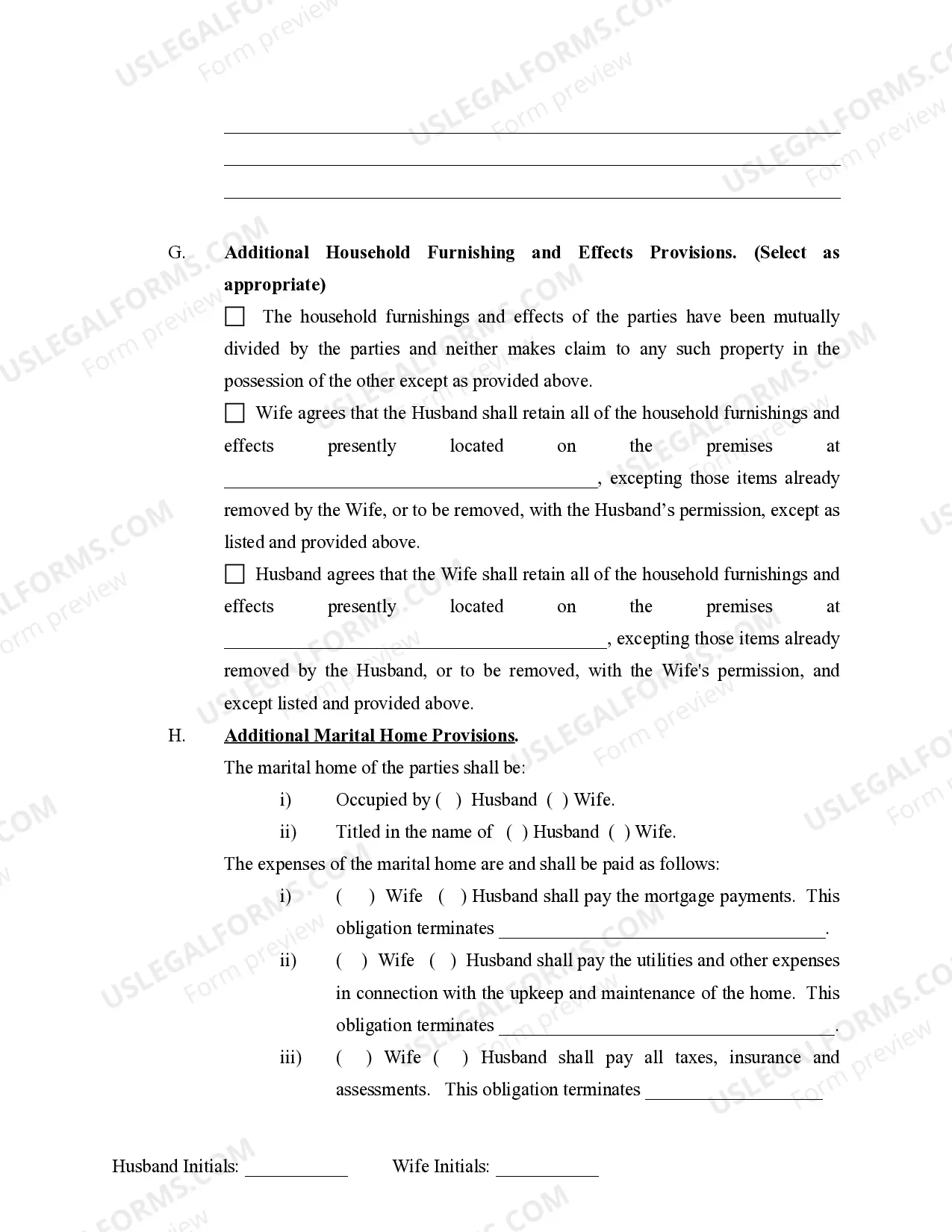
- Provisions for the division of assets, including real estate, retirement accounts, and personal property.
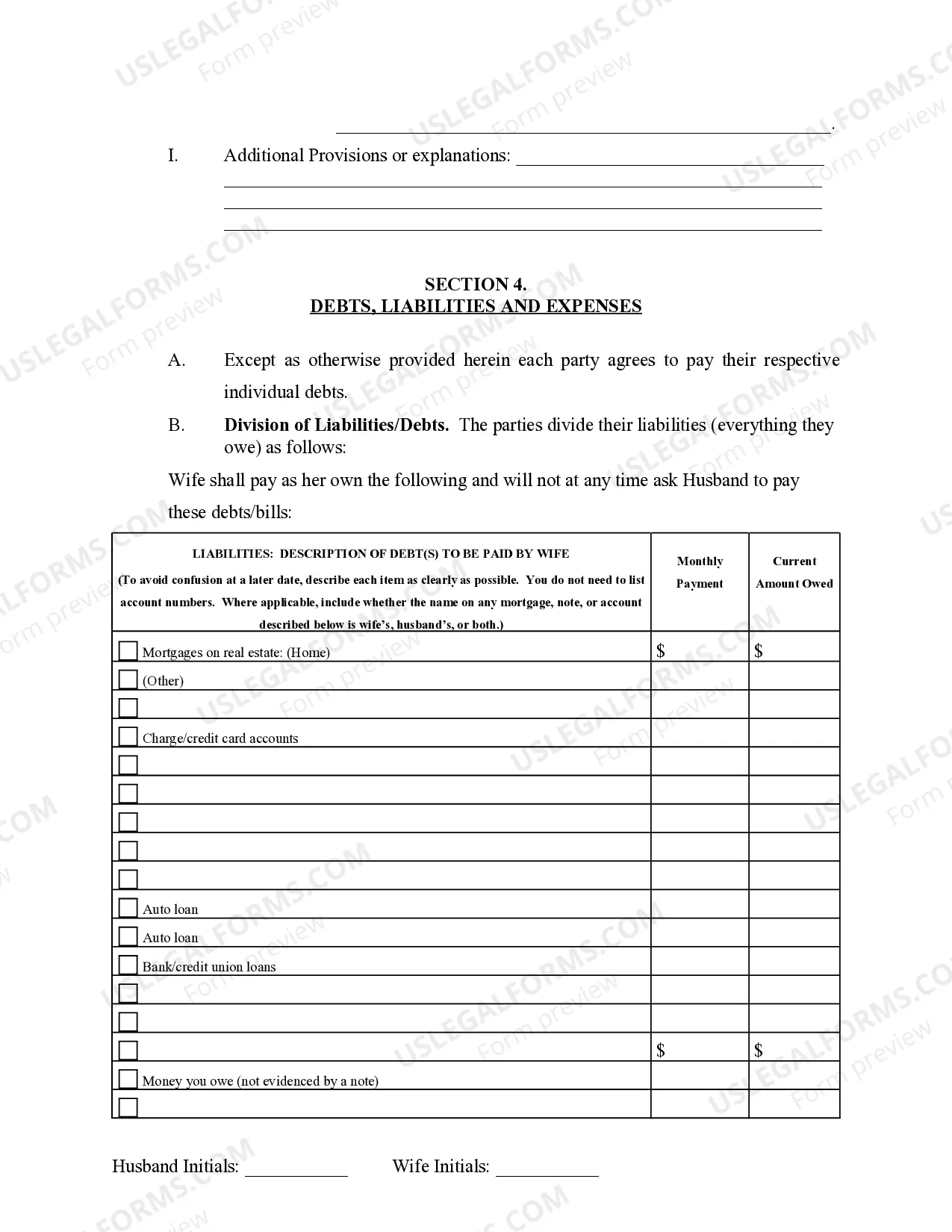
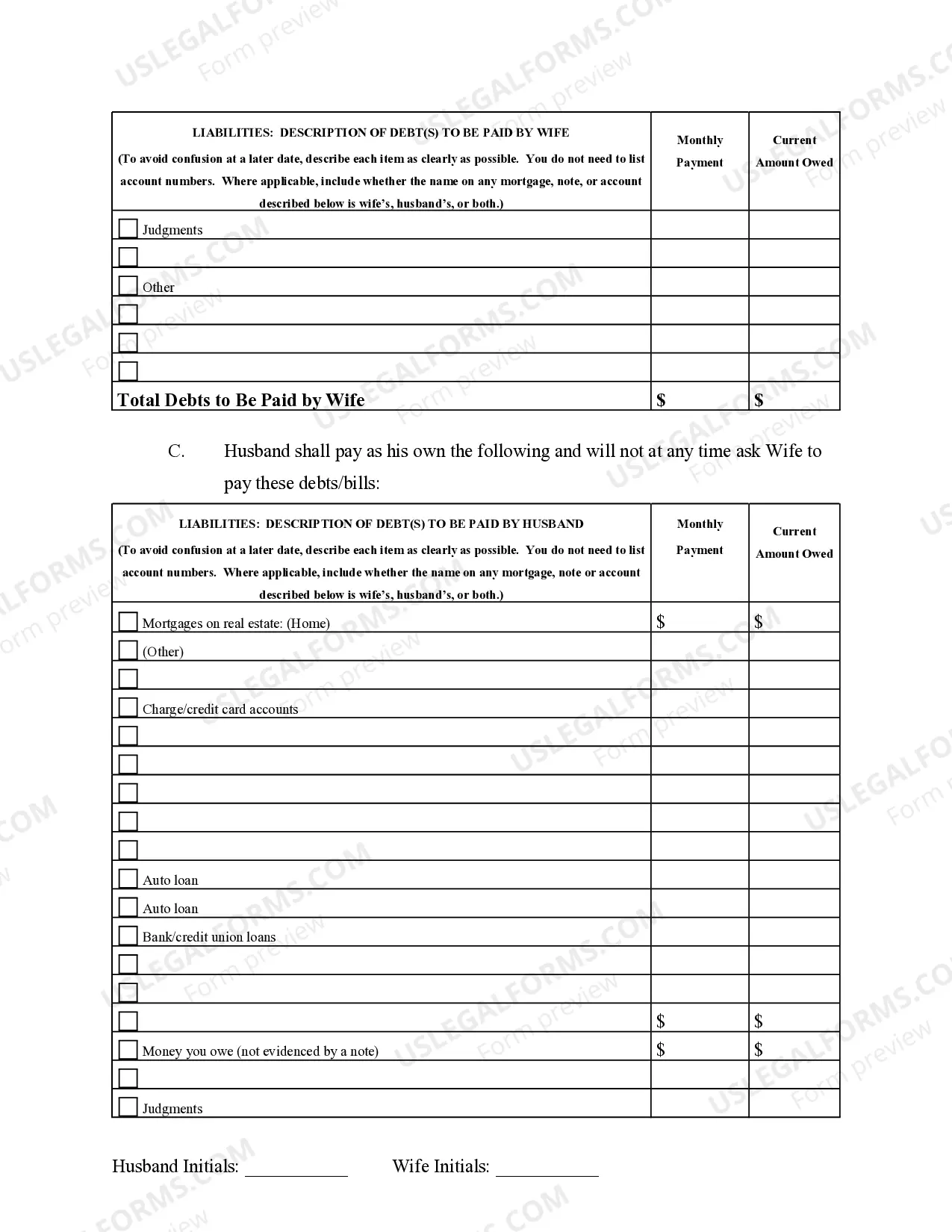
- Agreement on the payment of individual debts and liabilities.
- Details about spousal support (alimony) arrangements if applicable.
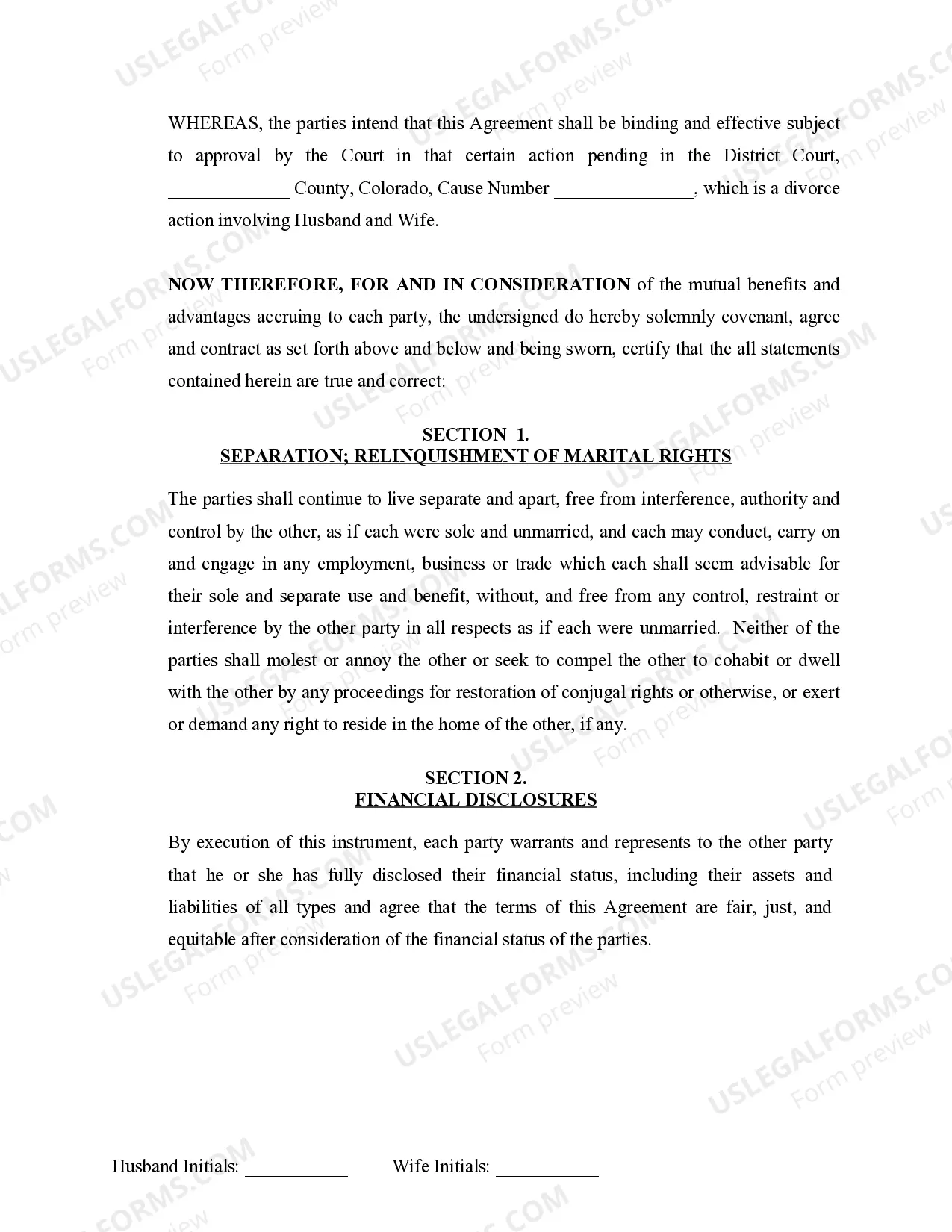
- Legal disclosures, including potential financial impacts and the recommendation to consult an attorney.
- Conditions for binding the agreement, including court approval.

When to use this document
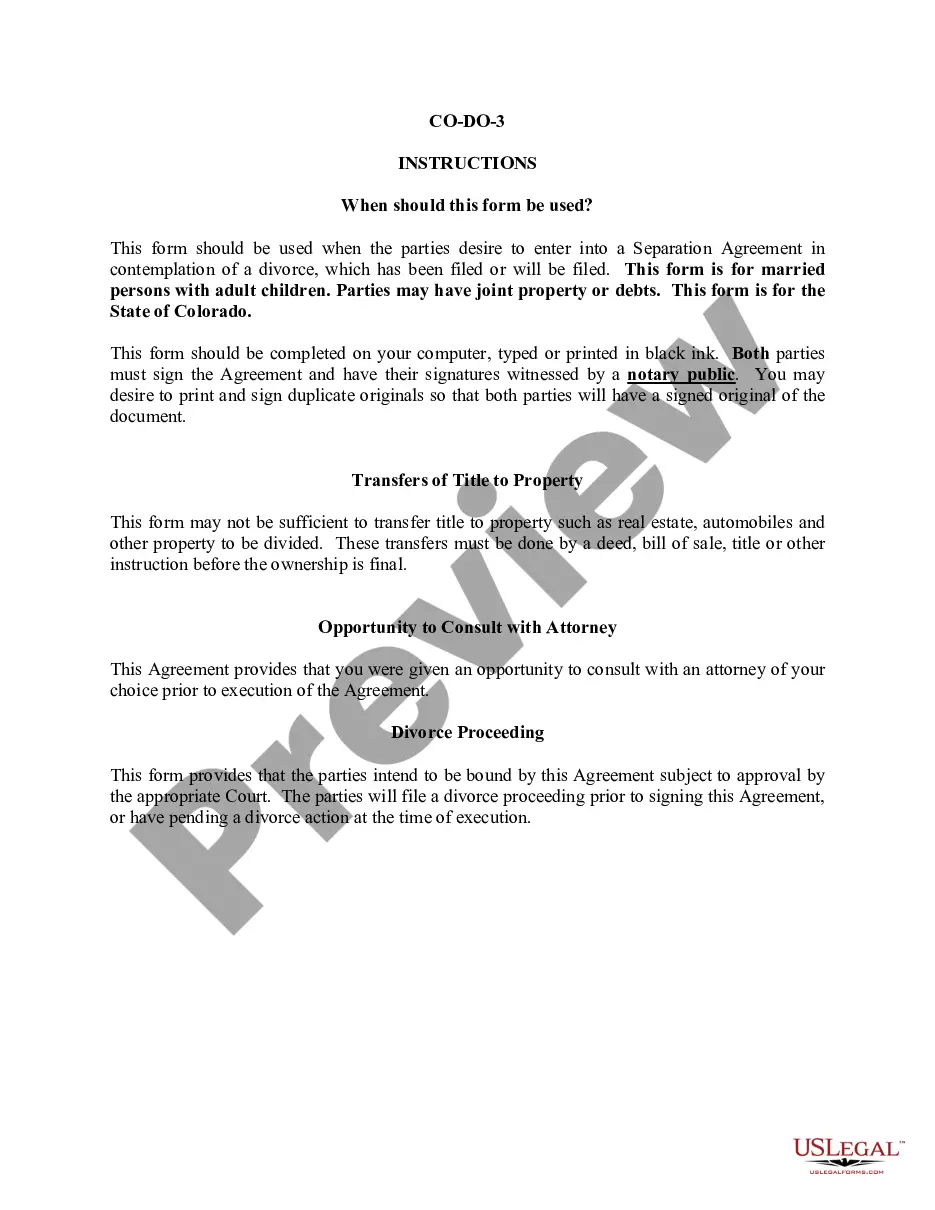
This form should be used when married couples with adult children want to establish a formal separation agreement as part of a divorce process. It is applicable when both parties wish to define their financial responsibilities and rights regarding jointly owned property and debts while ensuring clarity and legal enforceability in their settlement.
Intended users of this form
- Married couples with adult children looking to separate legally.
- Couples who own joint property or have shared debts.
- Individuals currently involved in divorce proceedings.
How to complete this form
- Identify and enter the full legal names of both parties involved in the agreement.
- Detail the separation date and relevant property information, including asset and debt descriptions.
- Clearly state the division of assets and liabilities in the appropriate sections.
- Include any agreements on spousal support, specifying amounts and payment schedules.
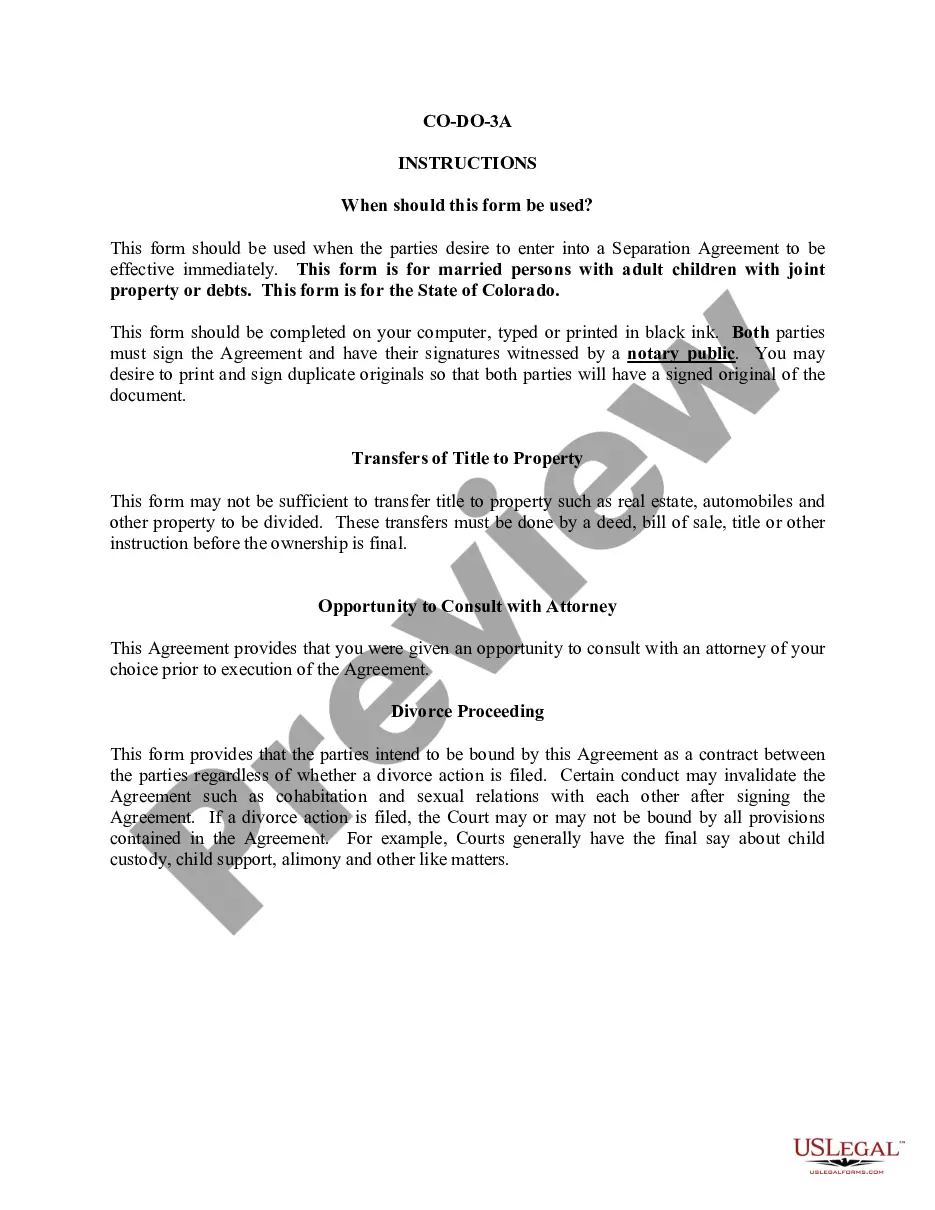
- Both parties must sign the document in the presence of a notary public.
Notarization guidance
This document requires notarization to meet legal standards. US Legal Forms provides secure online notarization powered by Notarize, allowing you to complete the process through a verified video call, available 24/7.
Get your form ready online
Our built-in tools help you complete, sign, share, and store your documents in one place.
Make edits, fill in missing information, and update formatting in US Legal Forms—just like you would in MS Word.
Download a copy, print it, send it by email, or mail it via USPS—whatever works best for your next step.
Sign and collect signatures with our SignNow integration. Send to multiple recipients, set reminders, and more. Go Premium to unlock E-Sign.
If this form requires notarization, complete it online through a secure video call—no need to meet a notary in person or wait for an appointment.
We protect your documents and personal data by following strict security and privacy standards.

Make edits, fill in missing information, and update formatting in US Legal Forms—just like you would in MS Word.

Download a copy, print it, send it by email, or mail it via USPS—whatever works best for your next step.

Sign and collect signatures with our SignNow integration. Send to multiple recipients, set reminders, and more. Go Premium to unlock E-Sign.

If this form requires notarization, complete it online through a secure video call—no need to meet a notary in person or wait for an appointment.

We protect your documents and personal data by following strict security and privacy standards.
Mistakes to watch out for
- Failing to adequately disclose all assets and debts.
- Not specifying how property transfers will occur.
- Neglecting to have the agreement notarized, if required.
- Overlooking the necessity to consult with an attorney for legal advice.
Why complete this form online
- Convenience of downloading the form immediately.
- Editability allows parties to customize the agreement for their specific needs.
- Reliability of forms drafted by licensed attorneys to ensure legal compliance.
- Access to guidance and support throughout the filling process.
Looking for another form?
Form popularity
FAQ
In Colorado, debt is divided based on the concept of marital versus separate property. Generally, any debt accrued during the marriage is considered marital and will be divided equitably. Understanding this distinction and working on a clear separation agreement can help manage debts effectively during the divorce process.
A separation agreement should include details about the division of marital property, debts, and the responsibilities for any adult children. It’s vital to specify how decisions will be made and how expenses will be shared moving forward. By including these elements, you can create a comprehensive Colorado legal separation and property settlement agreement that minimizes future disputes.
To fill out a separation agreement, begin by gathering all relevant financial information and documents. Clearly outline the division of assets and liabilities, as well as any arrangements for adult children's care. Utilizing resources like USLegalForms can simplify the process and ensure that your agreement is thorough and complies with Colorado laws.
The first step when separating is to communicate openly about the decision and the future. It’s crucial to discuss how to handle property division, debts, and any arrangements for adult children. Taking these steps early can lead to a smoother Colorado legal separation and property settlement agreement.
If one spouse does not want a separation, it may complicate the process, but it does not prevent it. The initiating spouse can still file for legal separation, even if the other spouse disagrees. This may lead to negotiations or court involvement to reach a resolution, particularly concerning any shared property or debts.
Yes, you can write your own separation agreement as long as it meets the legal requirements in Colorado. It's important to include essential elements like property division, debt obligations, and arrangements for adult children. However, consulting a legal expert or using a platform like USLegalForms can ensure you cover all necessary aspects and comply with state laws.
One significant disadvantage of legal separation is that it does not dissolve the marriage. This means that during this period, couples cannot legally remarry, which can be frustrating for some. Additionally, financial ties remain intact, especially concerning joint property and debts, complicating matters if a divorce action is eventually filed. Navigating these issues can be easier with tools from uslegalforms, which can help you create a comprehensive agreement that addresses your unique situation.
Yes, husbands may have a legal obligation to support their wives during a separation. This support typically comes in the form of spousal support agreements outlined in the Colorado Legal Separation and Property Settlement Agreement with Adult Children. Understanding the specifics of these obligations is crucial for both partners to ensure fair financial arrangements while navigating separate living conditions. You can utilize uslegalforms to create tailored agreements that reflect both parties' rights and responsibilities.
Couples often select legal separation for several reasons. It allows them to maintain certain benefits, such as health insurance, while still living apart. Additionally, legal separation provides a way to address financial and family matters without fully terminating the marriage. This arrangement can be especially beneficial for couples with adult children, as it enables clear management of property and debts during a divorce action filed.
In Colorado, your liability for your spouse's debts often hinges on the nature of the debt. If the debts are jointly incurred during the marriage, you may remain liable even after a legal separation. However, if debts are solely in your spouse's name and accumulated independently, you generally are not accountable. A Colorado Legal Separation and Property Settlement Agreement with Adult Children - Marital - Parties May have Joint Property or Debts - Divorce Action Filed helps clarify these situations and protect your interests.