Colorado Guaranty Attachment to Lease for Guarantor or Cosigner
Understanding this form
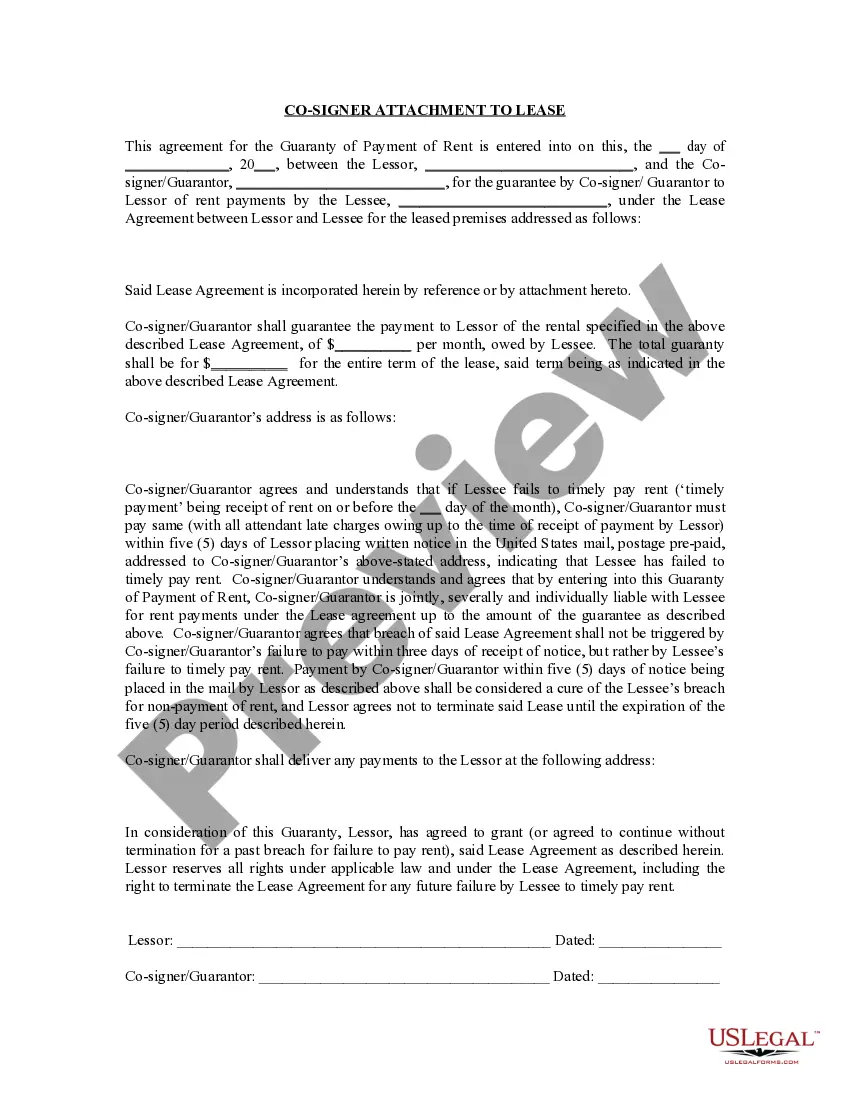
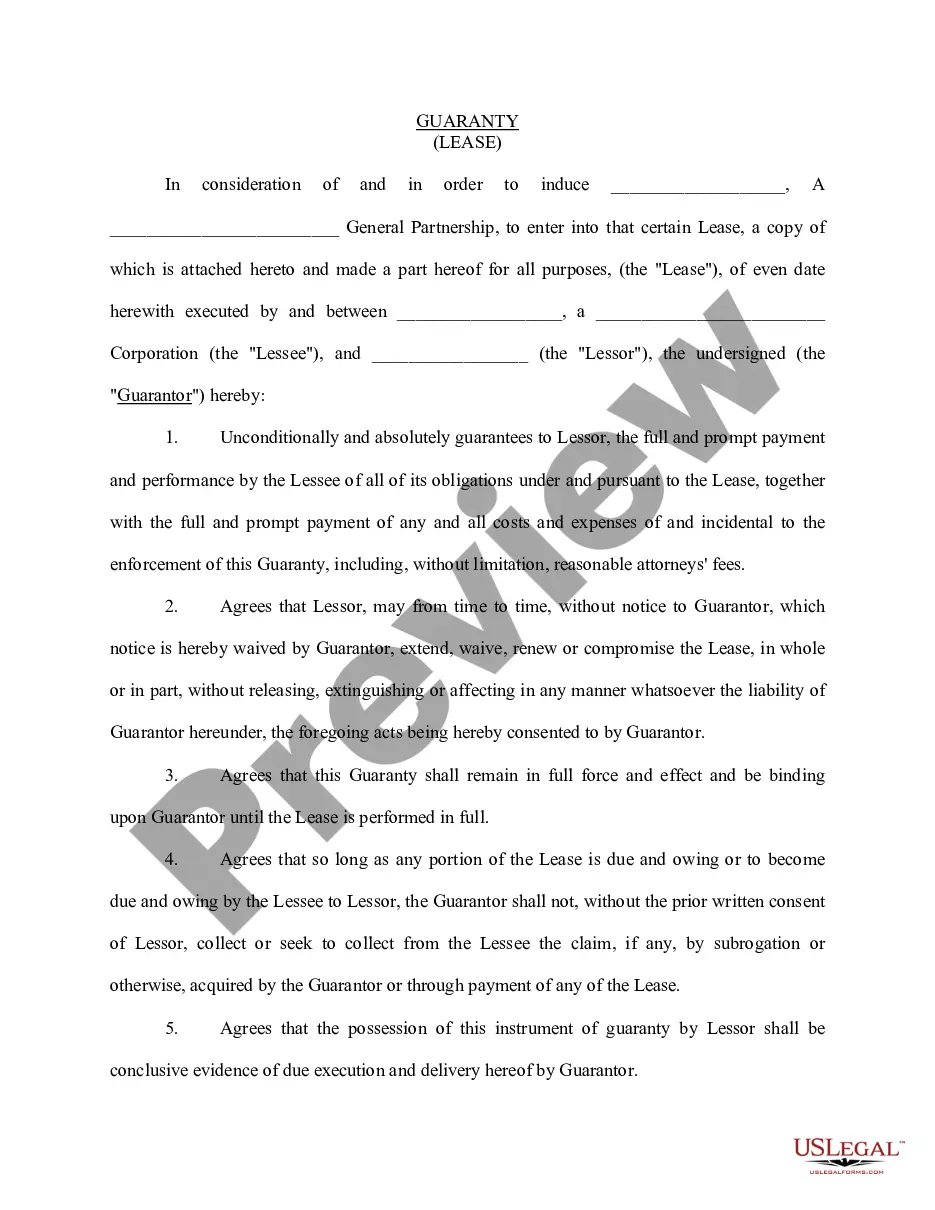
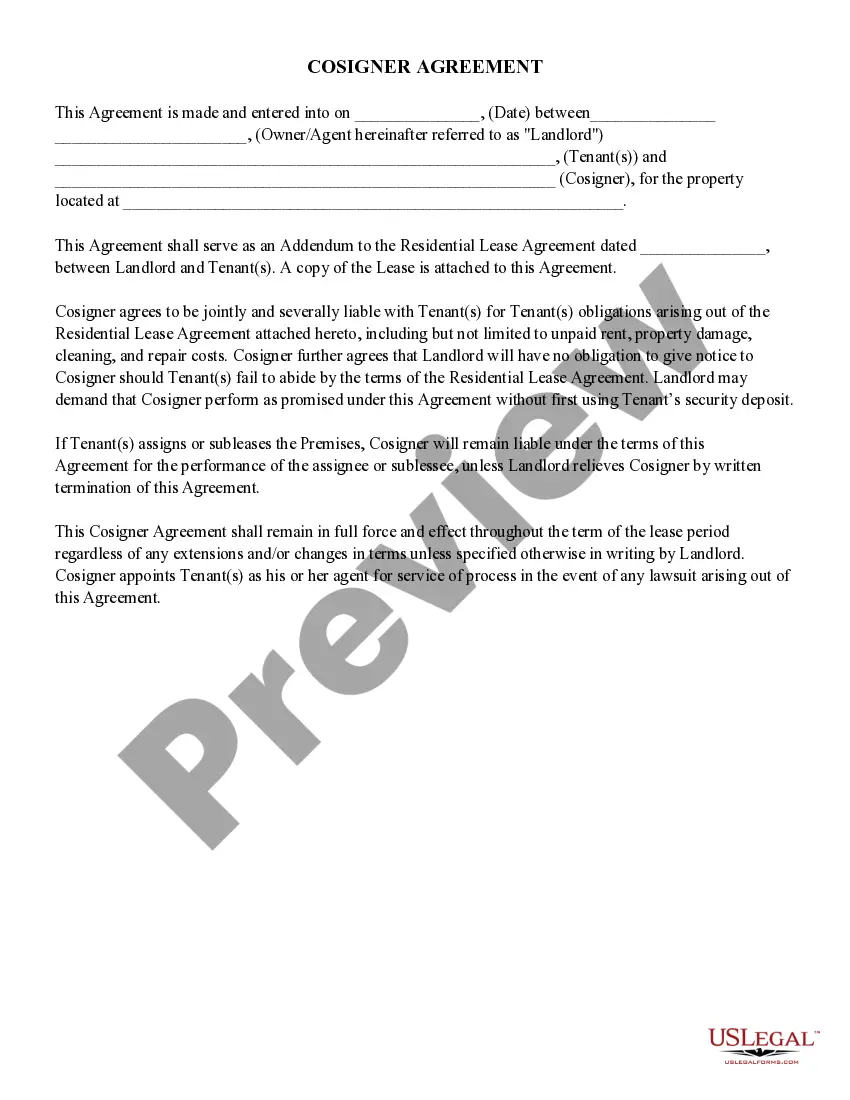
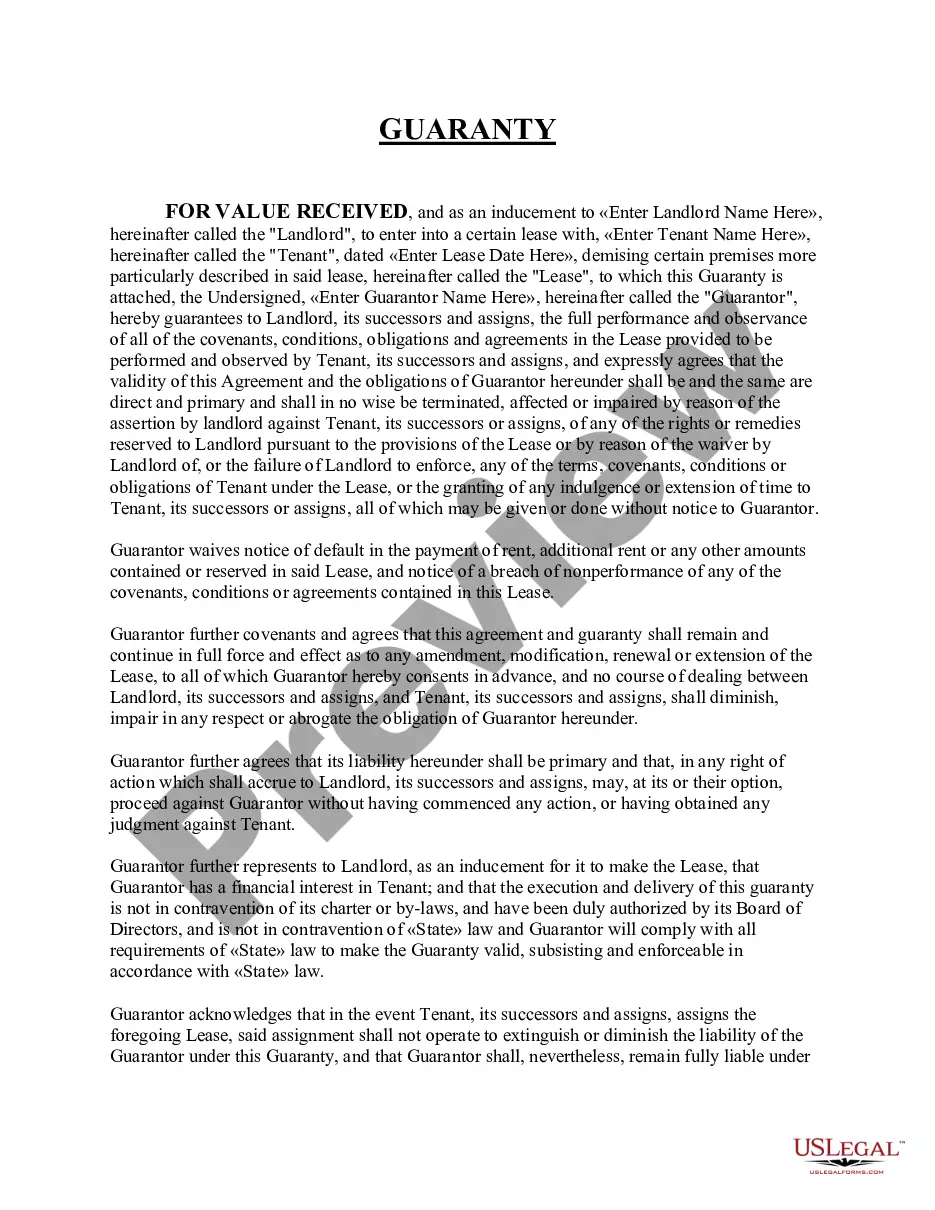
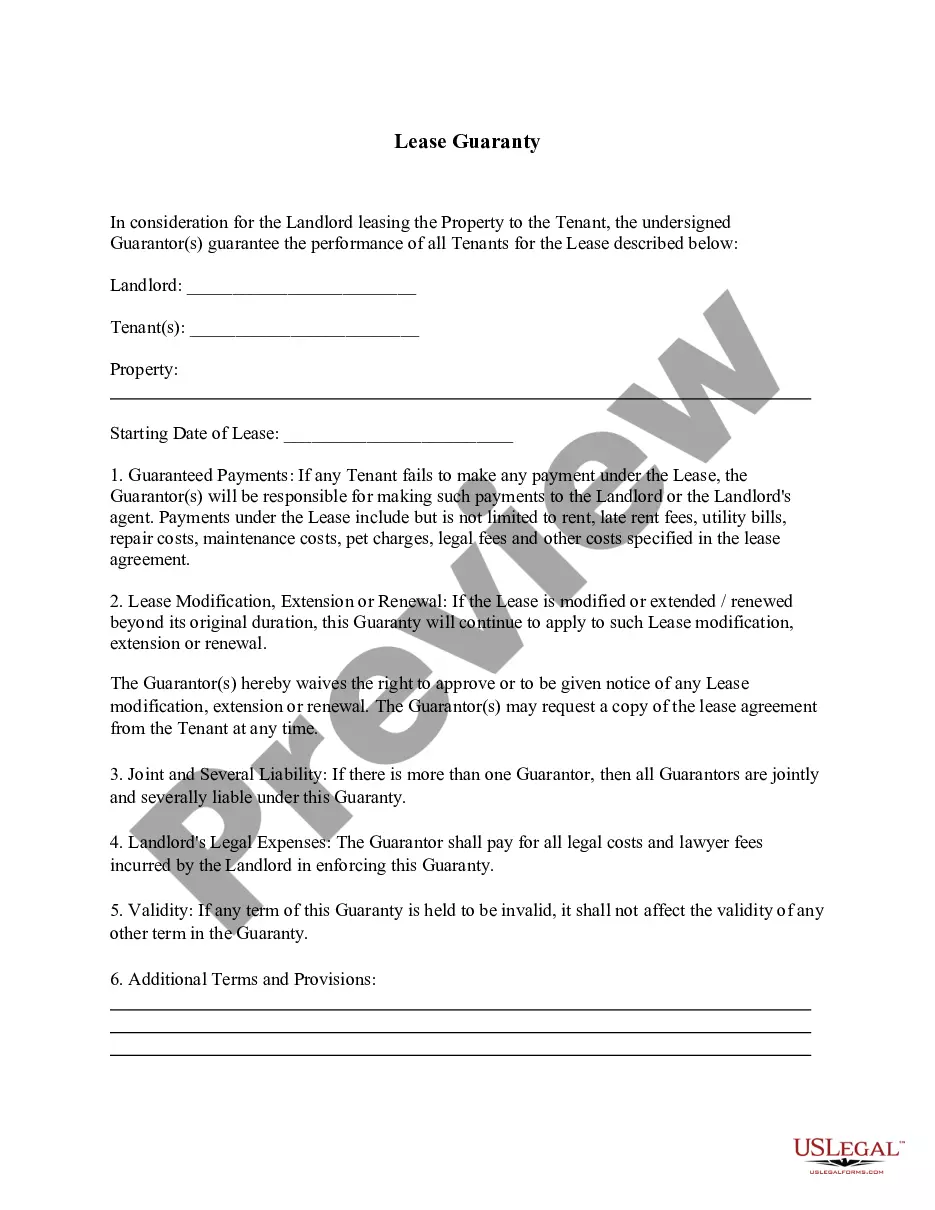
The Guaranty Attachment to Lease for Guarantor or Cosigner is a legal document that allows a third party to co-sign a lease agreement. This guarantor agrees to guarantee payment of rent if the tenant fails to do so. Unlike a standard lease agreement, this form specifically identifies the responsibilities of the guarantor in ensuring that rent is paid, providing additional security for the landlord.
What’s included in this form
- Guarantor's address: where the guarantor can be reached.
- Lessor's name: the party leasing the property.
- Signature fields: for both the lessor and the guarantor, indicating their agreement to the terms.
- Date fields: to record when each party signs the form.
When to use this document
This form is essential when a tenant's creditworthiness is in question, or when the landlord requires additional assurance that rent will be paid. It is commonly used in residential leasing situations where a parent or relative may act as a guarantor for a younger tenant or when the tenant does not meet certain financial criteria required by the landlord.
Intended users of this form
This form is designed for:
- Tenants who need a co-signer to secure a lease.
- Guarantors willing to assume responsibility for the lease obligations.
- Landlords seeking additional security against potential non-payment of rent.
How to complete this form
- Identify the parties: clearly state the names of the lessor and the guarantor.
- Specify the property: provide the address of the rental property being leased.
- Enter dates: include the date on which the agreement is signed by each party.
- Gather signatures: both the lessor and the guarantor must sign the document to validate it.
Does this form need to be notarized?
In most cases, this form does not require notarization. However, some jurisdictions or signing circumstances might. US Legal Forms offers online notarization powered by Notarize, accessible 24/7 for a quick, remote process.
Get your form ready online
Our built-in tools help you complete, sign, share, and store your documents in one place.
Make edits, fill in missing information, and update formatting in US Legal Forms—just like you would in MS Word.
Download a copy, print it, send it by email, or mail it via USPS—whatever works best for your next step.
Sign and collect signatures with our SignNow integration. Send to multiple recipients, set reminders, and more. Go Premium to unlock E-Sign.
If this form requires notarization, complete it online through a secure video call—no need to meet a notary in person or wait for an appointment.
We protect your documents and personal data by following strict security and privacy standards.

Make edits, fill in missing information, and update formatting in US Legal Forms—just like you would in MS Word.

Download a copy, print it, send it by email, or mail it via USPS—whatever works best for your next step.

Sign and collect signatures with our SignNow integration. Send to multiple recipients, set reminders, and more. Go Premium to unlock E-Sign.

If this form requires notarization, complete it online through a secure video call—no need to meet a notary in person or wait for an appointment.

We protect your documents and personal data by following strict security and privacy standards.
Mistakes to watch out for
- Failing to include the guarantor's complete address.
- Not having signatures from both parties.
- Missing or incorrect dates on the form.
Why complete this form online
- Easy access: download and complete the form at your convenience.
- Editability: fill in information directly on your device for accuracy.
- Peace of mind: forms are created by licensed attorneys and comply with legal standards.
Looking for another form?



Form popularity
FAQ
To effectively write a guarantor, you should start with a clear statement of their responsibilities within the lease. Include their personal details and specify which obligations they agree to cover. Incorporating a Colorado Guaranty Attachment to Lease for Guarantor or Cosigner allows you to formalize this aspect smoothly. Ensure both the tenant and the guarantor review and sign the document to create a legally binding agreement.
While a lease guarantor and a cosigner often serve similar roles, they differ slightly in their responsibilities. A cosigner technically shares the lease obligations equally, while a guarantor merely backs the tenant's obligations if they default. It's beneficial to use a Colorado Guaranty Attachment to Lease for Guarantor or Cosigner to clarify each party's role in the lease. Understanding these differences ensures all parties are aware of their legal responsibilities.
A guarantor is not typically listed as a tenant on a lease but is instead a separate party alongside the tenant. Their role is to provide financial assurance to the landlord in case the tenant fails to meet obligations. It is crucial to them that a Colorado Guaranty Attachment to Lease for Guarantor or Cosigner is used to clearly outline their responsibilities. This differentiation protects both the tenant's and guarantor's rights.
You can list a guarantor on a lease by including their name and details on the lease agreement or by attaching a relevant addendum, such as the Colorado Guaranty Attachment to Lease for Guarantor or Cosigner. Make sure to specify the responsibilities of the guarantor clearly. Both the tenant and the guarantor should sign the document to confirm the arrangement. Doing so ensures that the guarantor remains legally bound to the lease terms.
A lease addendum for a cosigner is a document that formally includes a cosigner or guarantor's responsibilities within the lease agreement. This addendum outlines the obligations of the cosigner towards the rental payments and terms. By using a Colorado Guaranty Attachment to Lease for Guarantor or Cosigner, you can clarify these terms and protect both the landlord and tenant. Always review the addendum carefully to ensure it reflects the agreed-upon terms.
Filling out a guarantor form involves providing accurate personal details, including the guarantor's name, address, and contact information. You also need to include financial details, such as income and employment verification, to show that the guarantor can cover the lease obligations. Utilizing a Colorado Guaranty Attachment to Lease for Guarantor or Cosigner can streamline this process and ensure all required information is included. Double-check all entries for accuracy before submission.
To include a guarantor on a lease, you typically need to add their information to the lease agreement or utilize a specific Colorado Guaranty Attachment to Lease for Guarantor or Cosigner. Ensure you have their consent before proceeding. In most cases, both parties must sign the addendum to create a binding agreement. This process protects the landlord by allowing the guarantor to assume responsibility for the lease obligations if the tenant defaults.
If you cannot find a guarantor, you still have options. First, consider providing additional documentation, such as proof of income or rental history, to strengthen your application. You may also explore properties that do not require a guarantor or look into using a Colorado Guaranty Attachment to Lease for Guarantor or Cosigner that allows for alternative solutions. Online platforms like uslegalforms can provide guidance in navigating this process.
Being a guarantor on a lease may impact your credit, particularly if the primary tenant defaults on payments. If you signed a Colorado Guaranty Attachment to Lease for Guarantor or Cosigner, lenders may view your obligation as additional debt. This could influence your ability to secure loans or credit in the future. It's crucial to understand your responsibilities fully before agreeing to be a guarantor.
Whether a guarantor or co-signer is required typically depends on the tenant's financial standing and the landlord's policies. Many landlords request a guarantor under the Colorado Guaranty Attachment to Lease for Guarantor or Cosigner when applicants lack sufficient credit history or income. This requirement helps landlords mitigate potential risks while allowing tenants access to housing.