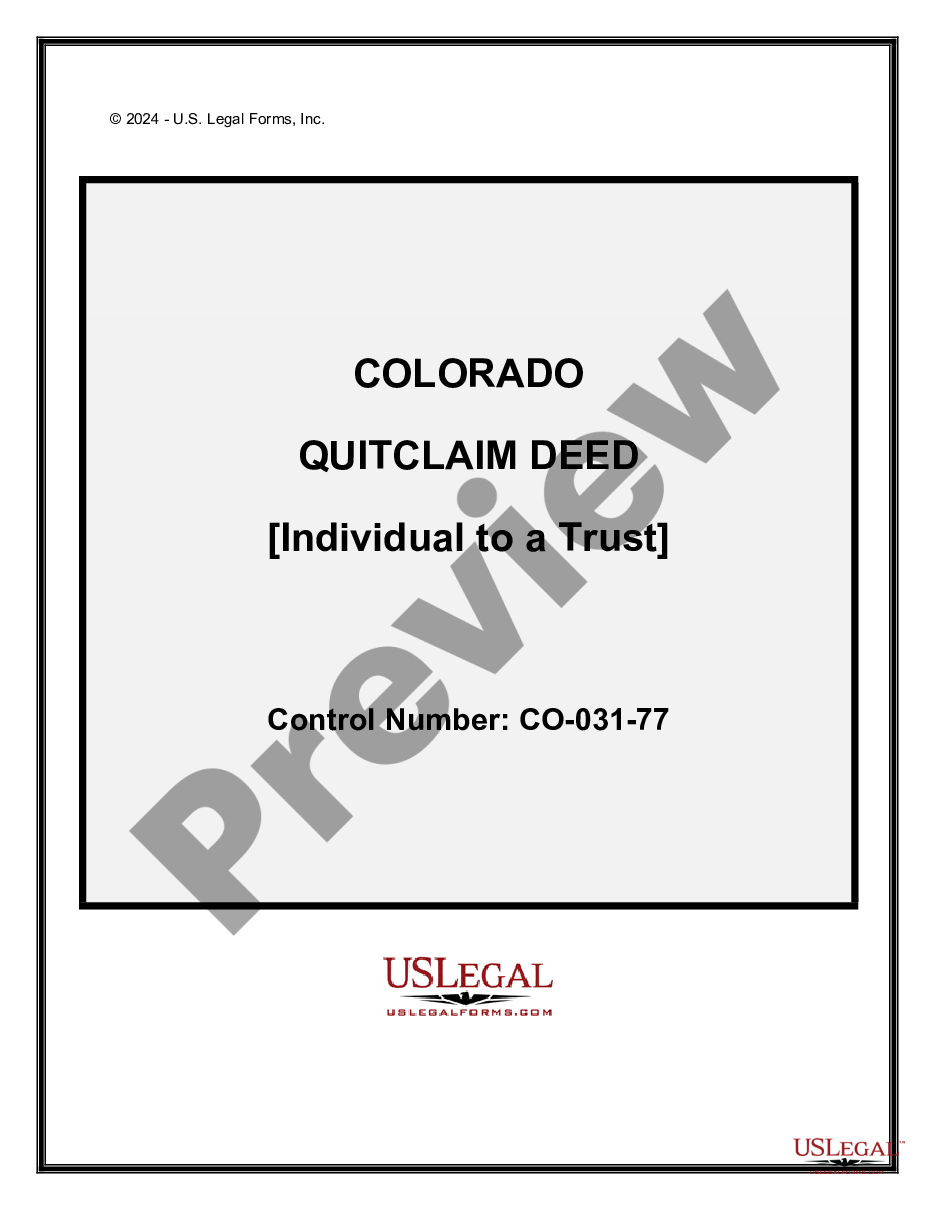
Colorado Quit claim Deed from an Individual to a Trust
What is this form?
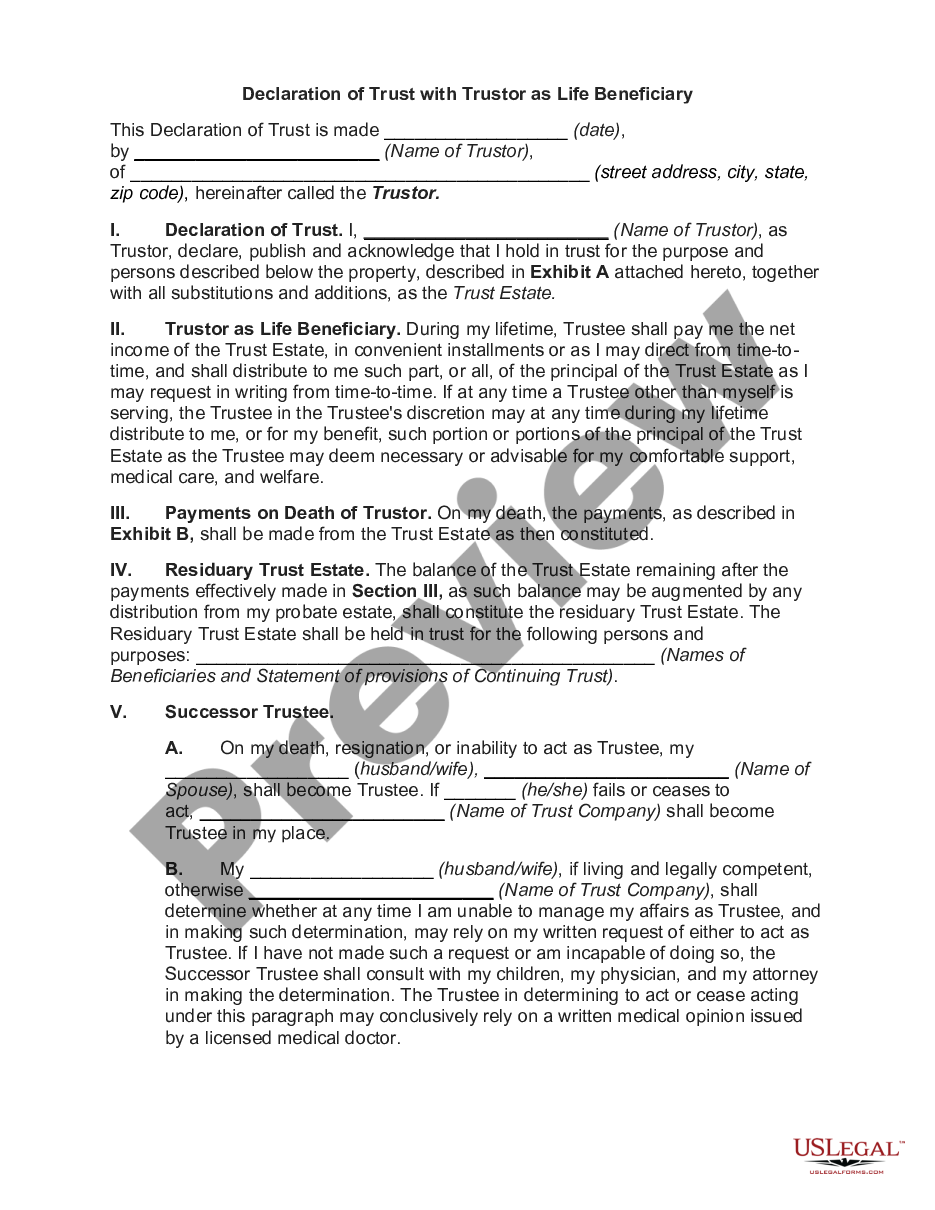
The Quitclaim Deed from an Individual to a Trust is a legal document that allows an individual (the Grantor) to transfer ownership of property to a trust (the Grantee). This form is utilized to convey rights and interests in real estate without guaranteeing the title. Unlike a warranty deed, a quitclaim deed does not provide any assurances about the property's title status, making it a straightforward option for transferring property within estate planning or asset management contexts.
Key parts of this document
- Identification of the Grantor: The individual transferring the property.
- Identification of the Grantee: The trust receiving the property.
- Description of the property: Detailed legal description of the real estate being transferred.
- Recorded statement: A section for indicating the intended recording with the county clerk or recorder.
- Signatures: Spaces for the Grantor to sign and date the deed.






Situations where this form applies
This form should be used when an individual wishes to transfer property to a trust, often for purposes of estate planning or asset protection. This is particularly useful when the Grantor wants to avoid probate, simplify the property transfer process, or manage the property within the trust for future beneficiaries.
Who needs this form
- Individuals looking to transfer real estate to a trust.
- Grantors in the process of estate planning.
- Property owners wanting to simplify property management for beneficiaries.
- Those seeking to avoid probate for the transferred property.
Completing this form step by step
- Identify the parties: Fill in the name and address of the Grantor and the trust as the Grantee.
- Specify the property: Provide a complete legal description of the property being transferred.
- Enter dates and signatures: Include the date of the transfer and ensure the Grantor signs the deed.
- Include a statement for recording: Indicate whether the deed will be recorded and provide relevant information.
- Verify the form: Ensure all information is accurate and complete before submission.
Notarization requirements for this form
To make this form legally binding, it must be notarized. Our online notarization service, powered by Notarize, lets you verify and sign documents remotely through an encrypted video session.
Get your form ready online
Our built-in tools help you complete, sign, share, and store your documents in one place.
Make edits, fill in missing information, and update formatting in US Legal Forms—just like you would in MS Word.
Download a copy, print it, send it by email, or mail it via USPS—whatever works best for your next step.
Sign and collect signatures with our SignNow integration. Send to multiple recipients, set reminders, and more. Go Premium to unlock E-Sign.
If this form requires notarization, complete it online through a secure video call—no need to meet a notary in person or wait for an appointment.
We protect your documents and personal data by following strict security and privacy standards.

Make edits, fill in missing information, and update formatting in US Legal Forms—just like you would in MS Word.

Download a copy, print it, send it by email, or mail it via USPS—whatever works best for your next step.

Sign and collect signatures with our SignNow integration. Send to multiple recipients, set reminders, and more. Go Premium to unlock E-Sign.

If this form requires notarization, complete it online through a secure video call—no need to meet a notary in person or wait for an appointment.

We protect your documents and personal data by following strict security and privacy standards.
Common mistakes to avoid
- Failing to provide a complete legal description of the property.
- Not obtaining signatures from all necessary parties.
- Overlooking state-specific filing requirements.
- Leaving out the recording information section.
Benefits of using this form online
- Convenience of completing the form at any time and from any location.
- Editability allows for corrections and updates before finalizing.
- Reliability of templates drafted by licensed attorneys ensures compliance with legal standards.
Quick recap
- Quit Claim Deed allows an individual to transfer property to a trust without warranties.
- This form is essential for estate planning and managing property ownership.
- Ensure notarization is completed for the document to be valid in legal contexts.
Looking for another form?

Form popularity
FAQ
In Colorado, a quitclaim deed works by transferring the ownership interest of the property from one party to another, such as in a Colorado Quit claim Deed from an Individual to a Trust. The deed is executed and must be recorded with the county clerk and recorder's office to be effective. Importantly, this deed does not assure the buyer of the property’s title quality, and it’s advisable to conduct a title search beforehand. Using platforms like uslegalforms can simplify the process and provide necessary legal guidance.
Yes, a quitclaim deed does transfer ownership in Colorado, including through the Colorado Quit claim Deed from an Individual to a Trust. However, it's important to note that this deed type only conveys the interest that the grantor has in the property, without offering any warranties. This means that if the grantor has no legal claim or the property has liens, the recipient may face challenges. Always consider consulting with professionals to ensure clear and valid title transfer.
Quitclaim deeds, such as the Colorado Quit claim Deed from an Individual to a Trust, are often viewed with caution because they do not guarantee the absence of liens or claims against the property. This means that the person receiving the property may inherit unexpected financial liabilities. Additionally, using a quitclaim deed can create uncertainty about ownership and rights, which can lead to future disputes. It's essential to consult with a legal expert to understand the implications when using this type of deed.
To transfer property into a trust in Colorado, you would typically need to execute a Colorado Quit Claim Deed from an Individual to a Trust. This deed serves to formally reassign the property from your name to the trust. It's advisable to work with a real estate attorney to navigate the process and ensure that all legal requirements are met.
While putting property in a trust can offer benefits, there are disadvantages to consider. The process of transferring property using a Colorado Quit Claim Deed from an Individual to a Trust can involve fees and paperwork. Additionally, there may be ongoing administrative responsibilities and potential tax implications involved with managing the trust.
Yes, you can transfer a property with a mortgage to a trust using a Colorado Quit Claim Deed from an Individual to a Trust. However, it's important to check the terms of your mortgage. Some lenders may have specific requirements or restrictions when transferring property into a trust. Consulting with a legal expert can help ensure the transfer goes smoothly.
Deciding between gifting a house or using a Colorado Quit claim Deed from an Individual to a Trust depends on your goals. Gifting may seem straightforward, but placing your house in a trust can provide more control over the property in the long term, allowing for conditions to be set. We recommend considering your estate planning needs; using platforms like USLegalForms can simplify the process of creating the necessary legal documents.
To transfer property into a trust in Colorado, you typically use a Colorado Quit claim Deed from an Individual to a Trust. Start by drafting the deed with the correct details about the trust and the property. Next, sign the document in front of a notary and file it with your county clerk’s office to finalize the transfer into the trust.
Using a Colorado Quit claim Deed from an Individual to a Trust may come with certain downsides. Unlike other forms of property transfer, a quitclaim deed does not provide warranty protection or guarantees regarding ownership rights. This means that if issues arise concerning the title, the grantee may face unexpected challenges.
A Colorado Quit claim Deed from an Individual to a Trust mainly benefits individuals looking to simplify property transfers, such as family members or friends. This deed allows for quick and easy transfers without lengthy legal processes. Often, it is beneficial for those who seek to consolidate ownership in a trust for better estate planning.