Colorado Lease Subordination, Non-Disturbance and Attornment Agreement
What is this form?
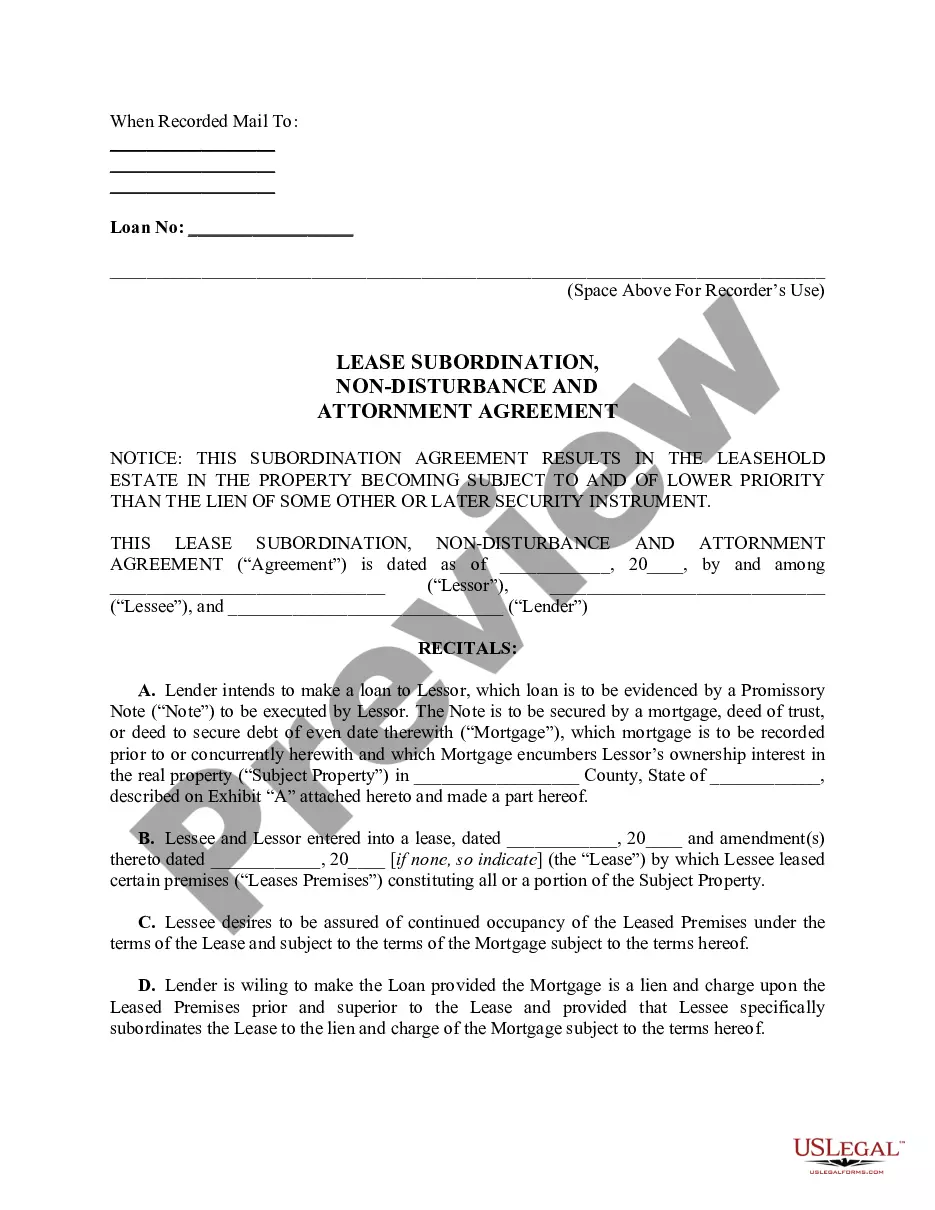
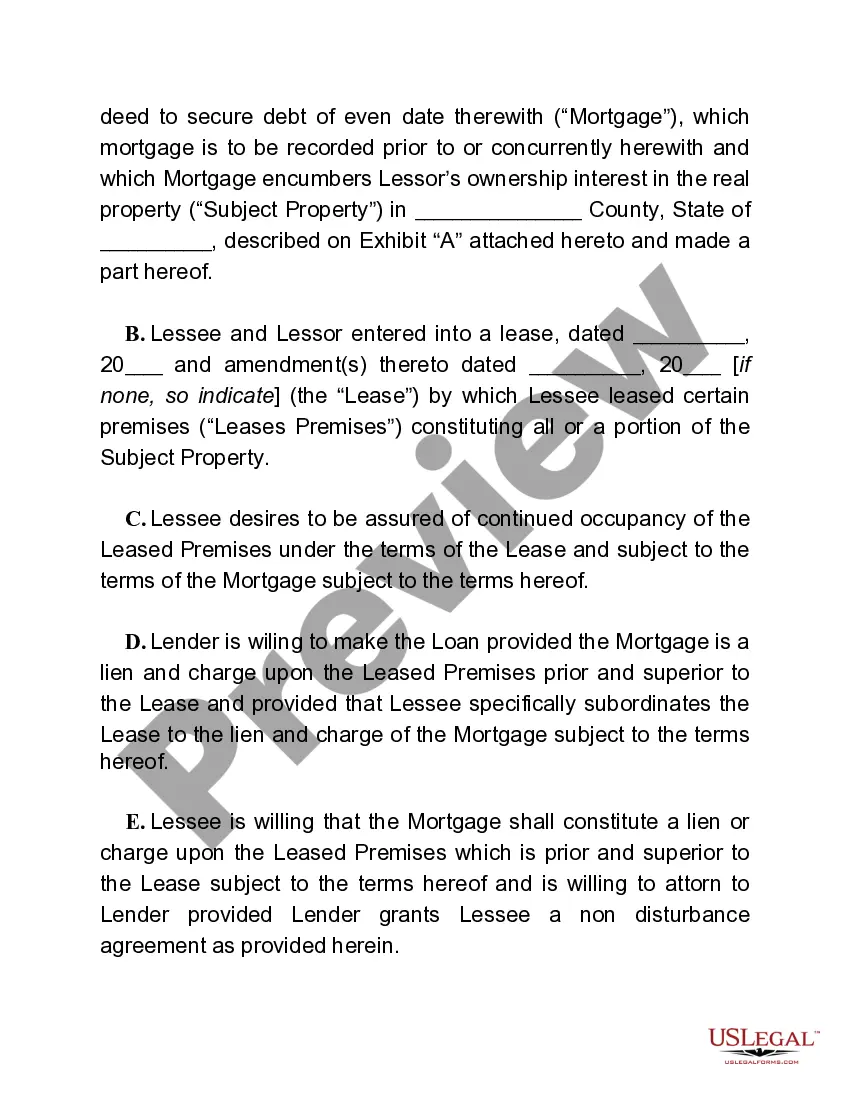
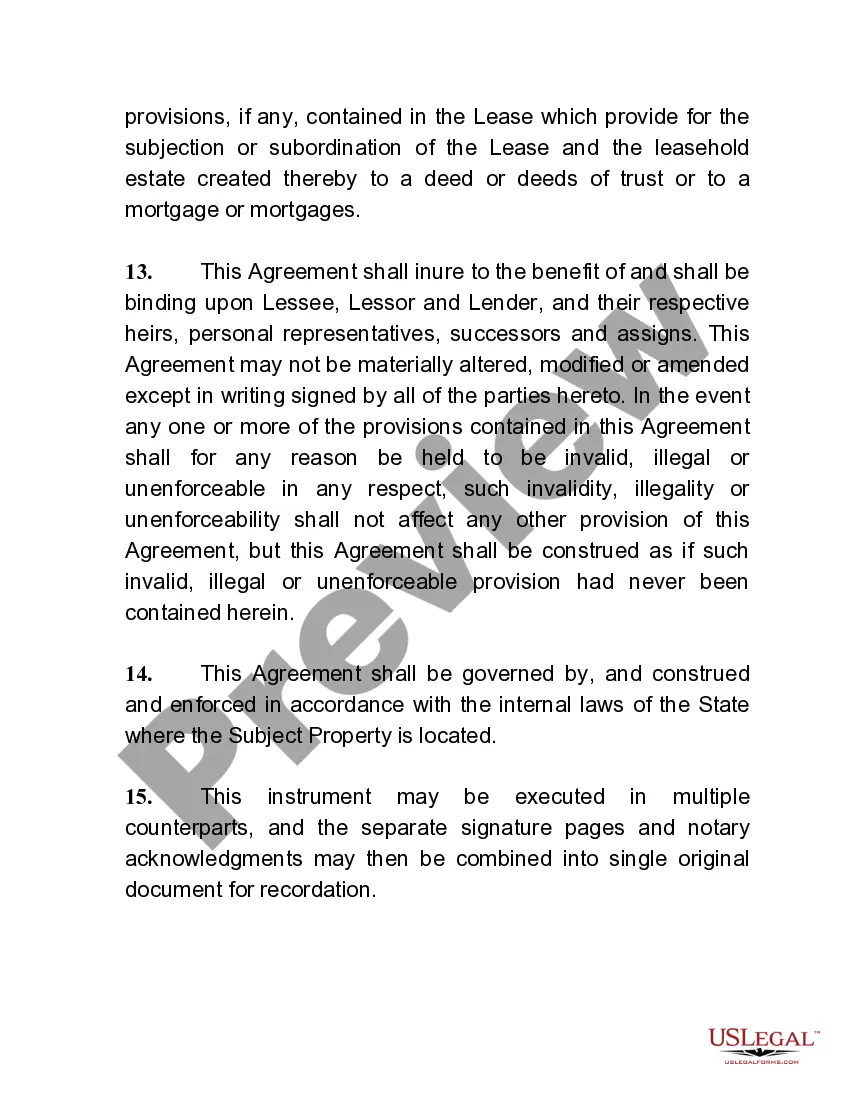
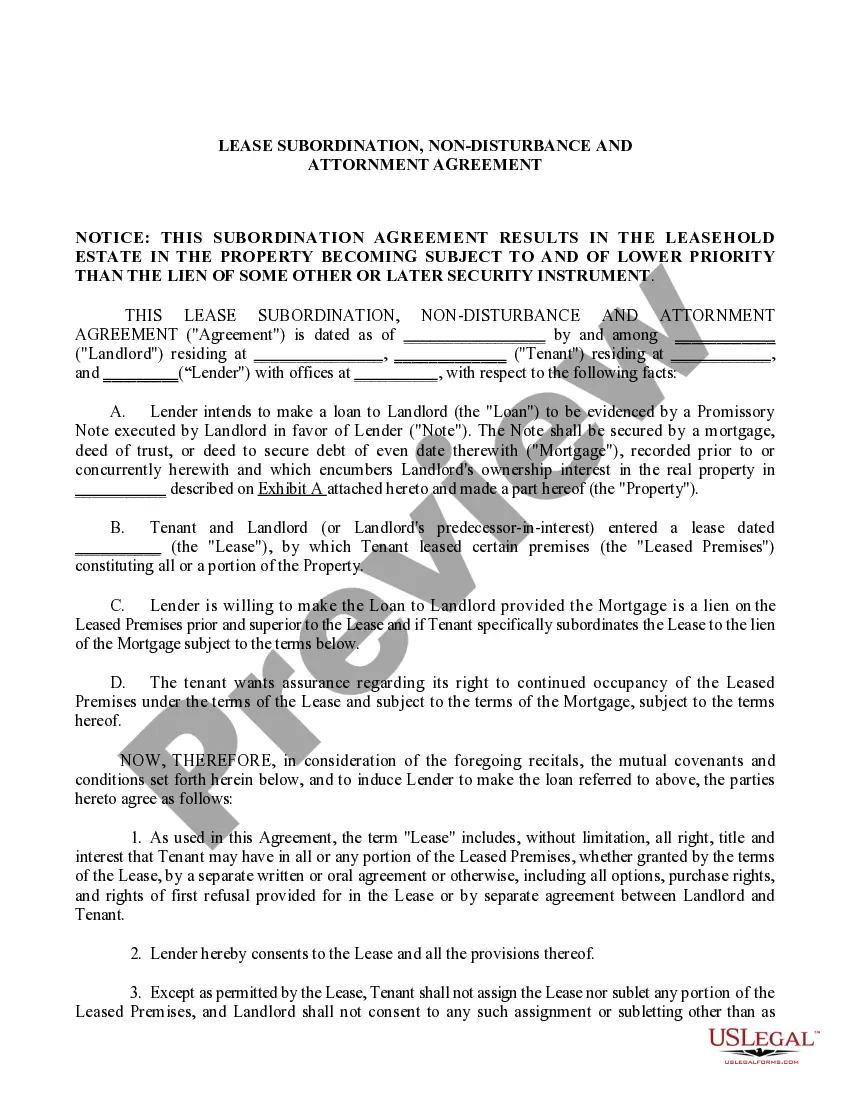
The Lease Subordination, Non-Disturbance and Attornment Agreement is a legal document that establishes the relationship between a commercial landlord, tenant, and lender. This agreement ensures that a tenant's lease remains valid even if the property is sold or mortgaged. It protects a tenant from eviction if the landlord defaults on mortgage payments, thereby providing peace of mind and stability for tenants in commercial properties.
Main sections of this form
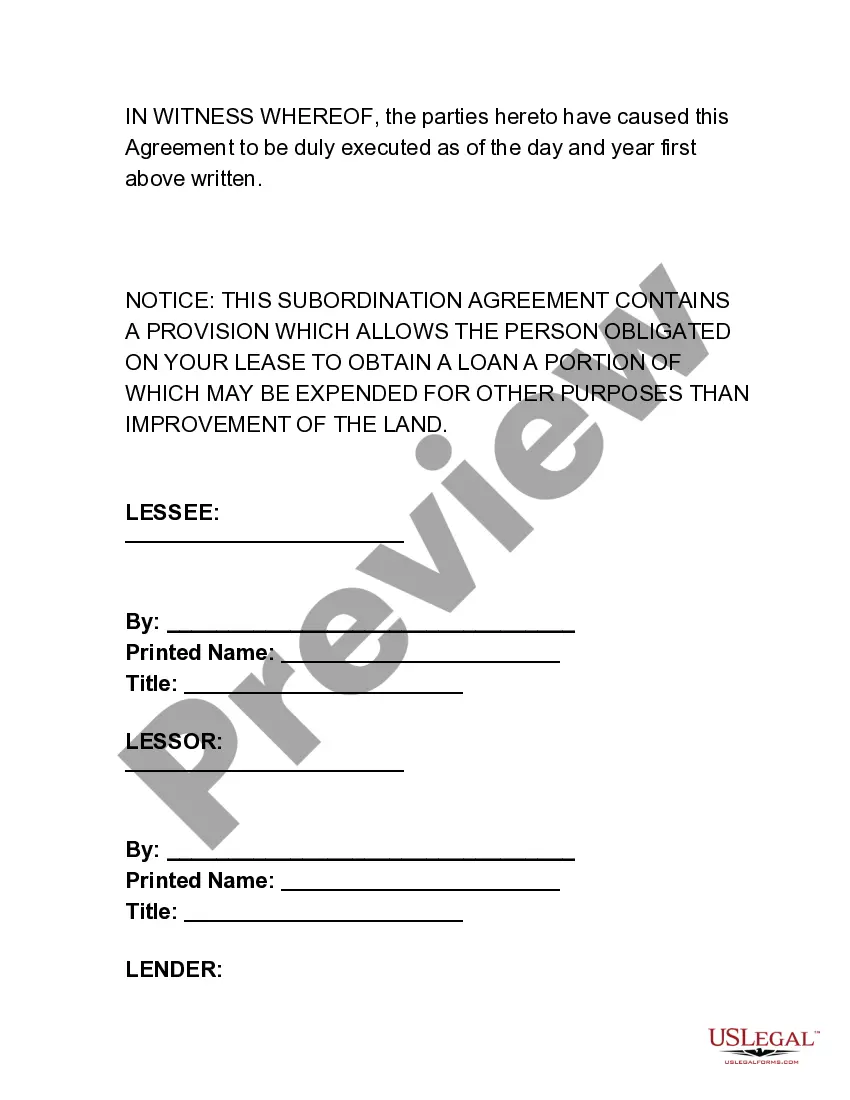
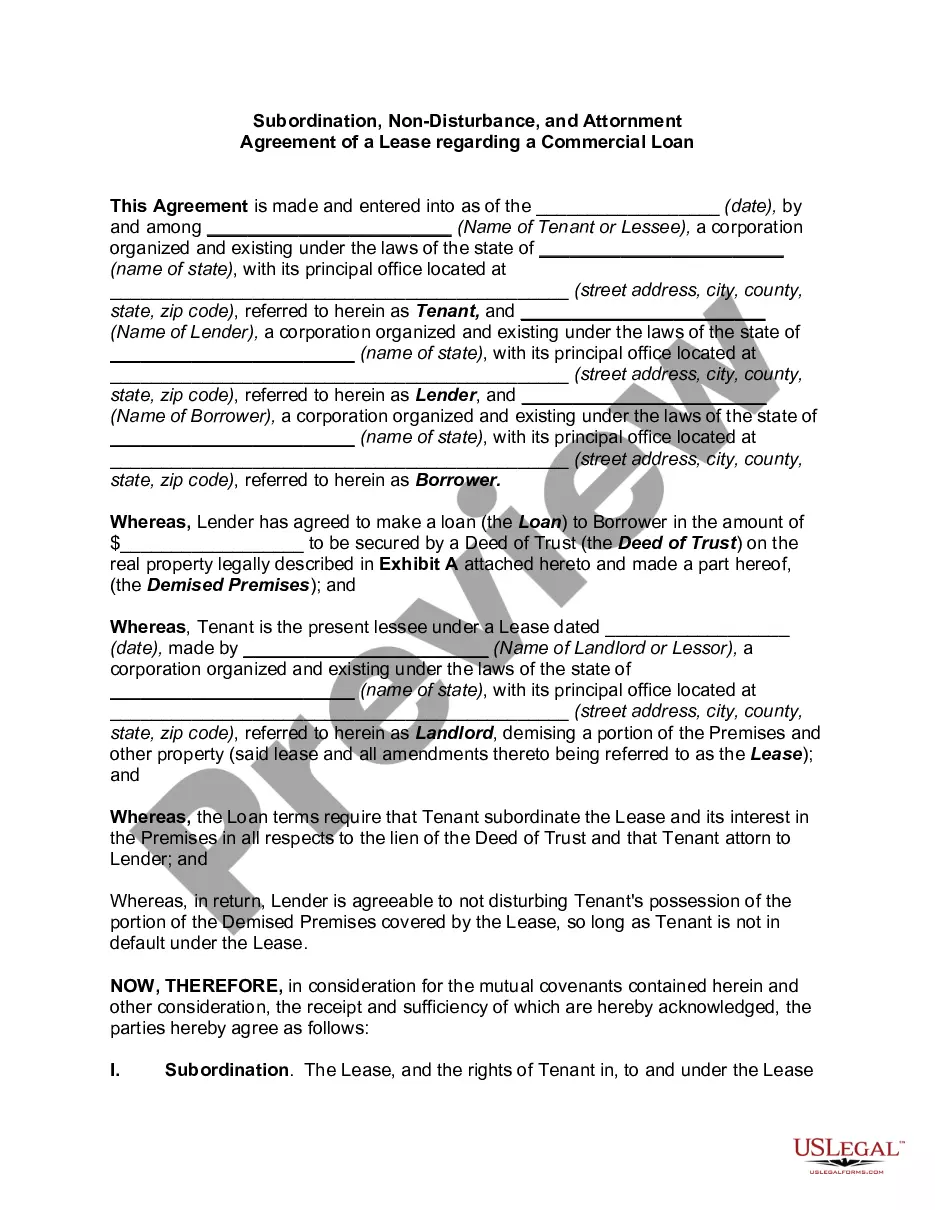
- Parties involved: Identification of the Lessor (landlord), Lessee (tenant), and Lender.
- Description of the mortgage: Details about the loan secured against the property.
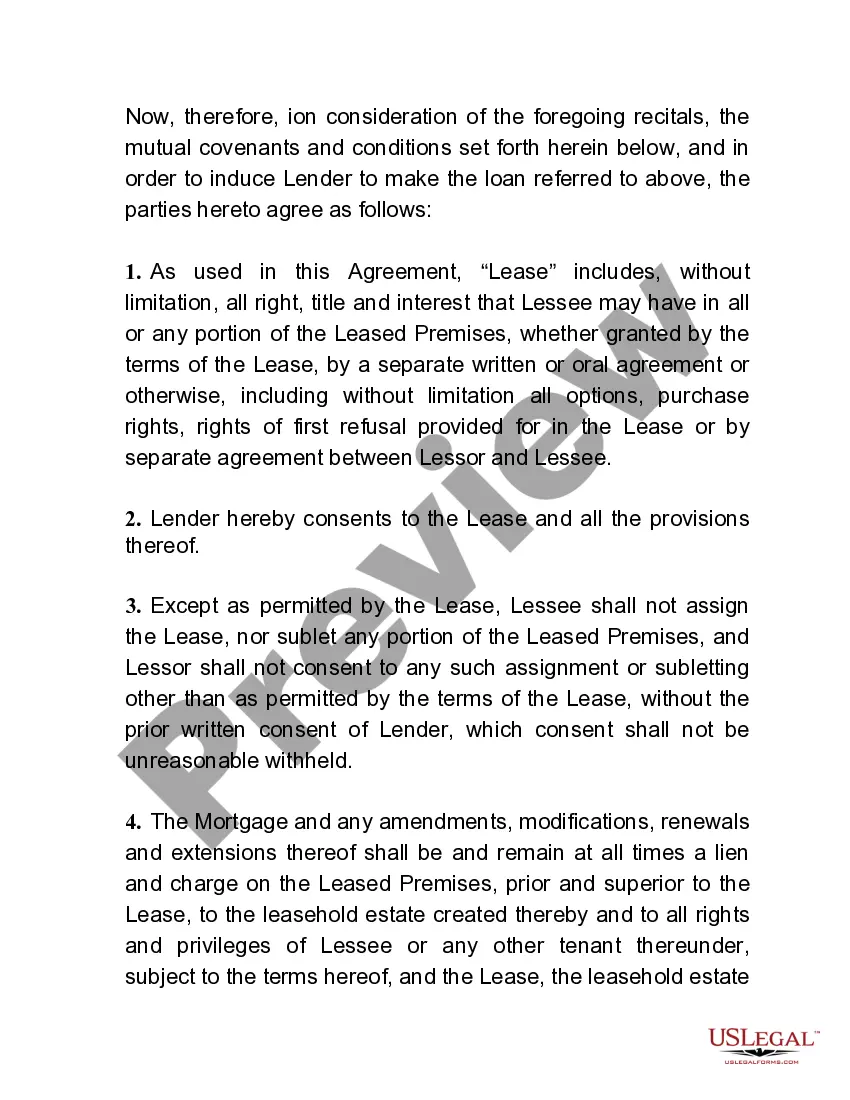
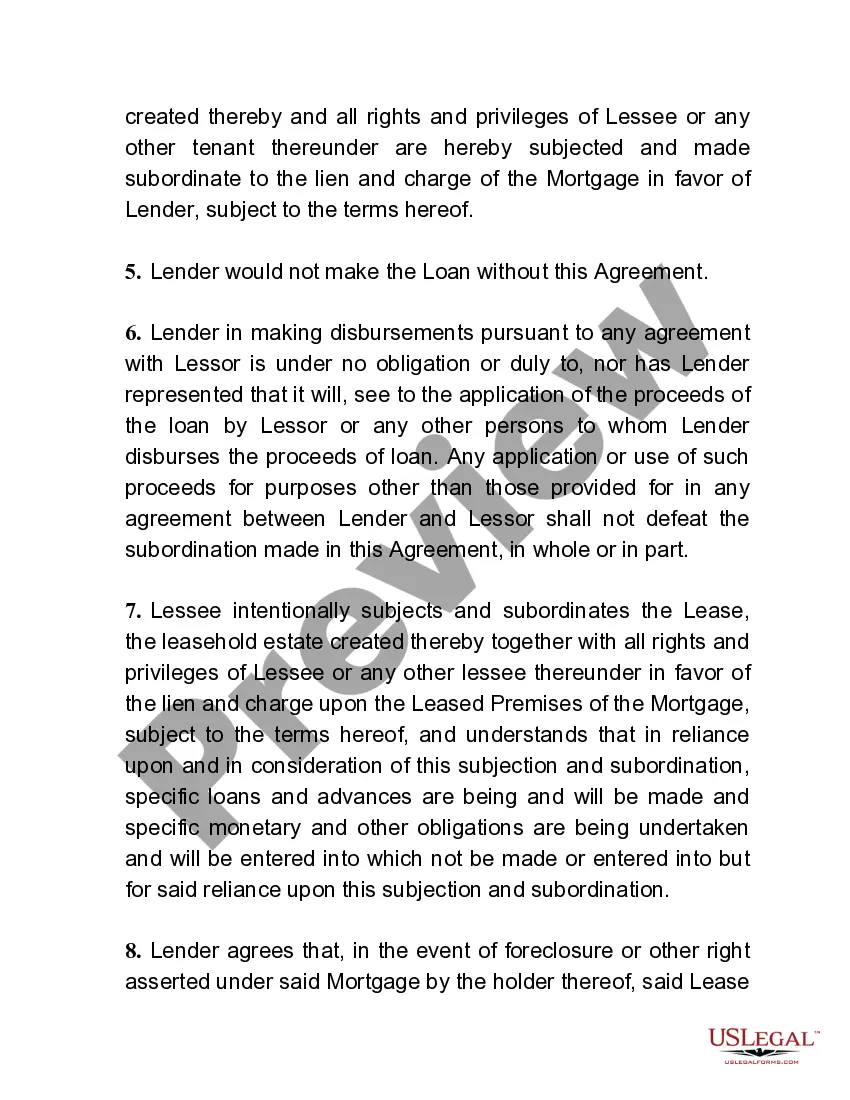
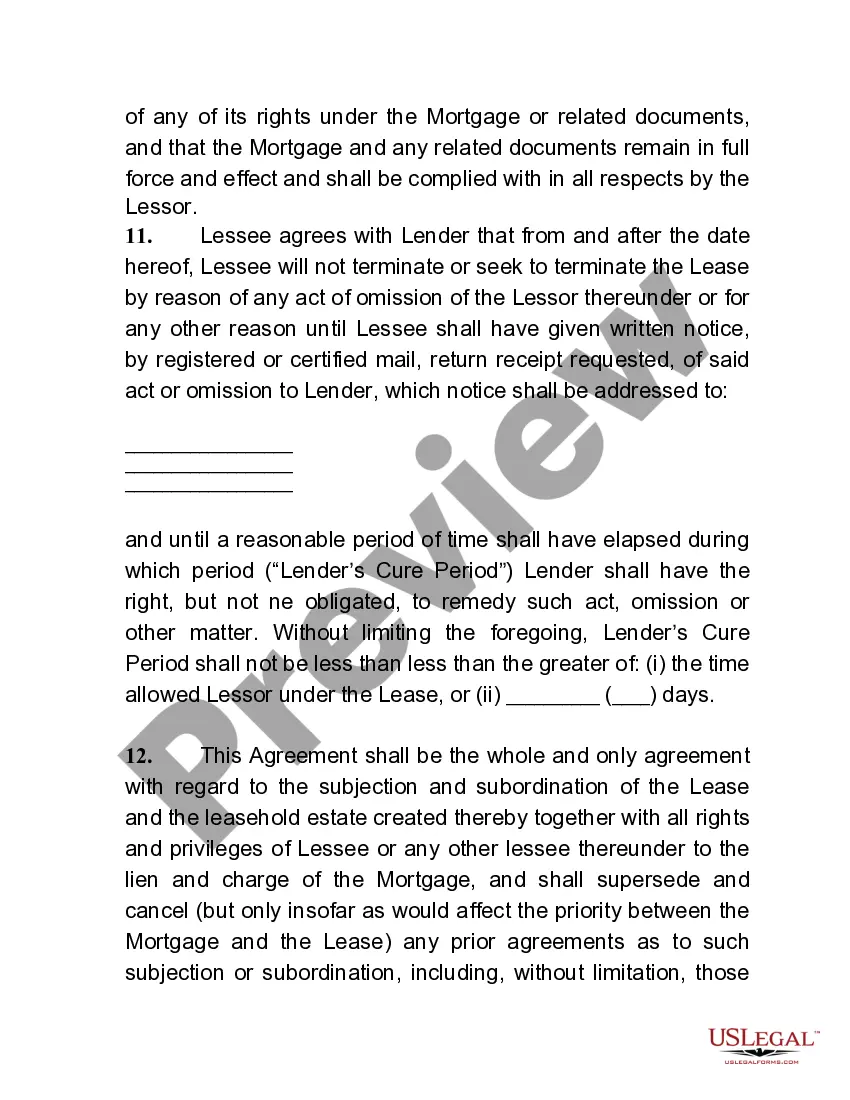
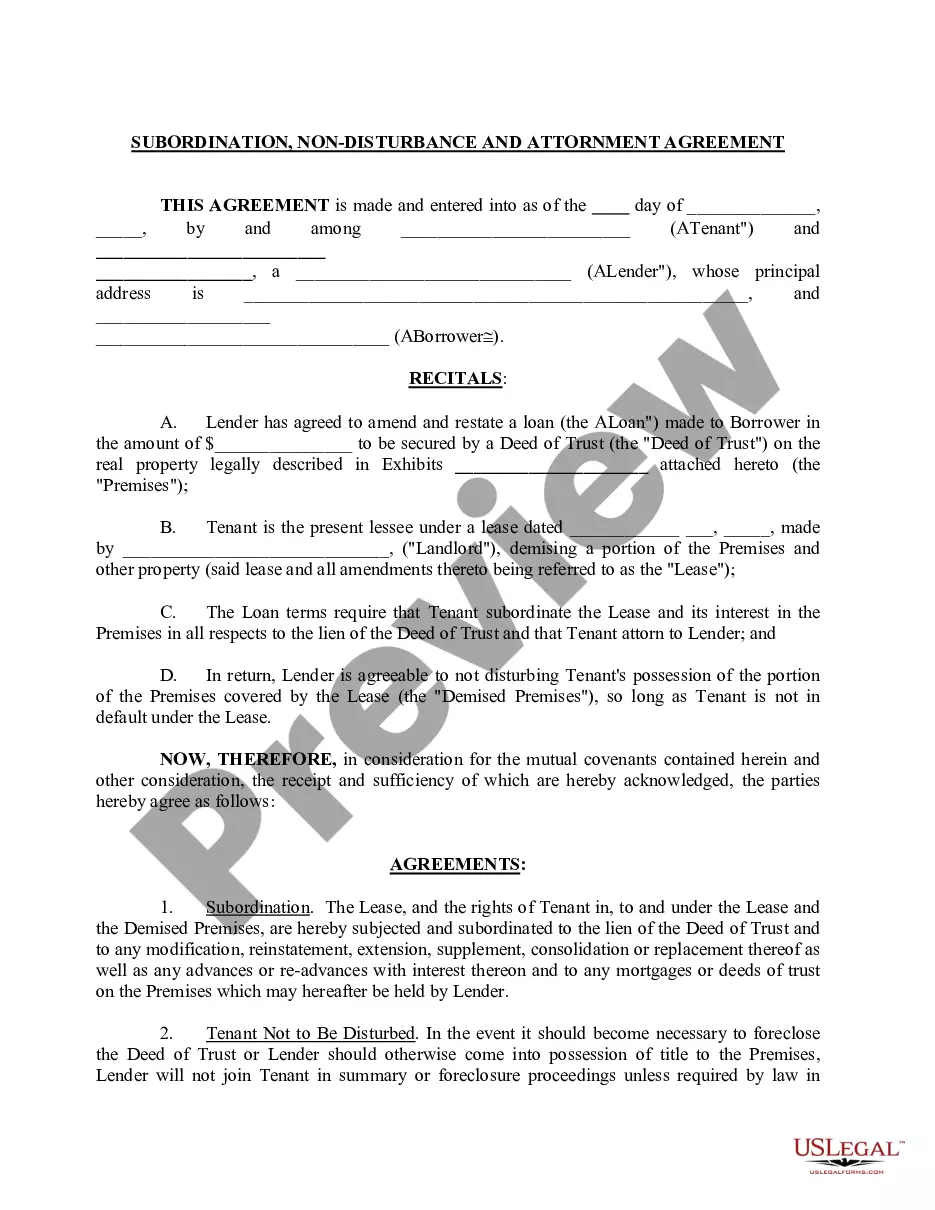
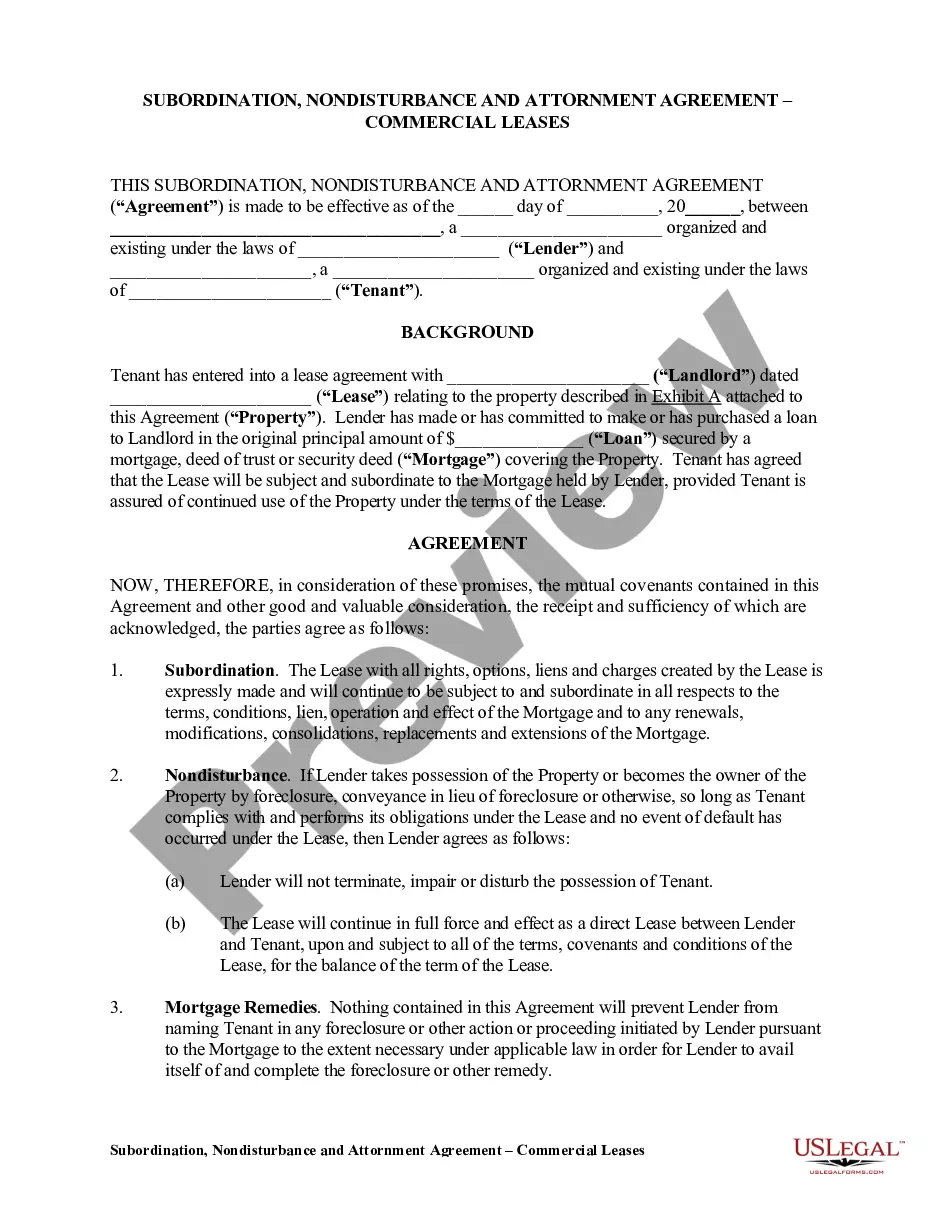
- Subordination clause: Establishes that the lease is subordinate to the mortgage lien.
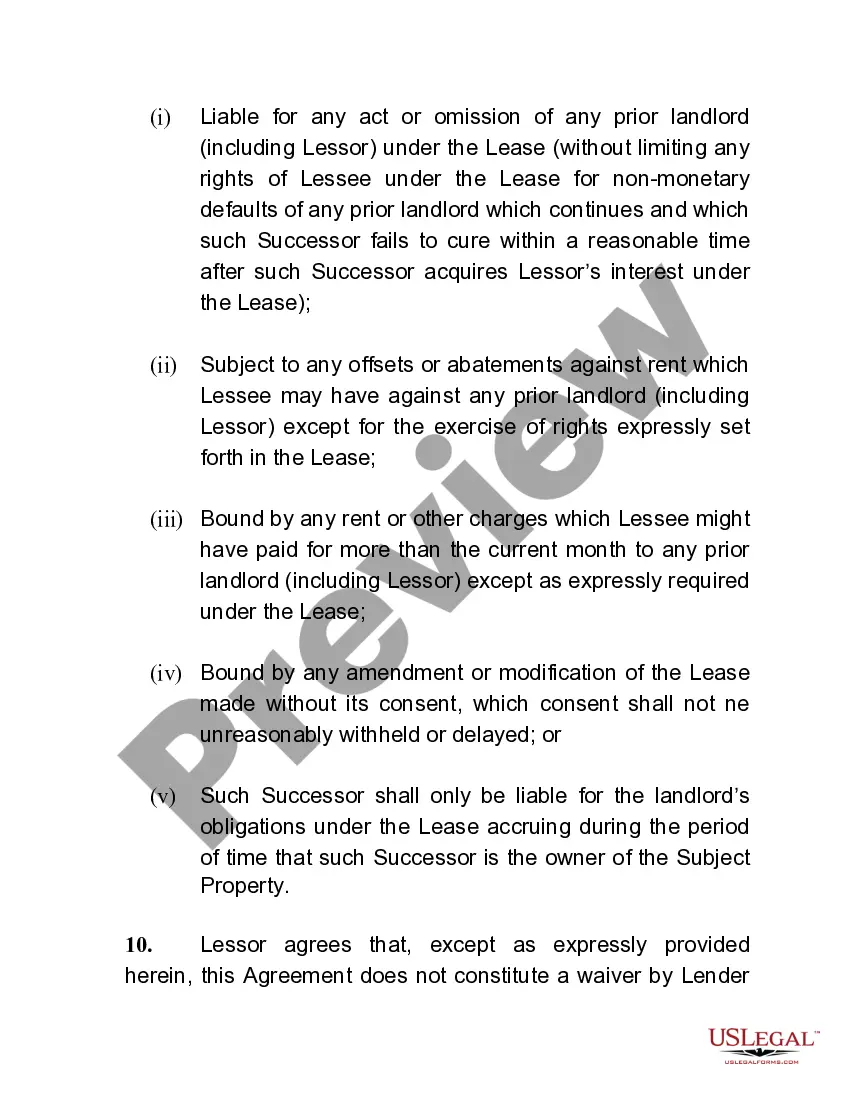
- Non-disturbance provision: Guarantees the tenant's rights to occupy the premises despite changes in ownership.
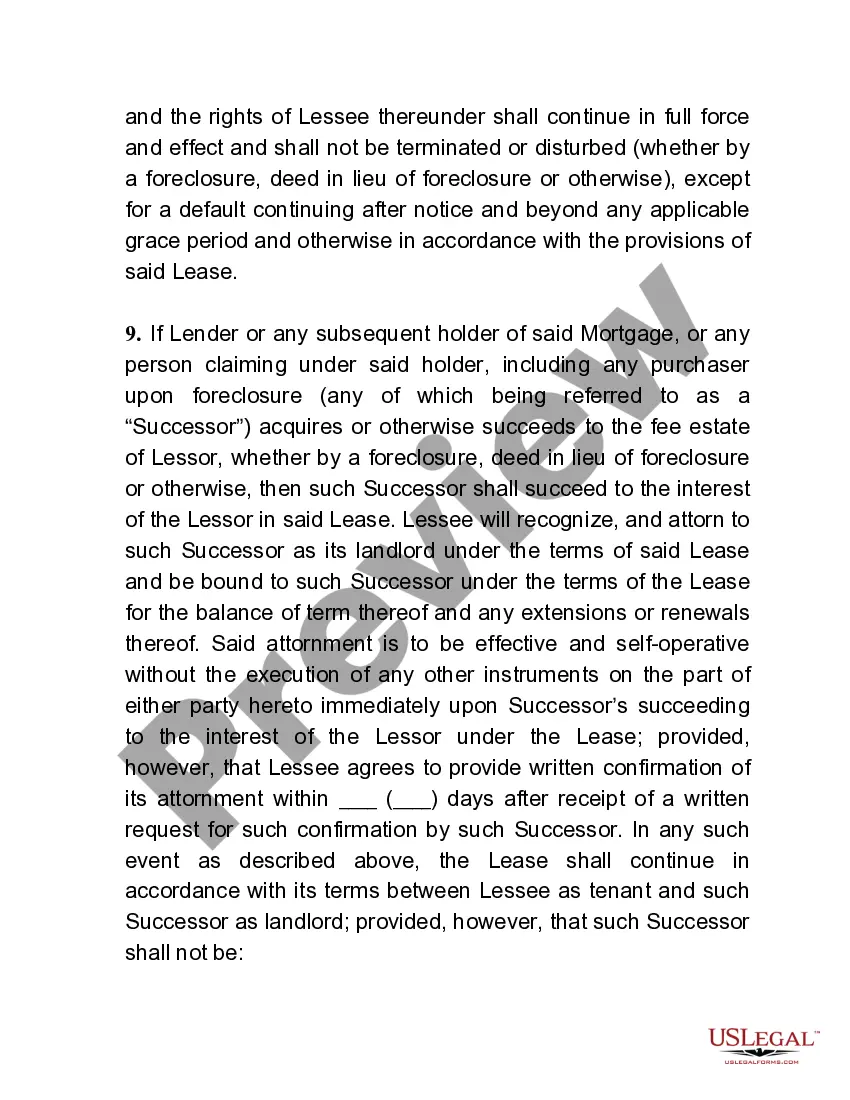
- Attornment clause: States that the tenant will recognize the lender as the landlord upon foreclosure.


When to use this form
This form is essential when a commercial tenant enters into a lease agreement with a landlord who is obtaining a mortgage on the property. It's particularly useful when tenants wish to safeguard their rights to the leased property in case the landlord defaults on the loan or undergoes foreclosure. Using this form can prevent tenants from losing their rental rights due to circumstances beyond their control.
Intended users of this form
This Lease Subordination, Non-Disturbance and Attornment Agreement should be used by:
- Commercial tenants looking to secure their rights under the lease.
- Commercial landlords who are securing financing for their properties.
- Lenders providing mortgage loans against commercial properties.
How to prepare this document
- Identify the parties: Clearly fill in the names of the Lessor, Lessee, and Lender.
- Specify the property: Include the address and legal description of the commercial property.
- Enter key dates: Provide the date of the agreement and other relevant lease dates.
- Complete the subordination clause: Confirm the tenant's agreement to subordinate their lease to the mortgage lender.
- Sign and notarize the document: Ensure all parties sign and include notarization as required.
Notarization requirements for this form
Yes, this form must be notarized to be legally valid. US Legal Forms provides an integrated online notarization service that offers 24/7 availability via secure video call, ensuring legal equivalence without the need for travel.
Get your form ready online
Our built-in tools help you complete, sign, share, and store your documents in one place.
Make edits, fill in missing information, and update formatting in US Legal Forms—just like you would in MS Word.
Download a copy, print it, send it by email, or mail it via USPS—whatever works best for your next step.
Sign and collect signatures with our SignNow integration. Send to multiple recipients, set reminders, and more. Go Premium to unlock E-Sign.
If this form requires notarization, complete it online through a secure video call—no need to meet a notary in person or wait for an appointment.
We protect your documents and personal data by following strict security and privacy standards.

Make edits, fill in missing information, and update formatting in US Legal Forms—just like you would in MS Word.

Download a copy, print it, send it by email, or mail it via USPS—whatever works best for your next step.

Sign and collect signatures with our SignNow integration. Send to multiple recipients, set reminders, and more. Go Premium to unlock E-Sign.

If this form requires notarization, complete it online through a secure video call—no need to meet a notary in person or wait for an appointment.

We protect your documents and personal data by following strict security and privacy standards.
Mistakes to watch out for
- Failing to clearly identify all parties involved.
- Not specifying the property details accurately.
- Omitting required signatures or notarization.
- Neglecting to review the lease terms for any conflicting provisions.
Why use this form online
- Convenience: Easily accessible and can be completed from any location.
- Editability: Allows you to fill out and customize the form as needed.
- Reliability: Ensures the use of attorney-drafted legal language that adheres to relevant laws.
Looking for another form?

Form popularity
FAQ
Several important clauses should be included in a lease contract, such as payment terms, maintenance responsibilities, and dispute resolution processes. Each of these clauses directly impacts the relationship between the landlord and tenant, establishing expectations and minimizing conflicts. When drafting a Colorado Lease Subordination, Non-Disturbance and Attornment Agreement, incorporating these essential clauses offers peace of mind and legal clarity for all parties involved.
An assignment clause in a lease allows tenants to transfer their lease rights and obligations to another party with the landlord's approval. This clause provides flexibility for tenants and can help prevent lease termination due to unexpected circumstances. In a Colorado Lease Subordination, Non-Disturbance and Attornment Agreement, including an assignment clause can protect both the landlord's interests and the tenant's ability to manage their lease effectively.
Attornment in a lease refers to the tenant's agreement to acknowledge a new landlord after a change in property ownership. This acknowledgment protects the tenant's rights under the lease while ensuring that the landlord can receive rent payments without disruption. In the context of a Colorado Lease Subordination, Non-Disturbance and Attornment Agreement, attornment is crucial for preserving tenant-landlord relationships throughout ownership transitions.
Attornment letters are essential for buyers as they help confirm that tenants will recognize the new owner and uphold their lease agreements. This process mitigates risks by securing rental income for the buyer and ensures a smooth transition during ownership changes. Securing these letters can be critical when dealing with a Colorado Lease Subordination, Non-Disturbance and Attornment Agreement, fostering confidence for both buyers and tenants.
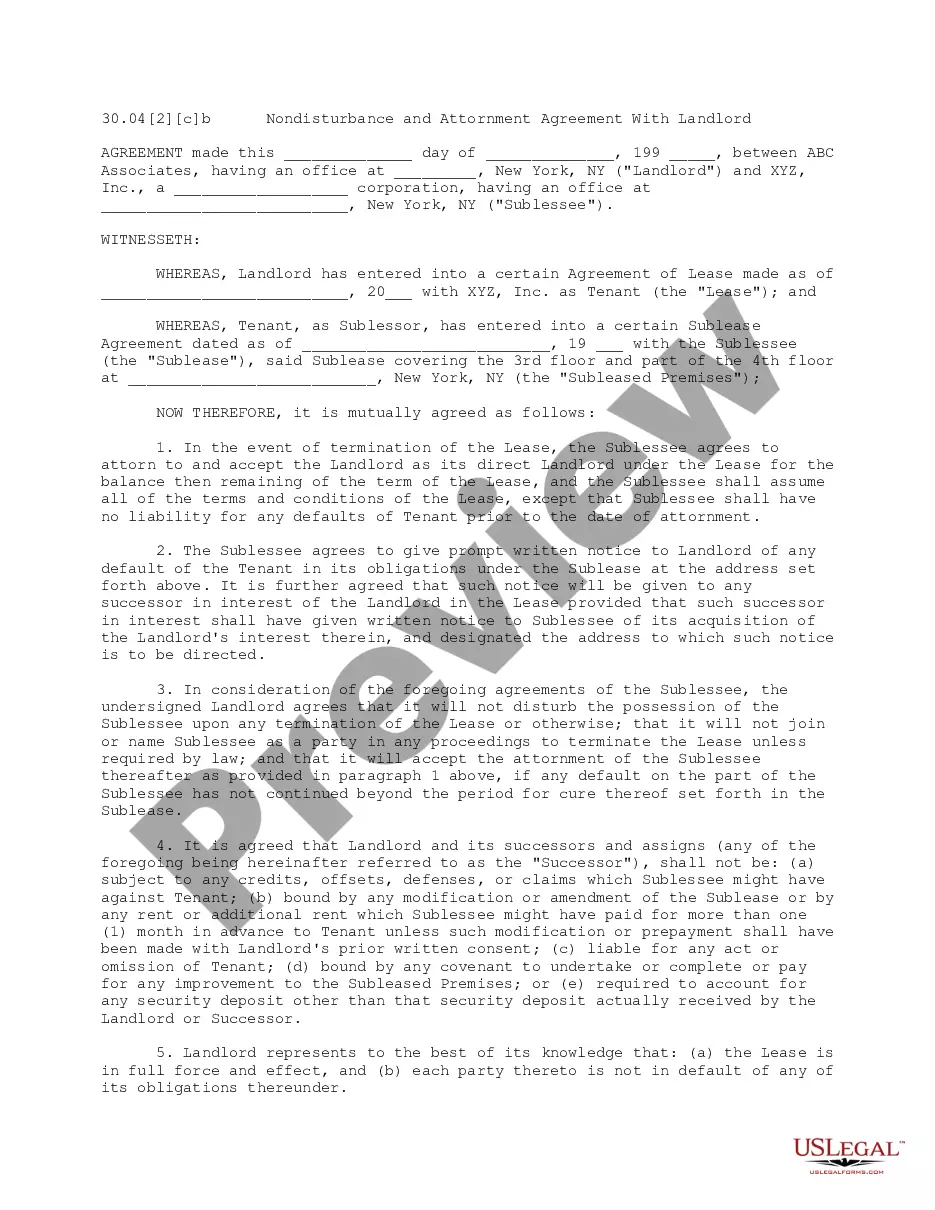
The attornment clause in a lease establishes a relationship between a tenant and a new landlord if property ownership changes. This clause ensures that the tenant continues to honor the lease under the same terms despite the change in ownership. By including this clause in the Colorado Lease Subordination, Non-Disturbance and Attornment Agreement, both parties maintain clarity and security regarding their rights and obligations.
disturbance agreement specifically safeguards a tenant's right to occupy the space, preventing eviction during ownership changes. On the other hand, a Subordination, NonDisturbance, and Attornment (SNDA) includes subordination of the lease, ensuring that the tenant's rights come after the lender's interests. While both documents offer similar protections, the SNDA is more comprehensive as it addresses additional concerns of the lender and the tenant. Utilize our Colorado Lease Subordination, NonDisturbance and Attornment Agreement resources for clarity on these documents.
A subordination clause is a provision in a lease that establishes the order of priority among competing interests in a property. It usually allows a mortgage lender's interest to take precedence over the leasehold interest. When dealing with real estate, a Colorado Lease Subordination, Non-Disturbance and Attornment Agreement ensures that tenants are protected if the property goes into foreclosure, maintaining their right to continue living there.
A typical example of a subordination clause can be found in a lease agreement stating that the lease is subordinate to any future mortgages. This clause effectively gives priority to the mortgage lender, ensuring they have the first claim on the property. It is important for tenants to understand how such clauses interact with a Colorado Lease Subordination, Non-Disturbance and Attornment Agreement, which protects their right to occupy the property.
Subordinate clauses can enhance comprehensibility in writing. Some examples include: 'although it was raining,' 'because he was hungry,' 'if you finish your homework,' 'unless she calls,' and 'whenever you arrive.' In terms of real estate, knowing how to handle these clauses, like those seen in a Colorado Lease Subordination, Non-Disturbance and Attornment Agreement, can be vital for both tenants and landlords.
A subordination occurs when a lease agreement is placed lower in priority than another legal agreement, such as a mortgage. For instance, if a property owner secures a mortgage after leasing it to a tenant, the mortgage lender may require a Colorado Lease Subordination, Non-Disturbance and Attornment Agreement. This agreement ensures that in case of foreclosure, the tenant's rights remain intact, and they can continue their tenancy.