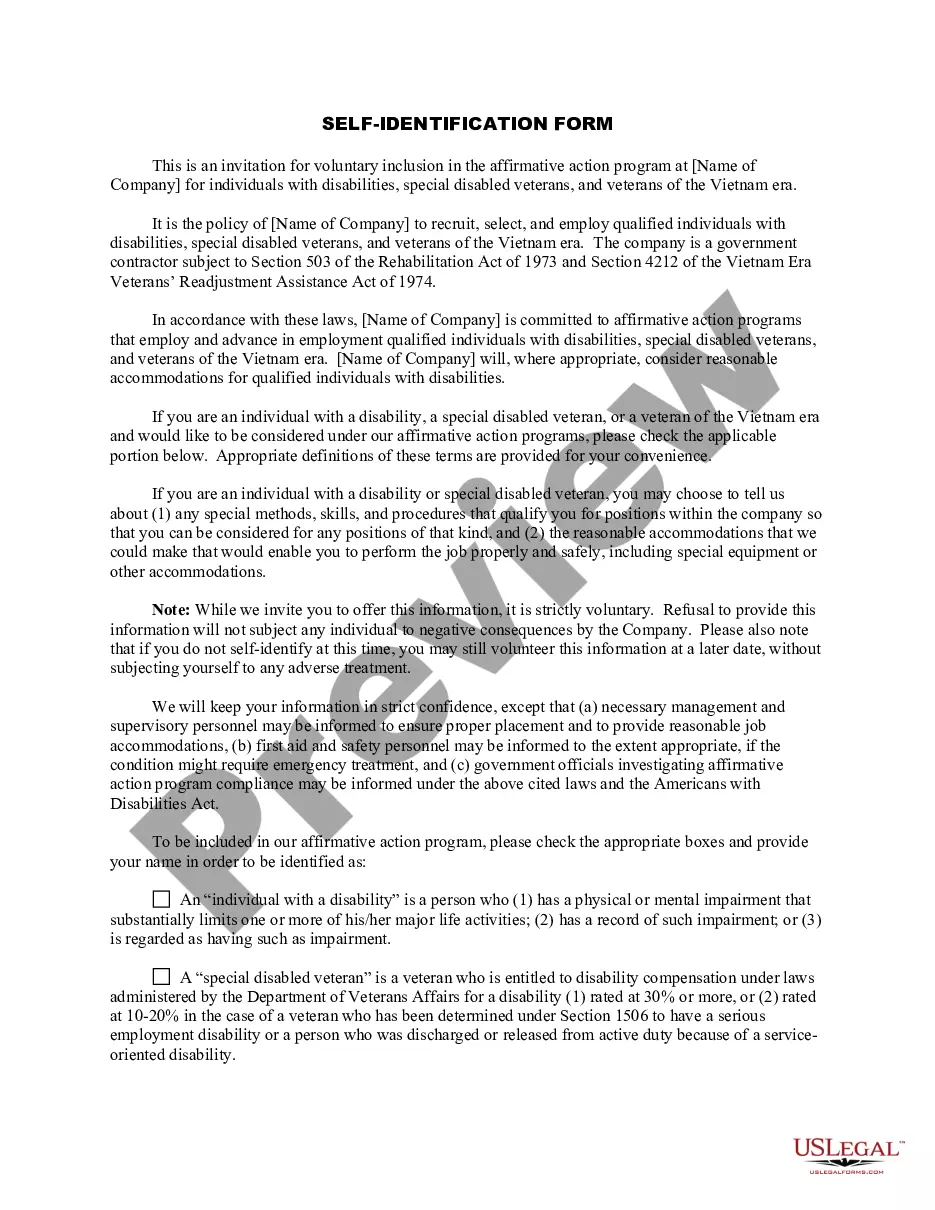
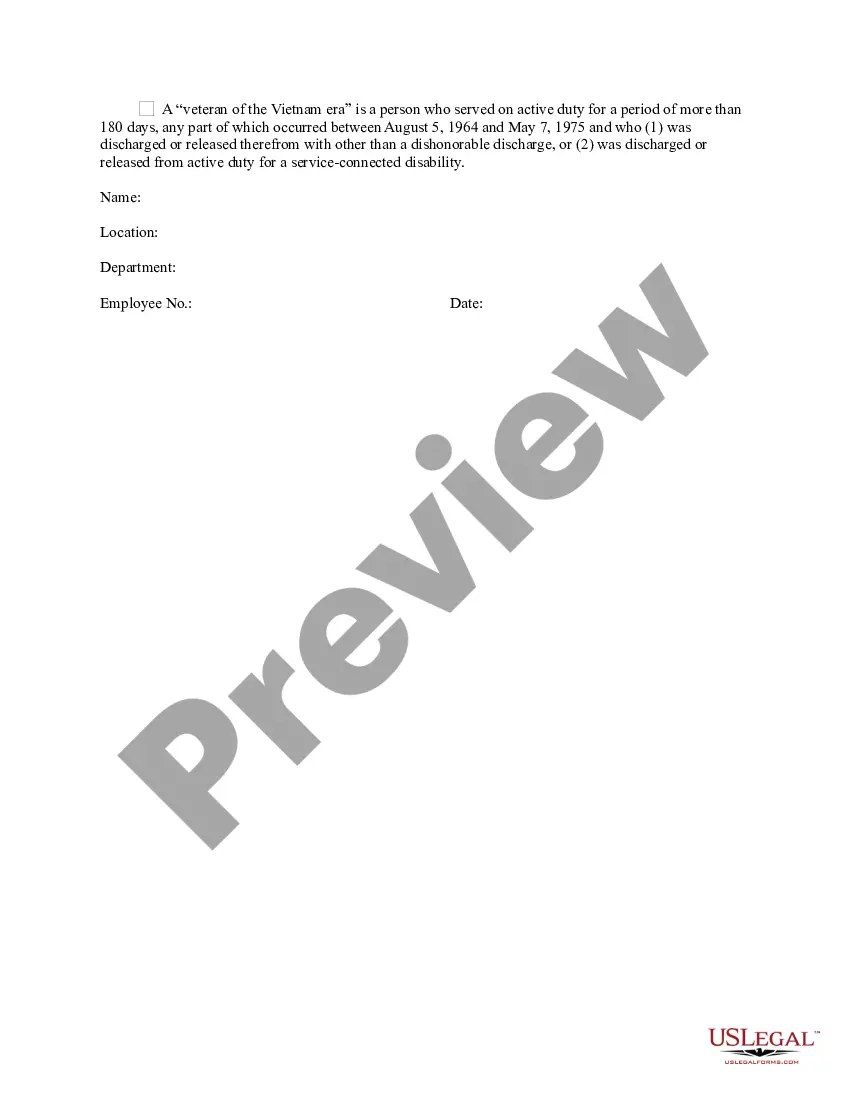
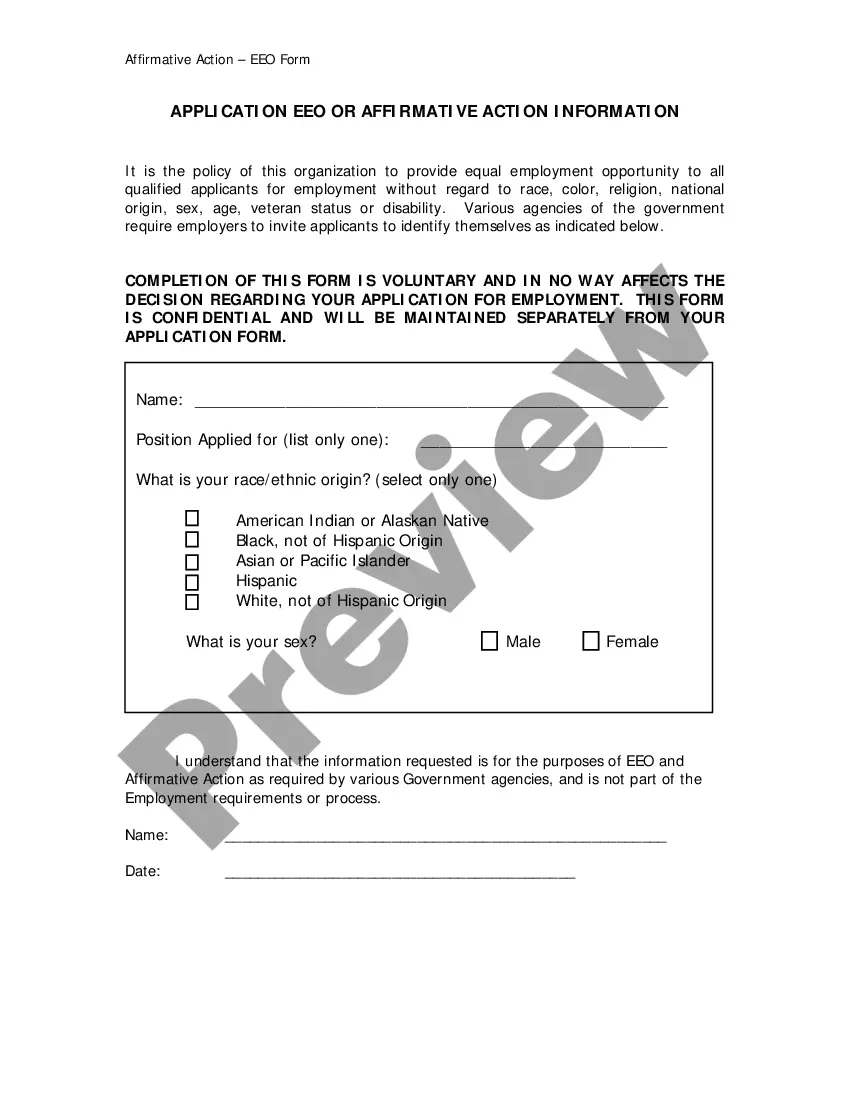
California Self-Identification Form
Description
Get your form ready online
Our built-in tools help you complete, sign, share, and store your documents in one place.
Make edits, fill in missing information, and update formatting in US Legal Forms—just like you would in MS Word.
Download a copy, print it, send it by email, or mail it via USPS—whatever works best for your next step.
Sign and collect signatures with our SignNow integration. Send to multiple recipients, set reminders, and more. Go Premium to unlock E-Sign.
If this form requires notarization, complete it online through a secure video call—no need to meet a notary in person or wait for an appointment.
We protect your documents and personal data by following strict security and privacy standards.

Make edits, fill in missing information, and update formatting in US Legal Forms—just like you would in MS Word.

Download a copy, print it, send it by email, or mail it via USPS—whatever works best for your next step.

Sign and collect signatures with our SignNow integration. Send to multiple recipients, set reminders, and more. Go Premium to unlock E-Sign.

If this form requires notarization, complete it online through a secure video call—no need to meet a notary in person or wait for an appointment.

We protect your documents and personal data by following strict security and privacy standards.
Looking for another form?




How to fill out Self-Identification Form?
It is feasible to spend hours online searching for the legal document template that meets the federal and state requirements you need.
US Legal Forms provides a vast number of legal templates that are reviewed by experts.
You can download or print the California Self-Identification Form from my service.
If available, utilize the Preview option to review the document template as well.
- If you already possess a US Legal Forms account, you can Log In and select the Acquire option.
- After that, you can complete, modify, print, or sign the California Self-Identification Form.
- Every legal document template you purchase remains your property indefinitely.
- To access an additional copy of an acquired form, visit the My documents tab and select the corresponding option.
- If you are using the US Legal Forms website for the first time, follow the simple instructions below.
- First, ensure that you have chosen the correct document template for your county/city of preference.
- Refer to the template description to verify you have selected the right form.
Form popularity
FAQ
The voluntary self-identification of disability is not strictly a yes or no situation. On the California Self-Identification Form, you have options to either declare your disability status or choose not to share that information. This process ensures you can decide based on your preference, promoting your personal choice. Remember, whatever you decide, your privacy is respected throughout.
Yes, you can self-identify as having a disability on the California Self-Identification Form if you meet the criteria outlined in the form. This identification allows organizations to support individuals with disabilities through various programs and initiatives. Your decision to self-identify is voluntary, ensuring your comfort and privacy. Consider taking this step to help foster an inclusive environment.
The self-identification status reflects whether an individual chooses to disclose their disability on the California Self-Identification Form. By selecting a status, you help organizations comply with legal requirements and promote inclusivity. This status aids employers in understanding the workforce's diversity. Remember, your disclosure remains confidential and is used solely for compliance and support.
An invitation to self-identify is an optional question on a job application that allows the applicant to identify as a veteran or person with a disability. Some organizations also invite existing employees to self-identify using a standard form.
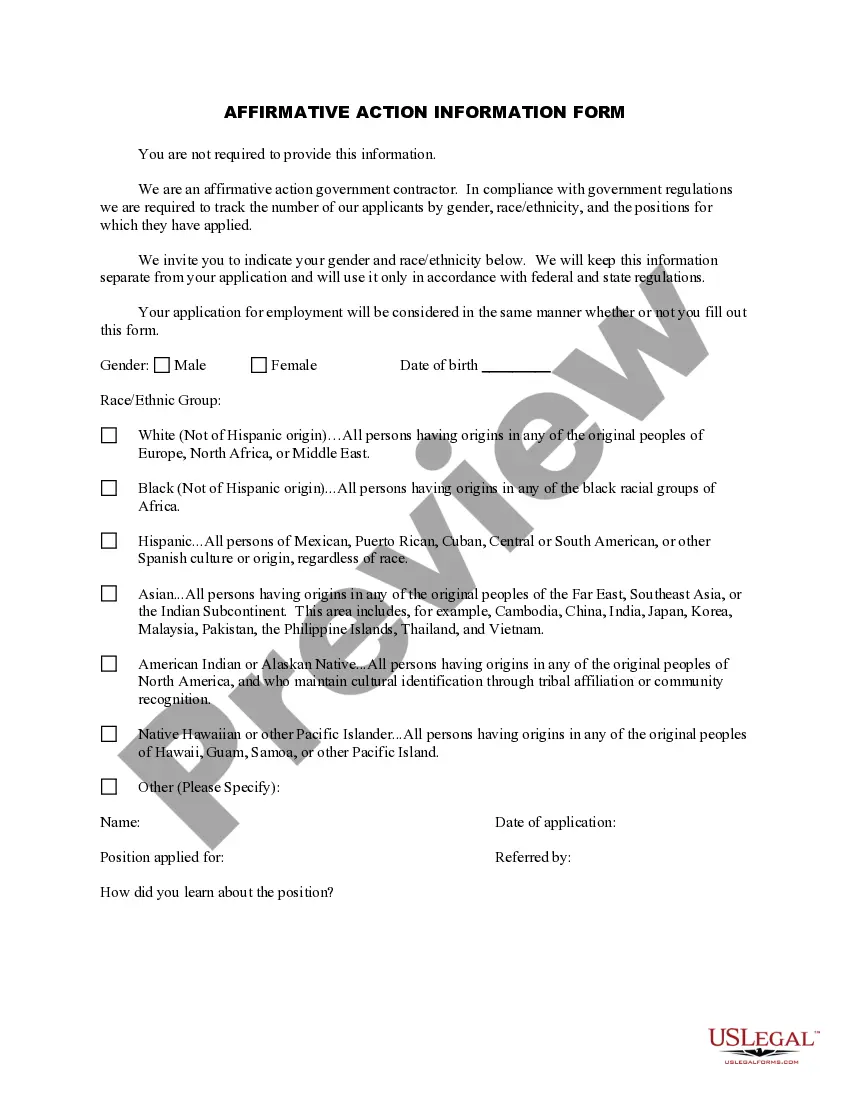
The purpose of the self-identification form is to collect information so the agencies can monitor the equity performance of programs and design new measures that achieve greater equity, diversity and inclusion in the research enterprise.
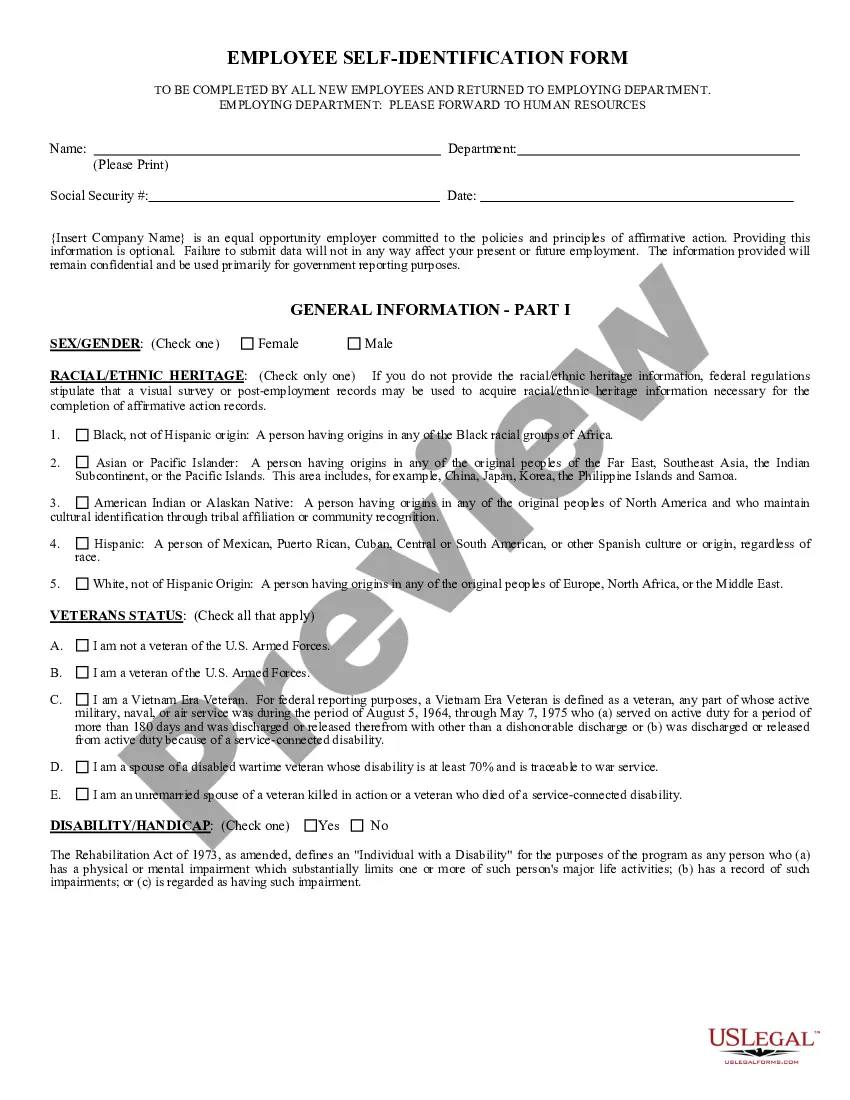
If an employee chooses not to self-identify their race/ethnicity, the employer may either conduct a visual survey to determine the information, or use employment records.
Self-Identification Form is to comply with federal government record-keeping and reporting. requirements. Periodic reports are made to the government on the following information.The. data you provide on this form will be kept confidential and used solely for analytical and reporting requirement purposes.
The questionnaire asks employees whether they identify as belonging to one or more designated groups. The four designated groups are racially visible persons, aboriginal persons, persons with a disability, and women. You may self-identify in more than one designated group.
The questionnaire asks employees whether they identify as belonging to one or more designated groups. The four designated groups are racially visible persons, aboriginal persons, persons with a disability, and women. You may self-identify in more than one designated group.
Self-identification is an important tool that provides an avenue for employees to anonymously share their diversity data so that their employers can implement strategies to build a culture that supports all employees, and measure their progress towards their diversity goals.