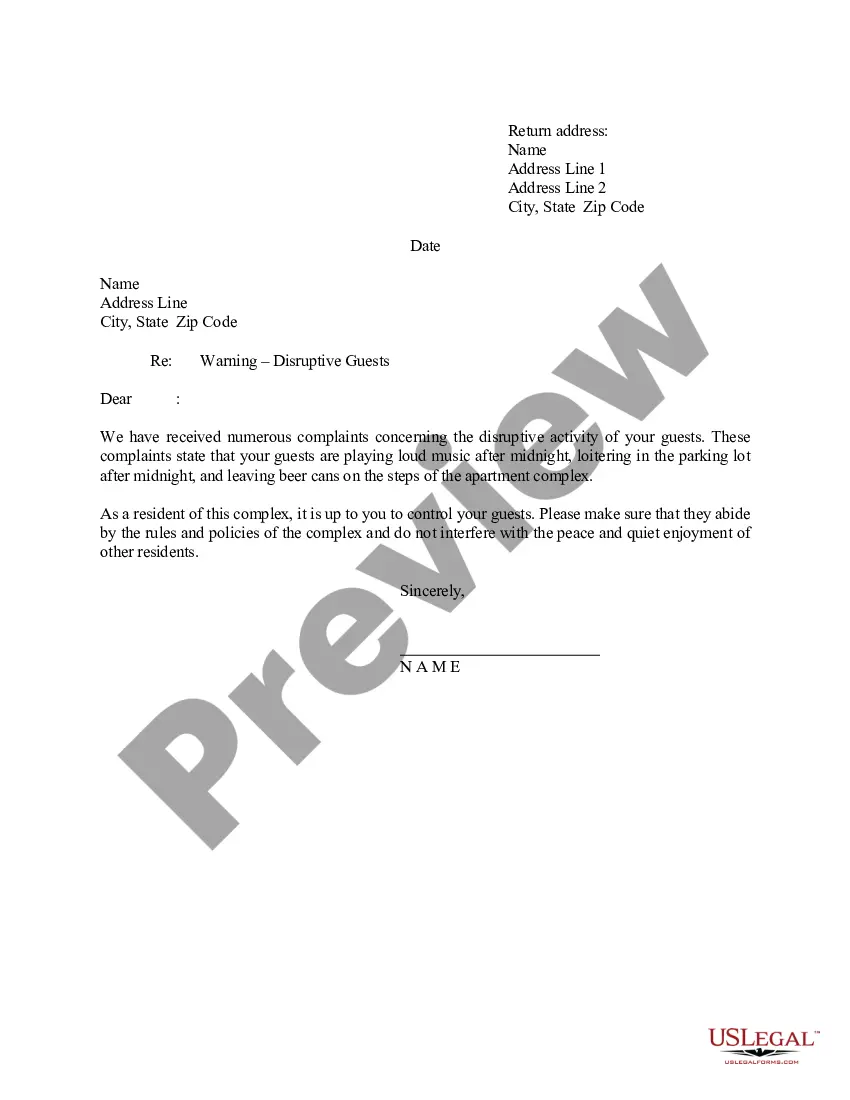
California Letter - Warning To Renter Regarding Disruptive Guests
Description
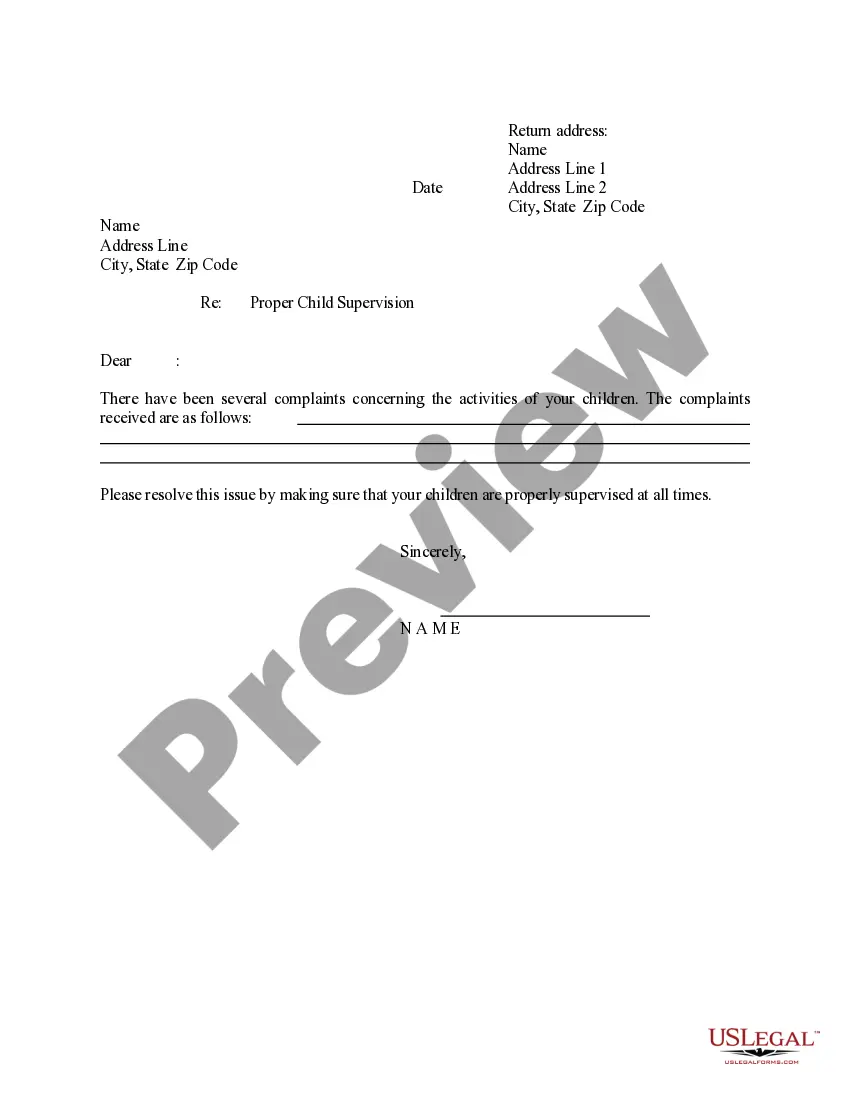
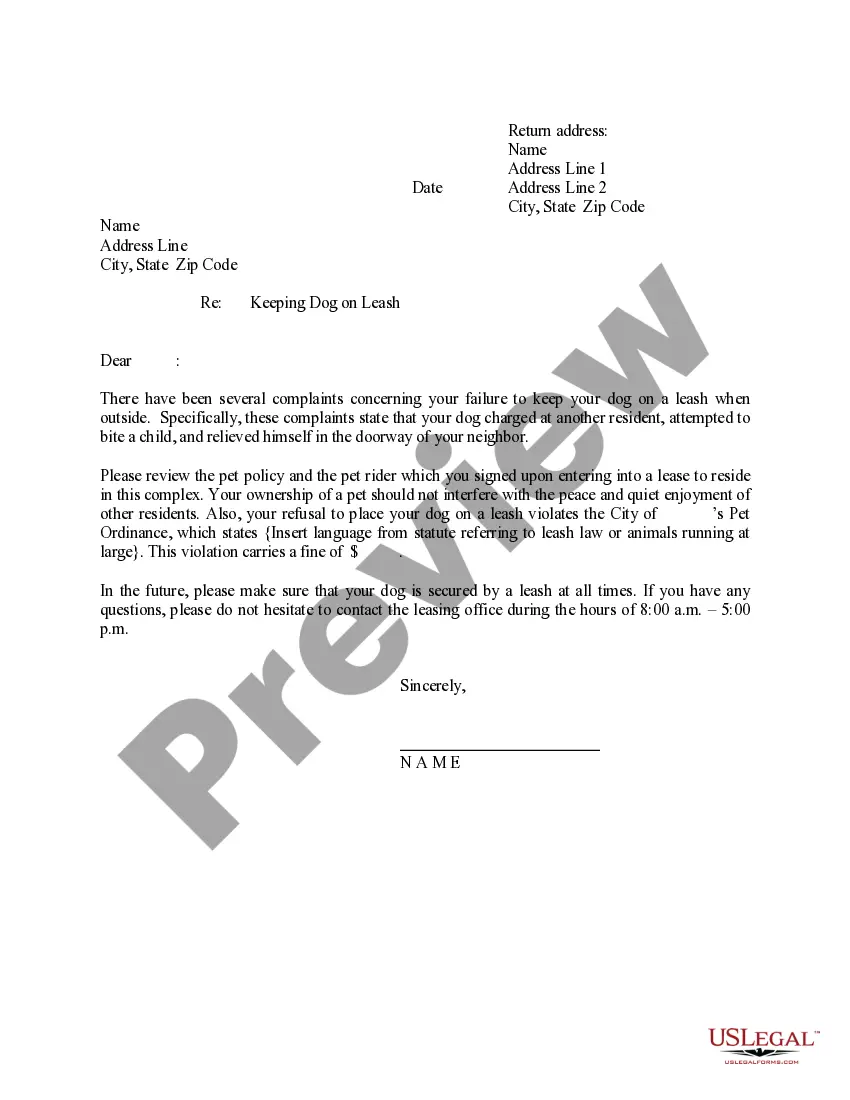
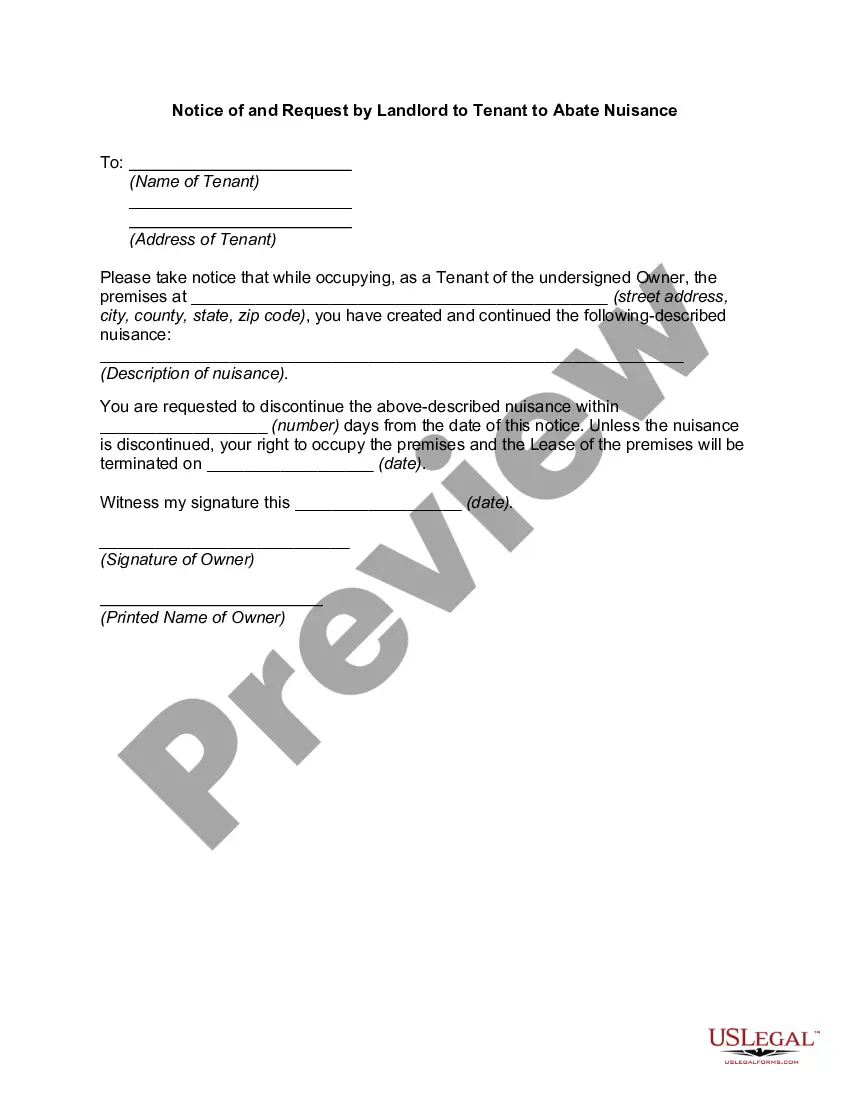
Get your form ready online
Our built-in tools help you complete, sign, share, and store your documents in one place.
Make edits, fill in missing information, and update formatting in US Legal Forms—just like you would in MS Word.
Download a copy, print it, send it by email, or mail it via USPS—whatever works best for your next step.
Sign and collect signatures with our SignNow integration. Send to multiple recipients, set reminders, and more. Go Premium to unlock E-Sign.
If this form requires notarization, complete it online through a secure video call—no need to meet a notary in person or wait for an appointment.
We protect your documents and personal data by following strict security and privacy standards.

Make edits, fill in missing information, and update formatting in US Legal Forms—just like you would in MS Word.

Download a copy, print it, send it by email, or mail it via USPS—whatever works best for your next step.

Sign and collect signatures with our SignNow integration. Send to multiple recipients, set reminders, and more. Go Premium to unlock E-Sign.

If this form requires notarization, complete it online through a secure video call—no need to meet a notary in person or wait for an appointment.

We protect your documents and personal data by following strict security and privacy standards.
Looking for another form?

How to fill out Letter - Warning To Renter Regarding Disruptive Guests?
US Legal Forms - one of the largest repositories of legal documents in the United States - provides a variety of legal document templates that you can download or print.
On the website, you can locate thousands of forms for both business and personal purposes, categorized by types, states, or keywords. You can find the most recent versions of forms such as the California Letter - Warning To Renter About Disruptive Guests in seconds.
If you already have a monthly subscription, Log In and download the California Letter - Warning To Renter About Disruptive Guests from the US Legal Forms library. The Acquire button will appear on each form you view. You can access all previously downloaded forms from the My documents tab of your account.
Choose the format and download the form to your device.
You can fill out, edit, and print the retrieved California Letter - Warning To Renter About Disruptive Guests. Every template you add to your account has no expiration date and belongs to you forever. Therefore, if you need to download or print another copy, just go to the My documents section and click on the form you require. Access the California Letter - Warning To Renter About Disruptive Guests with US Legal Forms, one of the most extensive repositories of legal document templates. Utilize thousands of professional and state-specific templates that meet your business or personal needs and requirements.
- Make sure you have selected the correct form for your city/state. Hit the Preview button to check the form's content.
- Examine the form description to ensure that you have selected the correct form.
- If the form doesn't meet your requirements, utilize the Search box at the top of the screen to find one that does.
- If you're satisfied with the form, confirm your choice by clicking on the Buy now button.
- Then, select your preferred pricing plan and provide your information to register for an account.
- Finally, process the purchase. Use your Visa or Mastercard or PayPal account to complete the transaction.
Form popularity
FAQ
The guest cannot be barred unless he or she broke the rules of the lease, or broke local, state or federal law. The landlord may tell your guest that they are not allowed to visit you, and may say that they cannot come on the landlord's property at all if it is an apartment complex or mobile home park.
Take time to make the letter look official.Include a company or personal letterhead. If you do not have a letter head create one that includes your name, address and contact information such as phone number and email.Include the date in the top left corner.Include the tenant's name and address below the date.
California law gives tenants the right to quiet enjoyment of their property so long as they are not violating local laws or the lease. This generally means that your landlord cannot interfere with your right to have visitors.
As a landlord, you're not technically liable for nuisance tenants or occupiers of your property. However, you may be liable if you've allowed the tenants to cause the nuisance or if, when renting out your property, you were aware that nuisance was inevitable or almost certainly going to occur.
Standard rental and lease agreements often state: Guests may stay a maximum of 14 days in a six-month period or 7 nights consecutively on the property. Any guest residing on the property for more than 14 days in a six-month period or spending more than 7 nights consecutively will be considered a tenant.
If you notify your landlord and the landlord doesn't take action to stop the nuisance, especially if the offender is another tenant, then the landlord may be held liable. As a tenant, you may remain on your leased property and sue the landlord for breach of the covenant of quiet enjoyment.
CAL. CIV. CODE § 1927. Landlords have a duty to ensure that tenants can peaceful possess their rental unit free of disturbances, and in extreme cases may take steps to evict bothersome tenants to abate a nuisance.
Landlords cannot unreasonably prohibit guests from entering the rental property or charge a fee for having guests over. However, you can put specific terms in your lease that relate to tenants' guests and their rights.
While a landlord cannot stop you from having guests, he can put a limit on how many guests you have at one time or prevent extended stays. California law protects tenants by allowing them to have guests and to live peacefully.