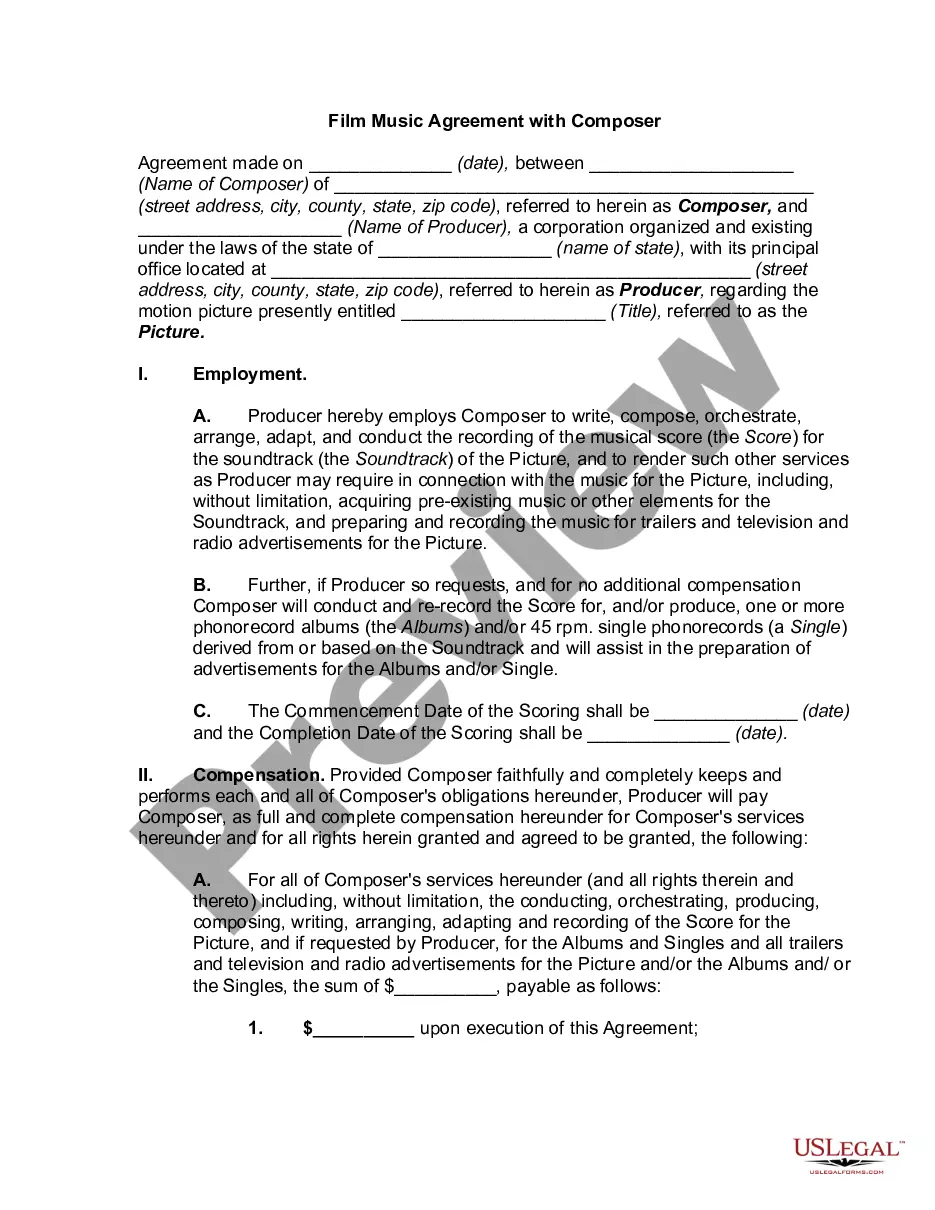
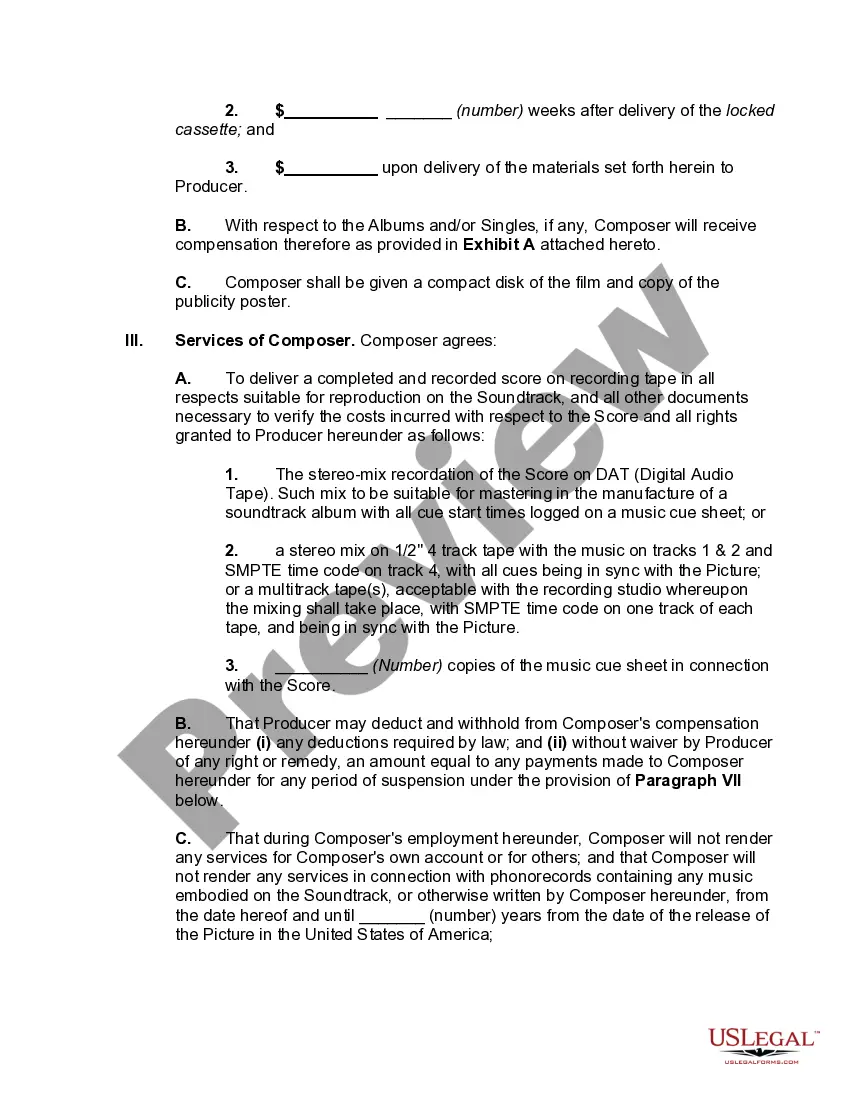
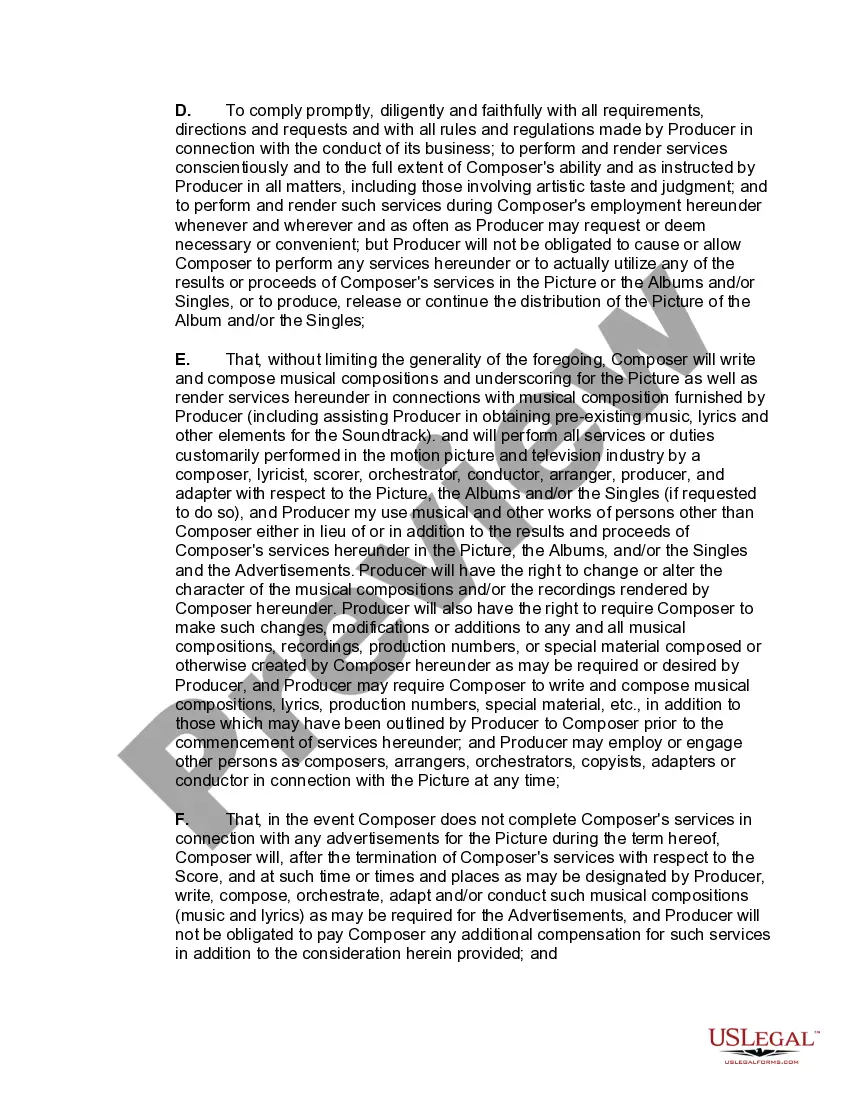
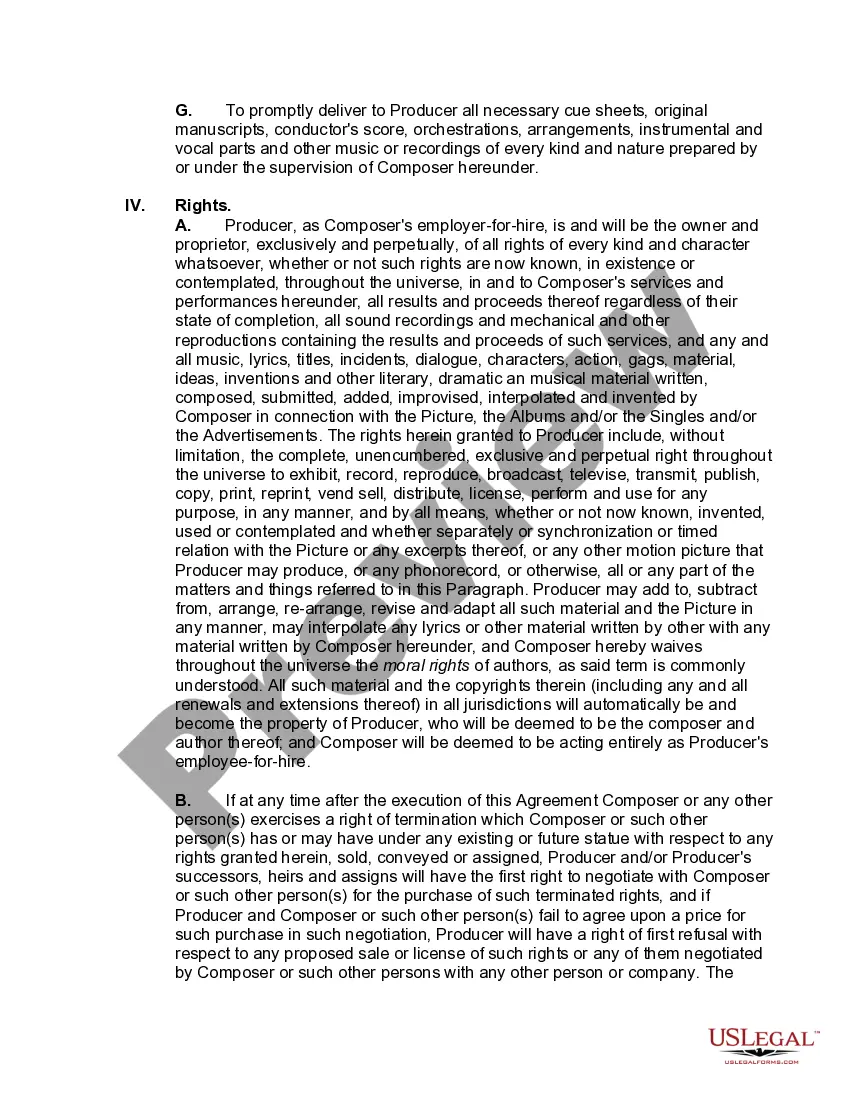
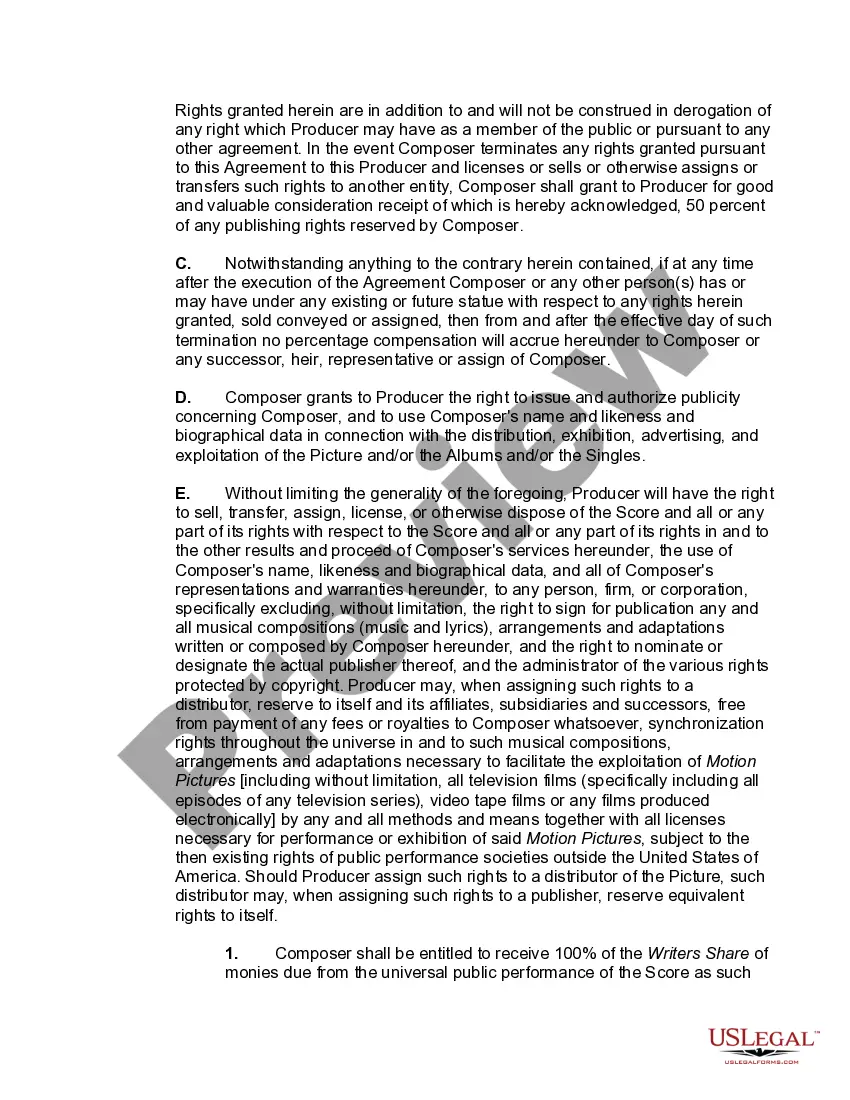
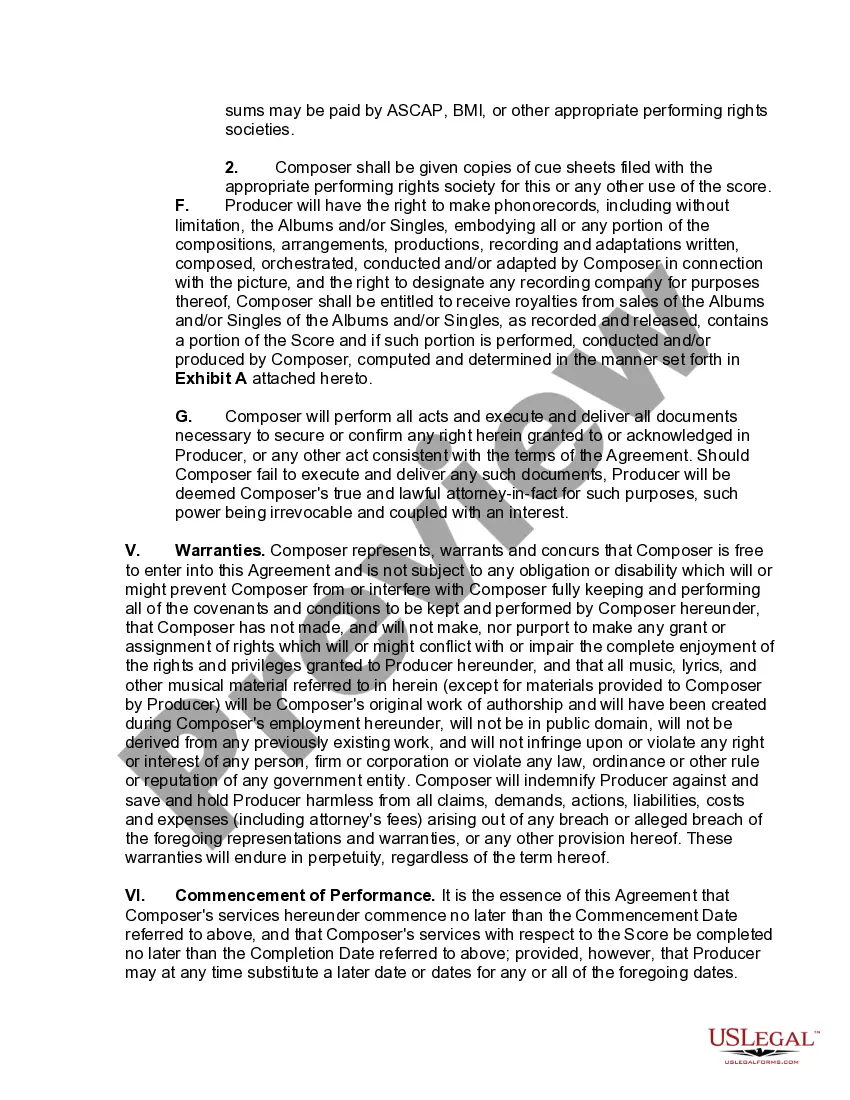
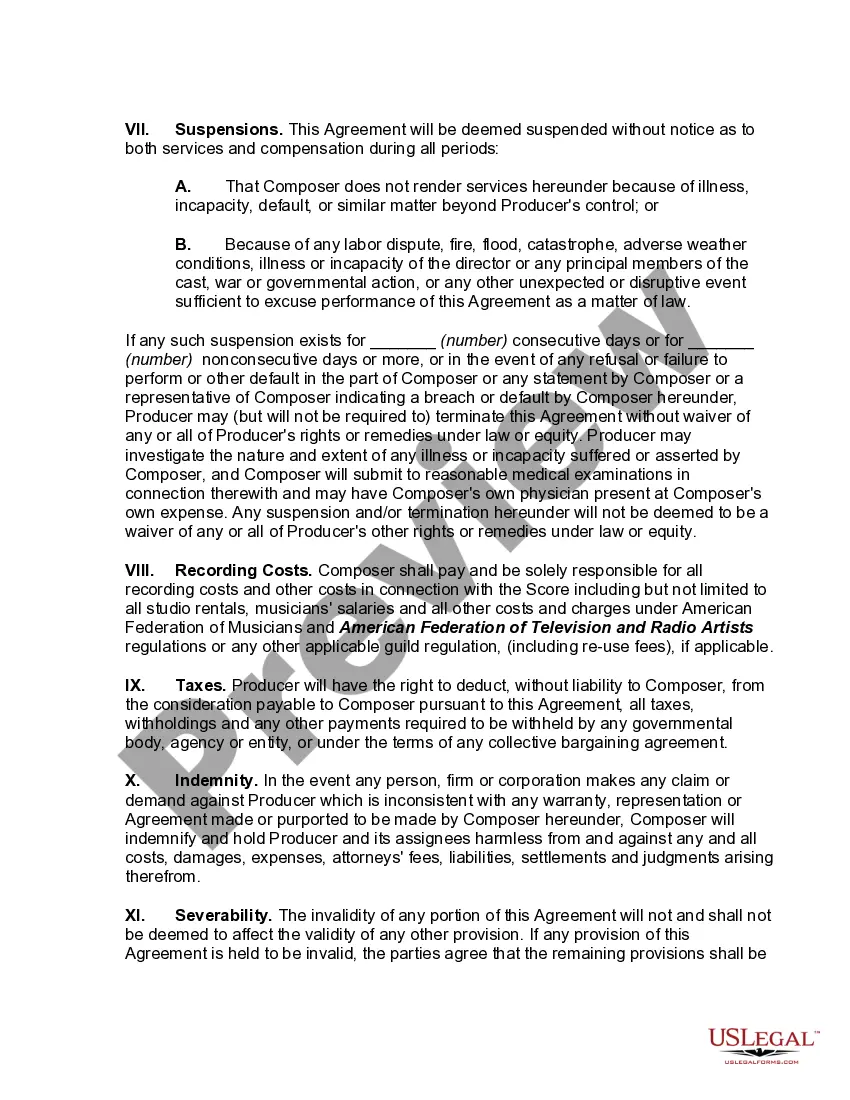
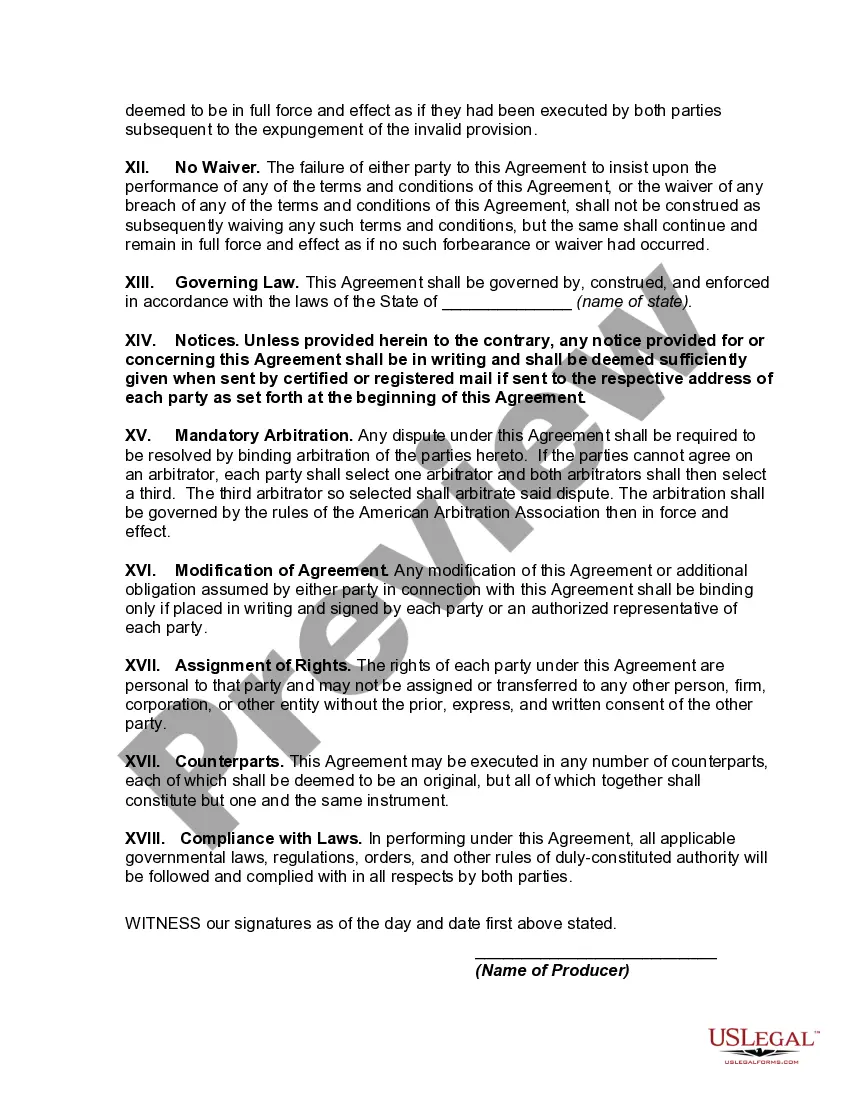
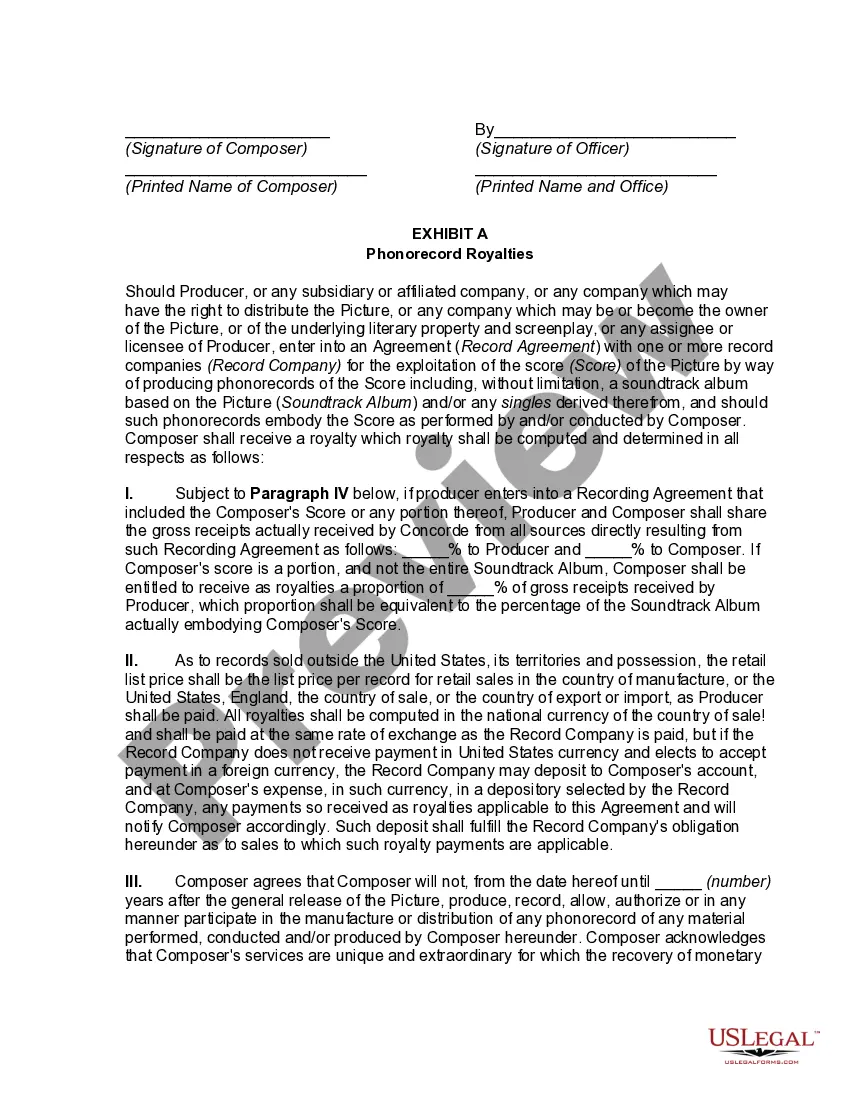
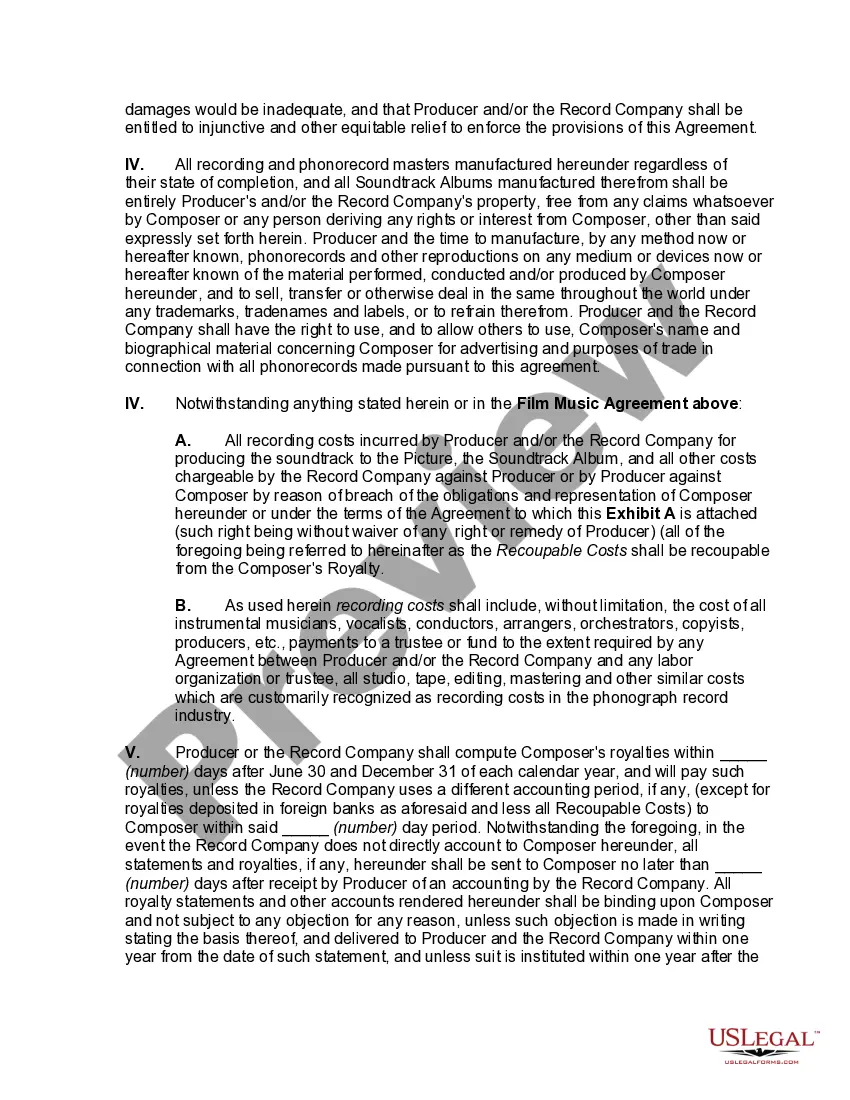
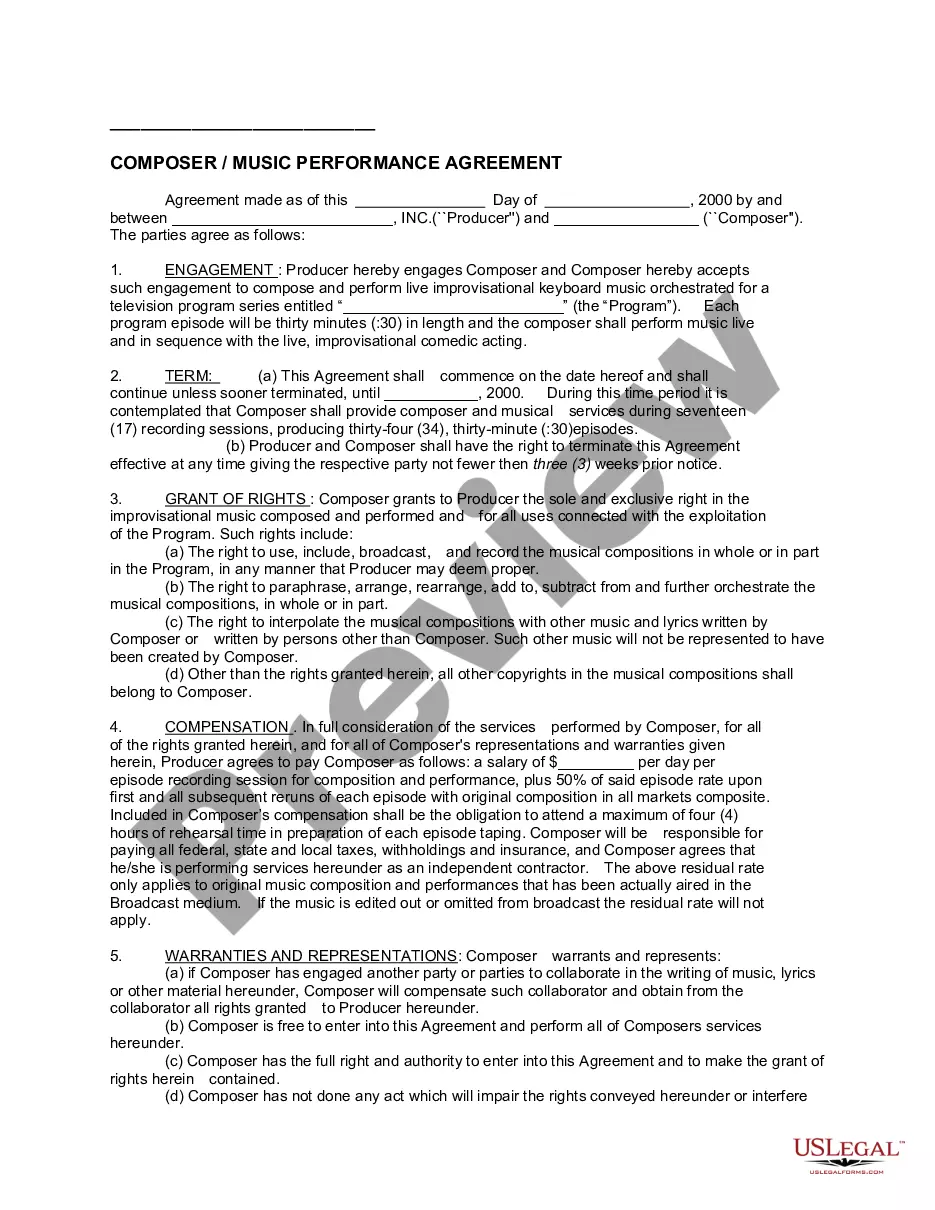
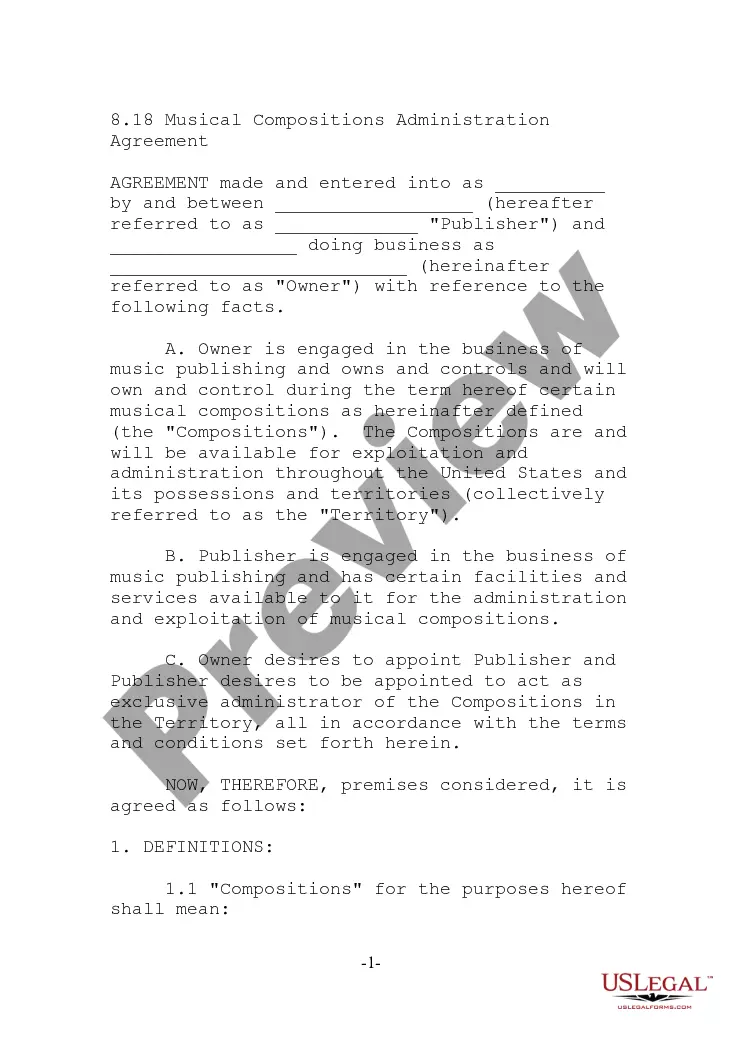
California Film Music Agreement with Composer
Description

Get your form ready online
Our built-in tools help you complete, sign, share, and store your documents in one place.
Make edits, fill in missing information, and update formatting in US Legal Forms—just like you would in MS Word.
Download a copy, print it, send it by email, or mail it via USPS—whatever works best for your next step.
Sign and collect signatures with our SignNow integration. Send to multiple recipients, set reminders, and more. Go Premium to unlock E-Sign.
If this form requires notarization, complete it online through a secure video call—no need to meet a notary in person or wait for an appointment.
We protect your documents and personal data by following strict security and privacy standards.

Make edits, fill in missing information, and update formatting in US Legal Forms—just like you would in MS Word.

Download a copy, print it, send it by email, or mail it via USPS—whatever works best for your next step.

Sign and collect signatures with our SignNow integration. Send to multiple recipients, set reminders, and more. Go Premium to unlock E-Sign.

If this form requires notarization, complete it online through a secure video call—no need to meet a notary in person or wait for an appointment.

We protect your documents and personal data by following strict security and privacy standards.
Looking for another form?
How to fill out Film Music Agreement With Composer?
Finding the appropriate legal document template can be challenging.
Certainly, there are numerous templates available online, but how do you find the legal form you need.
Utilize the US Legal Forms website.
If you are a new user of US Legal Forms, here are simple instructions you can follow: First, ensure you have selected the correct form for your city/county. You can preview the form using the Preview button and review the form description to confirm it is the right one for you. If the form does not meet your needs, use the Search field to find the appropriate form. Once you are certain the form is suitable, click the Purchase now button to acquire the form. Choose the pricing plan you wish and enter the required information. Create your account and complete your purchase using your PayPal account or credit card. Select the file format and download the legal document template to your device. Finally, complete, modify, print, and sign the acquired California Film Music Agreement with Composer. US Legal Forms is the largest library of legal forms where you can find a wide variety of document templates. Use the service to acquire professionally-created documents that meet state requirements.
- The service offers a vast array of templates, including the California Film Music Agreement with Composer, suitable for both business and personal use.
- All templates are reviewed by experts and meet federal and state requirements.
- If you are currently registered, Log In to your account and click the Download button to obtain the California Film Music Agreement with Composer.
- Use your account to view the legal forms you have previously purchased.
- Go to the My documents tab in your account to download another copy of the documents you need.
Form popularity
FAQ
In the context of the California Film Music Agreement with Composer, film score composers often receive royalties for their work. These royalties are typically based on the usage of the music in films, such as theatrical releases or streaming services. Understanding this financial aspect is crucial for composers, as it can significantly impact their earnings over time. To ensure fair compensation, many composers use agreements that outline their rights to royalties, making it essential to consult legal resources like US Legal Forms for clear guidelines.
To credit music on a film, include detailed listings in both opening and closing credits, specifying composer, title, and any performing artists. Make sure to follow industry standards outlined in agreements such as the California Film Music Agreement with Composer. This will ensure that all contributors receive appropriate recognition.
Composers often start by analyzing the film's themes and emotions. They collaborate with directors and producers to understand the mood needed for different scenes, crafting music that enhances the narrative. For a smooth process, consider using a California Film Music Agreement with Composer to outline expectations and obligations.
You credit a musician by including their name in the film credits, typically in the music section based on their specific roles. Be clear about whether they performed, wrote, or arranged the music. Following the California Film Music Agreement with Composer helps you accurately reflect each musician’s participation.
A composer credit acknowledges the individual who created the music for a film. This credit highlights their contribution to the project and often appears in the film’s credits. Adhering to the California Film Music Agreement with Composer will ensure your credit aligns with industry standards.
When citing music in film credits, provide the composer's name alongside the title of the work. You should also mention any relevant associations, such as roles like composer or arranger. Referencing the California Film Music Agreement with Composer can guide you on the appropriate formatting to ensure all parties receive credit.
To credit a music composer in a movie, include their name in the opening or closing credits. Ensure the credit appears prominently, often in a designated section for music. Following the guidelines of the California Film Music Agreement with Composer can help in establishing proper recognition for their contributions.
Yes, film composers can earn royalties based on how their music is used in films. This involves payments received from public performances, streaming, and DVD sales, among other revenue streams. It's essential to negotiate these terms in the California Film Music Agreement with Composer to secure a fair share of future earnings. This ensures that the composer continues to benefit from their artistic work long after the film's release.
A composer agreement is a legal contract that outlines the terms between the composer and the filmmaker. It specifies details such as payment, ownership rights, and the scope of work. This agreement protects both parties and ensures clarity regarding the deliverables. Utilizing a California Film Music Agreement with Composer can streamline this process and safeguard your musical contributions.
Composers typically start by understanding the film's narrative and emotional tone. They then create a musical score that enhances the storytelling, using various instruments and styles. Collaborating closely with the director, the composer aligns their music to key scenes and character developments. To formalize this process, a California Film Music Agreement with Composer can help ensure all creative inputs are properly credited and compensated.