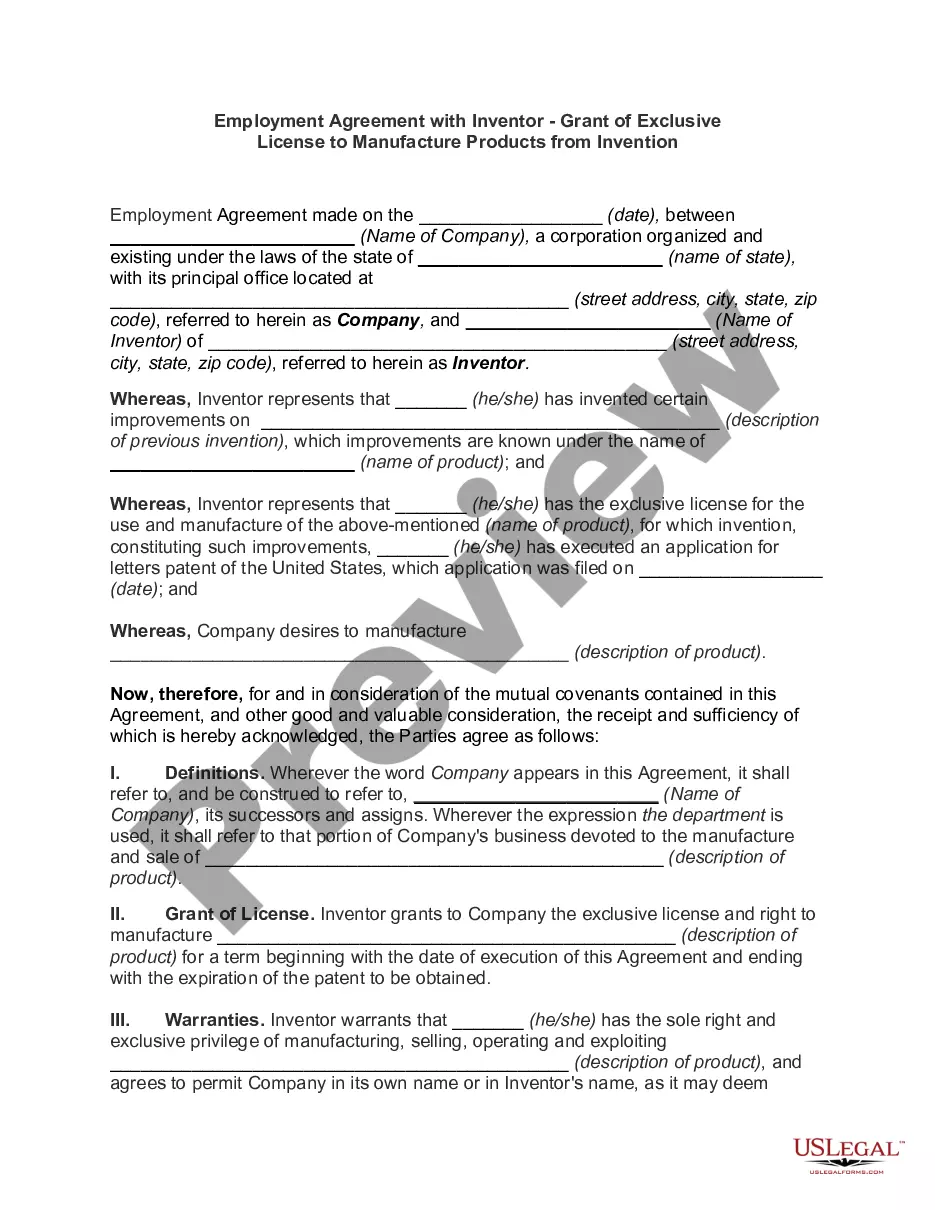
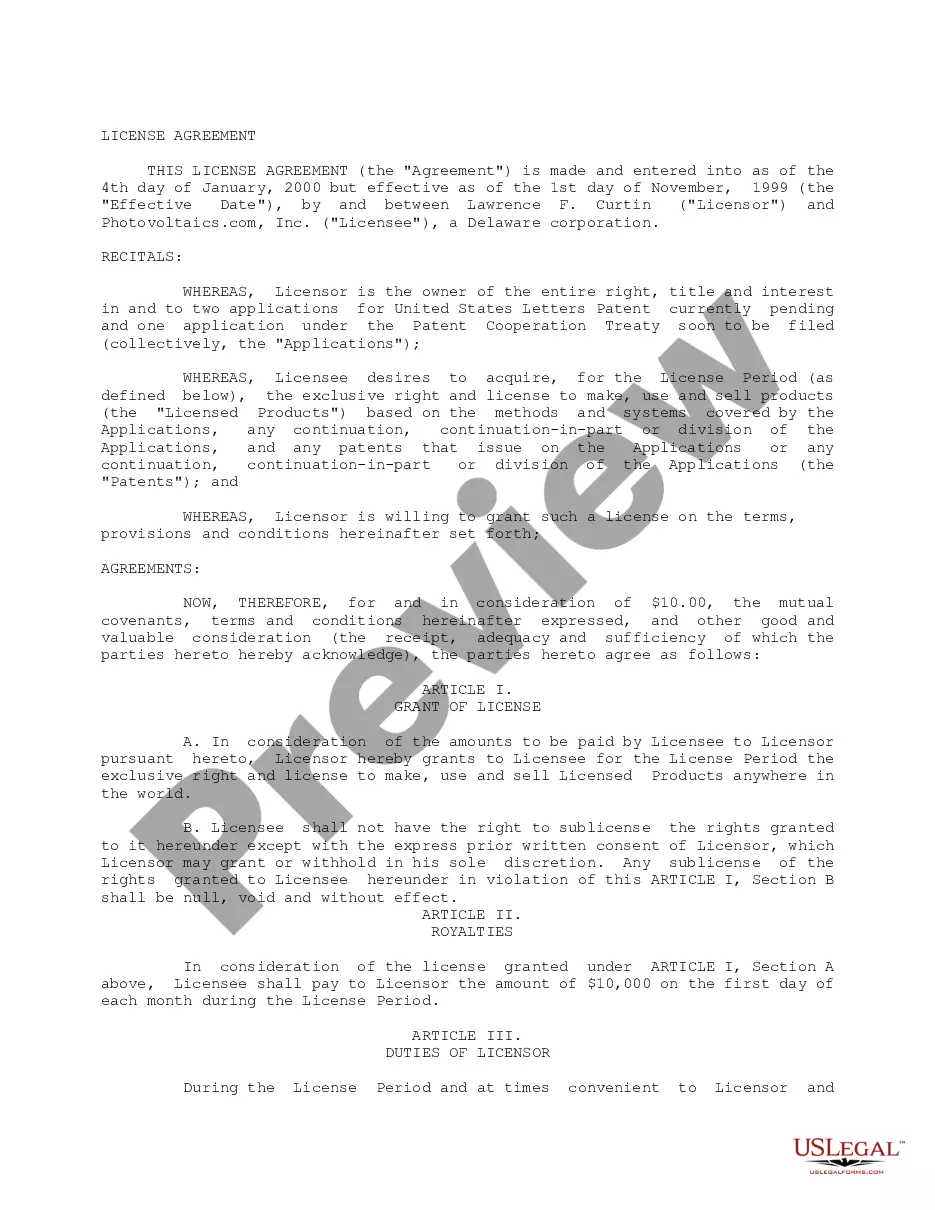
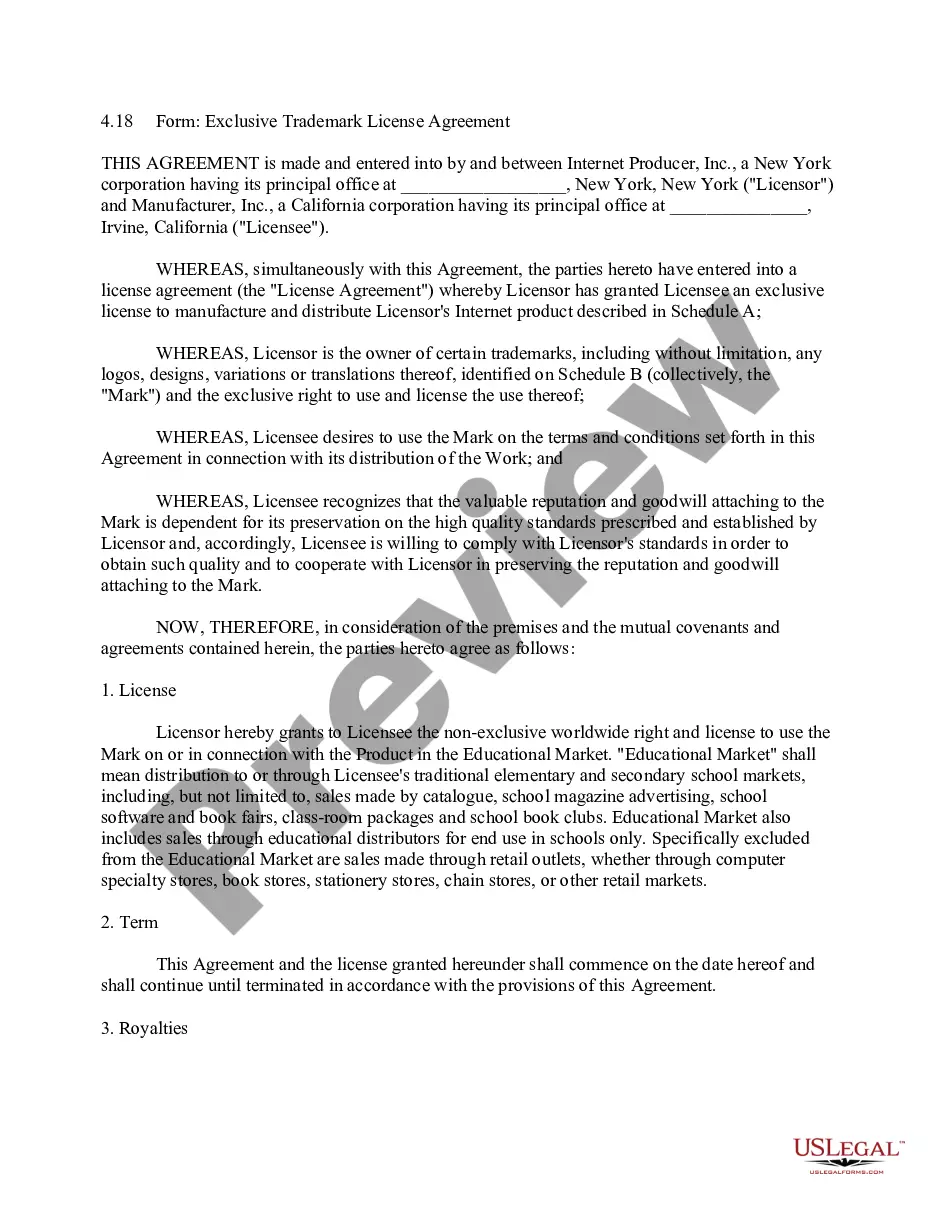
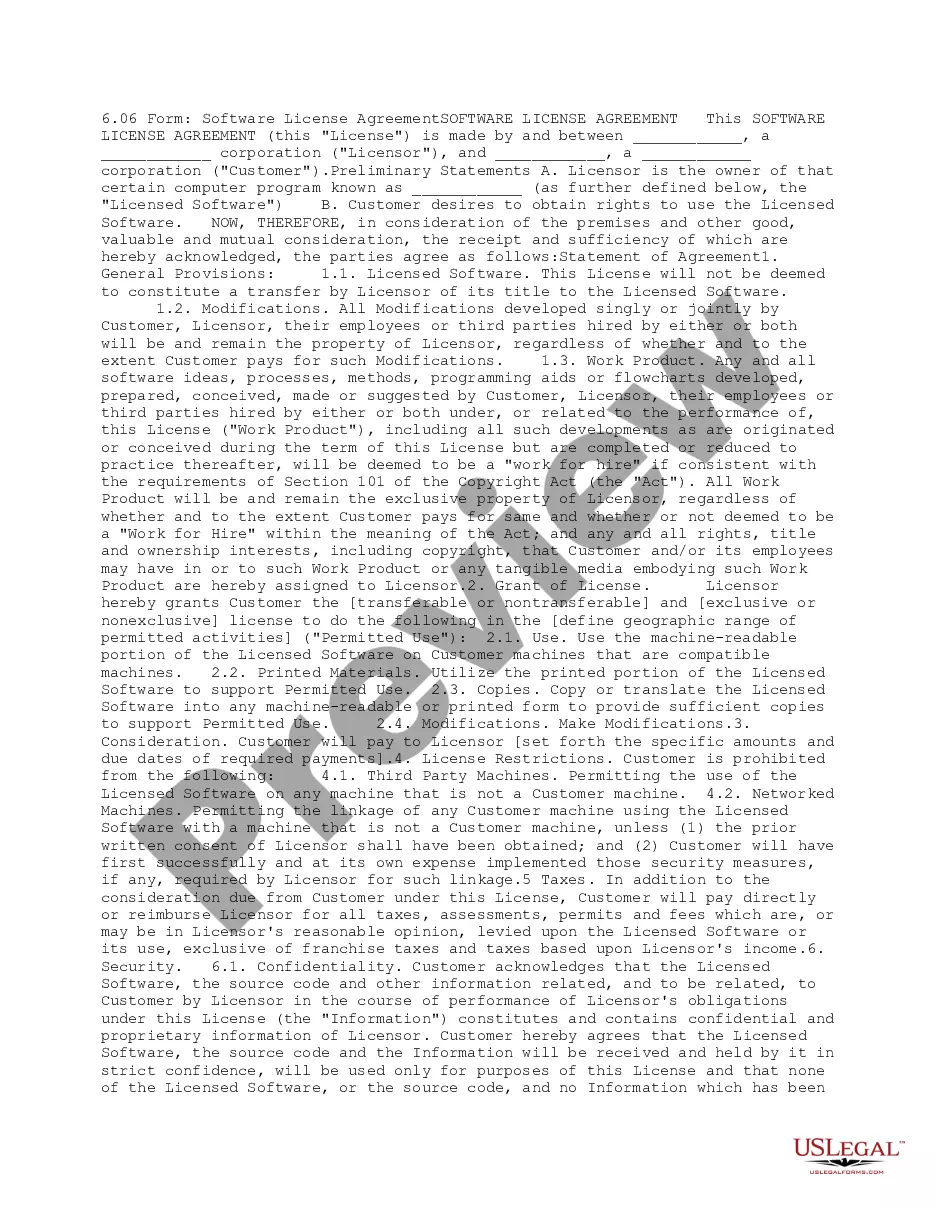
California Exclusive License Agreement between Individual Inventor and Corporation
Description


Get your form ready online
Our built-in tools help you complete, sign, share, and store your documents in one place.
Make edits, fill in missing information, and update formatting in US Legal Forms—just like you would in MS Word.
Download a copy, print it, send it by email, or mail it via USPS—whatever works best for your next step.
Sign and collect signatures with our SignNow integration. Send to multiple recipients, set reminders, and more. Go Premium to unlock E-Sign.
If this form requires notarization, complete it online through a secure video call—no need to meet a notary in person or wait for an appointment.
We protect your documents and personal data by following strict security and privacy standards.

Make edits, fill in missing information, and update formatting in US Legal Forms—just like you would in MS Word.

Download a copy, print it, send it by email, or mail it via USPS—whatever works best for your next step.

Sign and collect signatures with our SignNow integration. Send to multiple recipients, set reminders, and more. Go Premium to unlock E-Sign.

If this form requires notarization, complete it online through a secure video call—no need to meet a notary in person or wait for an appointment.

We protect your documents and personal data by following strict security and privacy standards.
Looking for another form?






How to fill out Exclusive License Agreement Between Individual Inventor And Corporation?
If you wish to aggregate, obtain, or print authentic document templates, utilize US Legal Forms, the premier repository of legal forms available online.
Take advantage of the website's straightforward and user-friendly search feature to locate the documents you need.
A wide array of templates for commercial and personal purposes are categorized by types and jurisdictions, or keywords.
Avoid altering or removing any HTML tags. Only use synonyms for plain text outside of the HTML tags.
- Employ US Legal Forms to find the California Exclusive License Agreement between Individual Inventor and Corporation in just a few clicks.
- If you are already a US Legal Forms patron, Log In to your account and click the Download button to retrieve the California Exclusive License Agreement between Individual Inventor and Corporation.
- You can also access forms you previously acquired in the My documents tab of your account.
- If you are using US Legal Forms for the first time, follow the instructions outlined below.
- Step 1. Ensure you have selected the document for the correct city/state.
- Step 2. Utilize the Review feature to examine the content of the document. Be sure to read the summary.
- Step 3. If you are dissatisfied with the document, use the Search field at the top of the screen to find alternative versions of the legal document template.
- Step 4. Once you have located the document you need, click the Get now button. Choose your pricing plan and provide your details to register for an account.
- Step 5. Process the transaction. You can use your credit card or PayPal account to complete the purchase.
- Step 6. Select the format of the legal document and download it to your device.
- Step 7. Complete, customize, and print or sign the California Exclusive License Agreement between Individual Inventor and Corporation.
- Every legal document template you obtain is yours permanently. You will have access to each form you acquired within your account. Click the My documents section and select a form to print or download again.
- Be proactive and obtain, and print the California Exclusive License Agreement between Individual Inventor and Corporation with US Legal Forms. There are numerous professional and jurisdiction-specific forms you can utilize for your business or personal requirements.
Form popularity
FAQ
A copyright exclusive license is one in which ownership in one or more rights is transferred by the copyright owner. A copyright nonexclusive license occurs when the owner retains ownership of the copyright and/or may license the same right to others.
By nature, exclusive licenses grant more rights than non-exclusive licenses and usually address a number of contractual obligations regarding the IP, including registration/prosecution, defense, and enforcement of the intellectual property rights.
Cross Licensing refers to the cross-license agreement between patentees, entered into for purposes of avoiding litigation concerning conflicting patents. It helps preserve the financial incentives for inventors to commercialize their existing innovations and undertake new, potentially patentable research.
An exclusive license grants the licensee singular permission to exploit the intellectual property in question. No other entity, including the party granting the license (the licensor), is allowed to use the intellectual property covered by the license unless specific carve-outs are included in the agreement.
Exclusive license allows a licensor to share intellectual property with a licensee for a specific period of time that usually binds the licensor to not share the property with anyone else.
An example of a licensing agreement is a contract between the copyright holders of software and another company, allowing the latter to use the computer software for their daily business operations.
Cross Licensing refers to the cross-license agreement between patentees, entered into for purposes of avoiding litigation concerning conflicting patents. It helps preserve the financial incentives for inventors to commercialize their existing innovations and undertake new, potentially patentable research.
Practitioners and licensing executives often refer to three basic types of voluntary licenses: non-exclusive, sole, and exclusive. A non-exclusive licence allows the licensor to retain the right to use the licensed property and the right to grant additional licenses to third parties.
Thus by cross licensing, each party maintains their freedom to bring the commercial product to market. The term "cross licensing" implies that neither party pays monetary royalties to the other party, although this may be the case. For example, Microsoft and JVC entered into a cross license agreement in January 2008.