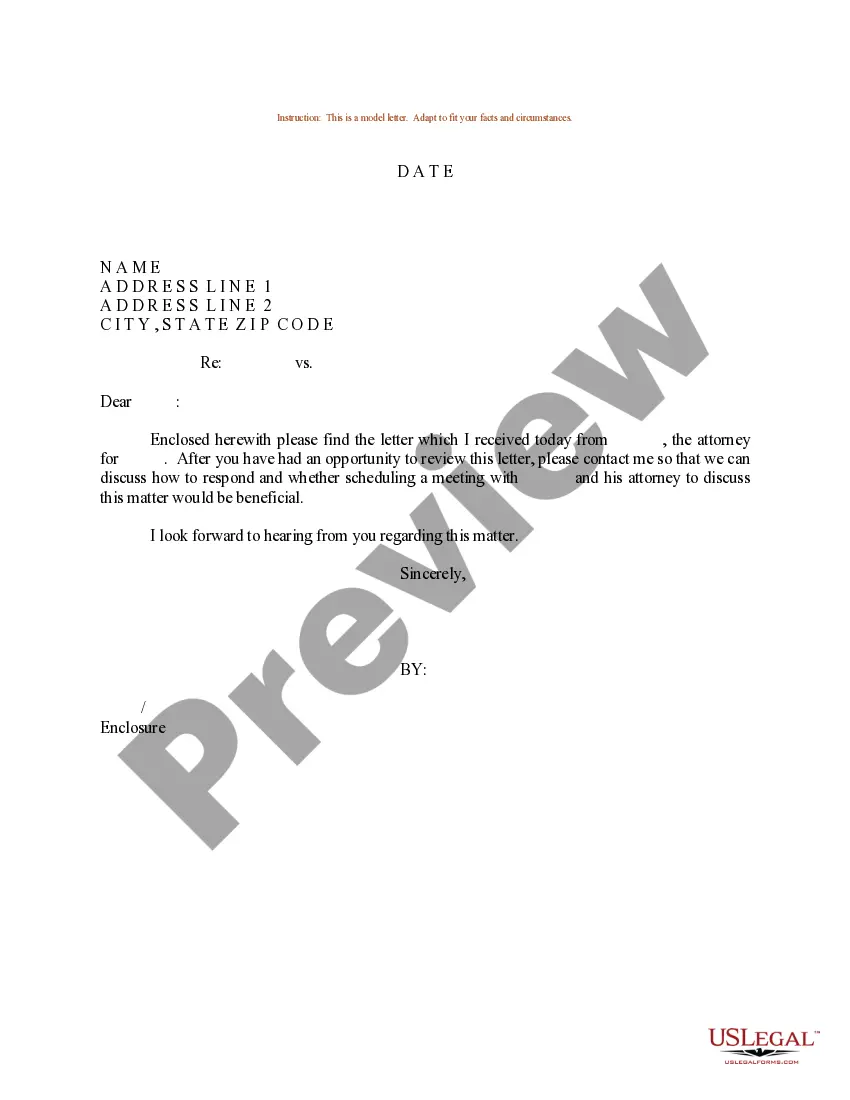
California Sample Letter for Meeting Opposing Attorney
Description
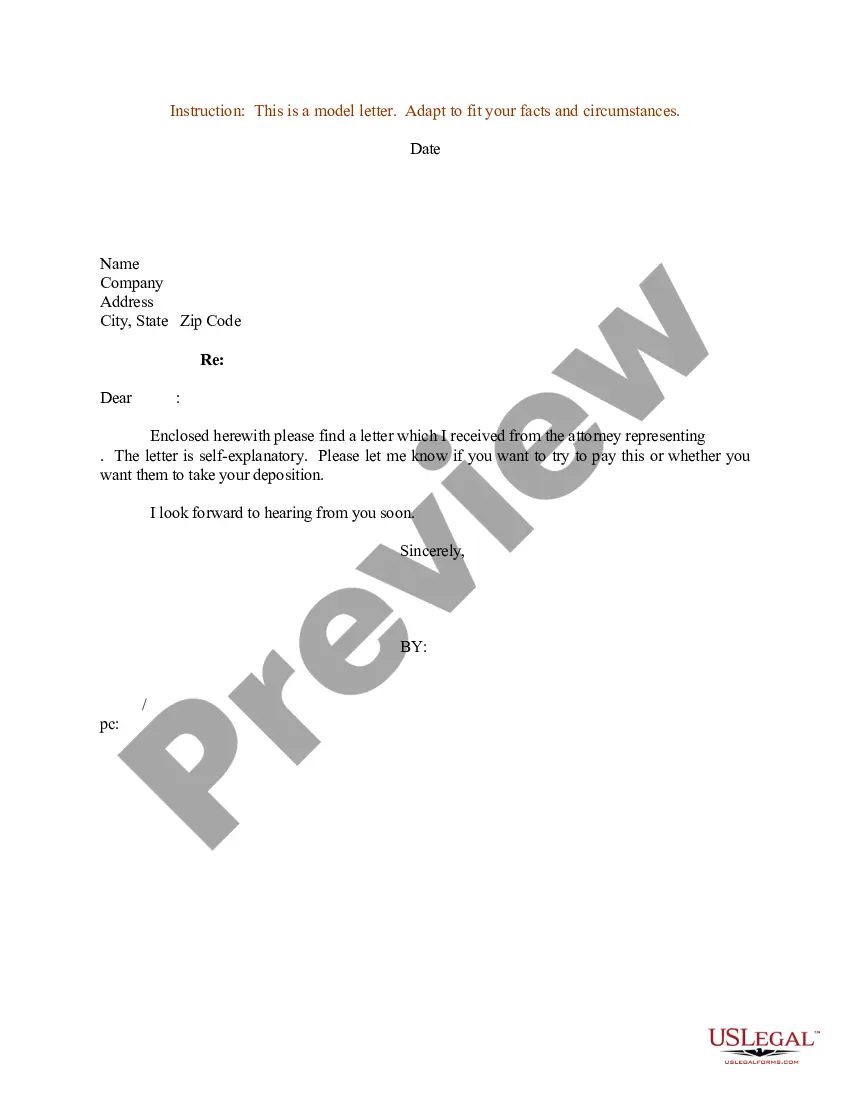
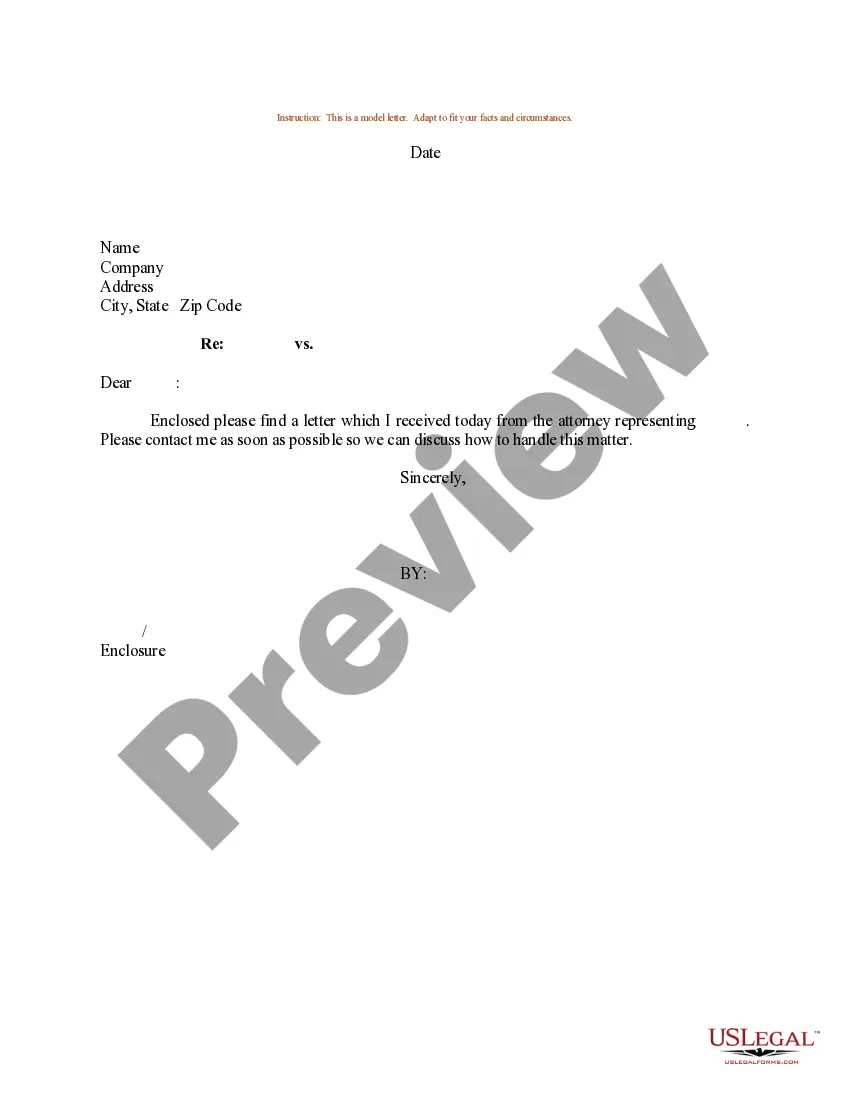
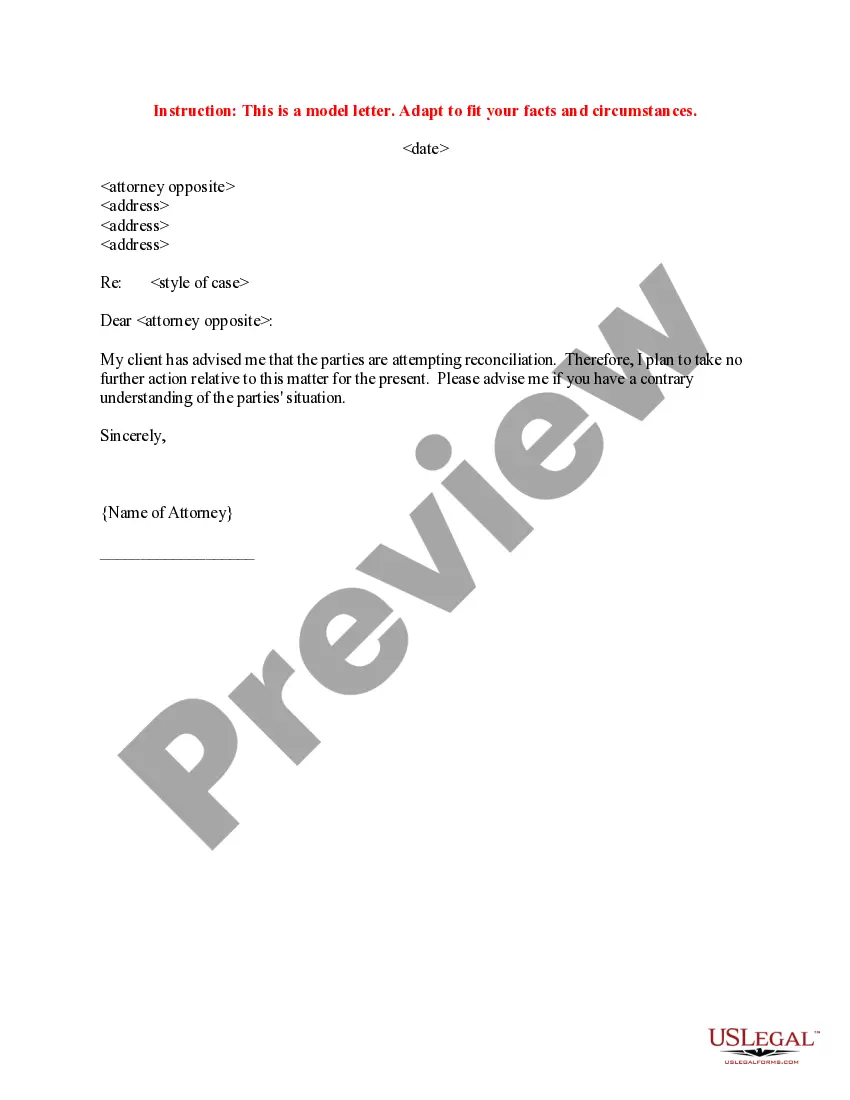
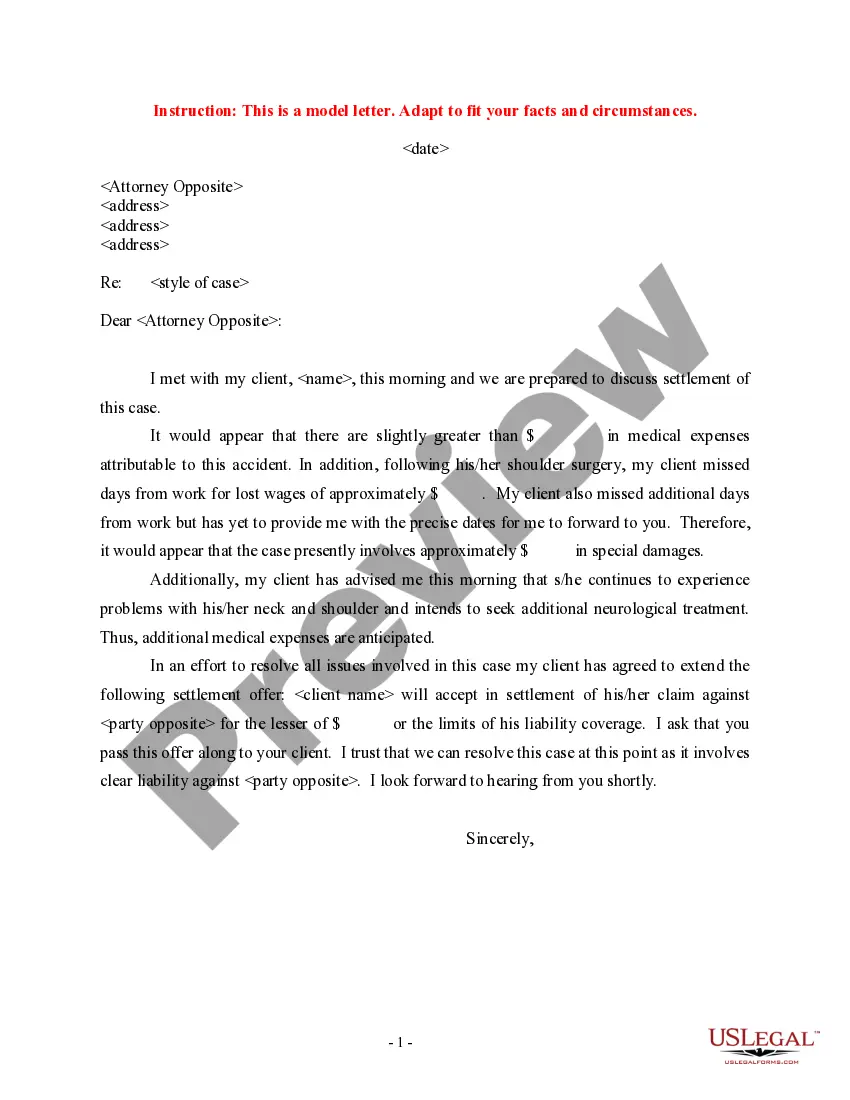
Get your form ready online
Our built-in tools help you complete, sign, share, and store your documents in one place.
Make edits, fill in missing information, and update formatting in US Legal Forms—just like you would in MS Word.
Download a copy, print it, send it by email, or mail it via USPS—whatever works best for your next step.
Sign and collect signatures with our SignNow integration. Send to multiple recipients, set reminders, and more. Go Premium to unlock E-Sign.
If this form requires notarization, complete it online through a secure video call—no need to meet a notary in person or wait for an appointment.
We protect your documents and personal data by following strict security and privacy standards.

Make edits, fill in missing information, and update formatting in US Legal Forms—just like you would in MS Word.

Download a copy, print it, send it by email, or mail it via USPS—whatever works best for your next step.

Sign and collect signatures with our SignNow integration. Send to multiple recipients, set reminders, and more. Go Premium to unlock E-Sign.

If this form requires notarization, complete it online through a secure video call—no need to meet a notary in person or wait for an appointment.

We protect your documents and personal data by following strict security and privacy standards.
Looking for another form?





How to fill out Sample Letter For Meeting Opposing Attorney?
Choosing the best legitimate file web template could be a have a problem. Needless to say, there are a lot of layouts available online, but how can you find the legitimate type you need? Make use of the US Legal Forms internet site. The services delivers a large number of layouts, for example the California Sample Letter for Meeting Opposing Attorney, that you can use for business and private needs. Each of the forms are inspected by specialists and fulfill federal and state demands.
In case you are currently registered, log in to your profile and click on the Acquire key to obtain the California Sample Letter for Meeting Opposing Attorney. Make use of profile to search throughout the legitimate forms you may have acquired formerly. Proceed to the My Forms tab of the profile and get one more backup of your file you need.
In case you are a fresh end user of US Legal Forms, listed here are simple directions for you to comply with:
- Initially, make certain you have selected the appropriate type for your personal metropolis/county. You can examine the form while using Preview key and browse the form description to make certain it will be the best for you.
- In the event the type does not fulfill your requirements, use the Seach industry to get the right type.
- Once you are certain that the form would work, click on the Acquire now key to obtain the type.
- Choose the rates program you desire and type in the required information and facts. Design your profile and pay for your order making use of your PayPal profile or credit card.
- Select the data file format and obtain the legitimate file web template to your system.
- Total, change and print out and signal the attained California Sample Letter for Meeting Opposing Attorney.
US Legal Forms is definitely the largest catalogue of legitimate forms that you can see various file layouts. Make use of the service to obtain professionally-made papers that comply with condition demands.
Form popularity
FAQ
Your meet and confer letter should look something like this: Dear Counsel; I am in receipt of your client's objections to our Request for Production of Documents, set #1 in the above entitled case. Below are a more detailed description of our problems with your responses.
A good faith attempt is more than arguing with opposing counsel. Instead, the law requires you to discuss the issues, compare views, exchange information (including statutes and case law supporting your position), and propose solutions to discovery fights without court interference.
8 Tips for Dealing with Difficult Opposing Counsel Point out Common Ground. ... Don't be Afraid to Ask Why. ... Separate the Person from the Problem. ... Focus on your Interests. ... Don't Fall for your Assumptions. ... Take a Calculated Approach. ... Control the Conversation by Reframing. ... Pick up the Phone.
Some are, some are not. The general rule is that all communications between parties is open and unprotected . However an exception applies to communications as part of an effort to settle the case. It is wise to head all such communications with the words ??Without Prejudice".
Rule 37 authorizes the court to direct that parties or attorneys who fail to participate in good faith in the discovery process pay the expenses, including attorney's fees, incurred by other parties as a result of that failure.
When you are emailing the opposing counsel, always be mindful of your tone, words, and spelling. Double-check and then check again before entering an email address in the ?To:? line and hitting ?send.? Make copies of all correspondence and never copy or blind carbon copy your client in emails with the opposing counsel.
As a rule, lawyers should avoid carbon copying or blind carbon copying clients on email, especially those to opposing counsel. And if doing so is necessary, the lawyer should first explain to the client why the lawyer is using CC or BCC, and that the client should not respond to all.
Dear [Opposing Counsel Name], I am writing to follow up on our recent communication regarding [case name]. I have not yet received a response from you regarding [list the specific issue or question]. Please let me know your thoughts as soon as possible so that we can continue to move forward with the case.