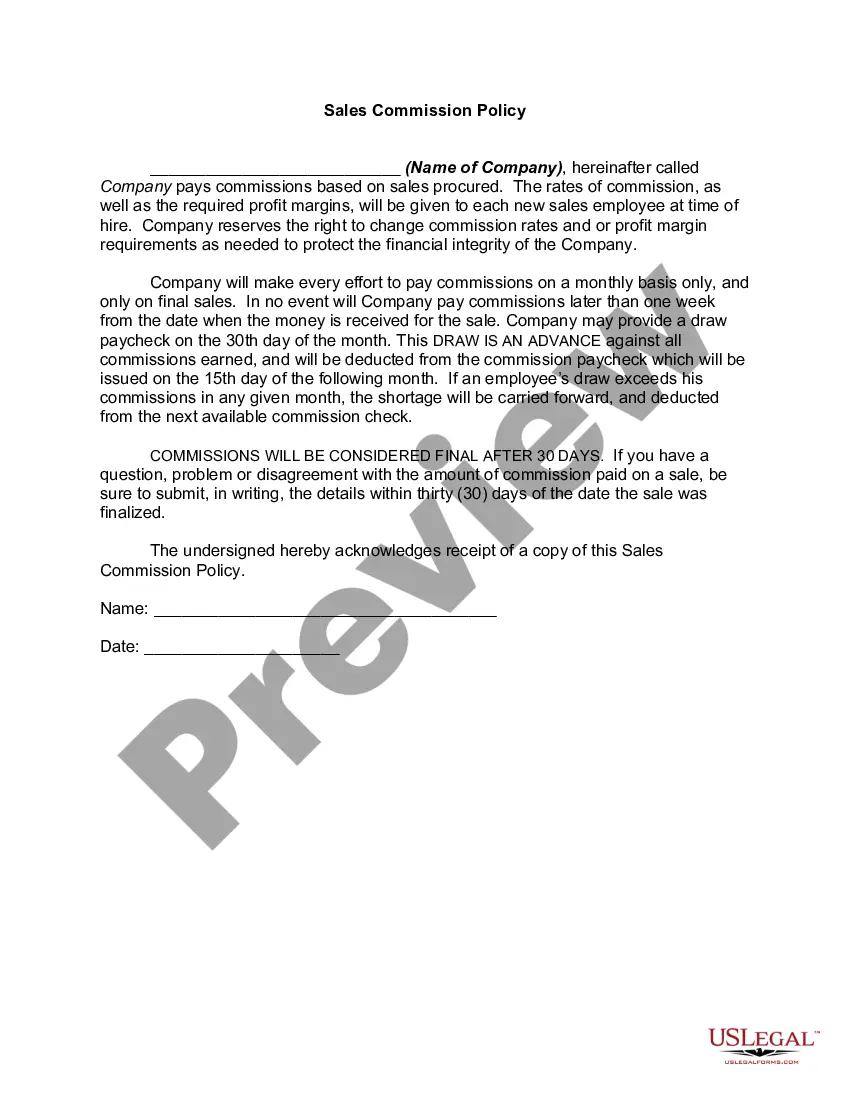
California Sales Commission Policy
Description
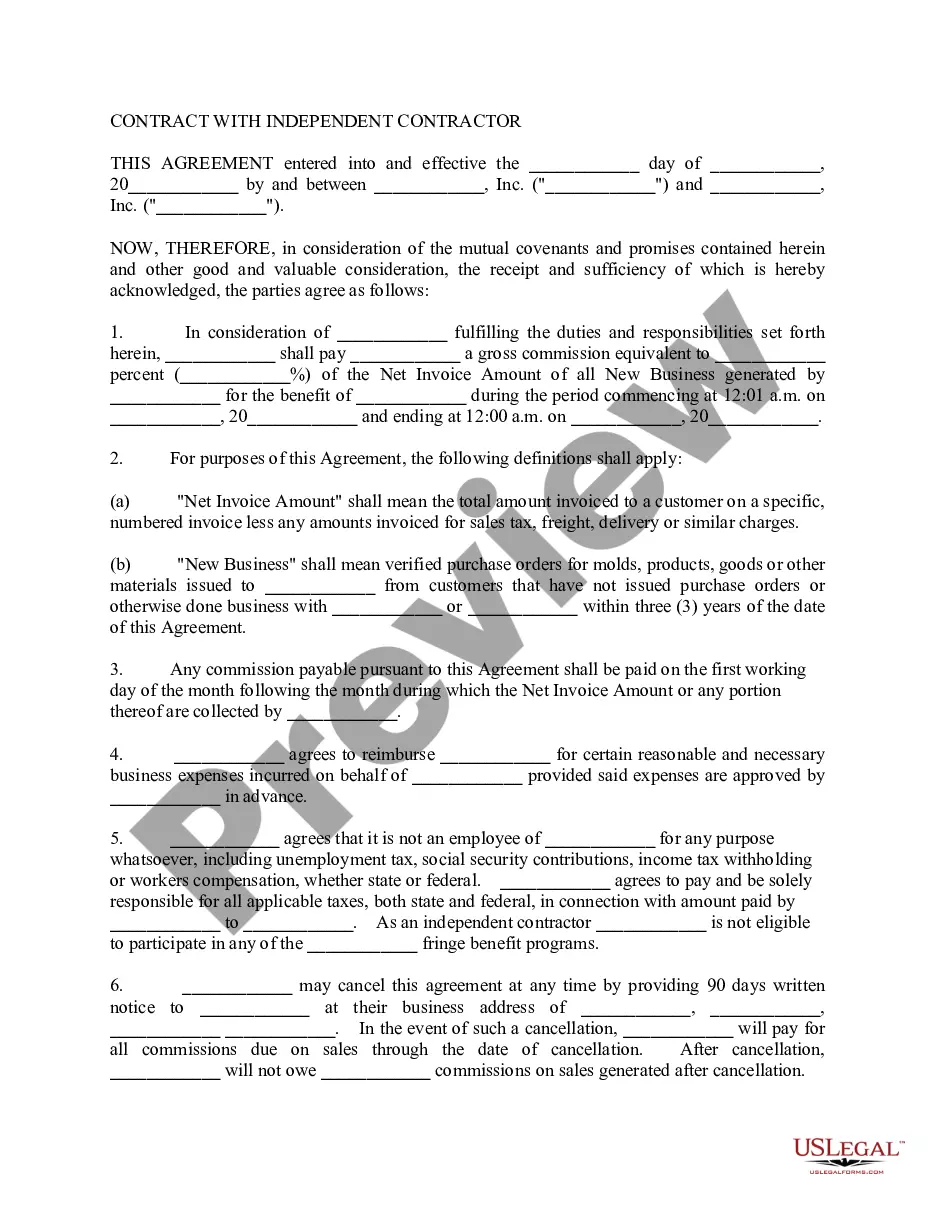
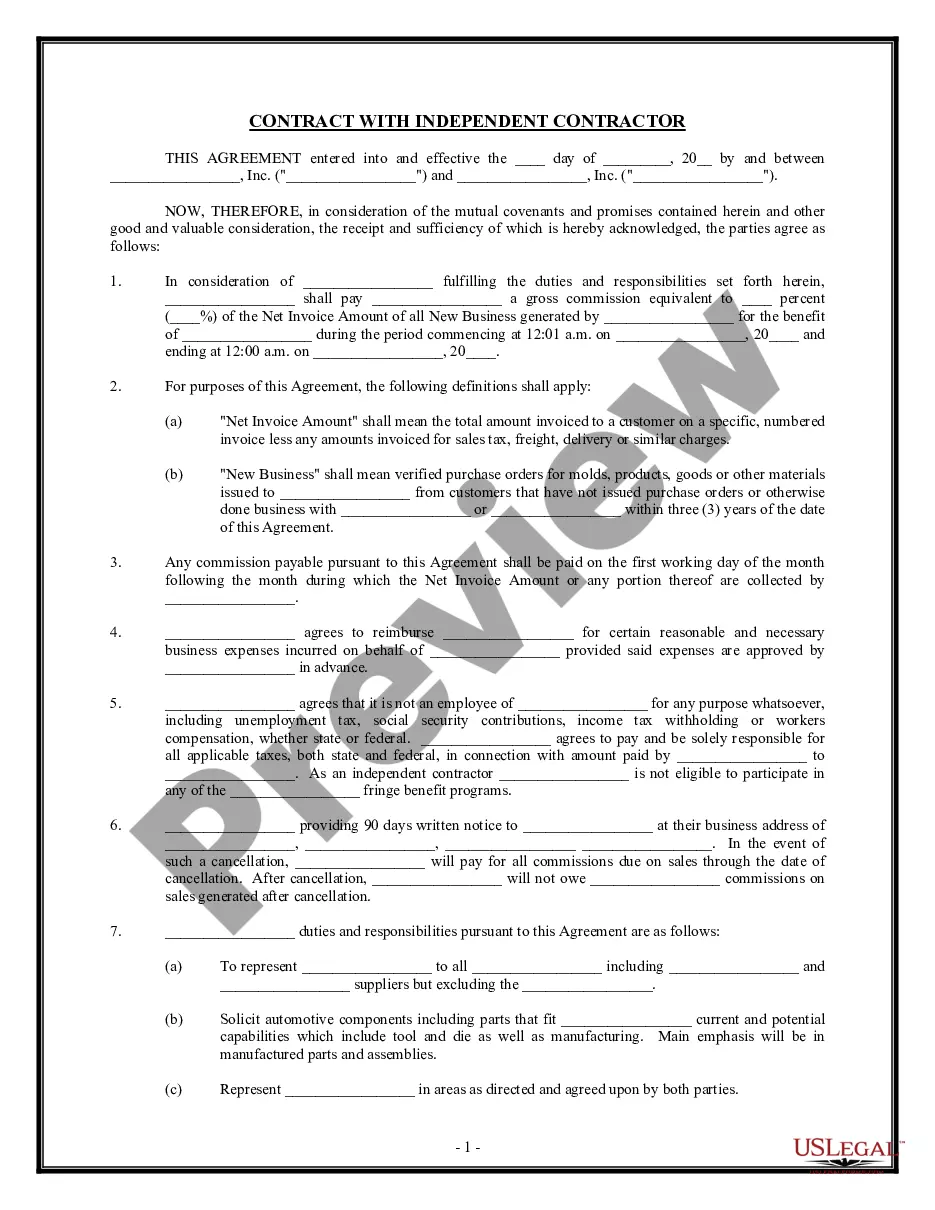
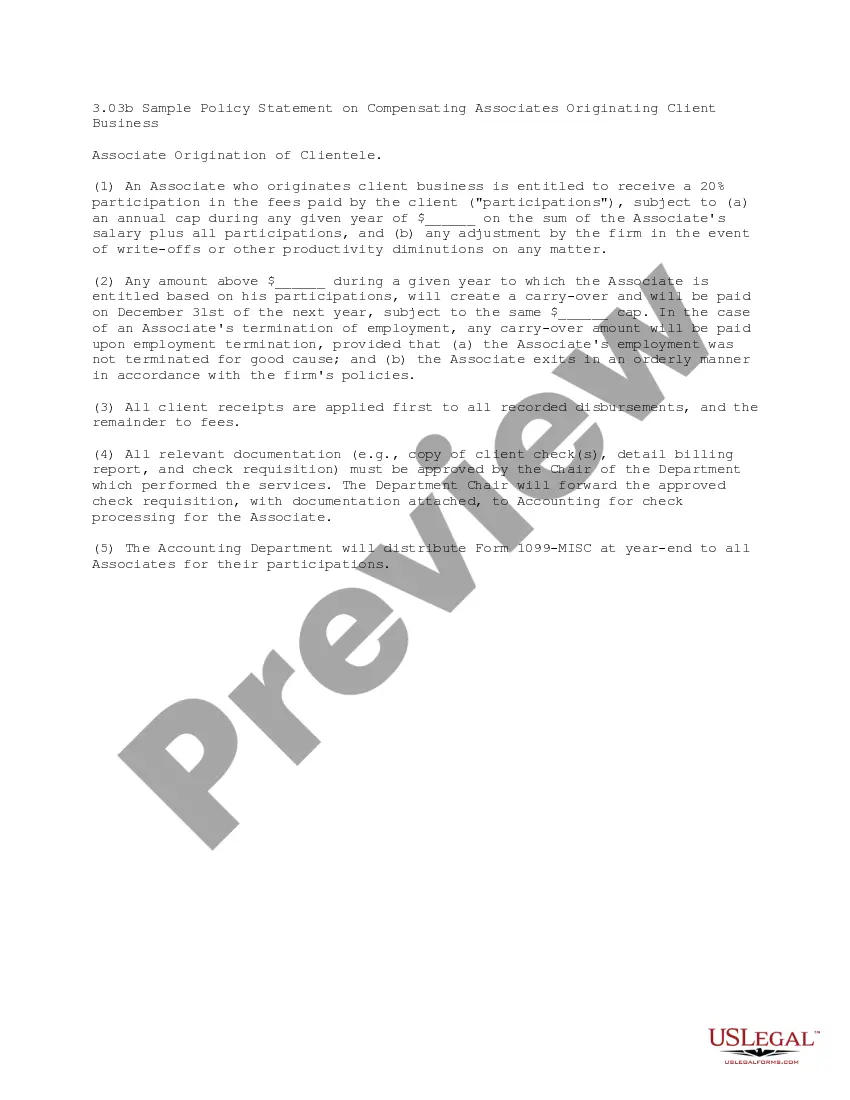
Get your form ready online
Our built-in tools help you complete, sign, share, and store your documents in one place.
Make edits, fill in missing information, and update formatting in US Legal Forms—just like you would in MS Word.
Download a copy, print it, send it by email, or mail it via USPS—whatever works best for your next step.
Sign and collect signatures with our SignNow integration. Send to multiple recipients, set reminders, and more. Go Premium to unlock E-Sign.
If this form requires notarization, complete it online through a secure video call—no need to meet a notary in person or wait for an appointment.
We protect your documents and personal data by following strict security and privacy standards.

Make edits, fill in missing information, and update formatting in US Legal Forms—just like you would in MS Word.

Download a copy, print it, send it by email, or mail it via USPS—whatever works best for your next step.

Sign and collect signatures with our SignNow integration. Send to multiple recipients, set reminders, and more. Go Premium to unlock E-Sign.

If this form requires notarization, complete it online through a secure video call—no need to meet a notary in person or wait for an appointment.

We protect your documents and personal data by following strict security and privacy standards.
Looking for another form?




How to fill out Sales Commission Policy?
US Legal Forms - one of the largest collections of legal documents in the United States - provides a range of legal document templates you can download or create.
By using the site, you can access numerous forms for business and personal purposes, categorized by type, state, or keywords. You can find the most recent forms like the California Sales Commission Policy in just a few minutes.
If you already have a subscription, Log In and download California Sales Commission Policy from your US Legal Forms library. The Download button will be visible on every form you view. You have access to all previously downloaded forms from the My documents section of your account.
Make modifications. Fill out, edit, print, and sign the downloaded California Sales Commission Policy.
Each template you added to your account has no expiration date and is yours indefinitely. So, if you wish to download or print another copy, simply go to the My documents section and click on the form you need. Access the California Sales Commission Policy through US Legal Forms, the most extensive collection of legal document templates. Utilize a vast number of professional and state-specific templates that meet your business or personal needs and requirements.
- If you wish to utilize US Legal Forms for the first time, here are simple instructions to help you get started.
- Ensure you have selected the correct form for your city/state. Click the Review button to view the details of the form. Check the form description to make sure you have chosen the right form.
- If the form does not meet your needs, use the Search field located at the top of the screen to find the one that does.
- If you are satisfied with the form, confirm your choice by clicking the Get now button. Then, select your preferred pricing plan and provide your information to register for the account.
- Complete the transaction. Use your credit card or PayPal account to finish the transaction.
- Choose the format and download the form to your device.
Form popularity
FAQ
Yes, commissions are considered wages in California. This is outlined in the California Sales Commission Policy, which defines wages to include all forms of compensation. Recognizing commissions as wages ensures that salespeople receive the same protections and benefits as other employees under labor laws.
Yes, in California, commission and bonus payments are typically taxed the same way. According to the California Sales Commission Policy, both types of compensation fall under taxable income. Therefore, you should expect similar tax treatment when it comes time to report these earnings.
The California Sales Commission Policy outlines specific rules regarding commission payments. Employers are required to provide written agreements detailing commission structures and payment timelines. Understanding these rules can help ensure compliance and protect your rights as a salesperson.
Indeed, commission is taxable in California. Under the California Sales Commission Policy, commissions are viewed as income, making them subject to state and federal taxes. This means you need to include any earned commission in your total income for accurate tax reporting.
Yes, commissions are taxed in California. The California Sales Commission Policy treats commissions as part of your overall income. Thus, you must report them when filing your state and federal taxes. It's crucial to consult a tax professional to understand your specific obligations.
The standard commission for sales can differ based on the product or service sold, but averages usually fall between 10% to 15%. Specific industries may offer higher or lower rates depending on market demand. For accurate information on commissions within your sector, refer to the guidelines provided by the California Sales Commission Policy.
The commission system for sales typically involves providing sales representatives a percentage of the sales they generate. Various structures, such as flat-rate, tiered, or residual commissions, exist to motivate sales performance. The California Sales Commission Policy supports fair remuneration and guides businesses in establishing a responsible commission system.
Yes, 100% commission jobs are legal in California, provided they adhere to state labor laws. However, it is crucial to ensure that such arrangements clearly define compensation terms. The California Sales Commission Policy aims to protect workers, so understanding the details of your agreement is essential for a successful commission-based role.
Building a sales compensation plan starts with understanding your sales strategy and employee roles. Incorporate both base salary and commission structures that reflect your business objectives. Keep the California Sales Commission Policy in forefront to ensure compliance with state laws. Tools provided by uslegalforms can assist you in documenting the plan effectively, making it easier for your team to understand.
Structuring a sales commission plan requires balancing competitiveness and sustainability. Start by identifying the key performance indicators that reflect your sales goals. Consider the California Sales Commission Policy and how commissions will be distributed across different roles and products. Many businesses find it effective to use tiered or performance-based structures that reward higher sales with greater commission rates.