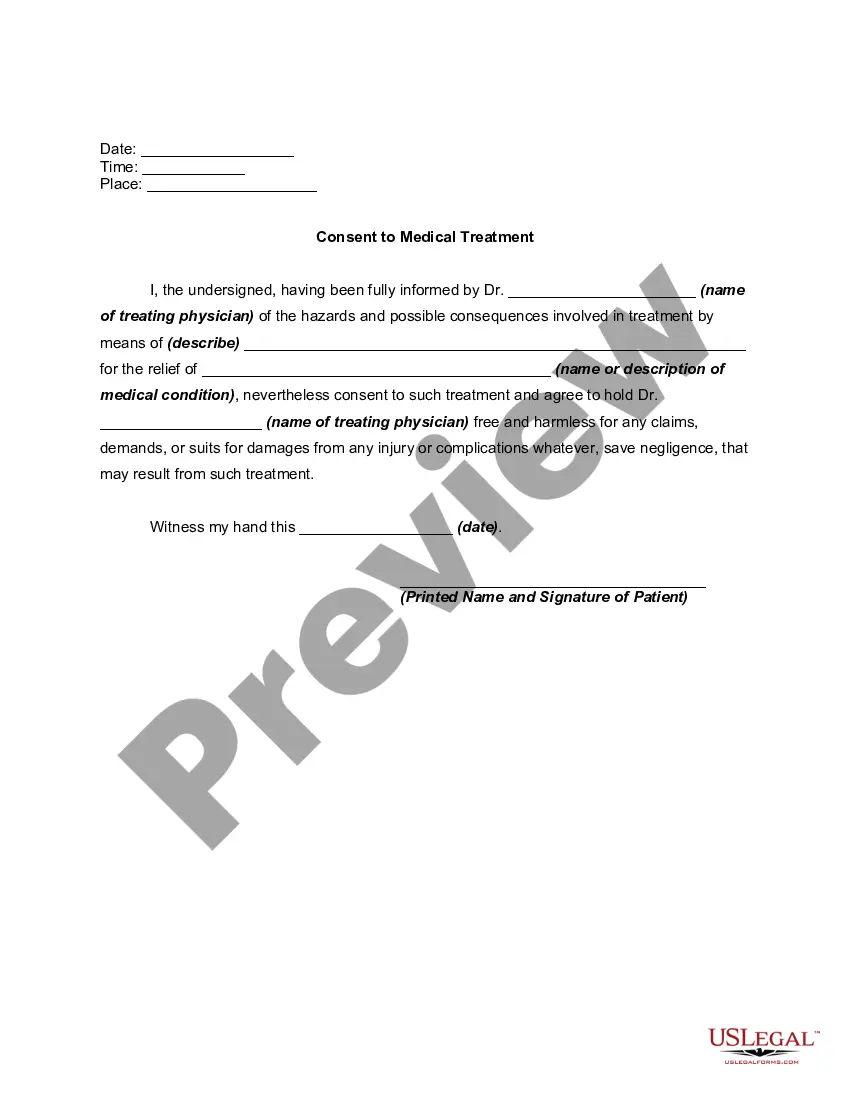
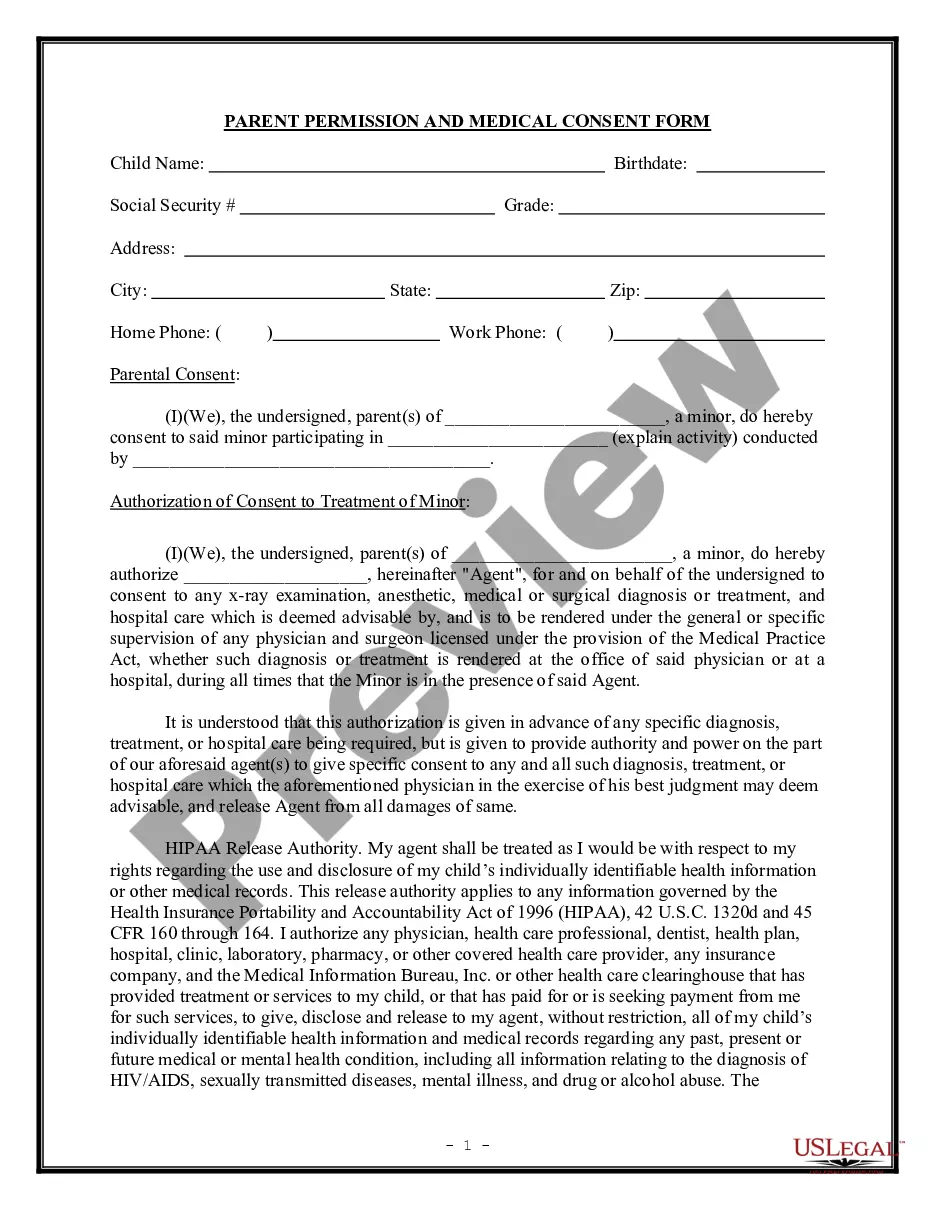
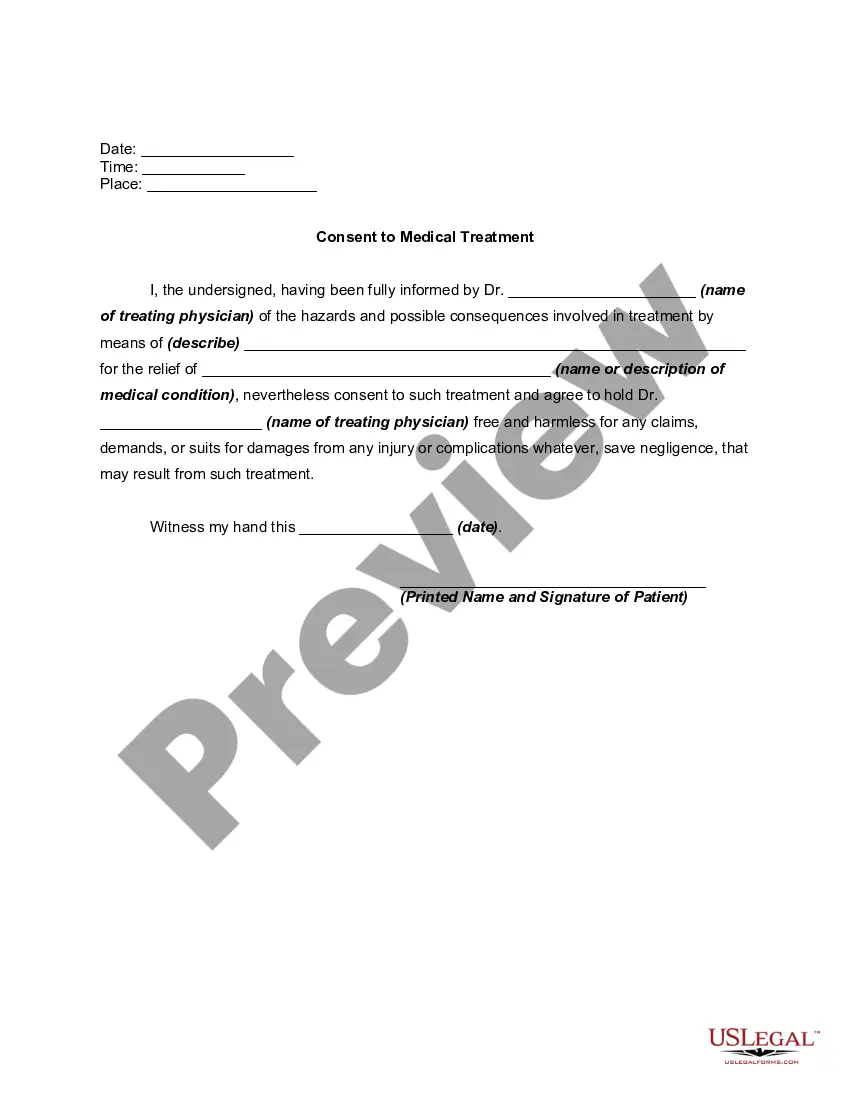
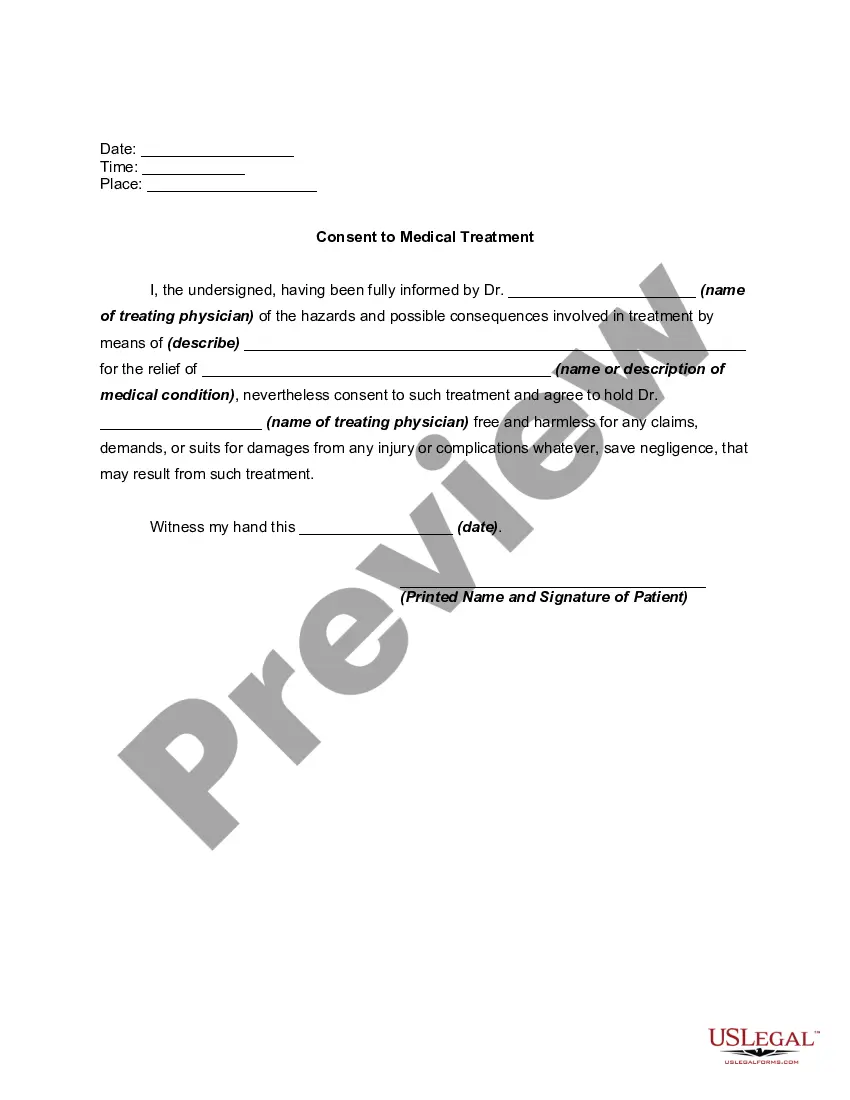
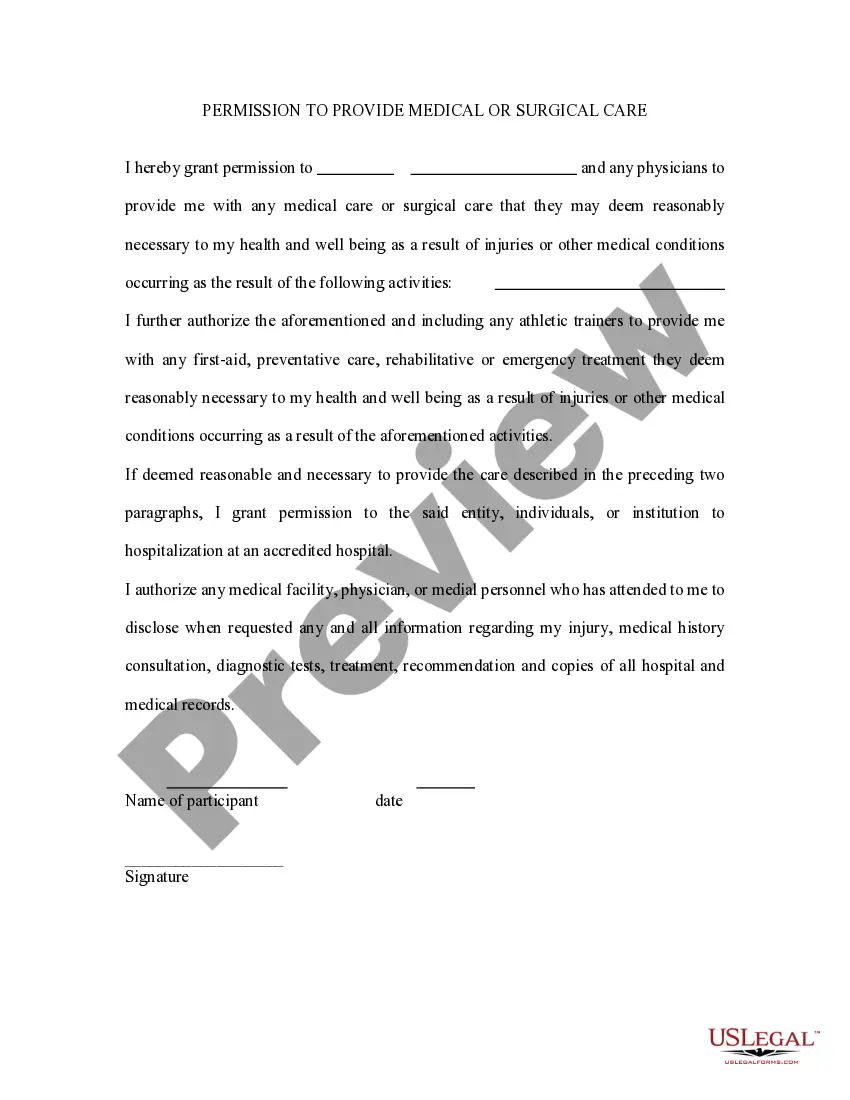
California Medical Consent for Treatment
Description
Get your form ready online
Our built-in tools help you complete, sign, share, and store your documents in one place.
Make edits, fill in missing information, and update formatting in US Legal Forms—just like you would in MS Word.
Download a copy, print it, send it by email, or mail it via USPS—whatever works best for your next step.
Sign and collect signatures with our SignNow integration. Send to multiple recipients, set reminders, and more. Go Premium to unlock E-Sign.
If this form requires notarization, complete it online through a secure video call—no need to meet a notary in person or wait for an appointment.
We protect your documents and personal data by following strict security and privacy standards.

Make edits, fill in missing information, and update formatting in US Legal Forms—just like you would in MS Word.

Download a copy, print it, send it by email, or mail it via USPS—whatever works best for your next step.

Sign and collect signatures with our SignNow integration. Send to multiple recipients, set reminders, and more. Go Premium to unlock E-Sign.

If this form requires notarization, complete it online through a secure video call—no need to meet a notary in person or wait for an appointment.

We protect your documents and personal data by following strict security and privacy standards.
Looking for another form?
How to fill out Medical Consent For Treatment?
Selecting the optimal valid document format can be challenging.
Of course, there are numerous templates available online, but how can you find the correct document you need.
Utilize the US Legal Forms website.
First, ensure you have chosen the correct document for your location/state. You can browse the form using the Review button and check the form description to confirm it is suitable for you. If the form does not meet your requirements, use the Search area to find the appropriate document. Once you are confident that the form is adequate, click the Acquire now button to obtain the document. Select the pricing plan you prefer and enter the necessary information. Create your account and complete the purchase with your PayPal account or credit card. Choose the file format and download the valid document for your device. Complete, modify, and print, then sign the acquired California Medical Consent for Treatment. US Legal Forms is the largest collection of legal documents where you can find a variety of document templates. Leverage the service to download properly crafted papers that comply with state regulations.
- The service provides thousands of templates, including the California Medical Consent for Treatment, suitable for both business and personal purposes.
- All forms are reviewed by professionals and comply with state and federal regulations.
- If you are already registered, Log In to your account and click the Download button to access the California Medical Consent for Treatment.
- Use your account to search through the legal documents you may have purchased previously.
- Navigate to the My documents tab within your account to download another copy of the document you require.
- If you are a new user of US Legal Forms, here are simple instructions for you to follow.
Form popularity
FAQ
Healthcare providers generally obtain consent by explaining the proposed treatment and answering any questions a patient might have. They must ensure that the patient understands the treatment and its potential risks and benefits before securing consent. This process is a vital aspect of the California Medical Consent for Treatment framework, as it protects patients' rights. For additional guidance on this process, you may want to explore resources on USLegalForms.
The three types of consent in healthcare include expressed consent, implied consent, and informed consent. Expressed consent is given verbally or in writing, while implied consent is understood through a patient's actions, such as showing up for treatment. Informed consent is crucial; it requires that patients fully understand the risks and benefits of a treatment before agreeing. Knowing about California Medical Consent for Treatment helps ensure everyone understands their rights regarding consent.
In California, any adult who is 18 years or older can provide their own consent for medical treatment. Additionally, minors who are emancipated or who meet certain criteria may also consent for their own healthcare. Understanding California Medical Consent for Treatment is essential for individuals to ensure they can make informed decisions about their health. If you are unsure, consider documenting your wishes through forms available on platforms like USLegalForms.
Yes, a 16-year-old can refuse mental health treatment in California. However, it's essential to consider the implications of this decision on their overall well-being. Understanding California Medical Consent for Treatment can help navigate such decisions, enabling teens to make informed choices about their mental health.
In most cases, a parent can take a child to counseling without needing permission from the other parent if they have legal custody. However, checking the specific custody agreement is crucial to avoid potential legal issues. By understanding California Medical Consent for Treatment, you can confidently navigate these situations while prioritizing your child's mental health.
The five requirements for informed consent include: disclosure of relevant information, understanding the information provided, competency to make decisions, voluntariness, and the ability to consent. Each of these aspects ensures that patients are fully aware of their treatment choices. Having clarity about California Medical Consent for Treatment facilitates a more informed decision-making process for minors.
Yes, in California, minors can attend therapy without needing parental consent, provided they are 12 years or older. This law helps ensure that minors have access to mental health support when they need it most. It's essential to be informed about California Medical Consent for Treatment to navigate these crucial decisions effectively.
In California, the general age of consent for medical treatment is 18 years old; however, minors aged 12 and up can consent to specific services. This includes mental health treatment or care related to sexually transmitted infections. Recognizing the nuances of California Medical Consent for Treatment can empower minors to seek necessary medical help.
In California, minors can consent to certain medical treatments, including reproductive health services, mental health treatment, and substance abuse counseling. This ability allows them to receive care without needing parental approval. Understanding California Medical Consent for Treatment is vital for parents and minors alike, as it helps protect the rights of younger individuals to make informed health decisions.
The California state code governing medical consent for treatment can be found in the California Health and Safety Code. Specifically, sections 6910 through 6922 outline the legal requirements for consent. Understanding this code helps ensure compliance with California Medical Consent for Treatment.