California Self-Defense - Assault
Description
Get your form ready online
Our built-in tools help you complete, sign, share, and store your documents in one place.
Make edits, fill in missing information, and update formatting in US Legal Forms—just like you would in MS Word.
Download a copy, print it, send it by email, or mail it via USPS—whatever works best for your next step.
Sign and collect signatures with our SignNow integration. Send to multiple recipients, set reminders, and more. Go Premium to unlock E-Sign.
If this form requires notarization, complete it online through a secure video call—no need to meet a notary in person or wait for an appointment.
We protect your documents and personal data by following strict security and privacy standards.

Make edits, fill in missing information, and update formatting in US Legal Forms—just like you would in MS Word.

Download a copy, print it, send it by email, or mail it via USPS—whatever works best for your next step.

Sign and collect signatures with our SignNow integration. Send to multiple recipients, set reminders, and more. Go Premium to unlock E-Sign.

If this form requires notarization, complete it online through a secure video call—no need to meet a notary in person or wait for an appointment.

We protect your documents and personal data by following strict security and privacy standards.
Looking for another form?
How to fill out Self-Defense - Assault?
If you desire to aggregate, retrieve, or print legal document templates, utilize US Legal Forms, the finest assortment of legal forms, available online.
Take advantage of the site's straightforward and user-friendly search to locate the documents you need.
Various templates for business and personal purposes are organized by categories and states, or keywords.
Once you have found the form you need, click the Acquire now option.
Select the pricing plan you prefer and enter your details to register for an account.
- Use US Legal Forms to find the California Self-Defense - Assault in just a few clicks.
- If you are already a US Legal Forms user, Log In to your account and click the Obtain option to access the California Self-Defense - Assault.
- You can also access forms you previously obtained in the My documents tab of your account.
- If you are using US Legal Forms for the first time, follow the steps outlined below.
- Ensure you have selected the form for the correct city/state.
- Use the Review function to examine the form's details.
- If you are not satisfied with the form, use the Search field at the top of the screen to find other forms in the legal document template.
Form popularity
FAQ
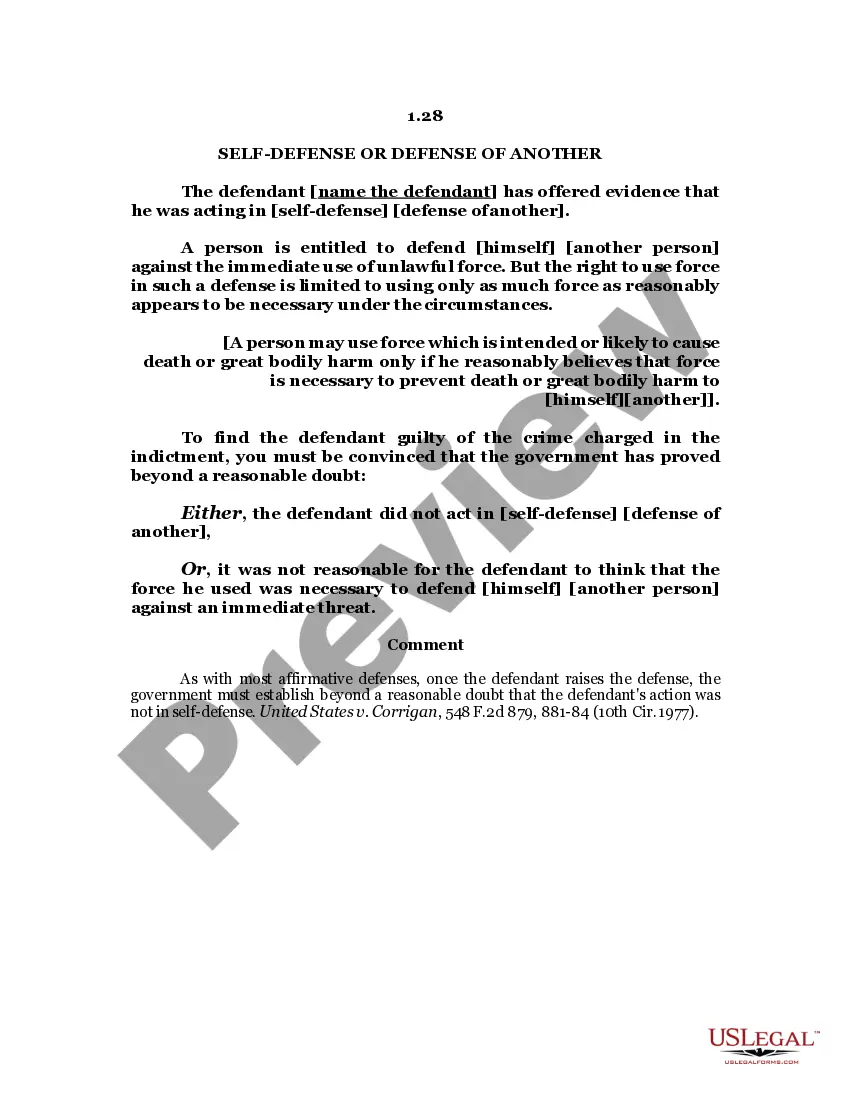
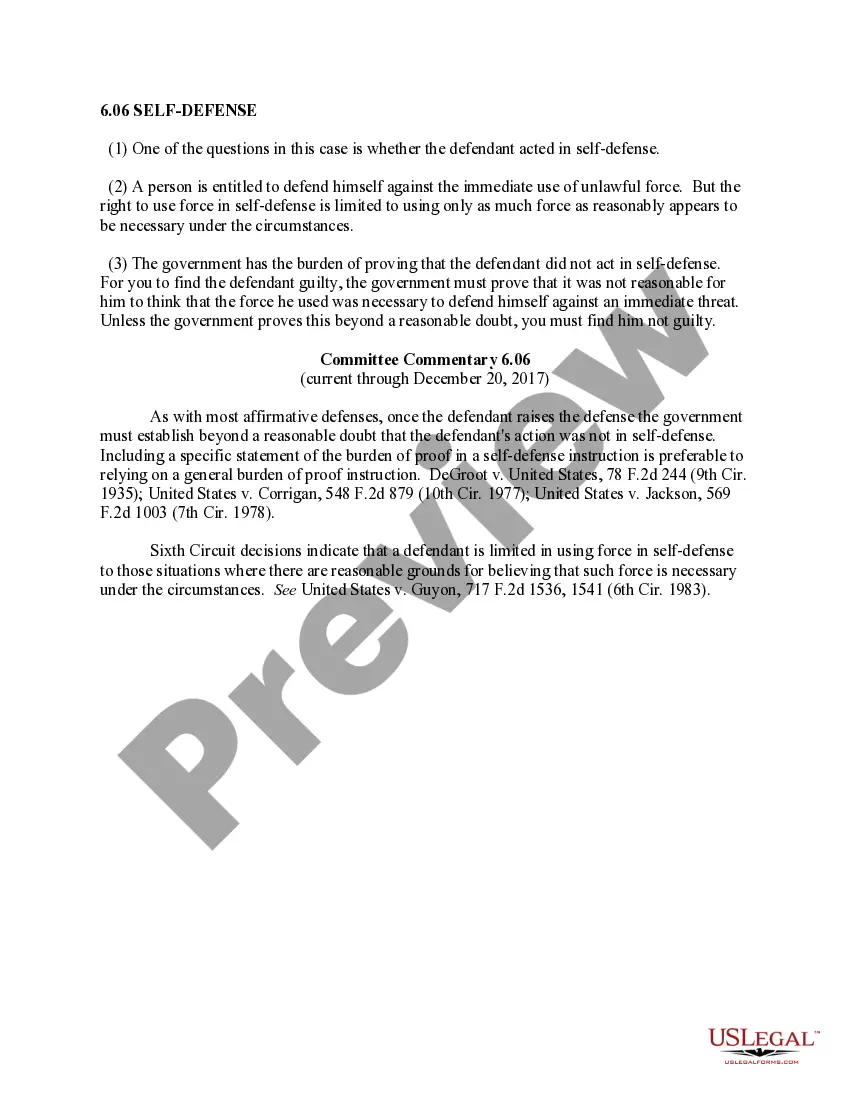
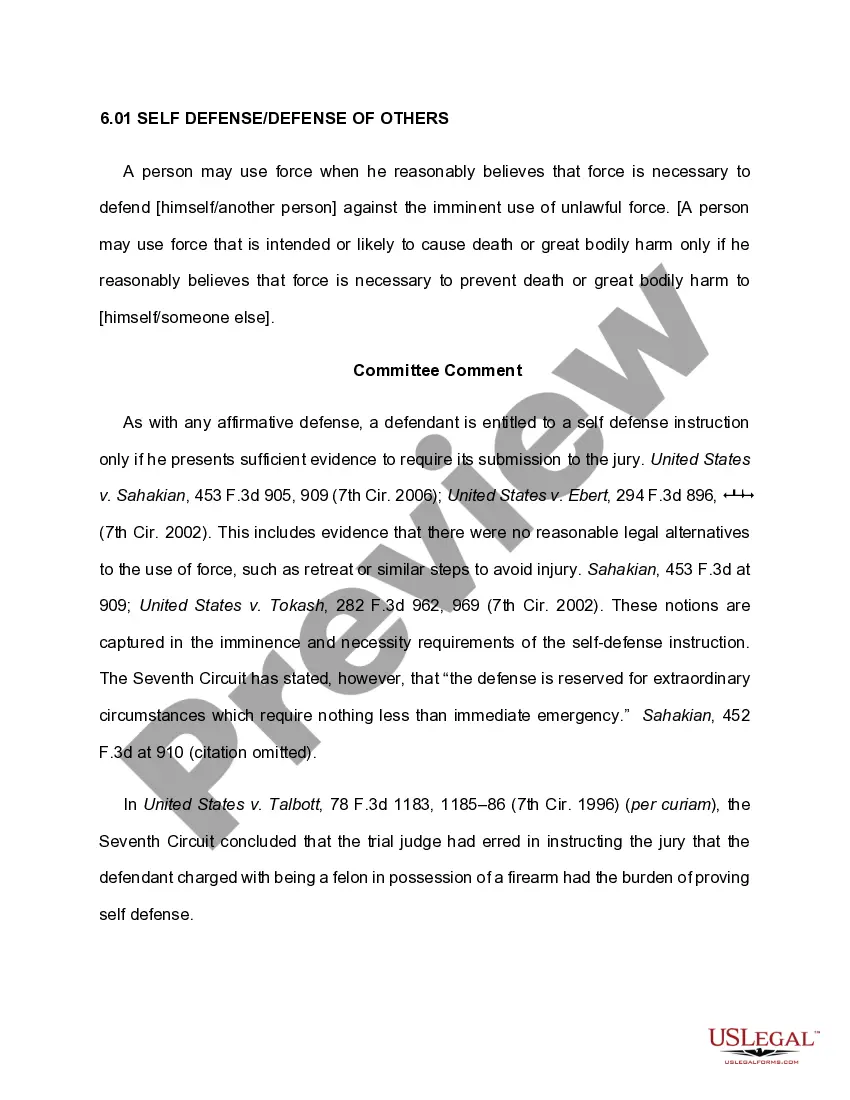
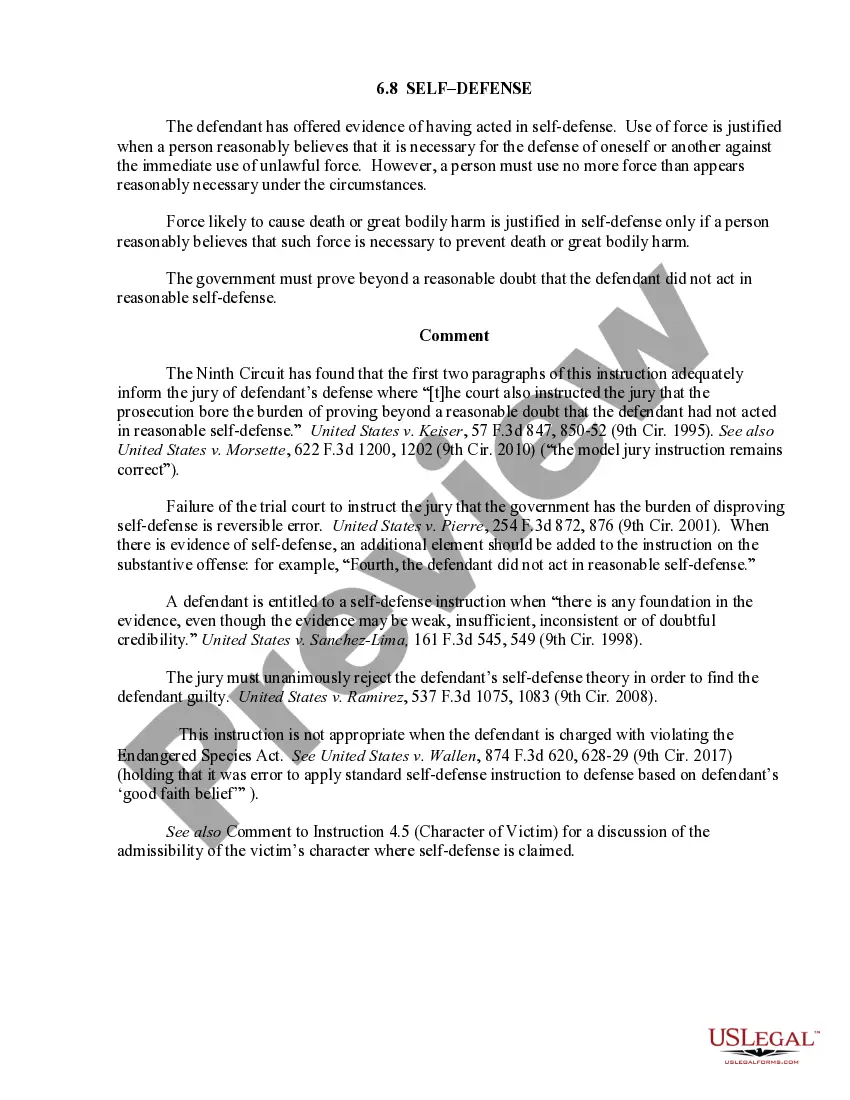
In a criminal self-defense case, the State of California has the burden of proving the defendant guilty beyond a reasonable doubt. While in most cases the defendant is not required to do anything to prove his or her innocence, affirmative defenses shift the burden of proof to the defendant.
Simply put, imperfect self-defense is a legal concept that arises in California Penal Code 187 PC murder cases. It applies when the perpetrator kills someone based on an honest but unreasonable belief in the need to use deadly force in self-defense or defense of others.
Definition: Imperfect justification is a reason or cause that is insufficient to completely justify a defendant's behavior but can be used to mitigate criminal punishment.
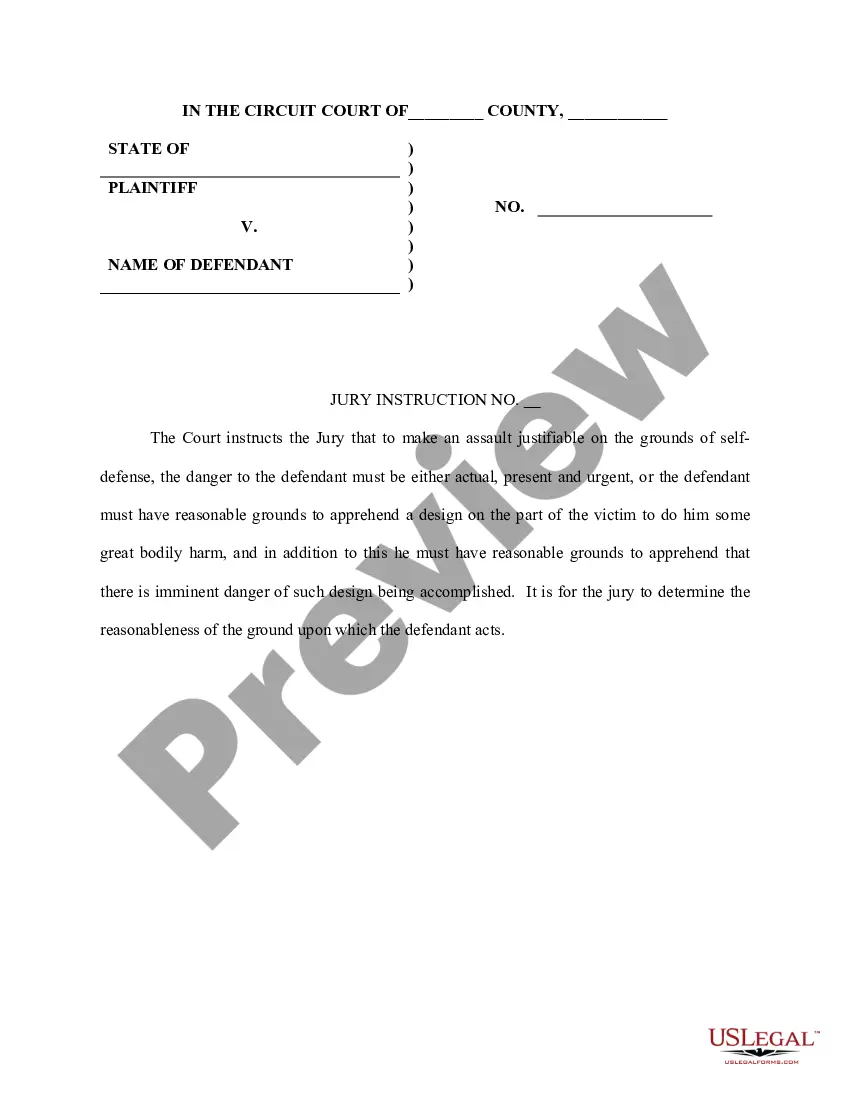
California law recognizes the right to self-defense, but it imposes certain limitations and requirements. ing to the state's laws, individuals are allowed to use reasonable force to defend themselves or others from imminent harm or danger.
In California, the self-defense laws are primarily based on the legal doctrine known as the "Castle Doctrine." This doctrine essentially allows individuals to use force, including deadly force, to protect their homes or "castles" without having a duty to retreat.
As an example, if someone threatens a person with a red toy gun, and that person unreasonably, but genuinely, believes it was a real gun and kills the person holding the gun because of that belief, the person would be guilty not of first-degree murder, only voluntary manslaughter.
As stated previously, a defense can reduce the severity of the offense, or completely exonerate the defendant from criminal responsibility. If a defense reduces the severity of the offense, it is called an imperfect defense. If a defense results in an acquittal, it is called a perfect defense.
California laws allow residents to legally own and carry the following self-defense weapons: tactical flashlights, pens, stun guns, tasers, pepper spray, tear gas, knives, and guns (though the latter 2 are heavily restricted compared to most states).