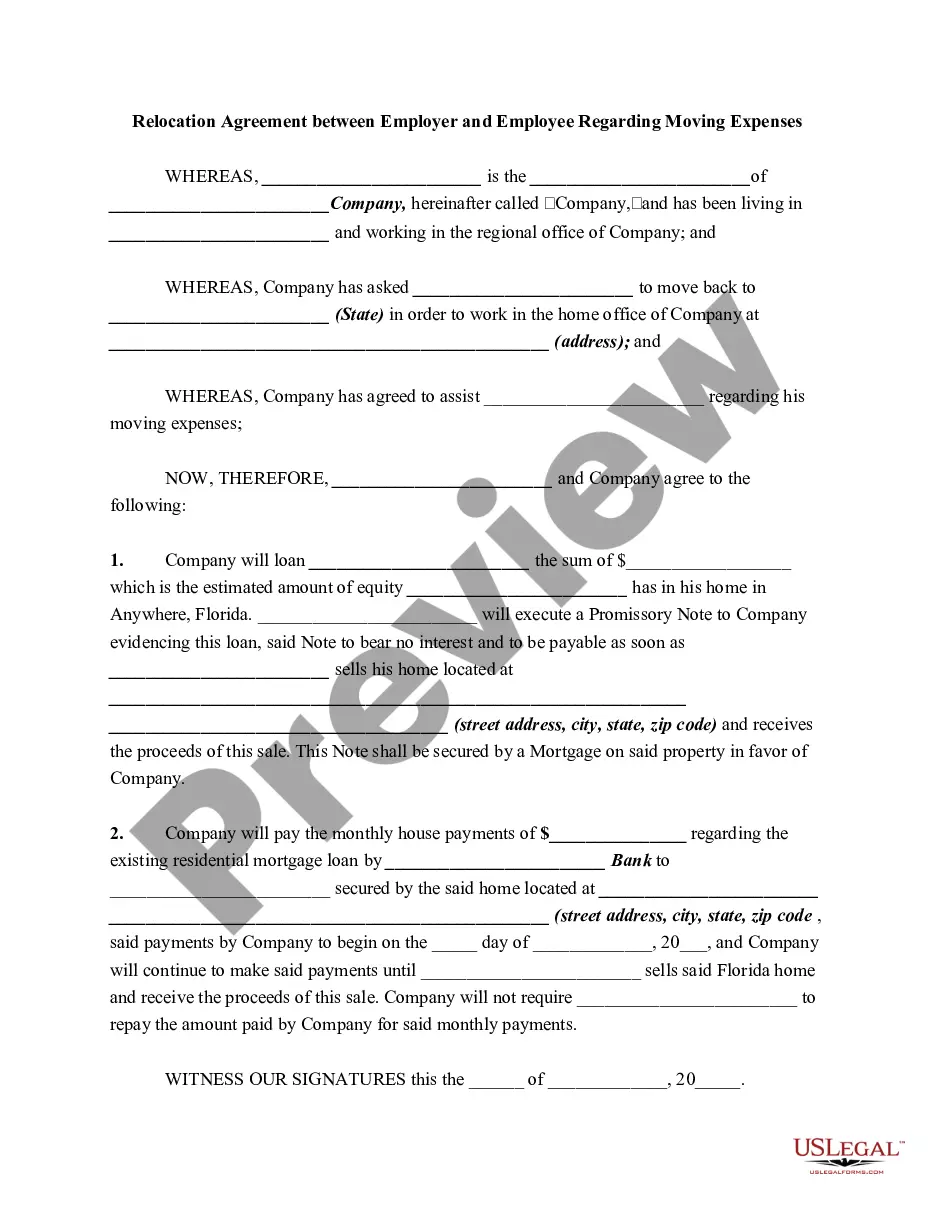
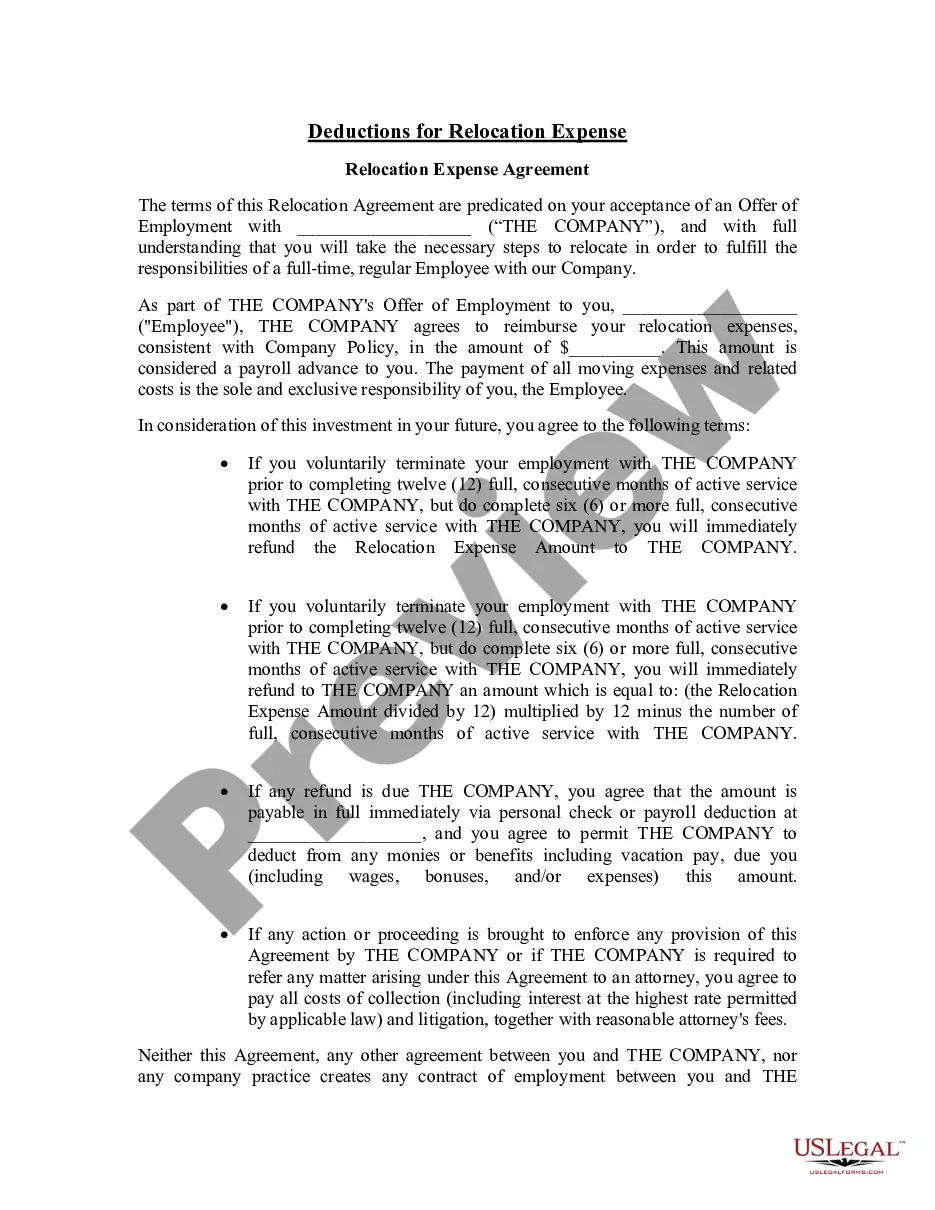
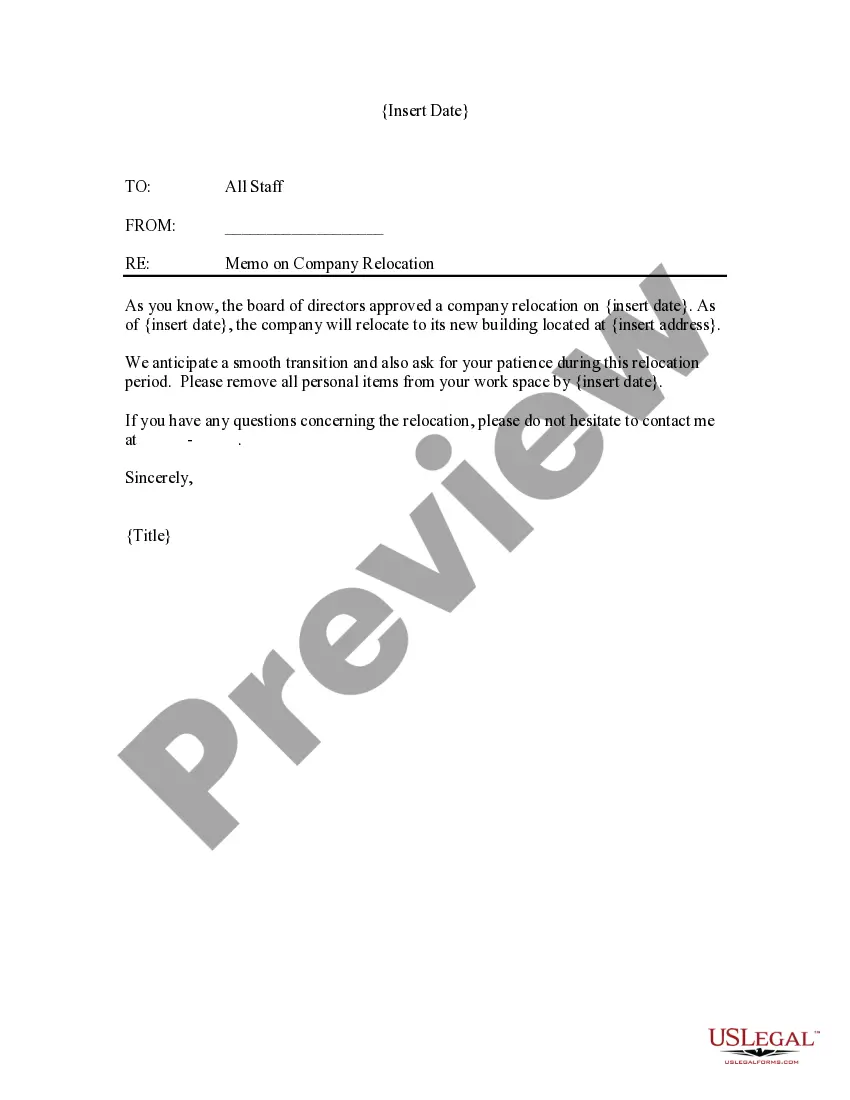
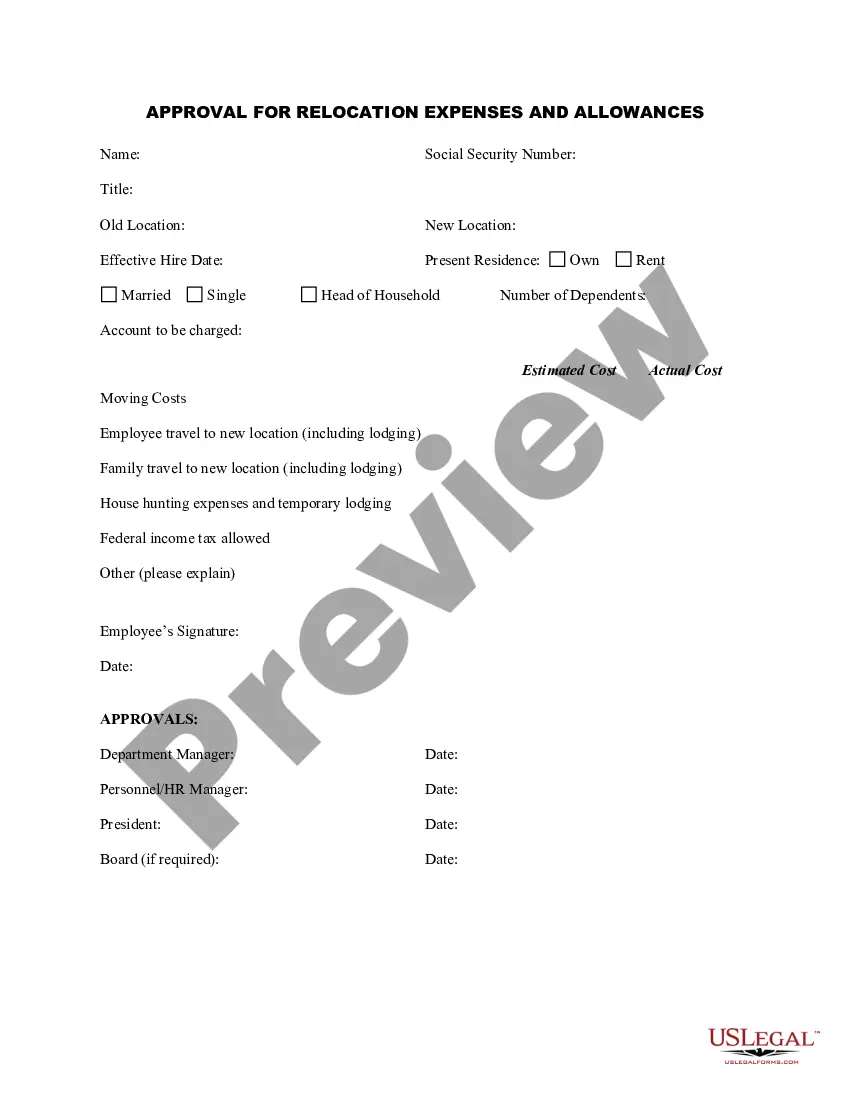
California Relocation Agreement between Employer and Employee Regarding Moving Expenses
Description
Get your form ready online
Our built-in tools help you complete, sign, share, and store your documents in one place.
Make edits, fill in missing information, and update formatting in US Legal Forms—just like you would in MS Word.
Download a copy, print it, send it by email, or mail it via USPS—whatever works best for your next step.
Sign and collect signatures with our SignNow integration. Send to multiple recipients, set reminders, and more. Go Premium to unlock E-Sign.
If this form requires notarization, complete it online through a secure video call—no need to meet a notary in person or wait for an appointment.
We protect your documents and personal data by following strict security and privacy standards.

Make edits, fill in missing information, and update formatting in US Legal Forms—just like you would in MS Word.

Download a copy, print it, send it by email, or mail it via USPS—whatever works best for your next step.

Sign and collect signatures with our SignNow integration. Send to multiple recipients, set reminders, and more. Go Premium to unlock E-Sign.

If this form requires notarization, complete it online through a secure video call—no need to meet a notary in person or wait for an appointment.

We protect your documents and personal data by following strict security and privacy standards.
Looking for another form?

How to fill out Relocation Agreement Between Employer And Employee Regarding Moving Expenses?
Are you presently in a position where you need documents for both professional and personal purposes almost every day.
There are numerous legal document templates accessible online, but finding versions you can rely on is challenging.
US Legal Forms offers a wide selection of form templates, including the California Relocation Agreement between Employer and Employee Regarding Moving Expenses, which can be tailored to meet federal and state requirements.
Once you find the appropriate form, click Purchase now.
Choose the pricing plan you desire, fill out the necessary information to create your account, and pay for your order using PayPal or Visa or MasterCard.
- If you are already familiar with the US Legal Forms website and possess an account, simply Log In.
- Afterward, you will be able to download the California Relocation Agreement between Employer and Employee Regarding Moving Expenses template.
- If you do not have an account and wish to start using US Legal Forms, follow these steps.
- Locate the form you need and ensure it is for the correct city/county.
- Utilize the Review button to examine the form.
- Check the description to confirm that you have selected the correct document.
- If the form is not what you require, use the Search field to find the document that satisfies your needs and criteria.
Form popularity
FAQ
Yes, in California, relocation reimbursement is typically considered taxable income. This means that if your employer reimburses you for moving expenses, you should expect those funds to be subject to income tax. Understanding the implications of a California Relocation Agreement between Employer and Employee Regarding Moving Expenses can help you plan better for your financial future, so consider consulting with a tax expert for comprehensive guidance.
Under the current tax laws, moving expenses for job relocation are generally not tax deductible for most employees. However, if you're moving for a temporary job assignment, you could be eligible for certain deductions. If you have a California Relocation Agreement between Employer and Employee Regarding Moving Expenses, it’s wise to consult a tax professional for personalized advice based on your specific situation.
A reasonable relocation allowance often depends on various factors including local housing costs, moving distances, and the employee's previous compensation. Generally, employers offer allowances ranging from $2,500 to $10,000 to cover moving expenses. When drafting a California Relocation Agreement between Employer and Employee Regarding Moving Expenses, clarity about the allowance can greatly facilitate the relocation process and support the employee’s transition.
A fair relocation bonus typically considers the distance of the move, the employee's role, and the costs associated with moving. Bonuses can range from a few thousand dollars to full coverage of moving expenses. It's crucial for employers to decide on a fair relocation bonus that aligns with their California Relocation Agreement between Employer and Employee Regarding Moving Expenses, ensuring it meets both parties' expectations.
The average relocation incentive can vary greatly depending on the job position and industry. Generally, many professionals receive relocation packages ranging from $5,000 to $15,000. When creating a California Relocation Agreement between Employer and Employee Regarding Moving Expenses, providing a reasonable incentive can attract talent and ease the transition for employees moving to a new location.
In California, the labor code does not specify an exact law dedicated solely to relocation agreements. However, general employment laws apply, making it essential for employers and employees to establish a California Relocation Agreement between Employer and Employee Regarding Moving Expenses. This agreement should detail terms and conditions regarding moving costs to ensure both parties understand their rights and responsibilities during the relocation process.
California does offer various forms of relocation assistance, particularly for employees moving for job-related reasons. Employers may provide financial support as outlined in the California Relocation Agreement between Employer and Employee Regarding Moving Expenses. Researching your company’s policy regarding relocation assistance will give you a clearer understanding of the benefits available to you.
To request relocation expenses, begin by reviewing your company's relocation policy or any existing agreements in place, like the California Relocation Agreement between Employer and Employee Regarding Moving Expenses. Prepare a detailed list of anticipated costs and submit a formal request to your HR department or direct supervisor. Being thorough and organized in your request can help expedite the process.
Valid reasons for relocation can include job promotions, transfers to new locations due to company needs, or personal circumstances that may benefit both you and your employer. A California Relocation Agreement between Employer and Employee Regarding Moving Expenses might detail such reasons, helping to establish a mutual understanding. Emphasizing how the relocation can enhance your work performance can strengthen your justification.
To request a relocation allowance, you should approach your employer with a well-prepared proposal, including estimated moving costs and how the relocation aligns with company objectives. Highlight your willingness to follow the guidelines set in the California Relocation Agreement between Employer and Employee Regarding Moving Expenses. Clarity and professionalism in your request will help facilitate a positive response.