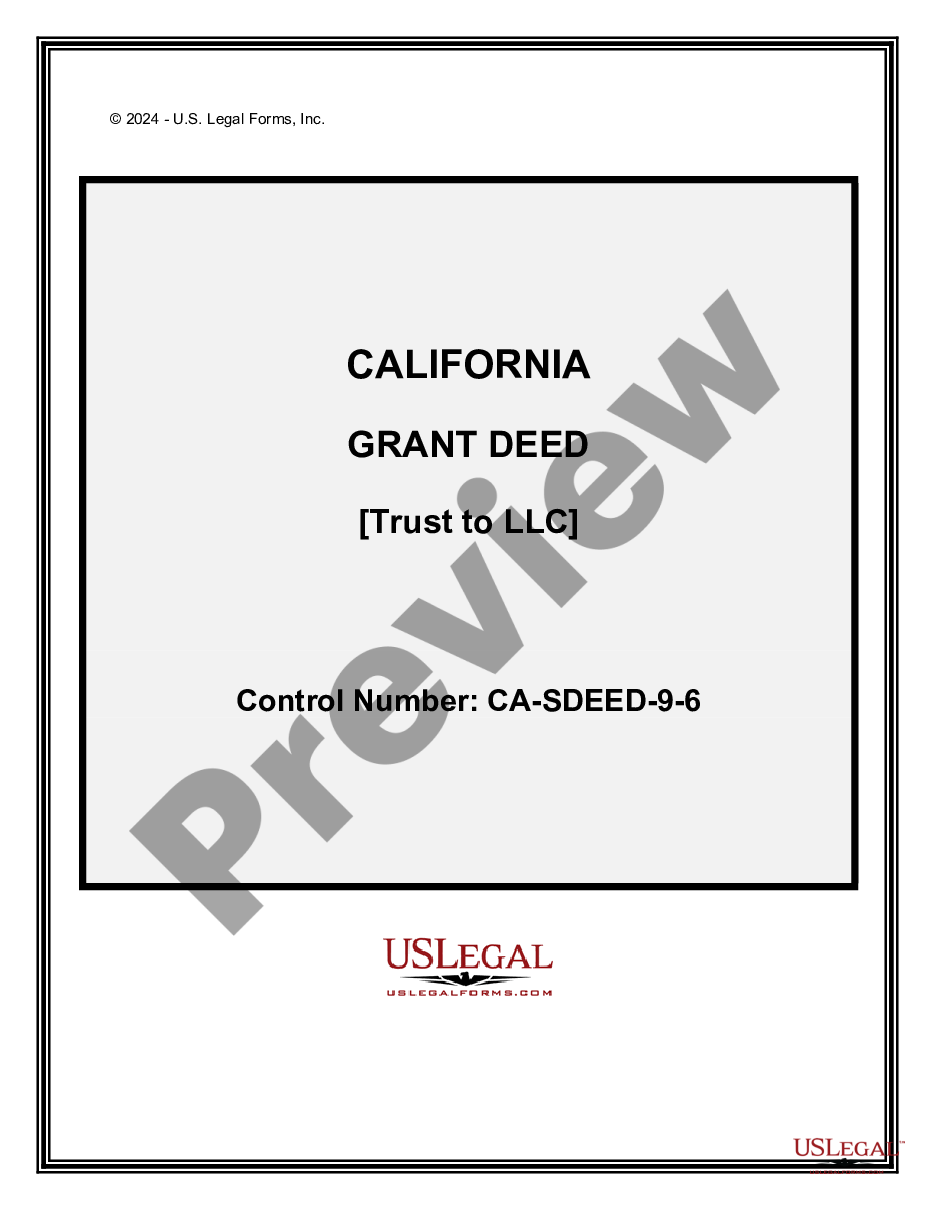
California Grant Deed from a Trust to LLC
Overview of this form
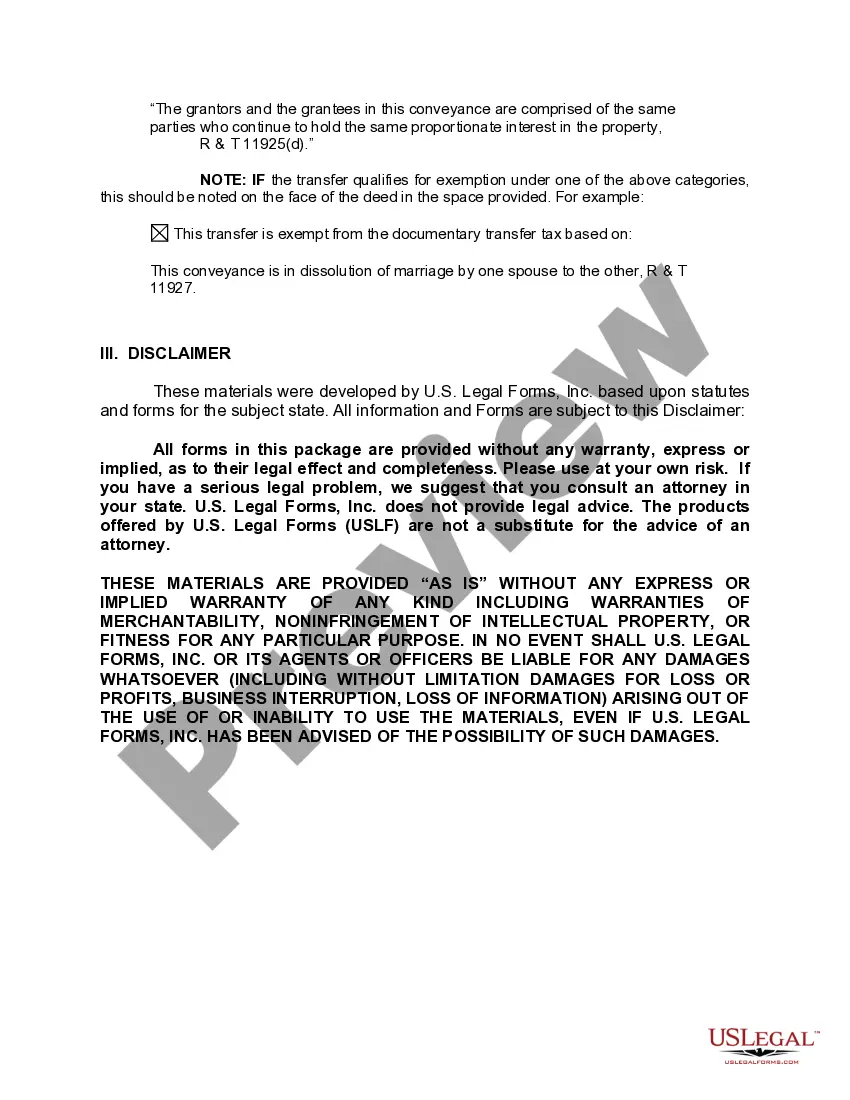
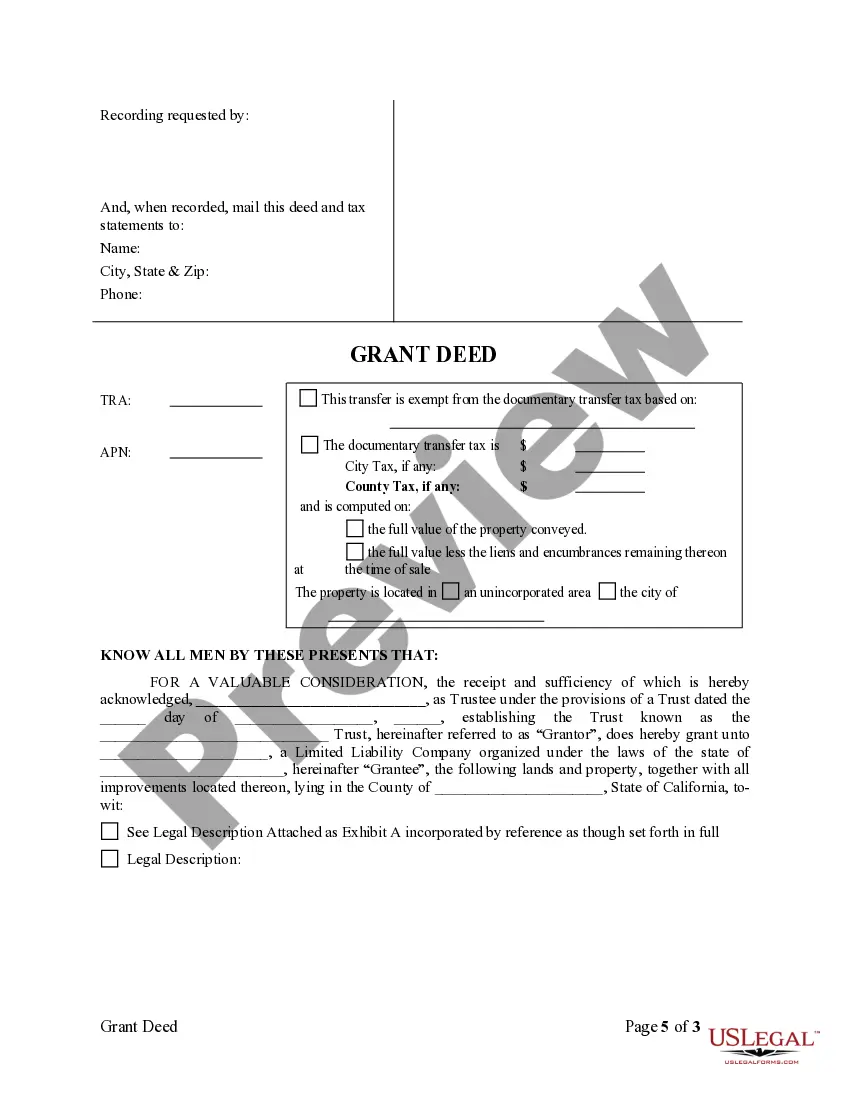
The Grant Deed from a Trust to LLC is a legal document that facilitates the transfer of property ownership from a trust to a limited liability company (LLC). This form serves as a warranty deed, ensuring that the grantor (the trust) conveys clear and legal title to the property while reserving certain rights, such as oil, gas, and mineral rights, if applicable. This form is crucial for formalizing the transfer of real estate property between these entities, ensuring compliance with legal requirements.
What’s included in this form
- Identification of the grantor (the trust) and grantee (the LLC).
- Description of the property being transferred, including its legal description.
- Reservation of rights concerning oil, gas, and minerals.
- Assurances provided by the grantor regarding the title of the property.
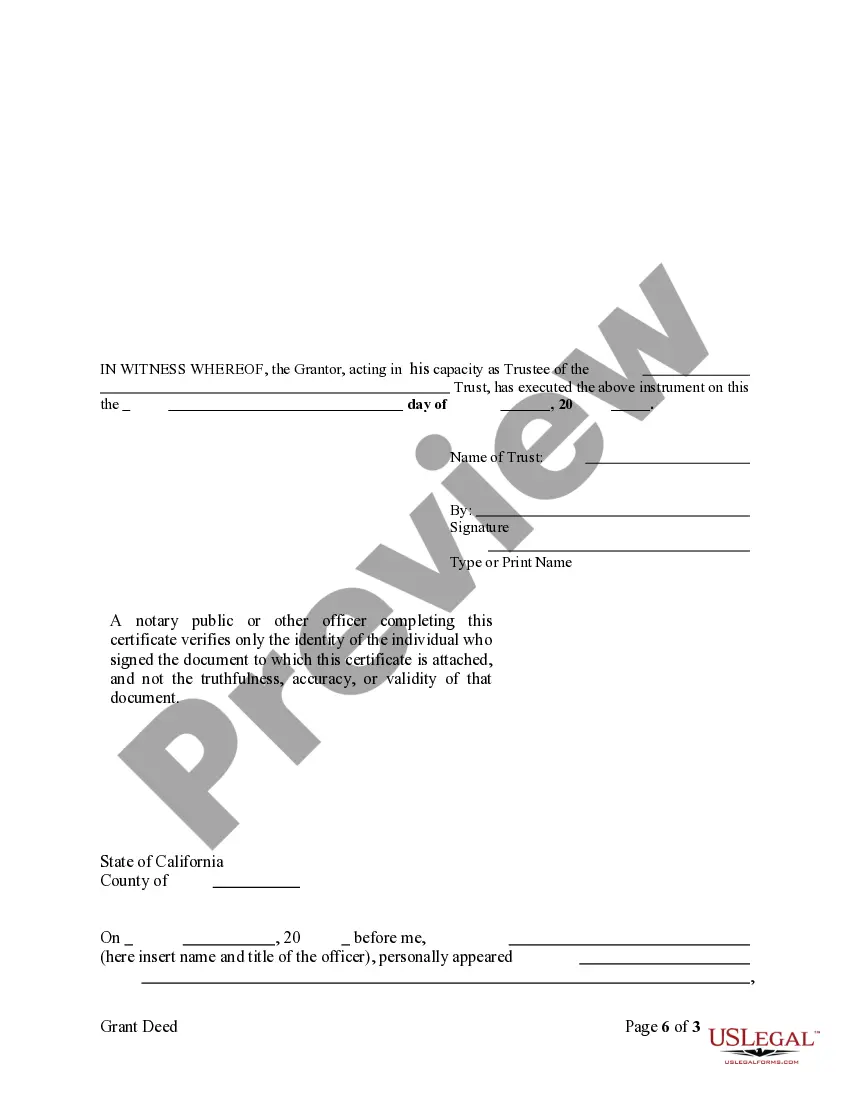
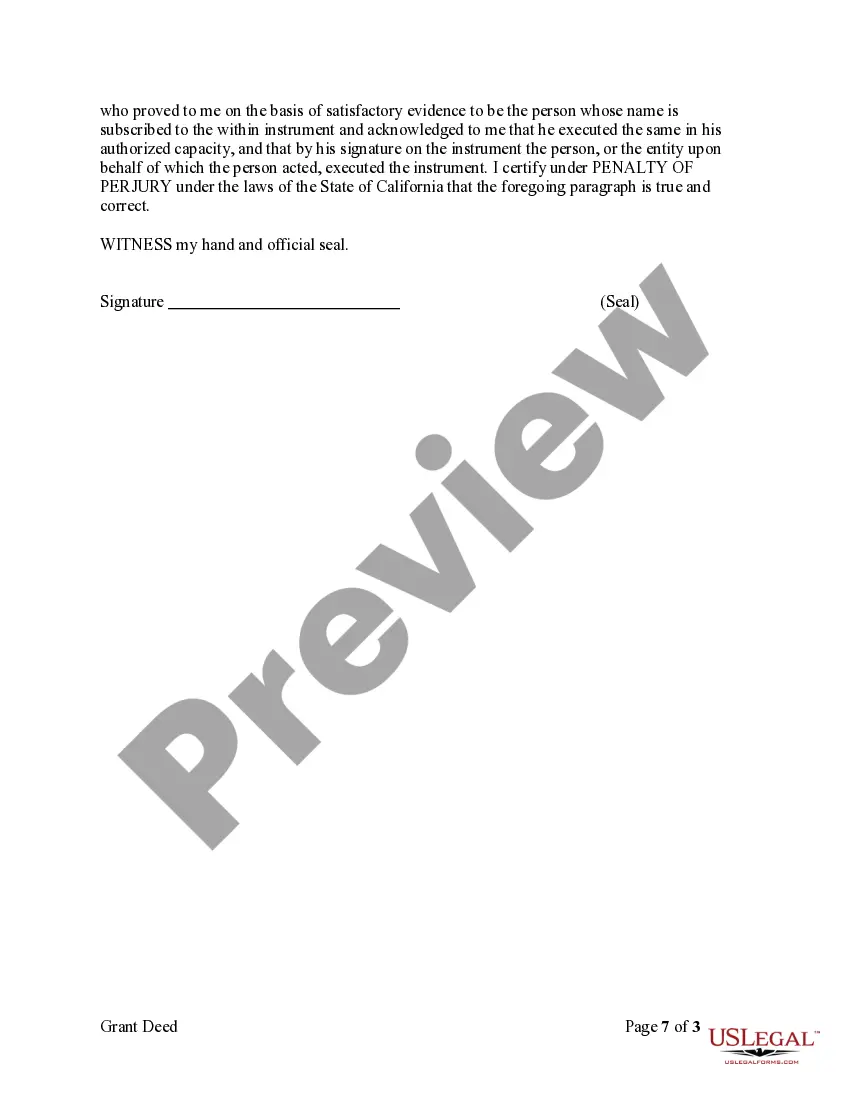
- Signature lines for both parties and a notary if applicable.


When to use this document
This form is used when a property owner wants to transfer real estate held in a trust to a limited liability company. Common situations include estate planning, business structuring, or when the property will be used for business purposes under the LLC. Using this form ensures that the transfer is legally recognized and protects the interests of both parties.
Intended users of this form
This form is ideal for:
- Trustees of a trust looking to transfer property to an LLC for business or estate planning purposes.
- Members of an LLC who are acquiring property from a trust.
- Individuals seeking to formalize the transfer of real estate in compliance with state laws.
How to complete this form
- Identify the parties involved: Add the full names of the trust (grantor) and LLC (grantee).
- Specify the property: Include a comprehensive legal description of the property being transferred.
- Indicate any reserved rights: Mention any oil, gas, or mineral rights that are not included in the transfer.
- Sign the document: Ensure that all necessary parties sign the deed, including a notary if required.
- Record the deed: Submit the completed deed to the appropriate county office to officially record the transfer.
Notarization requirements for this form
This form must be notarized to be legally valid. US Legal Forms provides secure online notarization powered by Notarize, allowing you to complete the process through a verified video call.
Get your form ready online
Our built-in tools help you complete, sign, share, and store your documents in one place.
Make edits, fill in missing information, and update formatting in US Legal Forms—just like you would in MS Word.
Download a copy, print it, send it by email, or mail it via USPS—whatever works best for your next step.
Sign and collect signatures with our SignNow integration. Send to multiple recipients, set reminders, and more. Go Premium to unlock E-Sign.
If this form requires notarization, complete it online through a secure video call—no need to meet a notary in person or wait for an appointment.
We protect your documents and personal data by following strict security and privacy standards.

Make edits, fill in missing information, and update formatting in US Legal Forms—just like you would in MS Word.

Download a copy, print it, send it by email, or mail it via USPS—whatever works best for your next step.

Sign and collect signatures with our SignNow integration. Send to multiple recipients, set reminders, and more. Go Premium to unlock E-Sign.

If this form requires notarization, complete it online through a secure video call—no need to meet a notary in person or wait for an appointment.

We protect your documents and personal data by following strict security and privacy standards.
Common mistakes to avoid
- Not including the complete legal description of the property.
- Failing to reserve rights correctly, which can lead to future disputes.
- Omitting signatures, which renders the deed invalid.
- Not recording the deed with local authorities after completion.
Benefits of using this form online
- Convenience: Easily download and fill out the form at your own pace.
- Editability: Modify the document as needed before finalizing the transfer.
- Reliability: Use professionally drafted templates that comply with legal standards.
Looking for another form?
Form popularity
FAQ
Yes, you can put your house in an LLC in California, but it’s essential to follow the correct procedures. This includes executing a California Grant Deed to transfer ownership from your personal name to the LLC. Keep in mind that some considerations, like financing implications and liability protection, may influence your decision.
One disadvantage of putting property in an LLC is the potential loss of certain tax benefits, such as the personal residence deduction. Additionally, transferring property can involve upfront costs, including fees for drafting and recording the California Grant Deed. It's crucial to weigh these factors against the protection and liability benefits the LLC offers before making a decision.
Transferring property to an LLC in California involves preparing a California Grant Deed that specifies the transfer of ownership to the LLC. After completing the deed, you must file it with the county recorder's office where the property is located. This step is essential for ensuring public record reflects the change in ownership and protects the LLC's assets.
To put your property in an LLC, you first need to form the LLC and ensure it complies with California laws. Then, you will execute a California Grant Deed from a Trust to LLC, which transfers the property ownership from you or your trust to the LLC. It is crucial to prepare this deed correctly to avoid legal issues, and you may want to consult with a professional to ensure all details are correct.
Removing someone from a grant deed in California typically involves creating a new grant deed that excludes the individual you wish to remove. This new deed must be executed and properly recorded with the county. Utilizing uslegalforms can assist you in drafting the correct documents and ensure compliance with local regulations for modifying your California Grant Deed from a Trust to LLC.
Filling out a grant deed form in California requires careful attention to detail. You'll need to provide the names of the grantor and grantee, a legal description of the property, and the date of transfer. Using resources from platforms like uslegalforms can simplify the process, offering user-friendly templates that guide you step-by-step in creating your California Grant Deed from a Trust to LLC.
In California, the grant deed must be signed by the grantor, who is the individual transferring the property. If the grantor is a Trust or LLC, the authorized representative should sign on their behalf. It is essential to confirm that all signatures are properly notarized to enforce the validity of the California Grant Deed from a Trust to LLC.
A California Grant Deed from a Trust to LLC is valid when it meets specific requirements, including clear identification of the property, names of the grantor and grantee, and proper notarization. Additionally, the deed must be signed by the grantor and should include legal descriptions of the property. Following these guidelines ensures that your grant deed holds up legally and protects your interests.
The process of obtaining a California Grant Deed from a Trust to LLC can vary, typically taking a few days to a couple of weeks. Factors such as document preparation, county processing times, and recording schedules may influence the duration. You can speed up the process by utilizing online platforms like uslegalforms, which offer templates and guidance. Ensure you have all necessary information to streamline your experience.
Yes, a trust can own 100% of an LLC, providing full control over the asset to the trust beneficiaries. This arrangement simplifies succession planning and can be beneficial for tax purposes. To formalize this ownership, utilizing a California Grant Deed from a Trust to LLC is recommended. Always consult an expert to ensure you meet all legal requirements.