This form is an official document from the California Judicial Council, and it complies with all applicable state and Federal codes and statutes. USLF updates all state and Federal forms as is required by state and Federal statutes and law.
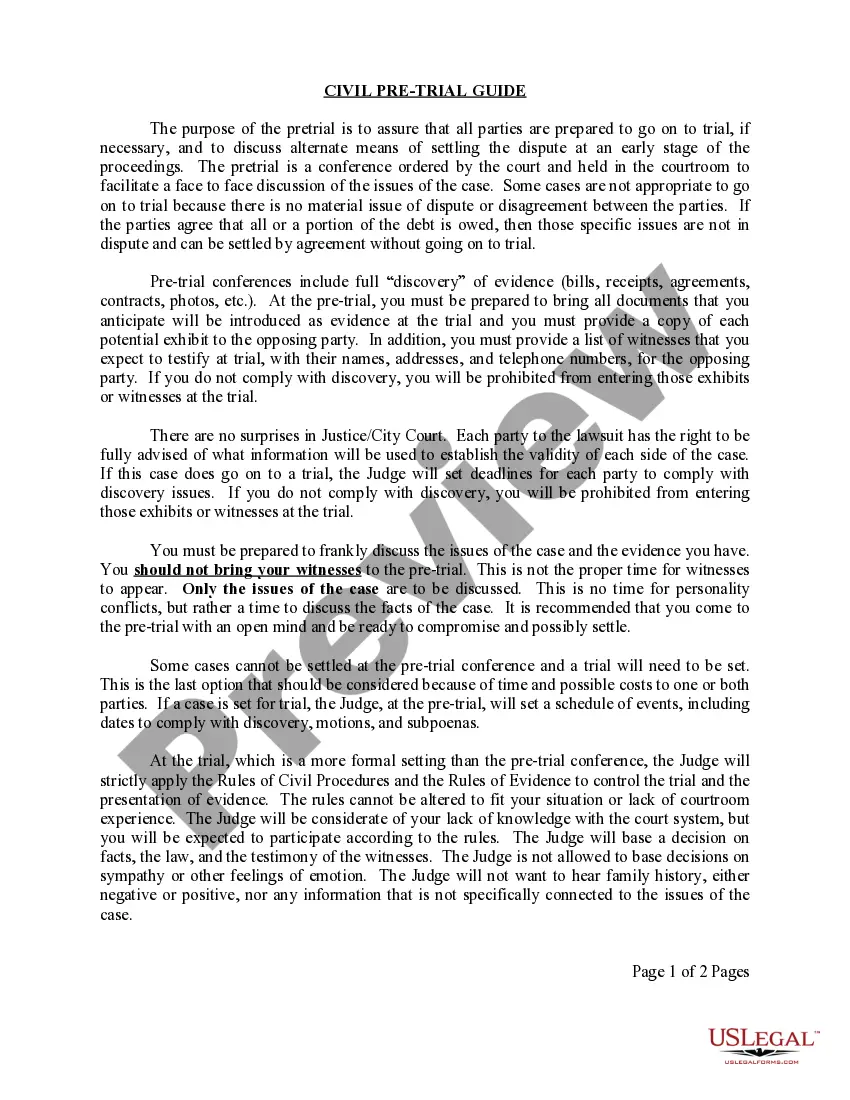
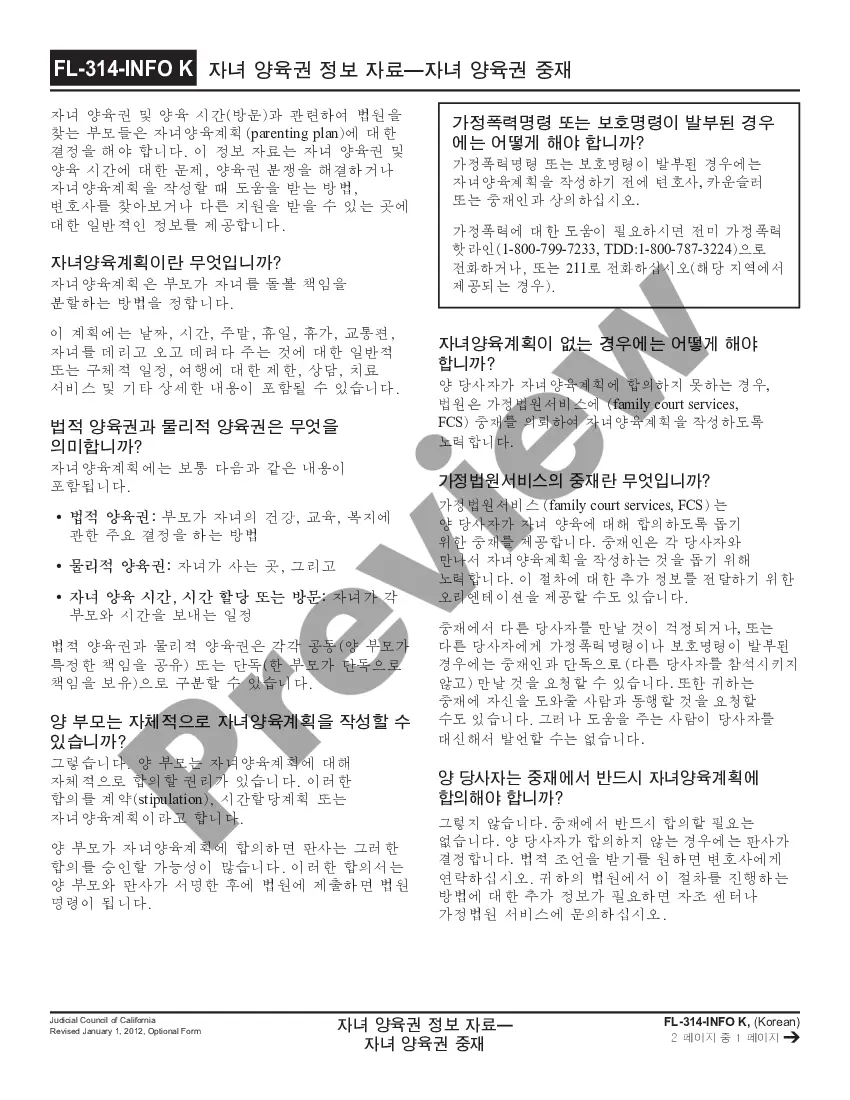
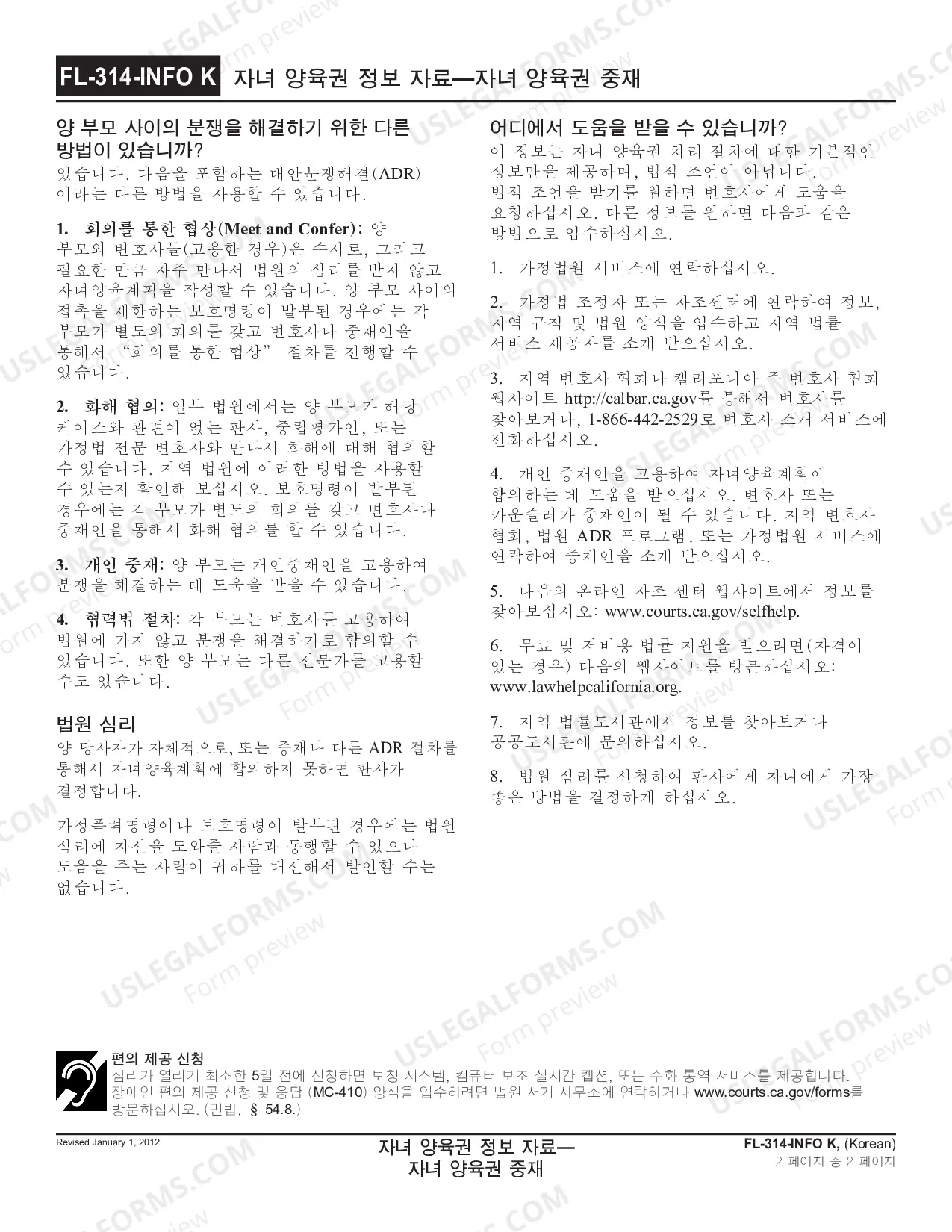
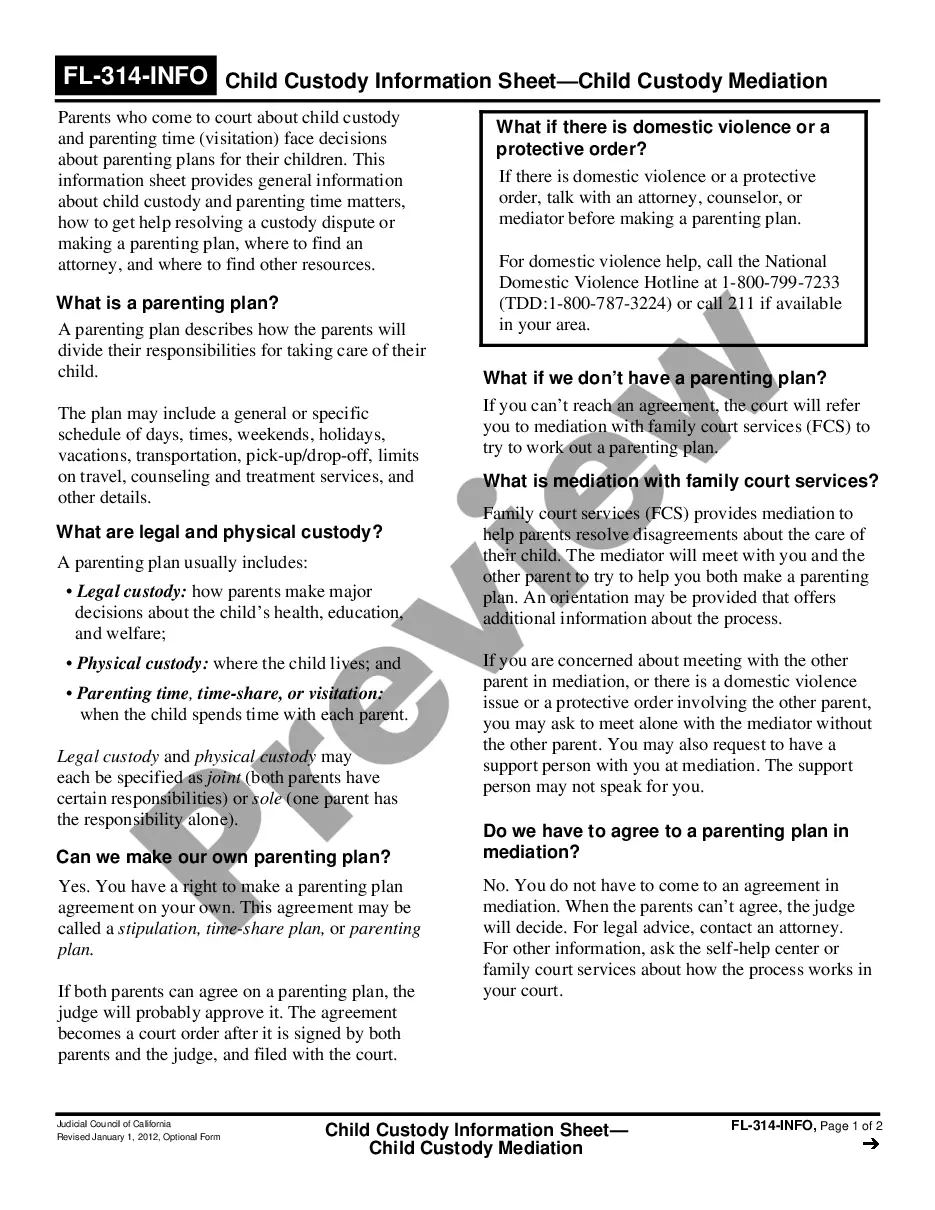
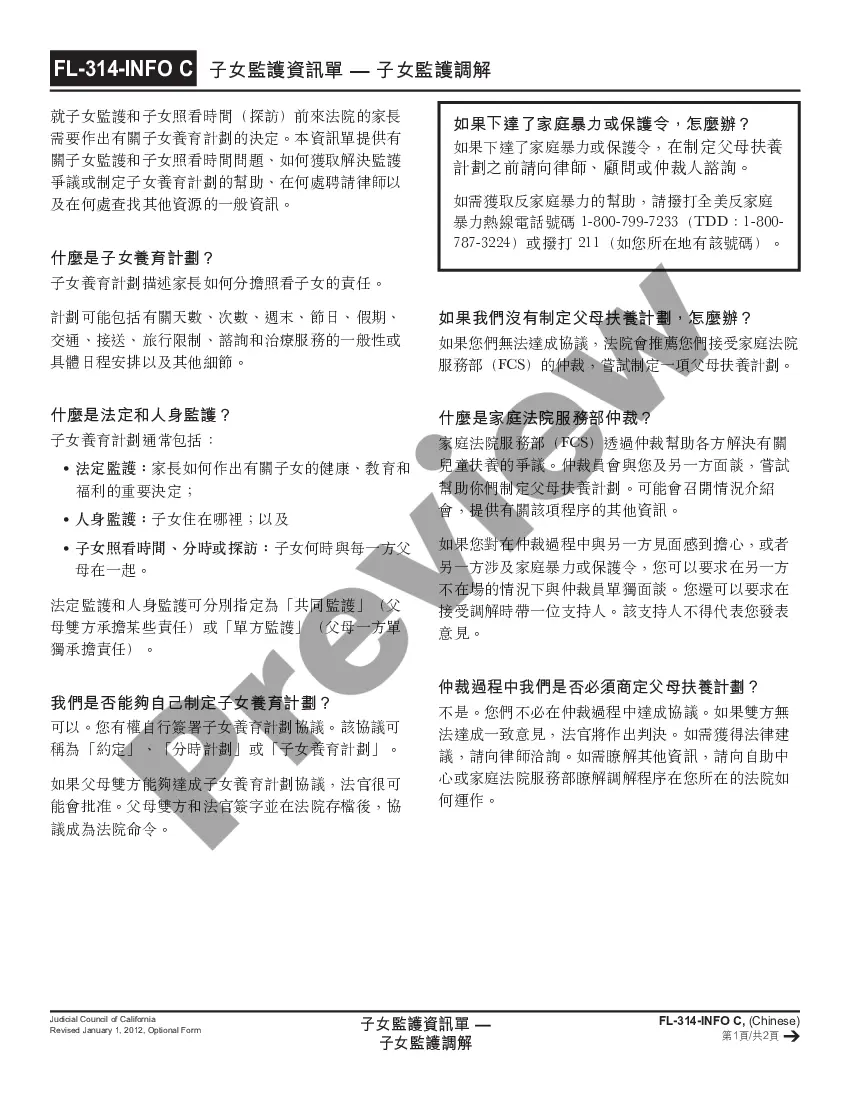
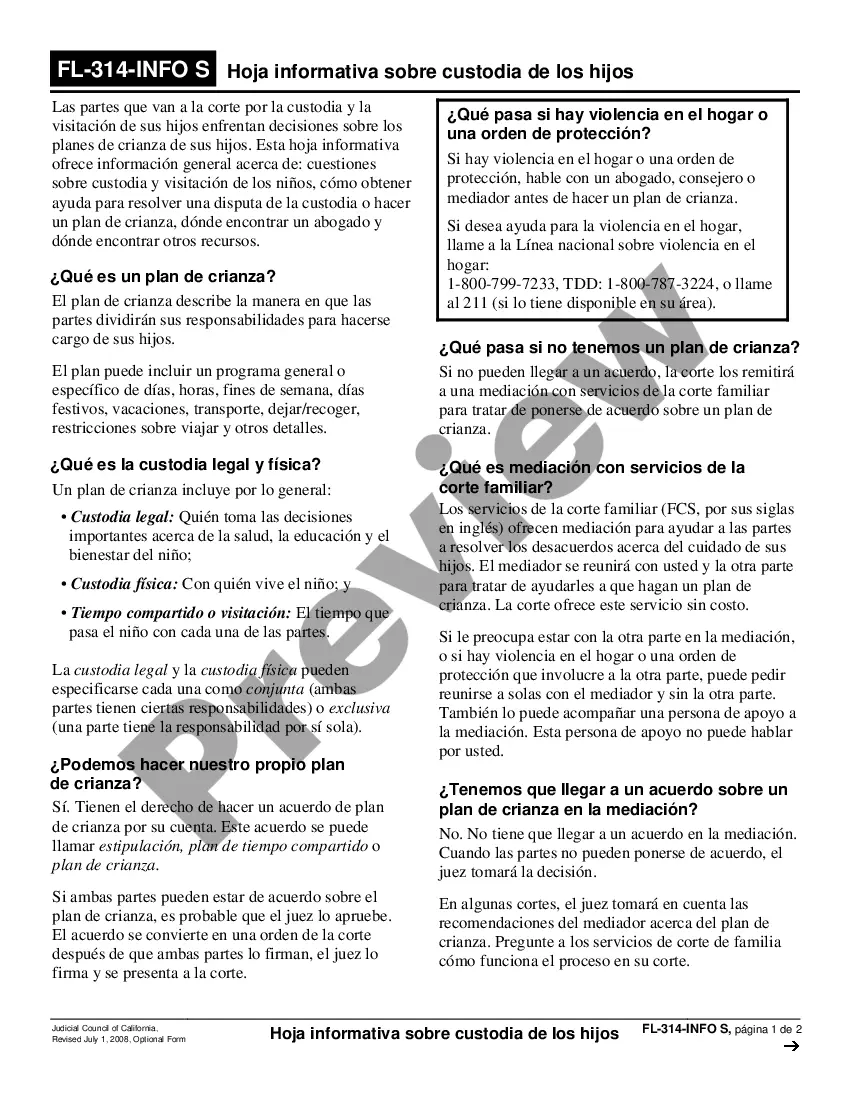
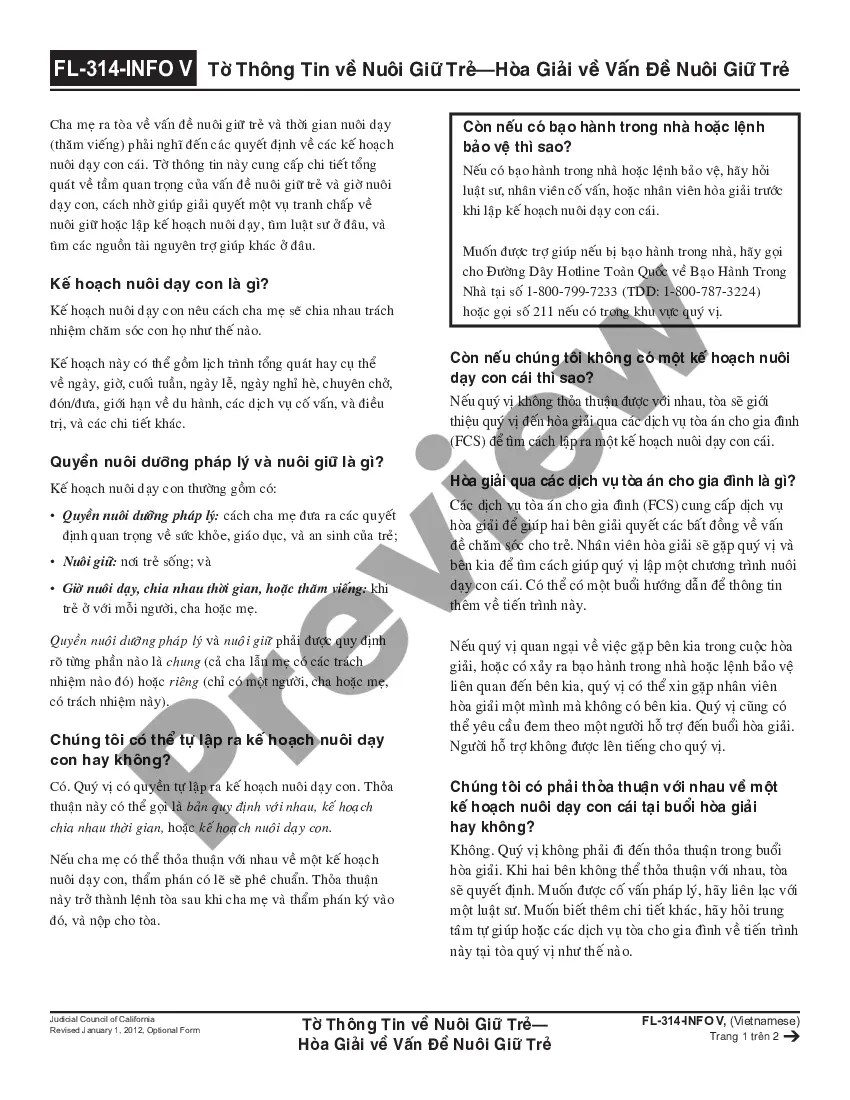
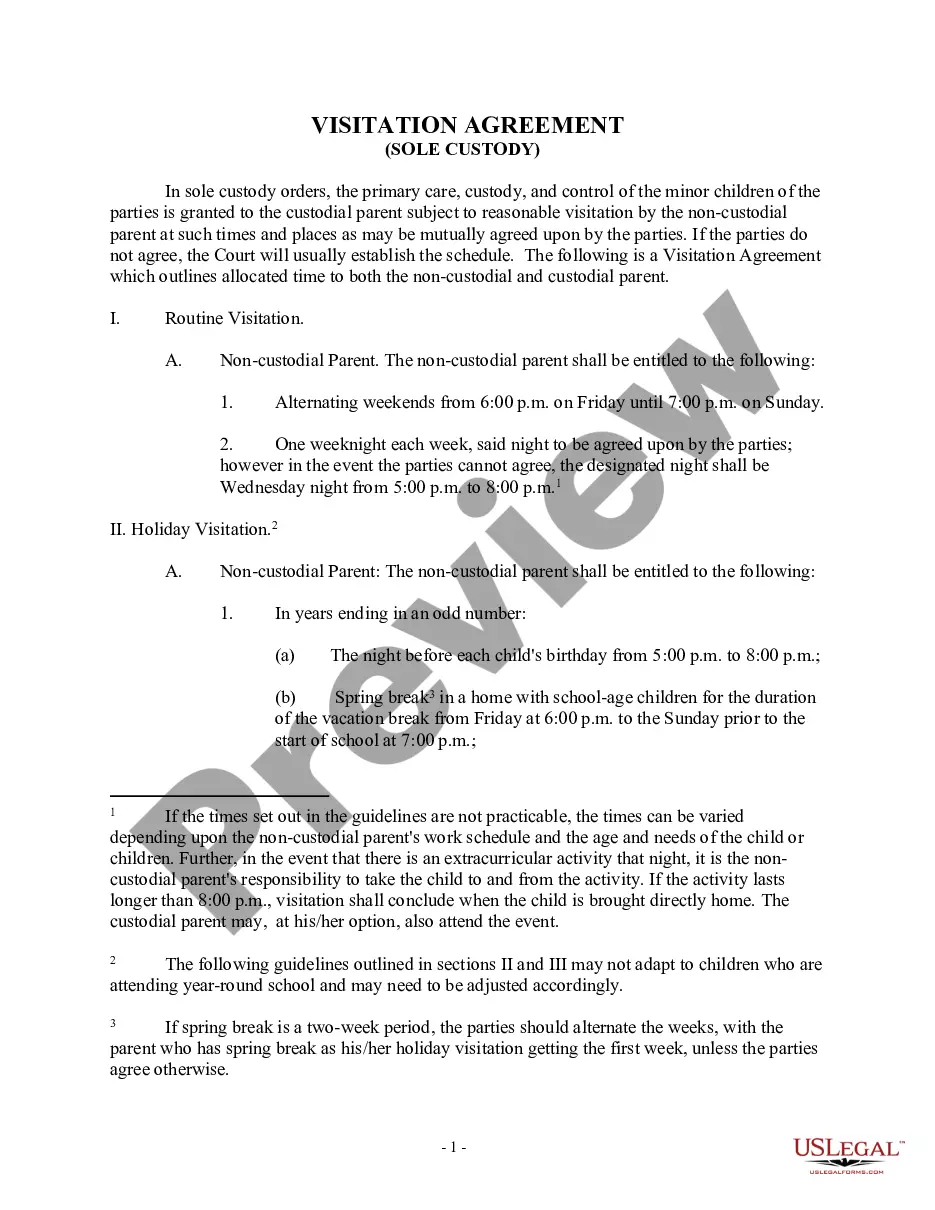
California Child Custody Order - Information - Korean
State:
California
Control #:
CA-FL-314-INFOK
Format:
PDF
Instant download
This website is not affiliated with any governmental entity
Public form
Description
Free preview
Get your form ready online
Our built-in tools help you complete, sign, share, and store your documents in one place.
Built-in online Word editor
Make edits, fill in missing information, and update formatting in US Legal Forms—just like you would in MS Word.
Export easily
Download a copy, print it, send it by email, or mail it via USPS—whatever works best for your next step.
E-sign your document
Sign and collect signatures with our SignNow integration. Send to multiple recipients, set reminders, and more. Go Premium to unlock E-Sign.
Notarize online 24/7
If this form requires notarization, complete it online through a secure video call—no need to meet a notary in person or wait for an appointment.
Store your document securely
We protect your documents and personal data by following strict security and privacy standards.

Make edits, fill in missing information, and update formatting in US Legal Forms—just like you would in MS Word.

Download a copy, print it, send it by email, or mail it via USPS—whatever works best for your next step.

Sign and collect signatures with our SignNow integration. Send to multiple recipients, set reminders, and more. Go Premium to unlock E-Sign.

If this form requires notarization, complete it online through a secure video call—no need to meet a notary in person or wait for an appointment.

We protect your documents and personal data by following strict security and privacy standards.
Looking for another form?
How to fill out California Child Custody Order - Information - Korean?
If you are in search of precise California Child Custody Order - Information - Korean web templates, US Legal Forms is precisely what you require; obtain documents created and validated by state-certified legal experts.
Using US Legal Forms not only alleviates worries about proper forms; it also saves you time, effort, and money! Downloading, printing, and filling out a professional template is significantly more affordable than hiring a lawyer to do it for you.
And that’s it. With just a few simple steps, you have an editable California Child Custody Order - Information - Korean. When you create your account, all future orders will be processed even more smoothly. After obtaining a US Legal Forms subscription, simply Log In to your account and click the Download button located on the form's webpage. Then, when you need to access this sample again, you'll consistently find it in the My documents section. Don’t waste your time searching through countless forms on multiple online platforms. Obtain professional copies from a single trustworthy service!
- To begin, finalize your registration process by entering your email and setting a private password.
- Follow the instructions below to establish your account and obtain the California Child Custody Order - Information - Korean web template to address your situation.
- Utilize the Preview feature or review the document details (if available) to ensure that the template is what you need.
- Verify its validity in your location.
- Click Buy Now to place an order.
- Select a suitable payment plan.
- Create your account and check out using a credit card or PayPal.
- Choose an appropriate format and save the document.
Form popularity
FAQ
Yes, child custody records in California are generally public, but access may be limited to certain individuals depending on the case circumstances. Typically, parties involved in the case or their legal representatives can review these records. If you need specific documents or have questions about accessing these records, contacting the court clerk can provide direct guidance. Remember, understanding the implications of public records is important in custody matters.
Documentation of legal custody includes any official records that establish who holds legal responsibility for a child. This includes court orders, custody agreements, and related legal documents. Keeping this documentation current and readily accessible is crucial for ongoing custody arrangements. If you need help generating any legal forms or understanding your rights, consider using uslegalforms for valuable assistance.
An example of proof of custody is a signed court order that states one parent has legal custody. Other forms of proof may include parenting plans and school records indicating who is responsible for decision-making. Having these documents readily available is essential in legal discussions or proceedings. They ensure you are recognized as the custodial parent and can help in any custody evaluation.
To find out who has custody of a child, you can start by checking court records in the jurisdiction where the custody case was filed. Custody orders are generally public documents, and you may request access at the courthouse. If you are involved in a custody dispute, consulting with a legal professional is beneficial. This can provide clarity and direction for your specific situation.
Documents that show custody of a child include court orders, custody agreements, and parenting plans. These legal documents outline the arrangement between parents regarding who cares for the child. It's crucial to keep copies of these documents organized and accessible. If you need assistance with legal documentation, consider using uslegalforms for reliable resources.
A written statement for custody of a child is a formal document that outlines a parent's desires regarding custody arrangements. This statement helps clarify the parent’s perspective and can influence the court's decision. It typically includes information about the child's living situation, educational needs, and any existing agreements between parents. Providing clear and concise details can strengthen your position in custody discussions.
In South Korea, child custody is determined based on the child's best interests. Courts evaluate various factors including the child's age, welfare, and the parents' living conditions. Generally, joint custody is encouraged, but sole custody can also be granted to one parent under specific circumstances. Understanding these aspects can be helpful for those navigating child custody matters in a bi-national context.
To obtain a copy of your California child custody order, you should contact the court that issued the order. You may visit the court in person or check their website for instructions. Additionally, you can request copies of the documents by mail. Make sure to provide necessary details such as case number and your identification to expedite the process.
A parent may be deemed unfit for custody in California due to issues like substance abuse, history of violence, or inability to provide a safe and stable living environment. Factors that pose risks to the child's well-being, including neglect or emotional harm, also play a significant role. Understanding these criteria and aligning your approach accordingly is critical. You can find detailed information in the California Child Custody Order - Information - Korean available on our platform.
Judges in California assess child custody cases primarily based on the child's best interests. They look for parental involvement, emotional stability, and the ability to provide a nurturing environment. Each parent's relationship with the child is also vital in their evaluation. For specific guidance tailored to your situation, consult the California Child Custody Order - Information - Korean through our platform.