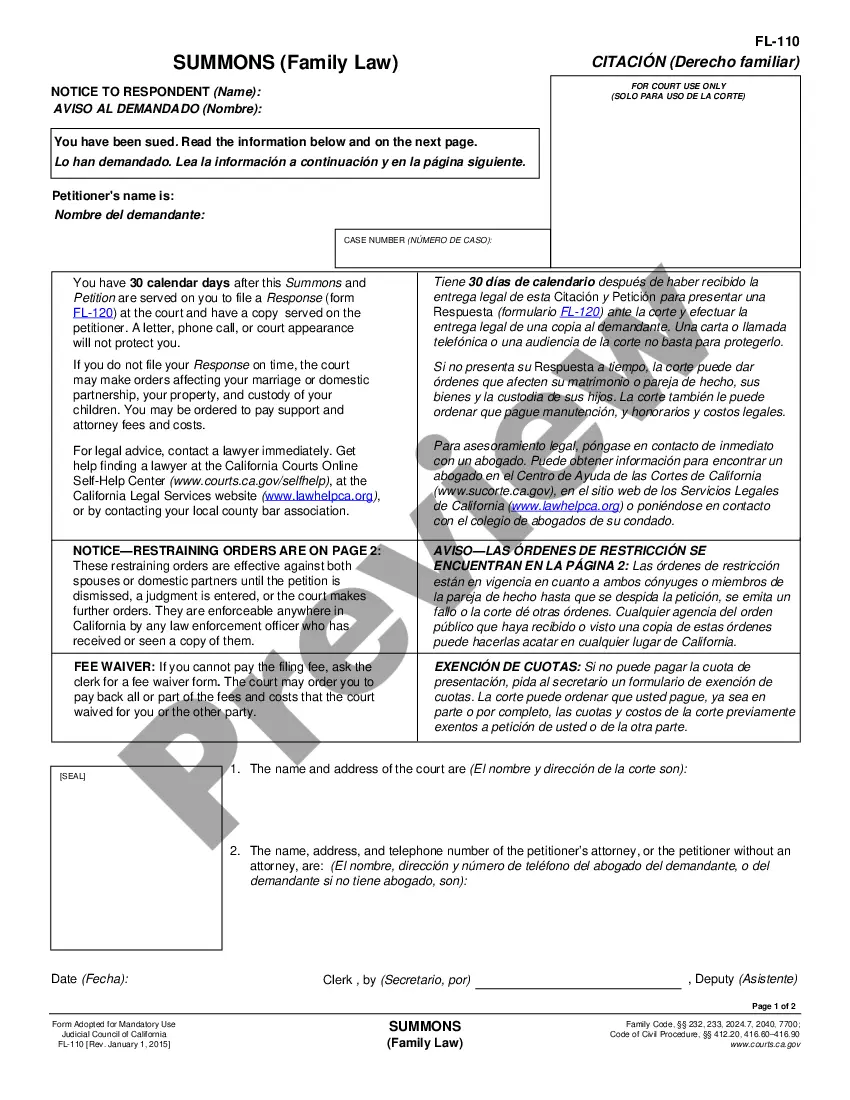
California Summons - Family Law
Understanding this form
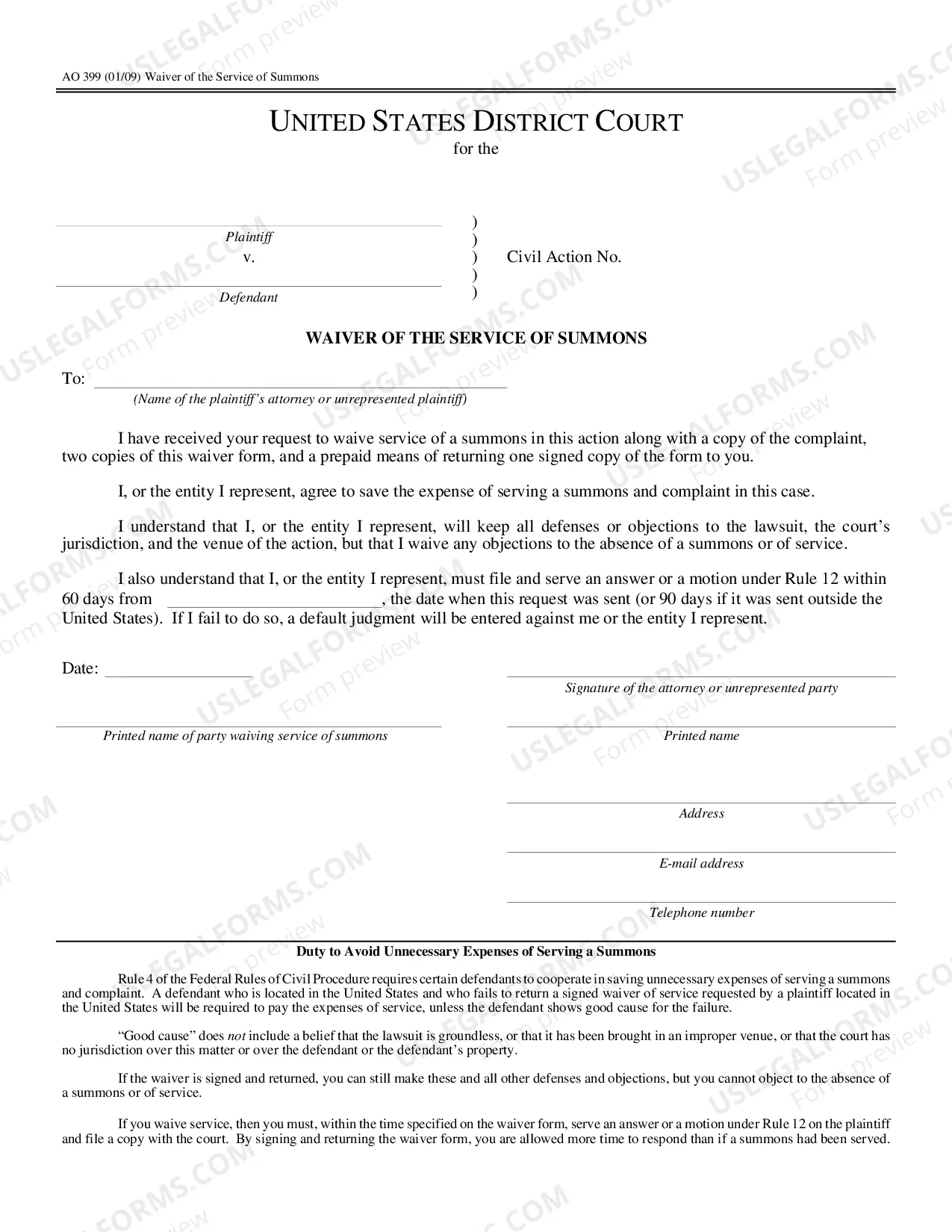
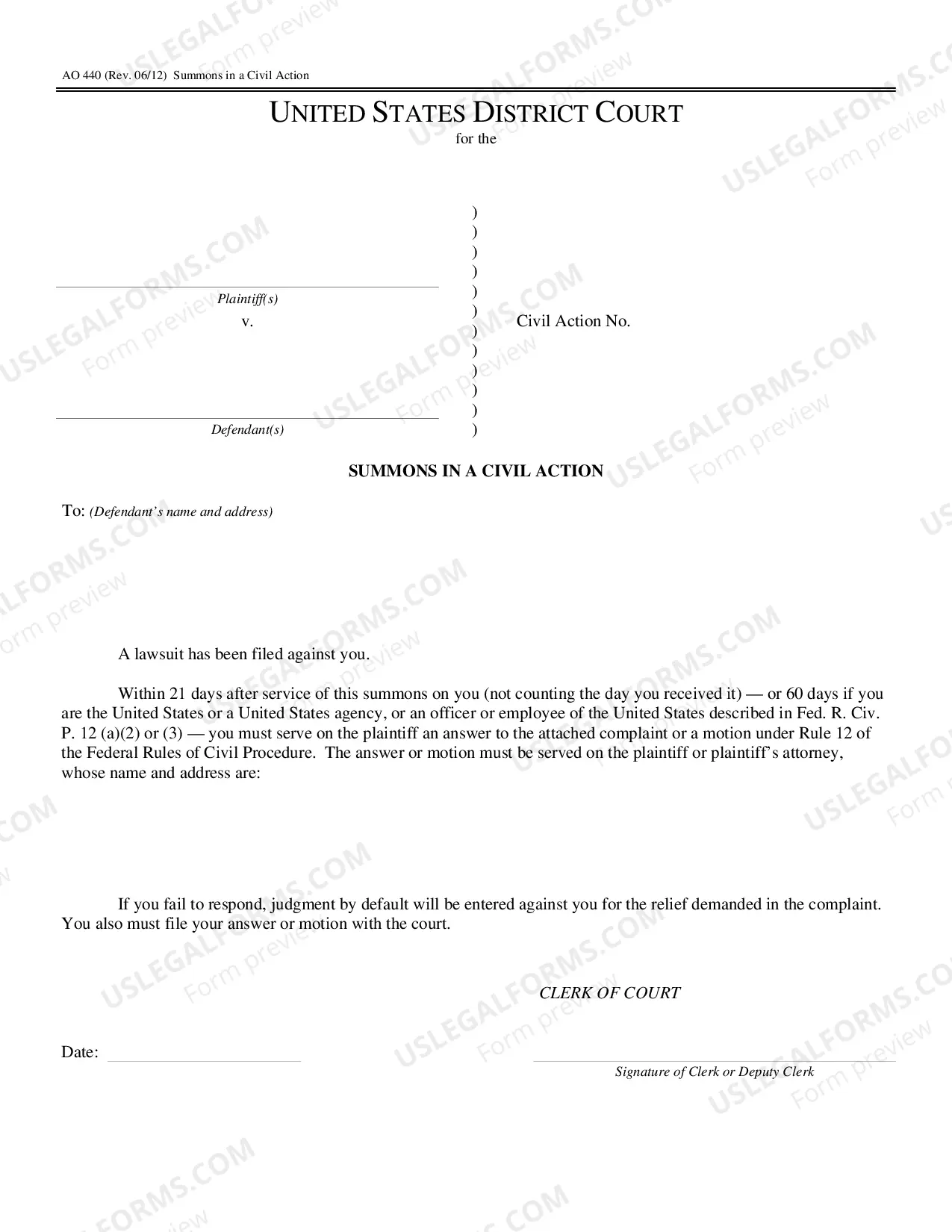
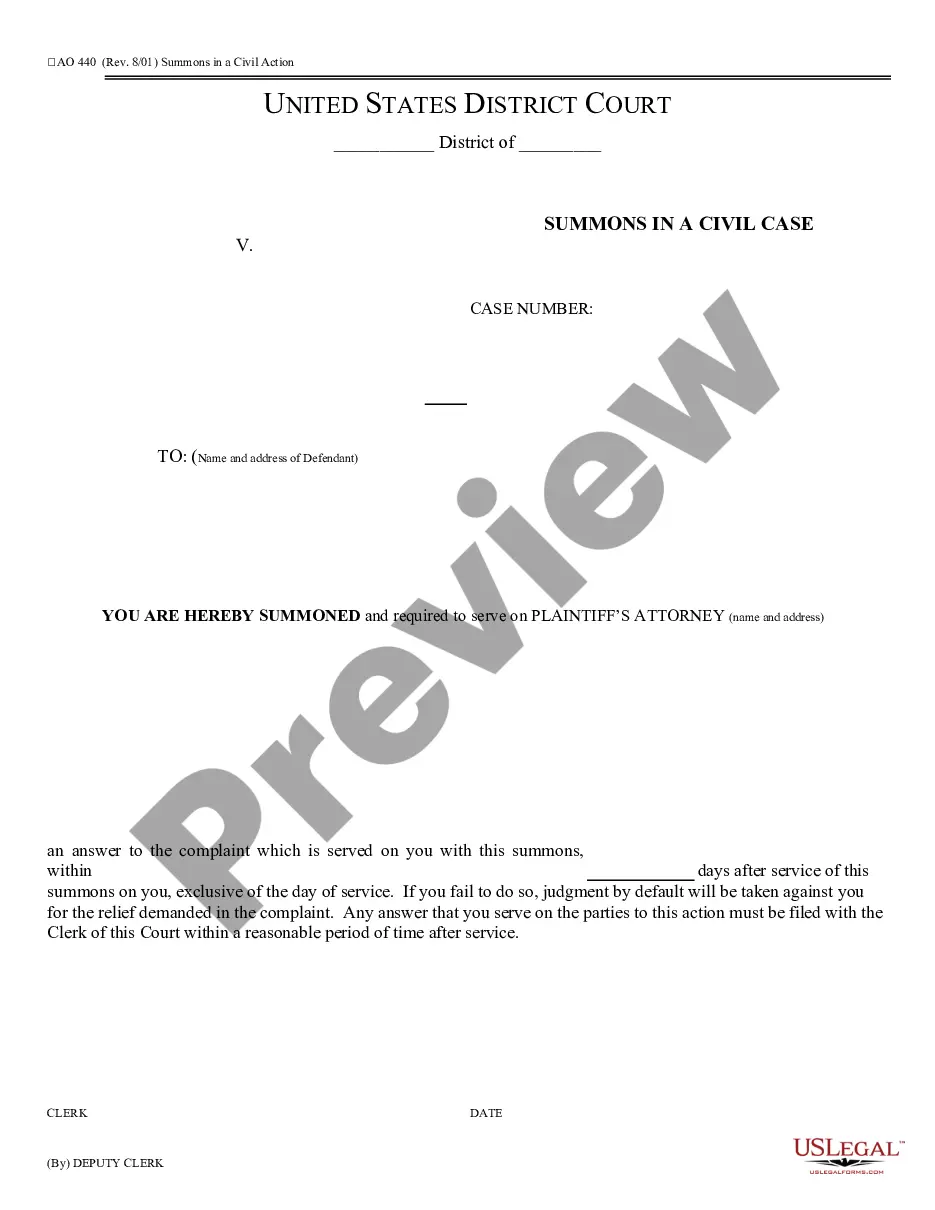
The Summons - Family Law is an official California Judicial Council form used to initiate domestic litigation in family law matters. This document serves as a notice to the other party, informing them of legal action taken against them and outlining their rights and responsibilities. It is important for ensuring that both parties are aware of the proceedings and can respond accordingly.
Key components of this form
- Name and address of the court where the case is filed.
- Information about the parties involved in the case.
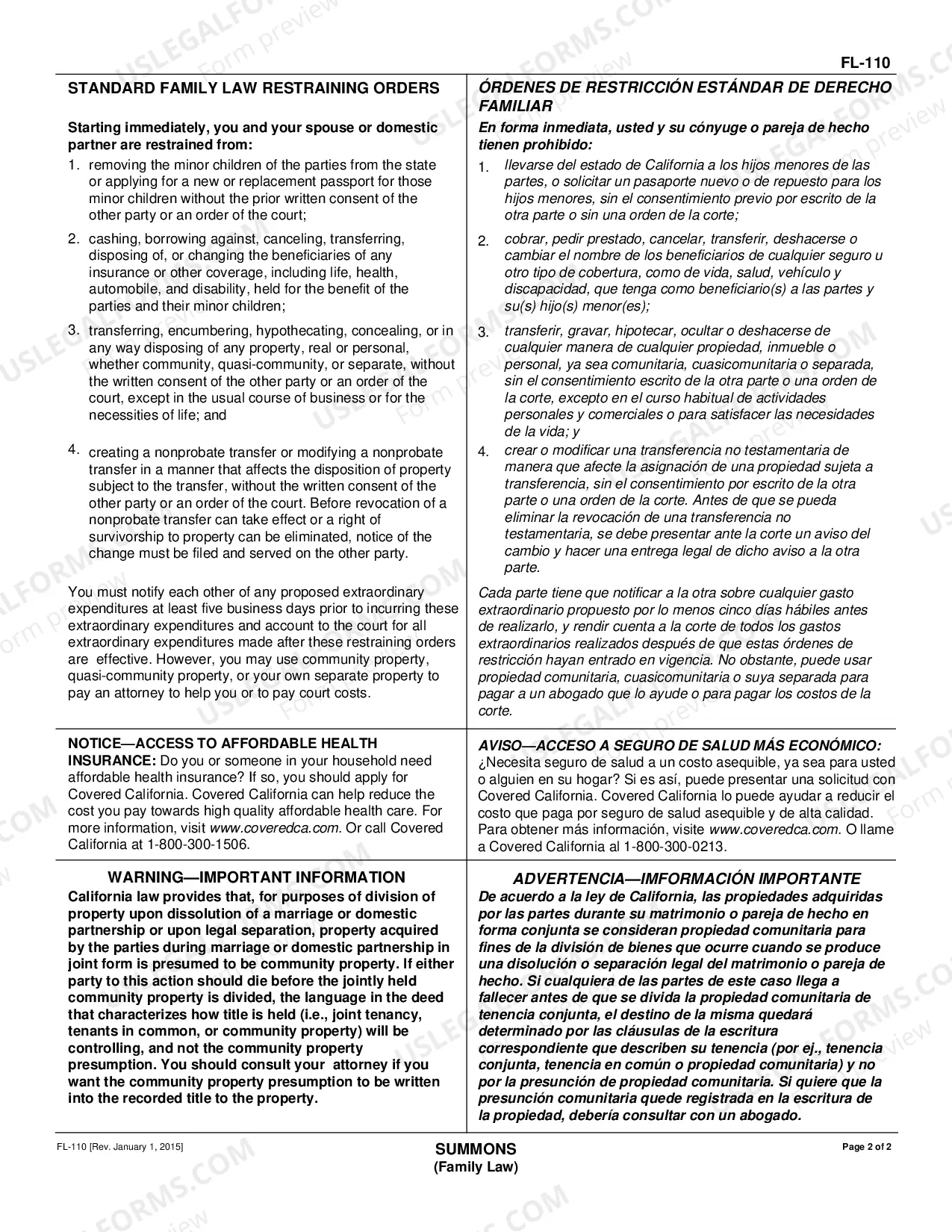
- Standard family law restraining orders to protect assets and children.
- Instructions for the recipient on responding to the summons.
- Important legal warnings regarding failure to respond.
When this form is needed
This form is needed when one party wishes to file for divorce, legal separation, or any other family law matter in California. It serves to legally notify the other party that they are being sued and outlines their obligation to respond within a specified timeframe. Filing this summons properly is crucial to avoid default judgments.
Who should use this form
- Individuals seeking to initiate a divorce or legal separation in California.
- Respondents in a family law case who have received the summons and need to respond.
- Legal representatives or attorneys preparing documents for their clients in family law matters.
How to complete this form
- Identify and enter the name and address of the court at the top of the form.
- Provide your name and contact information as the petitioner.
- Include the name and address of the respondent.
- Complete the sections that detail the nature of the legal action being initiated.
- Review the restraining orders and confirm understanding of their implications.
- File the completed form with the court and serve it to the other party to ensure they receive notification.
Is notarization required?
Notarization is not commonly needed for this form. However, certain documents or local rules may make it necessary. Our notarization service, powered by Notarize, allows you to finalize it securely online anytime, day or night.
Get your form ready online
Our built-in tools help you complete, sign, share, and store your documents in one place.
Make edits, fill in missing information, and update formatting in US Legal Forms—just like you would in MS Word.
Download a copy, print it, send it by email, or mail it via USPS—whatever works best for your next step.
Sign and collect signatures with our SignNow integration. Send to multiple recipients, set reminders, and more. Go Premium to unlock E-Sign.
If this form requires notarization, complete it online through a secure video call—no need to meet a notary in person or wait for an appointment.
We protect your documents and personal data by following strict security and privacy standards.

Make edits, fill in missing information, and update formatting in US Legal Forms—just like you would in MS Word.

Download a copy, print it, send it by email, or mail it via USPS—whatever works best for your next step.

Sign and collect signatures with our SignNow integration. Send to multiple recipients, set reminders, and more. Go Premium to unlock E-Sign.

If this form requires notarization, complete it online through a secure video call—no need to meet a notary in person or wait for an appointment.

We protect your documents and personal data by following strict security and privacy standards.
Common mistakes
- Failing to serve the summons to the other party properly.
- Not filing the summons within the required timeline.
- Inaccurate information about the court or parties involved.
- Ignoring the restraining orders specified in the form.
Why complete this form online
- Convenience of filling out the form at your own pace.
- Access to templates that are legally compliant and properly formatted.
- Ability to save and edit your information as needed before final submission.
- Reliable source for ensuring all required sections are addressed.
Looking for another form?


Form popularity
FAQ
In California, the two main types of summons are the family law summons and the civil summons. The family law summons is specific to family law cases, while the civil summons applies to other disputes. Understanding the differences can help you determine which summons you need depending on your legal situation.
To enforce a family law judgment in California, you must file a motion or request with the court. This process includes providing details about the judgment and the actions of the other party that warrant enforcement. Leveraging tools like a California summons can facilitate proper notification and increase the chances of compliance when enforcing a family law judgment.
If you do not follow a family court order in California, you may face legal consequences, including potential fines or modifications to your custody or support arrangements. The other party could file for contempt, which may lead to court hearings and additional penalties. Adhering to family court orders is essential to maintain compliance and avoid complications.
Serving a summons in California involves delivering the summons and complaint to the other party according to state laws. You can serve the documents through a professional process server or by someone who is over 18 and not involved in the case. Proper service ensures that the other party receives notice of the proceedings, which is crucial for the validity of your case.
To enforce a family judgment in California, you may need to file an enforcement action with the court. This typically involves submitting forms that detail the judgment and the non-compliance of the other party. Utilizing California summons in family law can help in ensuring that the other party is formally notified of the enforcement actions you are taking.
In California, any party involved in a family law case, such as a petitioner or respondent, can file a summons. The summons must be filed with the court where the case is pending. It's important to ensure that all information is accurate and complete to avoid delays in your family law proceedings.
To submit evidence to Family Court in California, you need to gather your documents and complete the required forms. Ensure you comply with filing deadlines and follow the court's instructions for submission. Using the California summons for family law cases can streamline this process by making sure all necessary paperwork is in order.
In California, you must serve a California Summons - Family Law at least 16 court days before the scheduled hearing. This timeline ensures that the other party has adequate notice to prepare for the court proceedings. However, if you use methods like personal service, you may need to account for additional days to allow for the service to be completed effectively, so planning ahead is crucial.
To enforce a family law judgment in California, you need to file a request with the court. This process typically involves submitting relevant documents that prove the judgment has not been complied with. If you require assistance, platforms like USLegalForms can provide helpful resources and templates tailored for enforcing California Summons - Family Law judgments, making the process more manageable.
Yes, a California Summons - Family Law can be served to a family member, but it is crucial to adhere to the legal requirements. The serving individual must not have any interest in the case and must be at least 18 years old. Serving a family member can sometimes be a practical solution, but it’s advisable to consider using a professional server to avoid any potential conflicts.