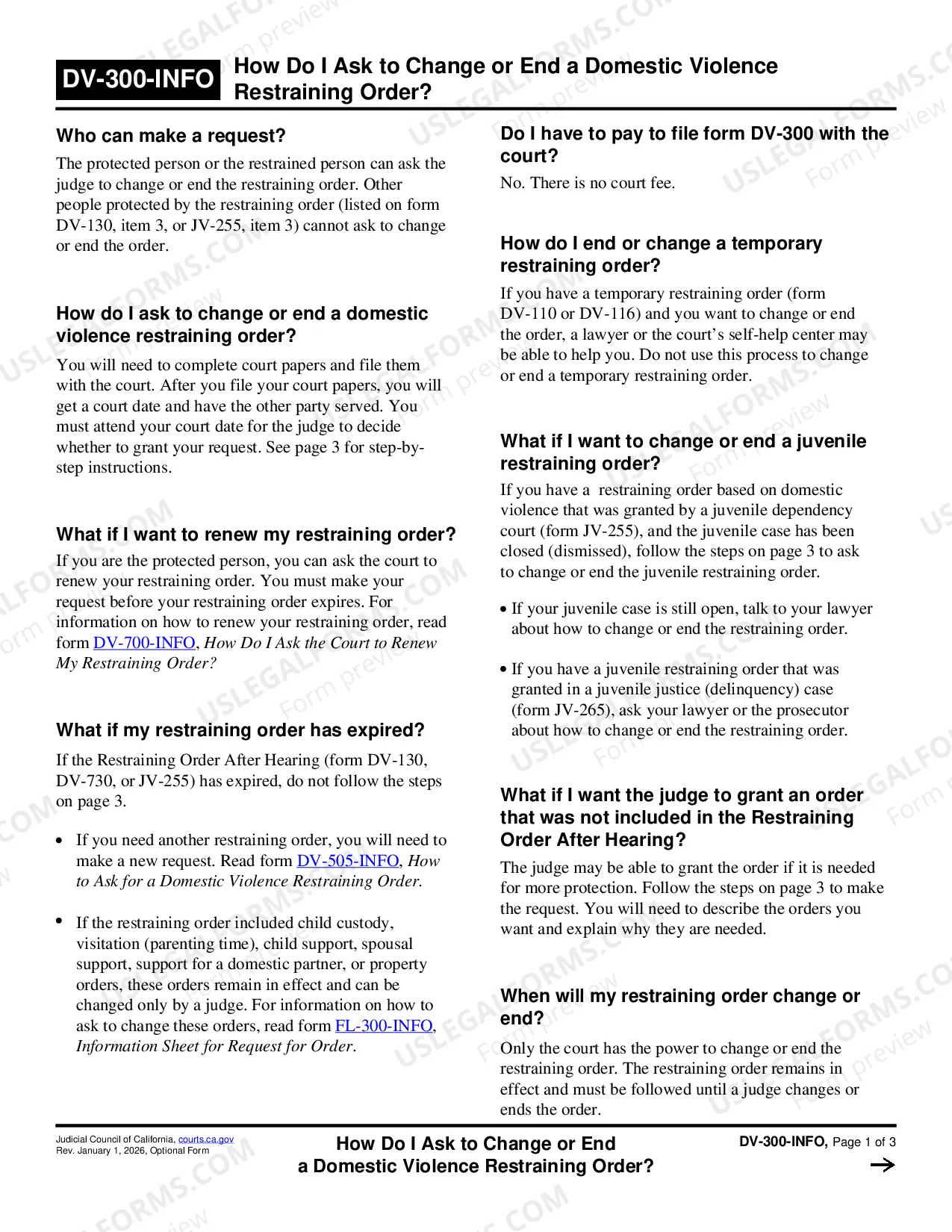
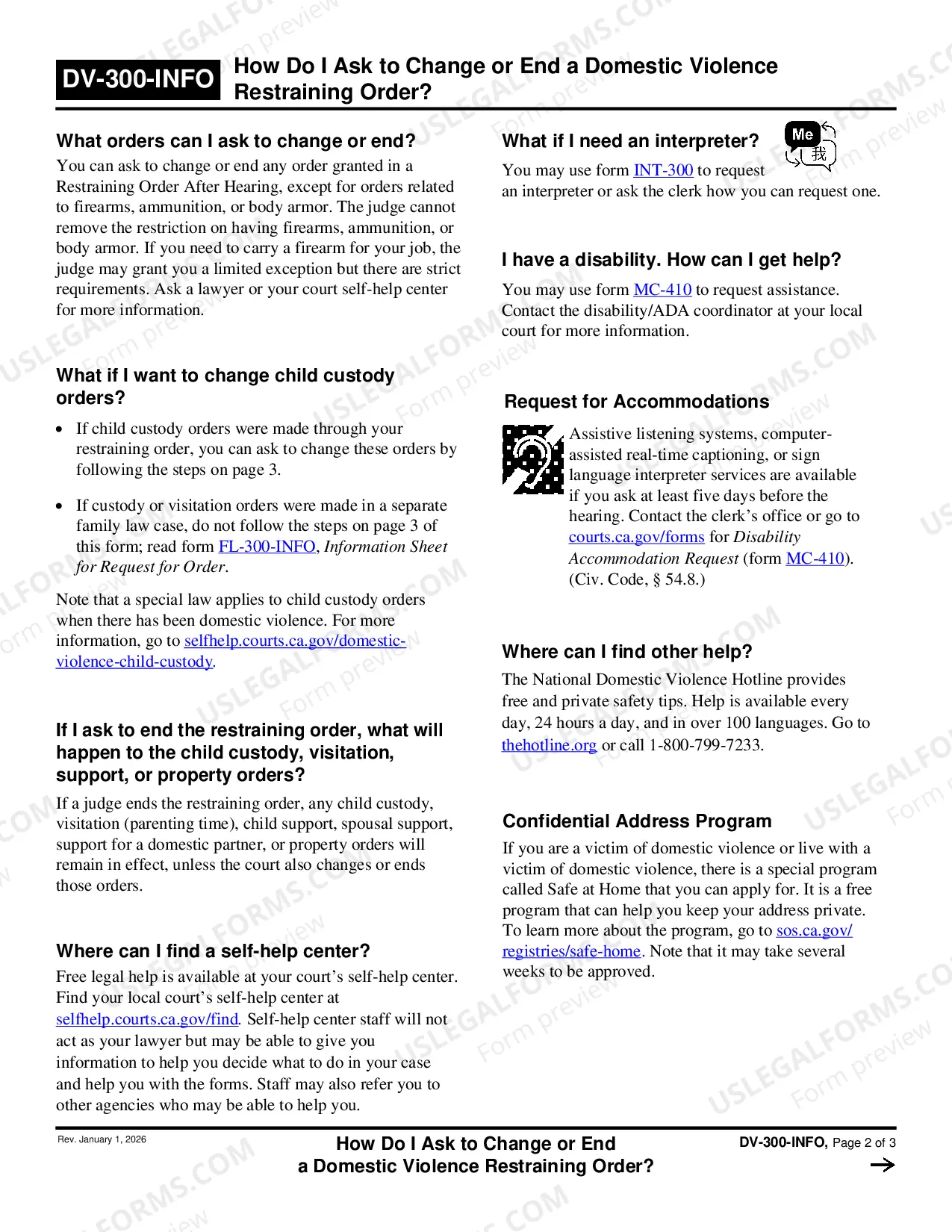
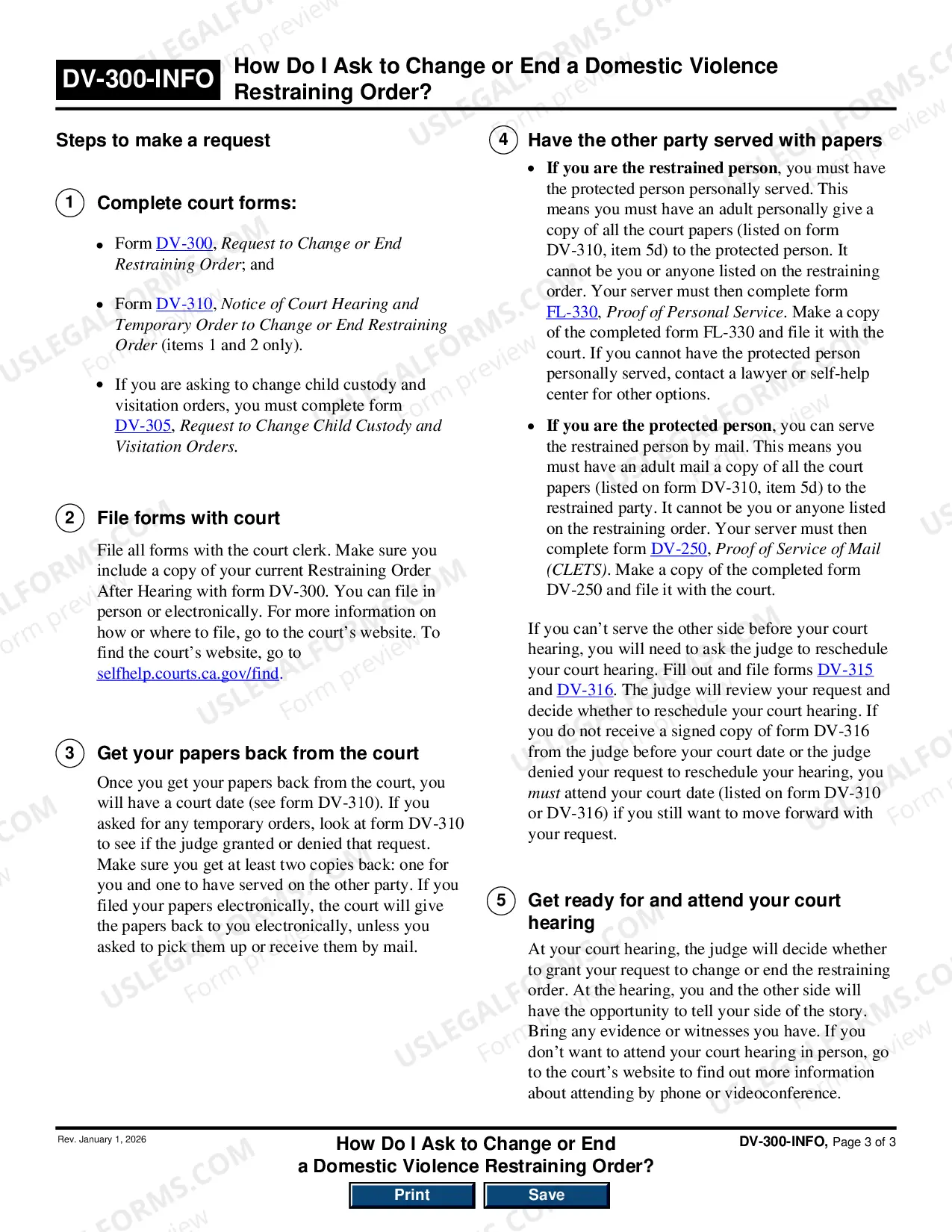
California How Do I Ask to Change or End a Domestic Violence Restraining Order
Description
Get your form ready online
Our built-in tools help you complete, sign, share, and store your documents in one place.
Make edits, fill in missing information, and update formatting in US Legal Forms—just like you would in MS Word.
Download a copy, print it, send it by email, or mail it via USPS—whatever works best for your next step.
Sign and collect signatures with our SignNow integration. Send to multiple recipients, set reminders, and more. Go Premium to unlock E-Sign.
If this form requires notarization, complete it online through a secure video call—no need to meet a notary in person or wait for an appointment.
We protect your documents and personal data by following strict security and privacy standards.

Make edits, fill in missing information, and update formatting in US Legal Forms—just like you would in MS Word.

Download a copy, print it, send it by email, or mail it via USPS—whatever works best for your next step.

Sign and collect signatures with our SignNow integration. Send to multiple recipients, set reminders, and more. Go Premium to unlock E-Sign.

If this form requires notarization, complete it online through a secure video call—no need to meet a notary in person or wait for an appointment.

We protect your documents and personal data by following strict security and privacy standards.
Looking for another form?
Key Concepts & Definitions
Domestic Violence: A pattern of abusive behavior in any relationship that is used by one partner to gain or maintain control over another intimate partner. This can include physical, sexual, emotional, economic, or psychological actions or threats.
Restraining Order: A legal order issued by a state court that requires one person to stop harming another. In the context of domestic violence, it can restrict the abuser from coming into contact with the victim.
Child Custody: A legal term regarding guardianship which is used to describe the legal and practical relationship between a parent or guardian and a child in that person's care.
Custody Visitation: An arrangement set by the court that allows the non-custodial parent to have time with their child, which can be impacted by domestic violence cases.
Step-by-Step Guide to Asking for Changes to Custody or Protection Orders
- Contact Support Services: Reach out to local support organizations that provide assistance for domestic violence victims. These entities can offer guidance and connect you with legal aid.
- File for a Restraining Order: If in immediate danger, consider filing for a violence restraining order through your local judicial branch. This will legally prevent the abuser from coming into contact with you.
- Request Changes in Child Custody: If children are involved, and their safety might be compromised, contact a family law attorney to discuss changes to child custody and visitation schedules. Documentation and evidence of abuse can support your case.
- Prepare for Court Hearing: Collect any relevant evidence you have of domestic violence and present this during your court hearing. Legal representation is advised.
- Email Contact and File Appeal If Necessary: If initial requests are denied or more changes are needed, maintain records of all communications and consider filing an appeal. Ensure all correspondence with courts or attorneys is well-documented.
Risk Analysis
- Safety Concerns: Ensuring the safety of the victim and children is paramount. Missteps in legal procedures can temporarily expose them to further risk.
- Legal Complications: Incorrect filings or improper handling of sensitive information can lead to legal delays or unfavorable outcomes.
- Emotional Impact: Navigating changes in child custody or ending a domestic relationship carries substantial emotional stress and potential for psychological effects.