California Boarding Stable Agreement - Horse Equine Forms
About this form
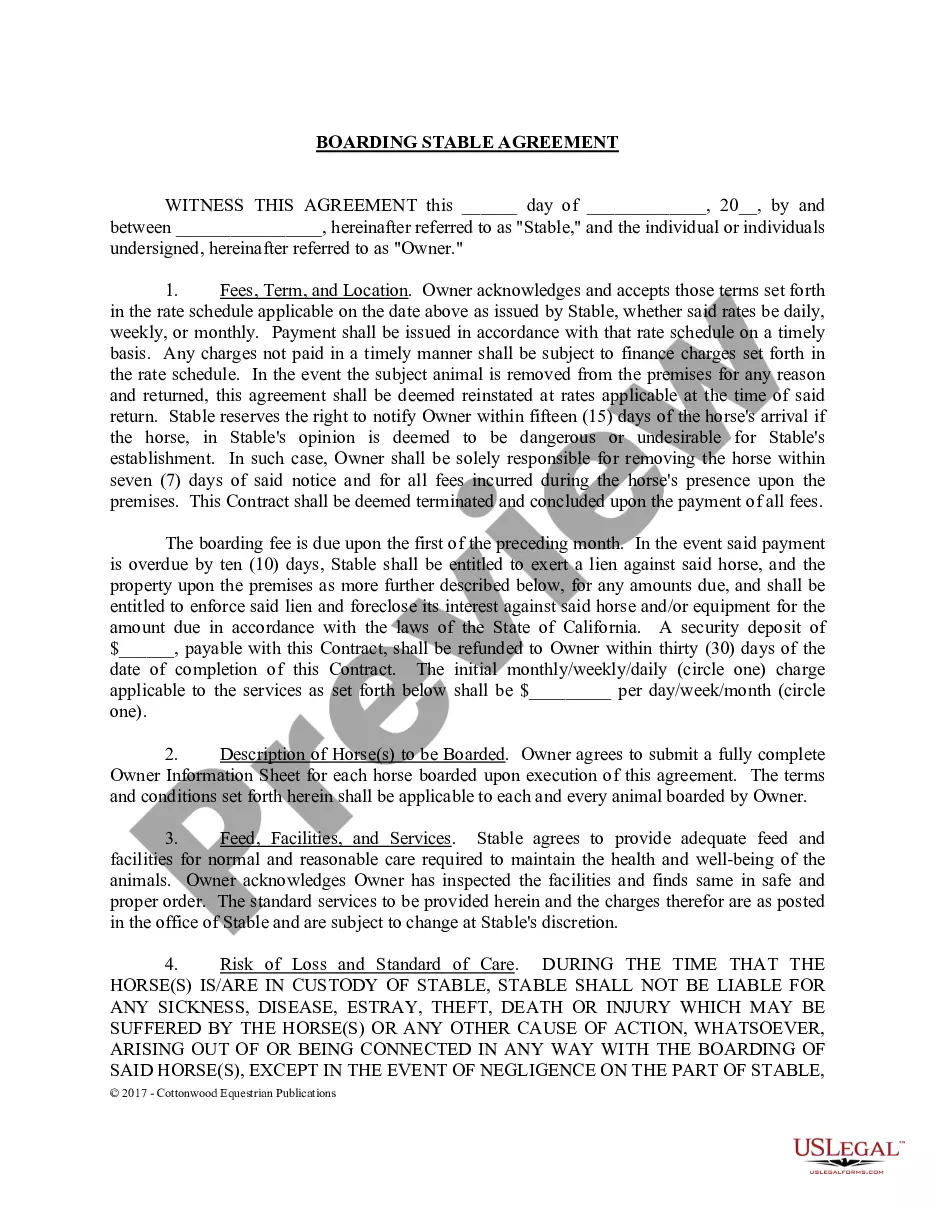
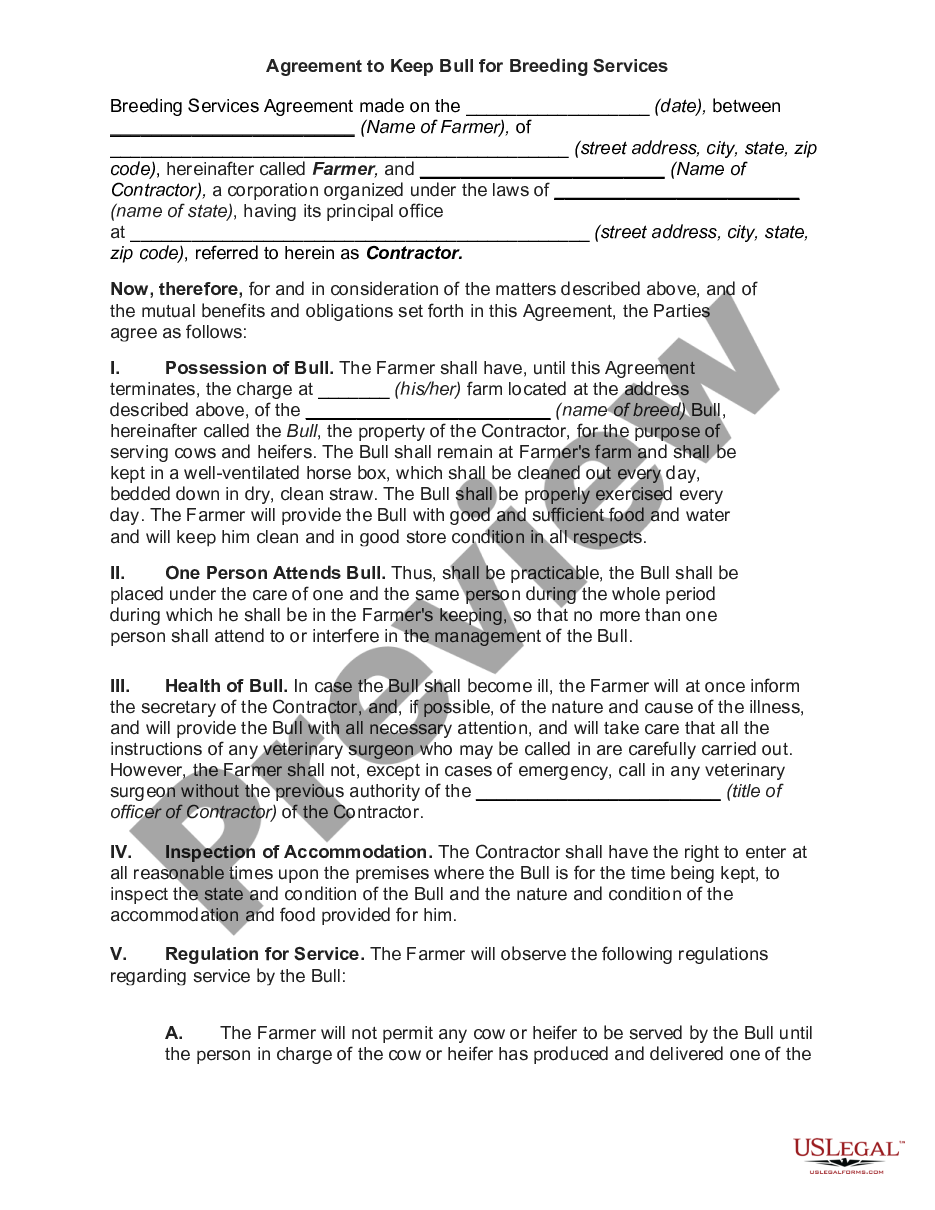
The Boarding Stable Agreement is a legally binding contract between a stable owner and a horse owner. It outlines the terms for boarding horses, covering essential aspects such as fees, liability, care standards, and emergency procedures. This agreement helps protect both the stable and the horse owner, ensuring clear responsibilities and expectations while also differentiating it from other equine agreements like rental leases or service contracts.
What’s included in this form
- Fees, term, and location of the boarding arrangement.
- Description and health documentation required for each horse.
- Standard of care provided by the stable and risk of loss clause.
- Emergency care procedures and owner's responsibilities.
- Liability provisions and hold harmless agreements.
- Provisions regarding storage of personal property and tack.


When this form is needed
This form should be used whenever a horse owner needs to board their horse at a stable. It is essential in situations where the horse owner wants to ensure that there are legally defined responsibilities for the care and management of their horse. Itâs also necessary if the stable has specific rules and conditions for boarders or if there is a need for liability protection and clarification of fees.
Who should use this form
- Horse owners seeking to board their animals in a stable.
- Stable owners who need a structured agreement for boarding services.
- Anyone involved in equine activities requiring clarity on boarding arrangements and responsibilities.
How to complete this form
- Identify the parties involved: the stable name and the horse owner's name.
- Fill in the date the agreement is being signed.
- Specify the boarding fees and payment terms accurately according to the rate schedule.
- Provide detailed information about each horse being boarded, including health records.
- Sign and date the agreement to indicate acceptance of all terms.
Does this document require notarization?
This form does not typically require notarization unless specified by local law. However, having it notarized can enhance the form's credibility and security, especially in disputes.
Get your form ready online
Our built-in tools help you complete, sign, share, and store your documents in one place.
Make edits, fill in missing information, and update formatting in US Legal Forms—just like you would in MS Word.
Download a copy, print it, send it by email, or mail it via USPS—whatever works best for your next step.
Sign and collect signatures with our SignNow integration. Send to multiple recipients, set reminders, and more. Go Premium to unlock E-Sign.
If this form requires notarization, complete it online through a secure video call—no need to meet a notary in person or wait for an appointment.
We protect your documents and personal data by following strict security and privacy standards.

Make edits, fill in missing information, and update formatting in US Legal Forms—just like you would in MS Word.

Download a copy, print it, send it by email, or mail it via USPS—whatever works best for your next step.

Sign and collect signatures with our SignNow integration. Send to multiple recipients, set reminders, and more. Go Premium to unlock E-Sign.

If this form requires notarization, complete it online through a secure video call—no need to meet a notary in person or wait for an appointment.

We protect your documents and personal data by following strict security and privacy standards.
Common mistakes
- Not specifying all horses to be boarded or missing health documentation.
- Ignoring emergency contact arrangements or procedures.
- Failing to review fees and payment terms before signing.
Benefits of completing this form online
- Convenient access to a legally compliant template.
- Editable fields allow you to tailor the agreement to specific needs.
- Reduce the risk of legal issues with clear terms and conditions.
Legal use & context
- This agreement serves as a comprehensive legal document to protect both the horse owner and stable by outlining rights and responsibilities.
- The provisions concerning risk of loss limit the stableâs liability, thus clarifying the legal framework for disputes.
- It is advisable for both parties to seek legal advice if unsure about any obligations or terms before signing.
What to keep in mind
- The Boarding Stable Agreement is crucial for clarifying the responsibilities of horse and stable owners.
- It is important to complete the form accurately to avoid disputes.
- Understanding state-specific laws can enhance legal protection for both parties.
Looking for another form?

Form popularity
FAQ
The 20 rule refers to the guideline that suggests horses need at least 20 hours of forage each day to maintain their health and well-being. This rule emphasizes the importance of managing their diet effectively. Incorporating this rule into your California Boarding Stable Agreement - Horse Equine Forms helps ensure that the boarding facility meets these dietary needs.
Every horse owner should have essential equipment, including grooming tools, safety gear, and feeding supplies. Furthermore, having a California Boarding Stable Agreement - Horse Equine Forms is crucial to protect both the owner's and the horse's interests. It serves as a reference point for care responsibilities and costs involved.
Horse boarding requires several essential components, including secure stabling, ample space for exercise, and regular feeding schedules. Additionally, a comprehensive California Boarding Stable Agreement - Horse Equine Forms outlines the specifics of the care an owner expects. This helps in preventing misunderstandings between the horse owner and the boarding facility.
When you board a horse, you typically enter into an agreement with the stable to provide care and shelter for the horse. This arrangement involves regular feeding, health check-ups, and exercise. Using a solid California Boarding Stable Agreement - Horse Equine Forms ensures clarity on responsibilities and services provided.
To set up a horse stable in Stardew Valley, you need materials such as wood, stone, and iron bars. You also require a building permit and access to your farm area. With the right resources and planning, you can create a lively environment for your horse, enhancing your gameplay experience.
Yes, it is legal to ride a horse on the street in California, but there are specific regulations and safety guidelines you must follow. Riders must adhere to local traffic laws and may need to wear safety gear. A California Boarding Stable Agreement - Horse Equine Forms can be useful to outline responsibilities and ensure that both horse owners and riders understand the legalities involved in riding on public roads.
In California, the amount of land needed to own a horse can vary based on local zoning laws and the number of horses you plan to keep. Generally, a minimum of 1 to 2 acres is recommended per horse to provide adequate space for grazing and exercise. A California Boarding Stable Agreement - Horse Equine Forms can assist you in understanding land use regulations and ensuring your boarding operation complies with local requirements.
The profit margin on horse boarding can vary significantly based on factors like location, services offered, and market demand. Typically, stable owners can expect a profit margin ranging from 20% to 40%. By using a California Boarding Stable Agreement - Horse Equine Forms, you can structure your boarding services effectively to maximize your income and ensure all aspects of the boarding arrangements are clear.