California Employee Confidentiality Agreement
About this form
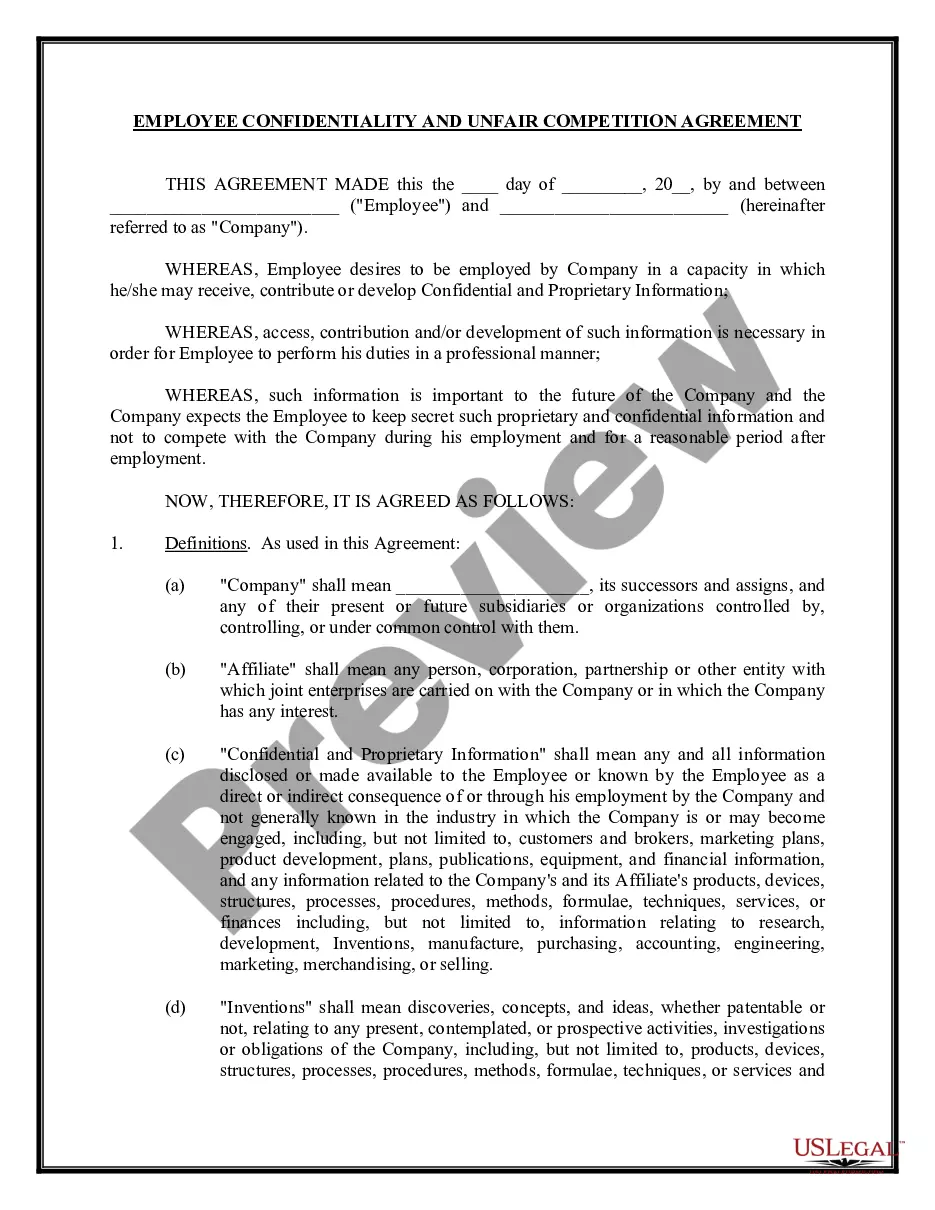
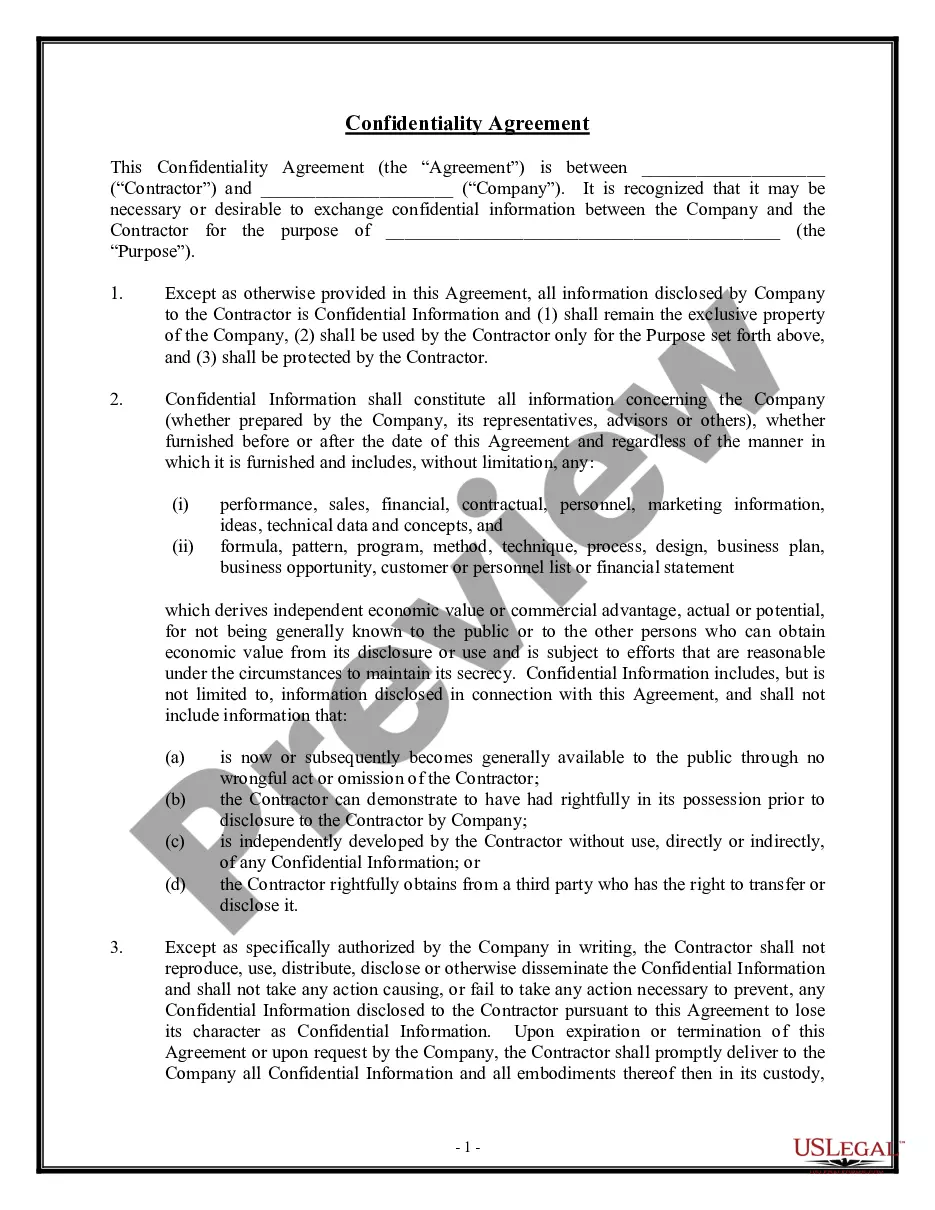
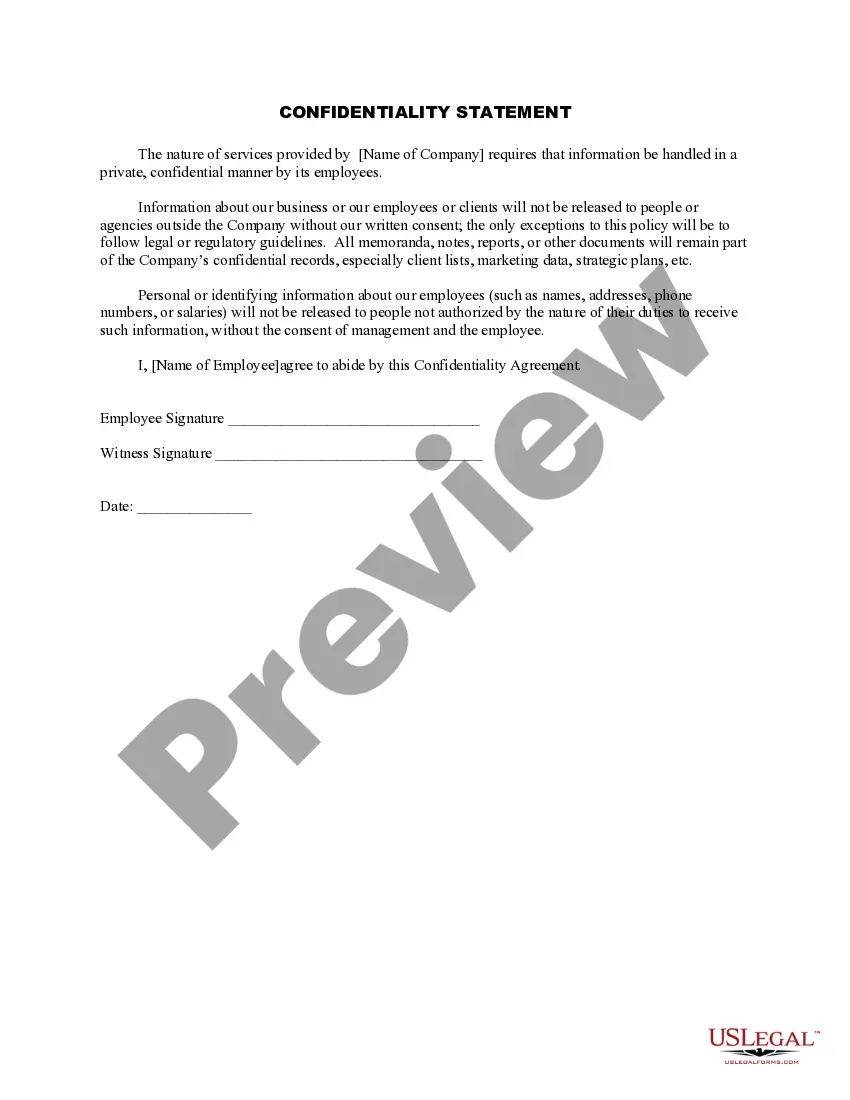
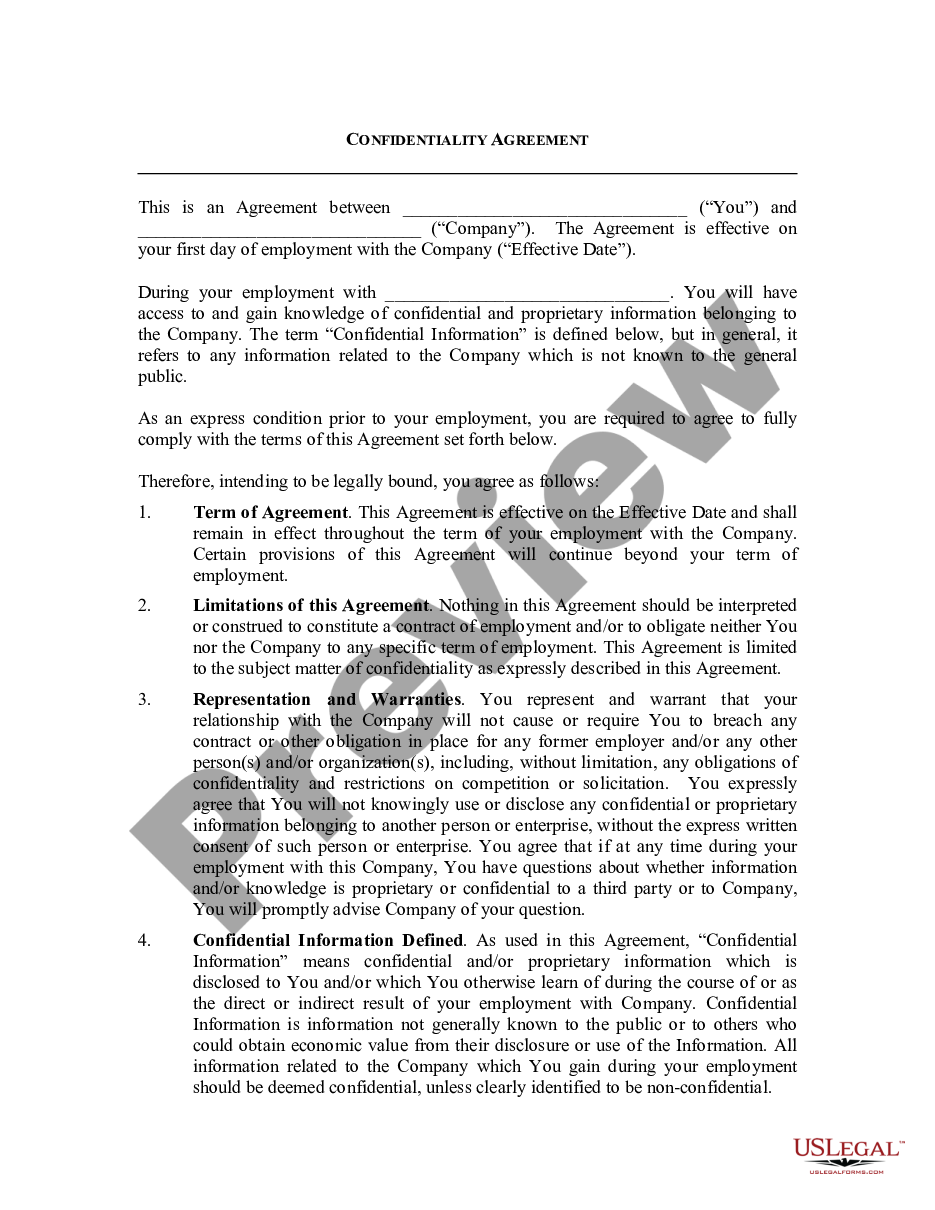
The Employee Confidentiality Agreement is a legally binding document that outlines the obligations of an employee to protect confidential and proprietary information belonging to their employer. This agreement ensures that sensitive business information, including trade secrets and client details, is not disclosed or misused during and after the term of employment. It is essential for maintaining business integrity and competitive advantage.
Key parts of this document
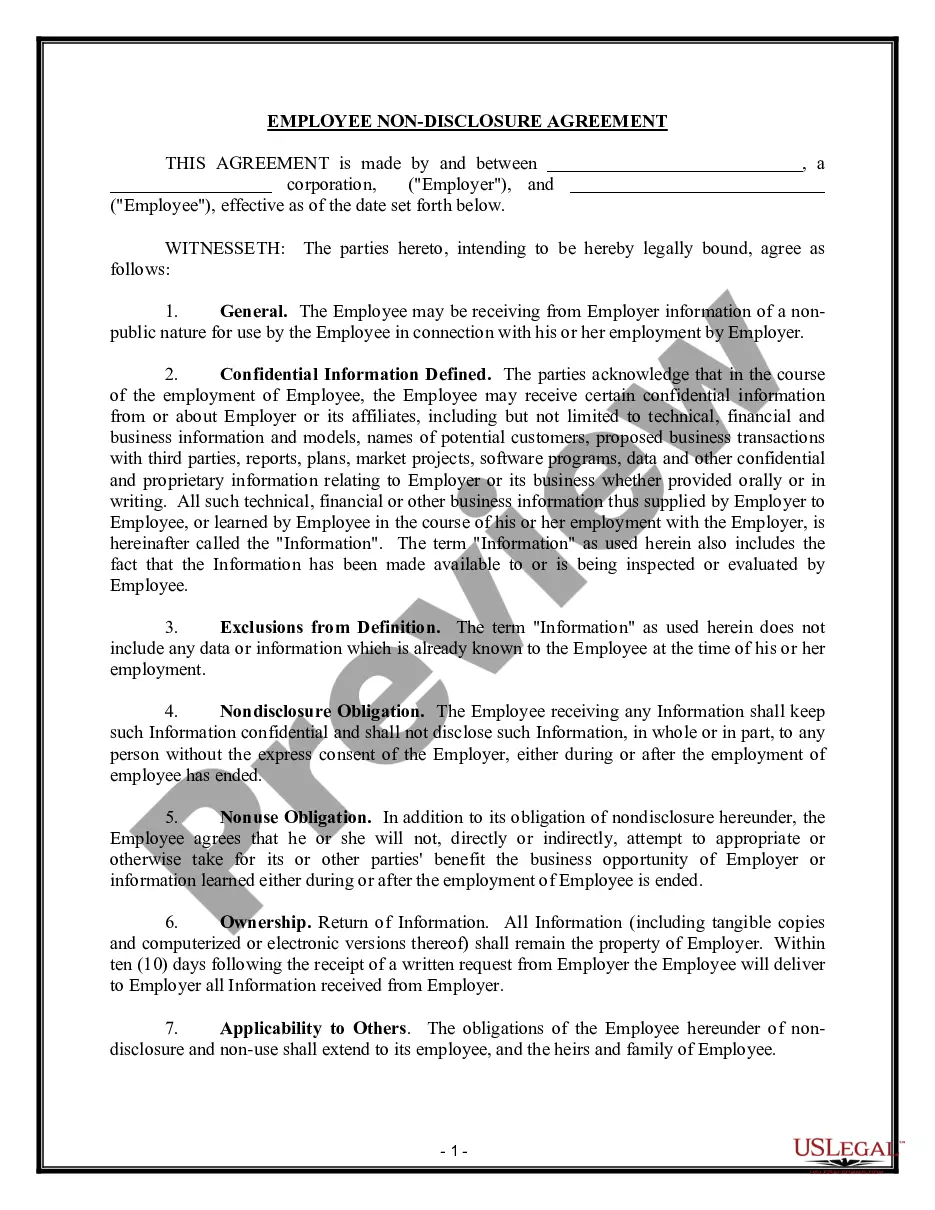
- Definitions: Clarifies essential terms such as Company, Employee, and Confidential Information.
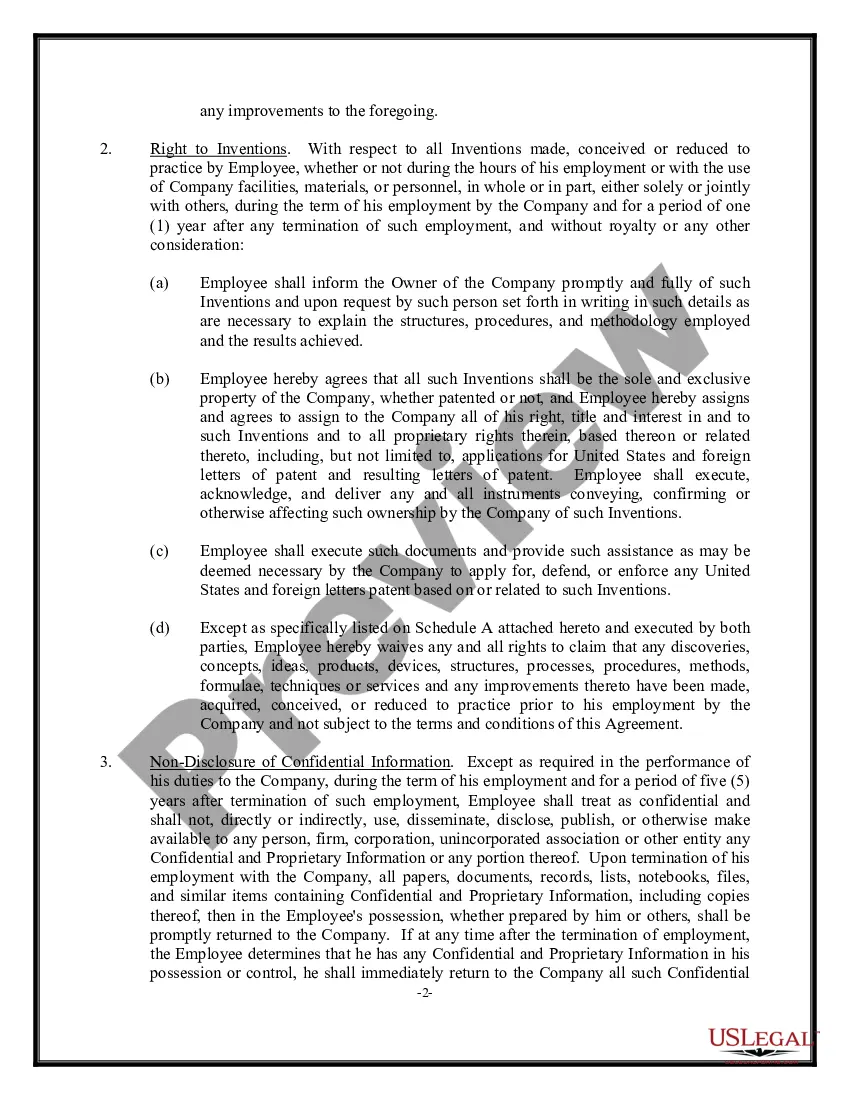
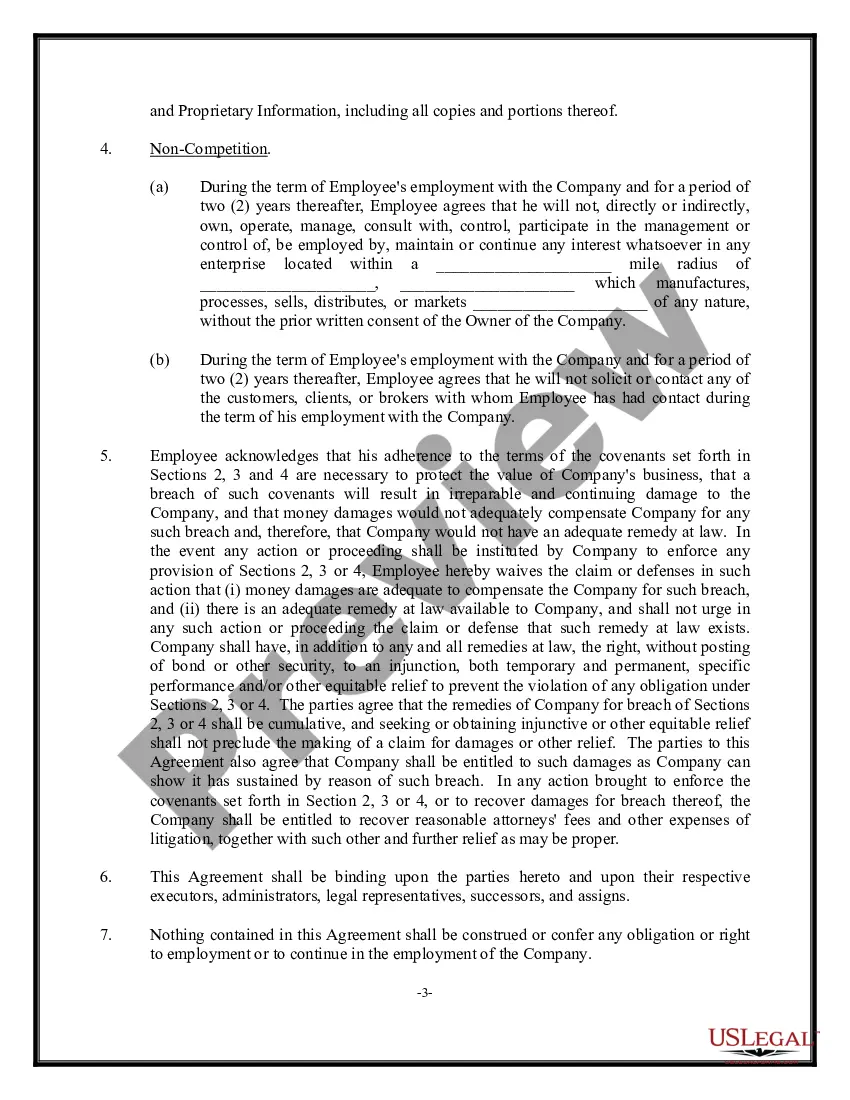
- Non-Disclosure Clause: Obligates employees to keep information confidential during and for five years after employment.
- Inventions Clause: States that any inventions created by the employee during employment are the property of the company.
- Non-Competition Agreement: Restricts the employee from engaging in similar business activities within a defined geographic area for two years post-employment.
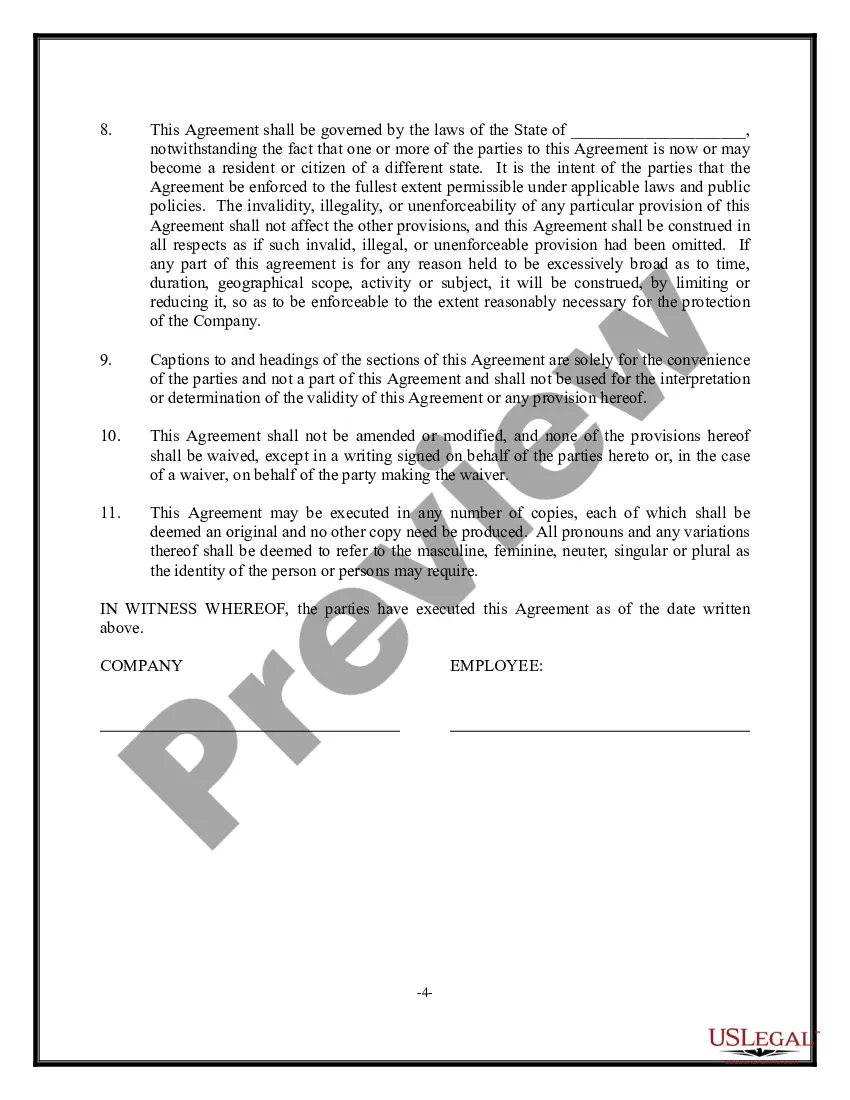
- Legal Framework: Establishes the governing law for the agreement.
Common use cases
This agreement should be used when hiring an employee who will have access to sensitive business information, proprietary technology, or trade secrets. It is also essential when you want to protect the company's intellectual property and confidential client information, ensuring employees understand their responsibilities regarding confidentiality during and after their tenure with the company.
Who this form is for
- Employers looking to protect their proprietary information.
- Businesses in competitive industries wanting to secure their client lists and trade secrets.
- Companies that develop innovative products or services requiring protection of intellectual property.
- Organizations that provide employees with confidential business strategies or financial information.
Steps to complete this form
- Identify the parties involved, including the employee's name and the company's name.
- Specify the definitions of key terms to ensure clarity regarding the confidentiality obligations.
- Detail the non-disclosure and non-competition terms, including duration and geographical scope.
- Confirm the acknowledgment of all inventions created during employment and their ownership to the company.
- Both parties should sign and date the agreement to make it legally binding.
Notarization guidance
This form does not typically require notarization unless specified by local law.
Get your form ready online
Our built-in tools help you complete, sign, share, and store your documents in one place.
Make edits, fill in missing information, and update formatting in US Legal Forms—just like you would in MS Word.
Download a copy, print it, send it by email, or mail it via USPS—whatever works best for your next step.
Sign and collect signatures with our SignNow integration. Send to multiple recipients, set reminders, and more. Go Premium to unlock E-Sign.
If this form requires notarization, complete it online through a secure video call—no need to meet a notary in person or wait for an appointment.
We protect your documents and personal data by following strict security and privacy standards.

Make edits, fill in missing information, and update formatting in US Legal Forms—just like you would in MS Word.

Download a copy, print it, send it by email, or mail it via USPS—whatever works best for your next step.

Sign and collect signatures with our SignNow integration. Send to multiple recipients, set reminders, and more. Go Premium to unlock E-Sign.

If this form requires notarization, complete it online through a secure video call—no need to meet a notary in person or wait for an appointment.

We protect your documents and personal data by following strict security and privacy standards.
Common mistakes
- Not clearly defining what constitutes confidential information.
- Failing to specify the duration of the non-compete clause.
- Omitting signatures, which makes the agreement unenforceable.
- Neglecting to review state-specific laws before finalizing the agreement.
Benefits of using this form online
- Easy access to a professionally drafted document that complies with legal standards.
- Ability to customize the agreement for specific company needs, including additional clauses or adjustments.
- Immediate download and use of the form, saving time and legal fees.
- Peace of mind knowing the document has been created by licensed attorneys.
Legal use & context:
- Non-disclosure agreements are enforceable in most jurisdictions if they are reasonable and protect legitimate business interests.
- Some states have specific rules governing the enforceability of non-compete clauses, especially regarding geographical scope and duration.
- Confidentiality agreements may be scrutinized for fairness if challenged in court, particularly by employees after employment termination.
Summary of main points
- The Employee Confidentiality Agreement safeguards proprietary business information.
- It includes clauses that detail the definitions of confidential information and the limitations placed on the employee.
- Using an online form streamlines the creation process and ensures legal integrity.
Glossary of terms used in this form
- Confidential Information: Any sensitive business data that is not publicly known and which the employee is required to keep secret.
- Non-Competition Clause: A provision preventing an employee from working for competitors for a specified time and within a specific area after leaving the company.
- Proprietary Rights: Legal rights that protect the ownership of inventions, ideas, and business secrets.
Looking for another form?


Form popularity
FAQ
Confidentiality agreements are generally enforceable in California as long as they meet specific legal standards. They must protect legitimate business interests and not impose undue restrictions on the employee's ability to work. Including clear definitions and reasonable terms in your California Employee Confidentiality Agreement will enhance its enforceability. Using platforms like USLegalForms can simplify the creation of these agreements.
Yes, Non-Disclosure Agreements (NDAs) can hold up in court in California if they are properly drafted and executed. Courts typically enforce these agreements when they are reasonable in scope and duration, and protect legitimate business interests. However, it's essential to ensure that the terms are clear, fair, and compliant with state laws. A well-structured California Employee Confidentiality Agreement is key to ensuring enforceability.
An example of a California Employee Confidentiality Agreement might include provisions that prevent employees from sharing proprietary information, like trade secrets or client lists, with outside parties. The agreement should specify what constitutes confidential information and any consequences for breaches. Such an agreement fosters a trusting environment, allowing businesses to safeguard their sensitive information effectively.
To fill out a California Employee Confidentiality Agreement, start by including the date and the names of the parties involved. Clearly define the confidential information to be protected, and outline the obligations of both the employer and employee regarding that information. Ensure you specify the duration of the confidentiality obligations. Finally, include signature lines for both parties to acknowledge and accept the terms.
An example of a confidentiality agreement would include sections on the definition of confidential information, obligations of the receiving party, and a clause on the duration of confidentiality. Generally, such agreements outline that the receiving party cannot disclose the information to outsiders. A robust California Employee Confidentiality Agreement serves to protect your trade secrets and sensitive data.
To fill a confidentiality agreement, start by providing the names of the parties and a brief description of the confidential information. Ensure that you explicitly state the obligations of each party regarding the protection of that information. A well-prepared California Employee Confidentiality Agreement can help safeguard your business interests.
Filling out a confidentiality agreement involves identifying the parties involved, detailing the information to be kept confidential, and specifying the duration of the agreement. Additionally, include any exceptions to the confidentiality obligations. By clearly outlining these elements in your California Employee Confidentiality Agreement, you establish a solid legal framework.
Yes, employee confidentiality agreements are enforceable in California as long as they comply with specific legal standards. The California Employee Confidentiality Agreement must be reasonable and not restrict an employee’s right to work or seek employment. If drafted correctly, it can provide significant protection for sensitive business information.
To fill out an NDA example, start by clearly defining the parties involved and the specific information considered confidential. Next, outline the terms of the agreement, including the duration of confidentiality and any exclusions. By following these steps in your California Employee Confidentiality Agreement, you ensure clarity and enforceability.
A confidentiality disclaimer typically states that the information shared is confidential and should not be disclosed to outsiders without permission. For instance, your California Employee Confidentiality Agreement might include a statement warning that any unauthorized sharing of proprietary information could result in legal action. This adds a layer of protection for both parties involved.