California Warranty Deed for Corporation
Overview of this form
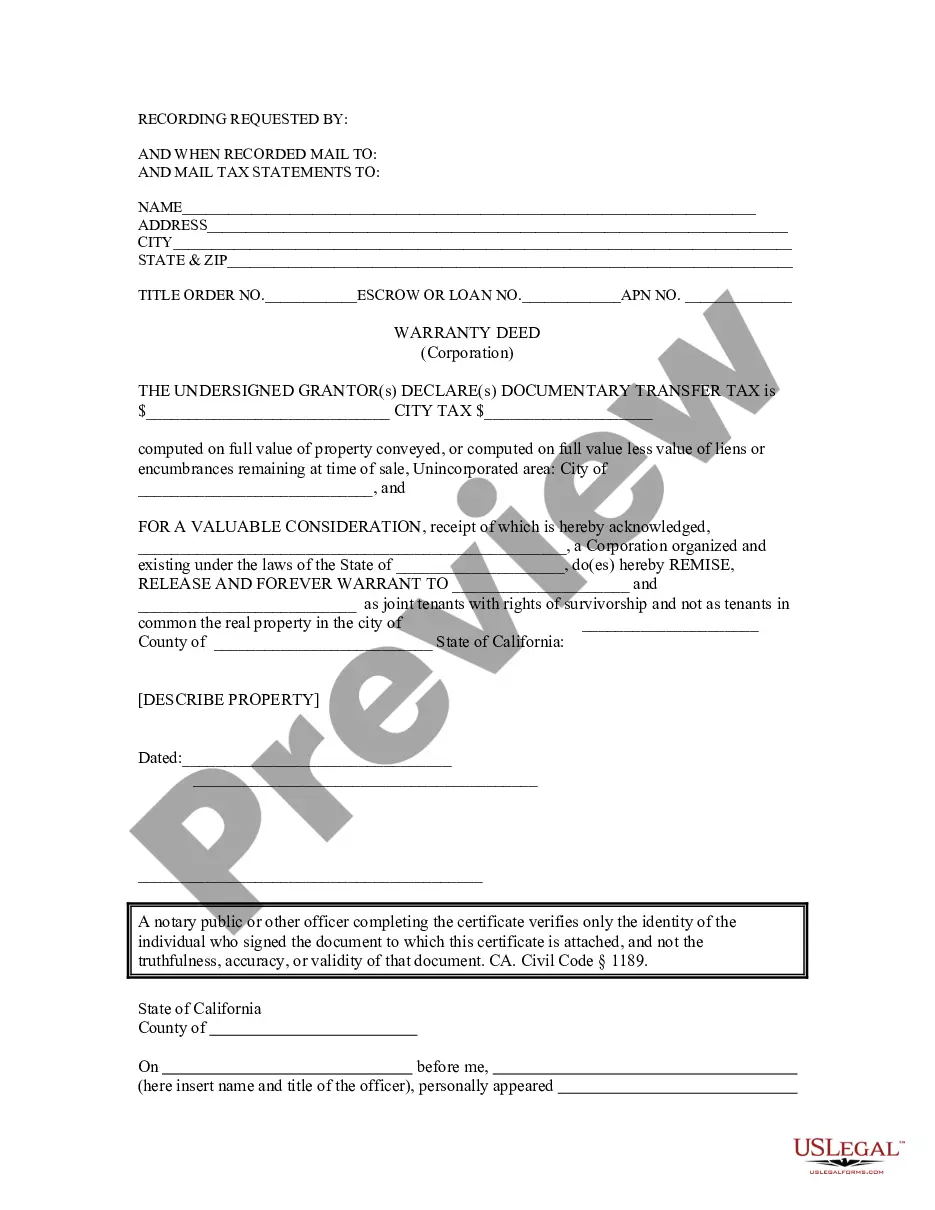
The Warranty Deed for Corporation is a legal document that transfers property ownership from a corporation to an individual or another entity. This form assures the grantee that the title to the property is being conveyed without any claims from third parties, making it distinct from other forms of deeds that may not offer such warranties.
Key parts of this document
- Identification of the grantor corporation and grantee(s)
- Property description, including address and legal identifiers
- Declarations regarding the documentary transfer tax
- Acknowledgment of receipt of consideration
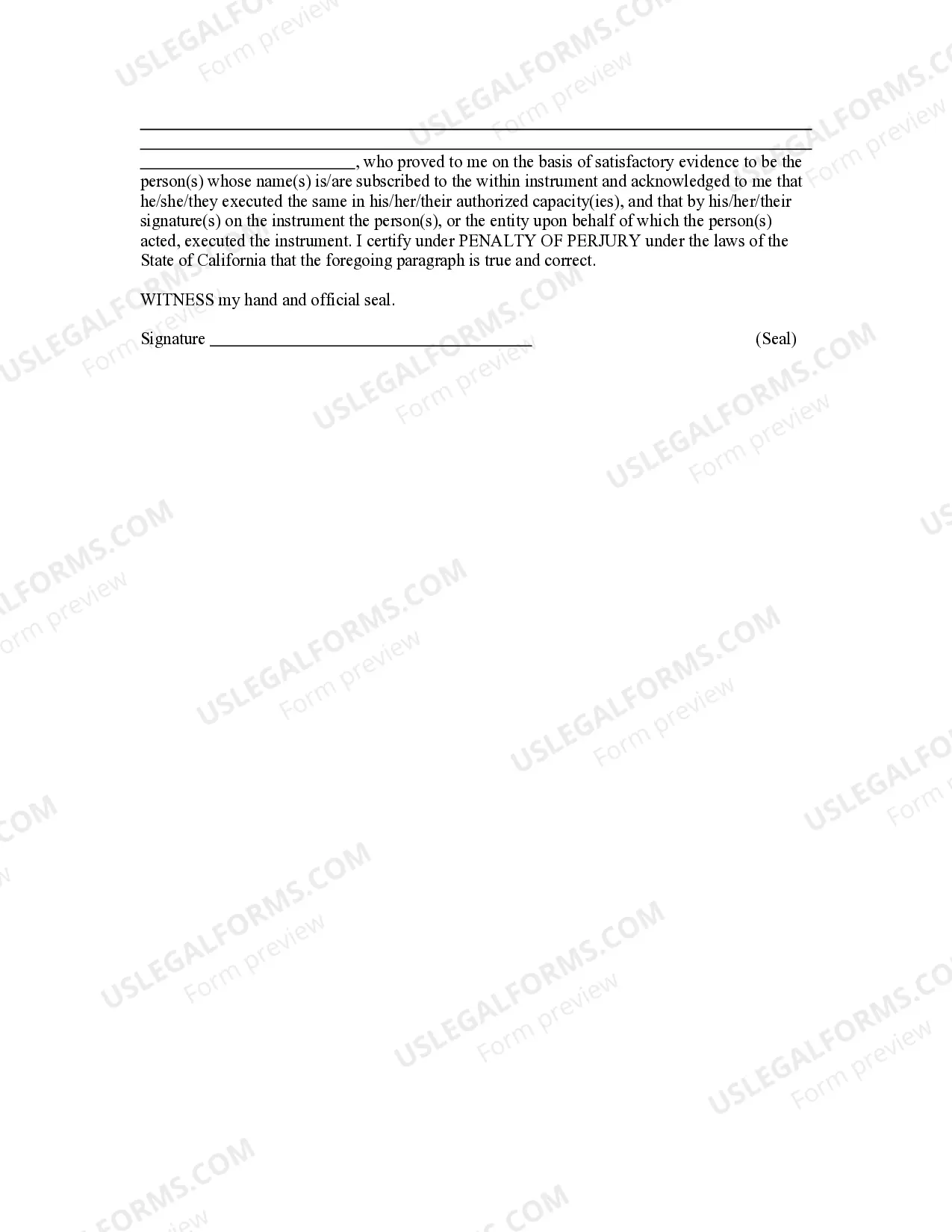
- Execution certificate with notarization section


When to use this form
This warranty deed is used when a corporation is transferring real property to a grantee. It is essential in transactions where the grantee requires assurance of good title and protection against future claims to the property.
Who needs this form
- Corporations transferring real estate
- Individuals receiving property from a corporation
- Real estate professionals involved in corporate property transactions
Instructions for completing this form
- Identify the parties involved: the grantor corporation and the grantee(s).
- Clearly specify the property being transferred, including its legal description.
- Fill in the relevant tax information as required in the deed.
- Ensure that all parties acknowledge the transaction, including signatures where needed.
- Complete the notarization section to validate the deed.
Does this form need to be notarized?
This form must be notarized to be legally valid. US Legal Forms provides secure online notarization powered by Notarize, allowing you to complete the process through a verified video call.
Get your form ready online
Our built-in tools help you complete, sign, share, and store your documents in one place.
Make edits, fill in missing information, and update formatting in US Legal Forms—just like you would in MS Word.
Download a copy, print it, send it by email, or mail it via USPS—whatever works best for your next step.
Sign and collect signatures with our SignNow integration. Send to multiple recipients, set reminders, and more. Go Premium to unlock E-Sign.
If this form requires notarization, complete it online through a secure video call—no need to meet a notary in person or wait for an appointment.
We protect your documents and personal data by following strict security and privacy standards.

Make edits, fill in missing information, and update formatting in US Legal Forms—just like you would in MS Word.

Download a copy, print it, send it by email, or mail it via USPS—whatever works best for your next step.

Sign and collect signatures with our SignNow integration. Send to multiple recipients, set reminders, and more. Go Premium to unlock E-Sign.

If this form requires notarization, complete it online through a secure video call—no need to meet a notary in person or wait for an appointment.

We protect your documents and personal data by following strict security and privacy standards.
Common mistakes to avoid
- Failing to accurately describe the property
- Not including all necessary parties' signatures
- Omitting required tax information
- Neglecting the notarization step, if necessary
Benefits of completing this form online
- Convenient access to legally vetted templates
- Edit and customize forms easily to fit your needs
- Downloadable for quick implementation in property transactions
- Guidance available to help complete forms correctly
Looking for another form?


Form popularity
FAQ
Yes, you can file a California Warranty Deed for Corporation yourself. Many corporations choose to handle this task directly to save on costs, but you should ensure that all information is complete and accurate to avoid any legal issues. It helps to use resources from US Legal Forms, which offers simple guides and templates to support you in completing the deed correctly. However, if you are unsure, consulting a legal professional can be beneficial.
To file a California Warranty Deed for Corporation, start by preparing the deed document with accurate details about the property and the corporation. Next, you must sign the deed in the presence of a notary public. After notarization, file the deed at the local county recorder’s office; this ensures the legal transfer of property ownership is recorded. Using a platform like US Legal Forms can streamline this process and provide templates for your needs.
To fill out a warranty deed form, start by entering the names of the parties involved in the transaction. Next, include a comprehensive description of the property being transferred. When dealing with a California Warranty Deed for Corporation, remember to use the official corporate name, specify any relevant authority, and ensure proper notarization for legal compliance. Utilizing platforms like US Legal Forms simplifies this process with guided resources tailored for your needs.
Filling out a warranty form requires specific information about the property and the parties involved. Begin by identifying the grantor and grantee, then provide the legal description of the property. For a California Warranty Deed for Corporation, ensure that you include the corporation's name and any file numbers or identifiers relevant to your corporation, as accuracy is essential for the validity of the deed.
A special warranty deed provides limited protection to the buyer, as it guarantees that the seller has not made any claims on the property during their ownership. This type of deed may also limit the seller's liability for issues that arose prior to their ownership. In the context of a California Warranty Deed for Corporation, it ensures that no past claims affect the corporation's ownership, making it a crucial document for corporate real estate transactions.
The most common method to transfer ownership of property is through a grant deed, which provides a straightforward conveyance process. However, in certain situations, especially with corporate transactions, a warranty deed can offer more extensive protections. Implementing a California Warranty Deed for Corporation allows corporations to safeguard their interests while simplifying the transfer of property. This ensures both parties feel secure in the ownership change.
When a corporation transfers property, the deed must be signed by an authorized officer of the corporation, such as the president or secretary. It is vital that this individual has the proper authority to execute the deed on behalf of the corporation, ensuring the transaction's legality. Properly notarizing this signature is also crucial to uphold the validity of the deed. Utilizing a California Warranty Deed for Corporation ensures all necessary legalities are observed.
A corporate warranty deed is a specific type of warranty deed used when a corporation transfers property. This deed includes assurances from the corporation that it holds clear title to the property and that it possesses the authority to sell. It provides the buyer with greater trust and reliability, essential features when handling corporate property. Employing a California Warranty Deed for Corporation aligns well with these assurances.
A corporation can own various types of property, including commercial real estate, residential properties, and even personal property. The ownership is generally held in the name of the corporation, providing liability protection to its owners. In property transactions, it's essential for a corporation to have a clearly defined ownership structure to ensure compliance with legal requirements. Executing a California Warranty Deed for Corporation can help delineate this ownership clearly.
The granting clause in a special warranty deed typically contains the phrase 'convey and warrant.' This clause confirms that the seller transfers ownership of the property to the buyer while only guaranteeing the title for the duration of their ownership. It's a way for sellers to protect themselves from liabilities that may have arisen before they owned the property. For companies, incorporating a California Warranty Deed for Corporation can enhance the level of security provided in these transfers.