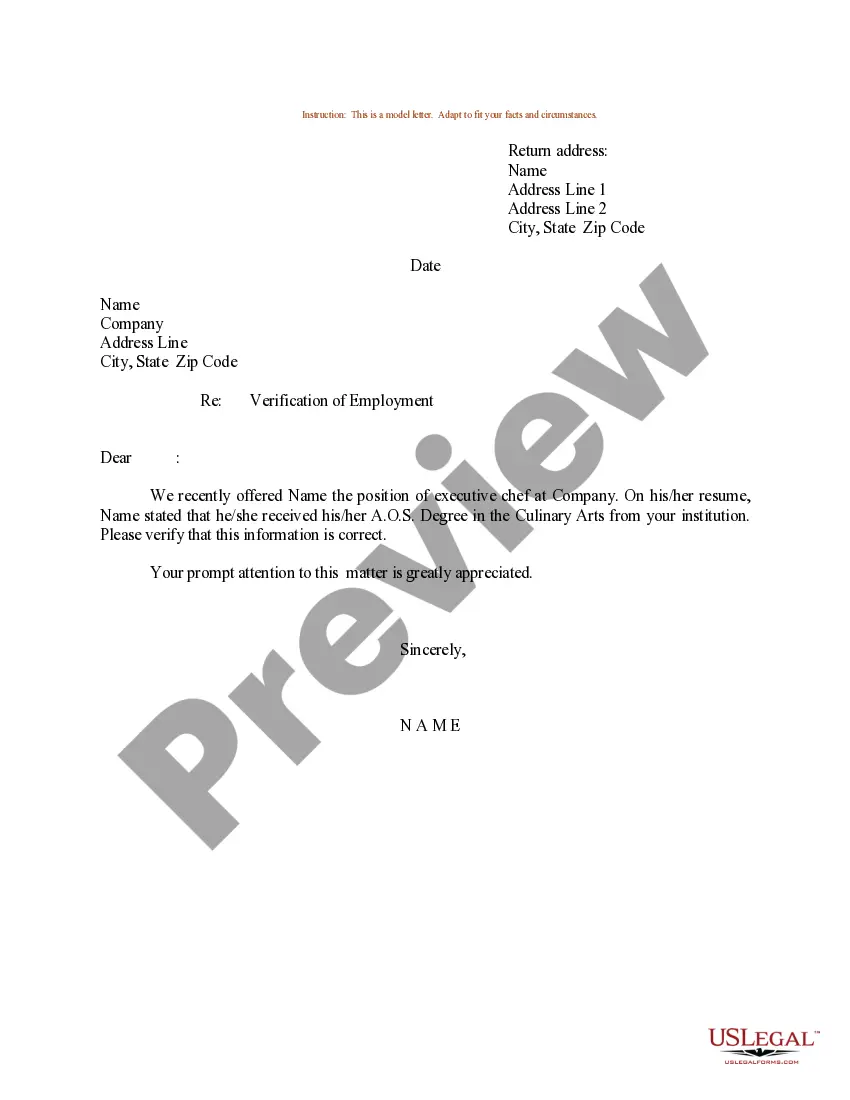
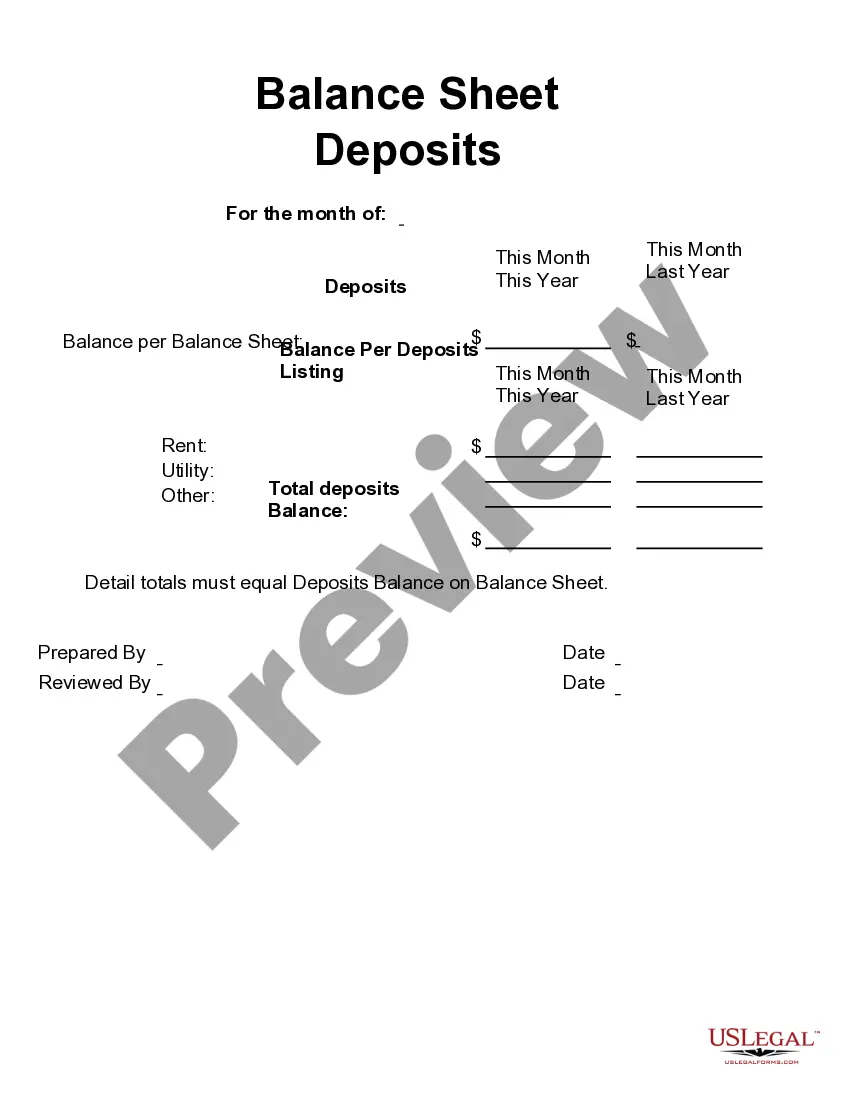
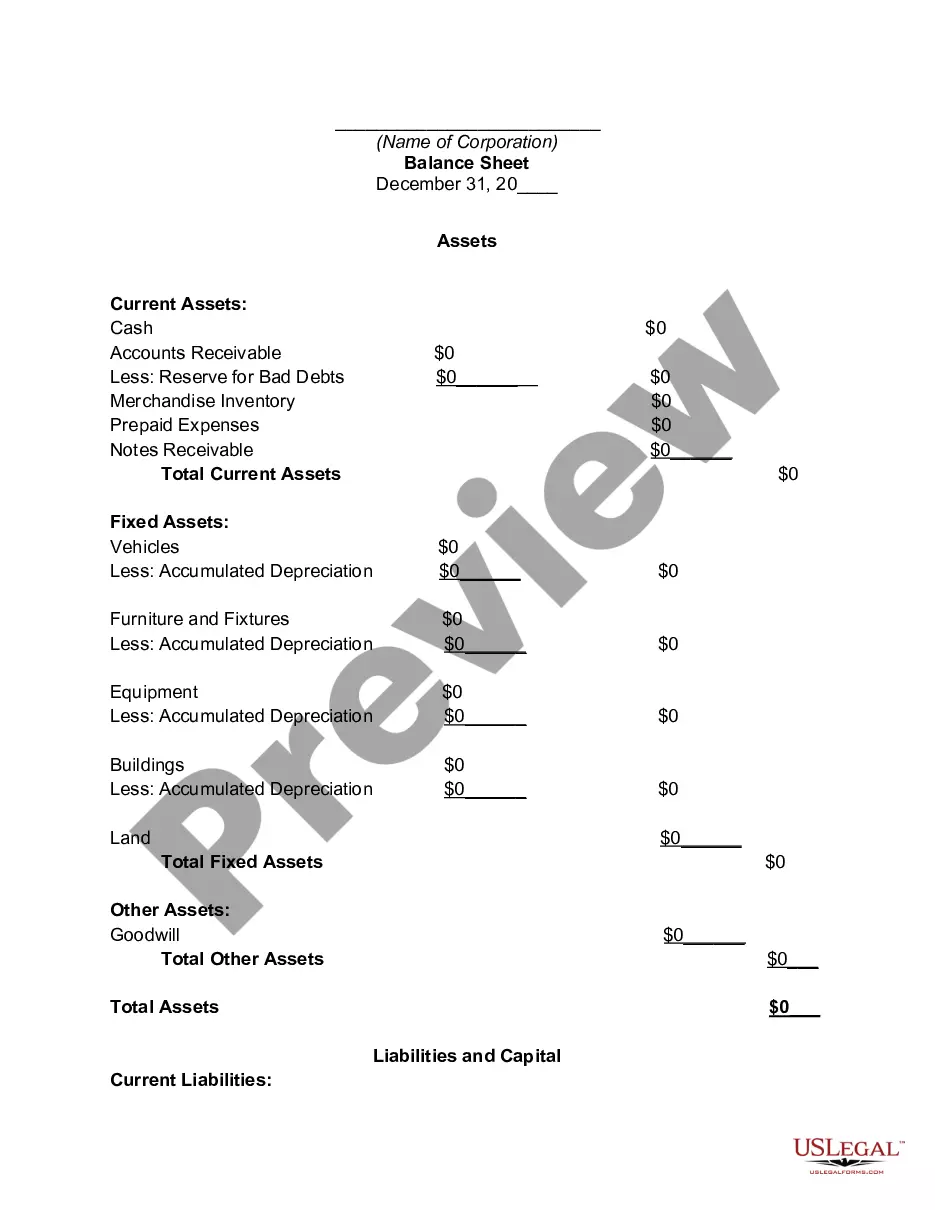
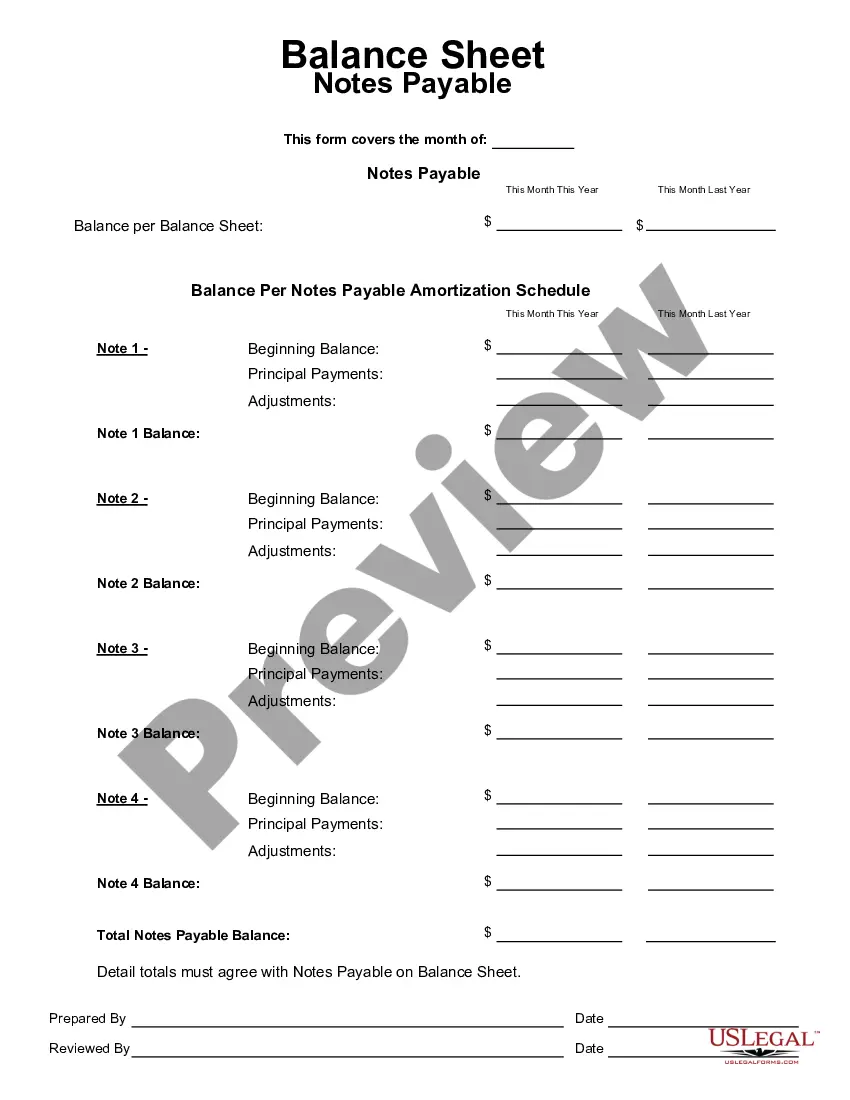
This form is a business type form that is formatted to allow you to complete the form using Adobe Acrobat or Word. The word files have been formatted to allow completion by entry into fields. Some of the forms under this category are rather simple while others are more complex. The formatting is worth the small cost.
Arizona Balance Sheet Deposits
Category:
State:
Multi-State
Control #:
US-122-AZ
Format:
Word;
PDF;
Rich Text
Instant download
Description
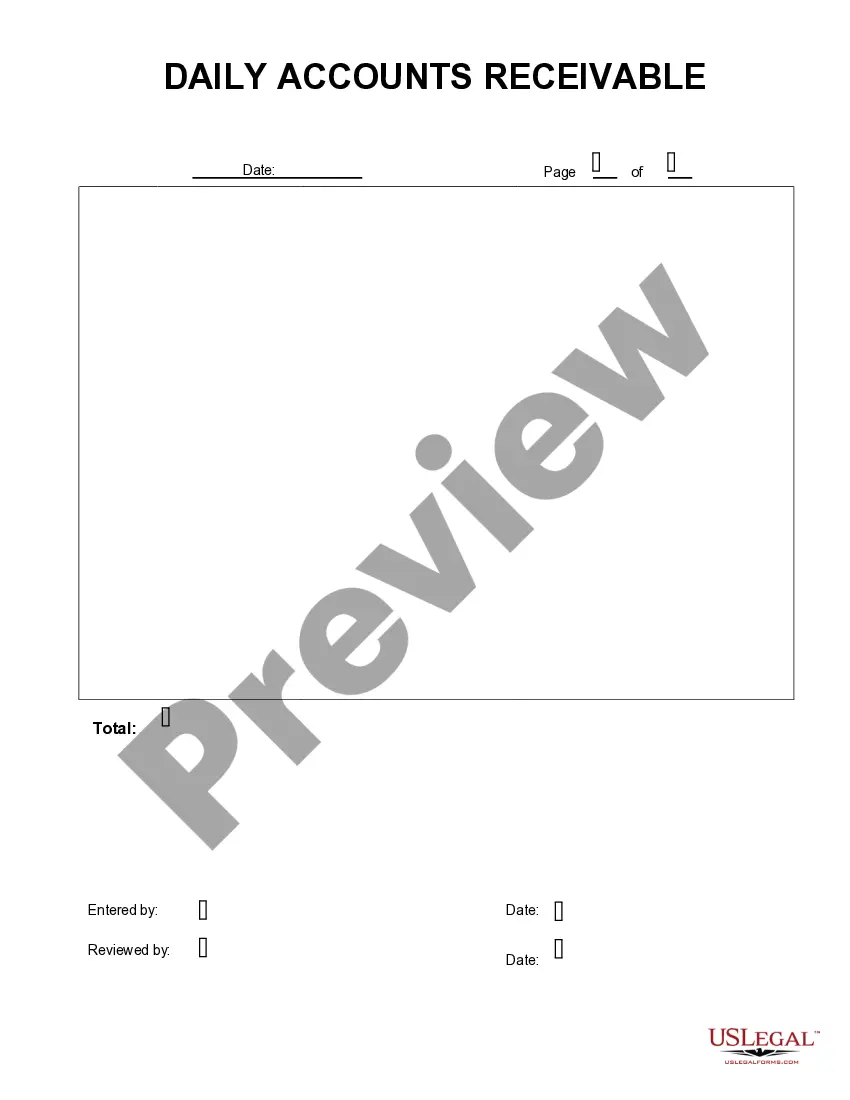
Get your form ready online
Our built-in tools help you complete, sign, share, and store your documents in one place.
Built-in online Word editor
Make edits, fill in missing information, and update formatting in US Legal Forms—just like you would in MS Word.
Export easily
Download a copy, print it, send it by email, or mail it via USPS—whatever works best for your next step.
E-sign your document
Sign and collect signatures with our SignNow integration. Send to multiple recipients, set reminders, and more. Go Premium to unlock E-Sign.
Notarize online 24/7
If this form requires notarization, complete it online through a secure video call—no need to meet a notary in person or wait for an appointment.
Store your document securely
We protect your documents and personal data by following strict security and privacy standards.

Make edits, fill in missing information, and update formatting in US Legal Forms—just like you would in MS Word.

Download a copy, print it, send it by email, or mail it via USPS—whatever works best for your next step.

Sign and collect signatures with our SignNow integration. Send to multiple recipients, set reminders, and more. Go Premium to unlock E-Sign.

If this form requires notarization, complete it online through a secure video call—no need to meet a notary in person or wait for an appointment.

We protect your documents and personal data by following strict security and privacy standards.
Looking for another form?



How to fill out Balance Sheet Deposits?
You might invest hours online trying to locate the legal document template that meets both state and federal regulations you require.
US Legal Forms offers a vast array of legal forms that have been evaluated by experts.
You can easily download or print the Arizona Balance Sheet Deposits from the platform.
If available, use the Preview option to examine the document template as well.
- If you already possess a US Legal Forms account, you may sign in and select the Obtain option.
- After that, you can complete, modify, print, or sign the Arizona Balance Sheet Deposits.
- Each legal document template you gain access to is yours permanently.
- To retrieve an additional copy of a purchased form, navigate to the My documents section and click the corresponding option.
- If this is your first time utilizing the US Legal Forms website, follow the straightforward instructions below.
- Firstly, ensure that you have chosen the correct document template for your preferred county/city.
- Review the form description to confirm you have selected the appropriate template.
Form popularity
FAQ
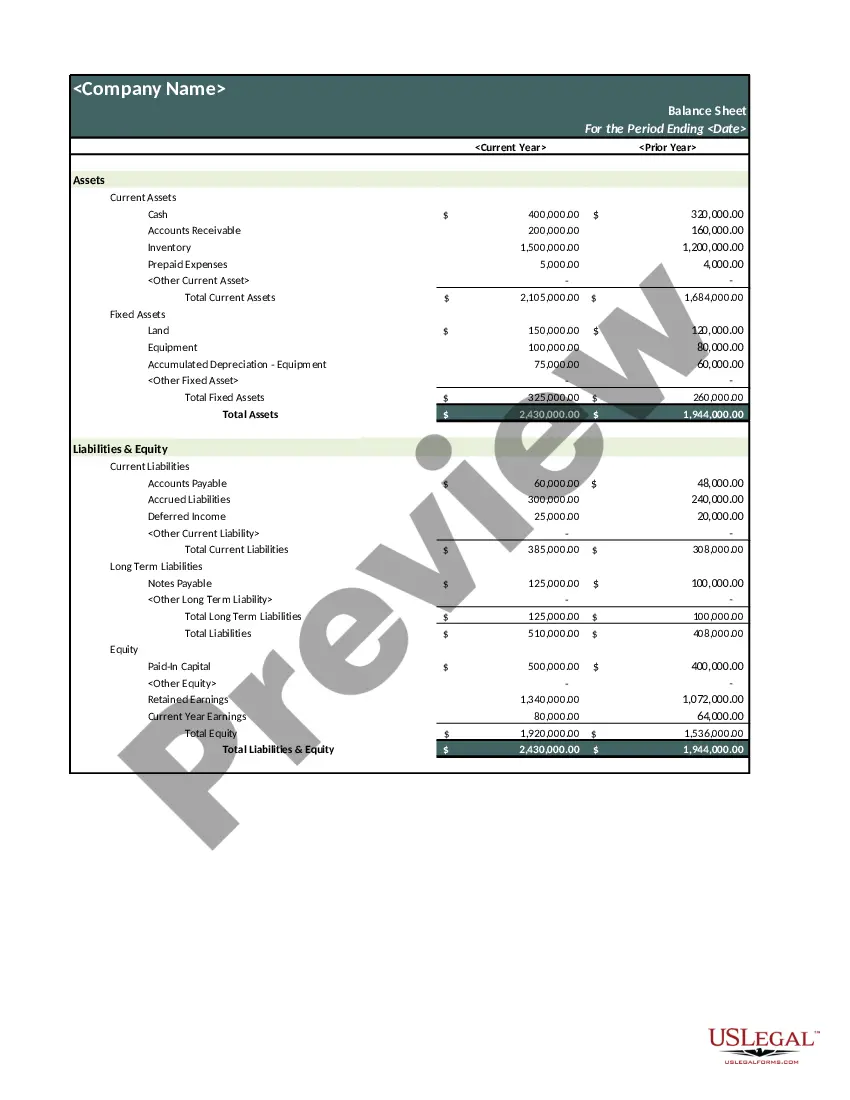
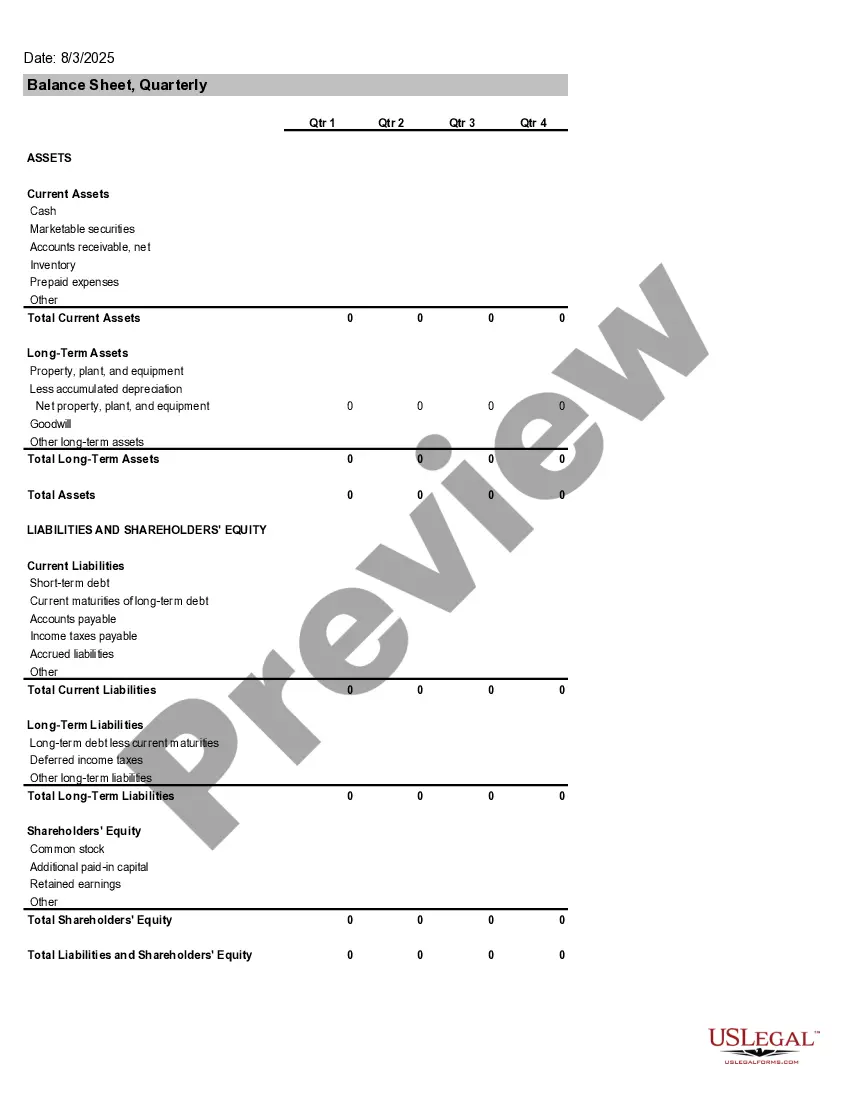
Components of a Balance SheetCash and cash equivalents. This line item includes all checking and savings accounts, as well as coins and bills kept on hand, certificates of deposit, and Treasury bills.Marketable securities.Prepaid expenses.Accounts receivable.Inventory.Fixed assets.
Cash and cash equivalents under the current assets section of a balance sheet represent the amount of money the company has in the bank, whether in the form of cash, savings bonds, certificates of deposit, or money invested in money market funds. It tells you how much money is available to the business immediately.
Deposits as AssetsWhen a business places a security deposit that is, it gives someone else money to hold against possible future charges the deposit is listed as an asset on its balance sheet.
Deposit Assets means cash, Short-Term Money Market Instruments and U.S.
Fixed deposit that is for a term of one year is termed as current asset, while fixed deposit having a term of more than one year is non-current asset. Also read: Intangible Assets.
A company's balance sheet provides a tremendous amount of insight into its solvency and business dealings. 1 A balance sheet consists of three primary sections: assets, liabilities, and equity.
The short answer is yes a term deposit is, indeed, an asset. Regardless that the funds are locked away for a fixed period, when it comes to the balance sheet, it's considered an asset.
Cash, stocks, bonds, mutual funds, and bank deposits are all are examples of financial assets.
In either case, on a bank's T-account, assets will always equal liabilities plus net worth. When bank customers deposit money into a checking account, savings account, or a certificate of deposit, the bank views these deposits as liabilities.
As an overview of the company's financial position, the balance sheet consists of three major sections: (1) the assets, which are probable future economic benefits owned or controlled by the entity; (2) the liabilities, which are probable future sacrifices of economic benefits; and (3) the owners' equity, calculated as