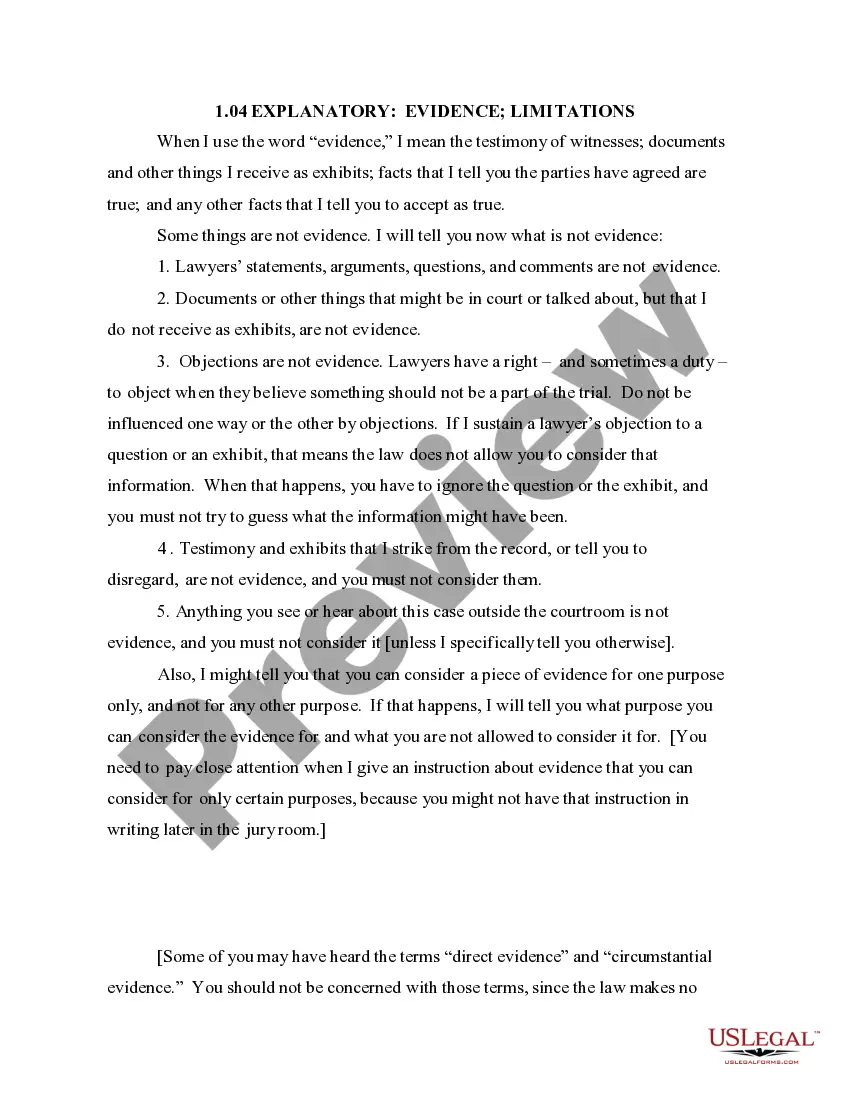
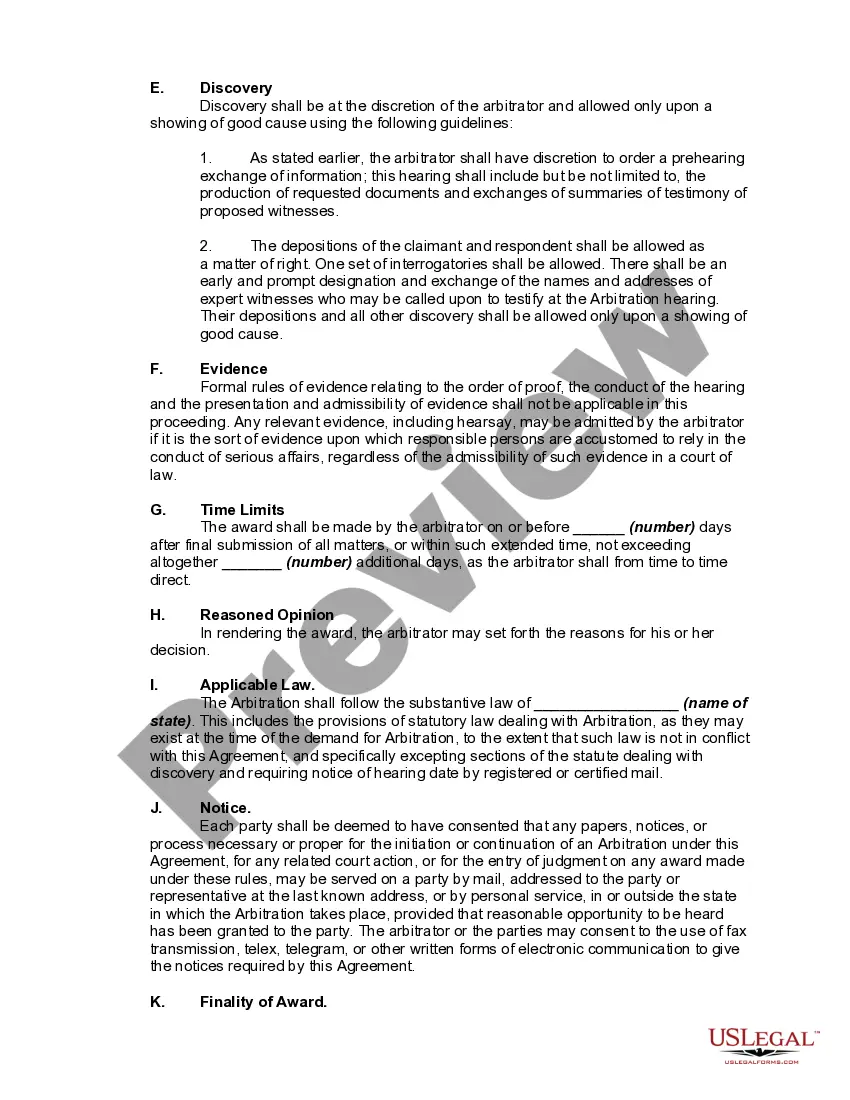
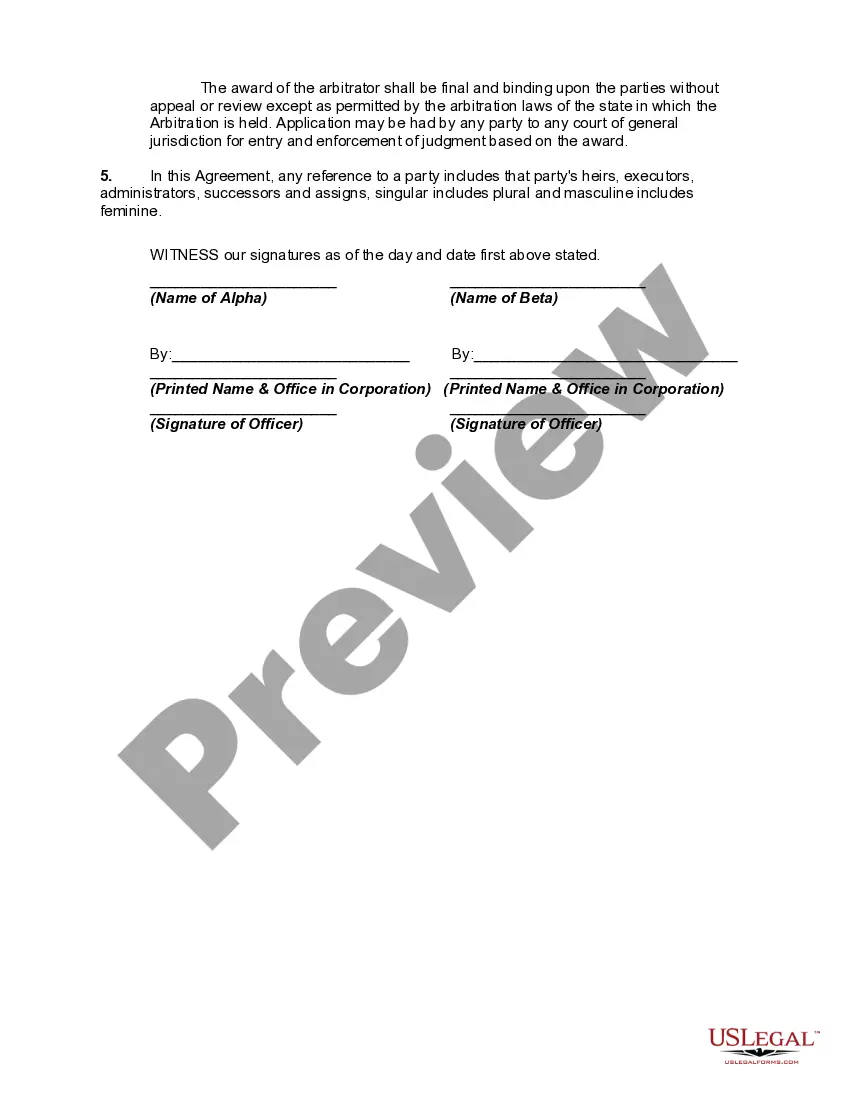
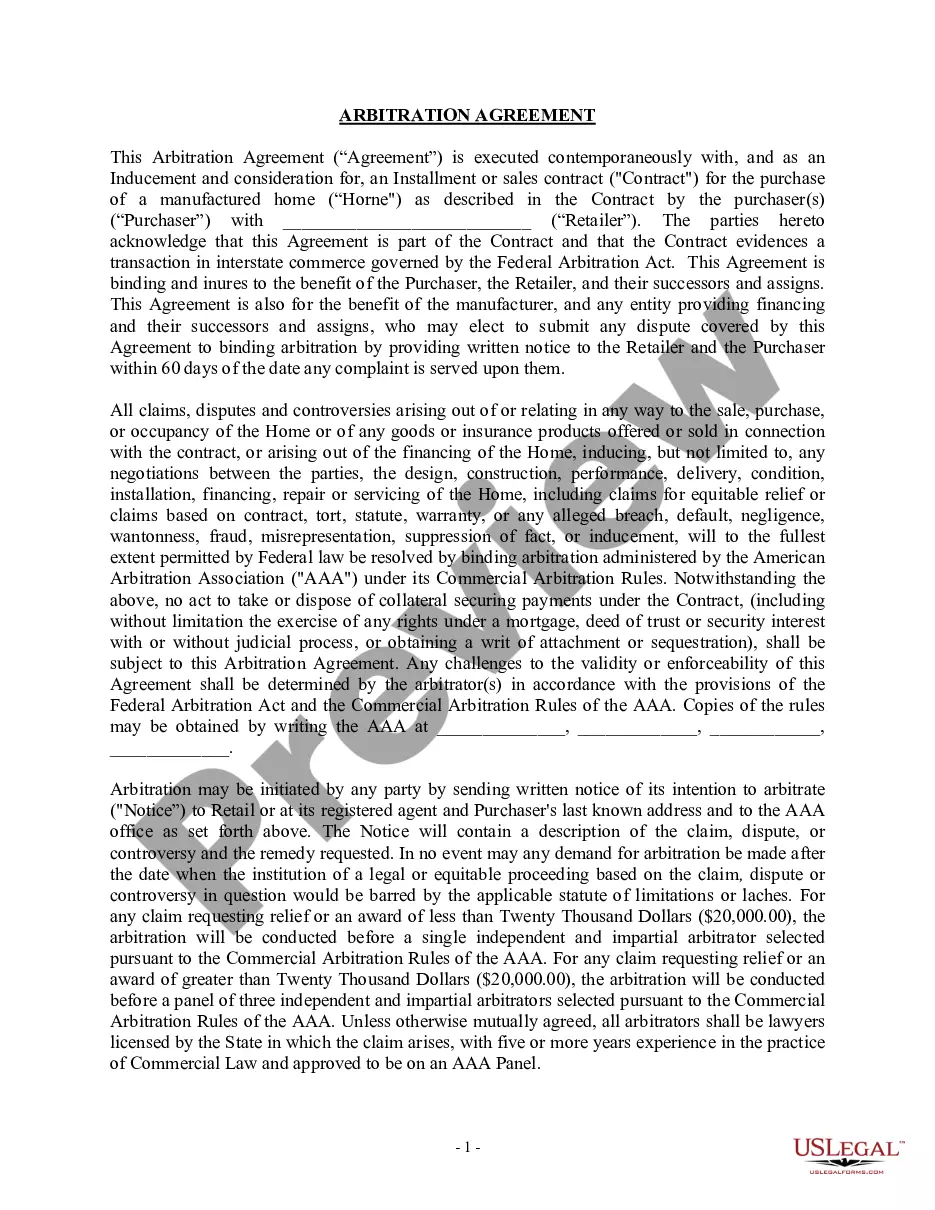
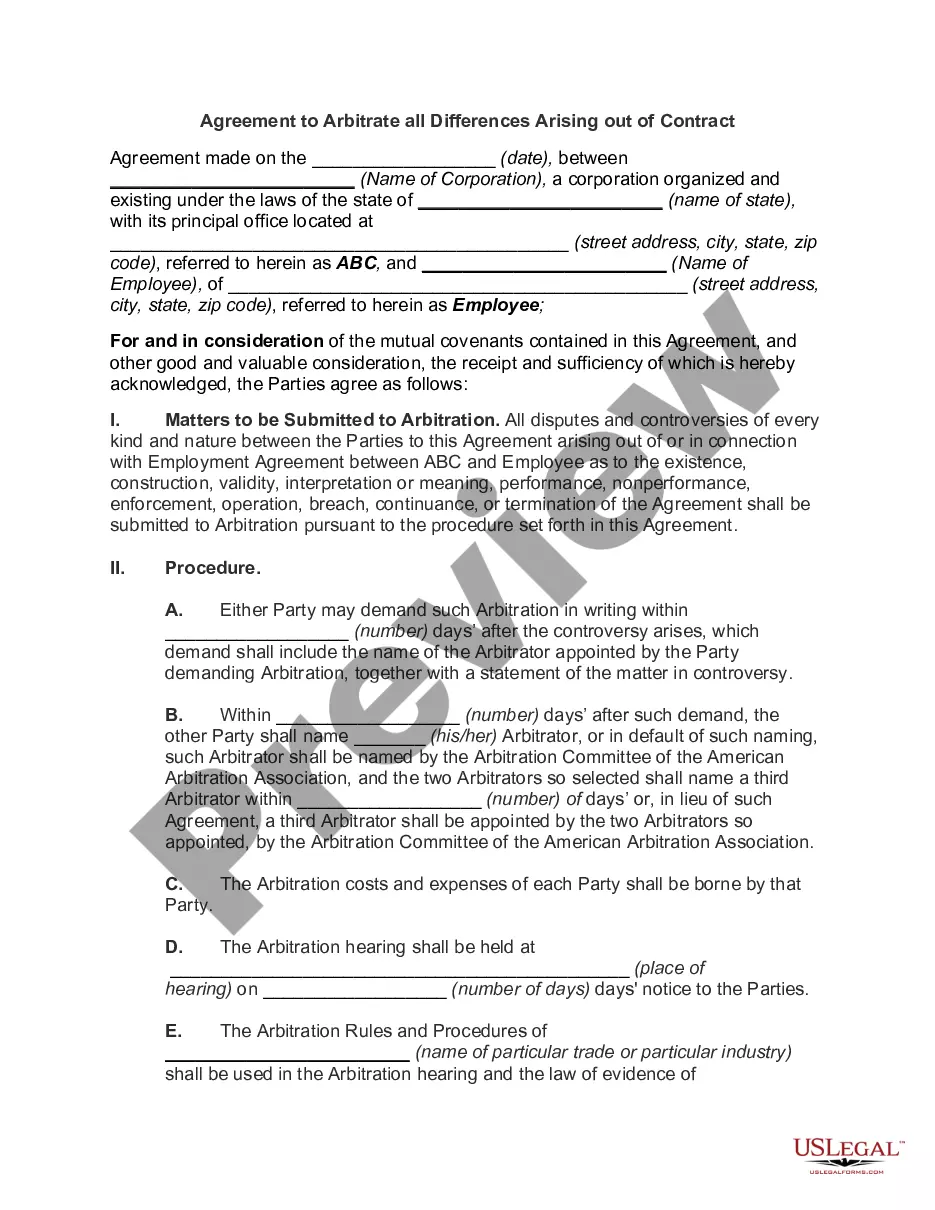
Arbitration is an alternative means of settling a dispute by impartial persons without proceeding to a court trial. It is sometimes preferred as a means of settling a matter in order to avoid the expense, delay, and acrimony of litigation. Discovery is with the discretion of the Arbitrator and there are simplified rules of evidence in arbitration.
Mediation is a non-adversarial method of alternative dispute resolution (ADR) in which a neutral third party helps resolve a dispute. The mediator does not have the power to render a decision on the matter or order an outcome. If a satisfactory resolution cannot be reached, the parties can pursue a lawsuit or arbitration.
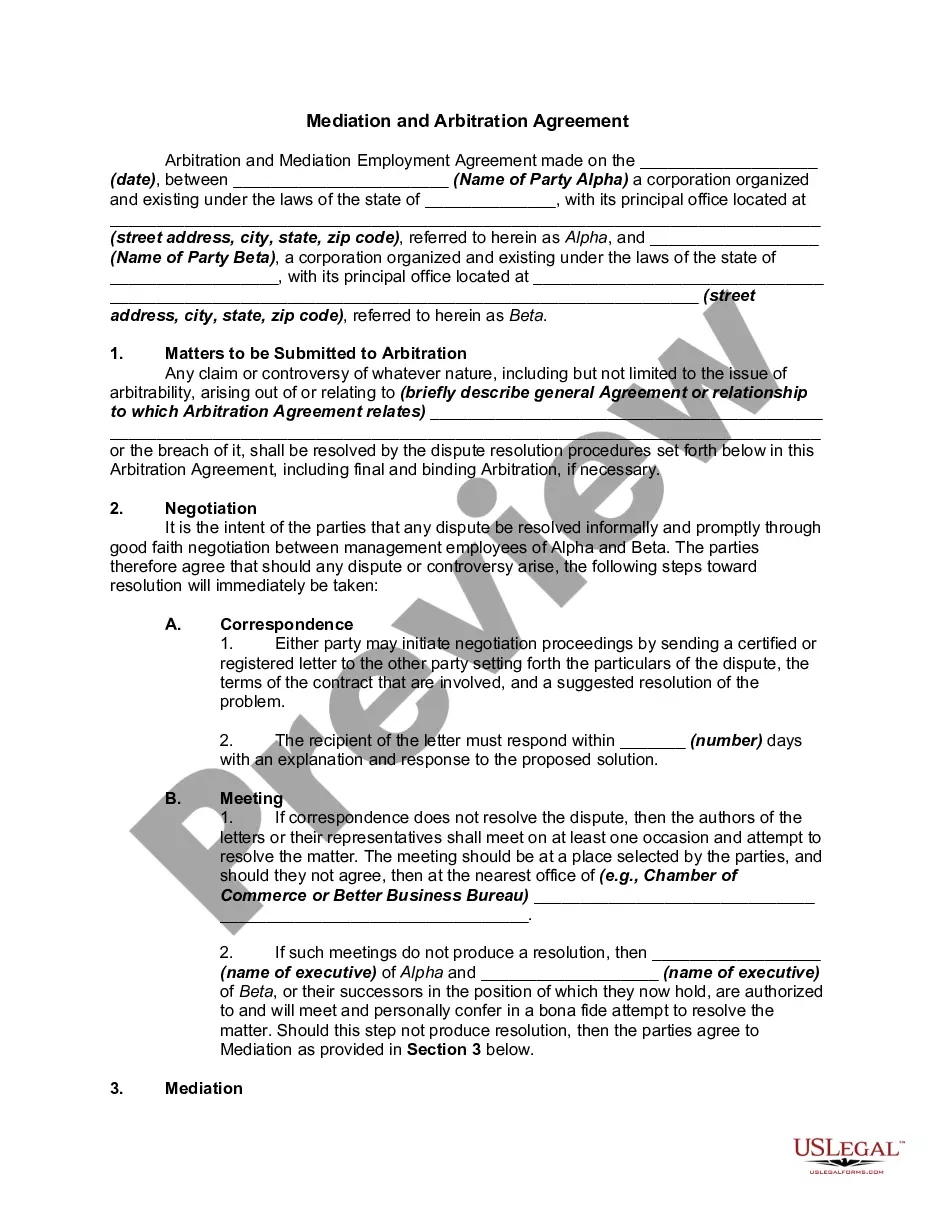
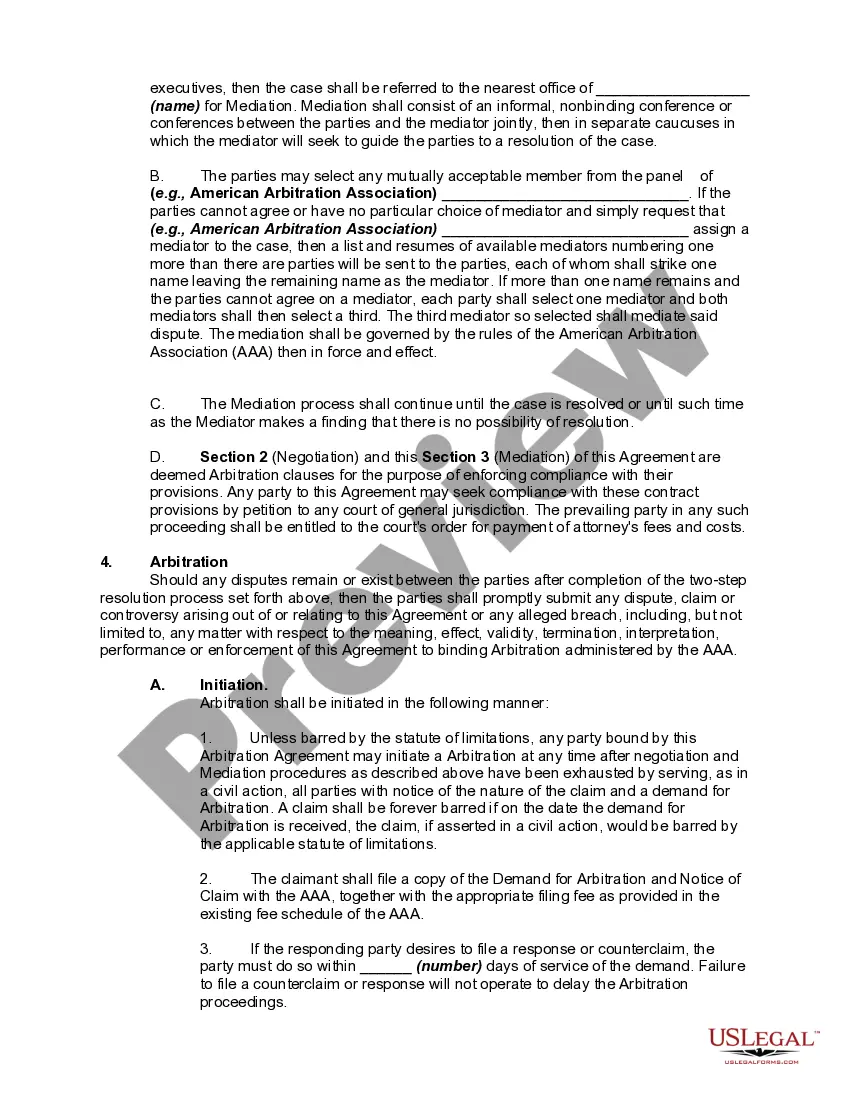
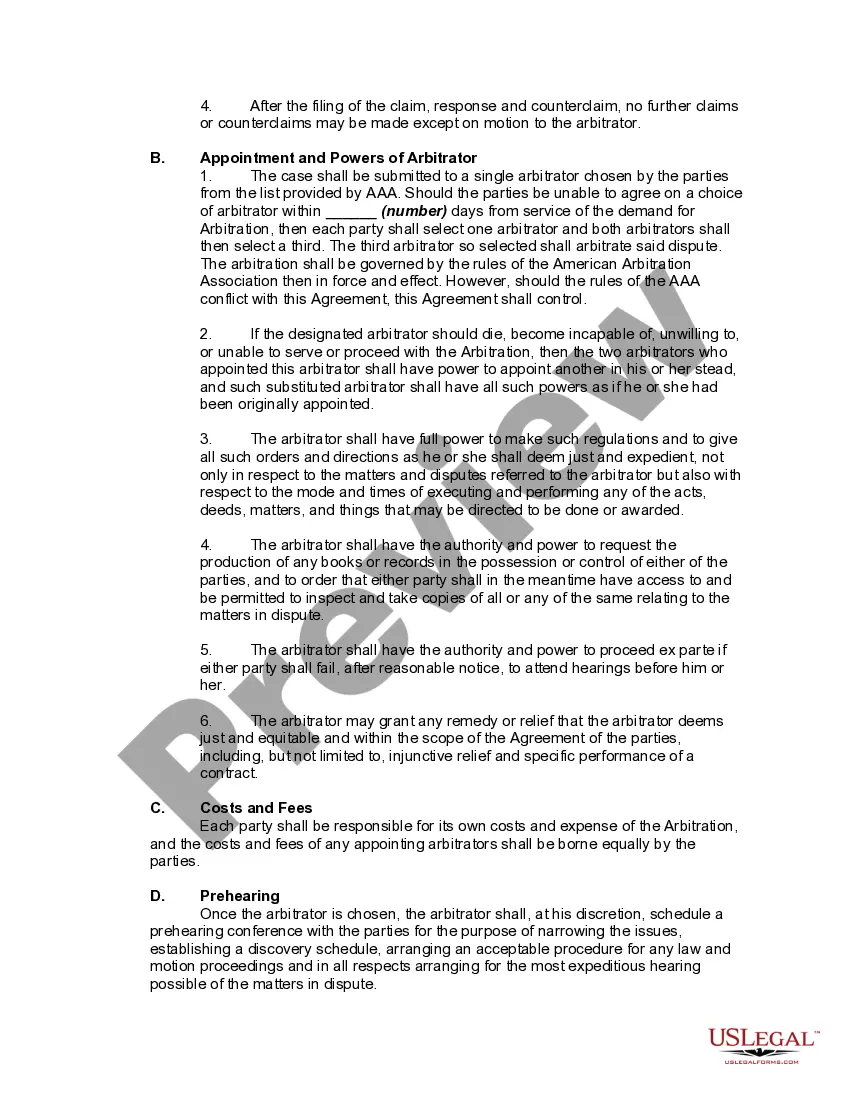
This form provides for negotiation, then mediation if the negotiation fails to resolve the issues. If both negotiation and mediation fail to resolve the issues, the parties arbitrate the dispute.
Arizona Mediation and Arbitration Agreement
Category:
State:
Multi-State
Control #:
US-02980BG
Format:
Word;
Rich Text
Instant download
Description
Free preview



Get your form ready online
Our built-in tools help you complete, sign, share, and store your documents in one place.
Built-in online Word editor
Make edits, fill in missing information, and update formatting in US Legal Forms—just like you would in MS Word.
Export easily
Download a copy, print it, send it by email, or mail it via USPS—whatever works best for your next step.
E-sign your document
Sign and collect signatures with our SignNow integration. Send to multiple recipients, set reminders, and more. Go Premium to unlock E-Sign.
Notarize online 24/7
If this form requires notarization, complete it online through a secure video call—no need to meet a notary in person or wait for an appointment.
Store your document securely
We protect your documents and personal data by following strict security and privacy standards.

Make edits, fill in missing information, and update formatting in US Legal Forms—just like you would in MS Word.

Download a copy, print it, send it by email, or mail it via USPS—whatever works best for your next step.

Sign and collect signatures with our SignNow integration. Send to multiple recipients, set reminders, and more. Go Premium to unlock E-Sign.

If this form requires notarization, complete it online through a secure video call—no need to meet a notary in person or wait for an appointment.

We protect your documents and personal data by following strict security and privacy standards.
Looking for another form?



How to fill out Mediation And Arbitration Agreement?
If you desire to obtain, access, or generate sanctioned document templates, utilize US Legal Forms, the largest selection of legal documents available online.
Leverage the website's user-friendly and straightforward search to locate the forms you need.
A range of templates for business and personal purposes are categorized by type and state, or keywords.
Step 4. Once you have found the form you need, click the Purchase now button.
Step 5. Complete the transaction. You can use your credit card or PayPal account to finalize the transaction.
- Use US Legal Forms to obtain the Arizona Mediation and Arbitration Agreement in just a few clicks.
- If you are already a US Legal Forms user, sign in to your account and click on the Download button to locate the Arizona Mediation and Arbitration Agreement.
- You can also access forms you previously saved in the My documents tab of your account.
- If you are using US Legal Forms for the first time, follow the steps below.
- Step 1. Ensure you have selected the form for your appropriate city/state.
- Step 2. Use the Preview option to review the form's details. Don't forget to go through the information.
- Step 3. If you are not satisfied with the form, use the Search field at the top of the screen to find alternative versions of the legal form format.
Form popularity
FAQ
In the context of the Arizona Mediation and Arbitration Agreement, mediation typically comes first. This process allows parties to discuss their differences with the help of a neutral mediator, aiming for a mutually acceptable resolution. If mediation fails to resolve the dispute, arbitration may follow as a more formal process, where an arbitrator makes a binding decision. Understanding the sequence can help you navigate your options effectively.
In some instances, you may have the right to opt out of forced arbitration, especially if the agreement allows for such an option. Reviewing your Arizona Mediation and Arbitration Agreement carefully is essential. If opting out is not clearly stated, consider discussing your concerns with a legal professional who can guide you on your rights and potential next steps. Staying informed can help you make the best decision.
If you don't agree with the arbitration process outlined in an Arizona Mediation and Arbitration Agreement, you may opt to pursue other legal routes. However, this could result in lengthy and costly court battles. Understanding the implications of your choices is crucial. Engaging with a legal expert can help you navigate your options effectively.
You can refuse to participate in arbitration, but doing so may have consequences. If you have signed an Arizona Mediation and Arbitration Agreement, you may be legally bound to comply with its terms. Ignoring the agreement might lead to a default judgment in favor of the other party. It's important to consider your options and seek legal advice if needed.
You may have the option to decline an arbitration agreement, especially if it feels unfair or is part of a contract you haven't fully agreed to. While the Arizona Mediation and Arbitration Agreement is often presented as a standard practice, it's important to review the terms carefully. If you feel uncomfortable, speak with a knowledgeable attorney who can guide you through the process. Understanding your rights can empower you to make an informed decision.
Yes, you can refuse to agree to mandatory arbitration under certain circumstances. When faced with an Arizona Mediation and Arbitration Agreement, you may negotiate terms or seek alternatives. It's essential to understand your rights before signing any document. Consulting with a legal professional can help clarify your options.
To draft an arbitration agreement, you should follow a structured approach to ensure it is comprehensive and clear. Begin by defining the terms of arbitration and the specific circumstances under which it applies. Be sure to include clauses about how arbitrators will be selected, the venue for arbitration, and any applicable rules of procedure. By carefully crafting your Arizona Mediation and Arbitration Agreement, you enhance its effectiveness and enforceability.
Writing an arbitration agreement involves several key components to ensure its effectiveness under Arizona law. Start with the title, specifying it as an Arizona Mediation and Arbitration Agreement. Clearly state the parties involved, the scope of the agreement, and the rules that will govern the arbitration process. By including these details, you create a strong foundation for resolving disputes peacefully.
To write an arbitration statement, first, clearly outline the nature of the dispute you wish to resolve under an Arizona Mediation and Arbitration Agreement. Include essential details such as parties involved, key facts, and any relevant documentation. Additionally, specify your proposed resolution and the reasons supporting your request. A well-structured statement sets the stage for an effective arbitration process.
Yes, arbitration agreements are generally enforceable in Arizona, provided they comply with state and federal laws. Courts respect the intent of parties to settle disputes outside of litigation, making these agreements a practical choice for many. However, specific conditions must be met, such as mutual consent and clarity of terms. Therefore, having a well-drafted Arizona Mediation and Arbitration Agreement is crucial for enforceability.