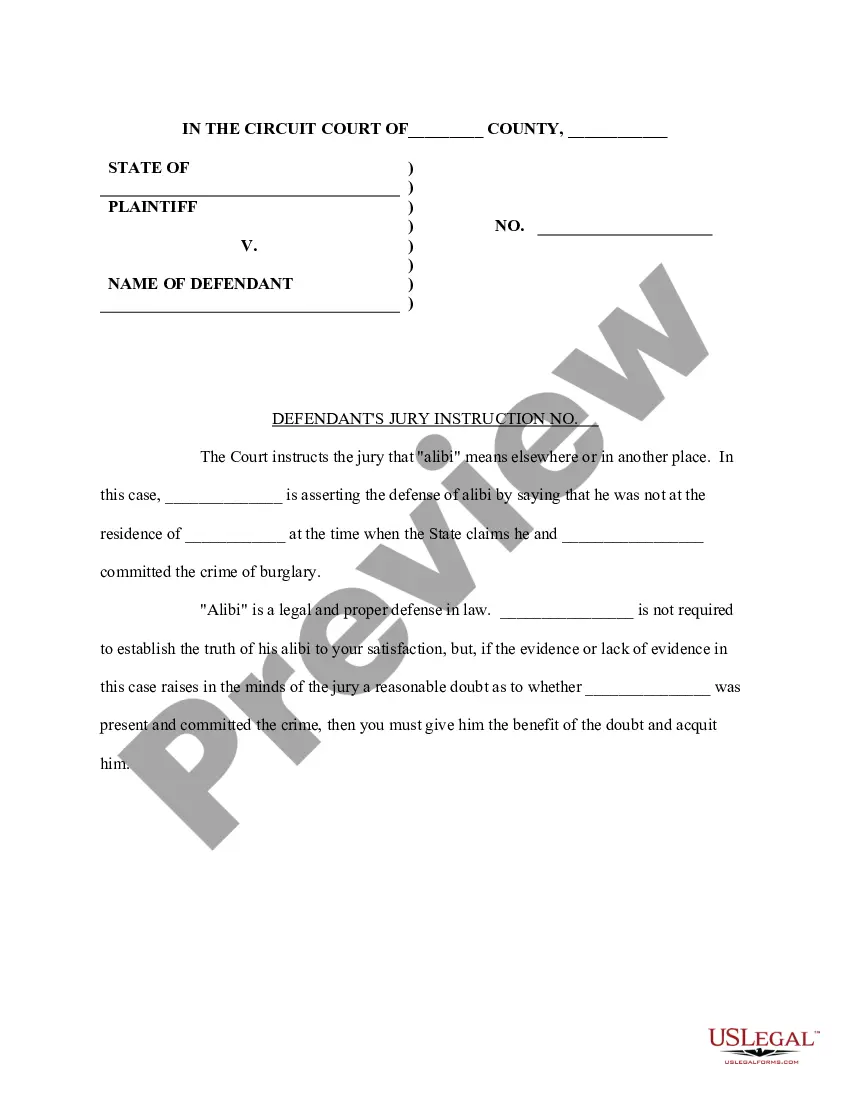
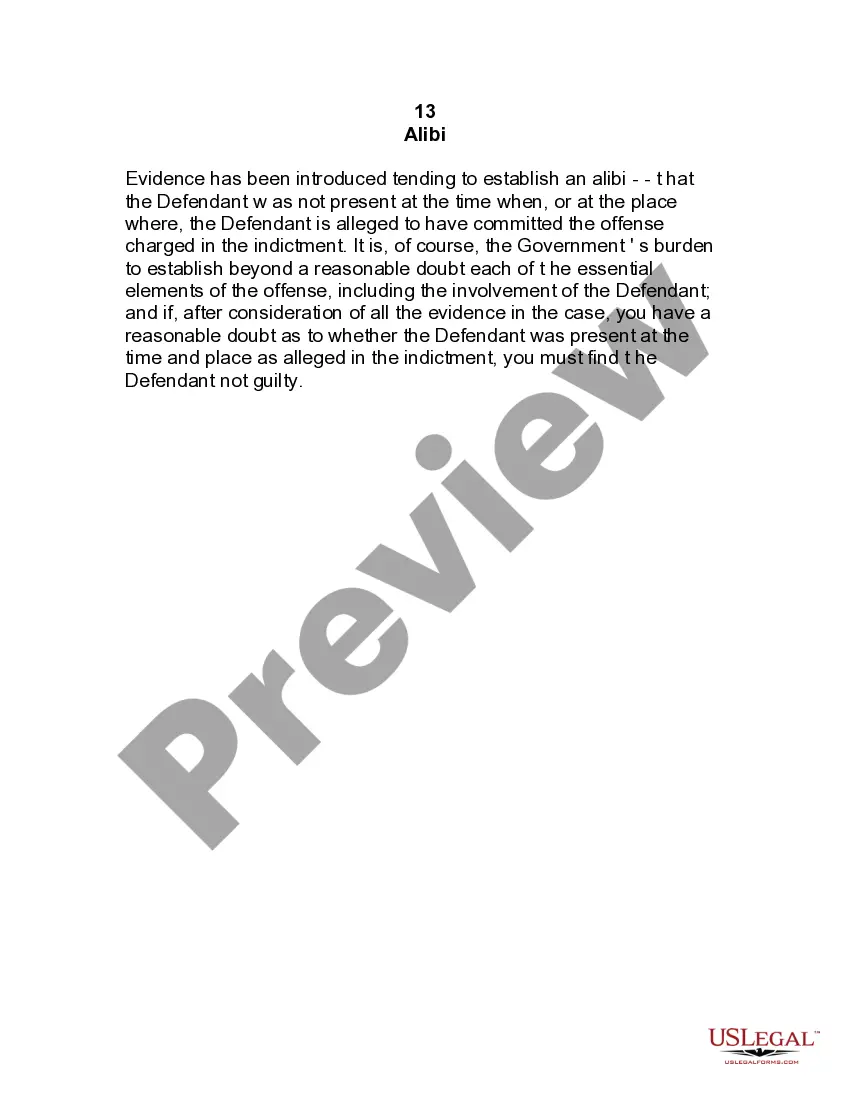
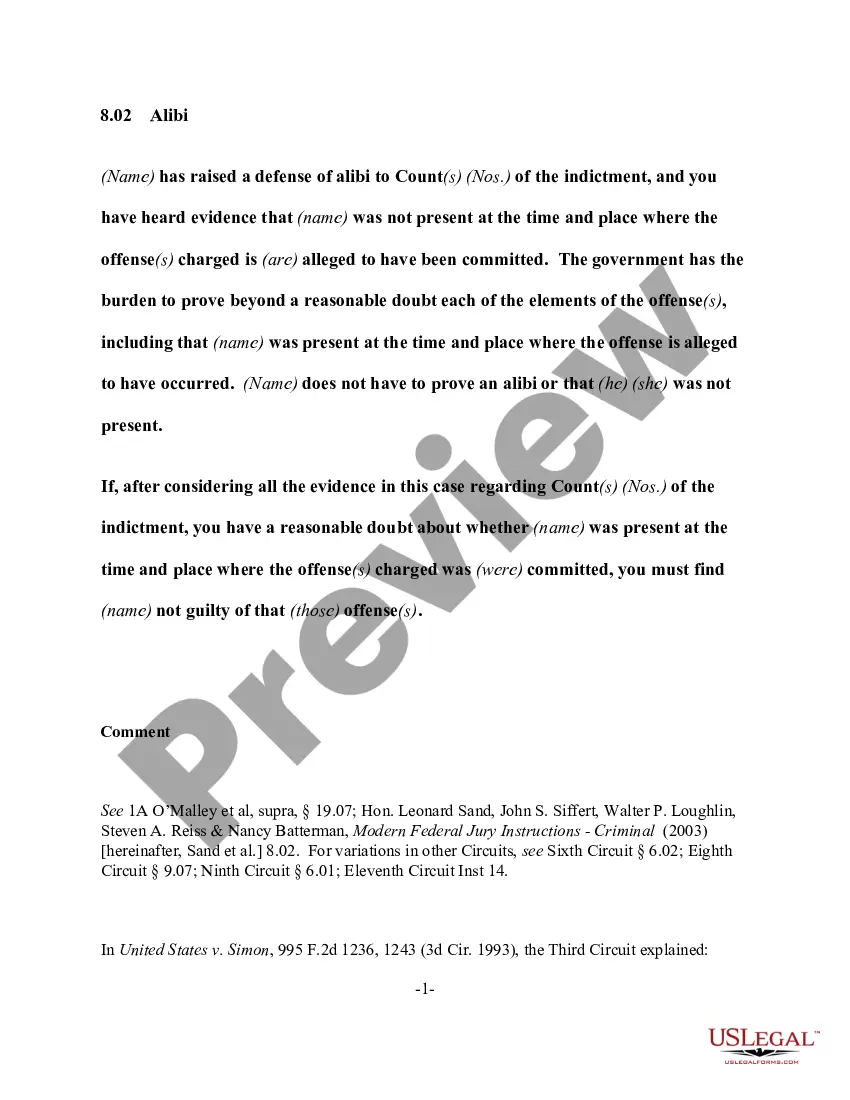
Arizona Alibi Instruction
Description
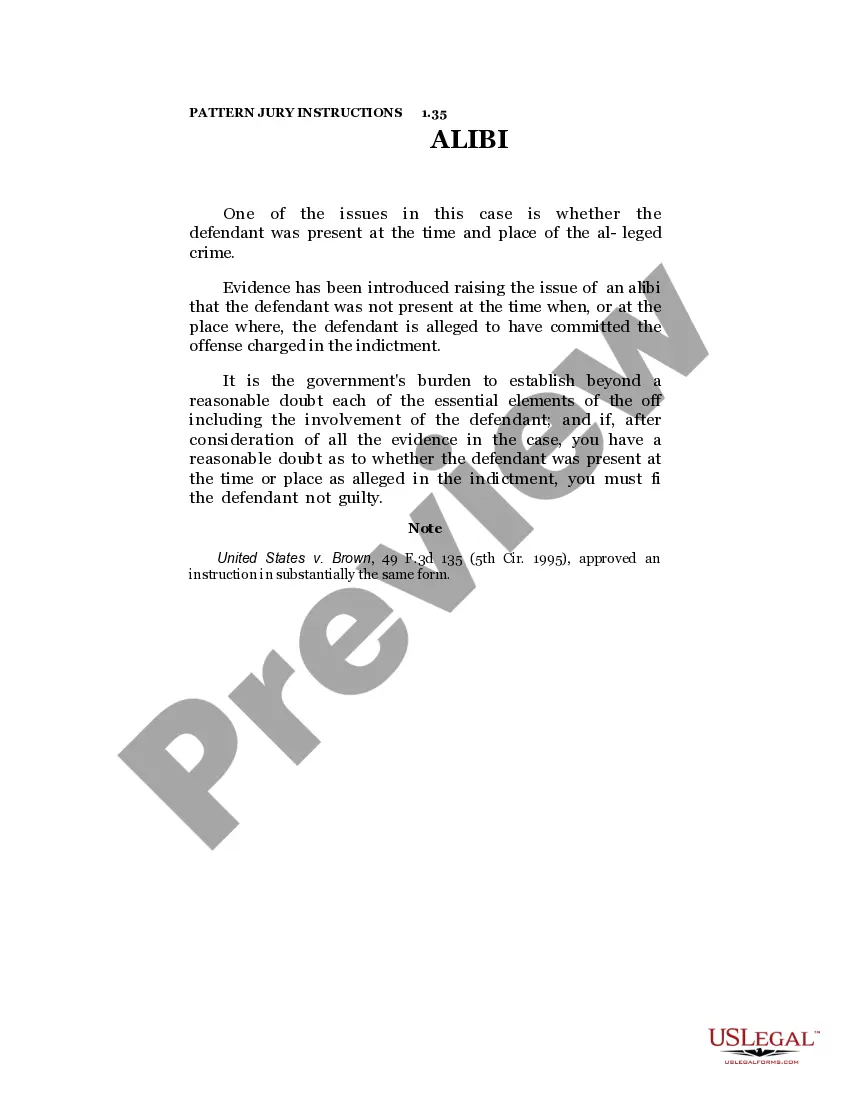
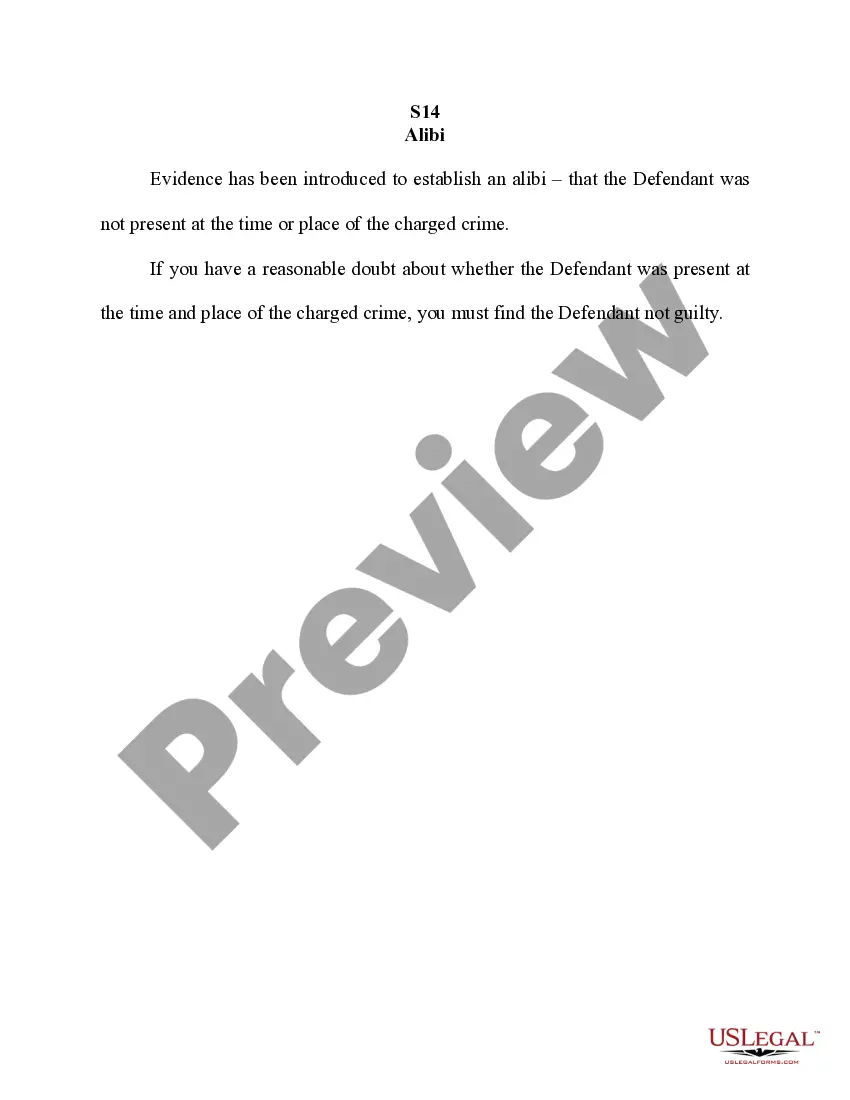
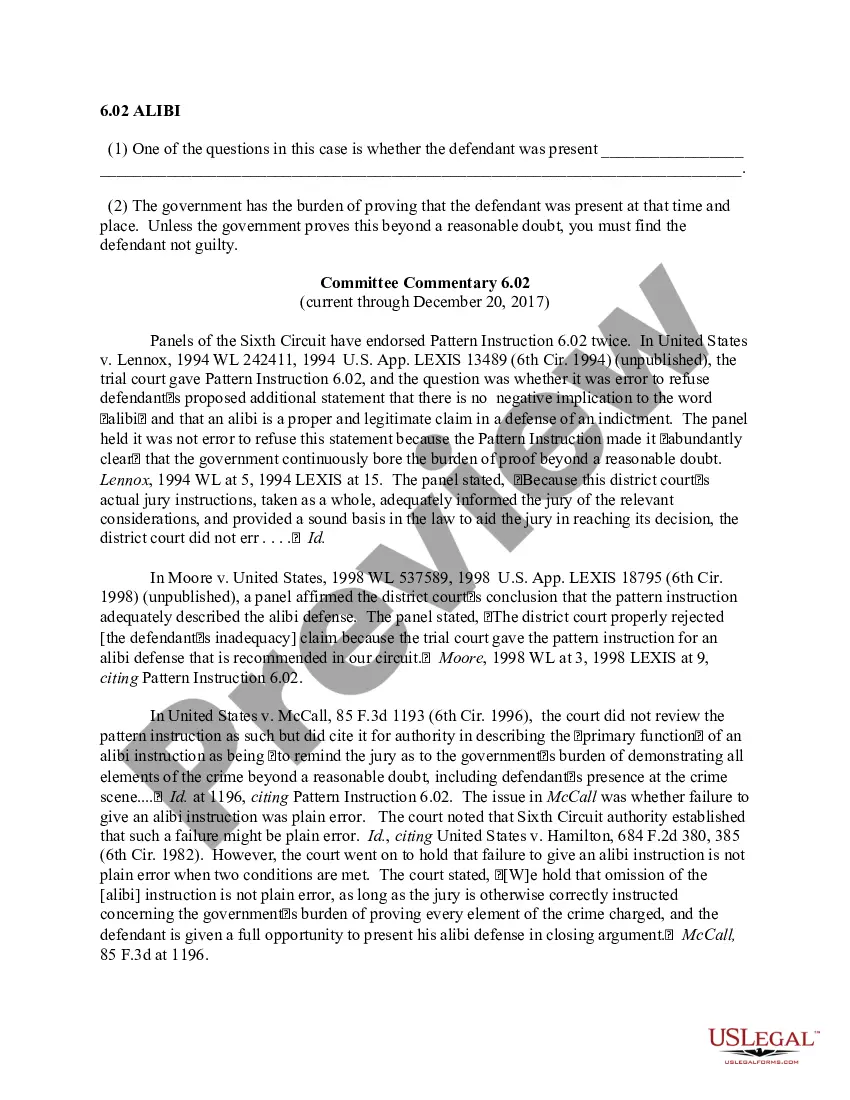
Get your form ready online
Our built-in tools help you complete, sign, share, and store your documents in one place.
Make edits, fill in missing information, and update formatting in US Legal Forms—just like you would in MS Word.
Download a copy, print it, send it by email, or mail it via USPS—whatever works best for your next step.
Sign and collect signatures with our SignNow integration. Send to multiple recipients, set reminders, and more. Go Premium to unlock E-Sign.
If this form requires notarization, complete it online through a secure video call—no need to meet a notary in person or wait for an appointment.
We protect your documents and personal data by following strict security and privacy standards.

Make edits, fill in missing information, and update formatting in US Legal Forms—just like you would in MS Word.

Download a copy, print it, send it by email, or mail it via USPS—whatever works best for your next step.

Sign and collect signatures with our SignNow integration. Send to multiple recipients, set reminders, and more. Go Premium to unlock E-Sign.

If this form requires notarization, complete it online through a secure video call—no need to meet a notary in person or wait for an appointment.

We protect your documents and personal data by following strict security and privacy standards.
Looking for another form?
How to fill out Alibi Instruction?
It is feasible to spend multiple hours online searching for the valid document template that fulfills the federal and state requirements you desire. US Legal Forms offers thousands of valid forms that can be examined by experts.
You can effortlessly download or print the Arizona Alibi Instruction from my assistance. If you possess a US Legal Forms account, you can sign in and then click the Download button. Subsequently, you can complete, edit, print, or sign the Arizona Alibi Instruction. Every valid document template you purchase is yours indefinitely.
To obtain another copy of any purchased form, visit the My documents section and click the corresponding button. If you are using the US Legal Forms website for the first time, follow the simple instructions below: First, ensure that you have chosen the correct document template for the state/city you select. Review the form description to ensure you have picked the right form. If available, utilize the Preview button to look through the document template as well.
Utilize professional and state-specific templates to address your business or personal requirements.
- If you wish to obtain another version of the form, use the Search field to find the template that meets your needs and requirements.
- Once you have found the template you want, click Buy now to proceed.
- Choose the pricing plan you prefer, enter your details, and create an account on US Legal Forms.
- Complete the transaction. You may use your credit card or PayPal account to pay for the valid form.
- Select the format of the document and download it to your device.
- Make adjustments to the document if necessary. You can complete, edit, and sign and print the Arizona Alibi Instruction.
- Download and print thousands of document templates using the US Legal Forms website, which offers the largest selection of valid forms.
Form popularity
FAQ
Voluntary and Involuntary Case Dismissals Most commonly, a defendant will file a motion to dismiss if they believe there is a lack of evidence, improper jurisdiction, a breach of the statute of limitations or if they believe the other party is not complying with a court order.
Alibi as a noun is defined as a defense to a criminal charge alleging that the accused was somewhere other than at the scene of the crime at the time it occurred. For example, A could not confirm B's alibi that B was at the dentist office at the time of the robbery.
An alibi is not an affirmative defense. The defendant is not admitting to anything and does not have the burden of proving their alibi. When a defendant raises an alibi, the burden of proof remains with the prosecution to prove the charge or charges against a defendant beyond a reasonable doubt.
To establish a credible alibi, the defendant and their legal counsel must provide concrete evidence that supports their claim of being in a different location at the time of the crime.
Alibi: The primary purpose of an alibi is to establish the defendant's absence from the crime scene, creating reasonable doubt about their guilt. Witness: Witnesses provide firsthand accounts or expert opinions to either support or challenge the facts and claims presented in the case.
In order to constitute an alibi, the evidence at issue must be determinative of the final issue of guilt or innocence. Such evidence contemplates that it is impossible for the accused to have committed the crime because, at the time of its commission, he was elsewhere.
General Principles Alibi evidence must be evidence that is "determinative of the final issue of guilt or innocence of the accused." It must be dispositive of guilt or innocence. An admission of being a party to some events making up the crime but not others is not an alibi. It must completely absolve the accused.
An Alibi and Reasonable Doubt The defense also does not have to provide the alibi beyond a reasonable doubt. If the jury or judge does not believe the alibi defense, the prosecution still must prove all elements of the crime beyond a reasonable doubt.