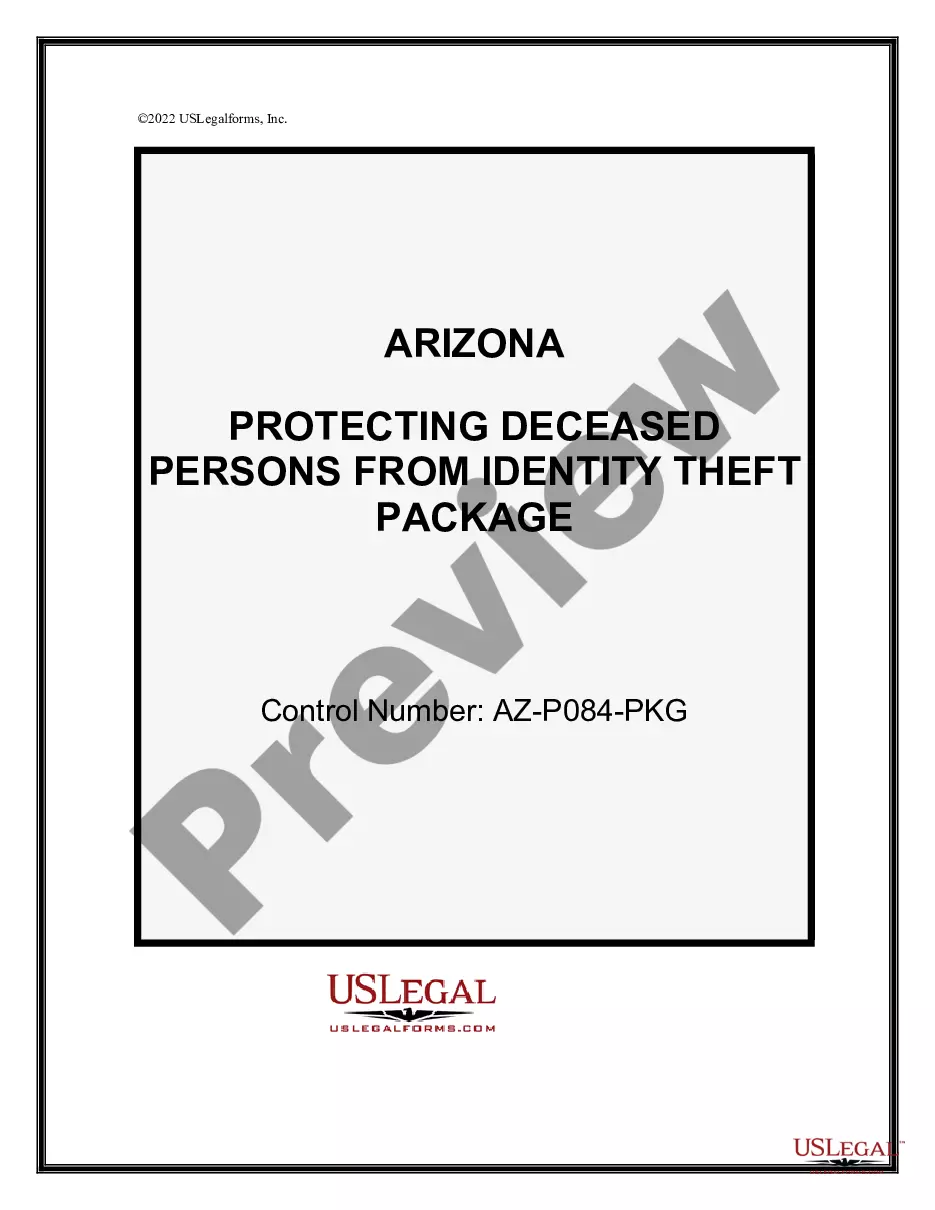
Arizona Protecting Deceased Persons from Identity Theft
About this form package
The Arizona Protecting Deceased Persons from Identity Theft form package contains essential documents designed to help families prevent and address identity theft of deceased individuals. This package stands out by providing a comprehensive set of forms tailored specifically to notify various entities about the death and protect the deceased's identifying information, helping ease the burden during a difficult time.
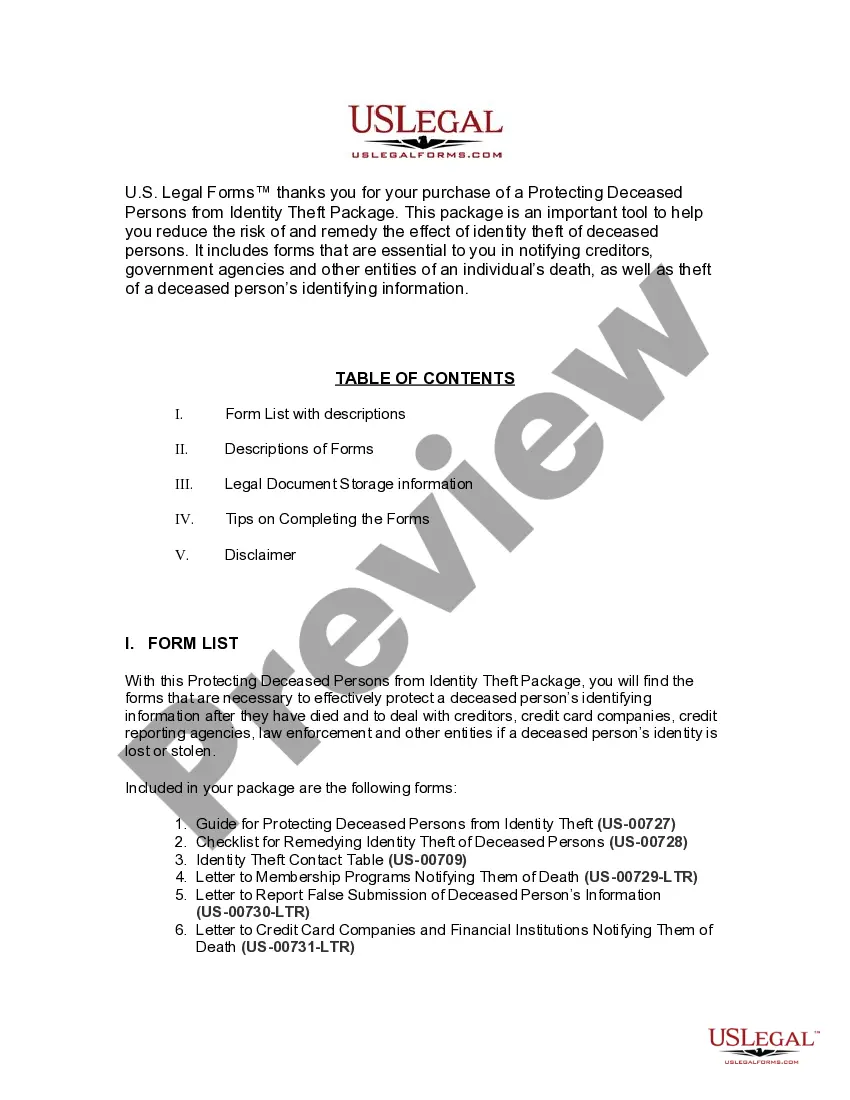
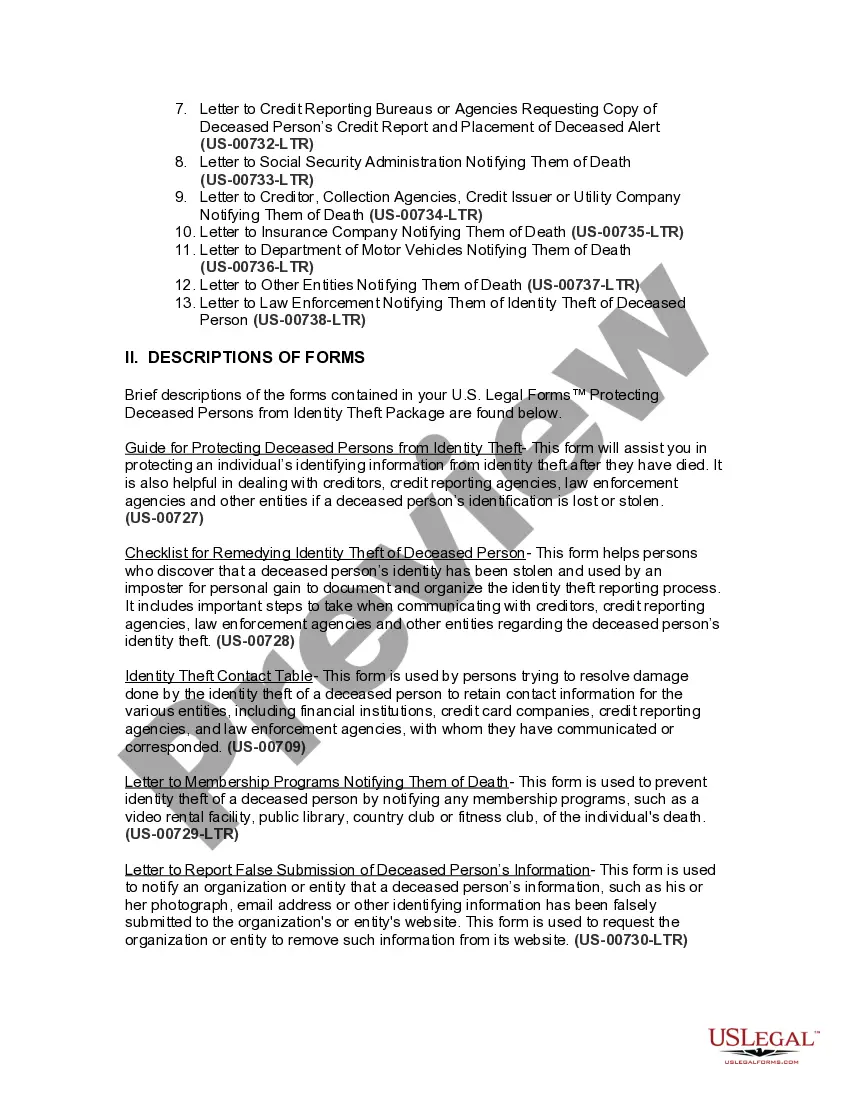
Forms included in this package
- Identity Theft Contact Table
- Guide for Protecting Deceased Persons from Identity Theft
- Checklist for Remedying Identity Theft of Deceased Persons
- Letter to Membership Programs Notifying Them of Death
- Letter to Report False Submission of Deceased Person's Information
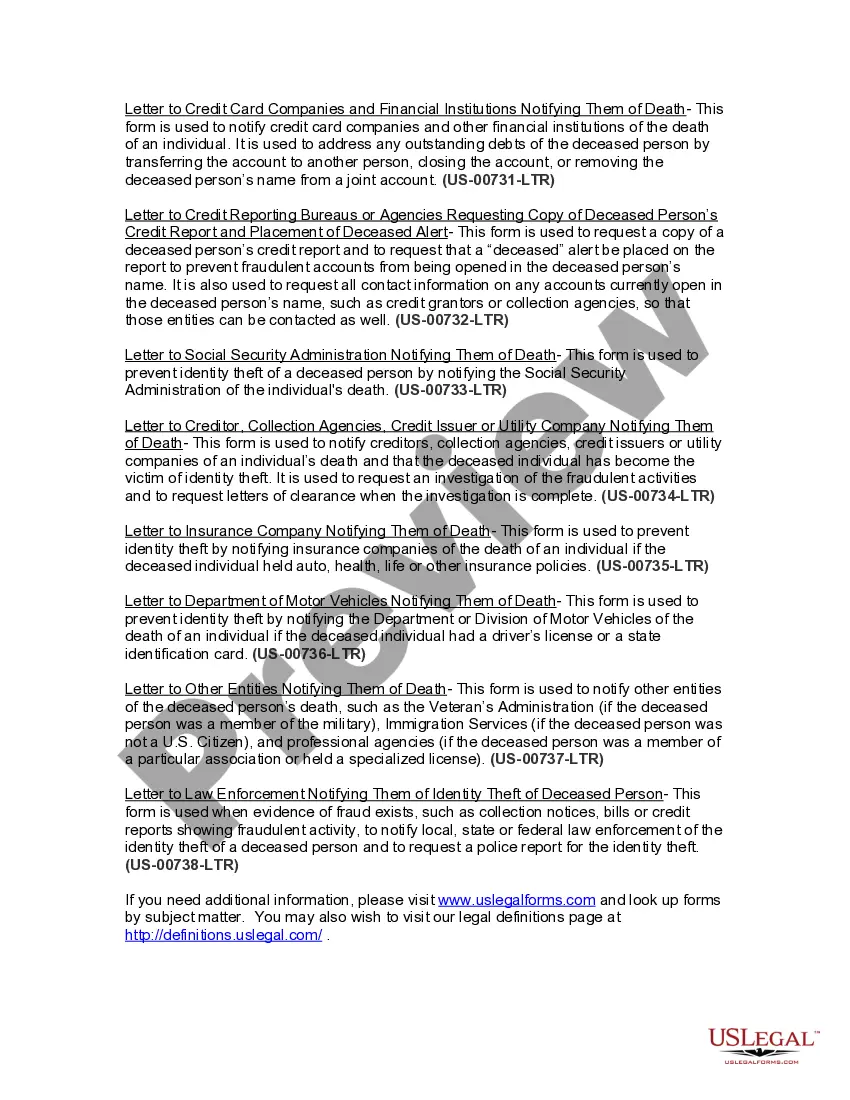
- Letter to Credit Card Companies and Financial Institutions Notifying Them of Death
- Letter to Credit Reporting Bureaus or Agencies Requesting Copy of Deceased Person's Credit Report and Placement of Deceased Alert
- Letter to Social Security Administration Notifying Them of Death
- Letter to Creditor, Collection Agencies, Credit Issuer or Utility Company Notifying Them of Death
- Letter to Insurance Company Notifying Them of Death
- Letter to Department of Motor Vehicles Notifying Them of Death
- Letter to Other Entities Notifying Them of Death
- Letter to Law Enforcement Notifying Them of Identity Theft of Deceased Person
When this form package is needed
You should use this form package in the following situations:
- When a loved one has passed away, and you want to prevent identity theft of their personal information.
- When you discover that a deceased family member's identity has been compromised or used fraudulently.
- When you need to formally notify creditors, government agencies, and other organizations regarding the death of an individual.
Who can use this document
- Family members or legal representatives of a deceased person.
- Executors or administrators of an estate.
- Anyone responsible for managing the affairs of a deceased individual.
Steps to complete these forms
- Review the guide for protecting deceased persons from identity theft included in the package.
- Complete the required notifications using the provided letters for various entities.
- Fill out the identity theft contact table to keep track of communications.
- Utilize the checklist to ensure all necessary steps are followed.
- Store completed documents securely, and consider informing a trusted person about their location.
Notarization requirements for forms in this package
Forms in this package typically do not require notarization. However, certain states or document types may still need it. US Legal Forms provides online notarization powered by Notarize, available 24/7 for your convenience.
Get your form ready online
Our built-in tools help you complete, sign, share, and store your documents in one place.
Make edits, fill in missing information, and update formatting in US Legal Forms—just like you would in MS Word.
Download a copy, print it, send it by email, or mail it via USPS—whatever works best for your next step.
Sign and collect signatures with our SignNow integration. Send to multiple recipients, set reminders, and more. Go Premium to unlock E-Sign.
If this form requires notarization, complete it online through a secure video call—no need to meet a notary in person or wait for an appointment.
We protect your documents and personal data by following strict security and privacy standards.

Make edits, fill in missing information, and update formatting in US Legal Forms—just like you would in MS Word.

Download a copy, print it, send it by email, or mail it via USPS—whatever works best for your next step.

Sign and collect signatures with our SignNow integration. Send to multiple recipients, set reminders, and more. Go Premium to unlock E-Sign.

If this form requires notarization, complete it online through a secure video call—no need to meet a notary in person or wait for an appointment.

We protect your documents and personal data by following strict security and privacy standards.
Mistakes to watch out for
- Failing to notify all relevant entities about the deceased's passing.
- Not keeping copies of the notifications sent for your records.
- Overlooking to request a copy of the deceased's credit report from credit agencies.
Benefits of completing this package online
- Convenience of downloading and printing forms at your own pace.
- Editability allows you to personalize letters as needed.
- Access to reliable documents drafted by licensed attorneys.
Legal use & context
- These forms are designed to help legally protect a deceased person's identity.
- Proper use of these documents can aid in resolving issues related to identity theft.
- The forms comply with Arizona state laws regarding notifications and identity theft protections.
Looking for another form?
Form popularity
FAQ
Identity theft covers a range of fraudulent activities, including unauthorized use of someone else’s name, Social Security number, or financial information. This also includes opening accounts or taking loans in the victim's name. Knowing what is covered under these laws is crucial for Arizona protecting deceased persons from identity theft, as it helps prevent exploitation during a vulnerable time.
The identity theft law in Arizona addresses the unlawful use of someone else's personal identification for fraudulent purposes. It encompasses a variety of acts, from credit card fraud to the misuse of Social Security numbers. This law is essential for Arizona protecting deceased persons from identity theft, ensuring that their identities cannot be exploited after their death.
In Arizona, the minimum sentence for identity theft can range from probation to several years in prison, depending on the severity of the offense. Even minor cases can lead to serious consequences, which is why understanding this law is critical for Arizona protecting deceased persons from identity theft. Engaging with legal resources can further clarify potential outcomes and penalties.
To protect a deceased person from identity theft, it’s important to secure their personal information immediately after their passing. You can request a credit freeze with the major credit bureaus, notify financial institutions, and consider using services that specialize in identity protection. These steps are essential in Arizona protecting deceased persons from identity theft, giving their loved ones peace of mind.
To report identity theft in Arizona, you should contact your local law enforcement agency and file a report. You can also file a complaint with the Federal Trade Commission (FTC) online or by phone. Prompt reporting is crucial for Arizona protecting deceased persons from identity theft, as it helps authorities take quick action to resolve the issue.
To protect someone from identity theft, you should take proactive steps such as monitoring their credit report, using strong passwords, and securely storing personal documents. In Arizona, protecting deceased persons from identity theft is crucial, so consider placing a fraud alert or credit freeze on their accounts. Additionally, familiarize yourself with identity theft laws and available resources in Arizona to ensure proper measures are followed. Utilizing platforms like USLegalForms can help you access valuable tools and documentation to take the right actions.
If the eligible surviving spouse or child is not currently receiving benefits, they must apply for this payment within two years of the date of death. For more information about this lump-sum payment, contact your local Social Security office or call 1-800-772-1213 ( TTY 1-800-325-0778).
Identity thieves can strike even after death. An identity thief's use of a deceased person's Social Security number may create problems for family members.The Social Security Administration (SSA) maintains a national file of reported deaths for the purpose of paying appropriate benefits.
It's called ghosting, and it's both scary and surprising. Ghosting is a form of identity theft. It occurs when someone uses the personal information of a dead person, often for monetary gain. A savvy criminal can take over bank accounts, apply for new credit cards, and even file for fraudulent tax refunds.
When a Social Security beneficiary dies, the death is usually reported to SSA by a family member, a funeral home, or a government agency. Whoever does the reporting, according to SSA, the death should be reported as soon as possible.