Arizona Transfer on Death Deed or TOD - Beneficiary Deed for Two Individuals to Two Individuals
Understanding this form
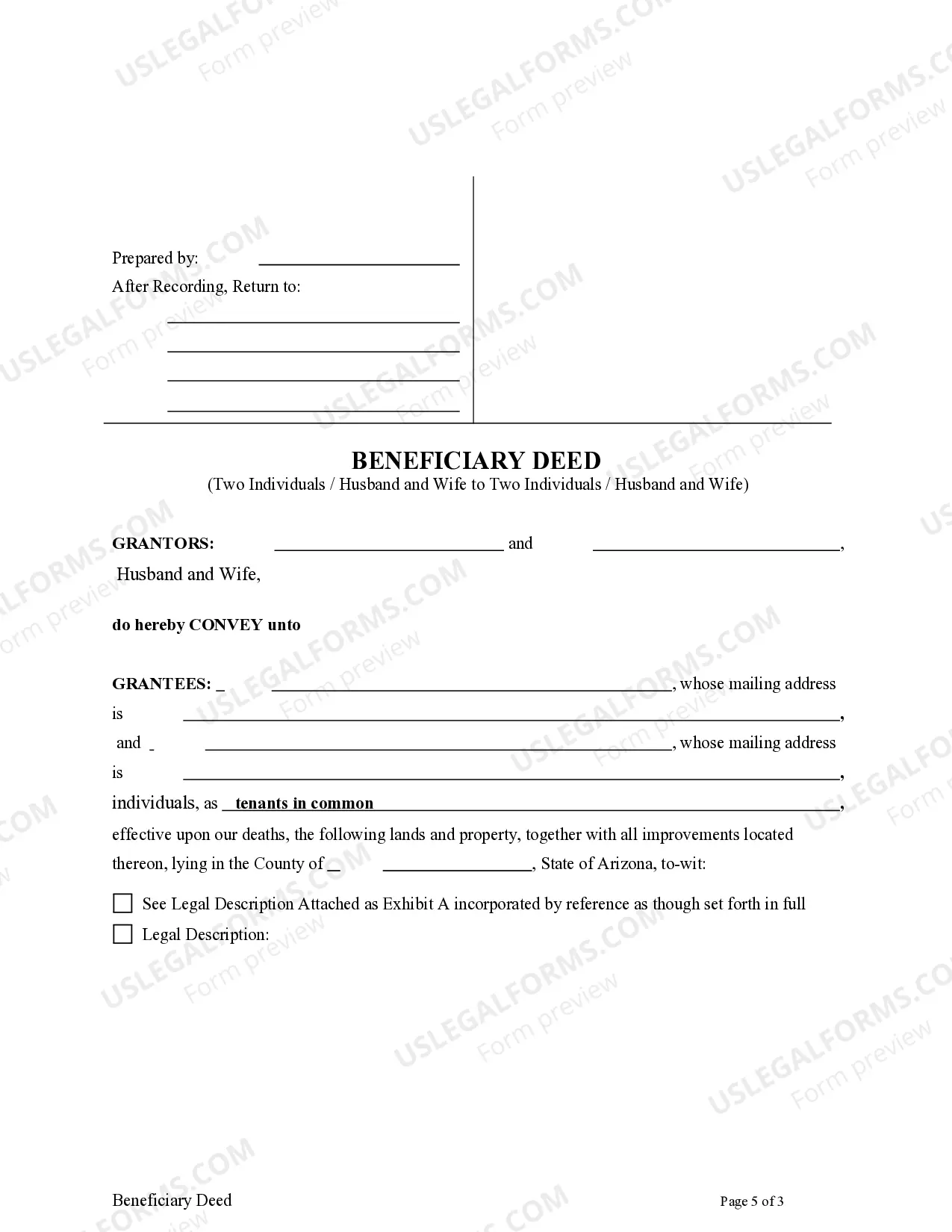
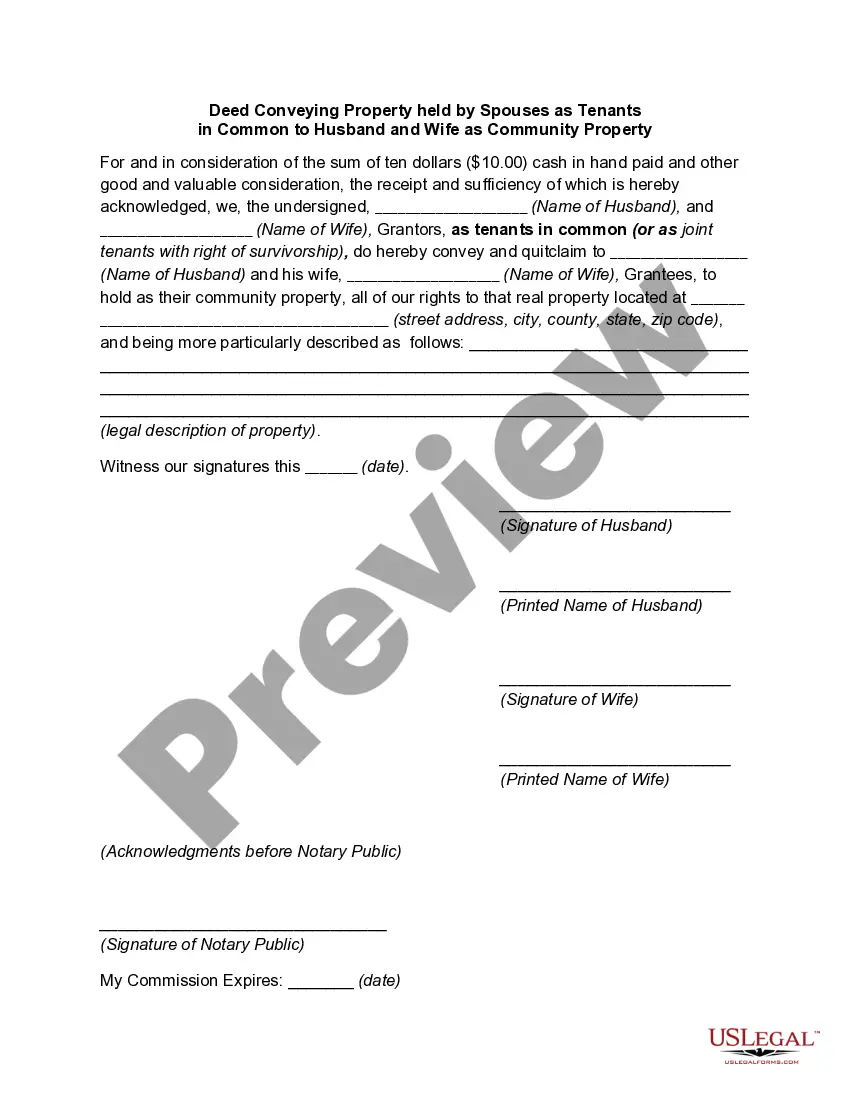
The Transfer on Death Deed (TOD) or Beneficiary Deed is a legal document that enables two individuals, whether married or unmarried, to transfer property to two grantees upon the death of the last surviving grantor. This form allows the grantors to retain control over the property during their lifetime, as it is revocable until their death. Unlike traditional property transfers, this deed avoids probate, making the transfer of ownership smoother and quicker for the beneficiaries. This is particularly beneficial in estate planning, allowing individuals to decide who will inherit their property seamlessly.
Key parts of this document
- Identification of grantors and grantees involved in the property transfer.
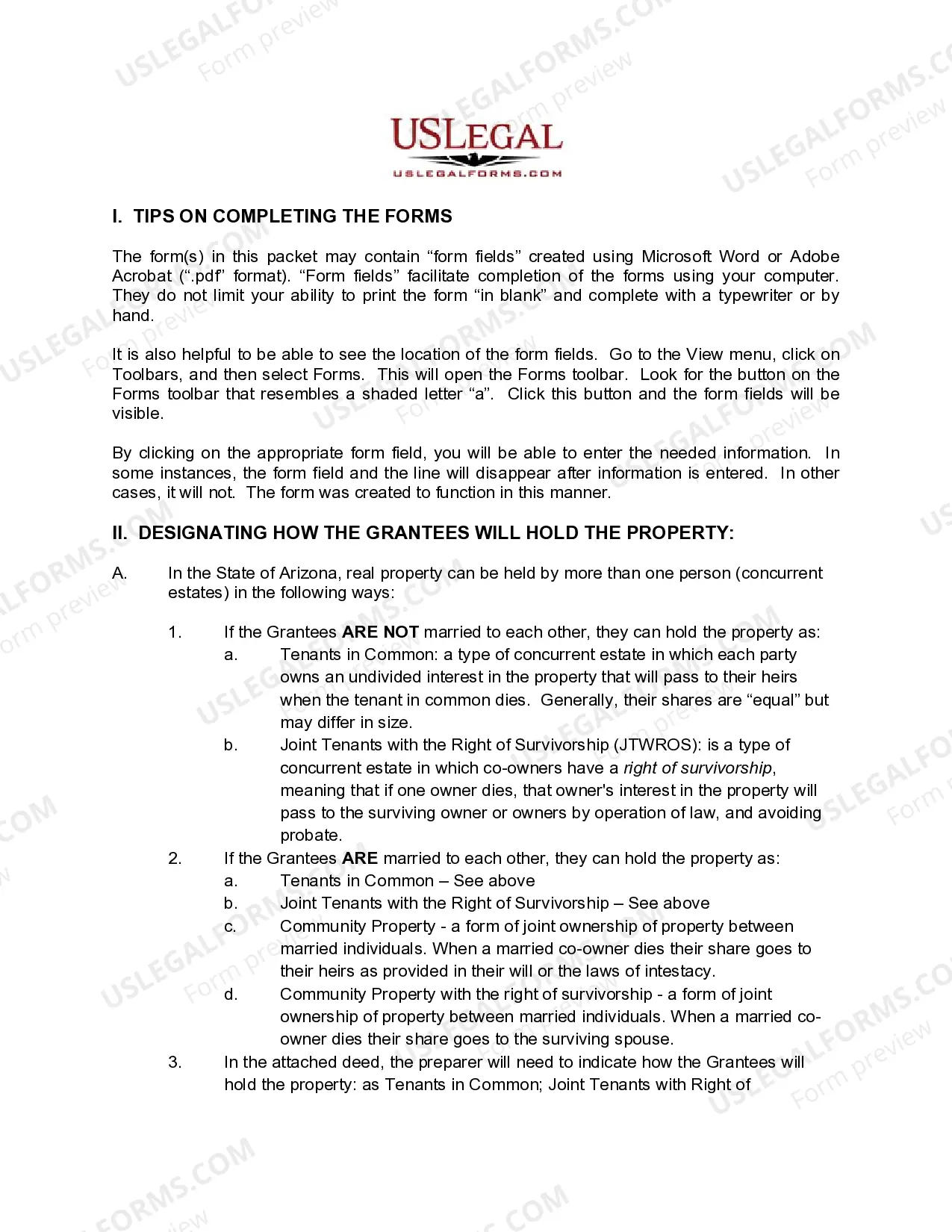
- Specification of how the grantees will hold title (tenants in common or joint tenants with the right of survivorship).
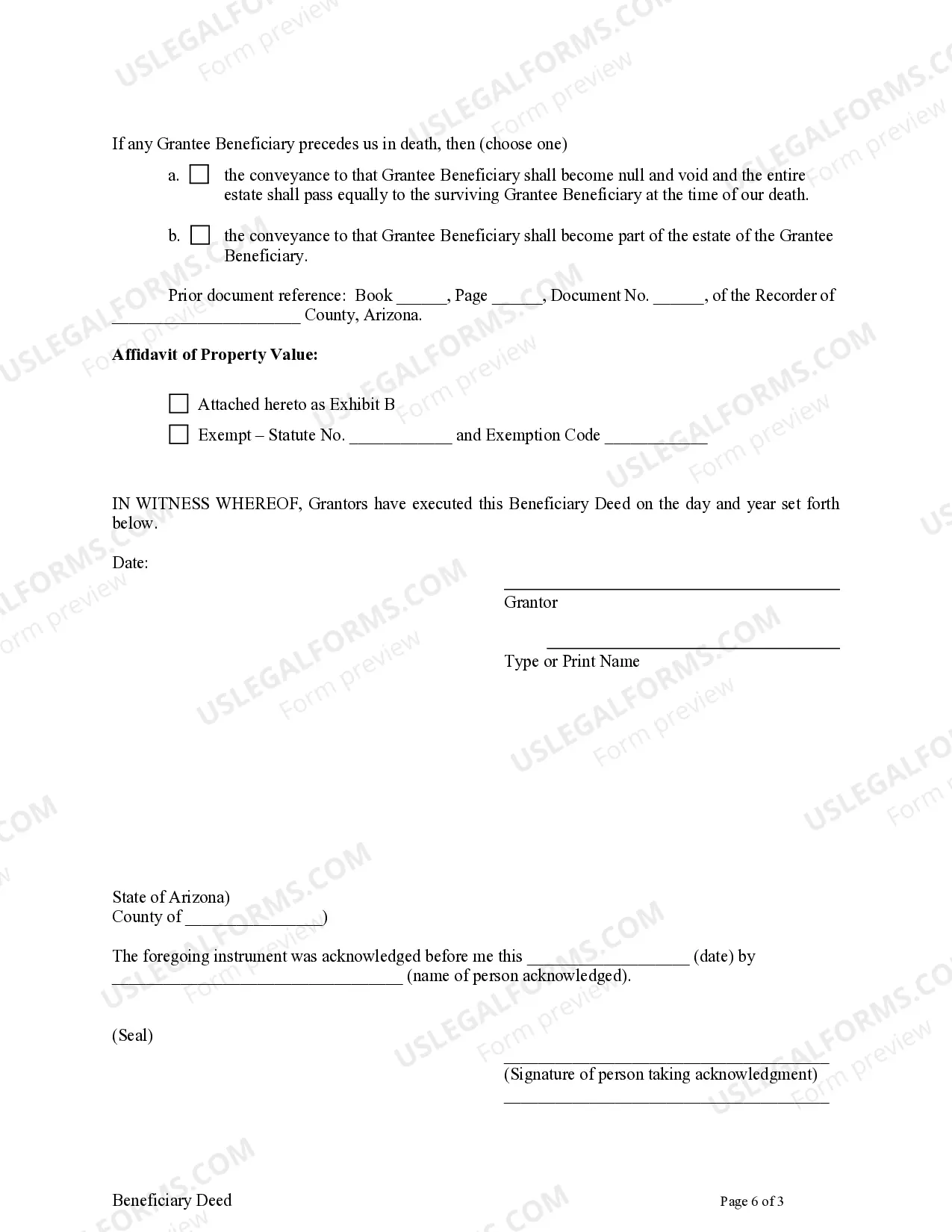
- Revocation clause, allowing grantors to change or cancel the deed prior to death.
- Legal compliance with state statutory laws for property transfers.



When this form is needed
This form is particularly useful in various scenarios, such as when you wish to designate specific individuals to inherit your property directly without involving the probate process. It is an ideal choice for estate planning, ensuring that the property is transferred effectively upon the death of the last grantor, while still allowing the grantors to retain complete control during their lifetime. This document is also suitable for unmarried couples or friends who want to ensure that their property passes according to their wishes.
Who can use this document
This form is suitable for:
- Individuals looking to create a simple estate plan.
- Couples (married or unmarried) wishing to designate beneficiaries for their property.
- Individuals who want to avoid probate for their property transfers.
- Owners of real property who want to specify how their property will be held by grantees.
How to prepare this document
To complete the Transfer on Death Deed or TOD, follow these steps:
- Identify the grantors (the individuals transferring the property).
- Identify the grantees (the individuals receiving the property).
- Specify how the property will be held by grantees (tenants in common or joint tenants with the right of survivorship).
- Fill in the necessary legal information, including property description and location.
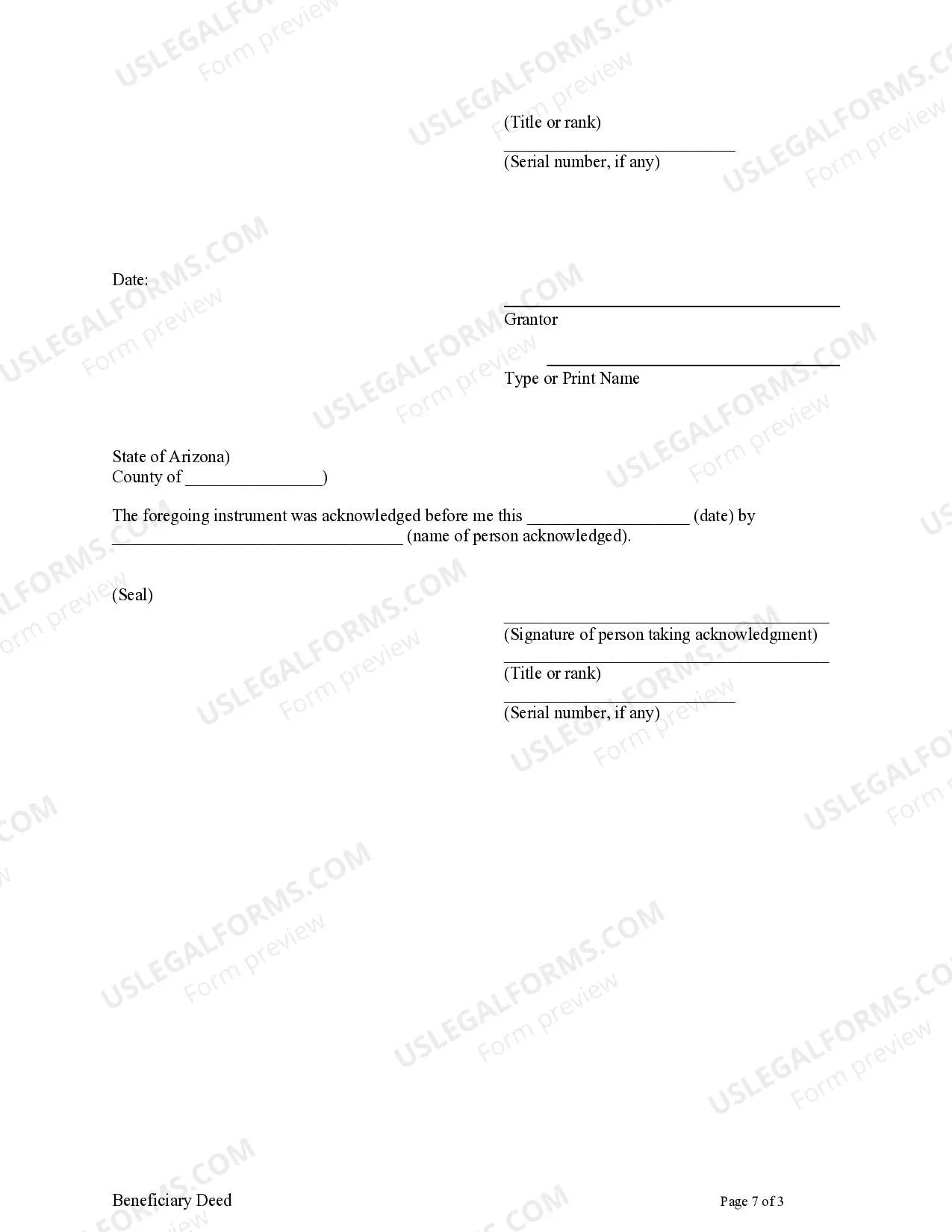
- Ensure both grantors sign the document in accordance with state laws.
Notarization requirements for this form
This form does not typically require notarization unless specified by local law. It is advisable to verify local regulations to ensure all legal requirements are met.
Get your form ready online
Our built-in tools help you complete, sign, share, and store your documents in one place.
Make edits, fill in missing information, and update formatting in US Legal Forms—just like you would in MS Word.
Download a copy, print it, send it by email, or mail it via USPS—whatever works best for your next step.
Sign and collect signatures with our SignNow integration. Send to multiple recipients, set reminders, and more. Go Premium to unlock E-Sign.
If this form requires notarization, complete it online through a secure video call—no need to meet a notary in person or wait for an appointment.
We protect your documents and personal data by following strict security and privacy standards.

Make edits, fill in missing information, and update formatting in US Legal Forms—just like you would in MS Word.

Download a copy, print it, send it by email, or mail it via USPS—whatever works best for your next step.

Sign and collect signatures with our SignNow integration. Send to multiple recipients, set reminders, and more. Go Premium to unlock E-Sign.

If this form requires notarization, complete it online through a secure video call—no need to meet a notary in person or wait for an appointment.

We protect your documents and personal data by following strict security and privacy standards.
Typical mistakes to avoid
- Failing to properly identify all parties involved.
- Not specifying how the grantees will hold the property.
- Neglecting to sign the document where required.
- Overlooking state-specific requirements, leading to invalidation of the deed.
Advantages of online completion
- Convenient online access allows users to complete the form from home.
- Editability ensures that all details can be customized to fit specific needs.
- Drafted by licensed attorneys, providing peace of mind about legal compliance.
- The Transfer on Death Deed is legally recognized in various jurisdictions, allowing for straightforward property transfer upon death.
- It is important to understand that this deed only takes effect upon the death of the last grantor.
- This deed does not affect the grantorsâ ability to sell or refinance the property while alive.
Quick recap
- The Transfer on Death Deed is a straightforward way to ensure property transfers to designated beneficiaries.
- It allows for revocable ownership during the grantors' lifetimes.
- Properly specifying how grantees hold the property is critical for future management and succession.
- Comply with all state regulations to ensure the deed is legally binding.
Looking for another form?


Form popularity
FAQ
An Arizona Transfer on Death Deed or TOD - Beneficiary Deed for Two Individuals to Two Individuals is a revocable transfer that avoids probate by passing title to two named grantees on the death of the last surviving grantor. It lets two grantors designate two grantees, choose how they hold title (tenants in common or joint tenancy with right of survivorship), and revoke the deed during life.
Yes. Arizona recognizes Transfer on Death Deeds (Beneficiary Deeds) that let property pass to named beneficiaries and avoid probate. This form supports two grantors naming two grantees, with a choice of how they hold title and a revocation option, and it must be properly recorded under Arizona law.
Disadvantages include that the transfer takes effect only at the death of the last surviving grantor, so it cannot transfer property during life. If grantors disagree, or if a beneficiary dies before them, complications can arise. Proper drafting and recording are essential to avoid challenges.
Not required by Arizona law, but advisable. The form can be prepared and filed with the county recorder, but ensuring correct grantor/grantee names, a revocation clause, and compliance with recording requirements is crucial; consulting a licensed attorney can help prevent mistakes.
Yes. This form is designed for two grantors to transfer property to two grantees, with the option to hold title as tenants in common or joint tenants with right of survivorship. The transfer activates on the death of the last surviving grantor and remains revocable during life.
This form specifically accommodates two grantors and two beneficiaries, and lets you choose how the two grantees hold title (TIC or JTWROS) while including a revocation clause. A standard single-beneficiary TOD deed typically designates one grantor to one beneficiary.