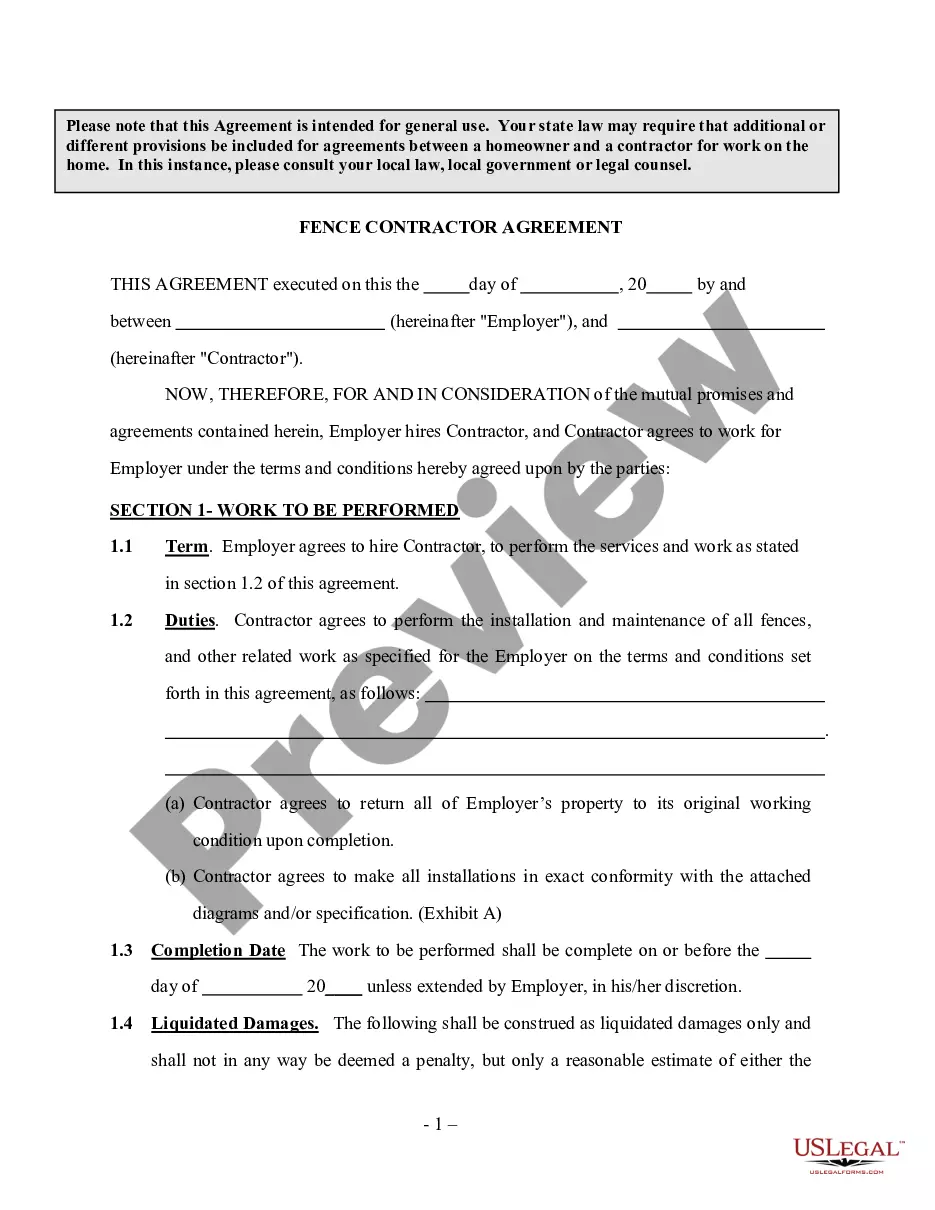
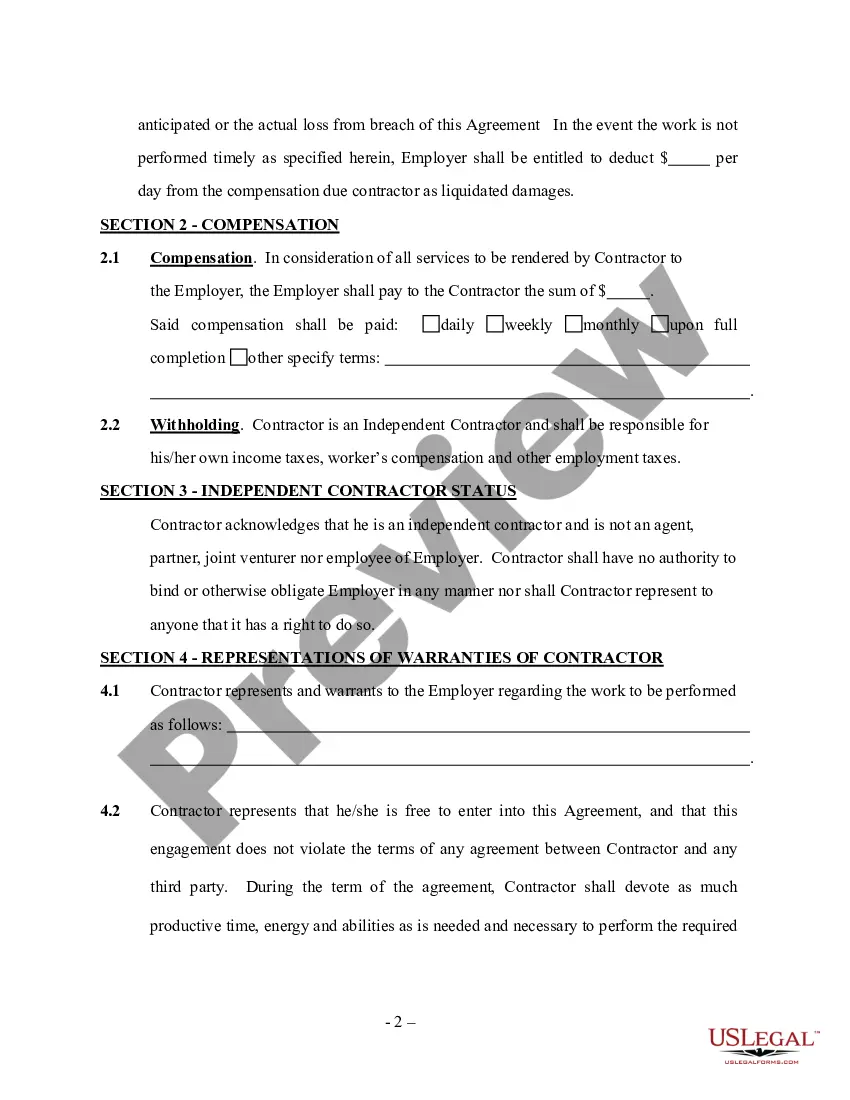
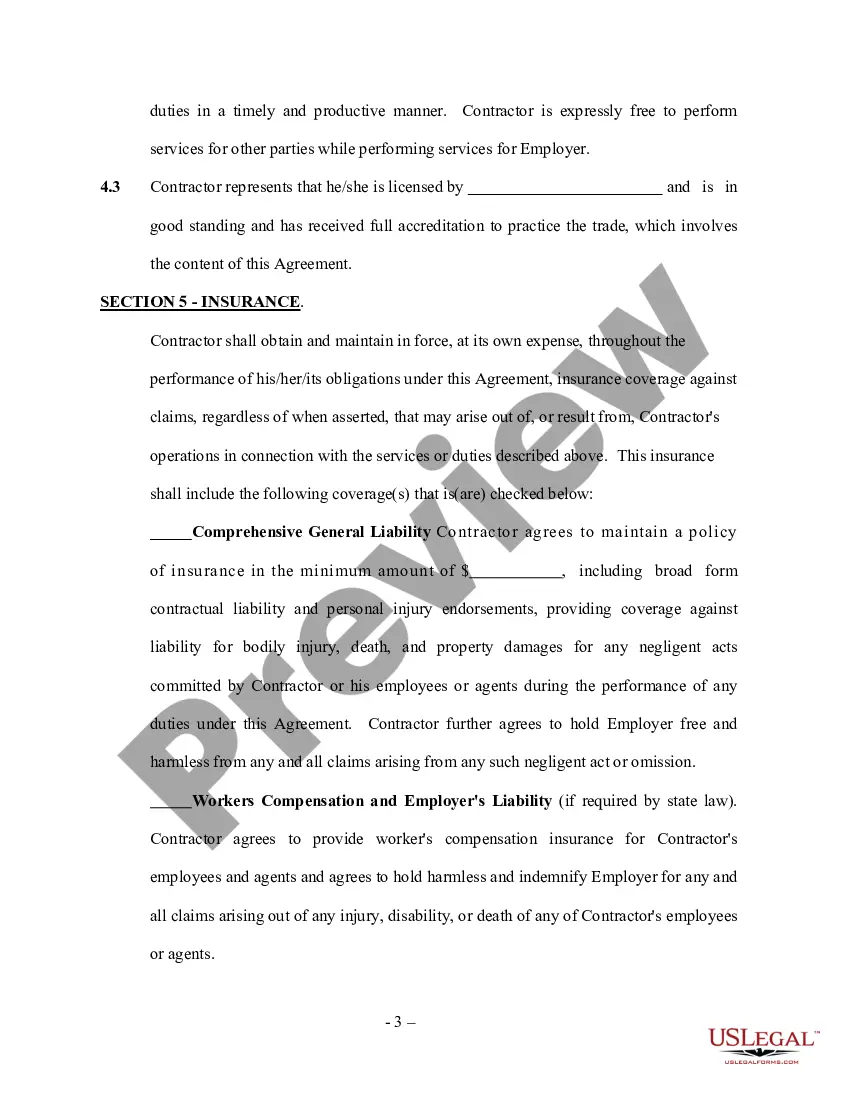
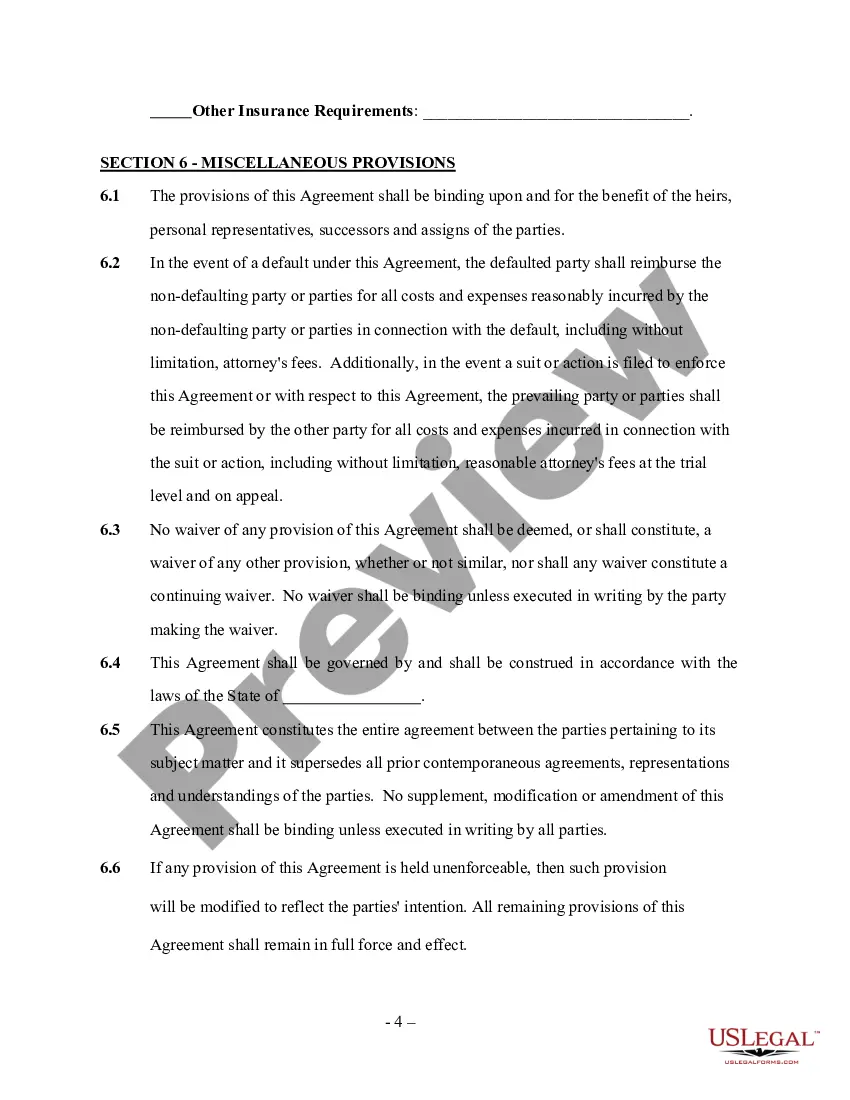
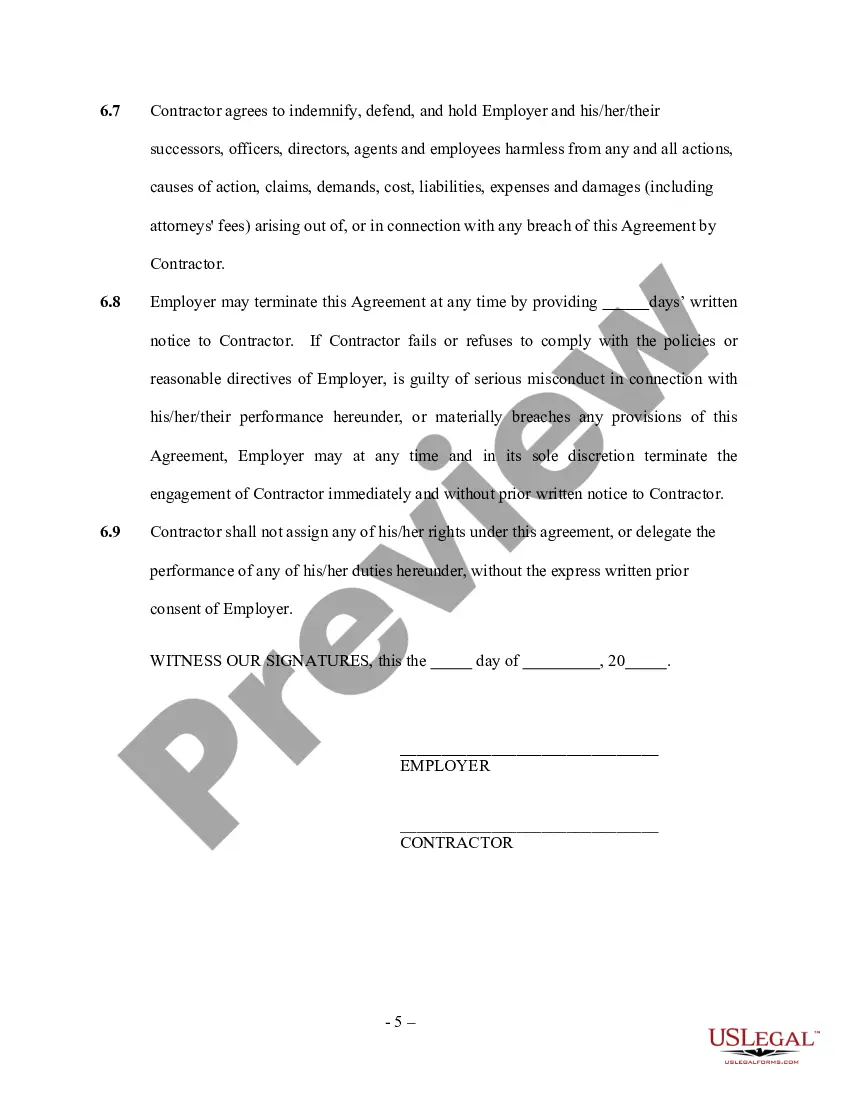
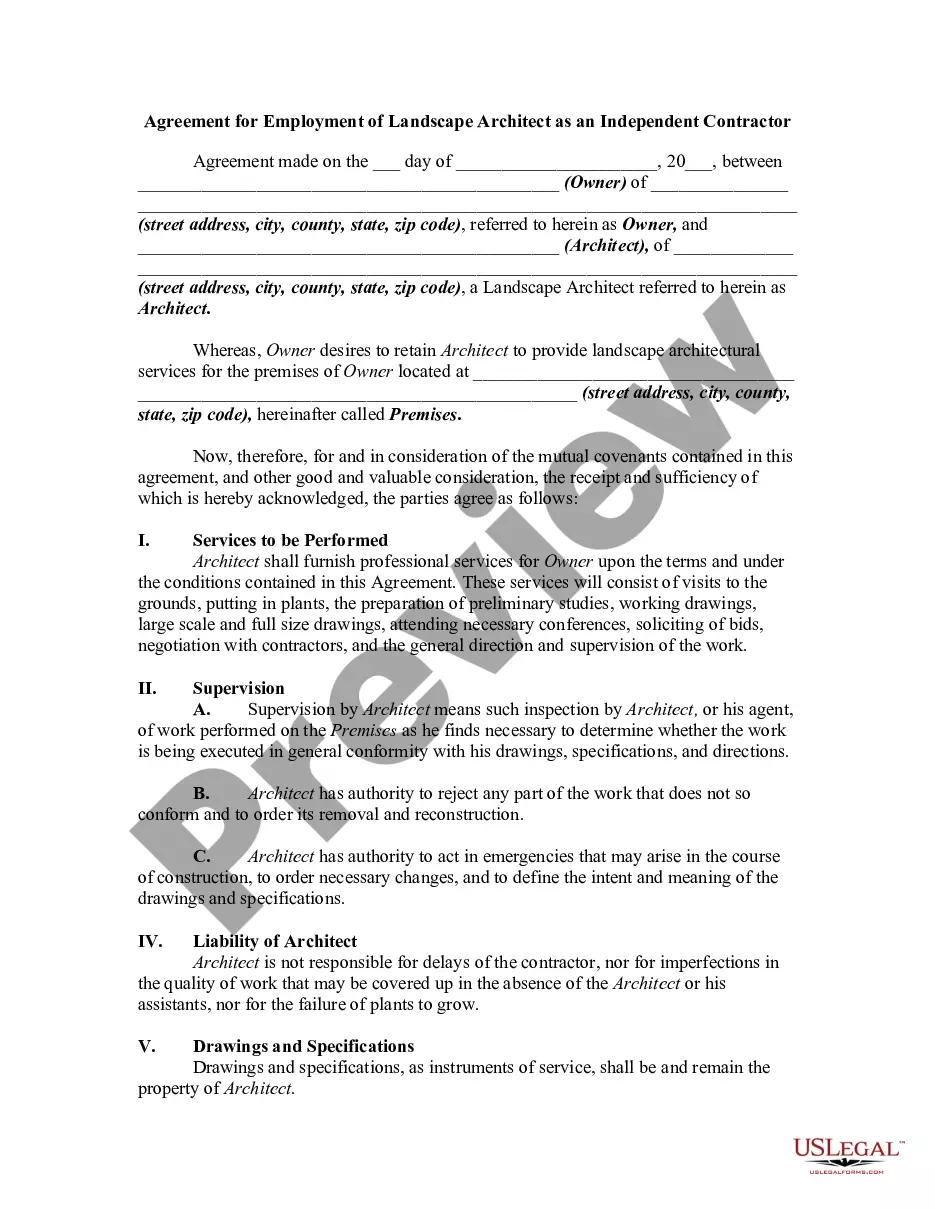
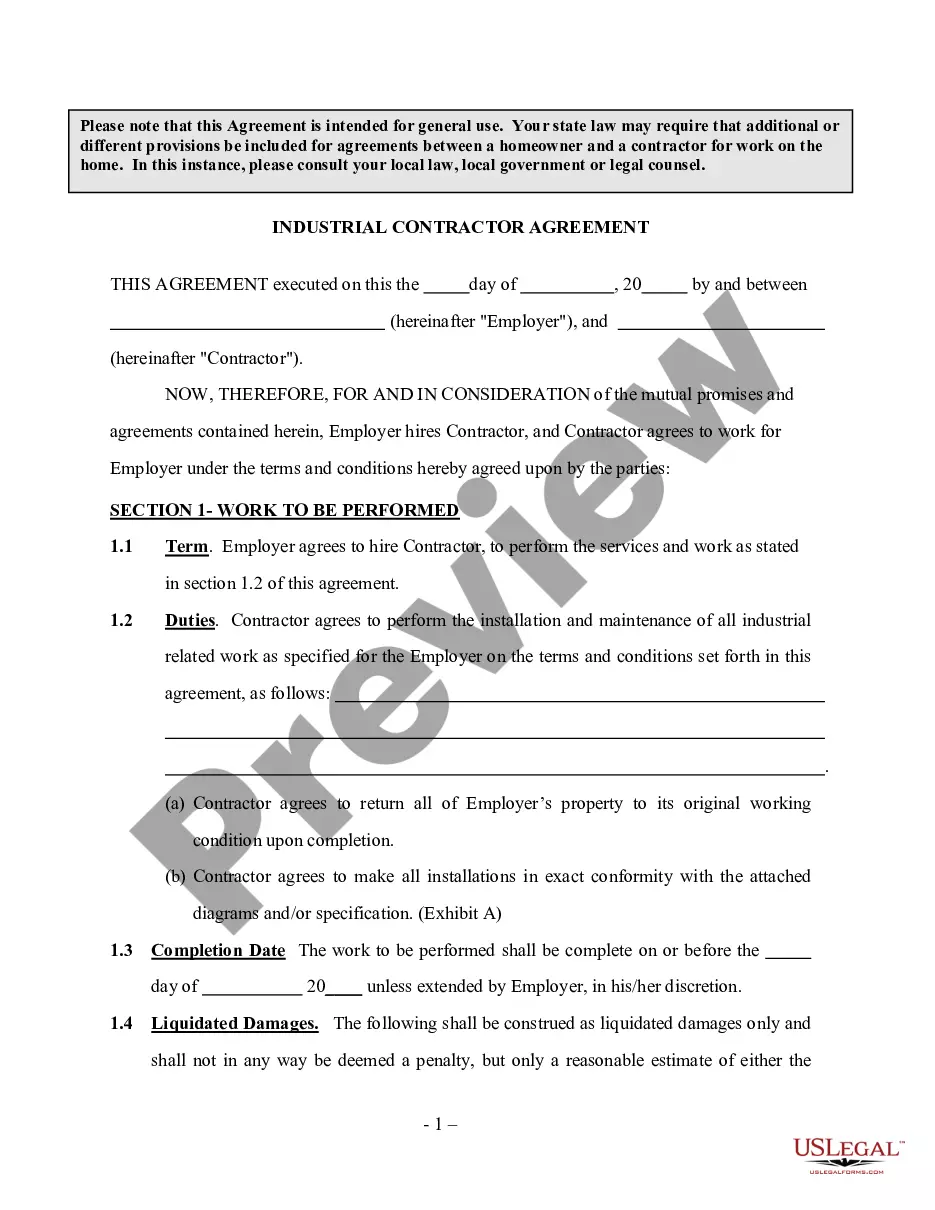
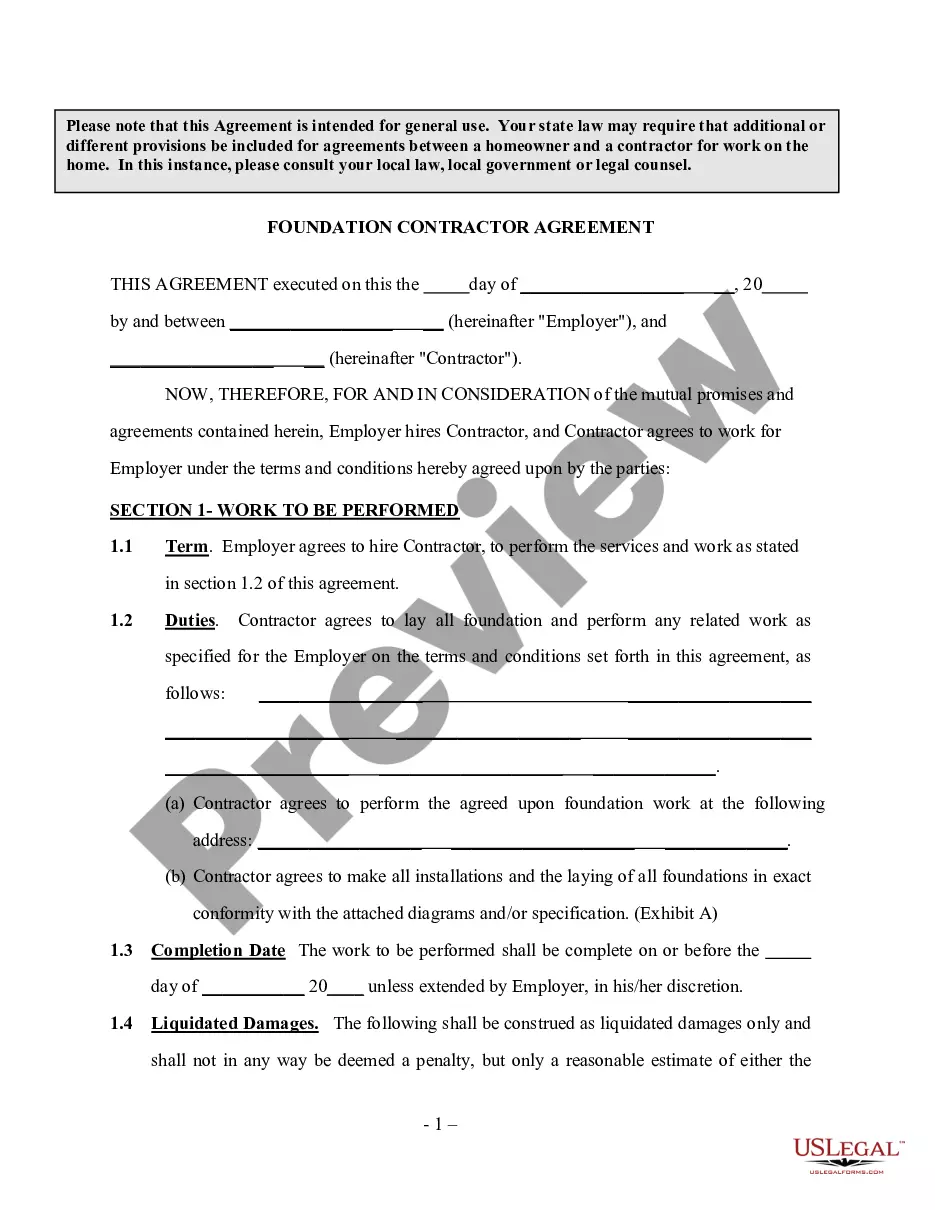
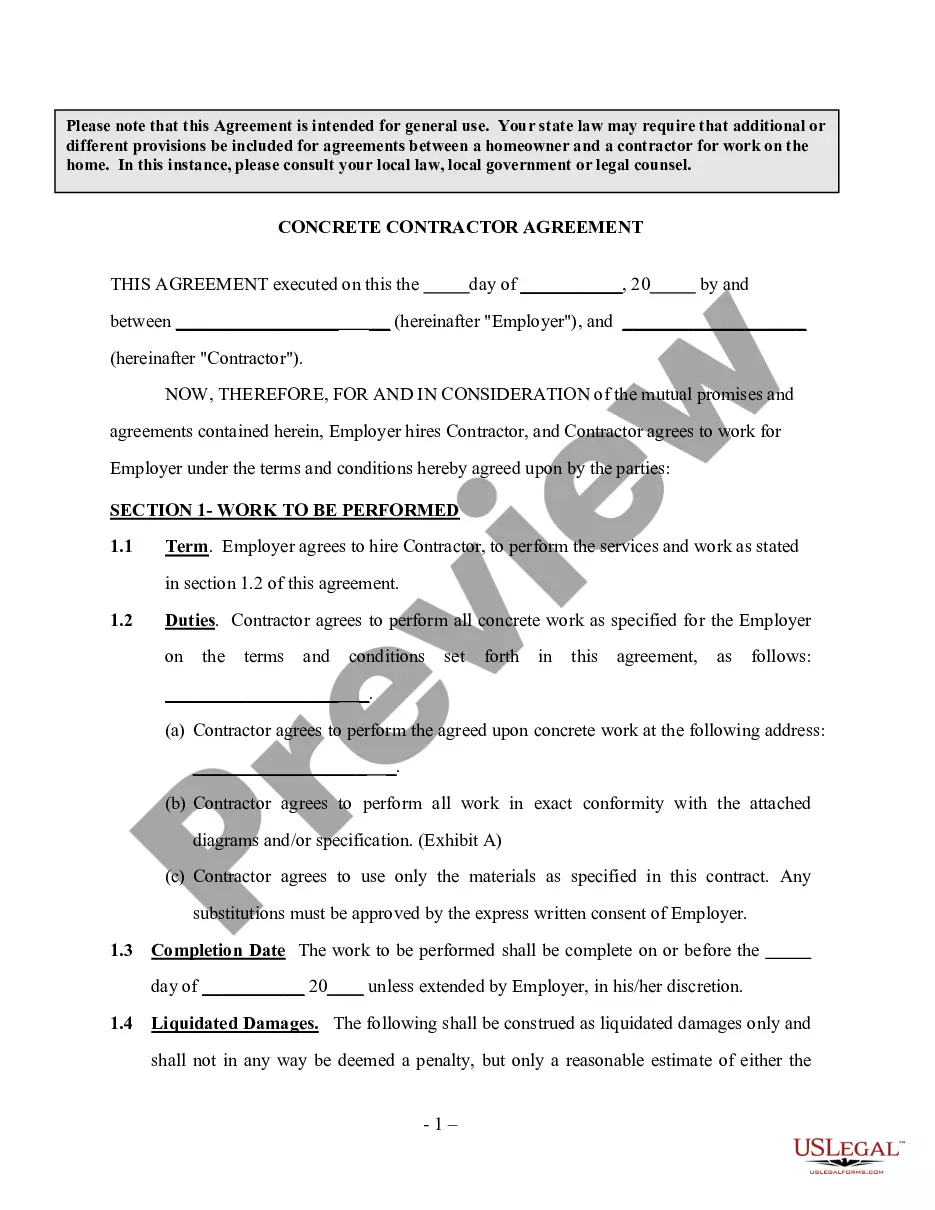
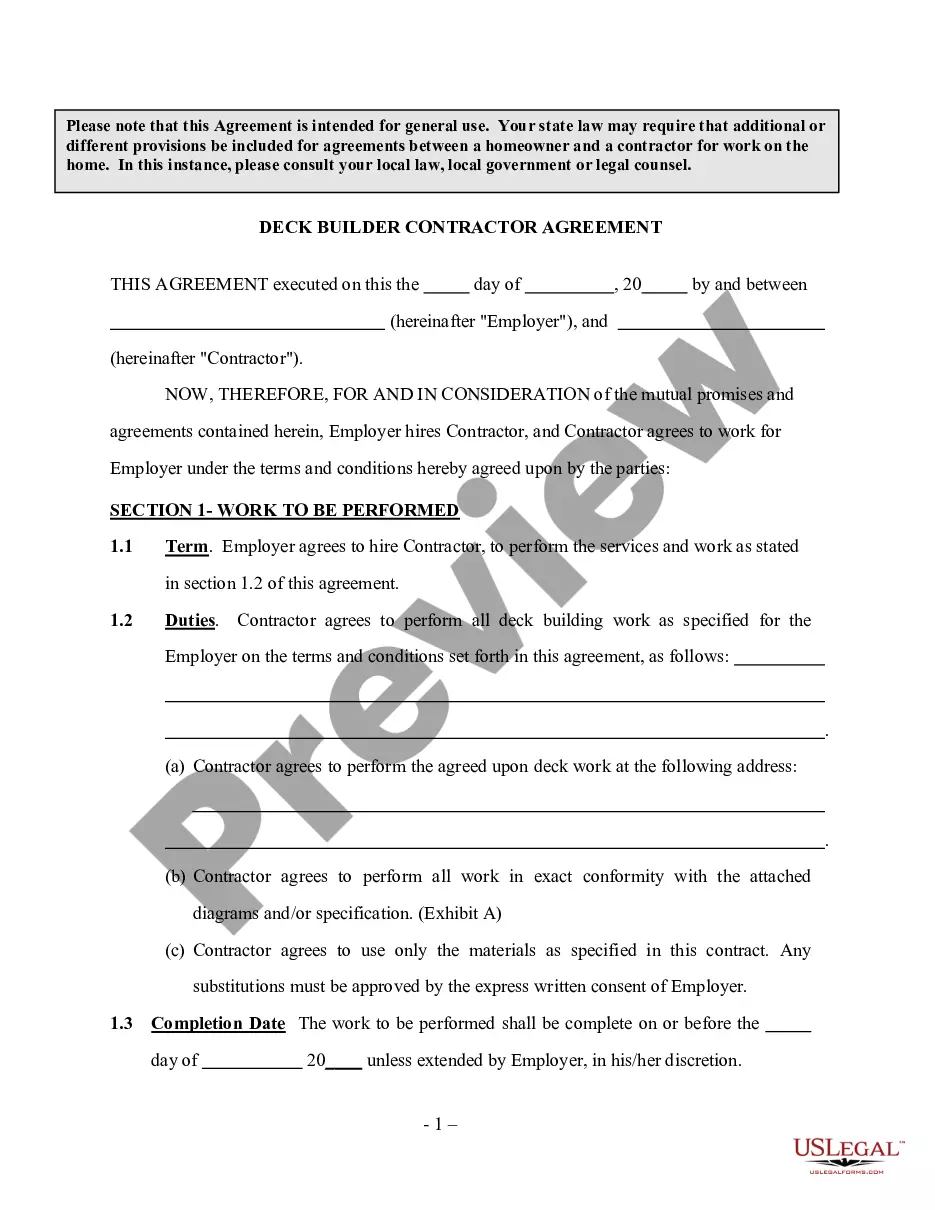
Employer contracts with an independent contractor to provide, install a fence as specified and agreed upon in the contract. Please note that this Agreement is intended for general use. Your state law may require that additional or different provisions be included for agreements between a homeowner and a contractor for work on the home. In this instance, please consult your local law, local government or legal counsel.
Arkansas Fence Contractor Agreement - Self-Employed
State:
Multi-State
Control #:
US-INDC-107
Format:
Word;
Rich Text
Instant download
Description
Free preview

Get your form ready online
Our built-in tools help you complete, sign, share, and store your documents in one place.
Built-in online Word editor
Make edits, fill in missing information, and update formatting in US Legal Forms—just like you would in MS Word.
Export easily
Download a copy, print it, send it by email, or mail it via USPS—whatever works best for your next step.
E-sign your document
Sign and collect signatures with our SignNow integration. Send to multiple recipients, set reminders, and more. Go Premium to unlock E-Sign.
Notarize online 24/7
If this form requires notarization, complete it online through a secure video call—no need to meet a notary in person or wait for an appointment.
Store your document securely
We protect your documents and personal data by following strict security and privacy standards.

Make edits, fill in missing information, and update formatting in US Legal Forms—just like you would in MS Word.

Download a copy, print it, send it by email, or mail it via USPS—whatever works best for your next step.

Sign and collect signatures with our SignNow integration. Send to multiple recipients, set reminders, and more. Go Premium to unlock E-Sign.

If this form requires notarization, complete it online through a secure video call—no need to meet a notary in person or wait for an appointment.

We protect your documents and personal data by following strict security and privacy standards.
Looking for another form?
How to fill out Fence Contractor Agreement - Self-Employed?
You might invest hours online seeking the valid document template that meets the federal and state requirements necessary.
US Legal Forms provides thousands of valid forms that can be assessed by experts.
You can obtain or print the Arkansas Fence Contractor Agreement - Self-Employed from their service.
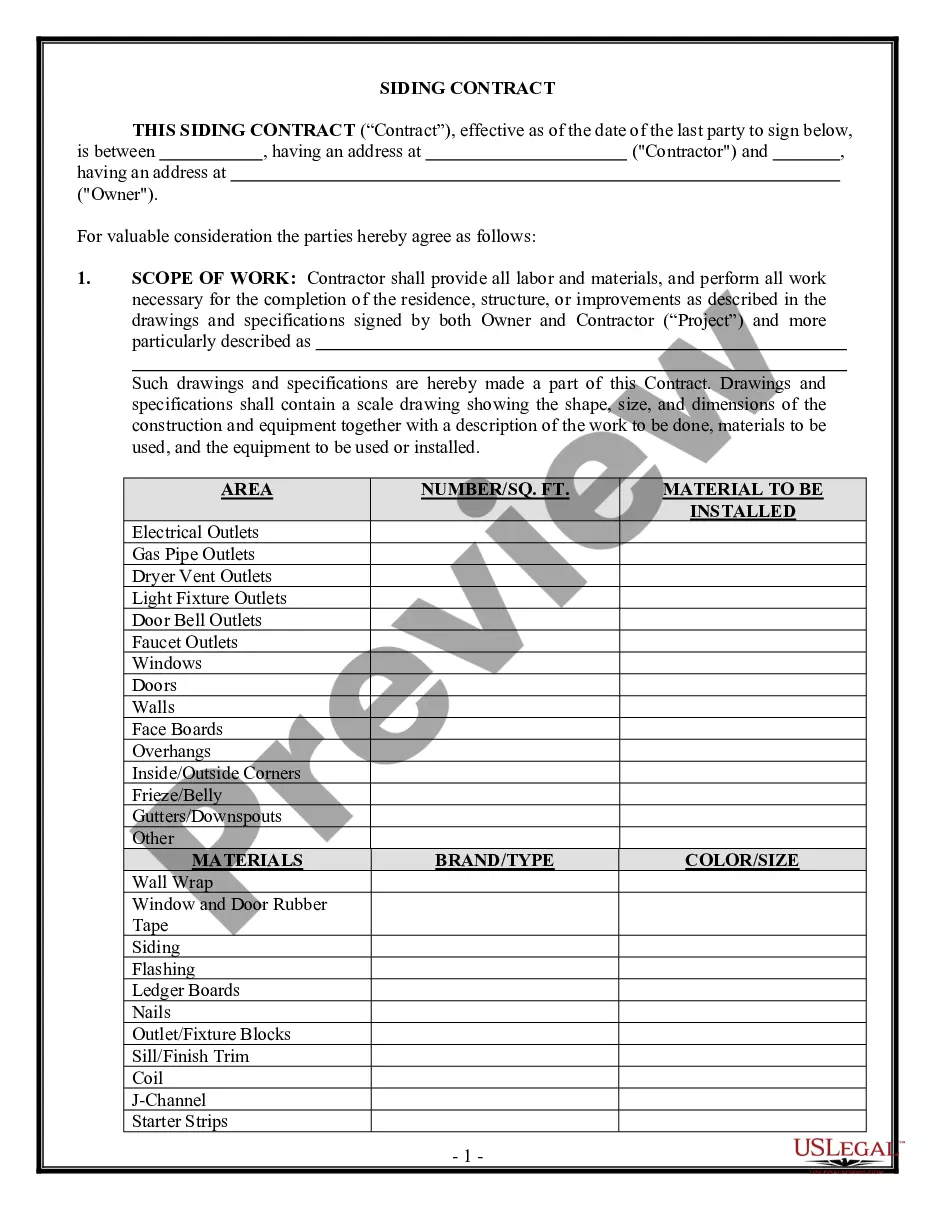
First, ensure that you have chosen the correct document template for the location/city of your choice. Review the form description to confirm you have selected the correct form. If available, use the Preview button to review the document template as well.
- If you possess a US Legal Forms account, you can Log In and click the Obtain button.
- Afterward, you can complete, modify, print, or sign the Arkansas Fence Contractor Agreement - Self-Employed.
- Every legal document template you acquire belongs to you indefinitely.
- To obtain another copy of the purchased form, navigate to the My documents tab and click the corresponding button.
- If you are using the US Legal Forms website for the first time, follow the simple instructions below.
Form popularity
FAQ
As an independent contractor operating under an Arkansas Fence Contractor Agreement - Self-Employed, you have several important rights. You are entitled to receive payment for your work as specified in your contract, and you have the right to define how to complete the tasks assigned. Moreover, you can protect your intellectual property and seek reimbursement for any expenses incurred while fulfilling your agreement. Consulting resources like US Legal Forms can provide valuable guidance on ensuring your rights are upheld.
When entering into an Arkansas Fence Contractor Agreement - Self-Employed, it's crucial to understand the legal requirements for independent contractors. You must have a clear contract that outlines the scope of work, payment terms, and deadlines. Additionally, you should comply with federal and state regulations regarding taxes, insurance, and permits. Using a platform like US Legal Forms can help you easily find and complete the necessary agreements.
To craft an independent contractor agreement, clearly define the scope of work, payment details, and deadlines. Include sections on liability, confidentiality, and dispute resolution to protect both parties. Make sure both you and the contractor read and sign the document for legal validity. Using an Arkansas Fence Contractor Agreement - Self-Employed template from US Legal Forms can guide you in covering all necessary elements.
Writing a self-employed contract involves detailing the nature of your services, payment terms, and project timelines. Be specific in outlining responsibilities to avoid potential disputes. Include termination clauses and confidentiality agreements when applicable. For a well-structured Arkansas Fence Contractor Agreement - Self-Employed, consider leveraging templates available on US Legal Forms.
In Arkansas, you can perform minor tasks without a contractor license, such as some home repairs or small-scale projects. However, there are restrictions on the total value of contracted work, typically around $20,000 for home improvement projects. If your work exceeds this amount, you must obtain the necessary license. Make sure to review your options and use an Arkansas Fence Contractor Agreement - Self-Employed to ensure compliance.
Filling out an independent contractor form requires you to input your personal information, including full name and contact details. Next, describe the services you will provide, including any relevant licensing information. Specify payment terms and key dates. Accessing an Arkansas Fence Contractor Agreement - Self-Employed template from US Legal Forms can streamline this process.
To complete an independent contractor agreement, start by clearly stating the terms of your engagement. Provide essential details like the scope of work, payment structure, and timelines. Ensure both parties sign the document to confirm mutual agreement. For an effective Arkansas Fence Contractor Agreement - Self-Employed, consider using resources like US Legal Forms to simplify the process.
In Arkansas, the primary difference between an employee and an independent contractor lies in the level of control and independence. Employees work under the employer's direction, following set hours and performing tasks in a specific manner. In contrast, independent contractors, such as those outlined in the Arkansas Fence Contractor Agreement - Self-Employed, operate with more autonomy, choosing how and when to complete their work. Understanding these differences can help you determine your legal standing and ensure compliance with state laws.