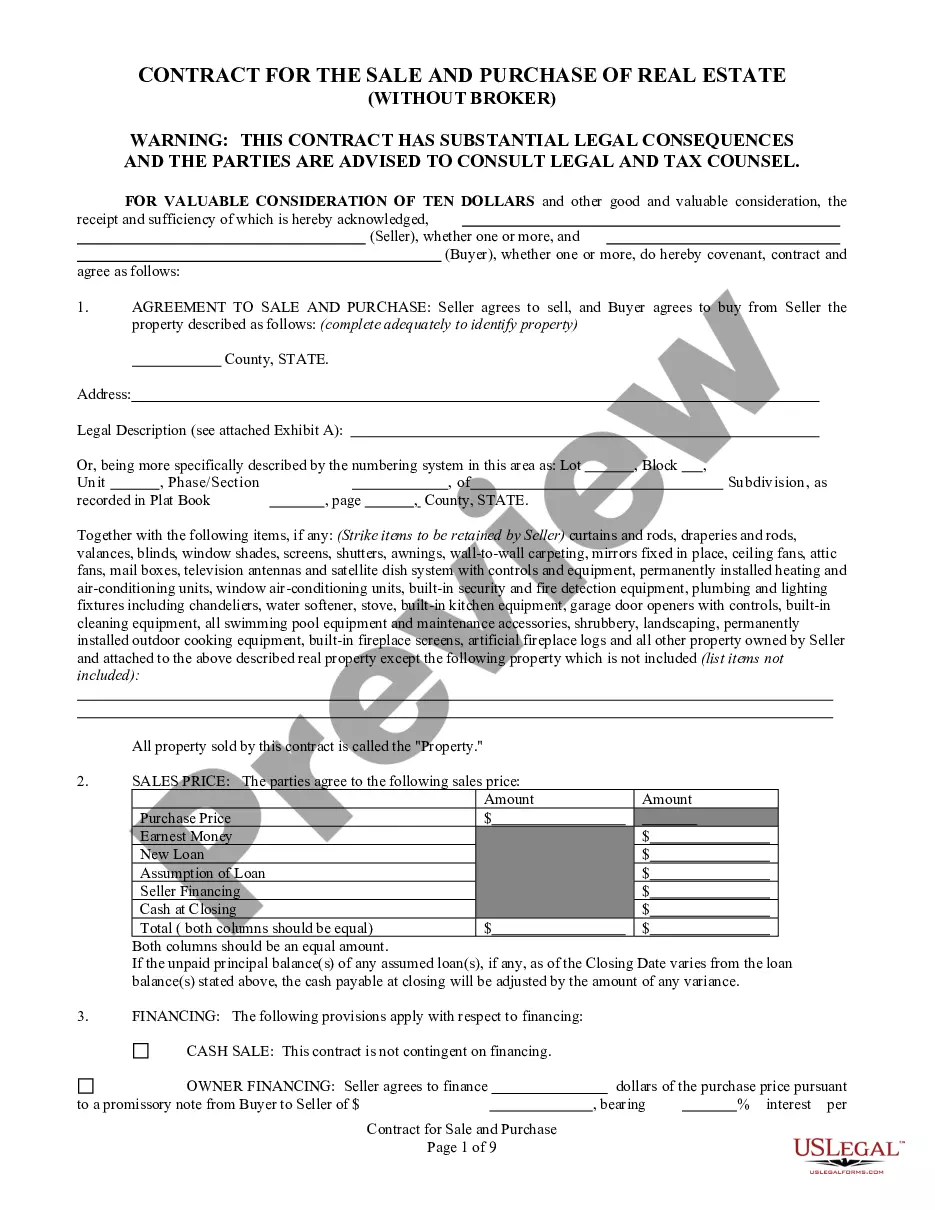
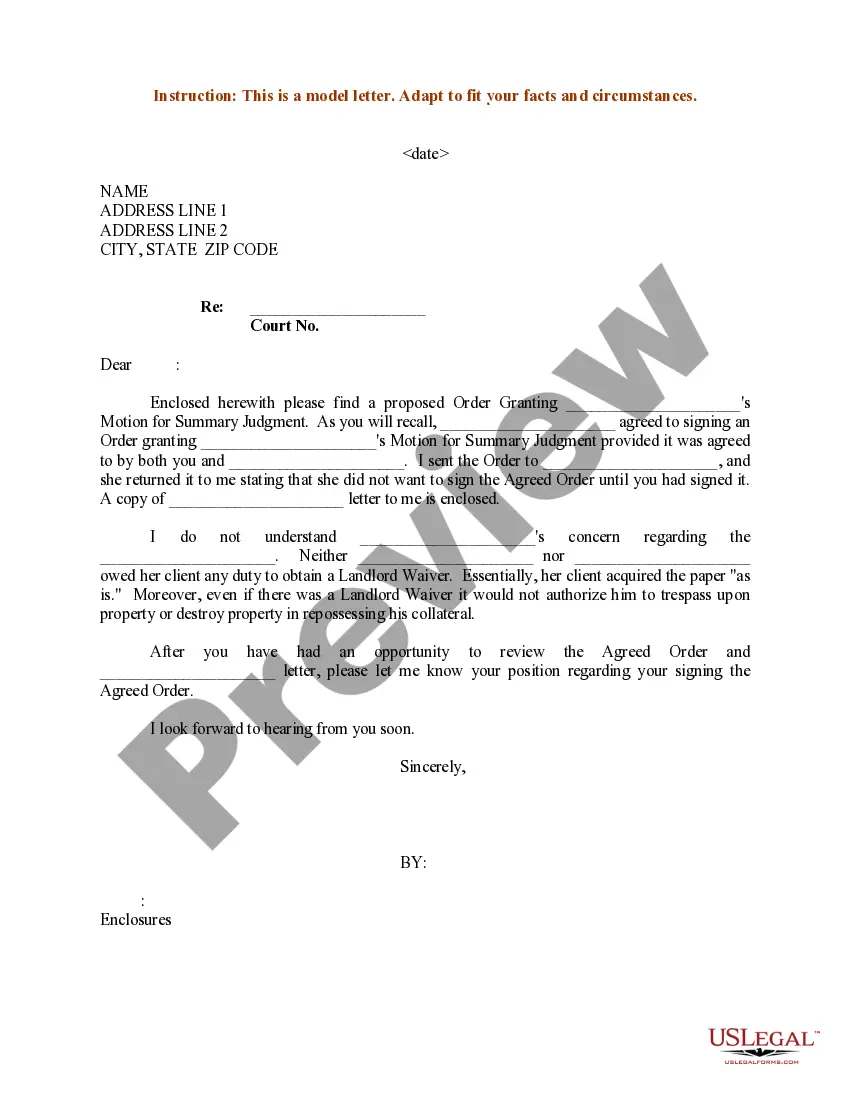
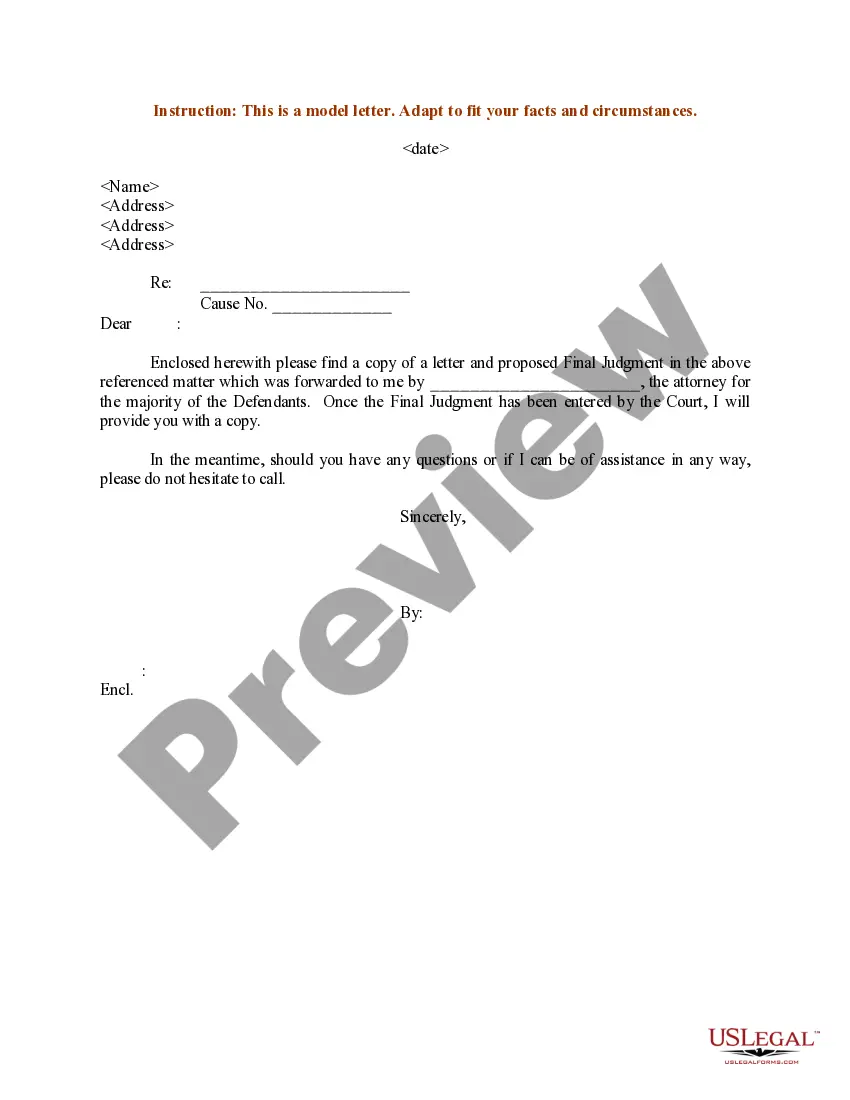
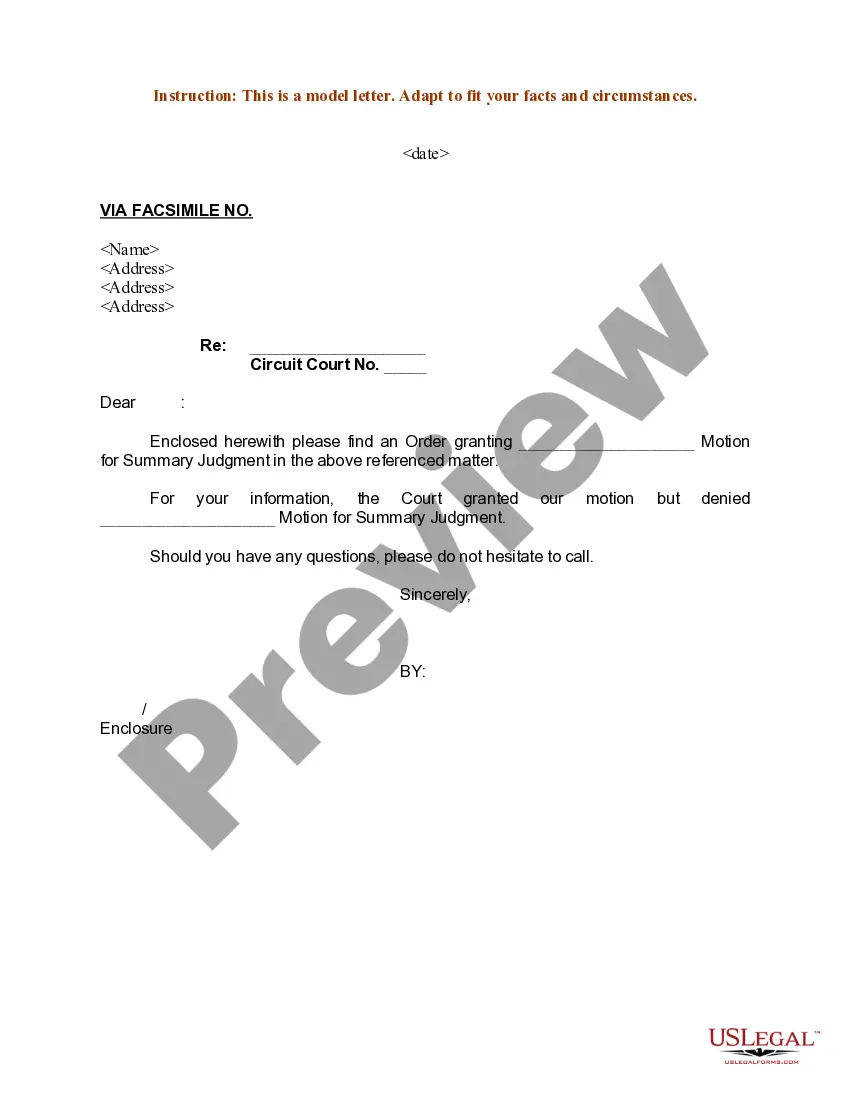
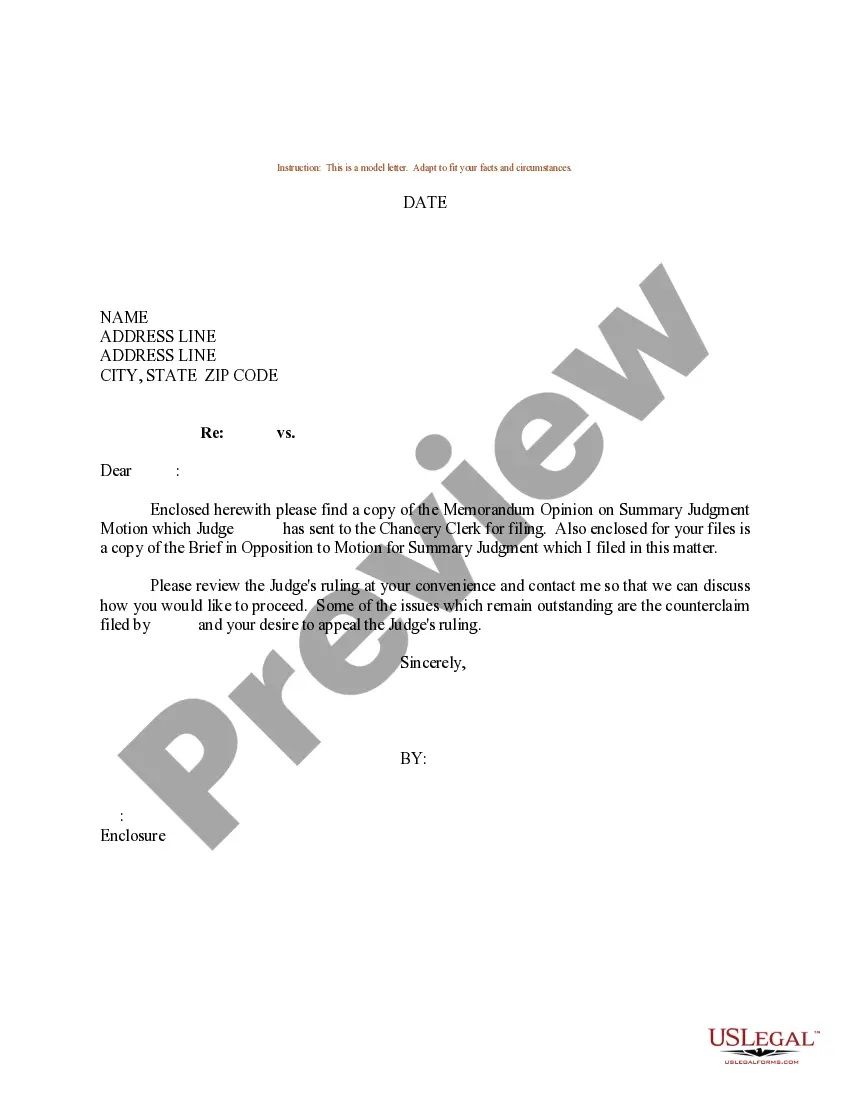
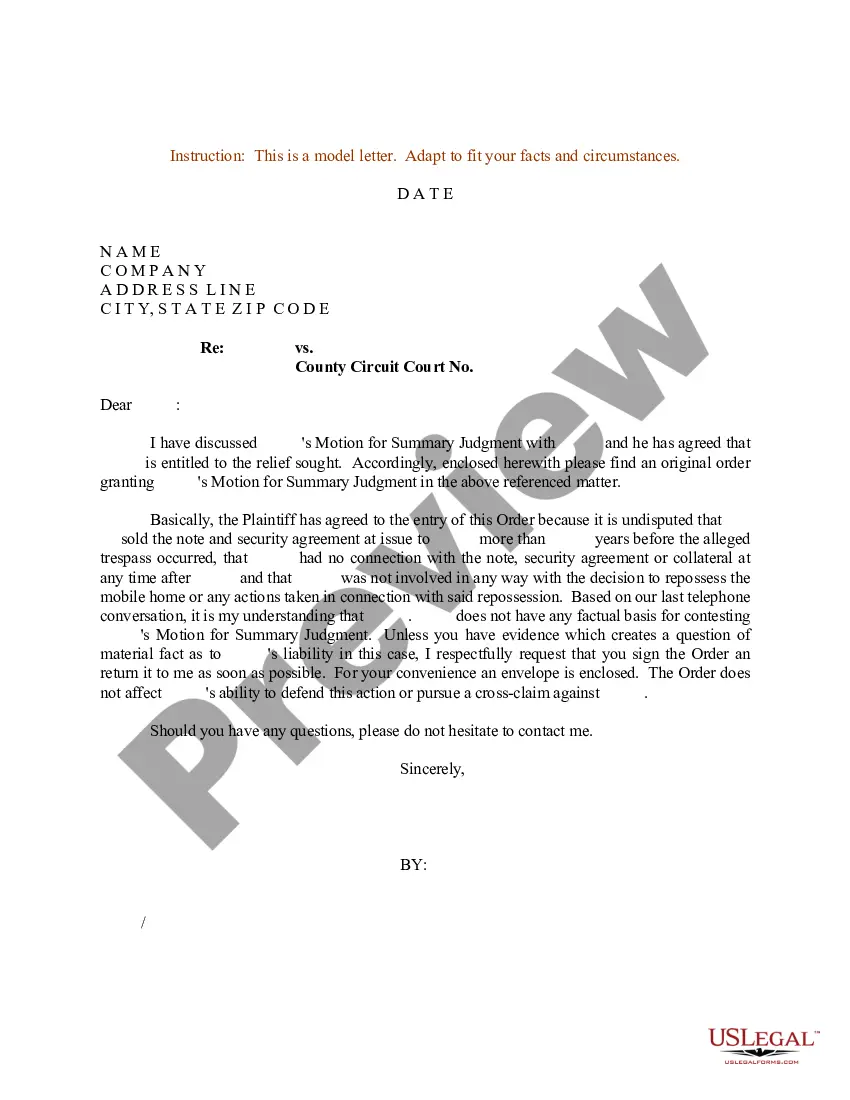
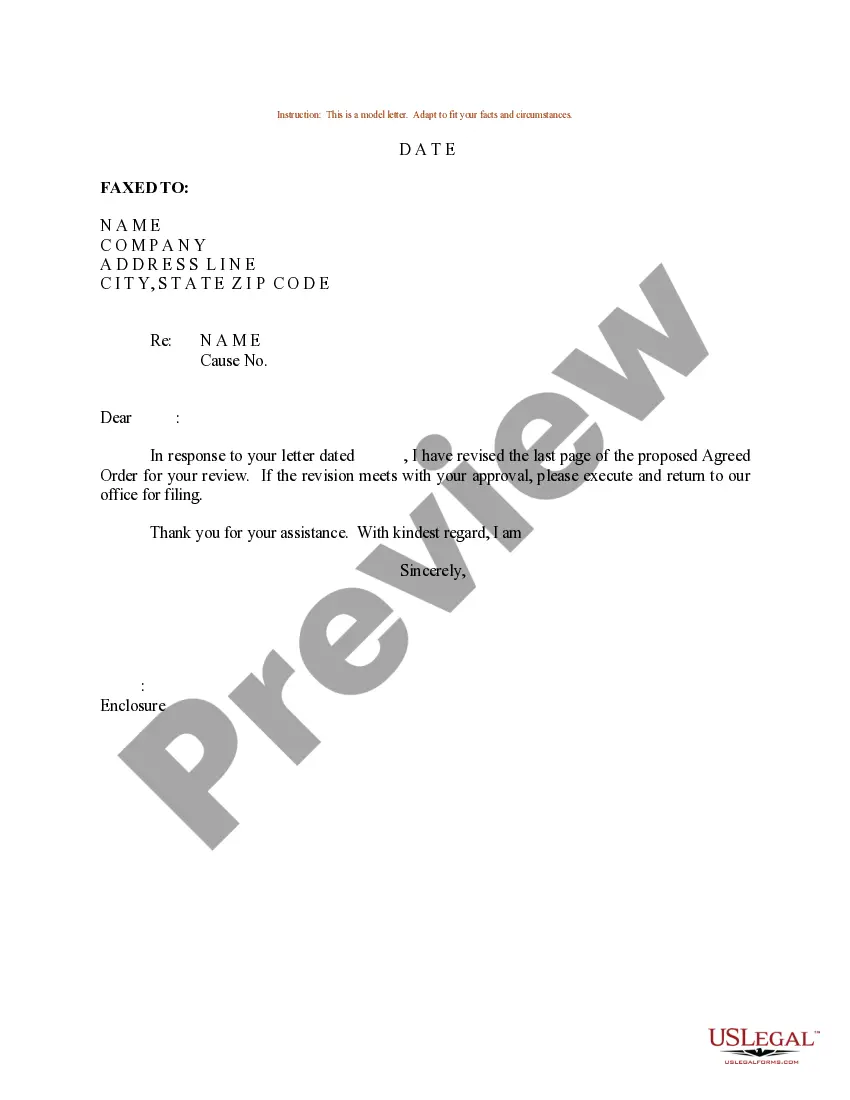
Arkansas Sample Letter for Proposed Order Granting Summary Judgment
Description
Get your form ready online
Our built-in tools help you complete, sign, share, and store your documents in one place.
Make edits, fill in missing information, and update formatting in US Legal Forms—just like you would in MS Word.
Download a copy, print it, send it by email, or mail it via USPS—whatever works best for your next step.
Sign and collect signatures with our SignNow integration. Send to multiple recipients, set reminders, and more. Go Premium to unlock E-Sign.
If this form requires notarization, complete it online through a secure video call—no need to meet a notary in person or wait for an appointment.
We protect your documents and personal data by following strict security and privacy standards.

Make edits, fill in missing information, and update formatting in US Legal Forms—just like you would in MS Word.

Download a copy, print it, send it by email, or mail it via USPS—whatever works best for your next step.

Sign and collect signatures with our SignNow integration. Send to multiple recipients, set reminders, and more. Go Premium to unlock E-Sign.

If this form requires notarization, complete it online through a secure video call—no need to meet a notary in person or wait for an appointment.

We protect your documents and personal data by following strict security and privacy standards.
Looking for another form?

How to fill out Sample Letter For Proposed Order Granting Summary Judgment?
Locating the appropriate legitimate document template can be a challenge. Clearly, there are numerous designs accessible online, but how do you obtain the legitimate form you seek.
Utilize the US Legal Forms website. The platform offers a wide range of templates, including the Arkansas Sample Letter for Proposed Order Granting Summary Judgment, which can be utilized for both business and personal purposes. All documents are reviewed by professionals and comply with federal and state regulations.
If you are already registered, Log In to your account and click on the Download button to access the Arkansas Sample Letter for Proposed Order Granting Summary Judgment. Use your account to browse through the legal forms you have previously purchased. Visit the My documents tab of your account to obtain another copy of the document you need.
Complete, modify, print, and sign the downloaded Arkansas Sample Letter for Proposed Order Granting Summary Judgment. US Legal Forms is the leading repository of legal templates where you can find a variety of document formats. Use the service to obtain professionally crafted papers that adhere to state regulations.
- If you are a new user of US Legal Forms, here are simple instructions for you to follow.
- First, ensure you have selected the correct form for your city/state. You can review the form using the Preview button and check the form description to confirm it is suitable for you.
- If the form does not meet your requirements, use the Search field to find the appropriate form.
- Once you are confident that the form is suitable, click the Get now button to obtain the form.
- Select the pricing plan you prefer and enter the necessary information. Create your account and complete your order using your PayPal account or credit card.
- Choose the file format and download the legal document template to your device.
Form popularity
FAQ
Despite the name ?summary judgment,? the ruling of the court that comes after the filing of a motion for summary judgment is an order, not a final judgment. Unlike the situation of the demurrer?in which it is not necessary to get a final judgment?an order granting summary judgment is not appealable.
The chance of success in these cases is less than 10% [1]. Another study found that summary judgment is mostly granted in Title VII cases, for example, cases involving equal pay or employment discrimination [2]. When it comes to federal cases, summary judgments are filed in 17% of total cases.
A summary judgment is a decision made based on statements and evidence without going to trial. It's a final decision by a judge and is designed to resolve a lawsuit before going to court.
If a motion for summary judgment is granted, the judge has determined that no material facts are in dispute and the moving party is entitled to judgment as a matter of law.
A party claiming relief may move, with or without supporting affidavits, for summary judgment on all or part of the claim. The motion may be filed at any time after twenty (20) days have passed from commencement of the action or the opposing party serves a motion for summary judgment. B. BY A DEFENDING PARTY.
Summary judgment applications (Rule 9-6) are intended to weed out those claims and responses that have no merit and will fail at trial. If you can show that the defendant has no real defence, you may be able to obtain summary judgment against them, without having to go through a trial.