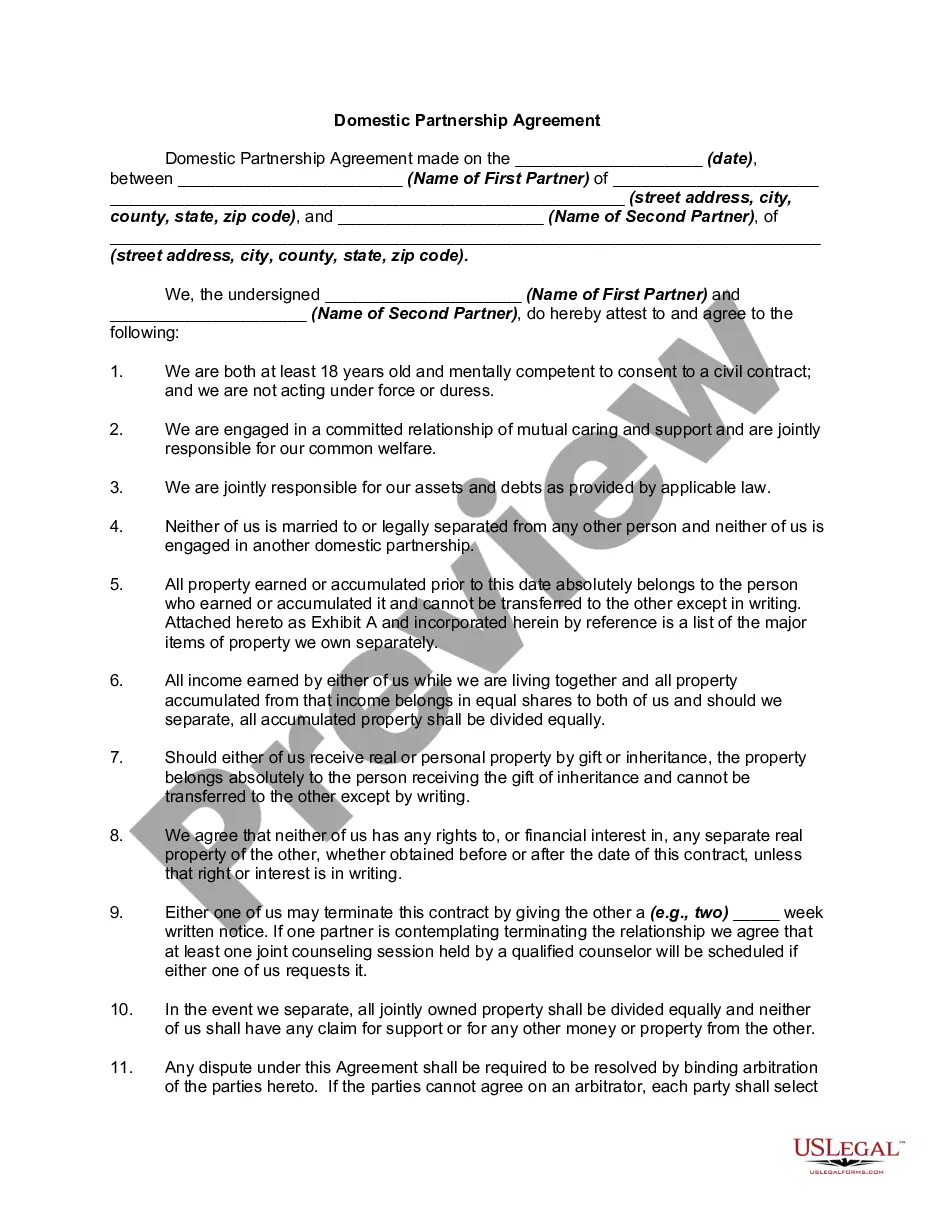
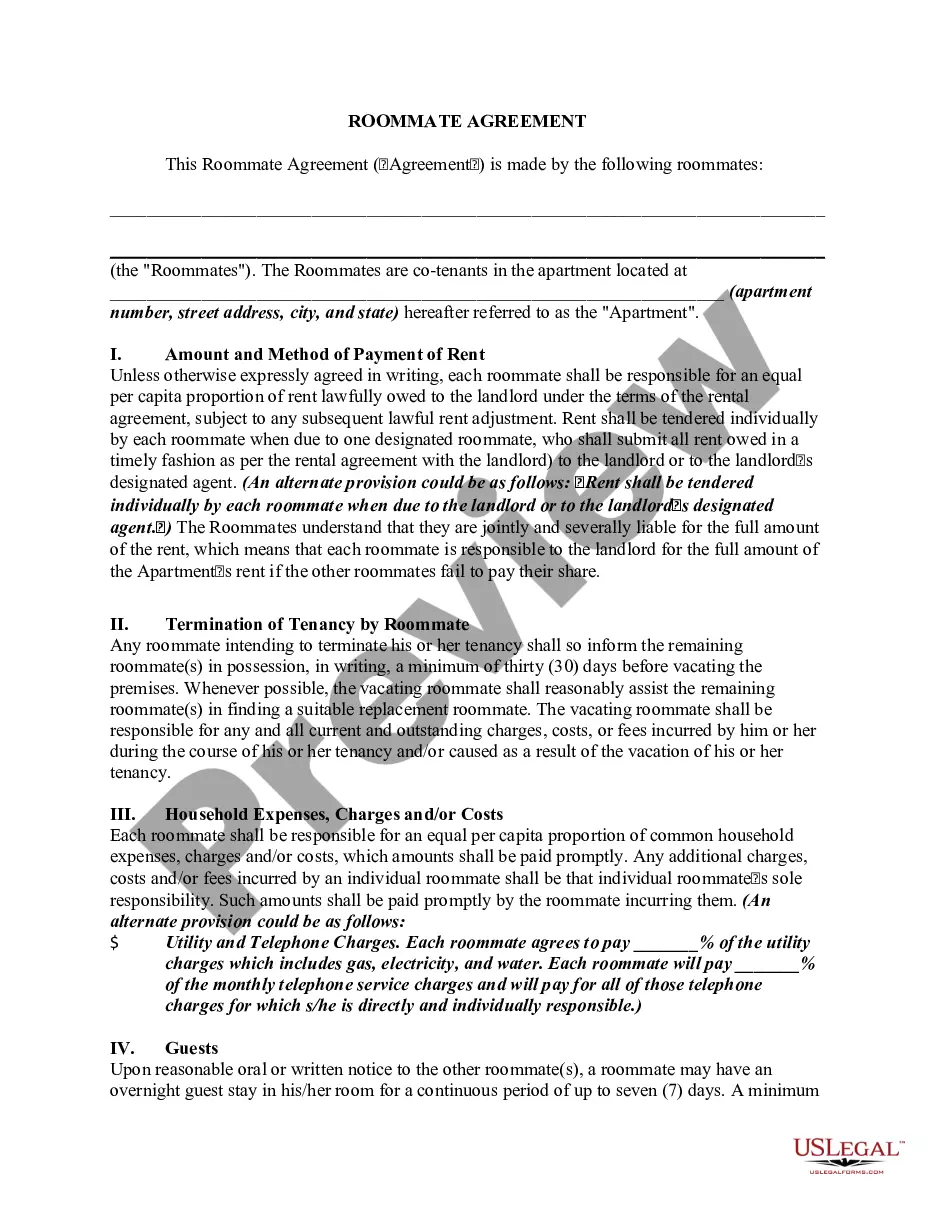
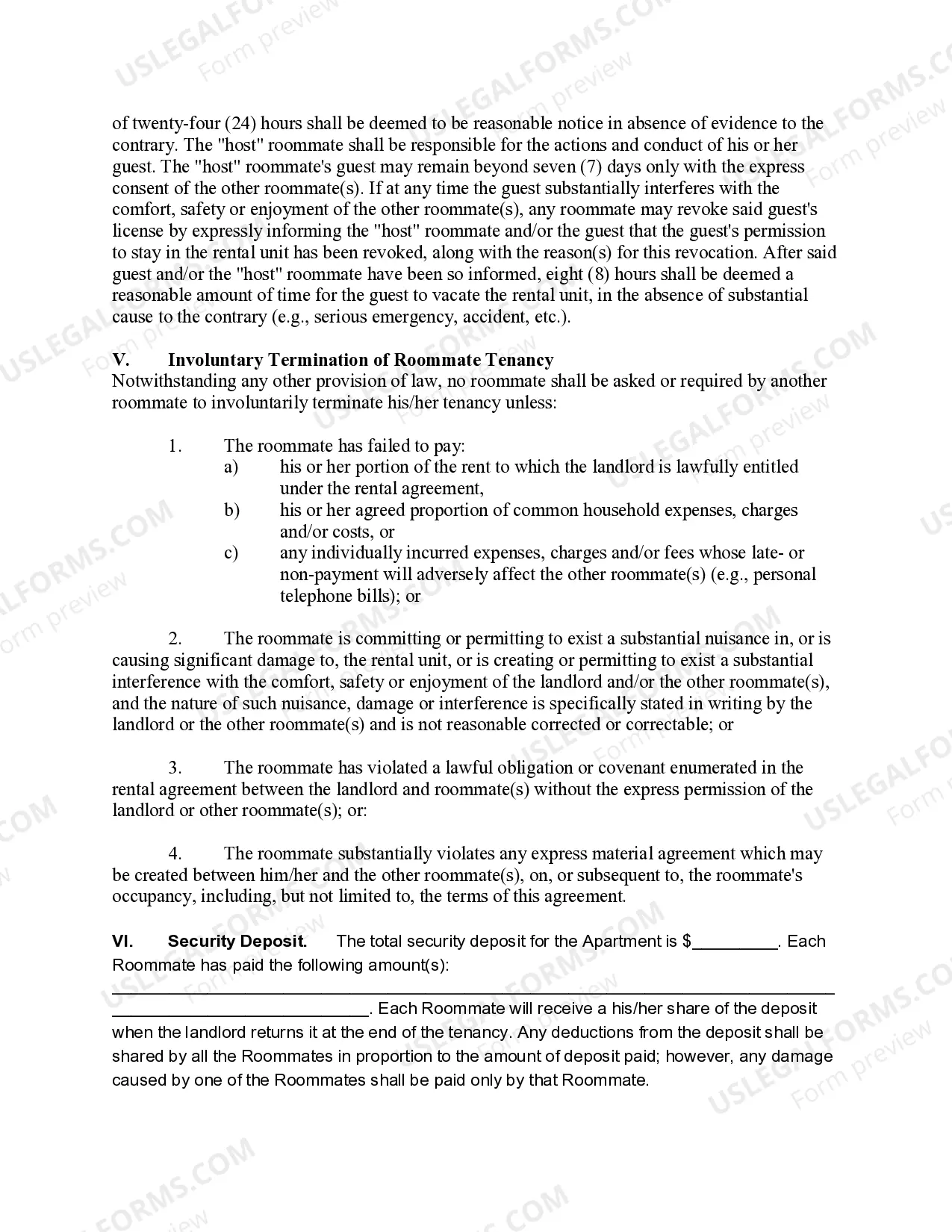
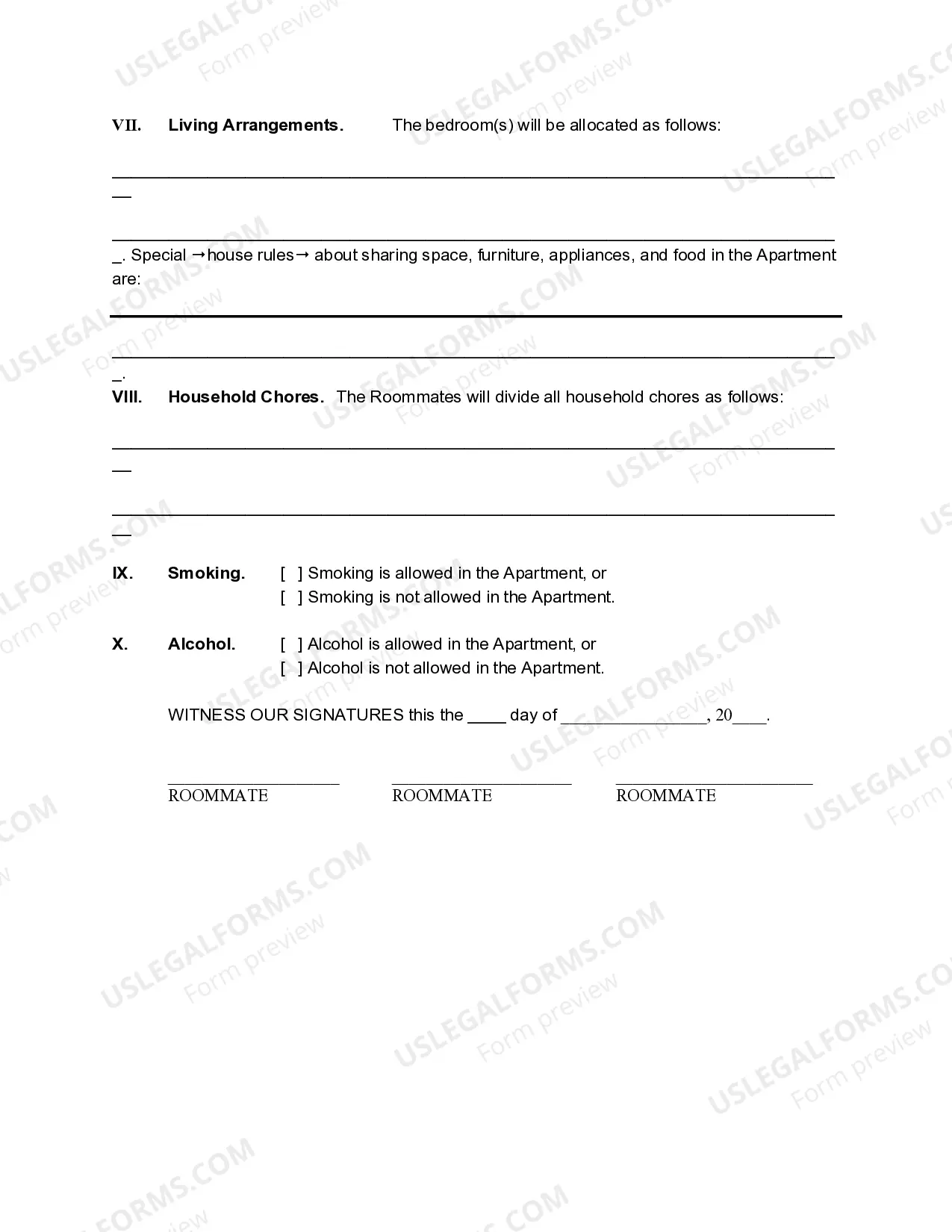
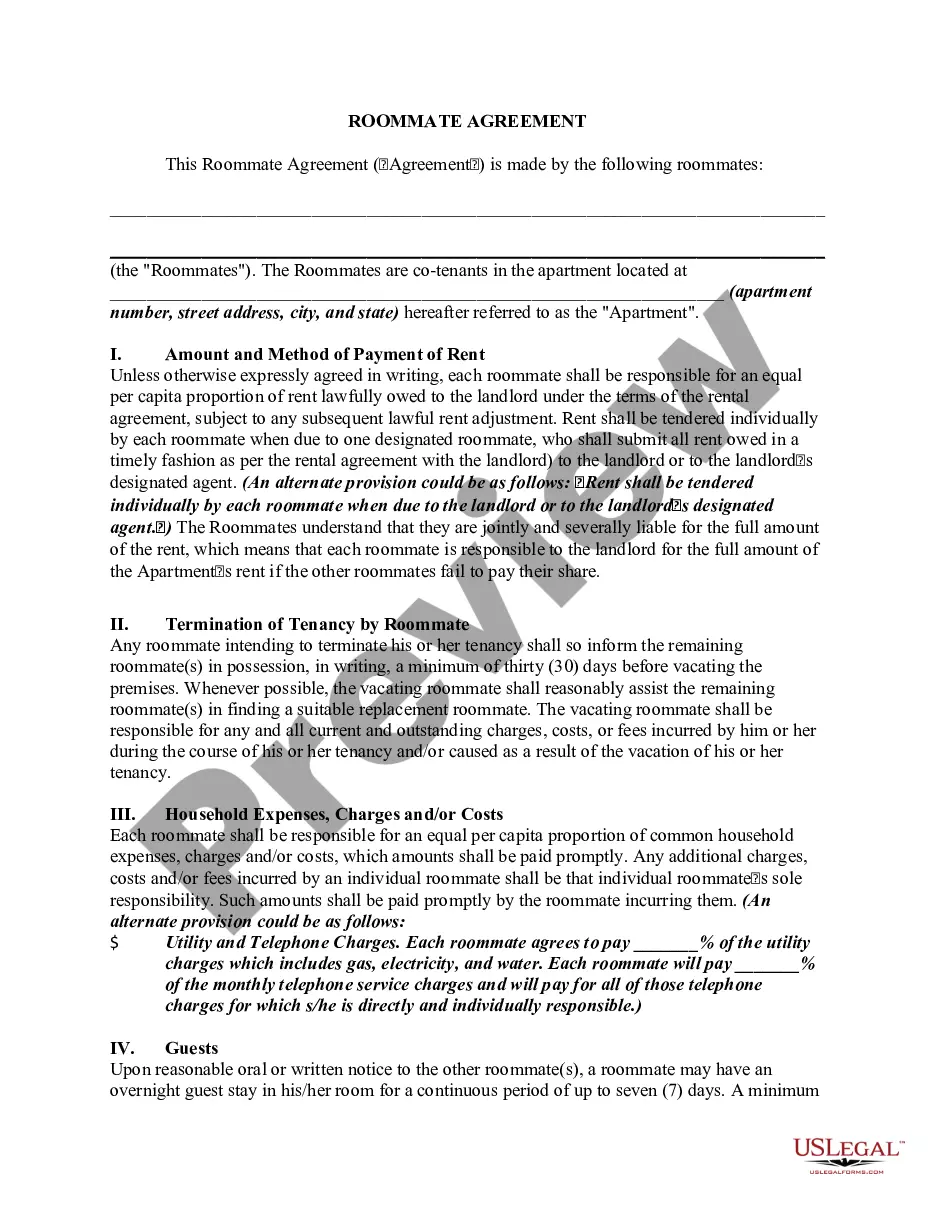
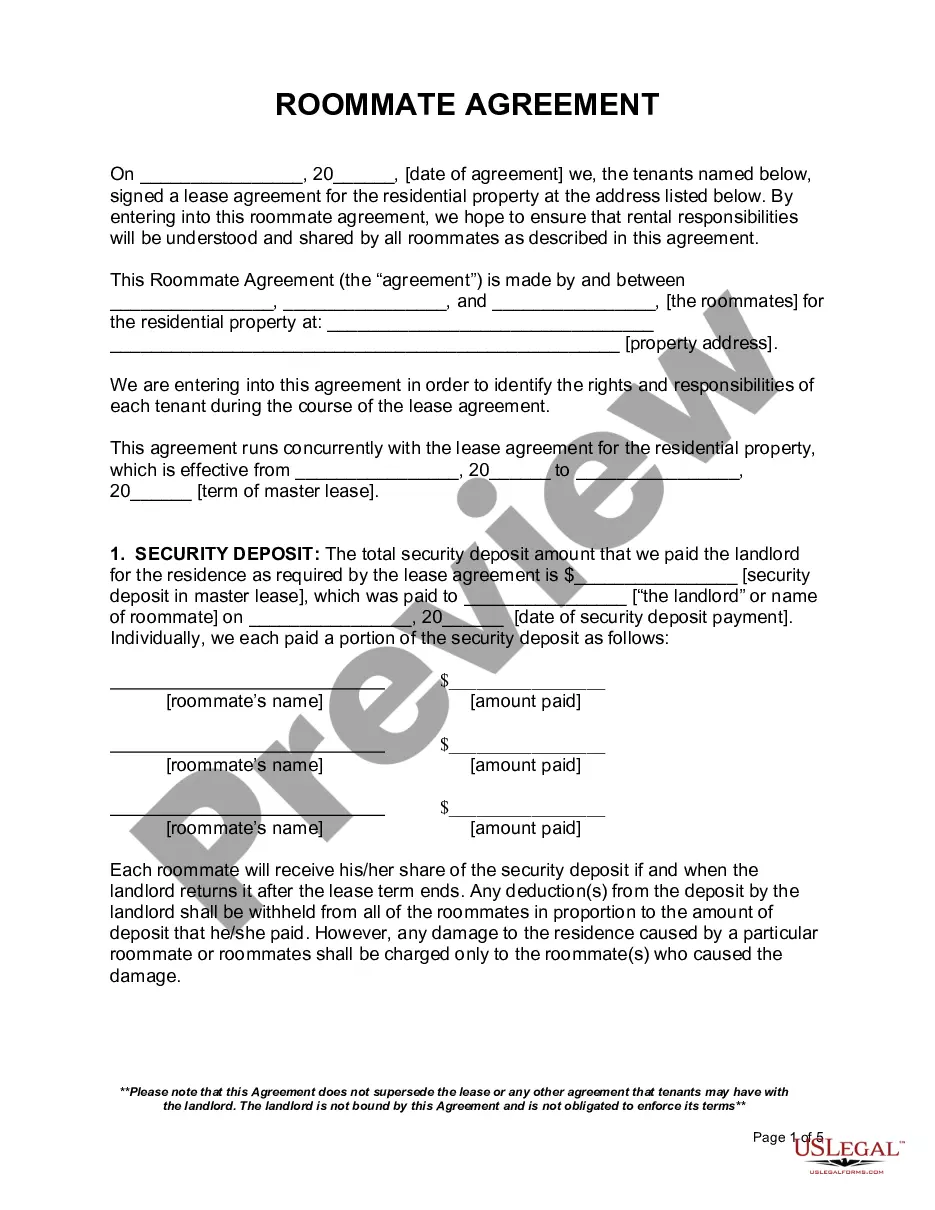
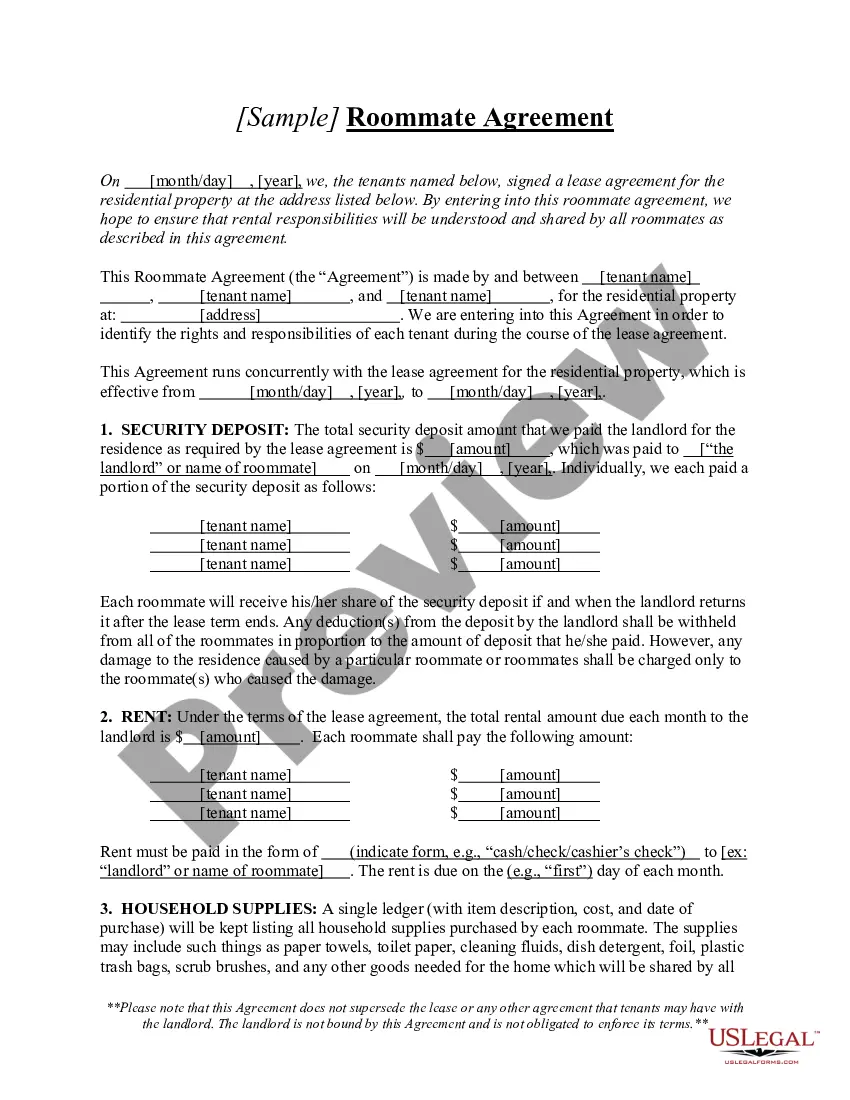
Arkansas Roommate Agreement for Landlord
Description

Get your form ready online
Our built-in tools help you complete, sign, share, and store your documents in one place.
Make edits, fill in missing information, and update formatting in US Legal Forms—just like you would in MS Word.
Download a copy, print it, send it by email, or mail it via USPS—whatever works best for your next step.
Sign and collect signatures with our SignNow integration. Send to multiple recipients, set reminders, and more. Go Premium to unlock E-Sign.
If this form requires notarization, complete it online through a secure video call—no need to meet a notary in person or wait for an appointment.
We protect your documents and personal data by following strict security and privacy standards.

Make edits, fill in missing information, and update formatting in US Legal Forms—just like you would in MS Word.

Download a copy, print it, send it by email, or mail it via USPS—whatever works best for your next step.

Sign and collect signatures with our SignNow integration. Send to multiple recipients, set reminders, and more. Go Premium to unlock E-Sign.

If this form requires notarization, complete it online through a secure video call—no need to meet a notary in person or wait for an appointment.

We protect your documents and personal data by following strict security and privacy standards.
Looking for another form?

How to fill out Roommate Agreement For Landlord?
Finding the appropriate legal document template can be challenging.
Of course, there are numerous formats accessible online, but how do you find the specific legal form you require.
Utilize the US Legal Forms website.
If you are a new user of US Legal Forms, here are simple steps to follow: First, ensure that you have selected the appropriate form for your location. You can review the form using the **Review** button and read the form overview to confirm it meets your needs. If the form does not meet your requirements, make use of the **Search** field to find the correct template. Once you are confident that the form is suitable, click the **Acquire now** button to obtain the document. Choose the pricing plan you want and input the required information. Create your account and complete the payment via your PayPal account or credit card. Select the document format and download the legal document template to your system. Fill out, edit, print, and sign the obtained Arkansas Roommate Agreement for Landlord. US Legal Forms is indeed the largest collection of legal templates where you can explore various document formats. Take advantage of the service to acquire professionally crafted documents that adhere to state standards.
- The service offers a wide range of templates, such as the Arkansas Roommate Agreement for Landlord, that can be used for both business and personal purposes.
- All forms undergo professional review and comply with federal and state regulations.
- If you are already registered, [Log In](https://www.uslegalforms.com/Log In/) to your account and click on the **Download** button to obtain the Arkansas Roommate Agreement for Landlord.
- Use your account to search for the legal documents you have previously purchased.
- Visit the [My documents](https://www.uslegalforms.com/Log In/#my-forms) tab in your account to retrieve another copy of the document you need.
Form popularity
FAQ
Evicting a roommate not on the lease in Arkansas can be complex. You must first provide written notice to the roommate, outlining the reasons for the eviction. An Arkansas Roommate Agreement for Landlord can simplify this process by defining terms and conditions clearly. If the roommate does not vacate, you may need to file an eviction lawsuit in court to formally remove them.
In Arkansas, you do not need a specific license to be a landlord. However, it is essential to understand the local laws and regulations that apply to renting properties. Establishing a solid Arkansas Roommate Agreement for Landlord can help clarify responsibilities and reduce potential disputes. Always stay informed about the legal requirements in your area to ensure compliance and protect your interests.
To evict a roommate not on the lease in Arkansas, you must first understand your rights and the legal process. Start by reviewing any Arkansas Roommate Agreement for Landlord that outlines the terms of occupancy. If there is no written agreement, you may still need to provide notice to the roommate, typically a fifteen-day written notice, depending on your lease terms. If they refuse to leave after this period, you may then file an eviction lawsuit in local court, seeking guidance through resources like US Legal Forms for the necessary documents.
Yes, your roommate may have the ability to lock you out if you are not listed on the lease. In this situation, legally, access to the property can be restricted. It’s wise to have an Arkansas Roommate Agreement for Landlord which addresses access rights and ensures that both parties understand their rights under the lease agreement.
In Arkansas, a landlord typically must provide a 30-day notice to a tenant to move out, especially if the agreement is month-to-month. However, this notice requirement can vary depending on your lease terms and type of tenancy. Always refer back to your original lease agreement and check with local laws to ensure compliance.
Breaking a roommate agreement can lead to various consequences, including financial liabilities and possible legal action for recovery of costs. The specific repercussions will depend on the terms set forth in your Arkansas Roommate Agreement for Landlord. It's important to communicate openly with your roommate and potentially negotiate any issues before they escalate.
A roommate agreement becomes legally binding when it is signed by all parties involved and outlines clear, enforceable terms. This typically includes provisions on payment responsibilities, house rules, and duration of the agreement. An Arkansas Roommate Agreement for Landlord serves as a highly recommended template that incorporates these essential elements, ensuring that both parties understand their duties.
Notarizing a roommate agreement is not strictly necessary, but it can provide extra assurance. A notarized agreement adds a layer of authenticity and can help if disputes arise later on. With an Arkansas Roommate Agreement for Landlord, notarization could enhance the document's validity in the eyes of the law, making it easier to enforce.
To ensure your roommate agreement is legally binding, both you and your roommate should sign the document. It's crucial that you clearly state the terms and conditions in the agreement, including rent payments, utilities, and shared responsibilities. Additionally, consider using an Arkansas Roommate Agreement for Landlord, which provides a structured format that can help both parties understand their obligations.
To add a roommate to your lease, discuss this matter with your landlord first. Typically, the landlord will need to approve any additional tenants for the lease agreement. Once approved, you can create an Arkansas Roommate Agreement for Landlord that outlines shared responsibilities, financial responsibilities, and any rules you both want to follow.