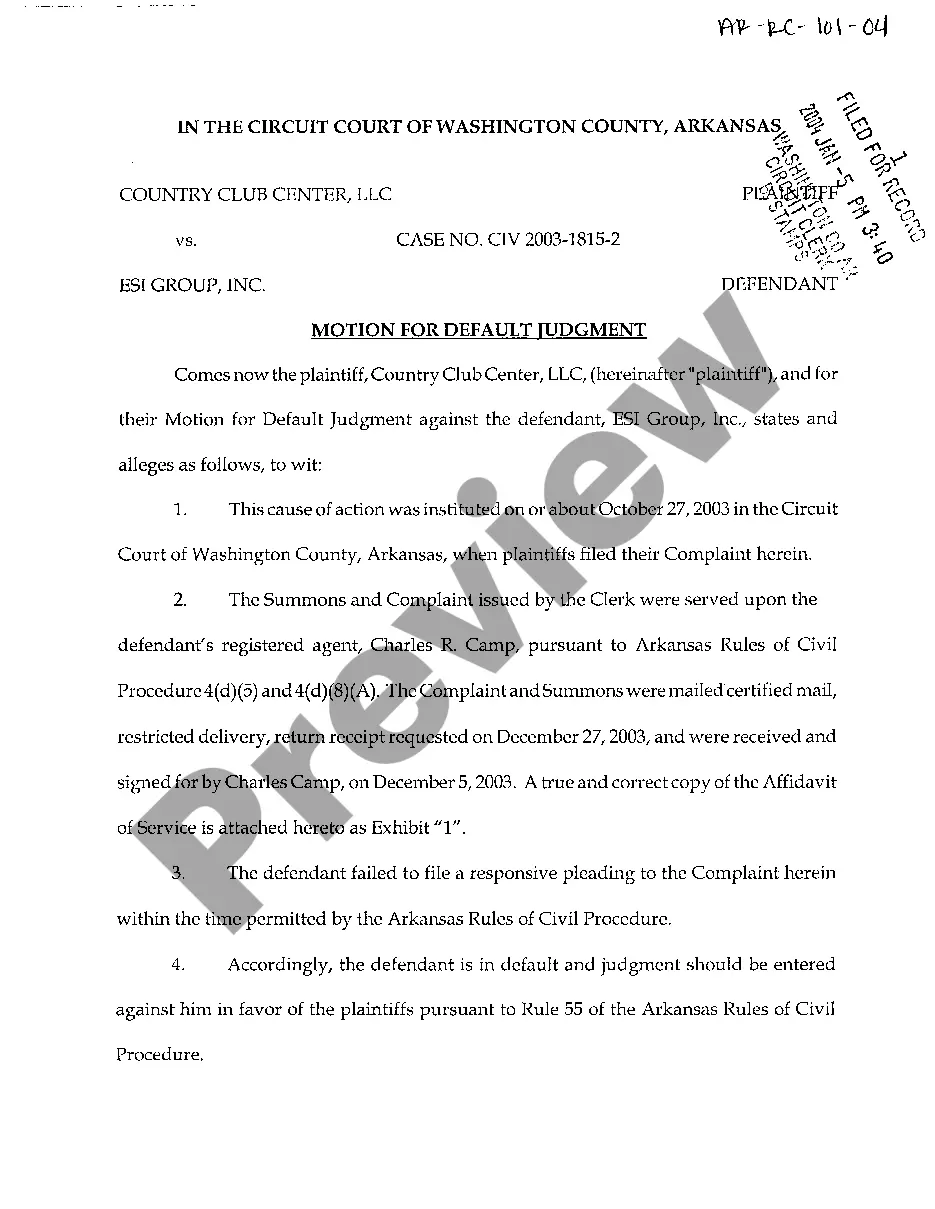
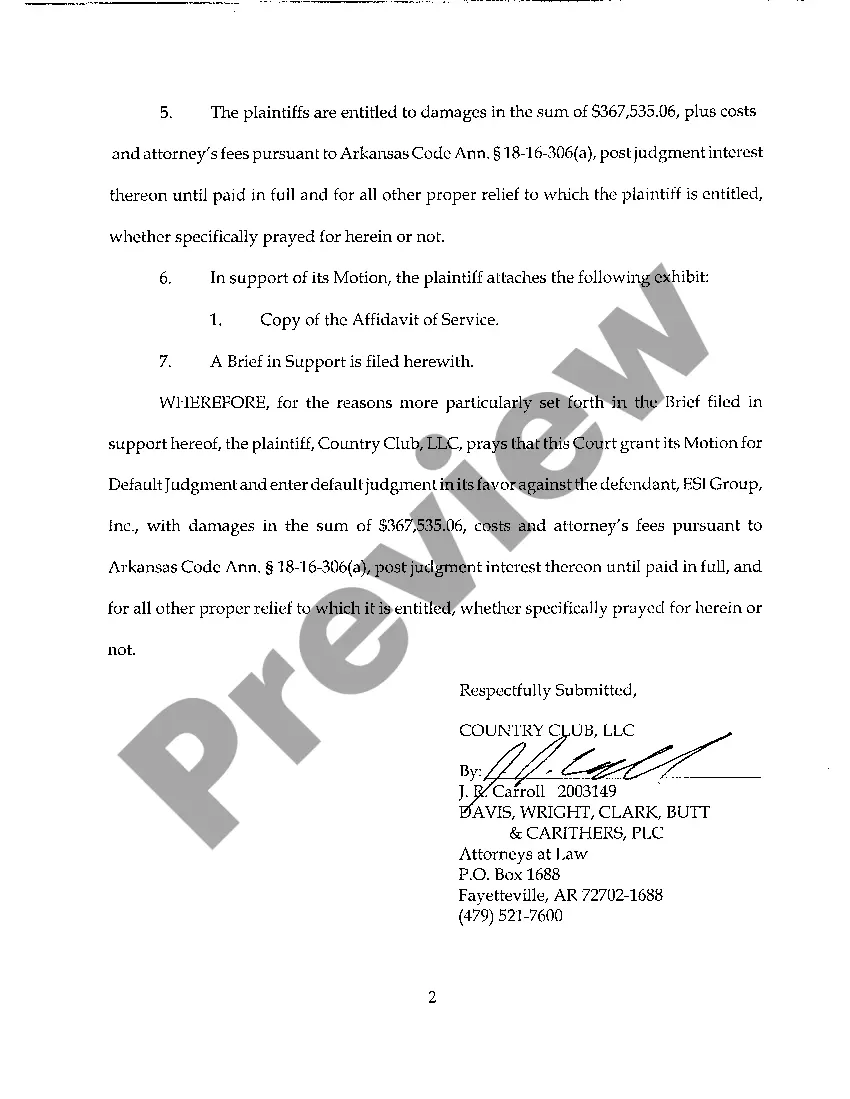
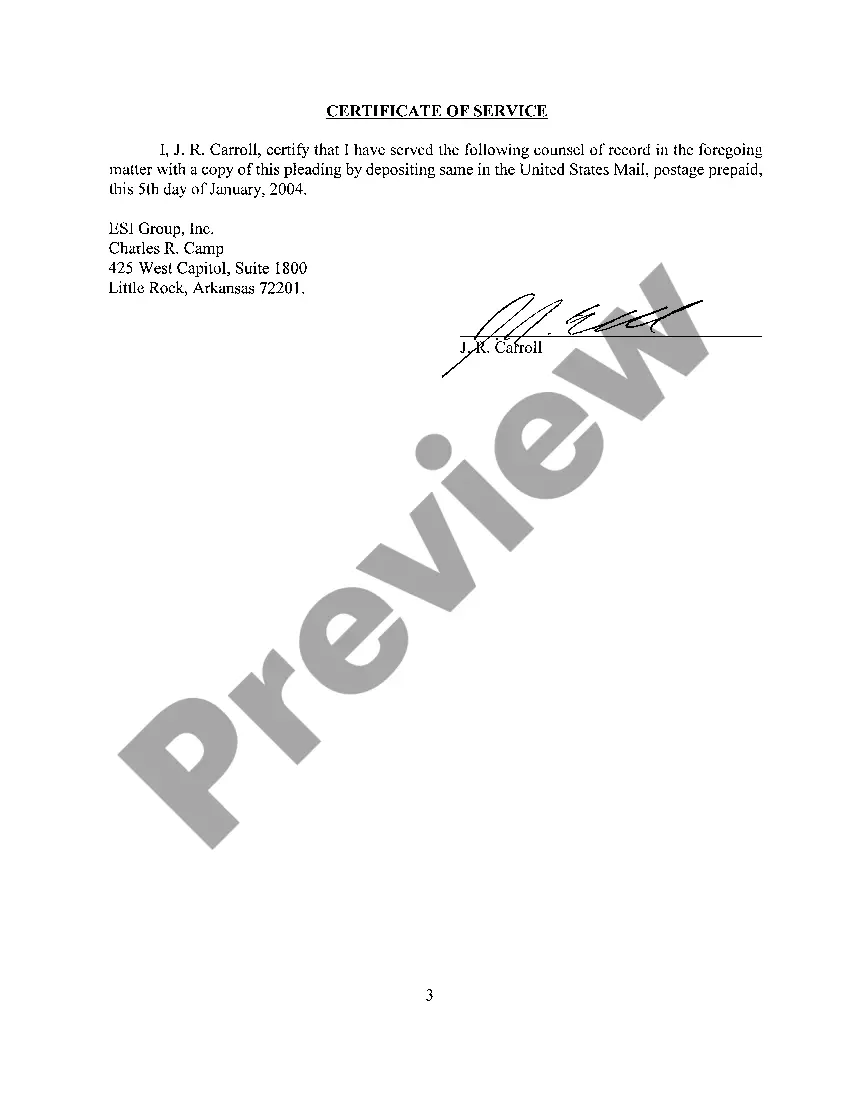
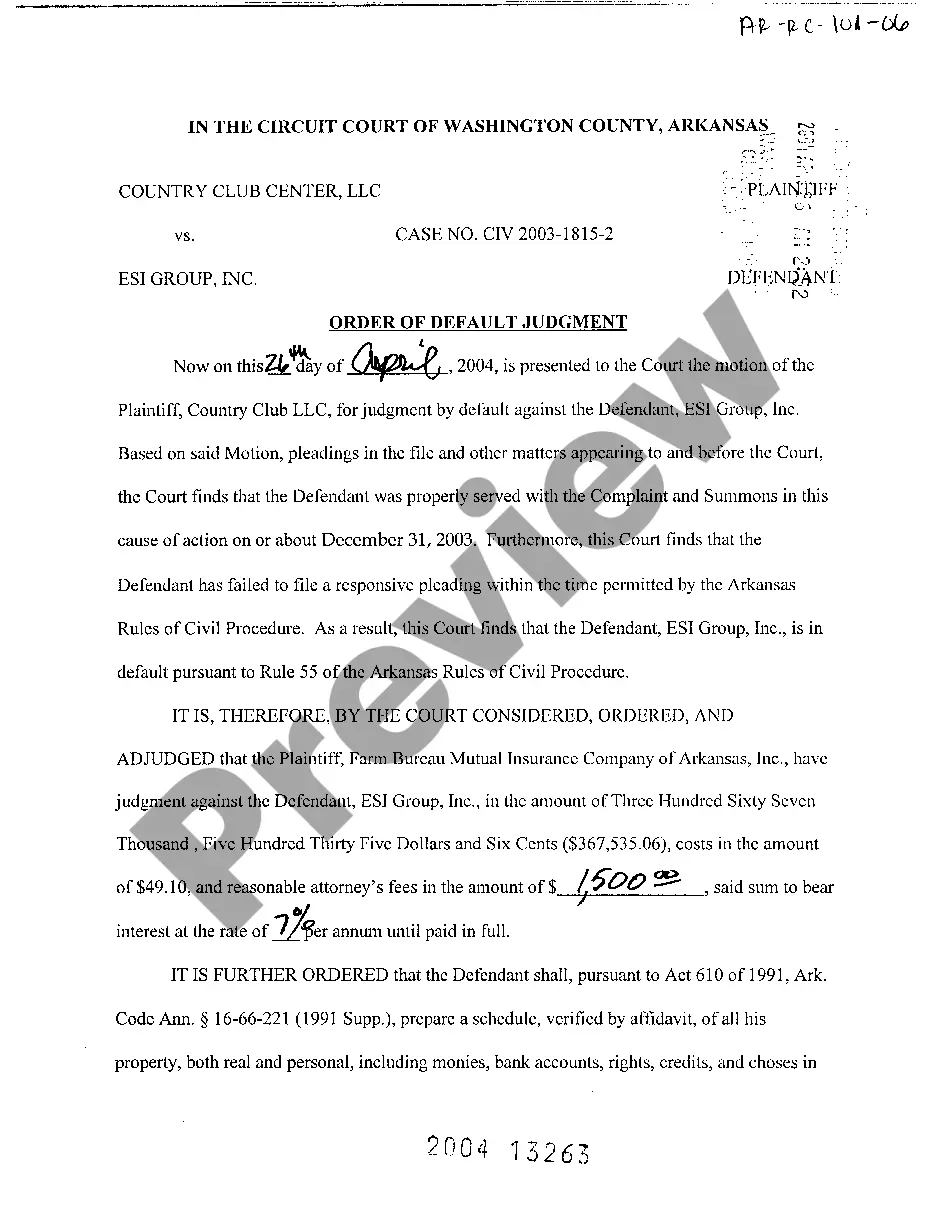
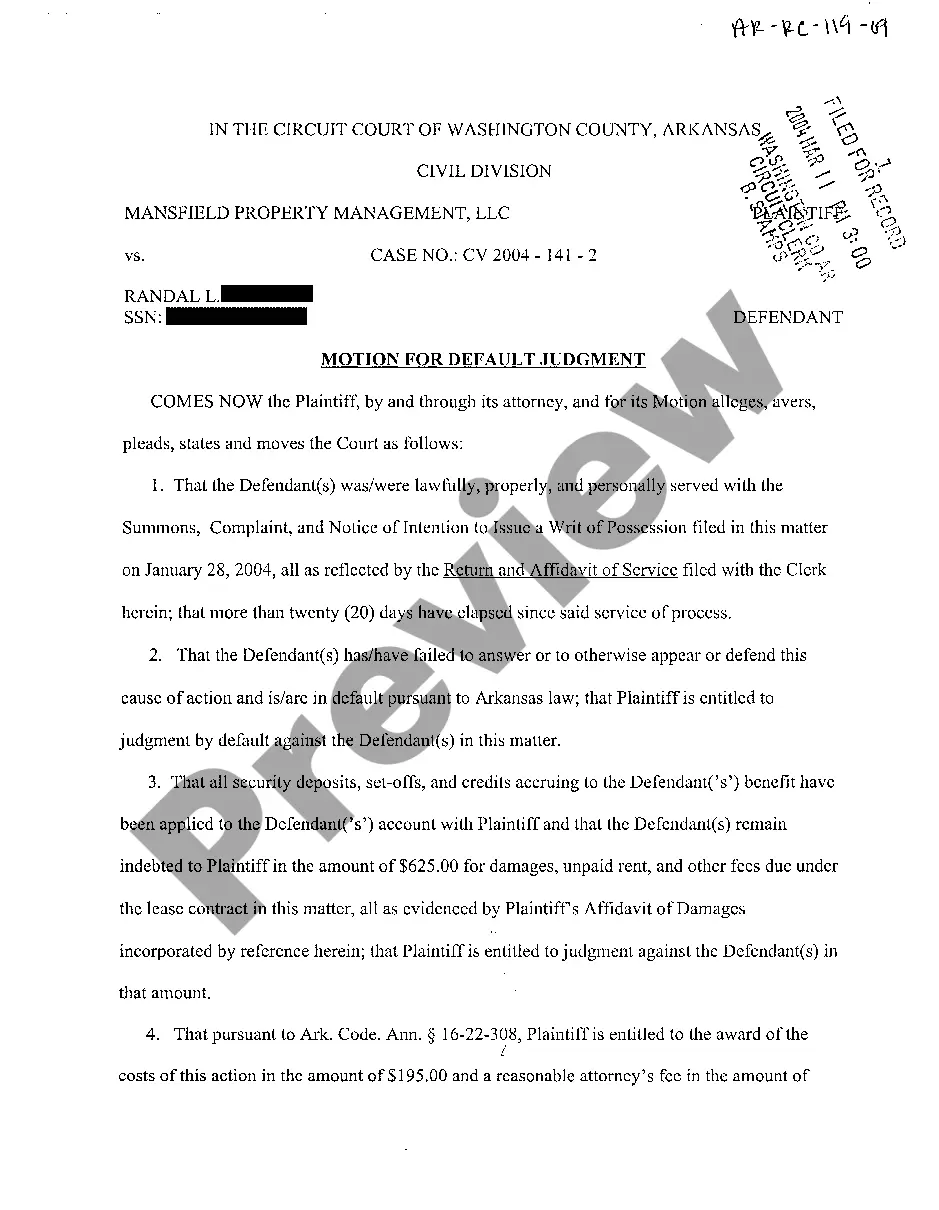
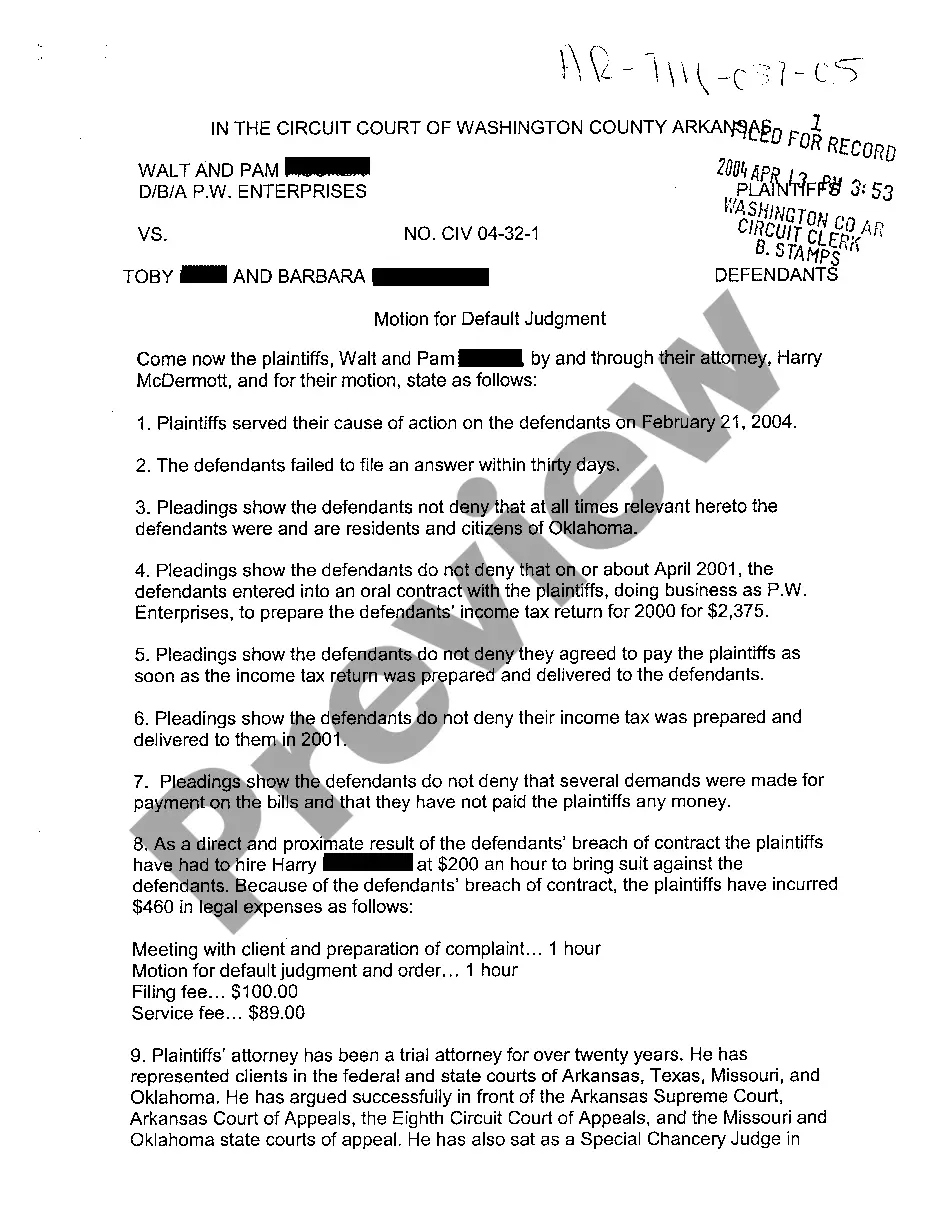
Arkansas Motion for Default Judgment
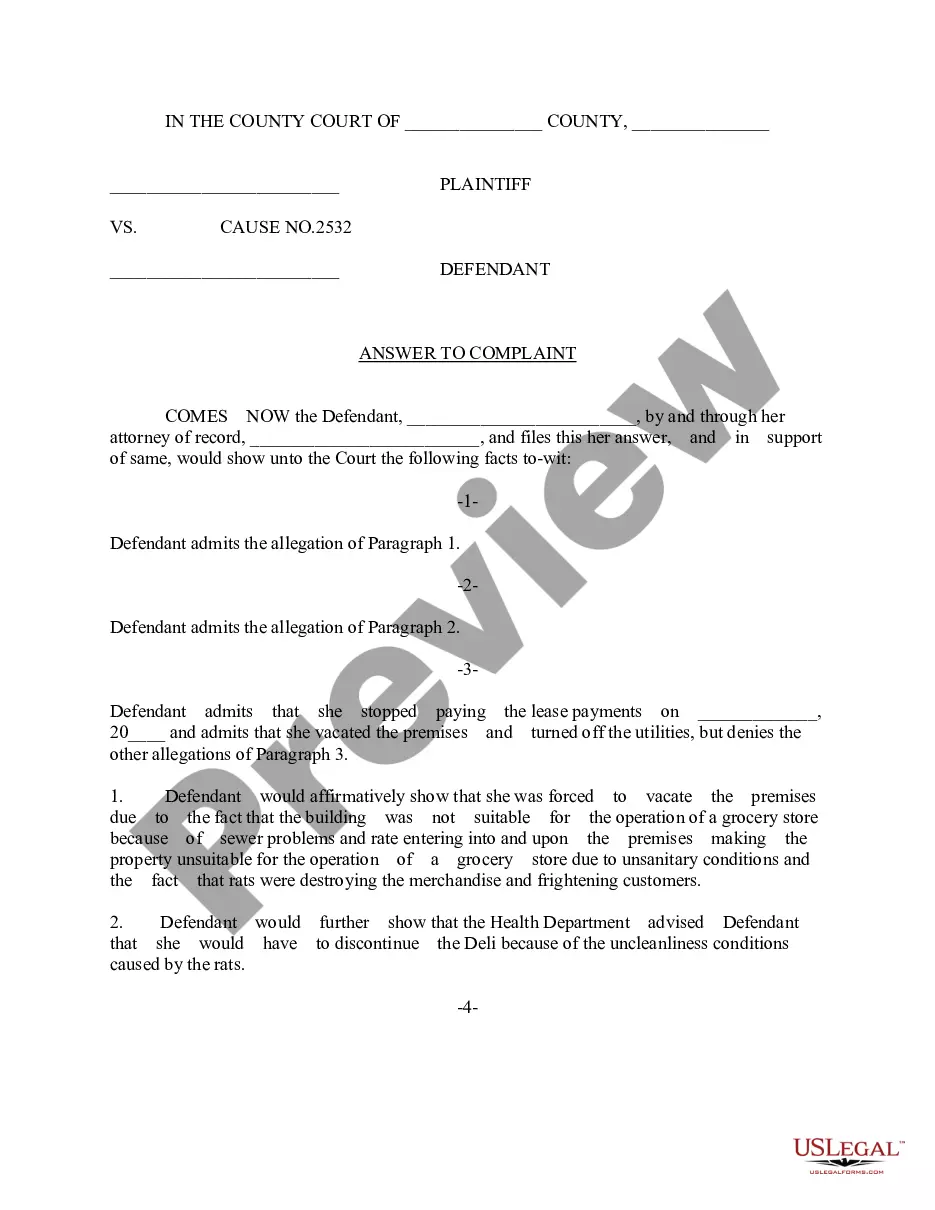
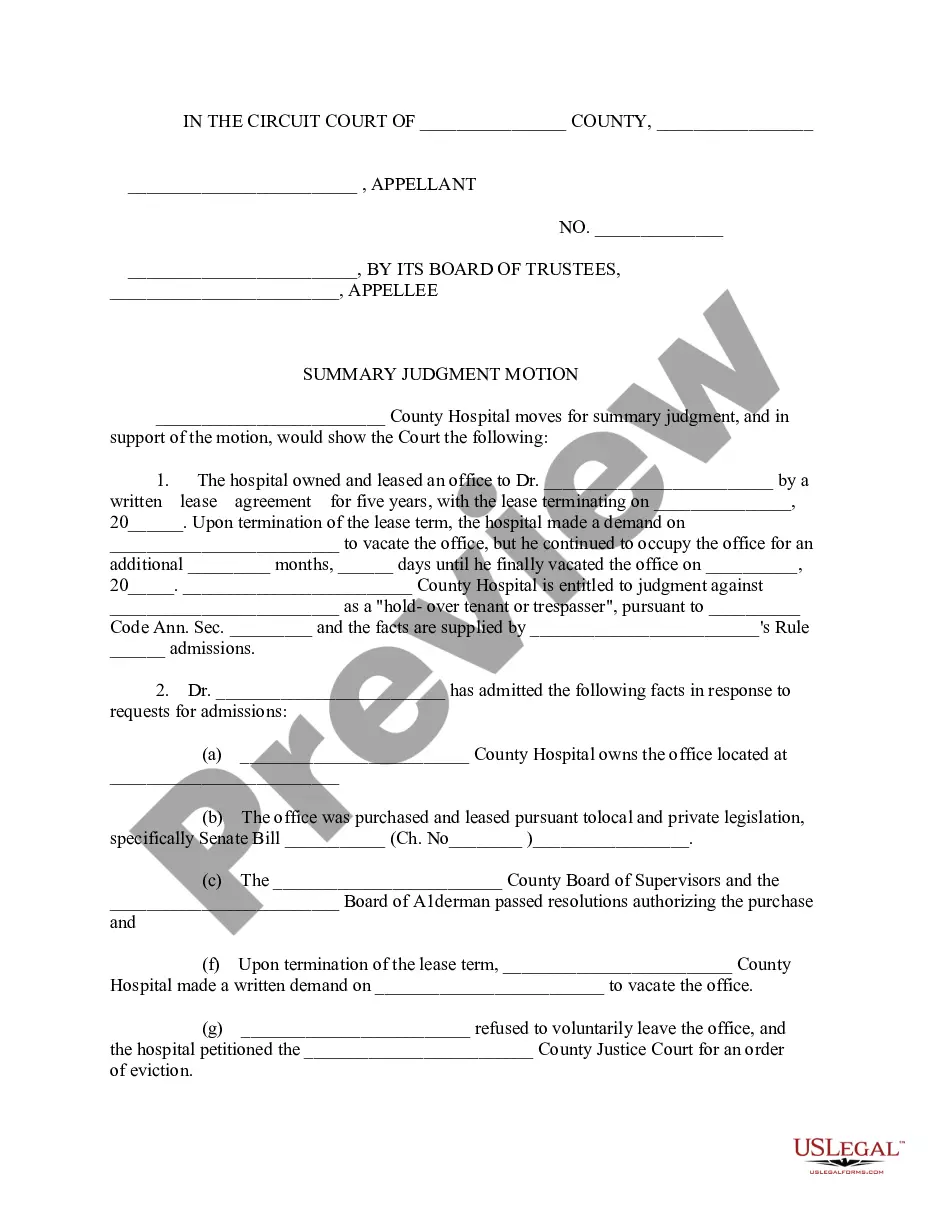
Notarization guidance
In most cases, this form does not require notarization. However, some jurisdictions or signing circumstances might. US Legal Forms offers online notarization powered by Notarize, accessible 24/7 for a quick, remote process.
Form popularity
FAQ
To collect a judgment in Arkansas, you can start by obtaining a copy of the judgment and its details. Then, you can file an Arkansas Motion for Default Judgment if necessary, especially if the debtor has not responded. After securing the judgment, you may pursue various collection methods such as wage garnishment, bank levies, or property liens. Consider utilizing the uslegalforms platform for easy access to necessary forms and guidance through the collection process.
To vacate a judgment in Arkansas, you can file a motion with the court where the judgment was entered. This process often requires demonstrating a valid reason for the request, such as new evidence or a lack of proper notification. Utilizing an Arkansas Motion for Default Judgment can aid in this process, giving you a structured way to address your situation. It is vital to follow the court's procedures carefully to achieve the best outcome.
Rule 55 in Arkansas outlines the process for obtaining a default judgment. It details how a party can proceed when the opponent fails to respond or appear in court. For individuals dealing with an Arkansas Motion for Default Judgment, understanding this rule helps clarify the necessary steps to secure a favorable resolution.
Rule 60 in Arkansas governs the relief from judgments, providing a way to request the court to set aside a previous judgment. This rule is commonly invoked if a party has a valid reason to challenge the judgment, including mistakes or new evidence. If you have obtained an Arkansas Motion for Default Judgment, understanding Rule 60 can be essential if either party seeks to alter the outcome.
A default judgment in Arkansas occurs when one party fails to respond to a summons or complaint. When you file an Arkansas Motion for Default Judgment, you ask the court to grant a judgment based on the lack of response. This judgment can resolve a case swiftly, allowing you to move forward without protracted litigation.
In Arkansas, a judgment generally remains valid for ten years from the date it was entered. However, you can renew that judgment for additional periods if necessary. If you’re utilizing an Arkansas Motion for Default Judgment, understanding the duration of your judgment is crucial for planning any potential enforcement actions.
After you file for a default based on an Arkansas Motion for Default Judgment, the court will set a hearing where both parties may present evidence. If the other party does not respond or attend the hearing, the court may grant the default judgment. Subsequently, you will receive documentation confirming the judgment, allowing you to proceed with enforcement if necessary.
The termination law in Arkansas governs how and when rental agreements can be terminated by landlords or tenants. It varies based on the type of lease, but generally requires proper notice. Understanding these laws is particularly important if you face an Arkansas Motion for Default Judgment related to unpaid rent or other housing disputes. Utilizing platforms like uslegalforms can enhance your understanding of your legal obligations and rights.
After a default judgment is entered in Arkansas, the winning party may seek to enforce the judgment through various legal means. This might involve garnishment of wages or seizing assets to satisfy the debt. If you are on the receiving end of an Arkansas Motion for Default Judgment, it’s essential to respond quickly to avoid complications. Exploring resources, such as uslegalforms, can help you understand your options and rights.
Rule 4.1 of the Arkansas Rules of Criminal Procedure addresses the rights of defendants, particularly regarding pretrial procedures. This rule ensures that defendants receive fair treatment as they move through the legal system. If you are involved in an Arkansas Motion for Default Judgment, understanding these rights can be crucial. Legal platforms like uslegalforms can provide valuable insights into navigating these rules.