Sample Bylaws for an Arkansas Professional Corporation
What this document covers
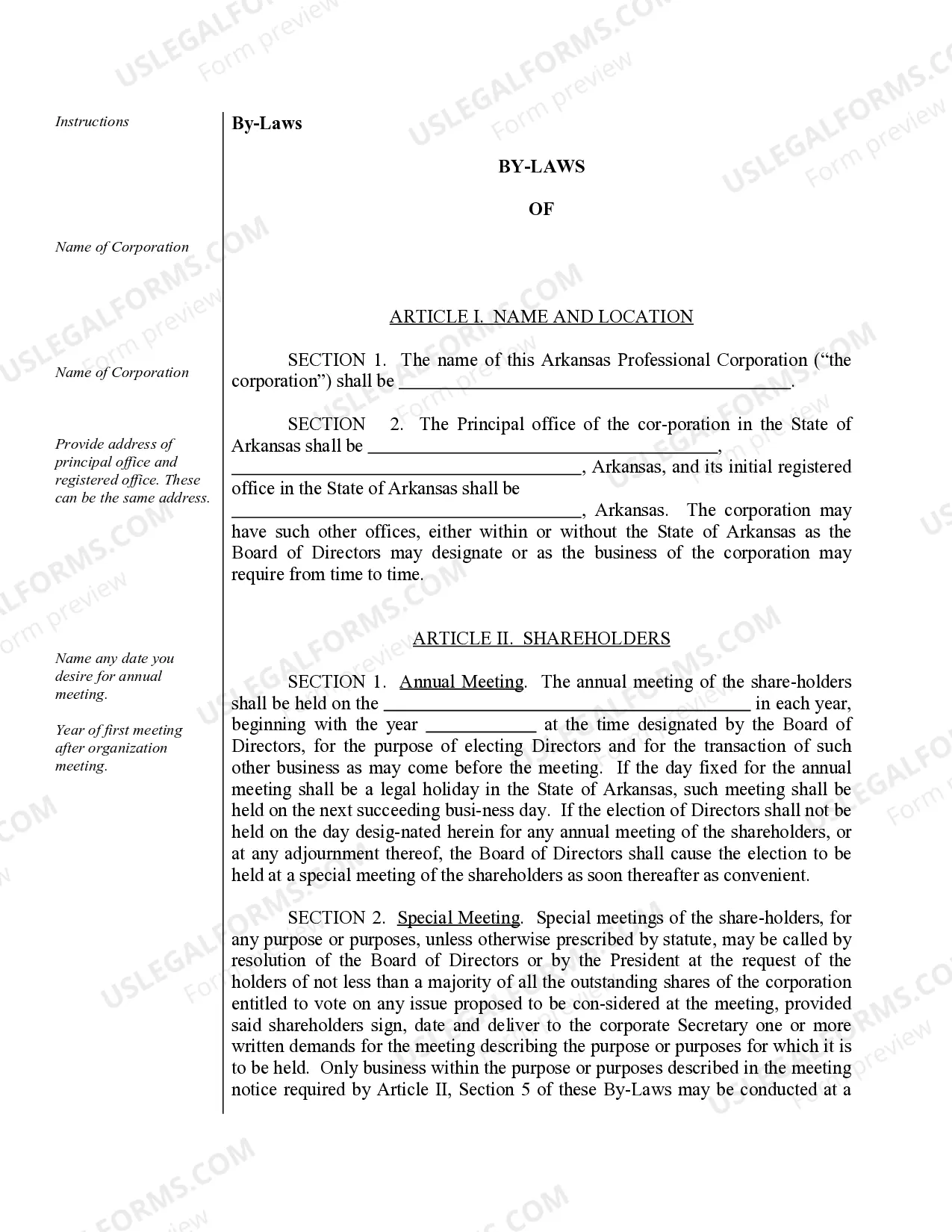
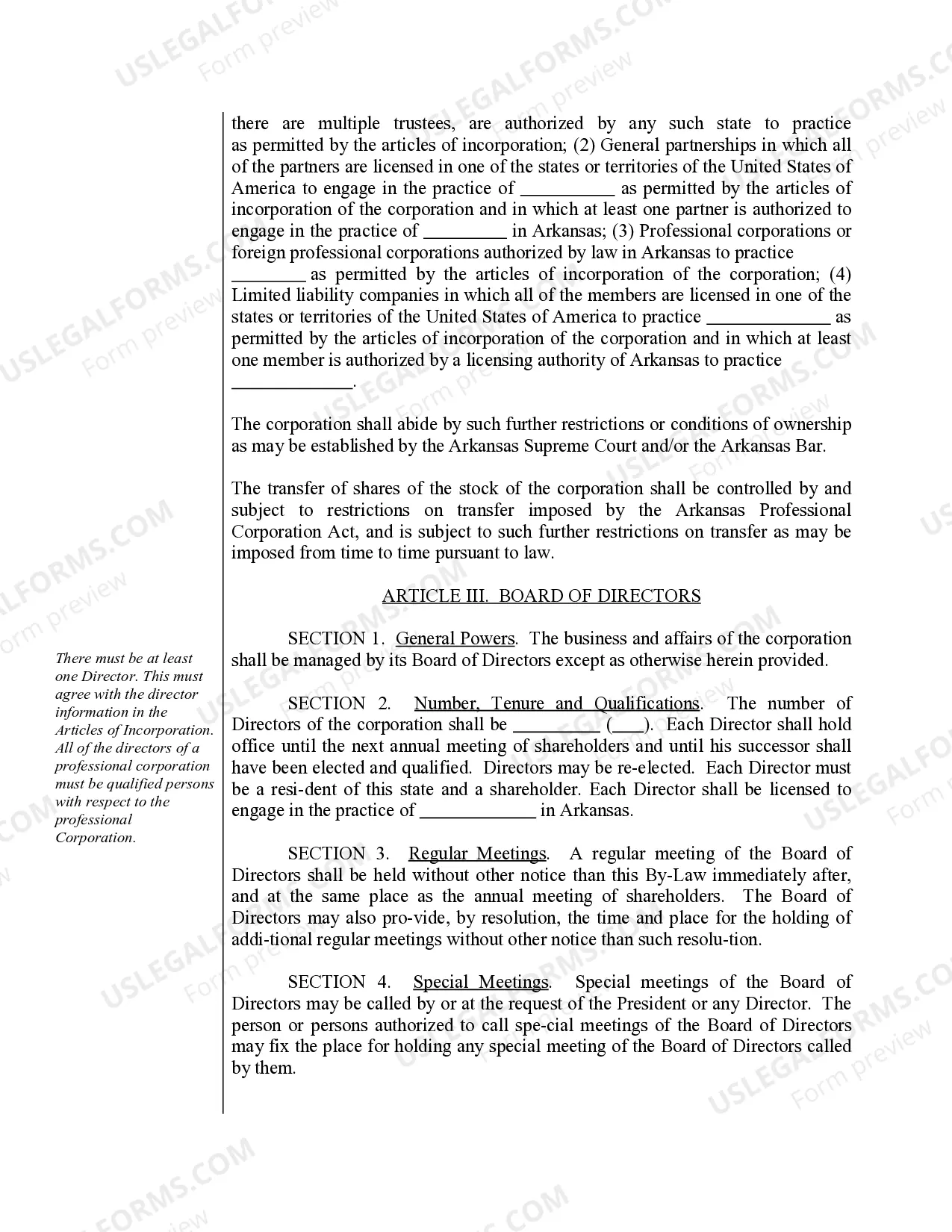
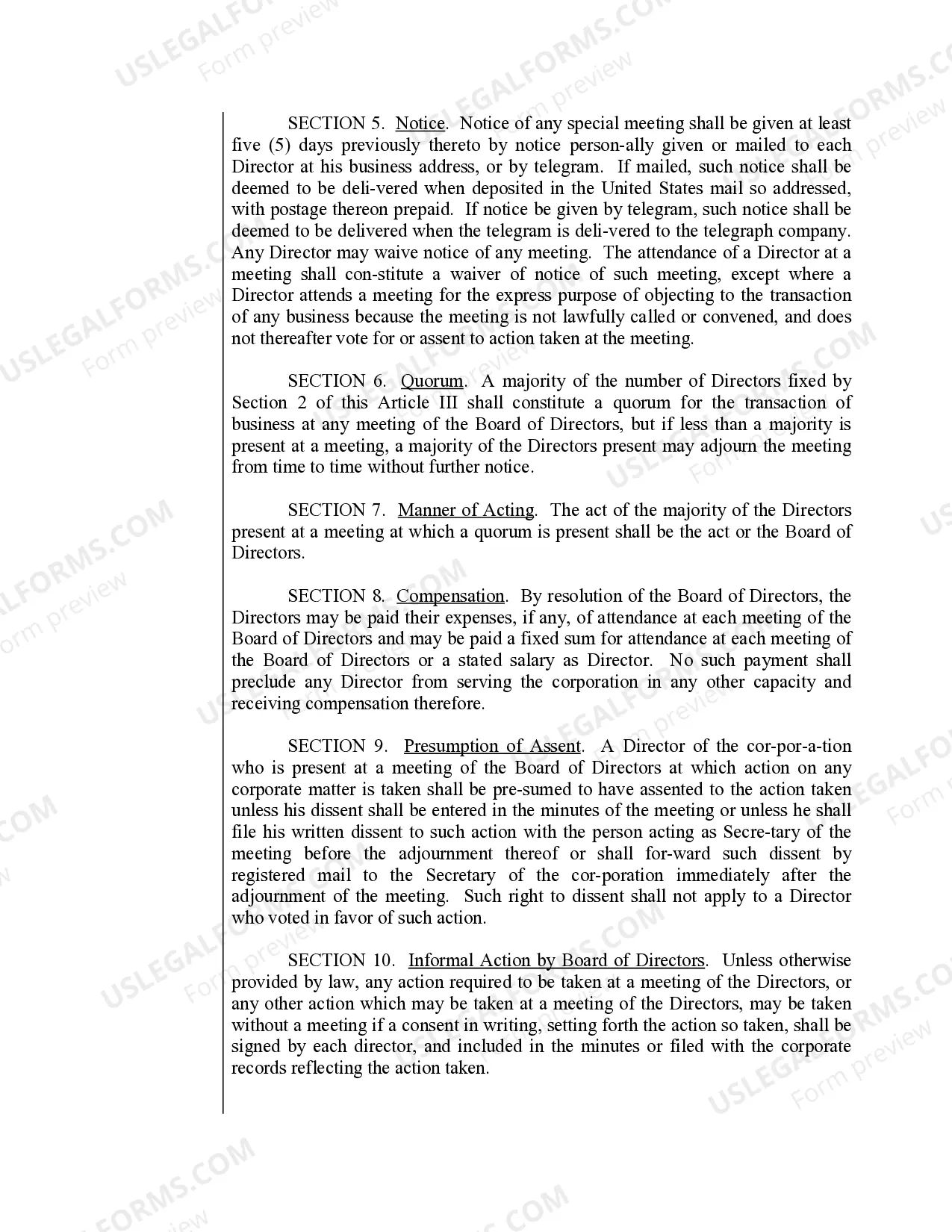
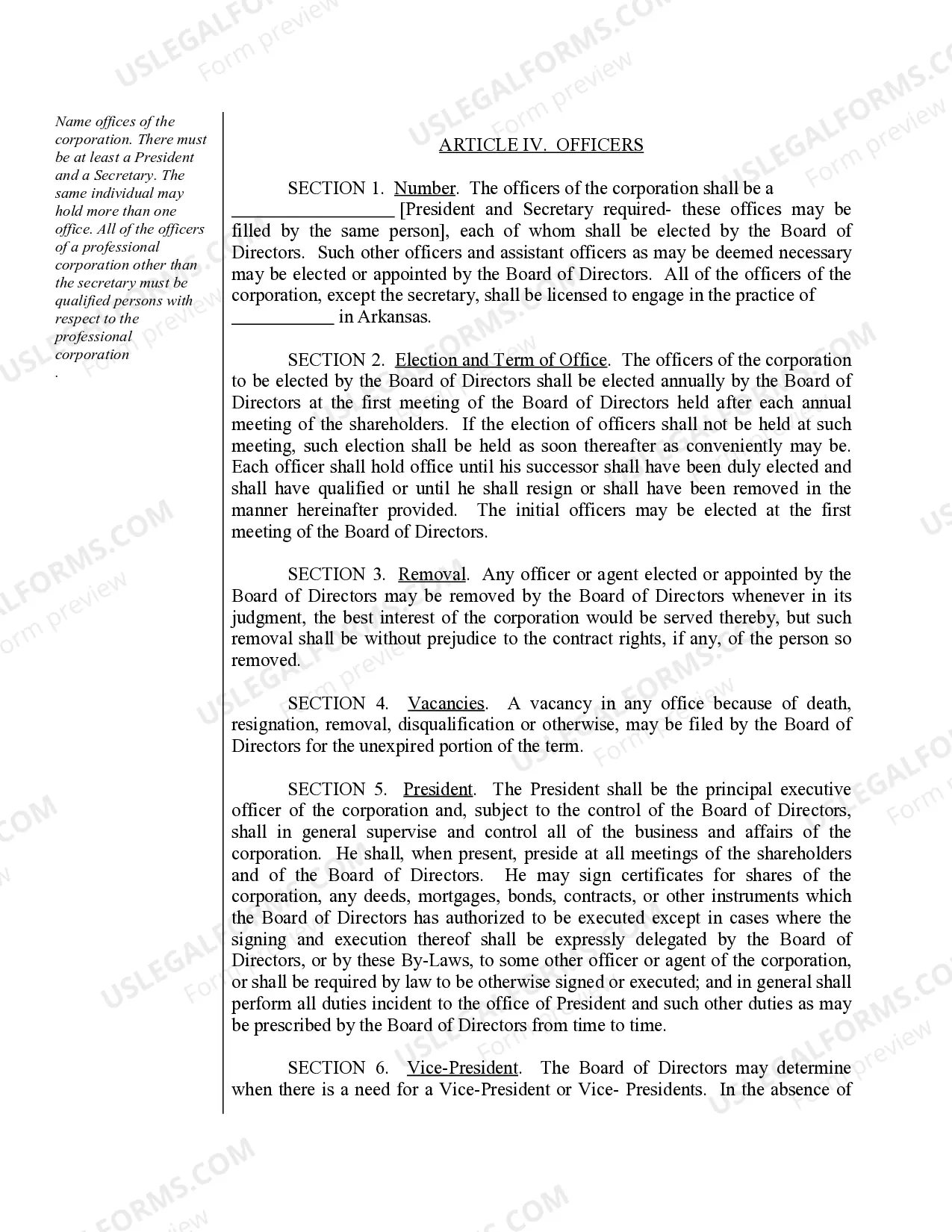
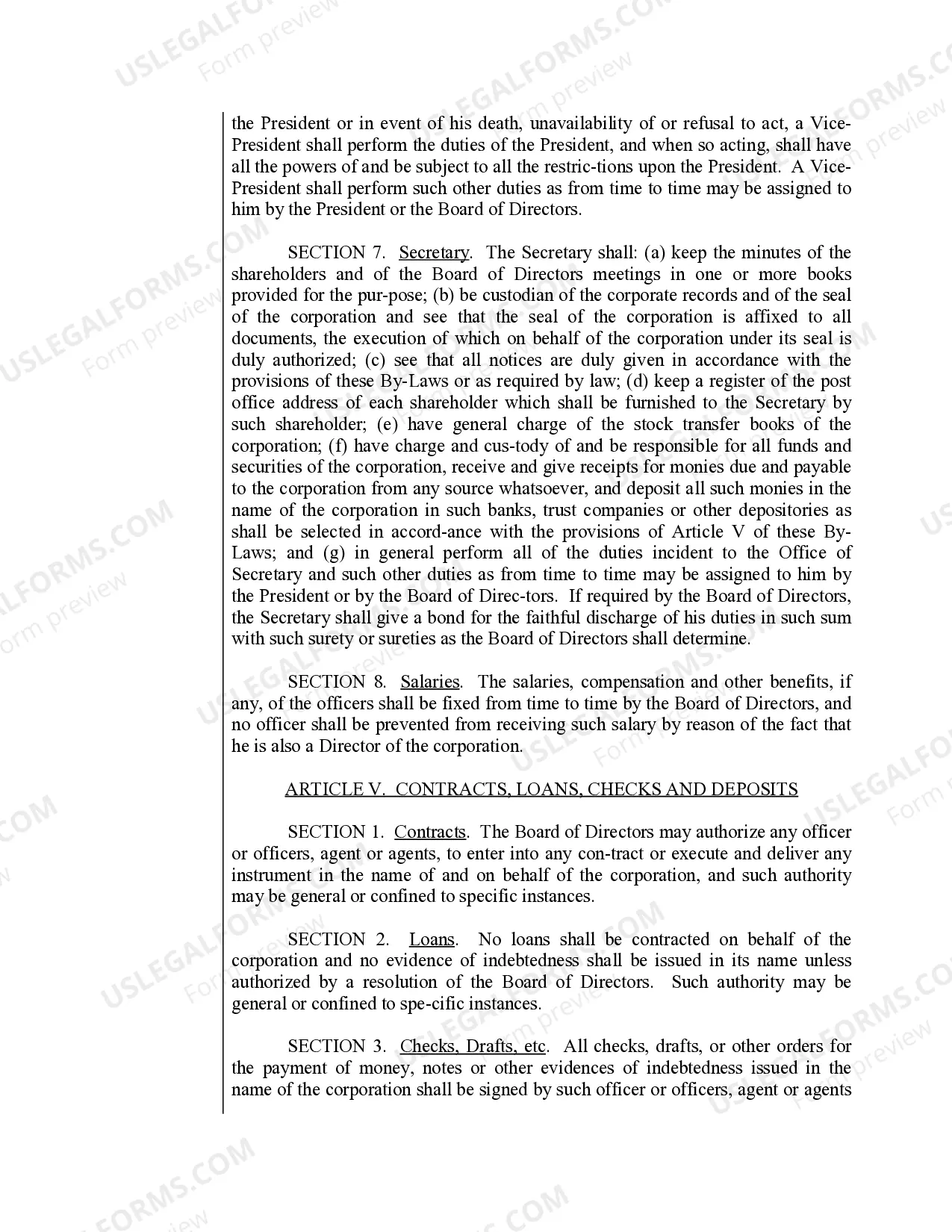
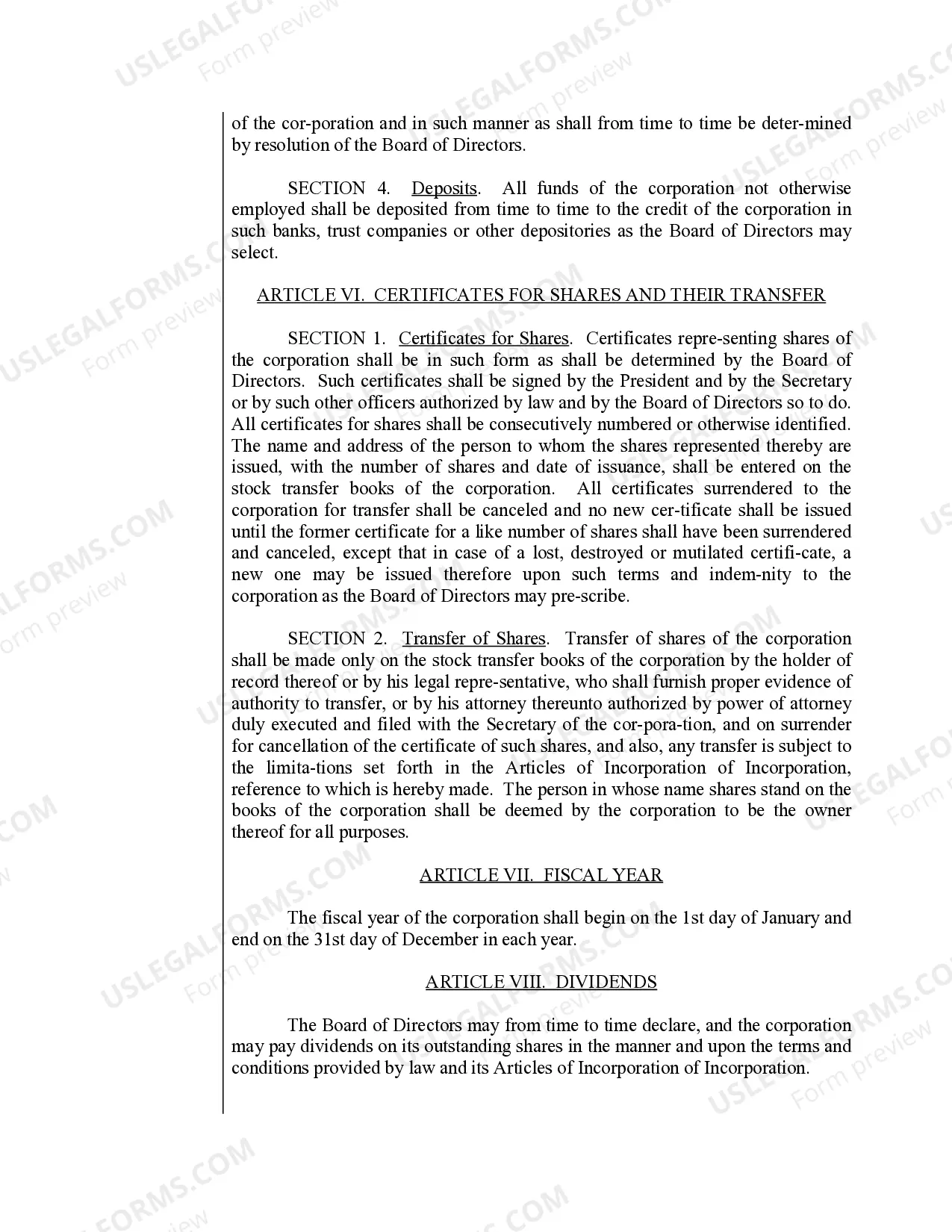
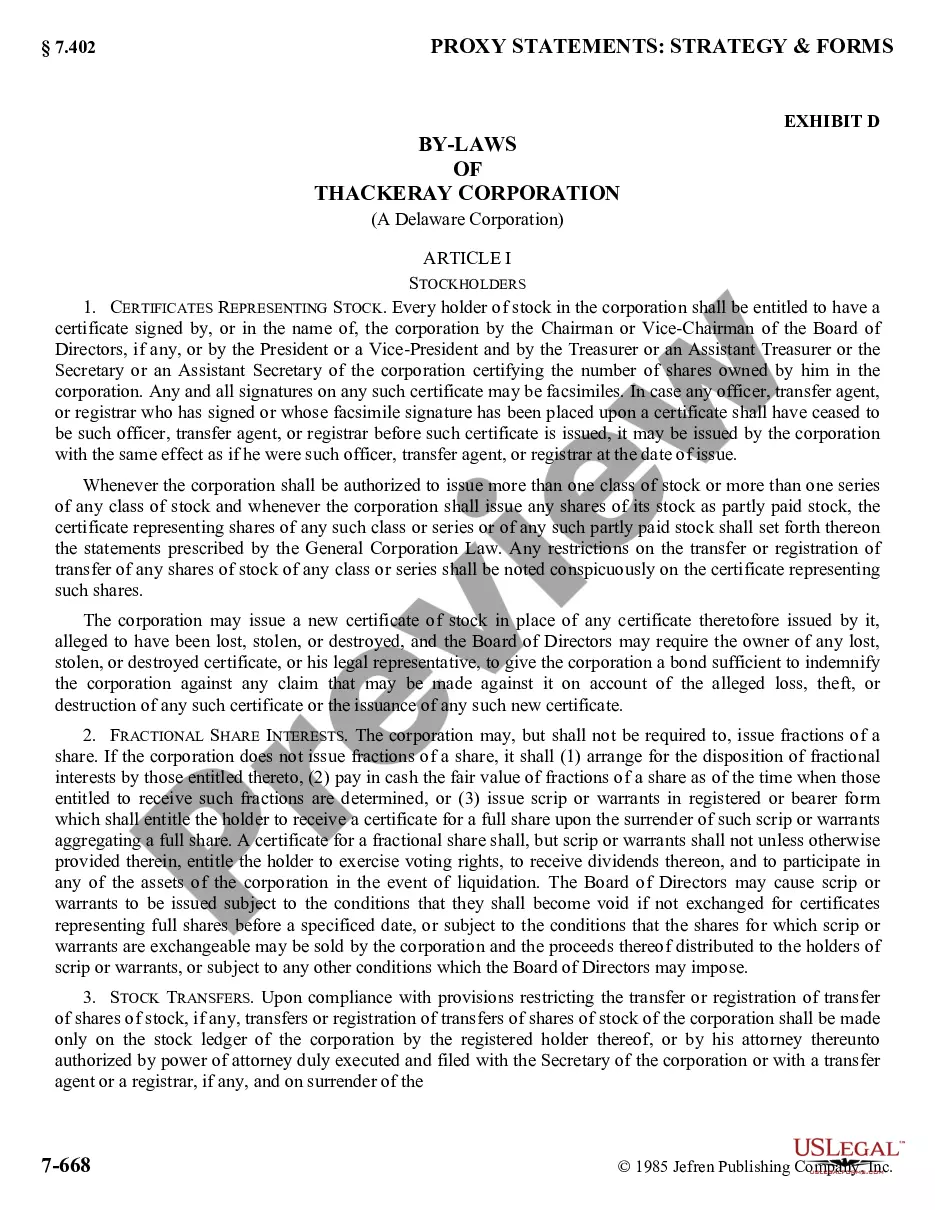
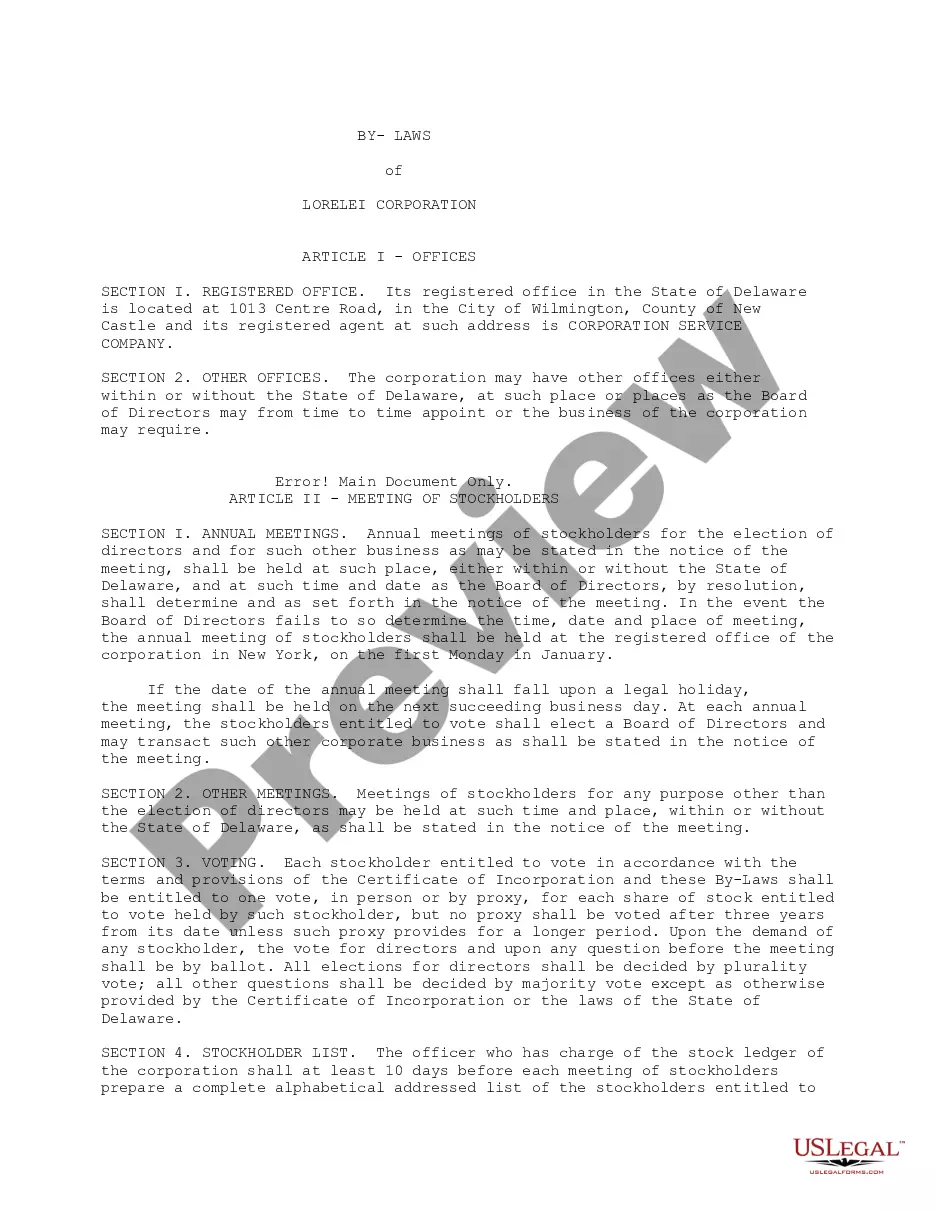
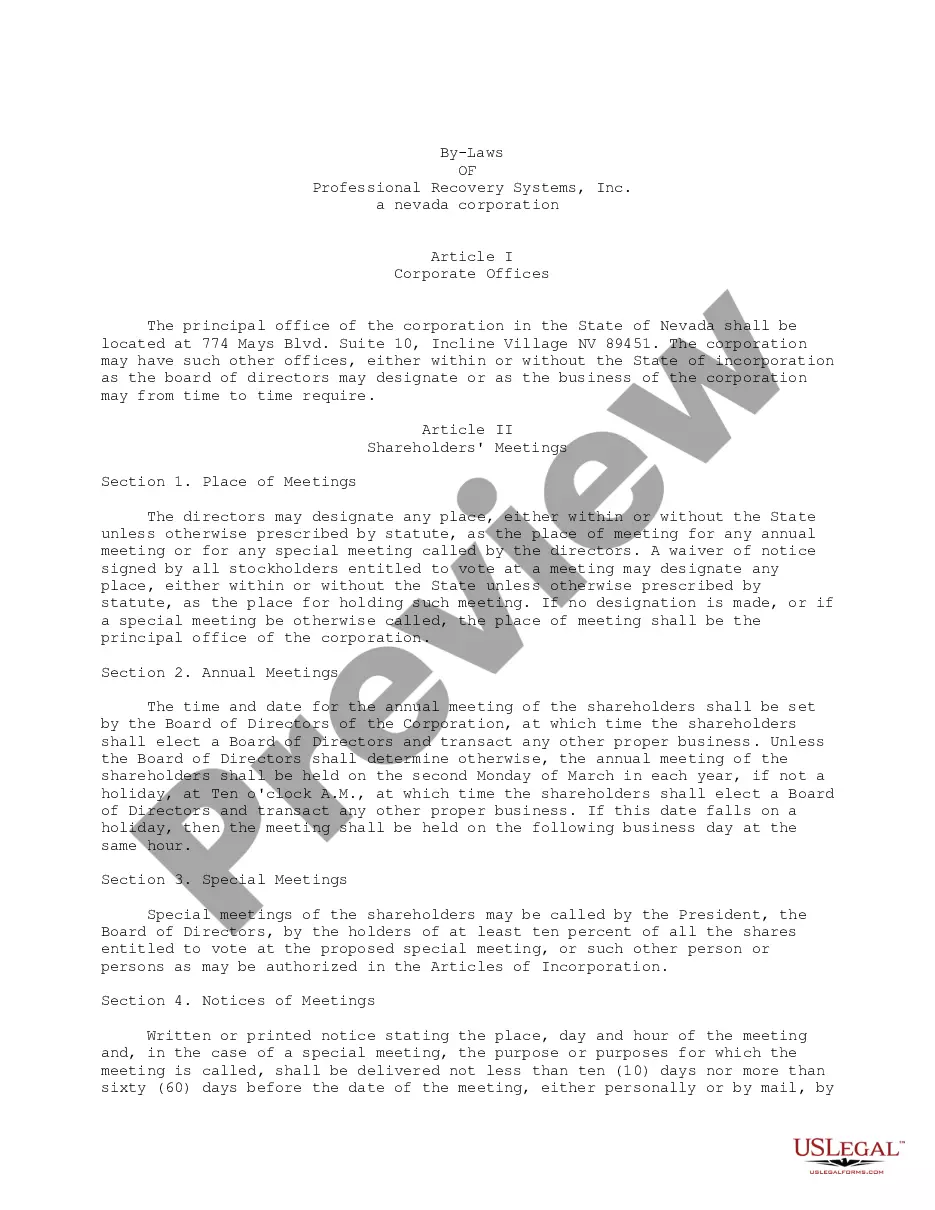
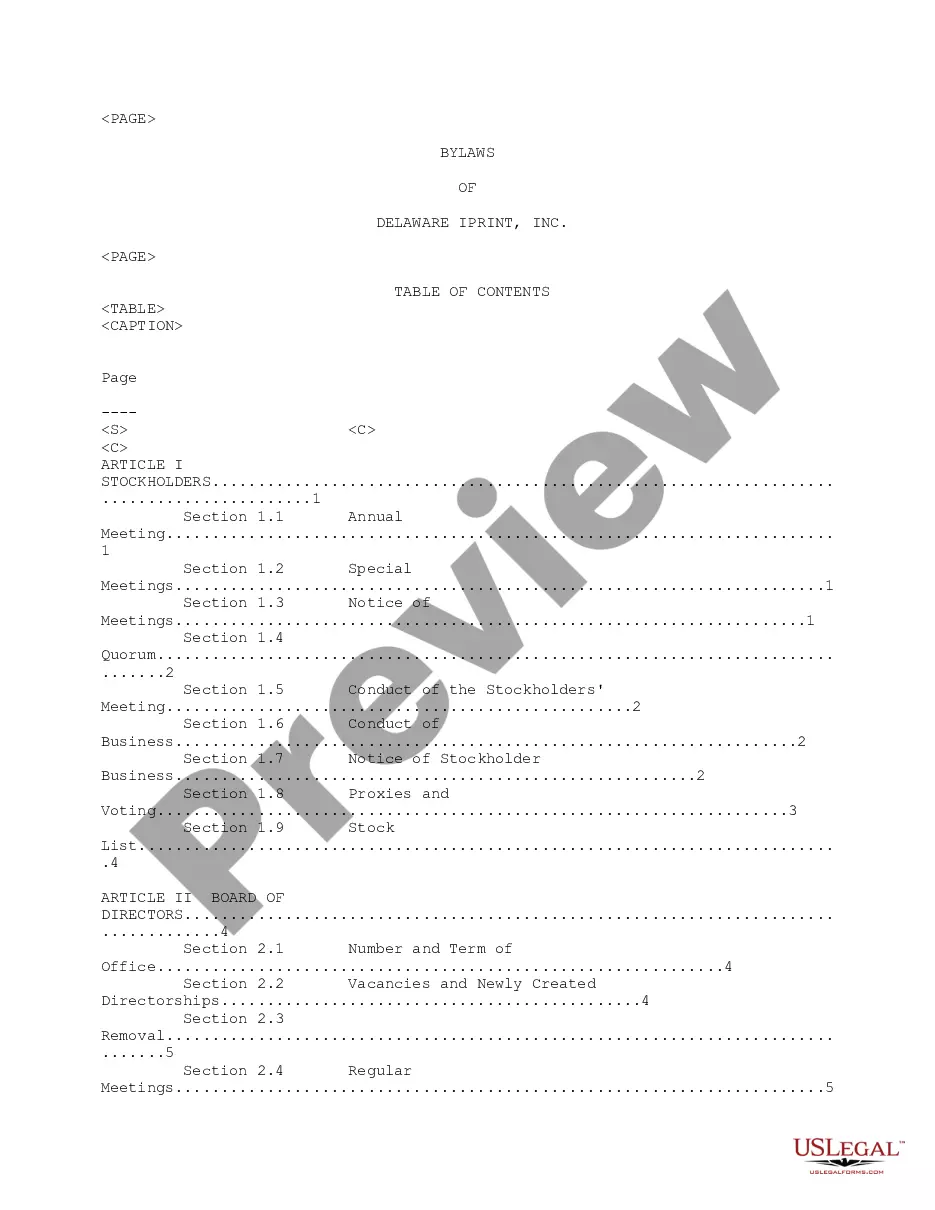
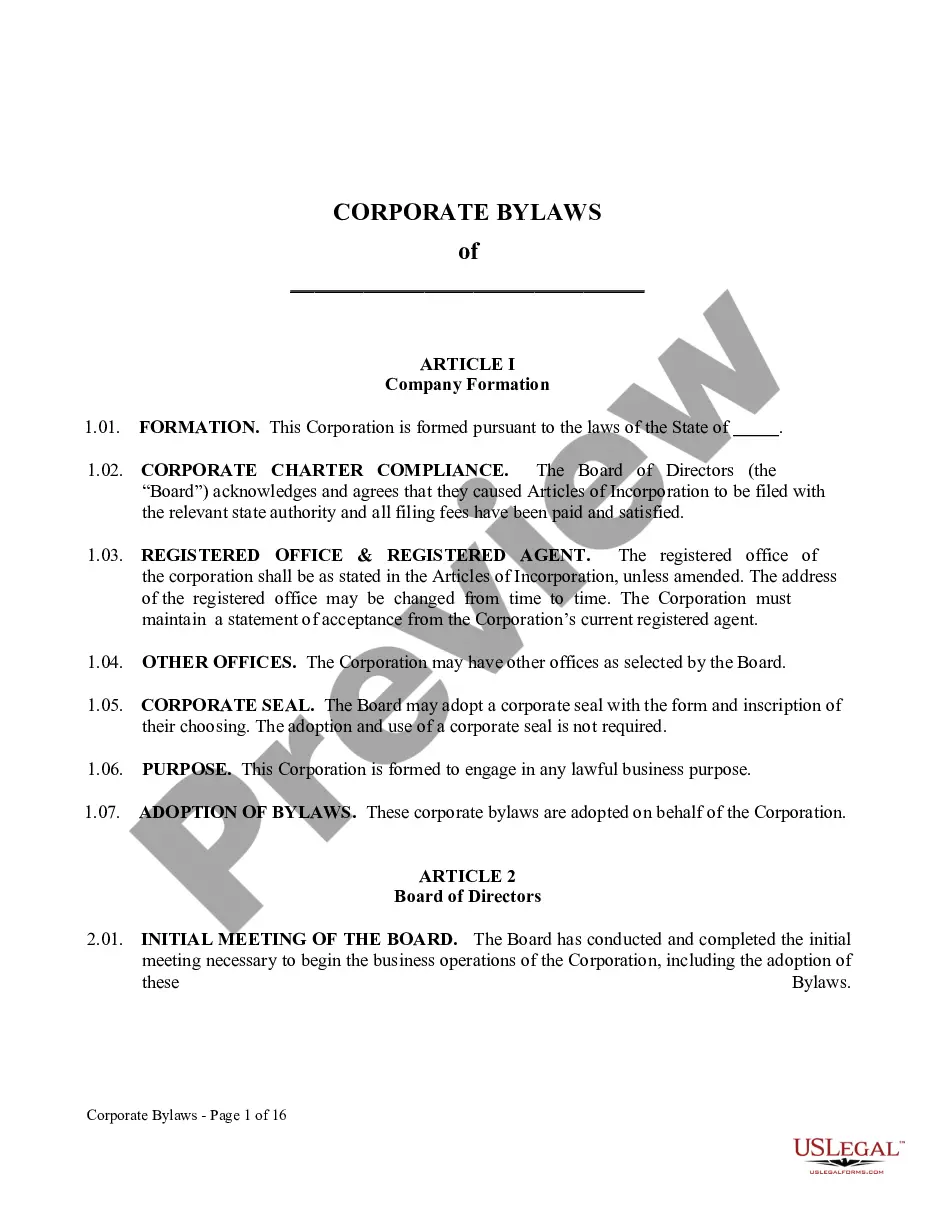
The Sample Bylaws for an Arkansas Professional Corporation is a legal document that outlines the internal rules governing the operation of a professional corporation in Arkansas. These bylaws establish processes for decision-making, define roles and responsibilities, and ensure compliance with applicable laws. Unlike general corporate bylaws, this template is tailored specifically for professional corporations, which may include businesses like law firms or medical practices requiring specific qualifications for their directors and officers.
What’s included in this form
- Name and address of the corporation
- Structure and roles of directors and officers
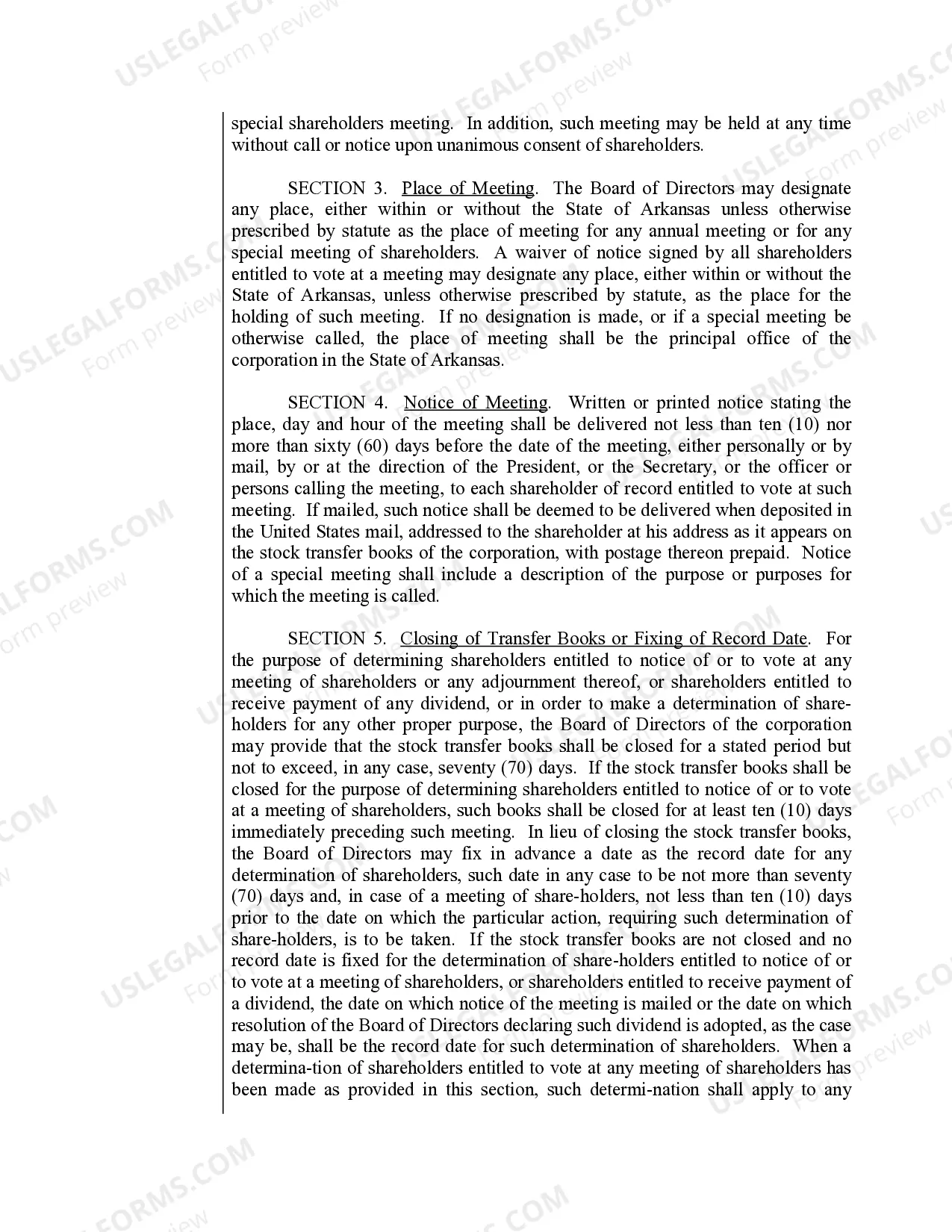
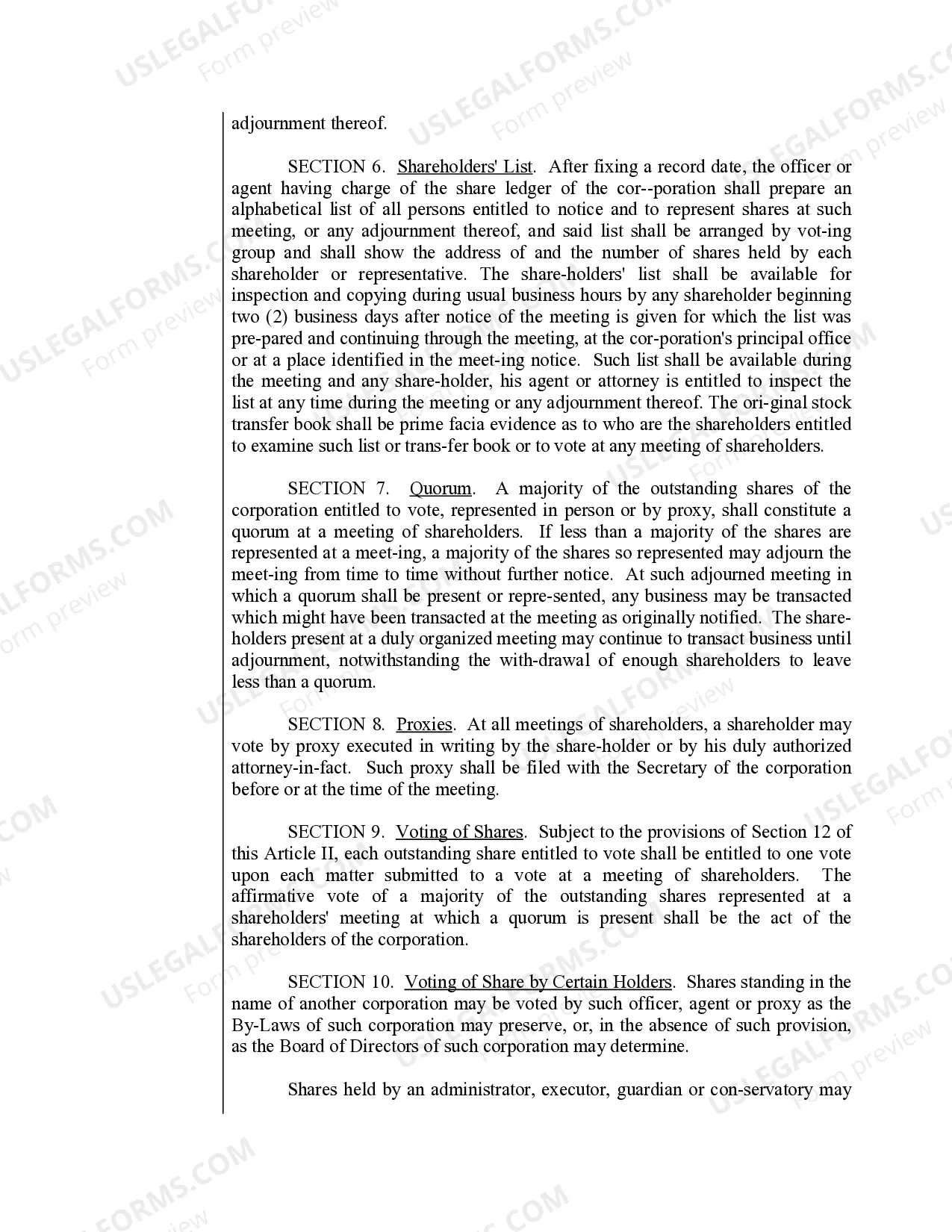
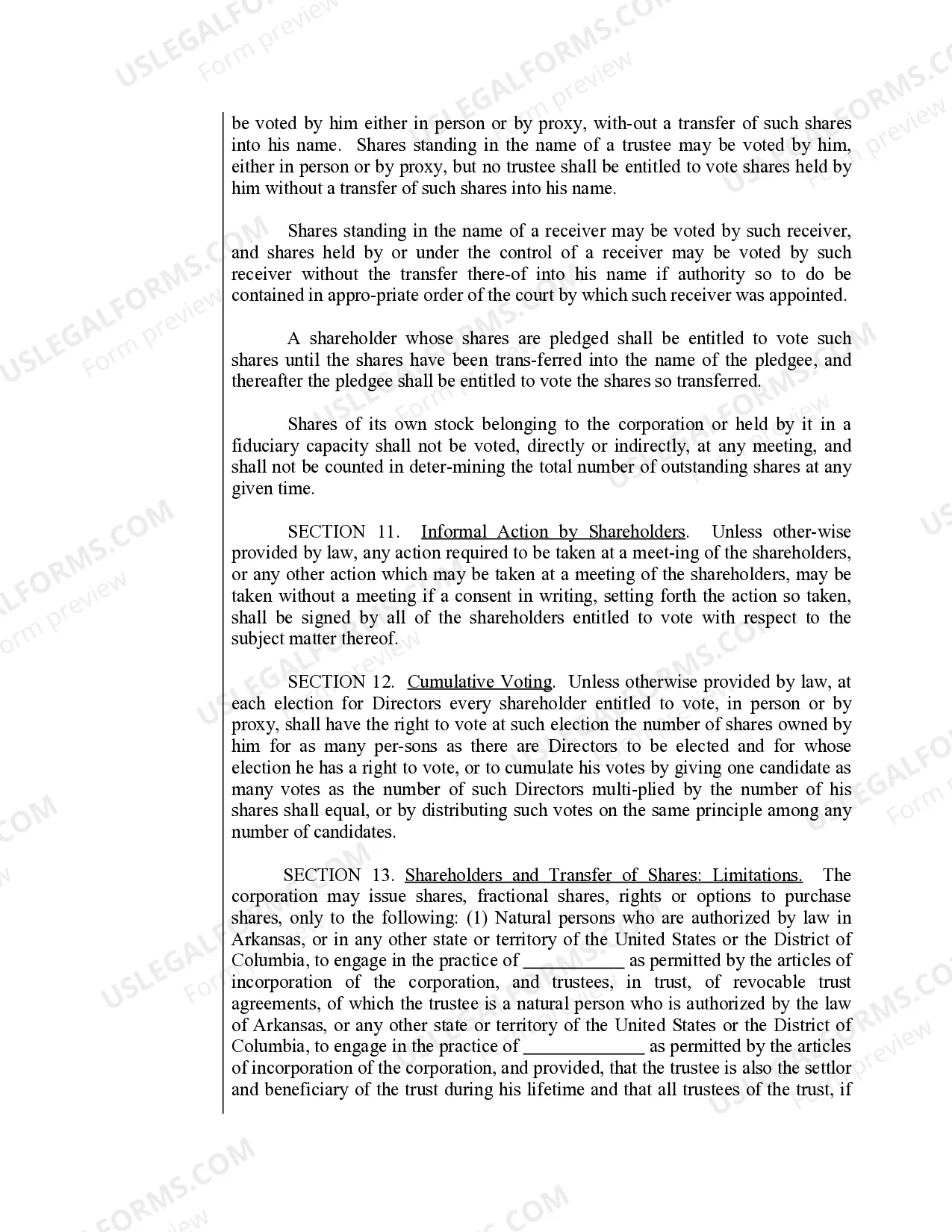
- Procedures for shareholder meetings and voting
- Quorum requirements and proxy voting
- Dividend declaration process
- Amendment procedures for the bylaws

Situations where this form applies
This form should be used when forming a professional corporation in Arkansas or when revising the bylaws of an existing corporation. It is essential for ensuring that the company operates within the legal framework and adheres to the standards required by state law. This document is particularly relevant during the initial organization phase or when significant changes to the operational structure are needed.
Who can use this document
- Business owners looking to establish a professional corporation in Arkansas
- Directors and officers of existing professional corporations seeking to update their bylaws
- Legal professionals advising clients on corporate structures
Completing this form step by step
- Identify and enter the name of the corporation and its principal office address.
- Specify the date for the annual meeting and the start year for the organization.
- List the directors of the corporation, ensuring all are qualified as per state law.
- Outline the roles of the officers, such as the President and Secretary, and their powers.
- Detail the procedures for shareholder meetings, including notice requirements and voting procedures.
Notarization requirements for this form
This form does not typically require notarization unless specified by local law. However, it is recommended to keep thorough records of the approval process for internal governance.
Get your form ready online
Our built-in tools help you complete, sign, share, and store your documents in one place.
Make edits, fill in missing information, and update formatting in US Legal Forms—just like you would in MS Word.
Download a copy, print it, send it by email, or mail it via USPS—whatever works best for your next step.
Sign and collect signatures with our SignNow integration. Send to multiple recipients, set reminders, and more. Go Premium to unlock E-Sign.
If this form requires notarization, complete it online through a secure video call—no need to meet a notary in person or wait for an appointment.
We protect your documents and personal data by following strict security and privacy standards.

Make edits, fill in missing information, and update formatting in US Legal Forms—just like you would in MS Word.

Download a copy, print it, send it by email, or mail it via USPS—whatever works best for your next step.

Sign and collect signatures with our SignNow integration. Send to multiple recipients, set reminders, and more. Go Premium to unlock E-Sign.

If this form requires notarization, complete it online through a secure video call—no need to meet a notary in person or wait for an appointment.

We protect your documents and personal data by following strict security and privacy standards.
Typical mistakes to avoid
- Failing to update the bylaws when there are changes in leadership or structure.
- Neglecting to include specific details regarding shareholder meeting procedures.
- Ignoring the requirement for directors and officers to meet qualification standards.
- Not adhering to the notice timings for meetings as prescribed by state law.
Benefits of completing this form online
- Convenient access to a ready-to-use template tailored for Arkansas professional corporations.
- Easy to modify and customize the bylaws to meet specific business needs.
- Reliable format that ensures compliance with local legal requirements.
Legal use & context
- The bylaws serve as a foundational document that defines the corporationâs governance and operations.
- Having well-drafted bylaws can protect the corporation against legal disputes.
- It ensures compliance with the Arkansas regulations specific to professional corporations, minimizing legal risks.
Summary of main points
- Bylaws are crucial for outlining company governance.
- This template is specific to Arkansas professional corporations.
- Regular updates to the bylaws are necessary to reflect changes in the corporation's structure.
Looking for another form?


Form popularity
FAQ
Article I. Name and purpose of the organization. Article II. Membership. Article III. Officers and decision-making. Article IV. General, special, and annual meetings. Article V. Board of Directors.
ARTICLE I. NAME OF ORGANIZATION. The name of the corporation is YOUR NONPROFIT NAME HERE. ARTICLE II. CORPORATE PURPOSE. Section 1. ARTICLE III. MEMBERSHIP. ARTICLE IV. MEETINGS OF MEMBERS. ARTICLE V. BOARD OF DIRECTORS. ARTICLE VI. OFFICERS. ARTICLE VII. COMMITTEES. ARTICLE VIII. CORPORATE STAFF.
Taxes. Corporations must file their annual tax returns. Securities. Corporations must issue stock as their security laws and articles of incorporation mandate. Bookkeeping. Board meetings. Meeting minutes. State registration. Licensing.
Put simply, Corporate Bylaws are the internal rules of your organization. They create the structure of your company and help to make sure that it runs smoothly. These fundamental rules will guide how your business will operate so everyoneshareholders, executives, and employeesare on the same page.
Corporate bylaws commonly include information that specifies, for example, the number of directors the corporation has, how they will be elected, their qualification, and the length of their terms. It can also specify when, where, and how your board of directors can call and conduct meetings, and voting requirements.
The California professional corporation bylaws were created to provide services in professions that require a state license in order to practice.The bylaws may be for either a C corporation or an S corporation.
The bylaws of a corporation are the governing rules by which the corporation operates. Bylaws are created by the board of directors when the corporation is formed.
Similarly, corporations (S corps and C corps) are not legally required by any state to have an operating agreement, but experts advise owners of these businesses to create and execute their version of an operating agreement, called bylaws.
Basic Corporate Information. The bylaws should include your corporation's formal name and the address of its main place of business. Board of Directors. Officers. Shareholders. Committees. Meetings. Conflicts of Interest. Amendment.