Alabama Complaint to Collect on a Promissory Note
What is this form?
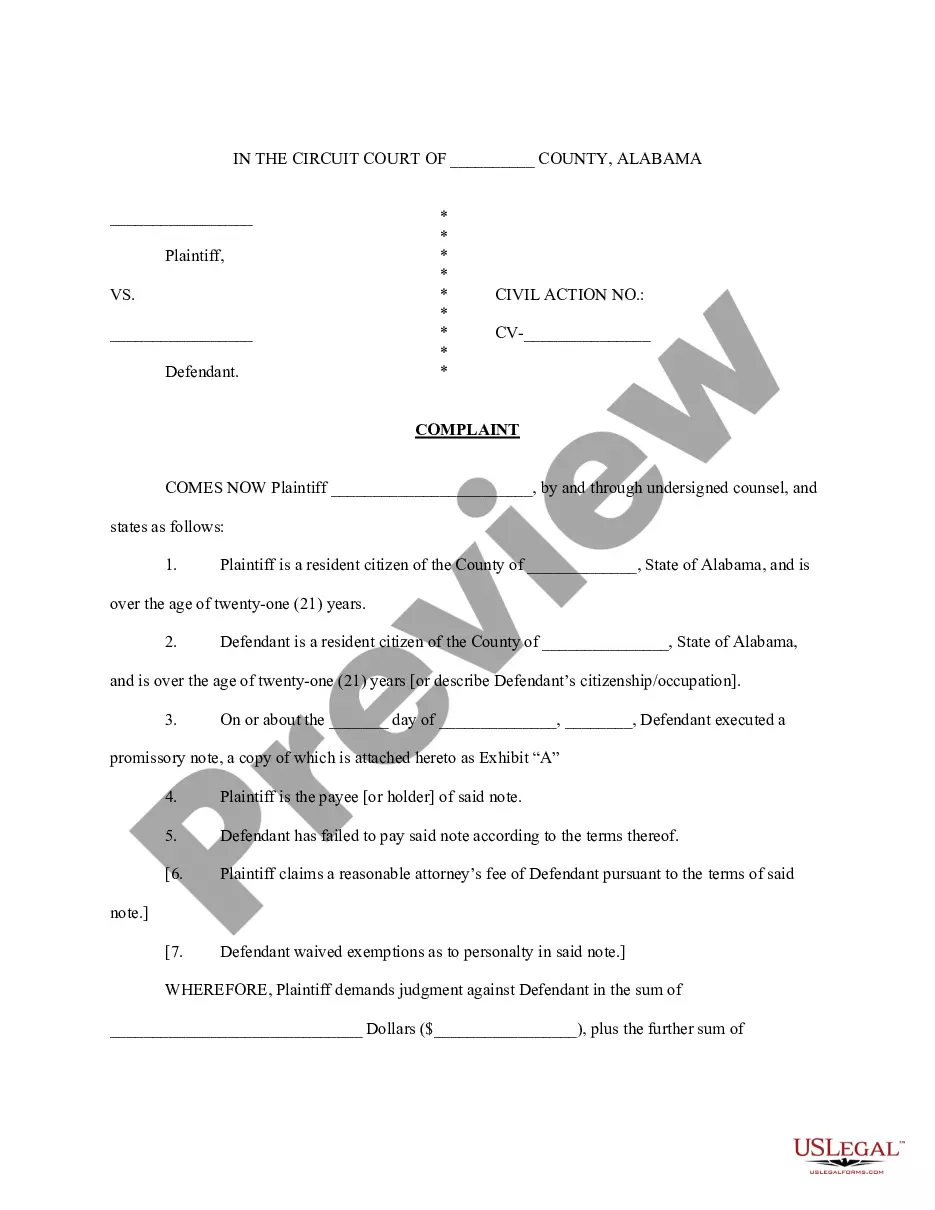
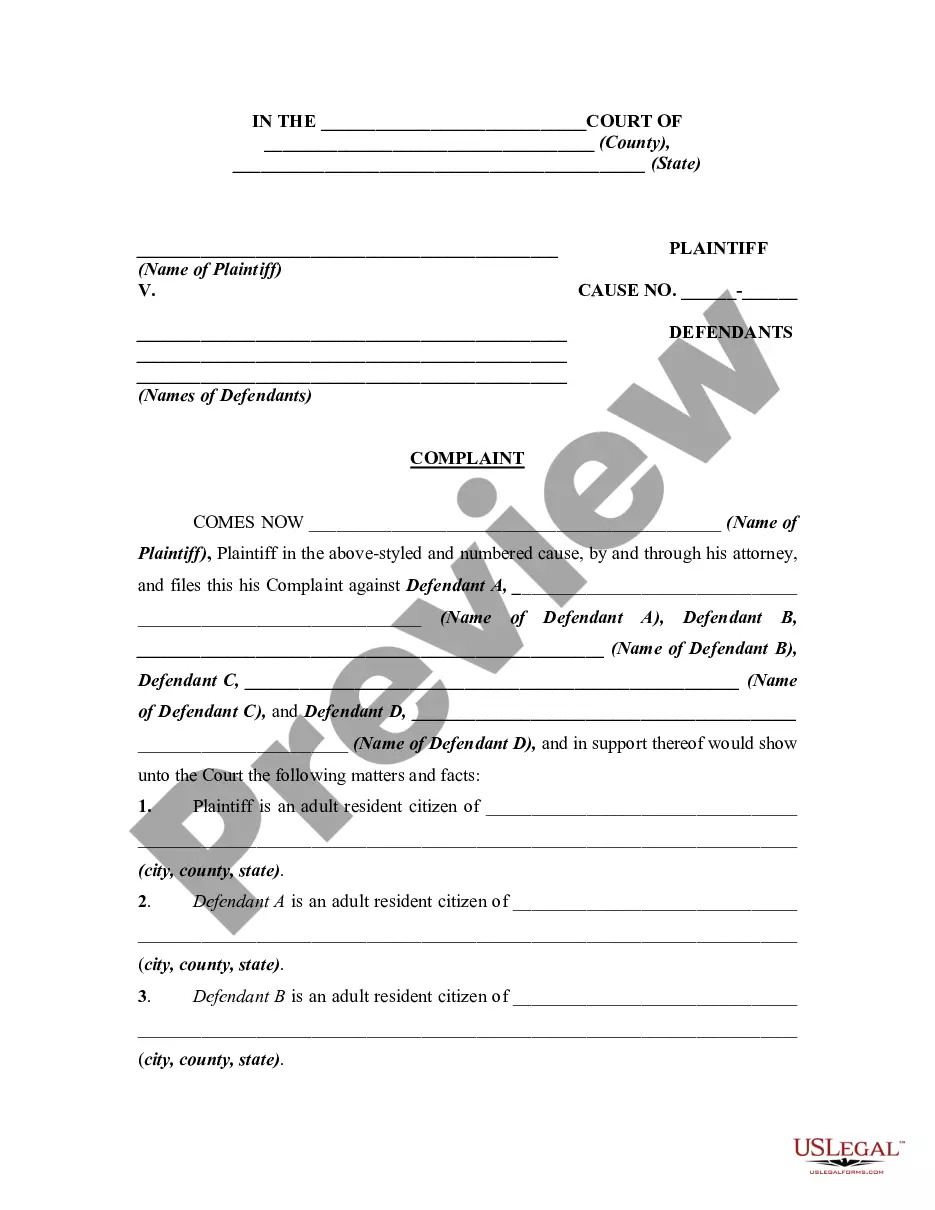
The Complaint to Collect on a Promissory Note is a legal document used to initiate a lawsuit against a borrower who has defaulted on a promissory note. This form is filed in the Circuit Court of Alabama to seek the repayment of the owed amount. It differs from other similar forms in that it specifically targets the enforcement of a written promise to pay, known as a promissory note, rather than other types of loans or debts.
Key components of this form
- Identification of the Plaintiff and Defendant, including their residency and legal status.
- Details of the promissory note, including the date of execution and parties involved.
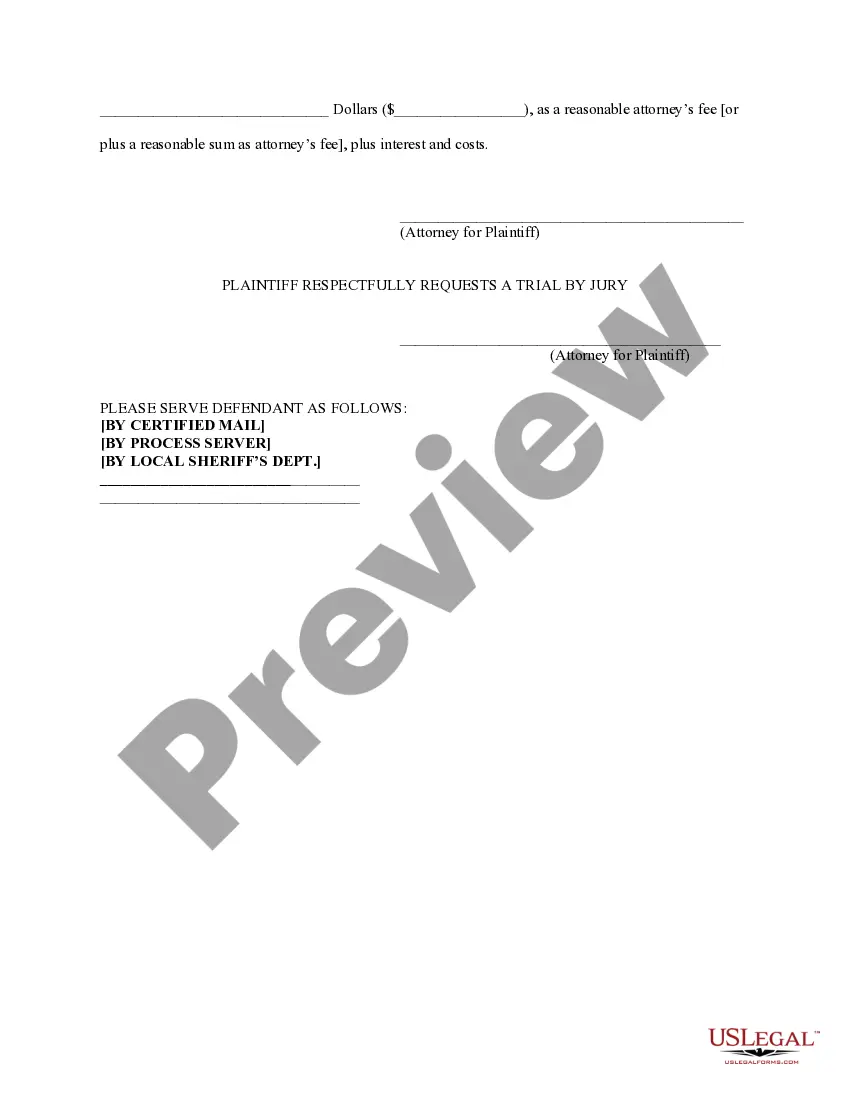
- Claim for payment due, including the amount owed and any applicable attorney fees.
- Request for a trial by jury, outlining the Plaintiff's demand for a jury trial.
- Instructions for serving the Defendant, indicating the preferred method of delivery.

When this form is needed
This form should be used when a Plaintiff needs to formally request repayment from a Defendant who has failed to fulfill their obligations under a promissory note. Common scenarios include personal loans, business loans, or other instances where a written promise to pay exists but has not been honored by the borrower.
Who can use this document
- Individuals or businesses that have loaned money and have a promissory note as evidence of the debt.
- Legal representatives filing on behalf of a Plaintiff seeking to recover owed funds.
- Creditors looking to enforce payment in a legal setting under Alabama law.
How to complete this form
- Identify the parties involved: Clearly state the names and addresses of the Plaintiff and Defendant.
- Fill in the details of the promissory note: Include the date the note was signed and provide a copy as an exhibit.
- Specify the amount owed: Enter the exact dollar amount the Defendant has failed to pay, along with attorney fees if applicable.
- Request a trial by jury: Indicate the Plaintiff's desire for a jury trial in the appropriate section.
- Provide service instructions: Indicate how the Defendant should be served with the complaint.
Notarization requirements for this form
This form does not typically require notarization to be legally valid. However, some jurisdictions or document types may still require it. US Legal Forms provides secure online notarization powered by Notarize, available 24/7 for added convenience.
Get your form ready online
Our built-in tools help you complete, sign, share, and store your documents in one place.
Make edits, fill in missing information, and update formatting in US Legal Forms—just like you would in MS Word.
Download a copy, print it, send it by email, or mail it via USPS—whatever works best for your next step.
Sign and collect signatures with our SignNow integration. Send to multiple recipients, set reminders, and more. Go Premium to unlock E-Sign.
If this form requires notarization, complete it online through a secure video call—no need to meet a notary in person or wait for an appointment.
We protect your documents and personal data by following strict security and privacy standards.

Make edits, fill in missing information, and update formatting in US Legal Forms—just like you would in MS Word.

Download a copy, print it, send it by email, or mail it via USPS—whatever works best for your next step.

Sign and collect signatures with our SignNow integration. Send to multiple recipients, set reminders, and more. Go Premium to unlock E-Sign.

If this form requires notarization, complete it online through a secure video call—no need to meet a notary in person or wait for an appointment.

We protect your documents and personal data by following strict security and privacy standards.
Avoid these common issues
- Failing to include necessary information about the parties involved.
- Not attaching a copy of the promissory note as required by the court.
- Calculating the wrong amount owed, including attorney fees.
- Neglecting to request a jury trial if desired, potentially missing out on this option.
Benefits of using this form online
- Convenience of completing the form from anywhere at any time.
- Editable format allows for easy updates and corrections before downloading.
- Reliability of having forms drafted by licensed attorneys to meet legal standards.
Looking for another form?
Form popularity
FAQ
Yes, you can dispute a promissory note. Common reasons for a dispute may include claims of fraud, ambiguity in terms, or lack of consideration. If you find yourself in this situation, you might consider seeking legal advice to navigate your options. Resolving disputes often involves filing an Alabama Complaint to Collect on a Promissory Note, ensuring your concerns are addressed properly.
Breaching a promissory note can lead to serious consequences. If a borrower fails to meet the repayment terms, the lender can file an Alabama Complaint to Collect on a Promissory Note in court. This action may result in a judgment against the borrower, which could lead to wage garnishment or liens on property. Understanding your rights in this scenario is essential for both lenders and borrowers.
To legally enforce a promissory note, follow a few key steps. First, ensure you have a written, signed document outlining the terms of repayment. If a borrower defaults, you may file an Alabama Complaint to Collect on a Promissory Note, seeking recovery through the courts. Always consider consulting a legal professional to navigate this process effectively.
A draft for a complaint should include several essential components. Start with the title, heading, and parties involved. Detail the factual background and the basis of your claim regarding the Alabama Complaint to Collect on a Promissory Note. Don't forget to conclude with a prayer for relief, outlining what you are asking the court to grant.
To collect on a judgment in Alabama, you need to follow specific legal procedures. Begin by obtaining a judgment in your favor, then pursue collection methods such as wage garnishment, bank levies, or property liens. It's important to follow the rules of civil procedure to ensure compliance. Using resources from US Legal Forms can guide you through the process efficiently.
To draft a legal complaint, organize your thoughts clearly. Start with identifying the parties and establishing jurisdiction, then lay out the facts of your case concerning the Alabama Complaint to Collect on a Promissory Note. Articulate the legal basis for your claims and the specific relief you are requesting. Remember to proofread your document carefully before submission.
Formatting a complaint is crucial for clarity and professionalism. Begin with the title at the top, followed by the court name and case number. Use headings for each section, such as 'Parties,' 'Jurisdiction,' and 'Allegations.' Maintain consistent font and spacing throughout the document. You may find helpful templates on platforms like US Legal Forms.
Drafting a complaint for court involves carefully outlining your case. Start by identifying the parties involved and providing a statement of facts regarding your Alabama Complaint to Collect on a Promissory Note. Specify the legal grounds for your claim and what remedy you seek. Ensure that you sign and date the complaint before filing.
To write a letter of complaint to court regarding your Alabama Complaint to Collect on a Promissory Note, start with your contact information at the top. Follow with the court's address, a subject line, and a formal greeting. Clearly state the reason for your complaint, include relevant details, and provide any supporting documents. Close with your signature and a request for a response.
In Alabama, the statute of limitations for a promissory note is generally six years. This means you must file your Alabama Complaint to Collect on a Promissory Note within that timeframe from the date of default. It's essential to act promptly, as waiting too long may prevent you from recovering the debt. Consulting with legal resources, such as US Legal Forms, can help you navigate this timeline effectively.