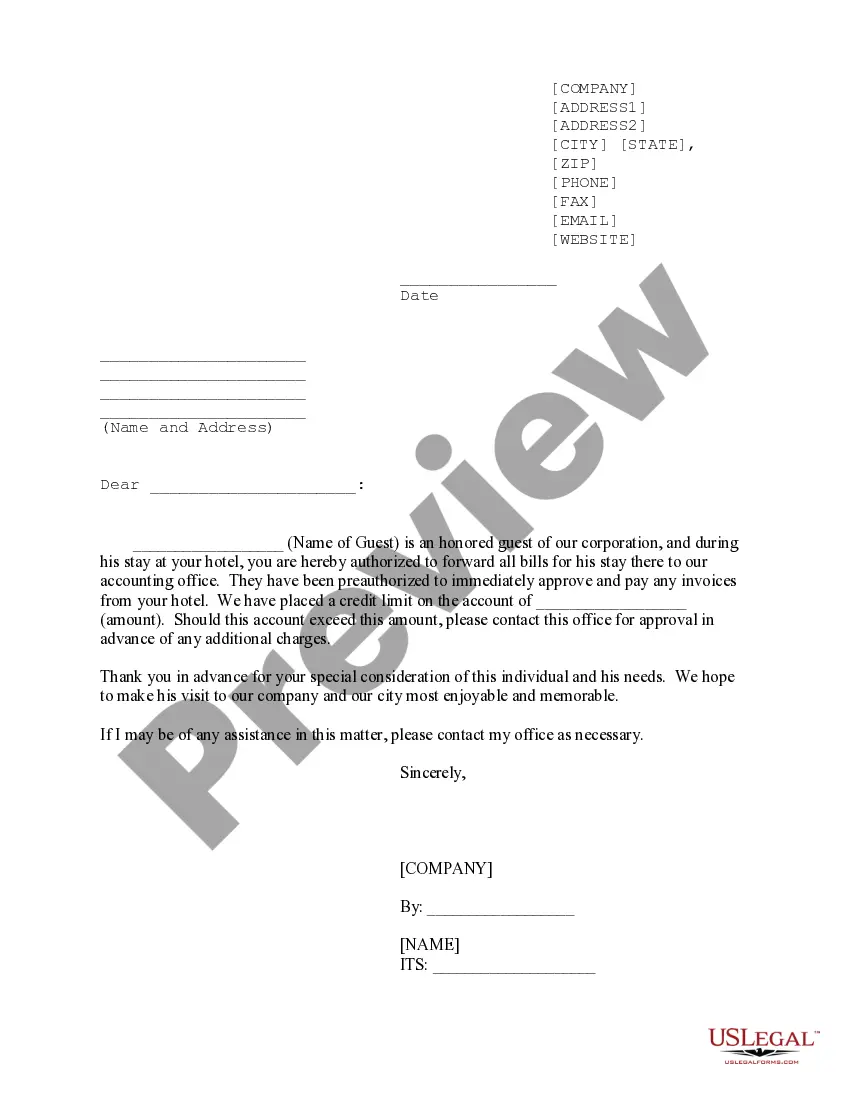
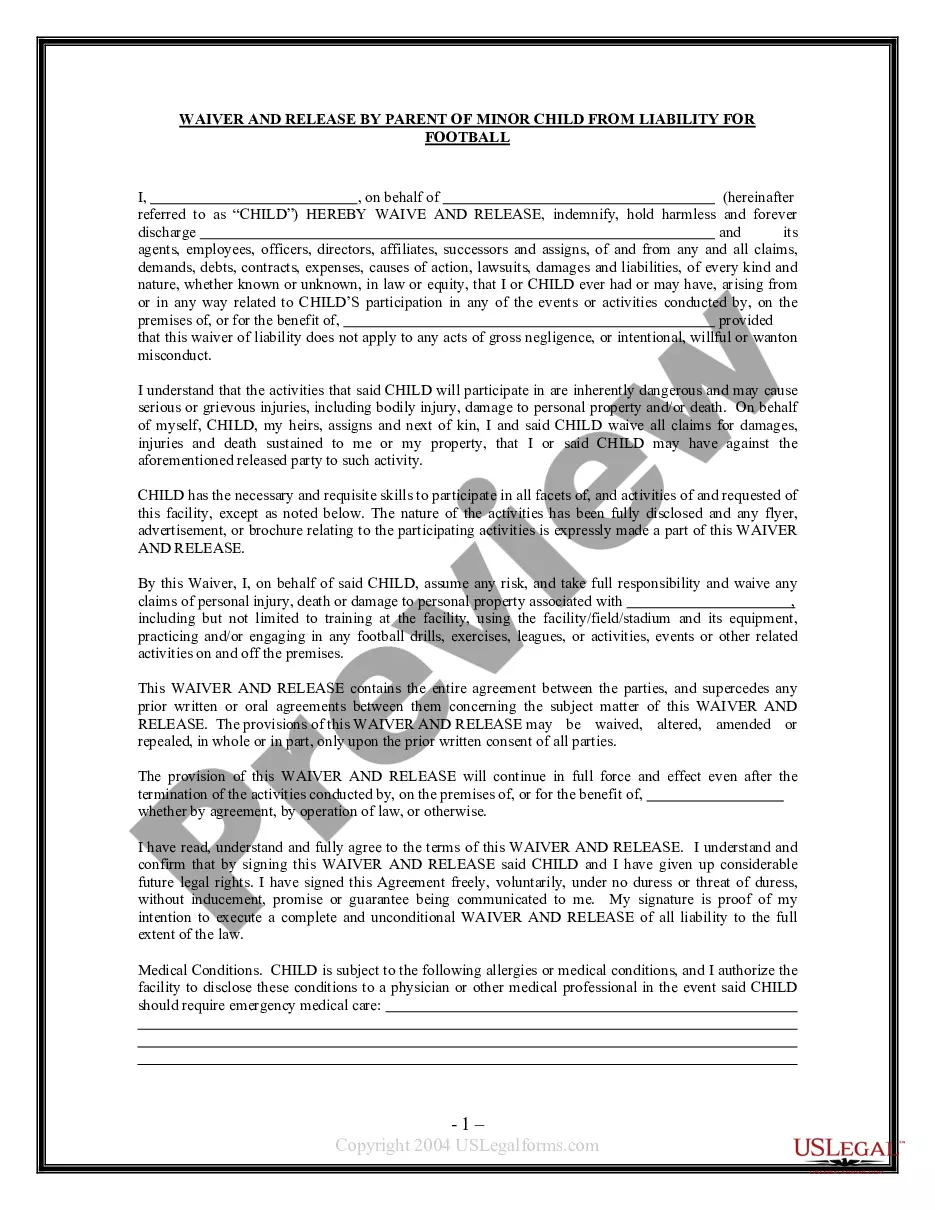
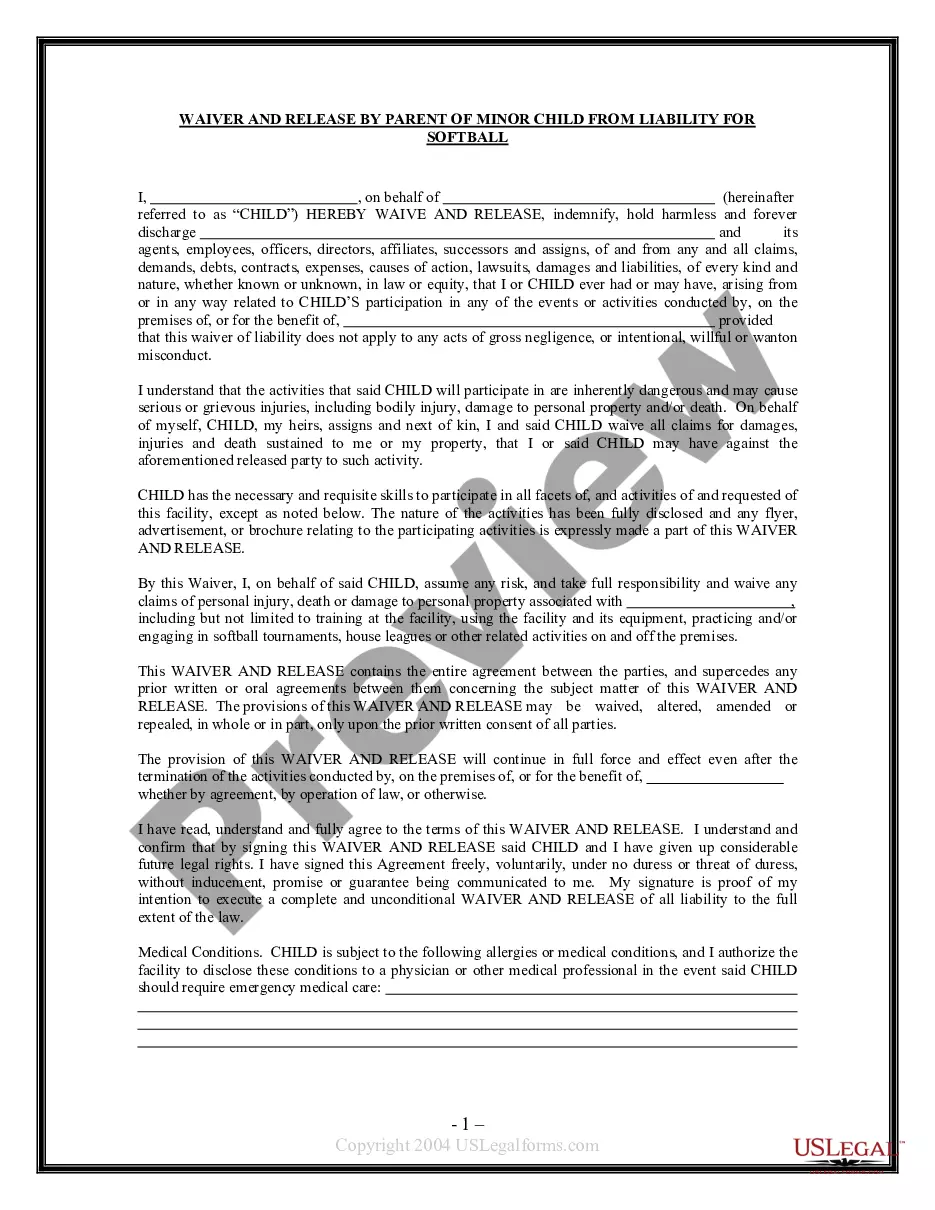
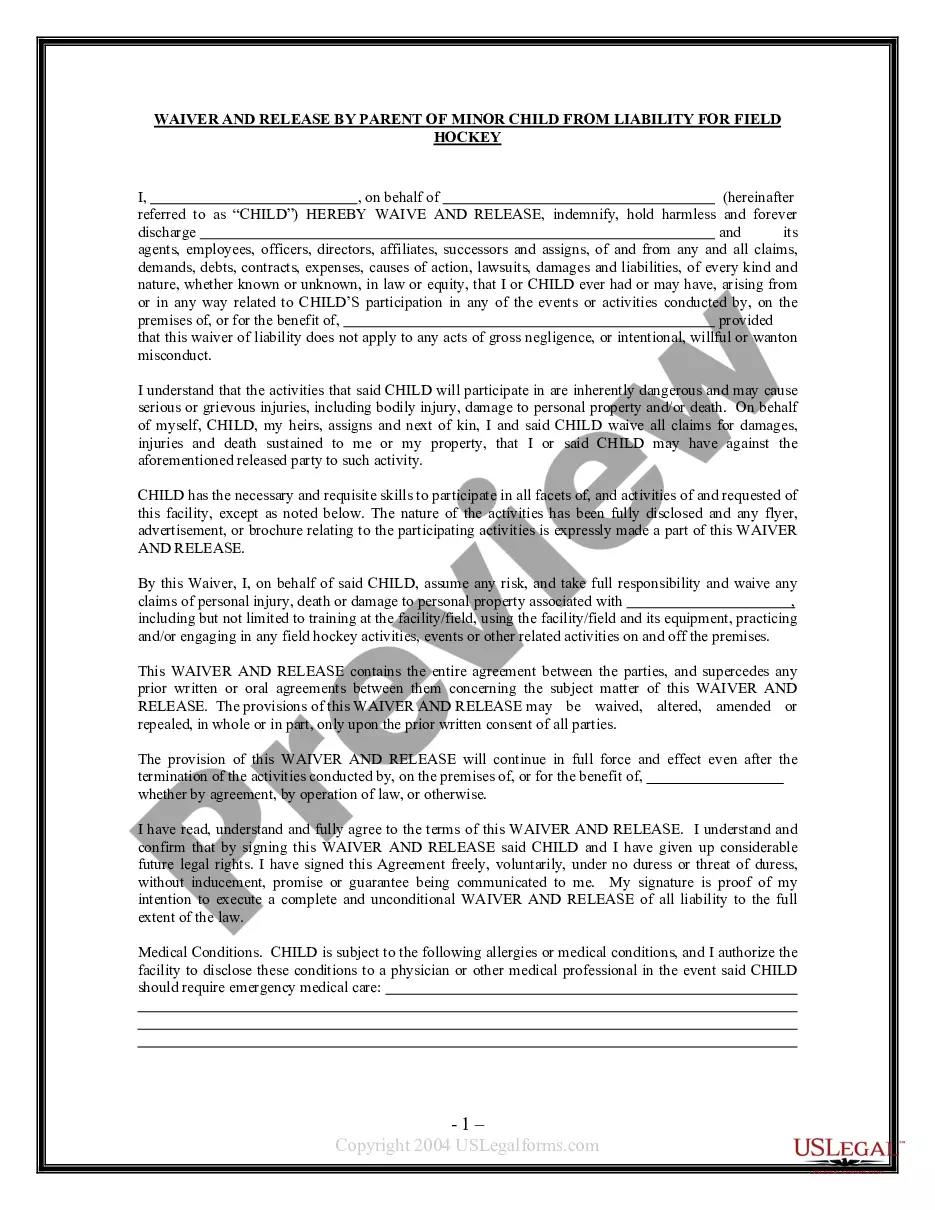
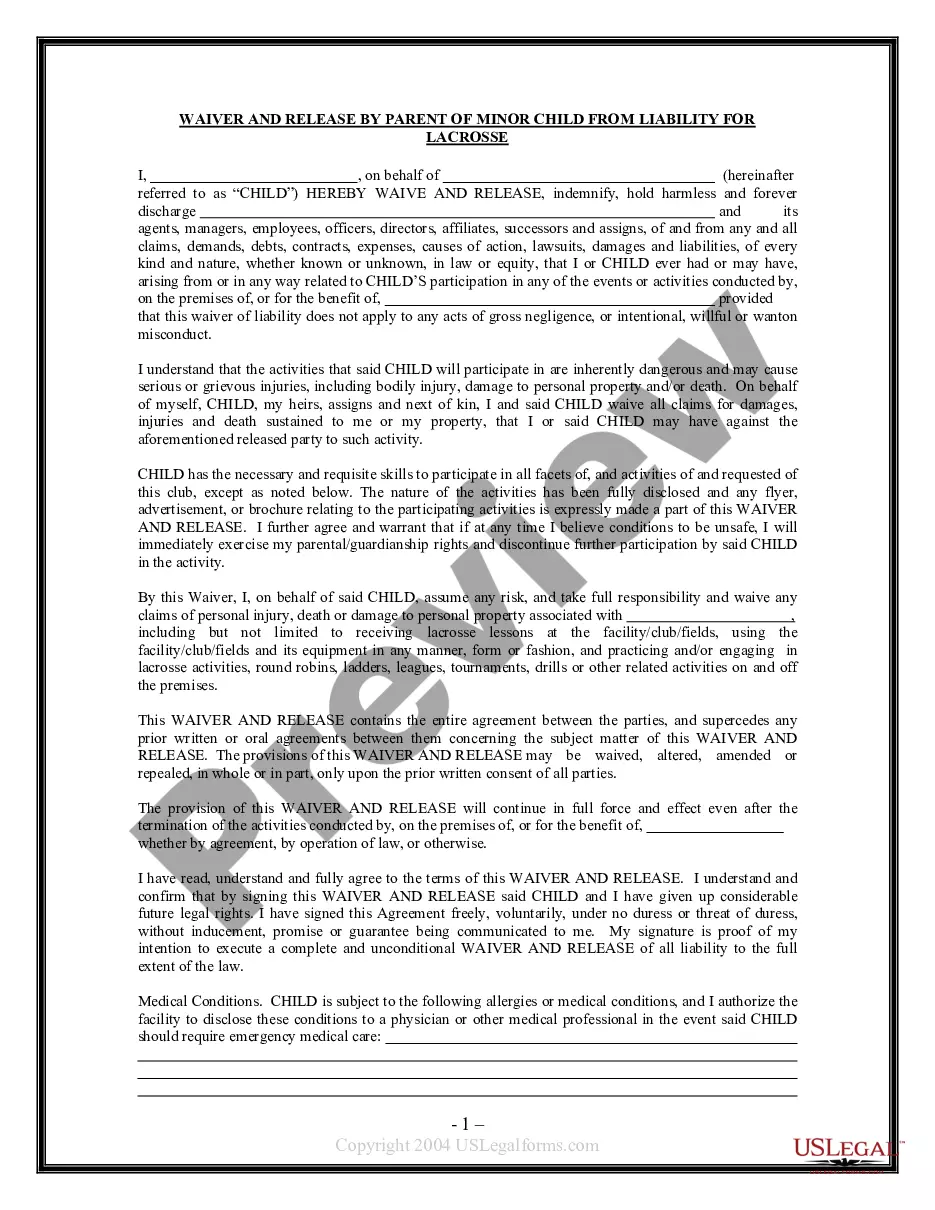
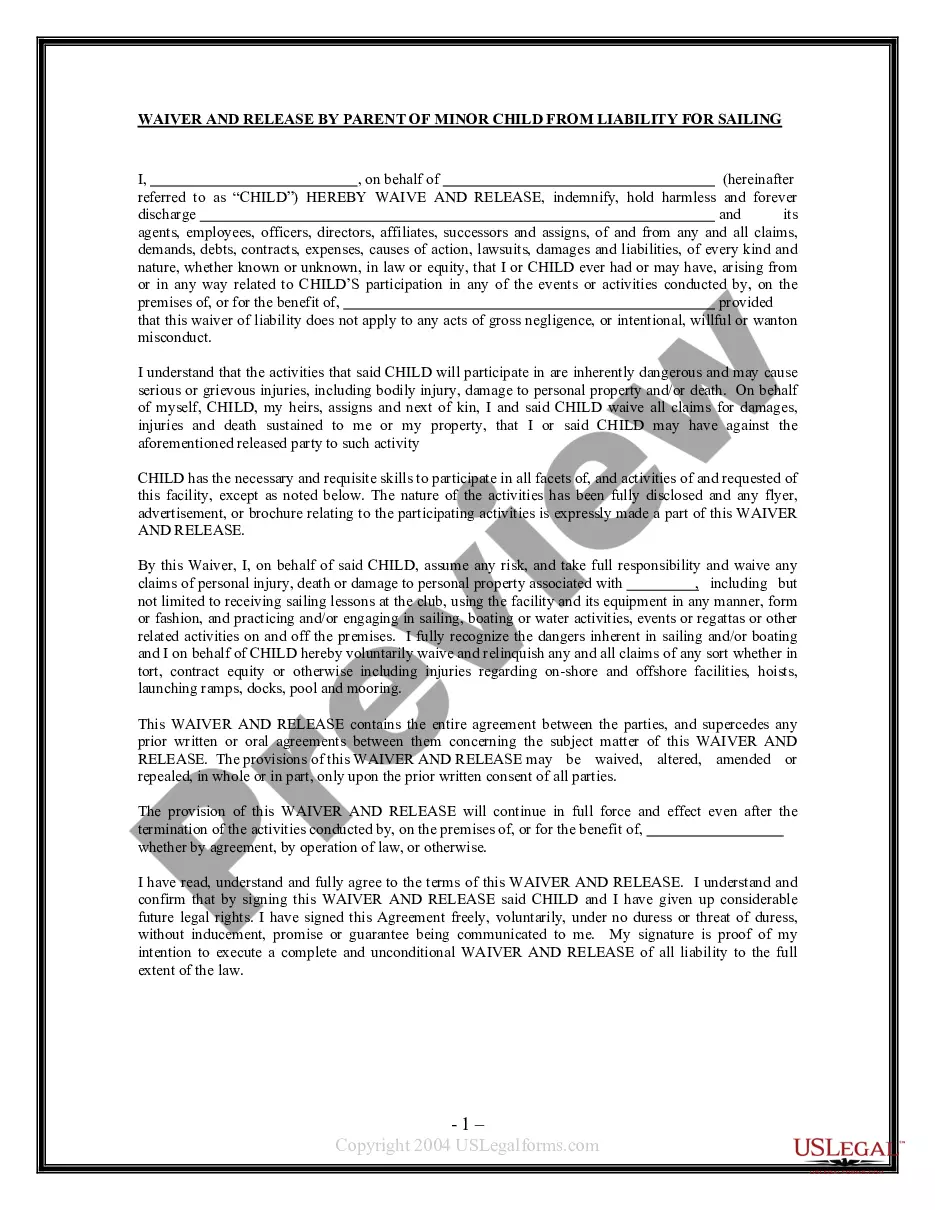
This form allows a parent or guardian to release a minor for intramural sports from liability for injuries which may be incurred by a minor child while on the premises, taking part in activities, etc.
Alaska Waiver and Release From Liability For Minor Child for Intramural Sports
Category:
State:
Multi-State
Control #:
US-WAV-90M
Format:
Word;
Rich Text
Instant download
Description
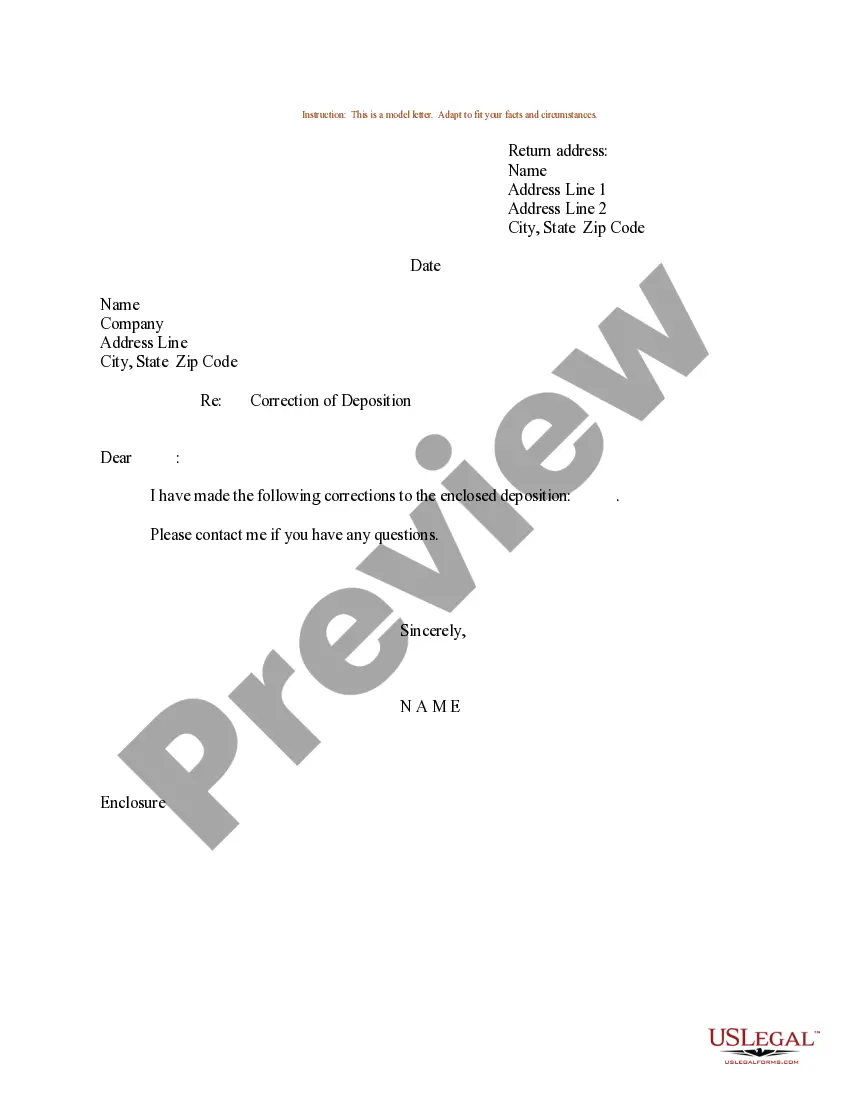
Free preview
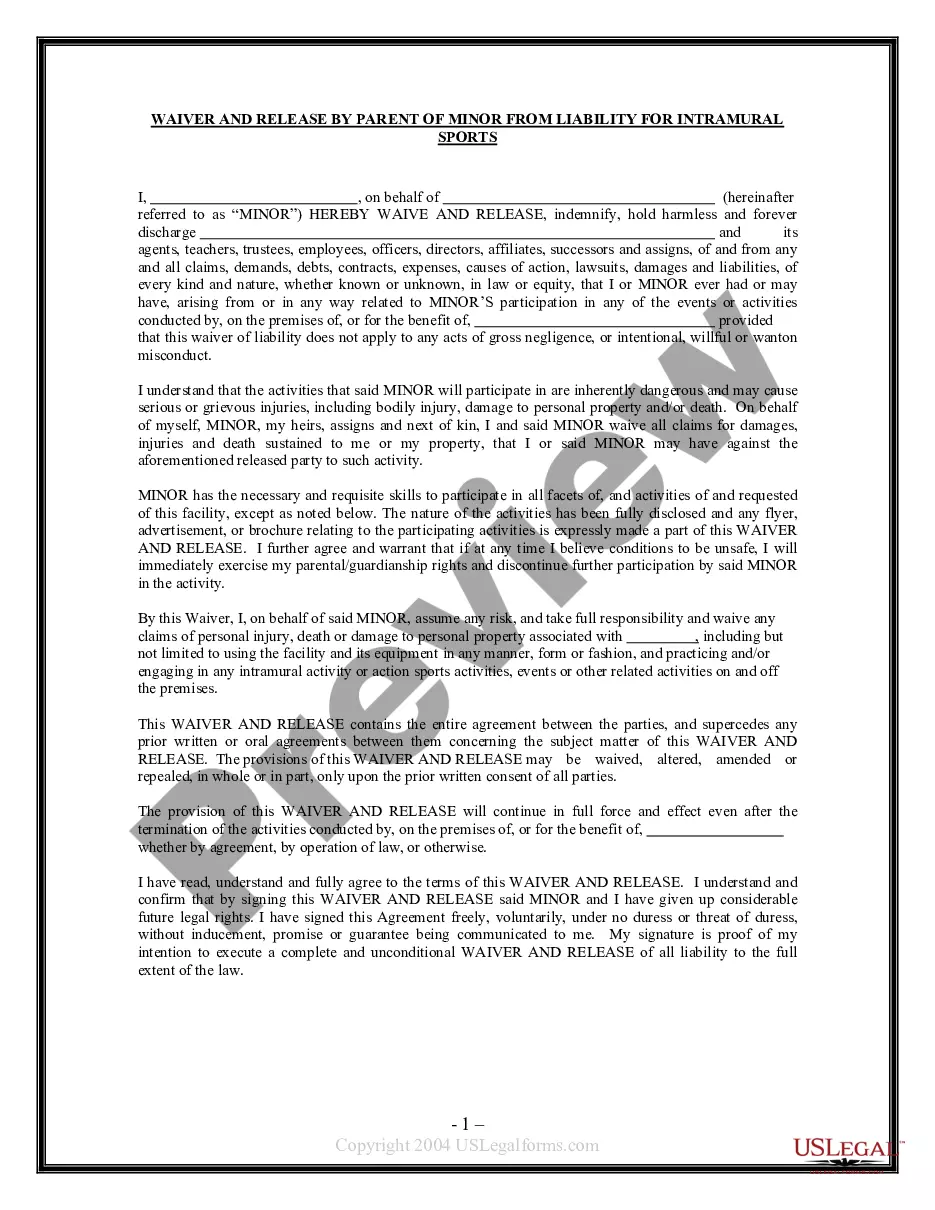
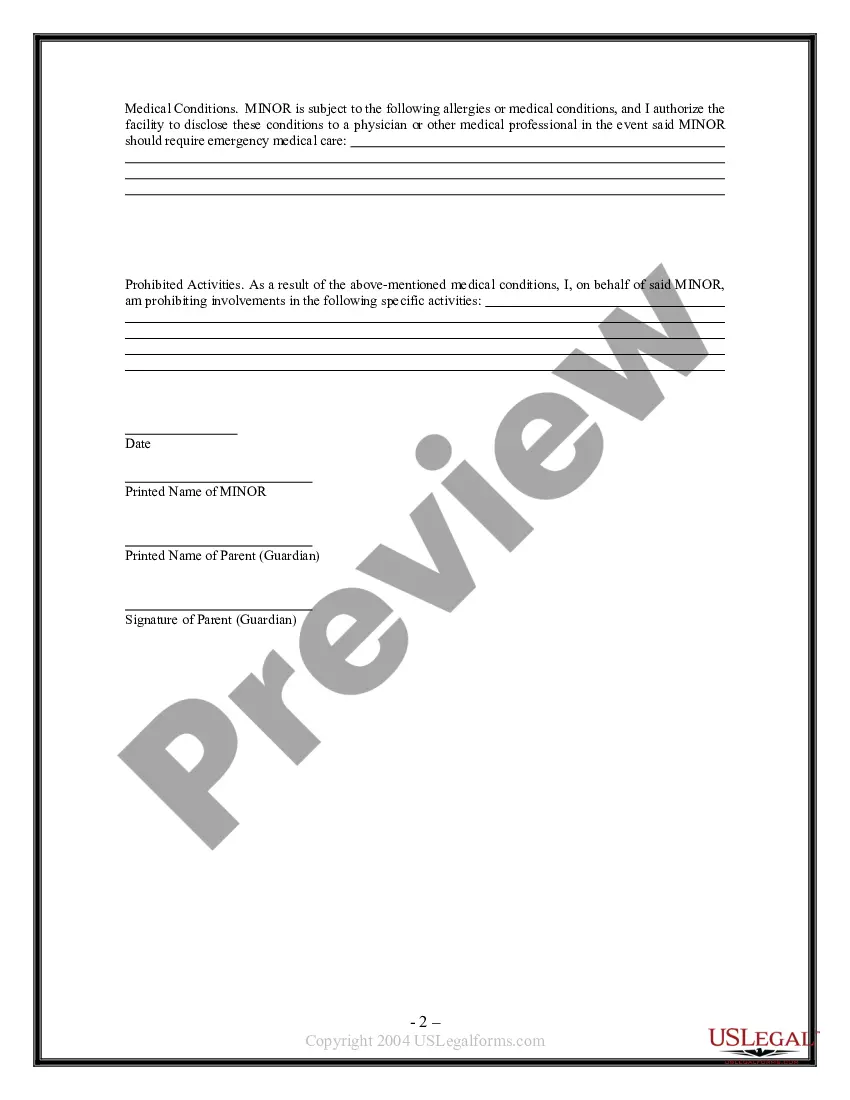
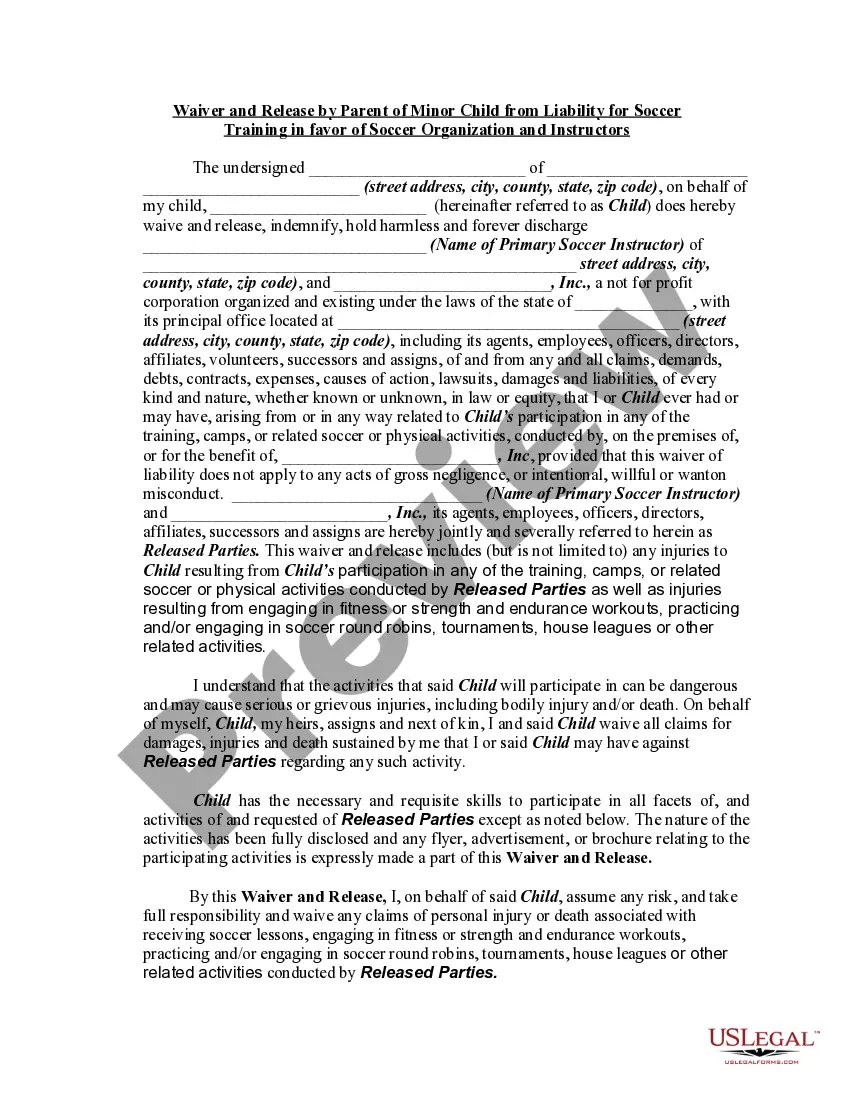

How to fill out Waiver And Release From Liability For Minor Child For Intramural Sports?
If you require extensive, acquire, or create authentic document templates, utilize US Legal Forms, the largest assortment of legal forms available online.
Employ the site's straightforward and convenient search to locate the documents you need. Numerous templates for business and personal use are categorized by groups and states, or keywords.
Use US Legal Forms to find the Alaska Waiver and Release From Liability For Minor Child for Intramural Sports with just a few clicks.
Step 5. Complete the transaction. You can use your Visa or Mastercard or PayPal account to finish the transaction.
Step 6. Choose the format of the legal form and download it to your device. Step 7. Complete, modify and print or sign the Alaska Waiver and Release From Liability For Minor Child for Intramural Sports. Every legal document template you purchase is yours forever. You will have access to every form you saved in your account. Select the My documents section and choose a form to print or download again. Be proactive and download, and print the Alaska Waiver and Release From Liability For Minor Child for Intramural Sports with US Legal Forms. There are thousands of professional and state-specific forms you can utilize for your business or personal needs.
- If you are already a US Legal Forms customer, Log In to your account and click on the Download button to access the Alaska Waiver and Release From Liability For Minor Child for Intramural Sports.
- You can also access forms you previously saved in the My documents tab of your account.
- If you are using US Legal Forms for the first time, follow the instructions below.
- Step 1. Ensure you have selected the form for your respective area/country.
- Step 2. Use the Preview option to review the form's content. Don't forget to read the description.
- Step 3. If you are unsatisfied with the form, utilize the Search field at the top of the screen to find other templates in the legal form library.
- Step 4. Once you have found the form you need, select the Buy now button. Choose the payment plan you prefer and provide your details to register for the account.
Form popularity
FAQ
A waiver and a release are both legal documents that help protect organizations from liability, but they serve different purposes. A waiver typically signifies that a participant acknowledges the risks involved in an activity and agrees not to hold the organization responsible for injuries. On the other hand, a release is a more formal agreement that relinquishes a participant’s right to sue for any claims or damages that may arise. When it comes to the Alaska Waiver and Release From Liability For Minor Child for Intramural Sports, understanding these differences is vital for parents and guardians.
The legal age of consent in Alaska is 16 years old. This means that individuals aged 16 or older can legally consent to various activities without parental involvement. However, this age can influence how waivers, like the Alaska Waiver and Release From Liability For Minor Child for Intramural Sports, are utilized. It is important for parents and guardians to understand these laws when signing on behalf of their minor children.
A hold harmless agreement is a legal document that protects an organization from liability in the event of injury or accidents. In the context of youth sports, it allows parents to acknowledge the risks involved and agree not to hold the organization responsible. The Alaska Waiver and Release From Liability For Minor Child for Intramural Sports serves as a hold harmless agreement, helping to ensure that both the minor and the organization are safeguarded legally.
In general, signatures from minors are not legally binding because the law recognizes their limited capacity to contract. This means that any agreement signed solely by a minor may be voidable. To ensure validity, parents or guardians should sign the Alaska Waiver and Release From Liability For Minor Child for Intramural Sports. This step protects both the organization and the minor participant from potential legal issues.
Not all waivers are legally binding, as their enforceability can depend on various factors, including state laws. In Alaska, for instance, a waiver must be clear, specific, and voluntarily signed to be enforceable. When drafting an Alaska Waiver and Release From Liability For Minor Child for Intramural Sports, it is crucial to ensure that the language is straightforward and that the document complies with legal standards. Using a platform like uslegalforms can help create a robust waiver that meets these requirements.
Typically, waivers signed by minors are not considered legally binding. Courts usually view minors as unable to make fully informed legal decisions. Therefore, it is essential for parents or guardians to sign the Alaska Waiver and Release From Liability For Minor Child for Intramural Sports on behalf of their child. This ensures that the waiver holds legal weight in protecting against potential liabilities.
The main difference between releases and waivers is the transferring of ownership. When rights are released, they are transferred to another party. When rights are waived, they are gone altogether. If intellectual property rights are waived, the IP can be used by any other party that has access to it.
Signing a waiver does not mean you automatically do not have the right to file a lawsuit after suffering a serious injury in California. Liability laws are complex and often require an attorney's assistance. If you signed a waiver before an activity that gave you an injury, speak to a lawyer about your rights.
A release and waiver agreement is an enforceable promise not to pursue legal action in exchange for compensation. The releasee gives money or some other form of compensation to the releasor, who then agrees not to press charges, sue, or take any other legal action against the releasee.
A waiver is a legal agreement the primary purpose of which is to let you or another party modify or relinquish a right, privilege, or claim. The agreement can be a separate document on its own, such as if you sign a waiver form, or added to a contract as a waiver clause.