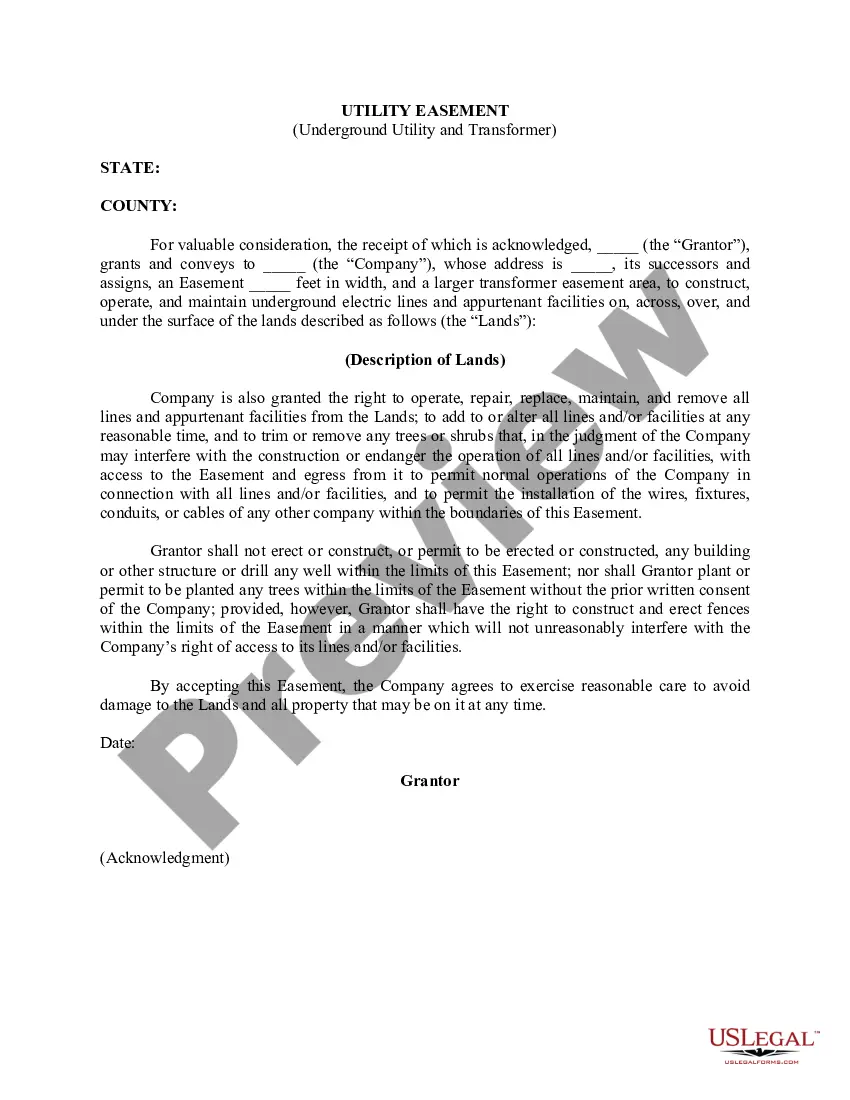
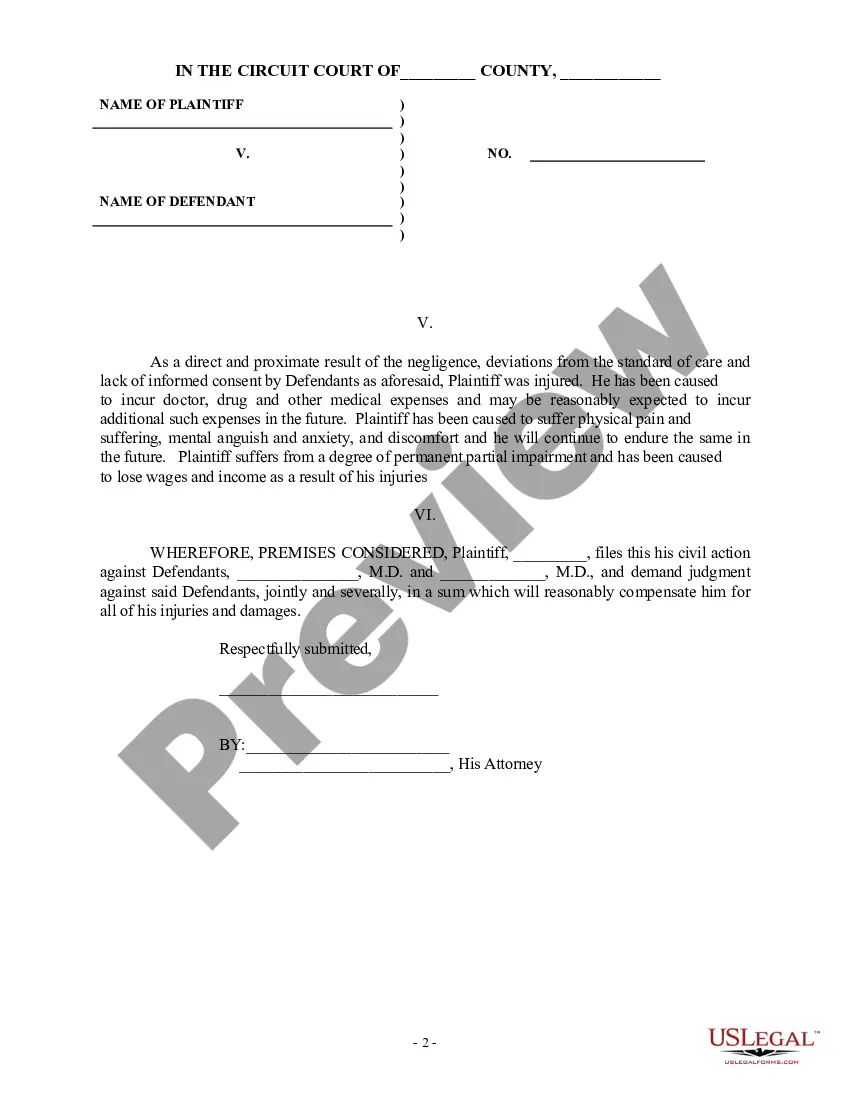
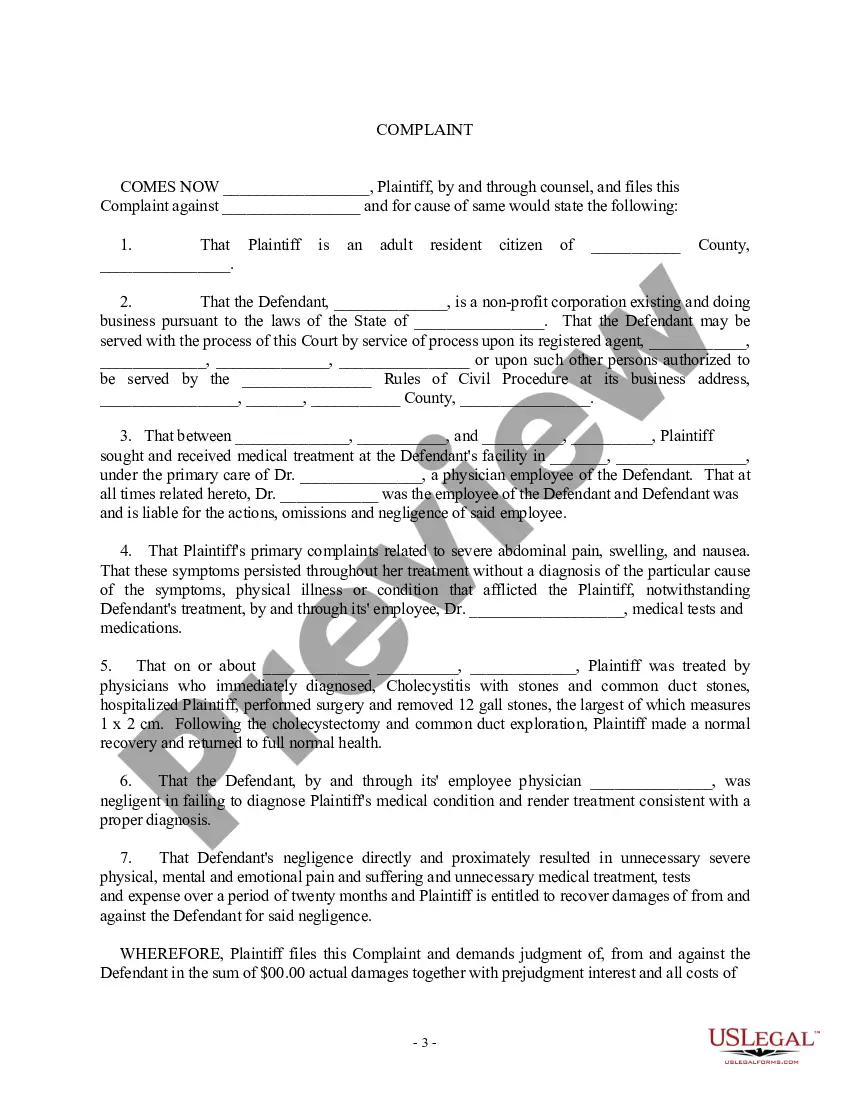
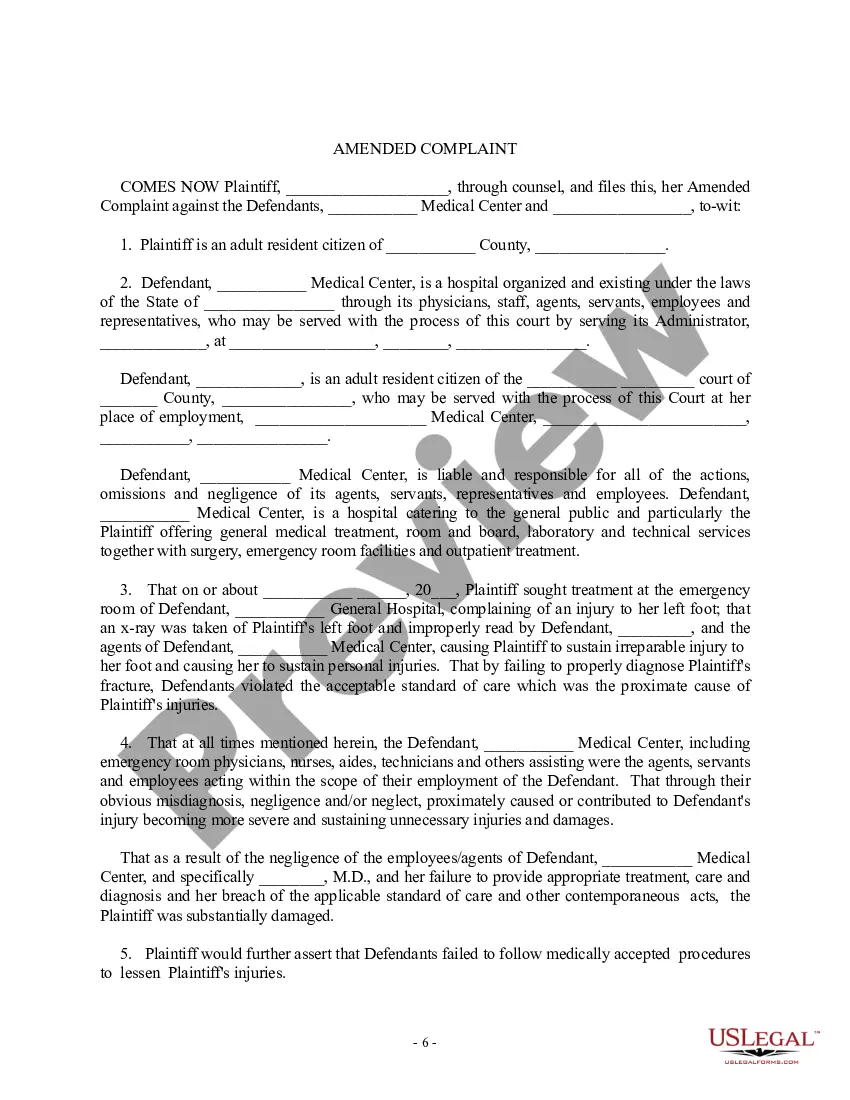
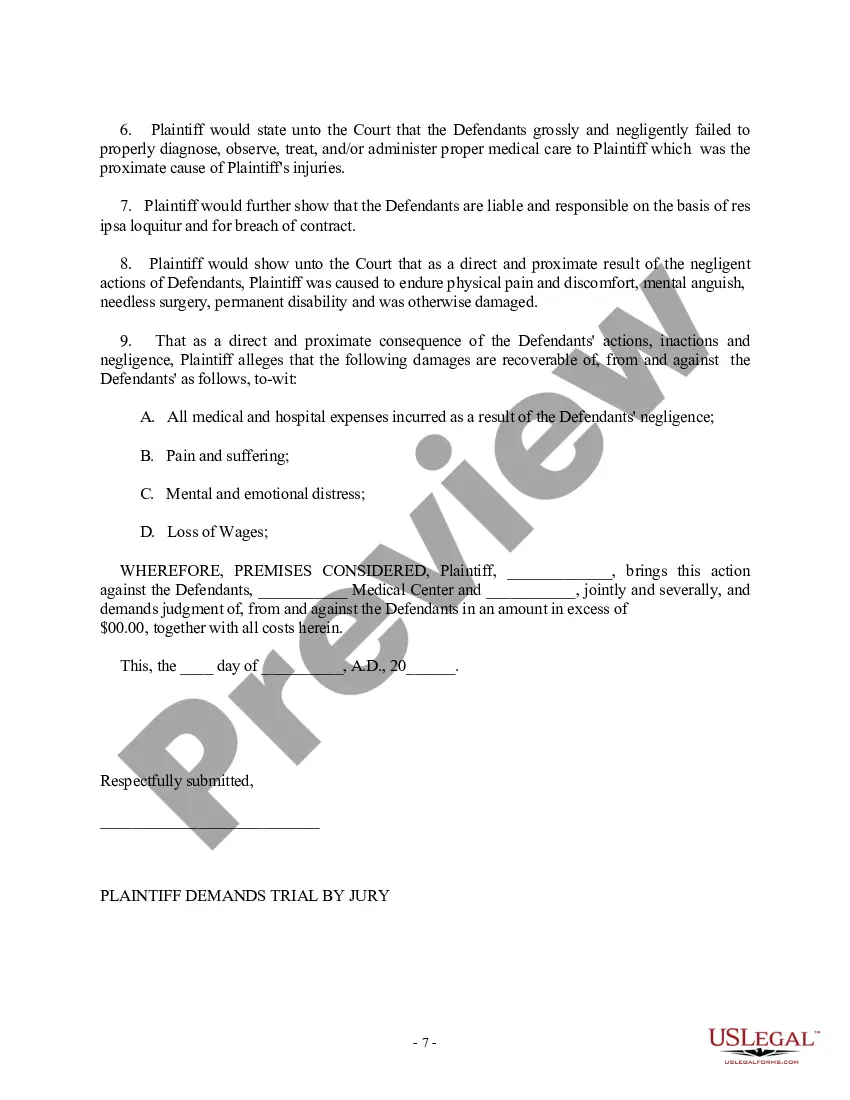
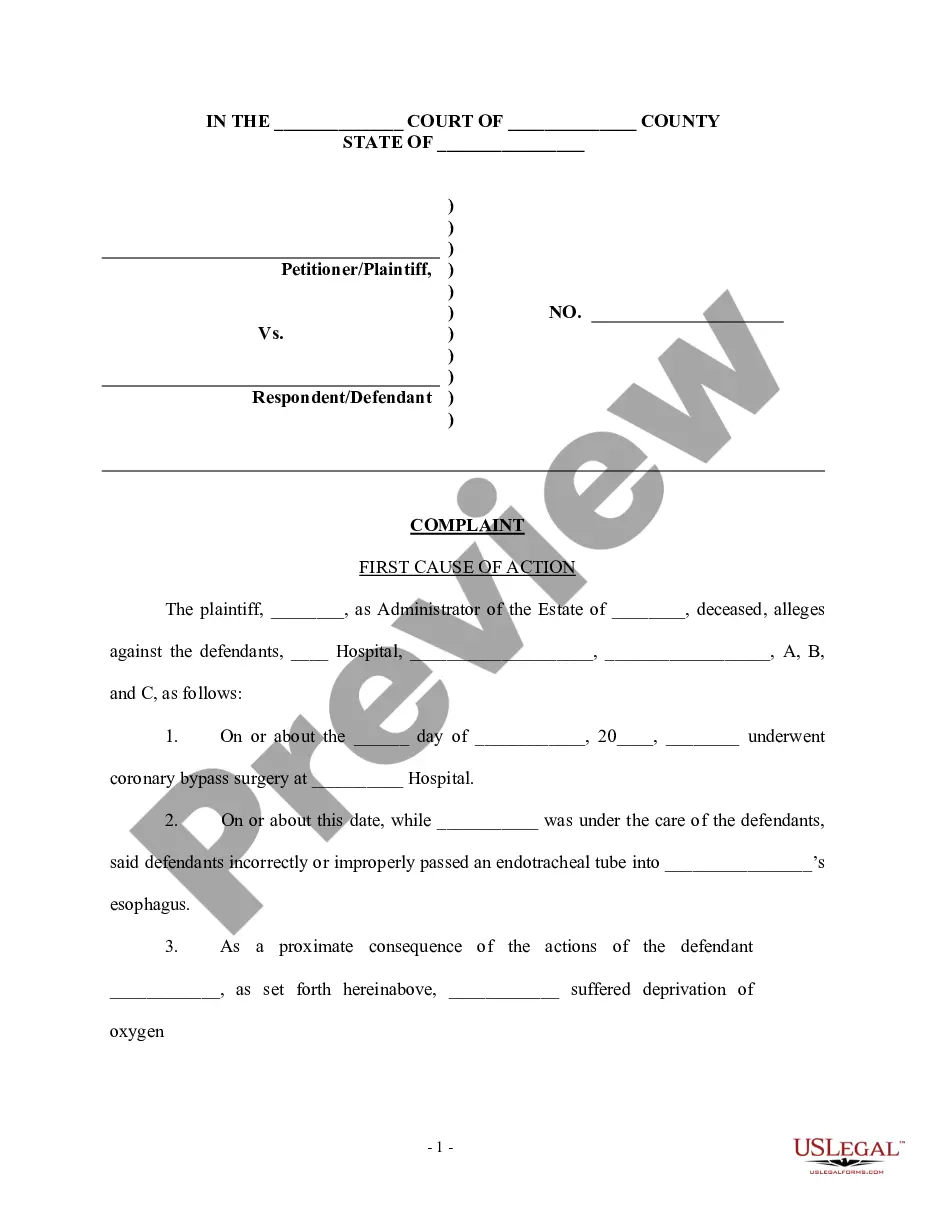
Alaska Complaint for Medical Malpractice regarding Surgical Procedure
Description
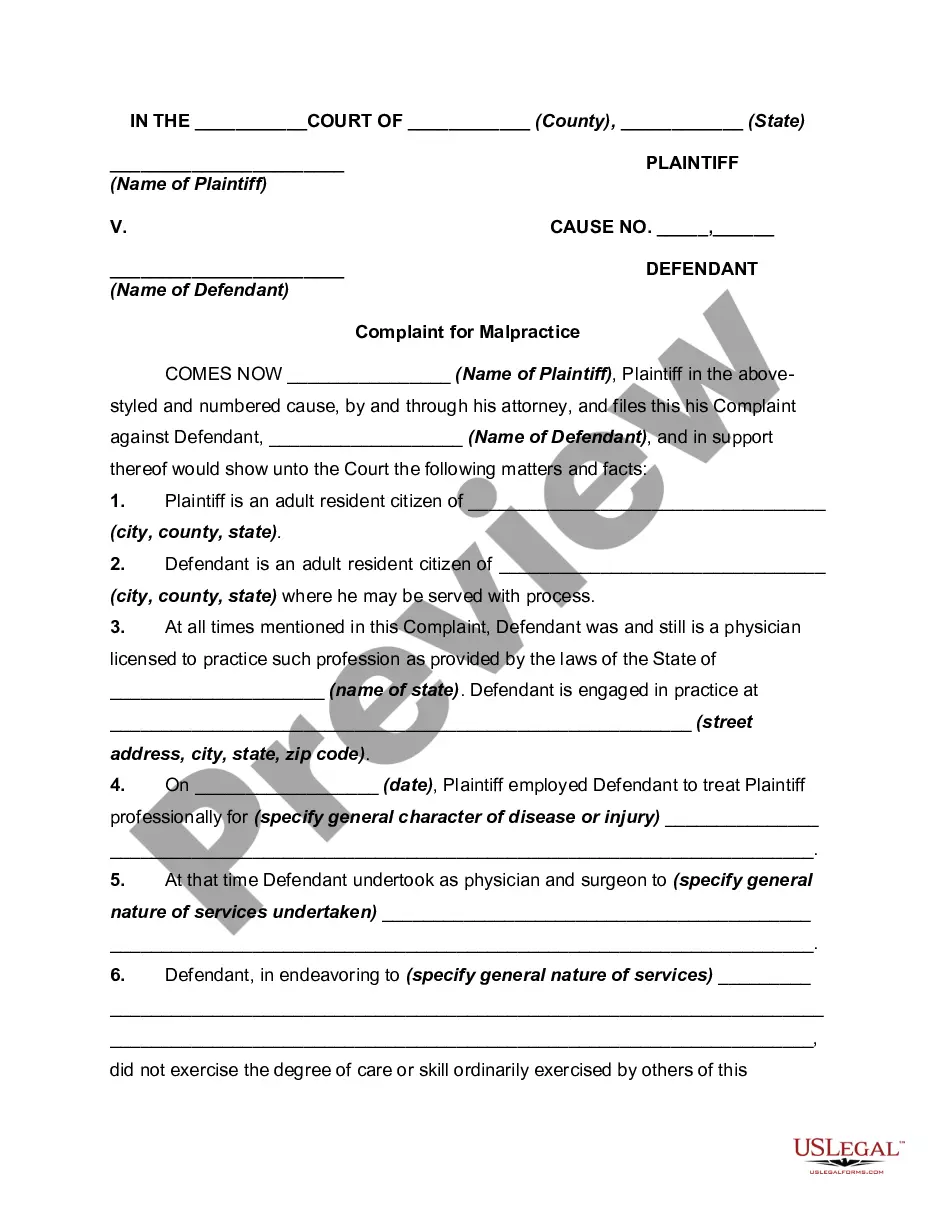
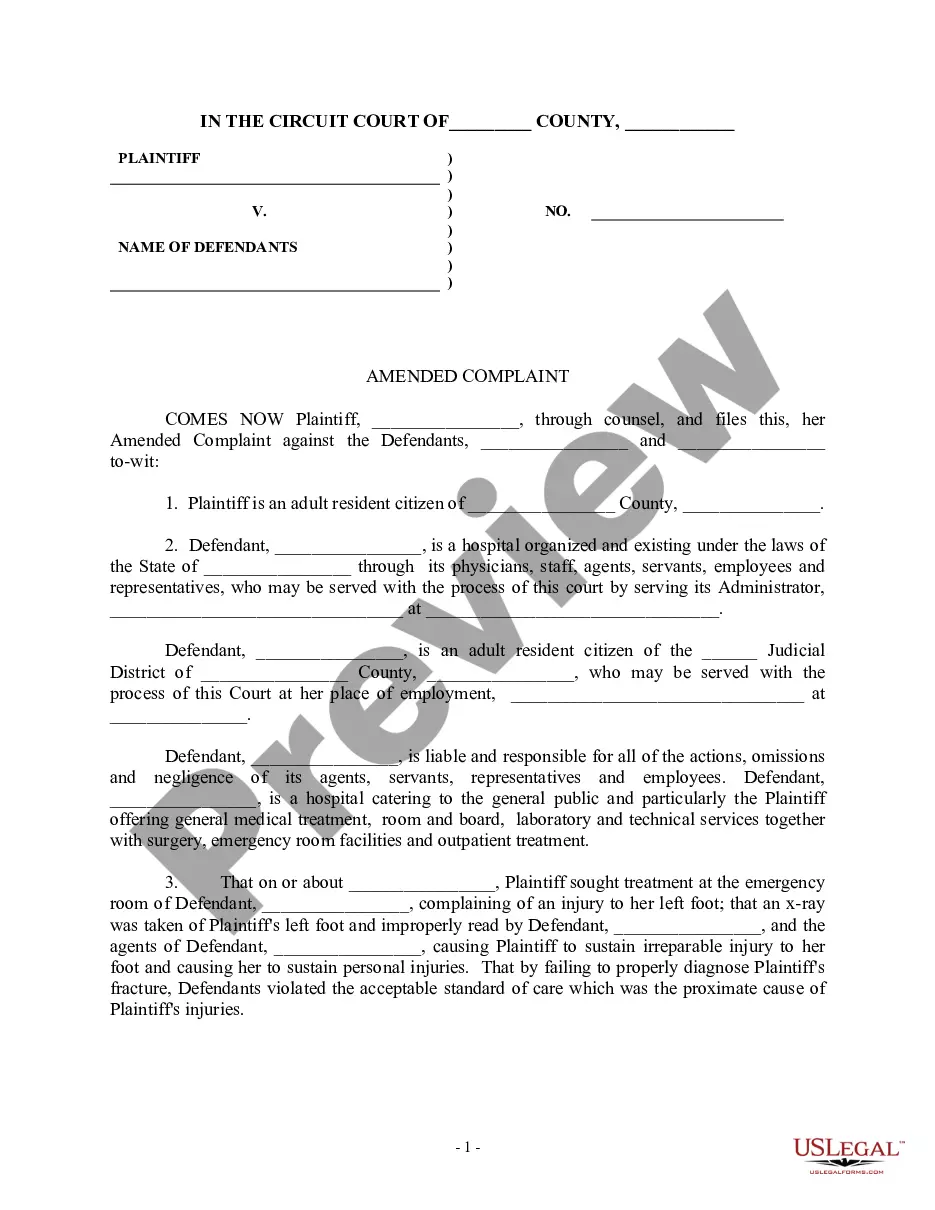
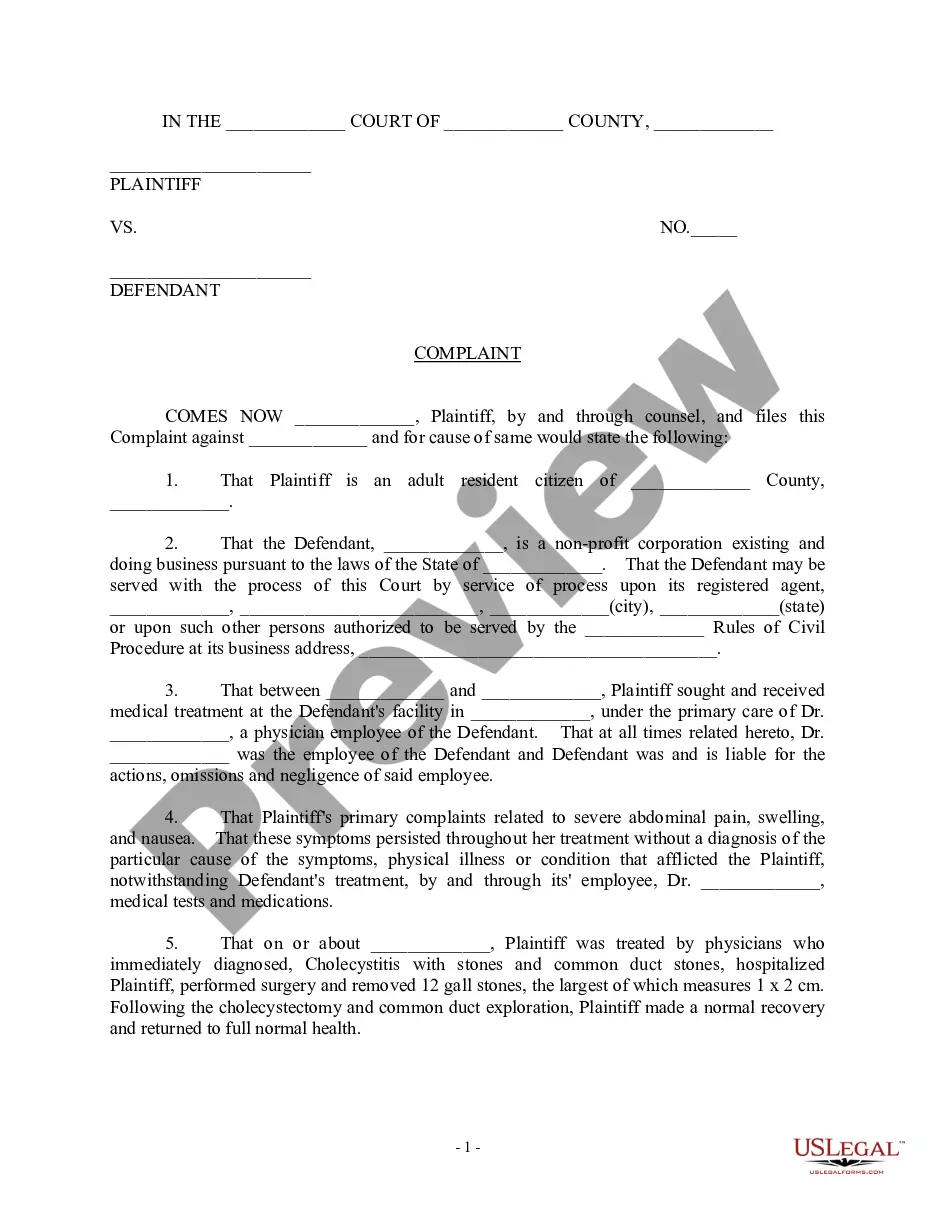
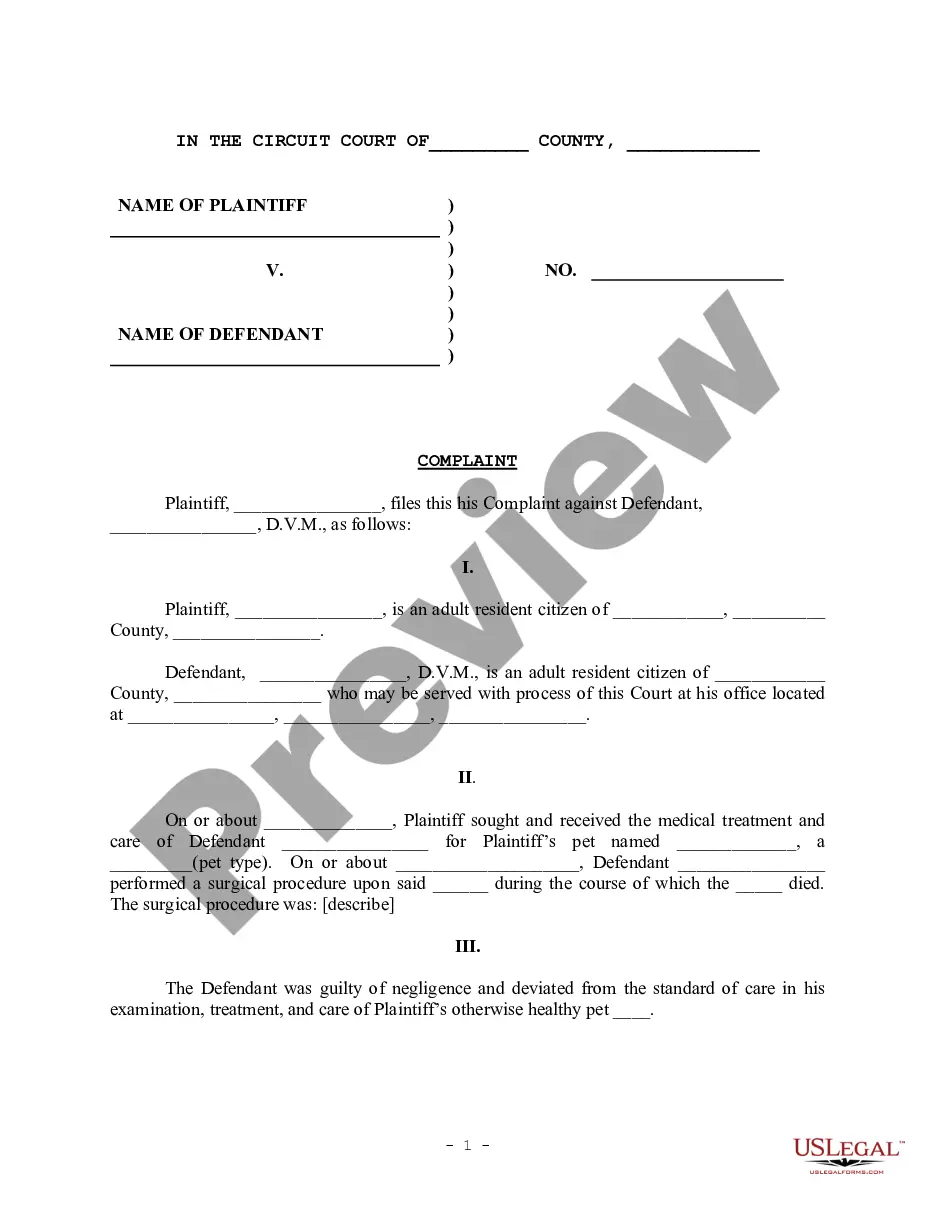
Get your form ready online
Our built-in tools help you complete, sign, share, and store your documents in one place.
Make edits, fill in missing information, and update formatting in US Legal Forms—just like you would in MS Word.
Download a copy, print it, send it by email, or mail it via USPS—whatever works best for your next step.
Sign and collect signatures with our SignNow integration. Send to multiple recipients, set reminders, and more. Go Premium to unlock E-Sign.
If this form requires notarization, complete it online through a secure video call—no need to meet a notary in person or wait for an appointment.
We protect your documents and personal data by following strict security and privacy standards.

Make edits, fill in missing information, and update formatting in US Legal Forms—just like you would in MS Word.

Download a copy, print it, send it by email, or mail it via USPS—whatever works best for your next step.

Sign and collect signatures with our SignNow integration. Send to multiple recipients, set reminders, and more. Go Premium to unlock E-Sign.

If this form requires notarization, complete it online through a secure video call—no need to meet a notary in person or wait for an appointment.

We protect your documents and personal data by following strict security and privacy standards.
Looking for another form?



How to fill out Complaint For Medical Malpractice Regarding Surgical Procedure?
US Legal Forms - one of the greatest libraries of lawful kinds in the States - gives a wide array of lawful record templates you can obtain or print out. While using internet site, you can get 1000s of kinds for company and personal reasons, sorted by classes, says, or search phrases.You can find the latest variations of kinds much like the Alaska Complaint for Medical Malpractice regarding Surgical Procedure in seconds.
If you currently have a monthly subscription, log in and obtain Alaska Complaint for Medical Malpractice regarding Surgical Procedure from your US Legal Forms collection. The Acquire option can look on each and every form you view. You have accessibility to all previously delivered electronically kinds in the My Forms tab of your respective profile.
If you want to use US Legal Forms initially, here are straightforward recommendations to help you began:
- Make sure you have chosen the proper form for your town/area. Click the Review option to review the form`s information. Browse the form outline to ensure that you have chosen the right form.
- In the event the form doesn`t match your needs, use the Research industry towards the top of the screen to get the one who does.
- Should you be content with the shape, verify your selection by simply clicking the Buy now option. Then, choose the rates prepare you favor and provide your references to register for an profile.
- Procedure the deal. Use your credit card or PayPal profile to accomplish the deal.
- Select the format and obtain the shape on the device.
- Make modifications. Load, modify and print out and sign the delivered electronically Alaska Complaint for Medical Malpractice regarding Surgical Procedure.
Every single format you added to your account does not have an expiration day and it is the one you have forever. So, in order to obtain or print out an additional copy, just proceed to the My Forms area and then click about the form you will need.
Gain access to the Alaska Complaint for Medical Malpractice regarding Surgical Procedure with US Legal Forms, one of the most comprehensive collection of lawful record templates. Use 1000s of skilled and state-specific templates that meet up with your organization or personal requirements and needs.
Form popularity
FAQ
Then, you have to show the court that the doctor's actions or inactions were the direct cause of your illness and that your health was damaged as a direct result. Of those four components, causation is often the hardest element to prove in court.
Informed consent is the type of consent that is most commonly an issue in a medical malpractice case. Before performing a medical procedure, a doctor or healthcare provider has a duty to warn the patient of the known risks involved.
Compassion, Communication, Competence and Charting are the four C's of medical malpractice.
Duty, Deviation, Damages, and Direct Cause are the 4 Ds of negligence. These are the legal requirements that a person has to prove to bring a medical malpractice claim successfully.
The injured patient must show that the physician acted negligently in rendering care, and that such negligence resulted in injury. To do so, four legal elements must be proven: (1) a professional duty owed to the patient; (2) breach of such duty; (3) injury caused by the breach; and (4) resulting damages.
In Alaska, medical malpractice occurs when a healthcare provider deviates from the standard of care and causes harm to a patient. You may be entitled to compensation if you or a loved one has suffered injuries due to medical malpractice.
What Are the Four Elements of Medical Malpractice? Duty: The duty of care owed to patients. Dereliction: Or breach of this duty of care. Direct cause: Establishing that the breach caused injury to a patient. Damages: The economic and noneconomic losses suffered by the patient as a result of their injury or illness.
Lawyers sometimes refer to the proof required to bring a successful medical malpractice claim as the ?four Ds?: Duty, Deviation (or Dereliction) from Duty, Damages and Direct Cause.