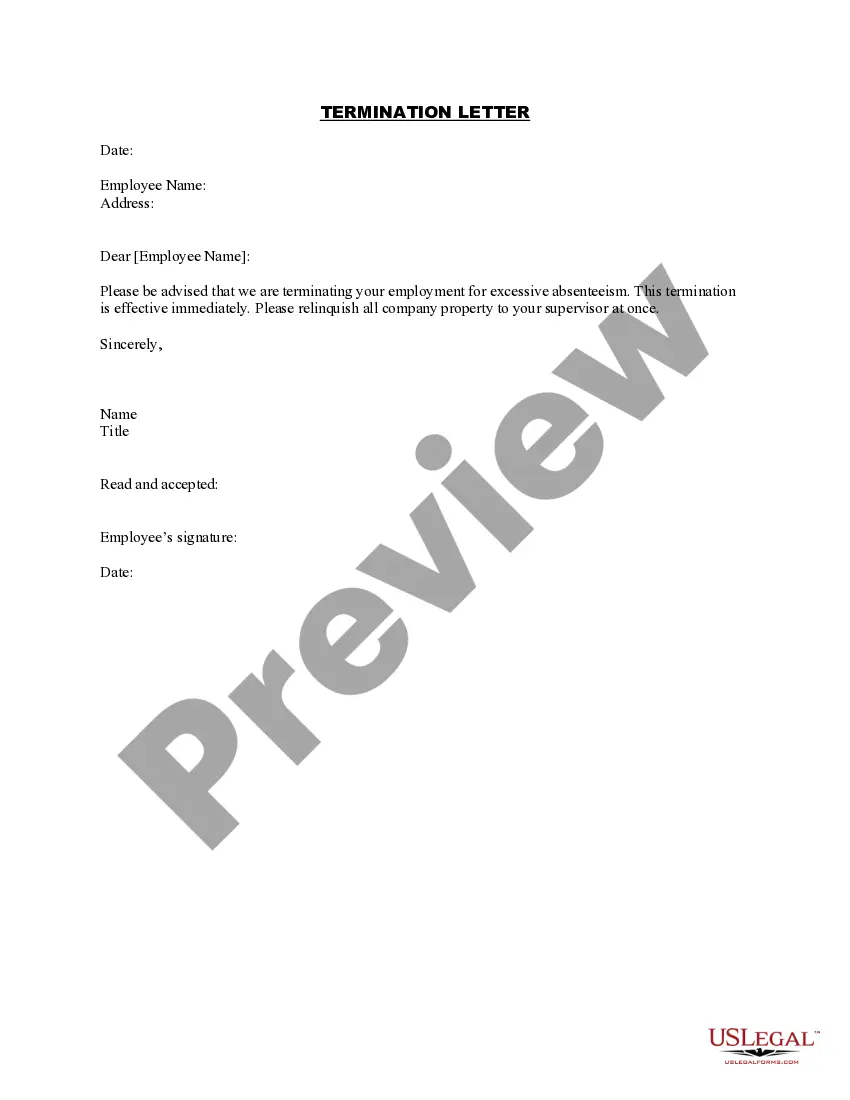
Alaska Termination Letter - Excessive Absenteeism
Description
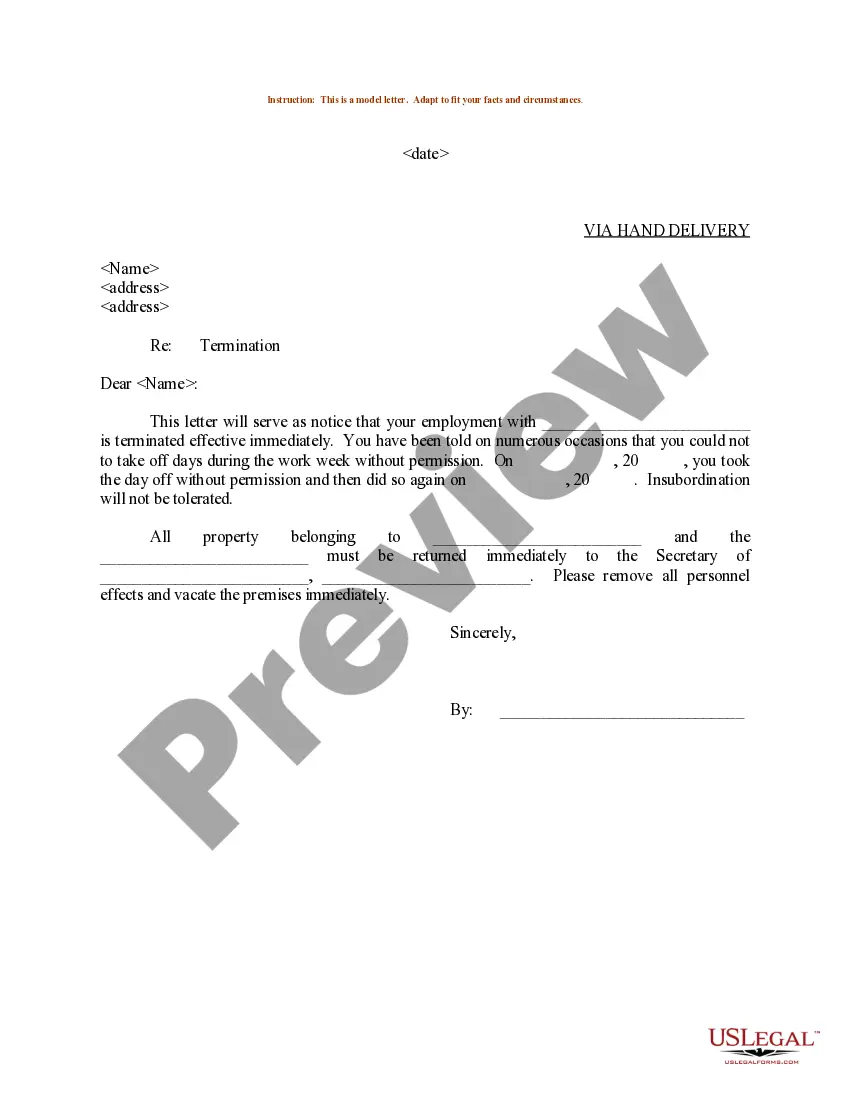
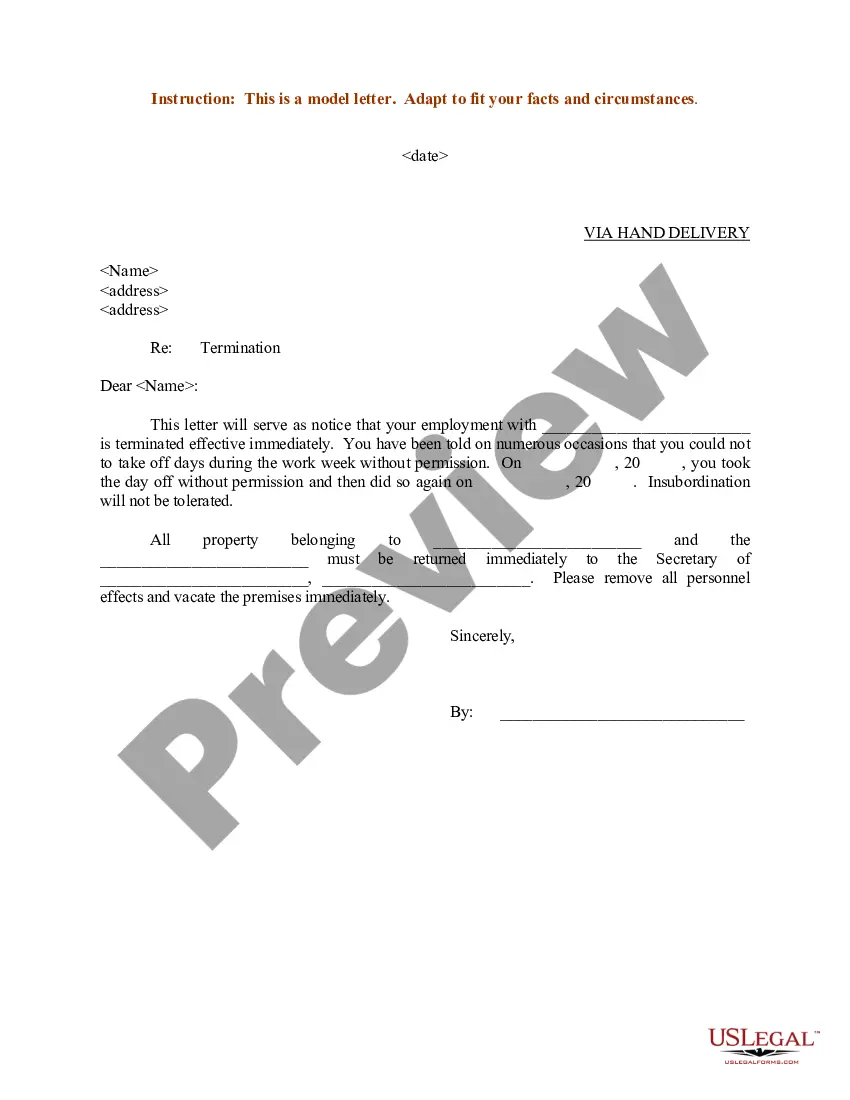
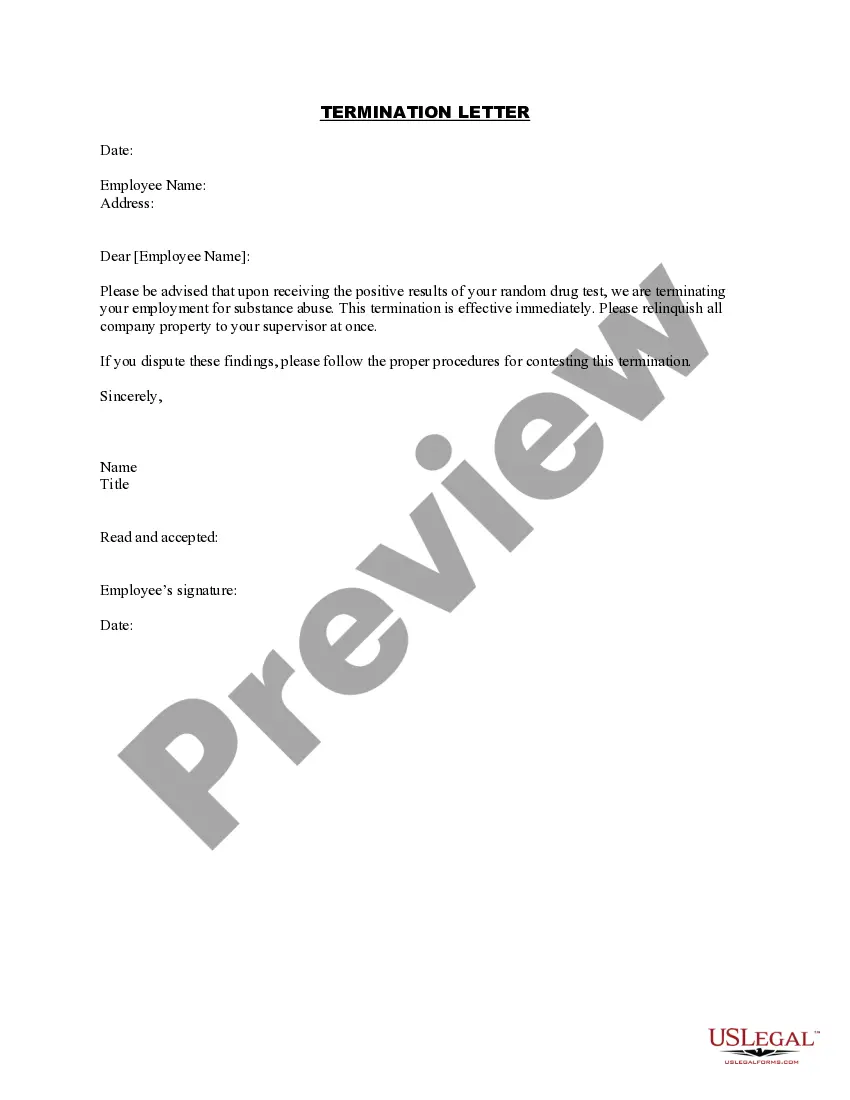
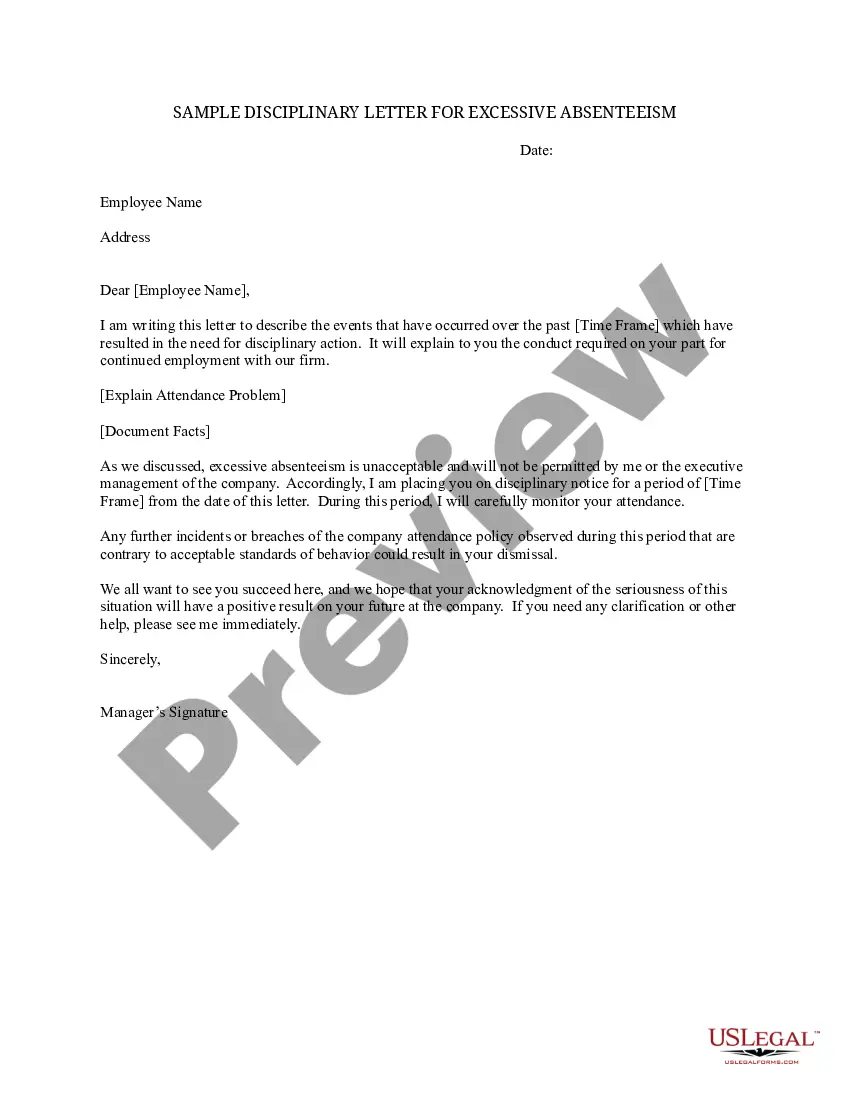
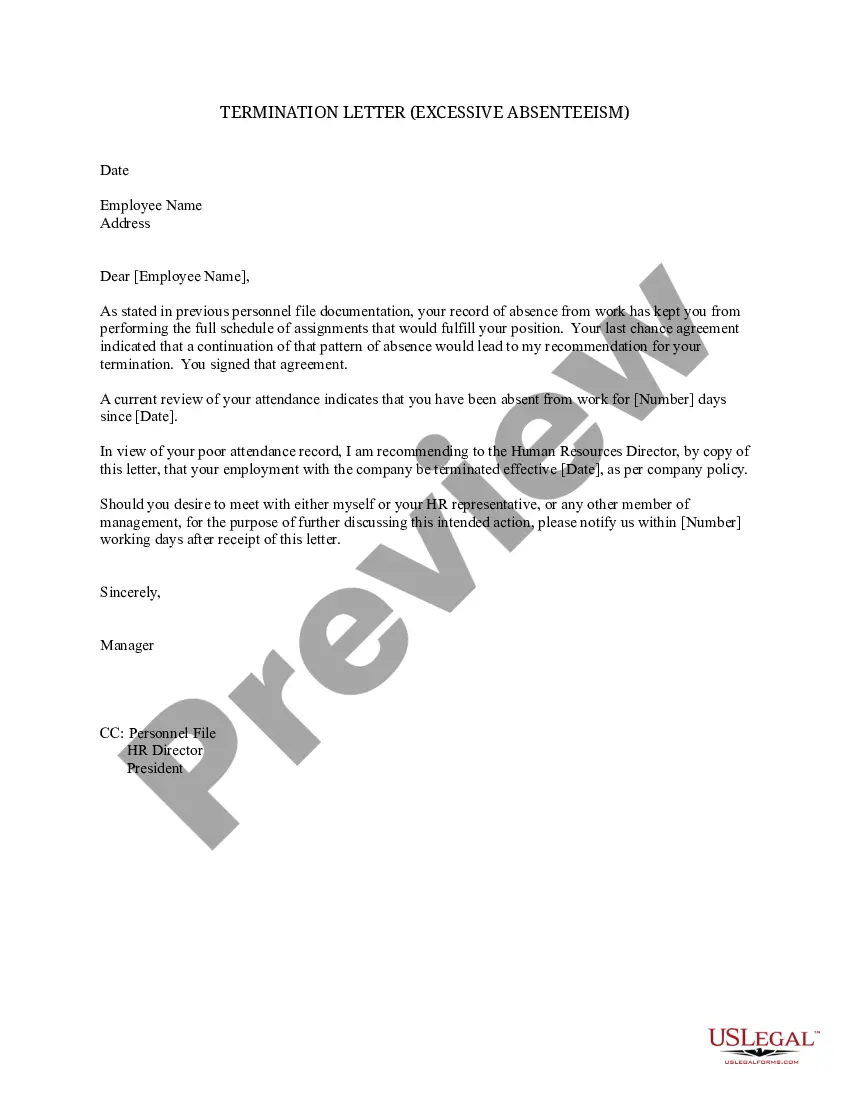
Get your form ready online
Our built-in tools help you complete, sign, share, and store your documents in one place.
Make edits, fill in missing information, and update formatting in US Legal Forms—just like you would in MS Word.
Download a copy, print it, send it by email, or mail it via USPS—whatever works best for your next step.
Sign and collect signatures with our SignNow integration. Send to multiple recipients, set reminders, and more. Go Premium to unlock E-Sign.
If this form requires notarization, complete it online through a secure video call—no need to meet a notary in person or wait for an appointment.
We protect your documents and personal data by following strict security and privacy standards.

Make edits, fill in missing information, and update formatting in US Legal Forms—just like you would in MS Word.

Download a copy, print it, send it by email, or mail it via USPS—whatever works best for your next step.

Sign and collect signatures with our SignNow integration. Send to multiple recipients, set reminders, and more. Go Premium to unlock E-Sign.

If this form requires notarization, complete it online through a secure video call—no need to meet a notary in person or wait for an appointment.

We protect your documents and personal data by following strict security and privacy standards.
Looking for another form?



How to fill out Termination Letter - Excessive Absenteeism?
US Legal Forms - one of the largest repositories of legal documents in the United States - offers a diverse collection of legal templates that you can obtain or print.
By using the website, you can access a multitude of forms for business and personal purposes, organized by categories, claims, or keywords. You can find the latest versions of documents like the Alaska Termination Letter - Excessive Absenteeism within moments.
If you hold a subscription, Log In and retrieve the Alaska Termination Letter - Excessive Absenteeism from the US Legal Forms library. The Download option will appear on each form you encounter. You have access to all previously downloaded forms from the My documents section of your account.
Complete your transaction. Use your credit card or PayPal account to process the payment.
Select the format and download the form to your device. Edit. Fill out, revise, print, and sign the downloaded Alaska Termination Letter - Excessive Absenteeism. Each template you add to your account has no expiration date and is yours forever. Therefore, if you wish to obtain or print another copy, simply navigate to the My documents section and click on the form you need. Gain access to the Alaska Termination Letter - Excessive Absenteeism with US Legal Forms, the most extensive library of legal document templates. Utilize numerous professional and state-specific templates that fulfill your business or personal requirements.
- Ensure you have selected the correct form for your area/region.
- Click on the Preview button to view the form's content.
- Review the form details to confirm you have chosen the appropriate form.
- If the form doesn't meet your needs, utilize the Search field at the top of the page to find one that does.
- If you are satisfied with the form, confirm your selection by clicking the Buy now button.
- Then, select your preferred pricing plan and provide your credentials to register for an account.
Form popularity
FAQ
Statute 23.10.060 in Alaska deals with the minimum wage and hourly wage standards. Employers who fail to adhere to these regulations may face legal challenges, especially when issuing an Alaska Termination Letter - Excessive Absenteeism. Proper understanding of this statute is vital during the termination process to avoid disputes over wage obligations. Additionally, seeking support from platforms like uslegalforms can facilitate compliance and provide the necessary legal documents.
Statute 23.10.430 in Alaska pertains to employee rights regarding wages, outlining essential provisions for fair compensation. It is crucial for employers to be aware of this statute when drafting an Alaska Termination Letter - Excessive Absenteeism, as improper handling could lead to wage claims. Understanding this statute helps in ensuring that all employment rights align with termination procedures. This knowledge can safeguard organizations when managing absenteeism-related terminations.
That equates to about 156 days. Employers are only mandated to follow the FMLA if the company has 50 or more employees. Employers may also ask for verification, at which time, employees must produce it within 15 calendar days. Once the leave ends, employers must reinstate the employee.
For example, if your Alaska employer fires you for discriminatory reasons, in violation of an employment contract, or in retaliation for exercising your legal rights, you may have a claim for wrongful termination.
In Alaska, an employer does not need to give a reason to fire an employee. Therefore, he/she has not violated any wage and hour law.
"Alaska law doesn't require employees to provide their employers with two weeks' notice of resignation. This notice is only required if an employment contract or company policy requires it and even then the notice requirement can sometimes be excused."
Your employer cannot terminate you because of your medical condition or because you are on medical leave. However, if the employer's reason for terminating your employment has nothing to do with the injury, illness, or medical leave, the firing may be legal.
DI provides up to 52 weeks of paid benefits when you are unable to work and have a wage loss due to your own non-work-related illness, injury, pregnancy, or childbirth.
Generally, Alaska's employers may fire employees for just about any reason, as long as there is not an existing employment contract, the reason isn't retaliatory in nature, and it doesn't infringe on a protected right (i.e., is discriminatory).
To win a claim of wrongful discharge in Alaska, the employee must show that (1) he was discharged by his employer and (2) that the employer breached a contract or committed a tort in connection with the termination.