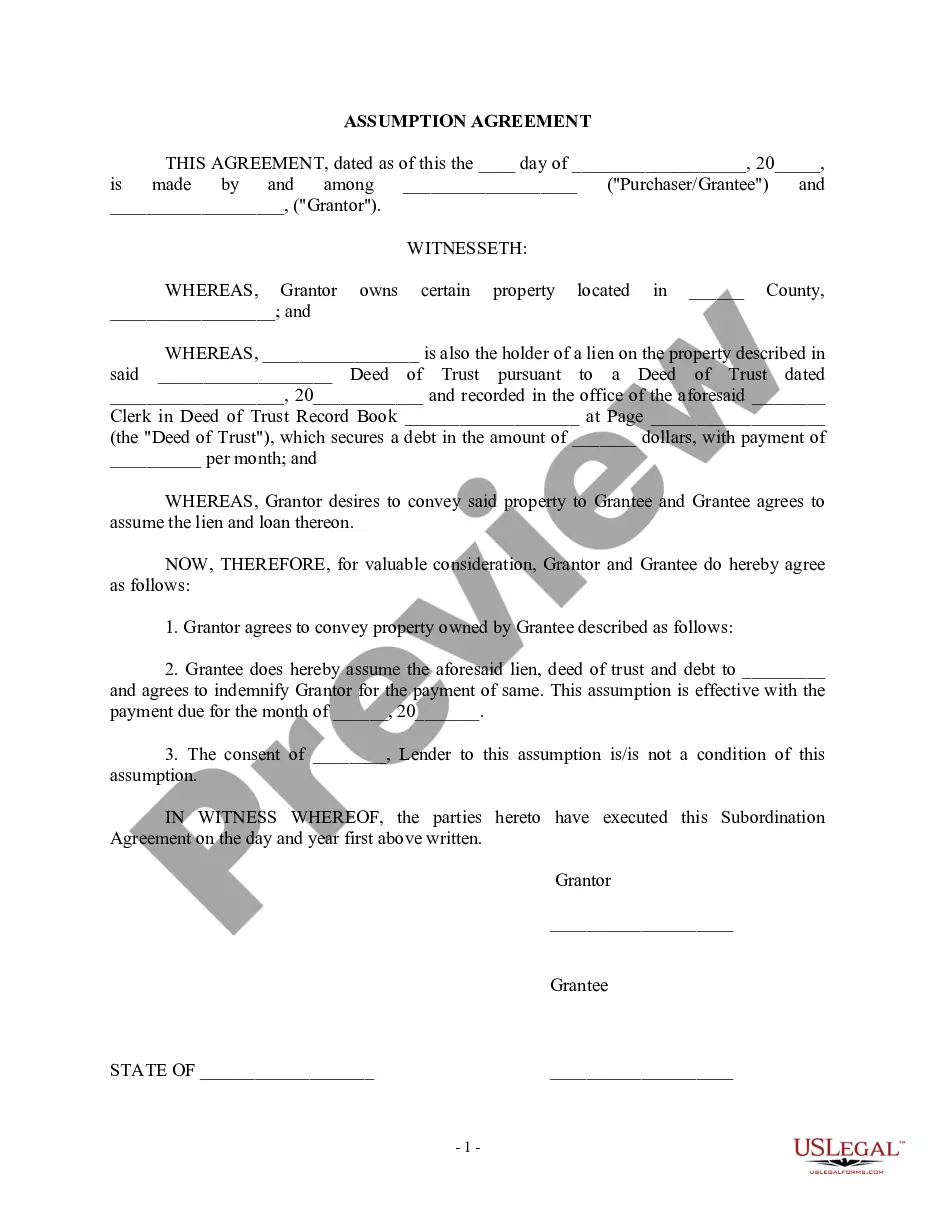
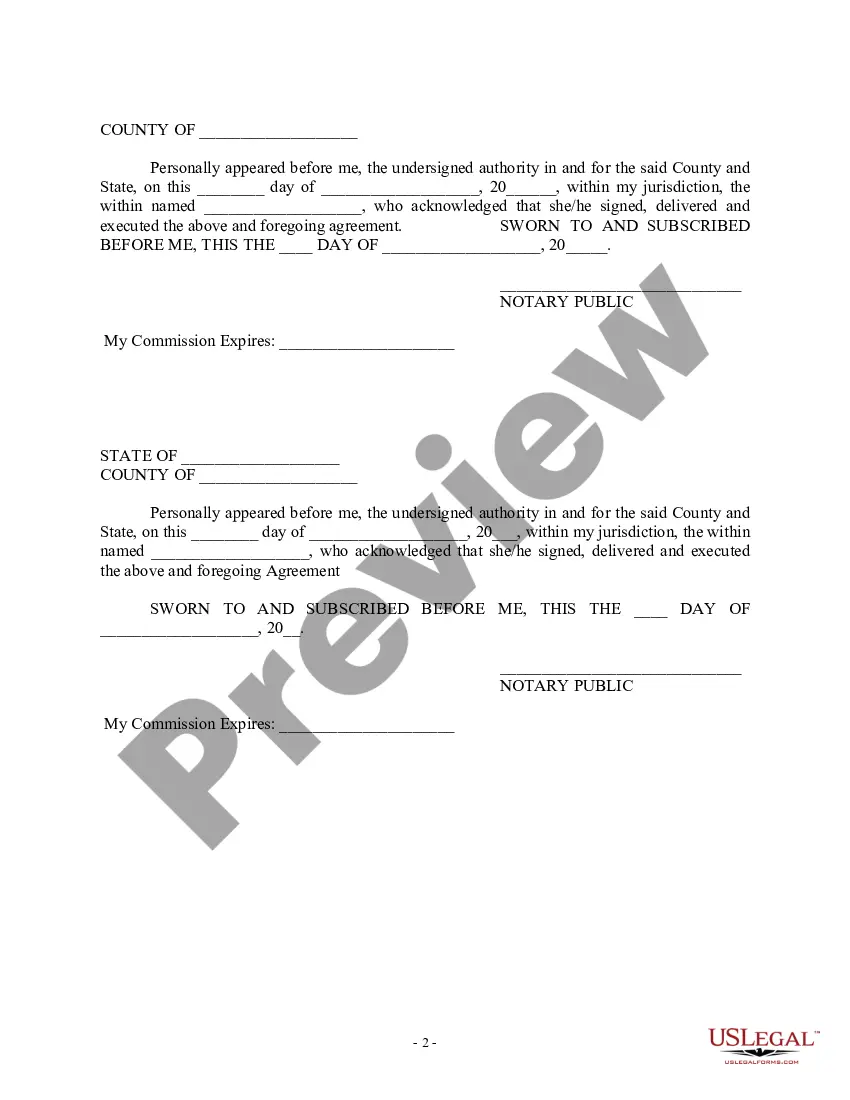
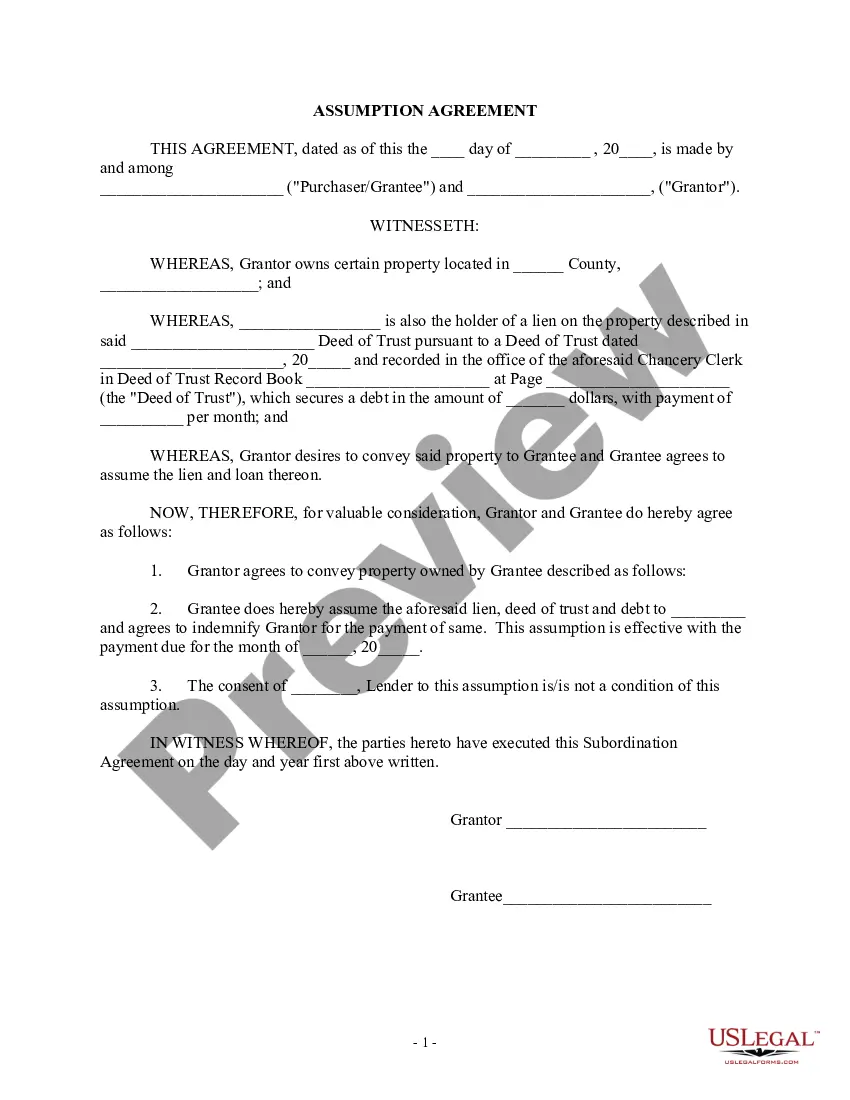
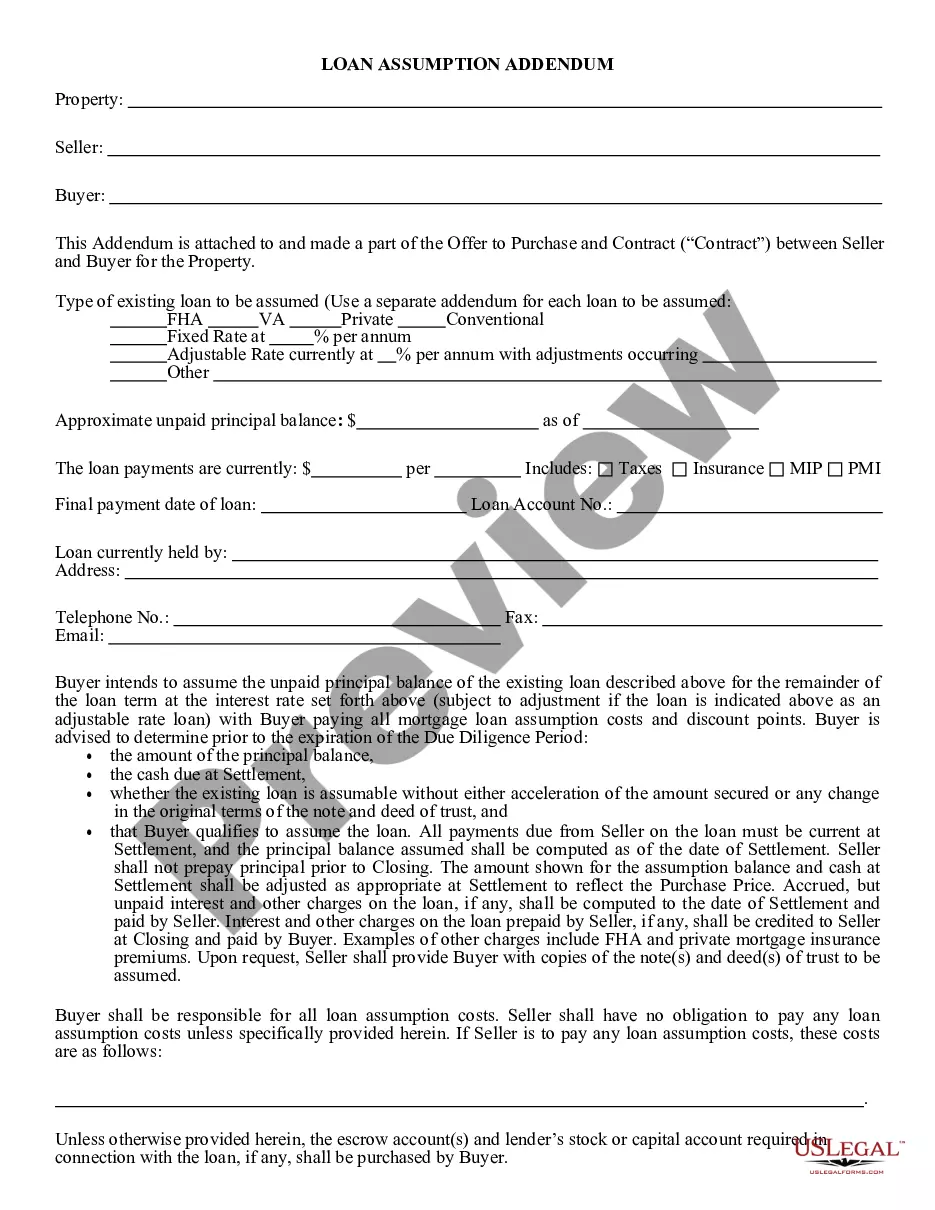
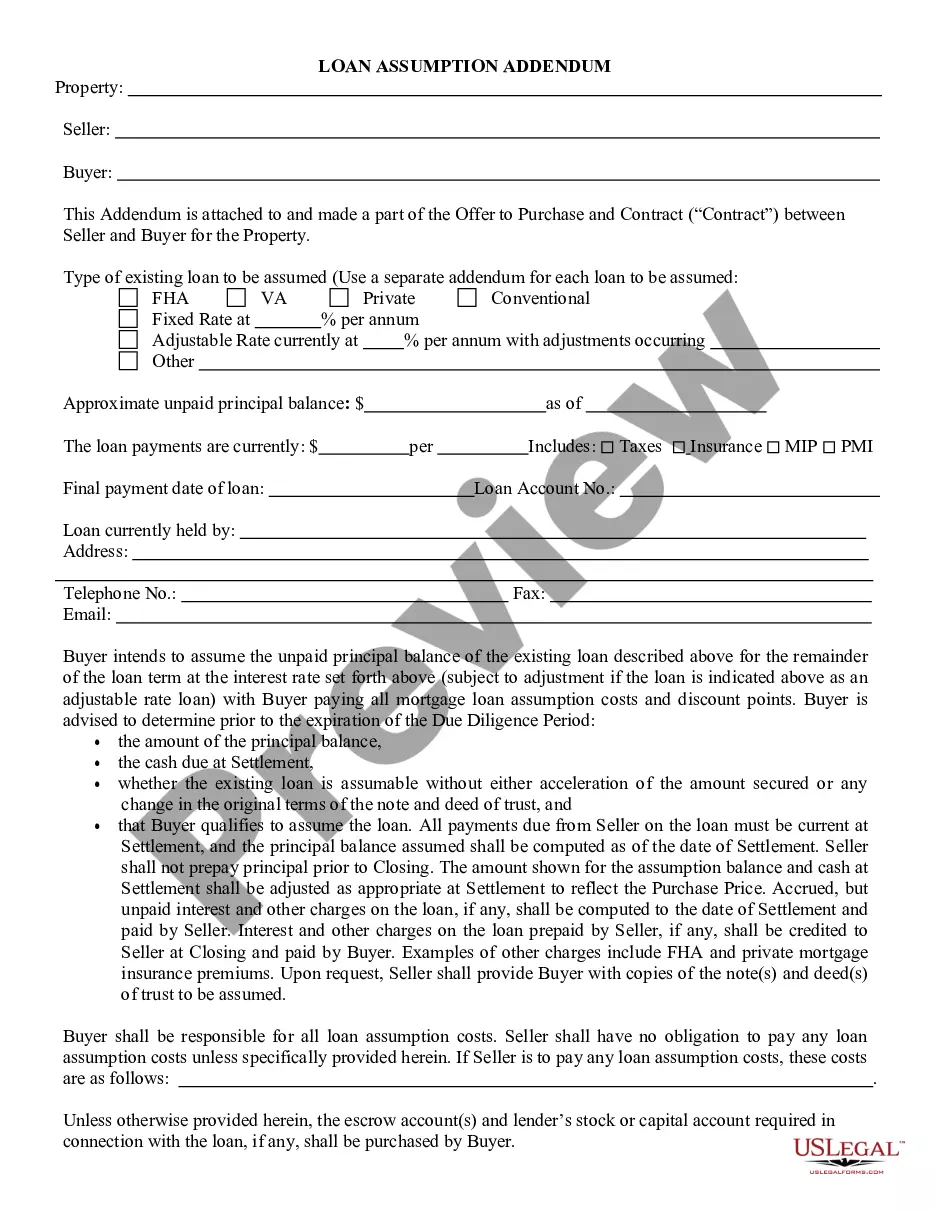
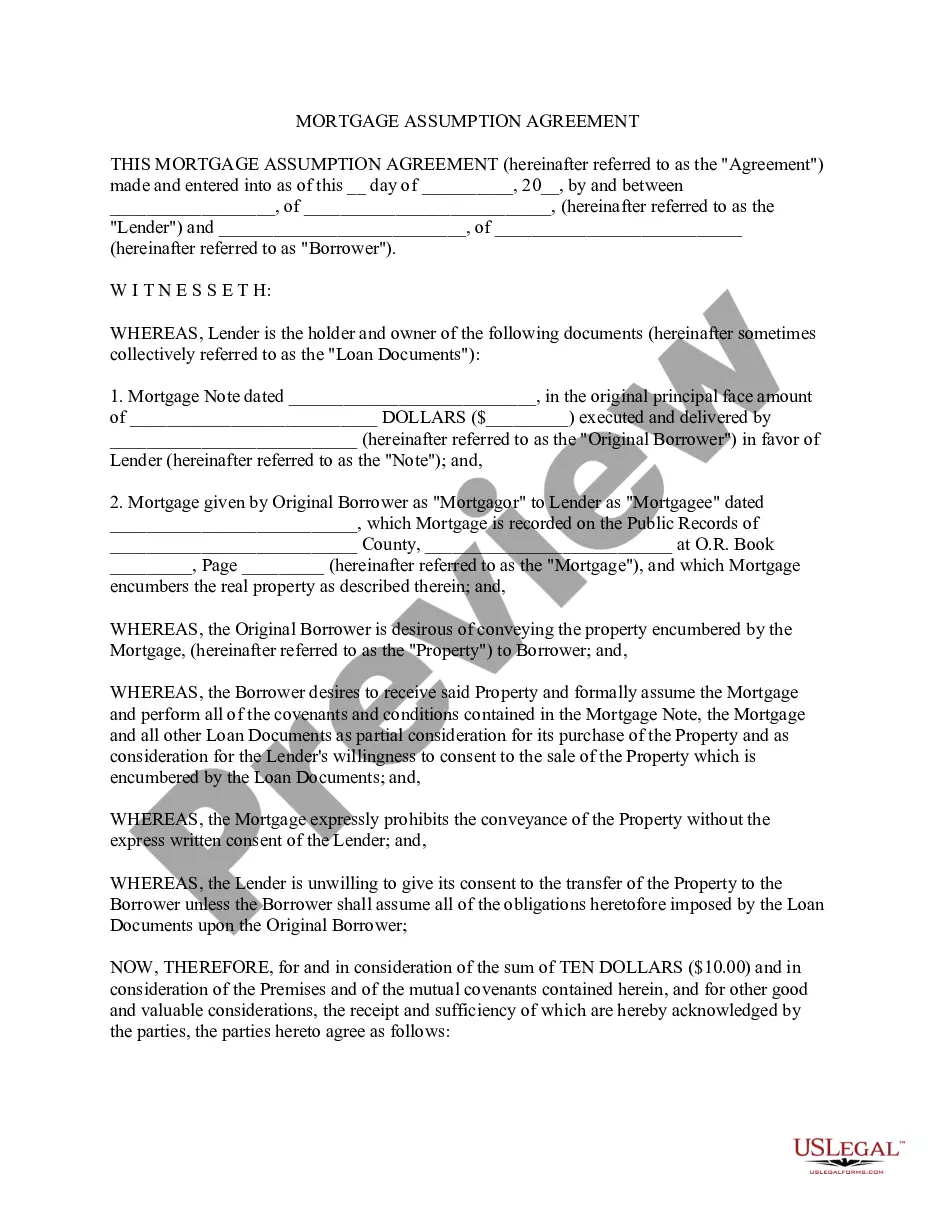
This form is an Assumption Agreement. The grantor desires to convey certain property to the grantee and the grantee agrees to assume the lien and the loan. The agreement must also be signed in the presence of a notary public.
Alaska Loan Assumption Agreement
Category:
State:
Multi-State
Control #:
US-00561
Format:
Word;
Rich Text
Instant download
Description
Free preview
Get your form ready online
Our built-in tools help you complete, sign, share, and store your documents in one place.
Built-in online Word editor
Make edits, fill in missing information, and update formatting in US Legal Forms—just like you would in MS Word.
Export easily
Download a copy, print it, send it by email, or mail it via USPS—whatever works best for your next step.
E-sign your document
Sign and collect signatures with our SignNow integration. Send to multiple recipients, set reminders, and more. Go Premium to unlock E-Sign.
Notarize online 24/7
If this form requires notarization, complete it online through a secure video call—no need to meet a notary in person or wait for an appointment.
Store your document securely
We protect your documents and personal data by following strict security and privacy standards.

Make edits, fill in missing information, and update formatting in US Legal Forms—just like you would in MS Word.

Download a copy, print it, send it by email, or mail it via USPS—whatever works best for your next step.

Sign and collect signatures with our SignNow integration. Send to multiple recipients, set reminders, and more. Go Premium to unlock E-Sign.

If this form requires notarization, complete it online through a secure video call—no need to meet a notary in person or wait for an appointment.

We protect your documents and personal data by following strict security and privacy standards.
Looking for another form?
How to fill out Loan Assumption Agreement?
Finding the appropriate valid document format can be challenging. Naturally, there is a range of templates accessible online, but how do you secure the correct version you require.
Utilize the US Legal Forms website. This service offers a multitude of templates, including the Alaska Loan Assumption Agreement, suitable for both business and personal purposes. All forms are reviewed by experts and comply with federal and state regulations.
If you are already registered, Log In to your account and click on the Obtain button to access the Alaska Loan Assumption Agreement. Use your account to browse the legal forms you have previously purchased. Go to the My documents section of your account and download an additional copy of the document you need.
Complete, modify, print, and sign the received Alaska Loan Assumption Agreement. US Legal Forms is the largest repository of legal documents where you can find numerous file templates. Utilize the service to acquire professionally crafted documents that adhere to state regulations.
- If you are a new user of US Legal Forms, here are simple instructions to follow.
- First, ensure you have selected the correct form for your specific city/county. You can examine the form using the Review button and read the form details to make sure it is appropriate for you.
- If the form does not meet your requirements, use the Search box to find the suitable document.
- Once you are confident that the form is appropriate, click the Get now button to obtain the form.
- Choose the payment plan you prefer and fill in the required information. Create your account and pay for the order using your PayPal account or a credit card.
- Select the file format and download the legal document to your device.
Form popularity
FAQ
Answer: A qualified assumption requires the assuming borrower to qualify for credit based on current underwriting guidelines. Credit score, debt-to-income ratios and other factors may be used to determine qualification, but vary based on loan type.
Loan assumption is the process whereby a buyer adopts or takes over the seller's debt and obligations under the terms of the existing mortgage. Loan assumption presents an alternative way for a seller to sell a property to a buyer. This option could prevent a seller from facing a short sale or pending foreclosure.
Forbearance. This option temporarily suspends payments, allowing you time to make up the shortfall. If an agreement is reached and you are able to meet its terms, the lender should not take foreclosure action against you.
Updated March 7, 2022. In real estate transactions, an assumption agreement allows a third party to ?assume? or take over the loan of the property's seller. Mortgages may be assumed when the house is sold, a divorcing spouse is awarded the property in a settlement or when someone inherits property.
When you assume a mortgage, the current borrower signs the balance of their loan over to you, and you become responsible for the remaining payments. That means the mortgage will have the same terms the previous homeowner had, including the same interest rate and monthly payments.
If the mortgage loan is assumable, a seller can sell their home to a qualified buyer, allowing the buyer to purchase the home by way of assuming responsibility for the seller's loan terms and remaining balance.
Lenders must typically approve an assumable mortgage. If done without approval, sellers run the risk of having to pay the full remaining balance upfront. Sellers also risk buyers missing payments, which can negatively impact their credit score.
Loan assumption, however, allows a buyer to take over the current owner's mortgage while the loan's terms ? including the repayment period and interest rate ? remain the same. Ultimately, it can help people get into a home at a lower interest rate even as the housing market around them becomes more expensive.