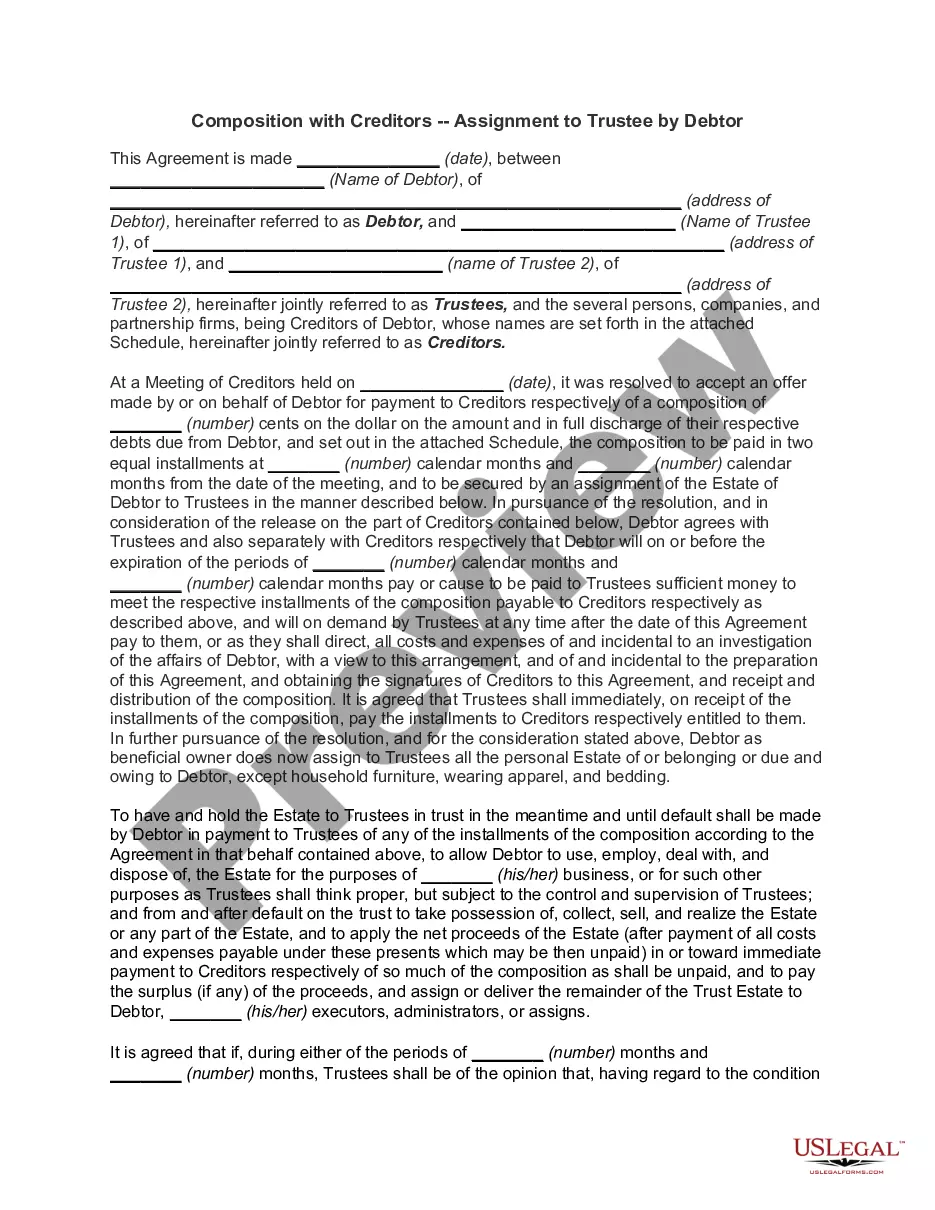
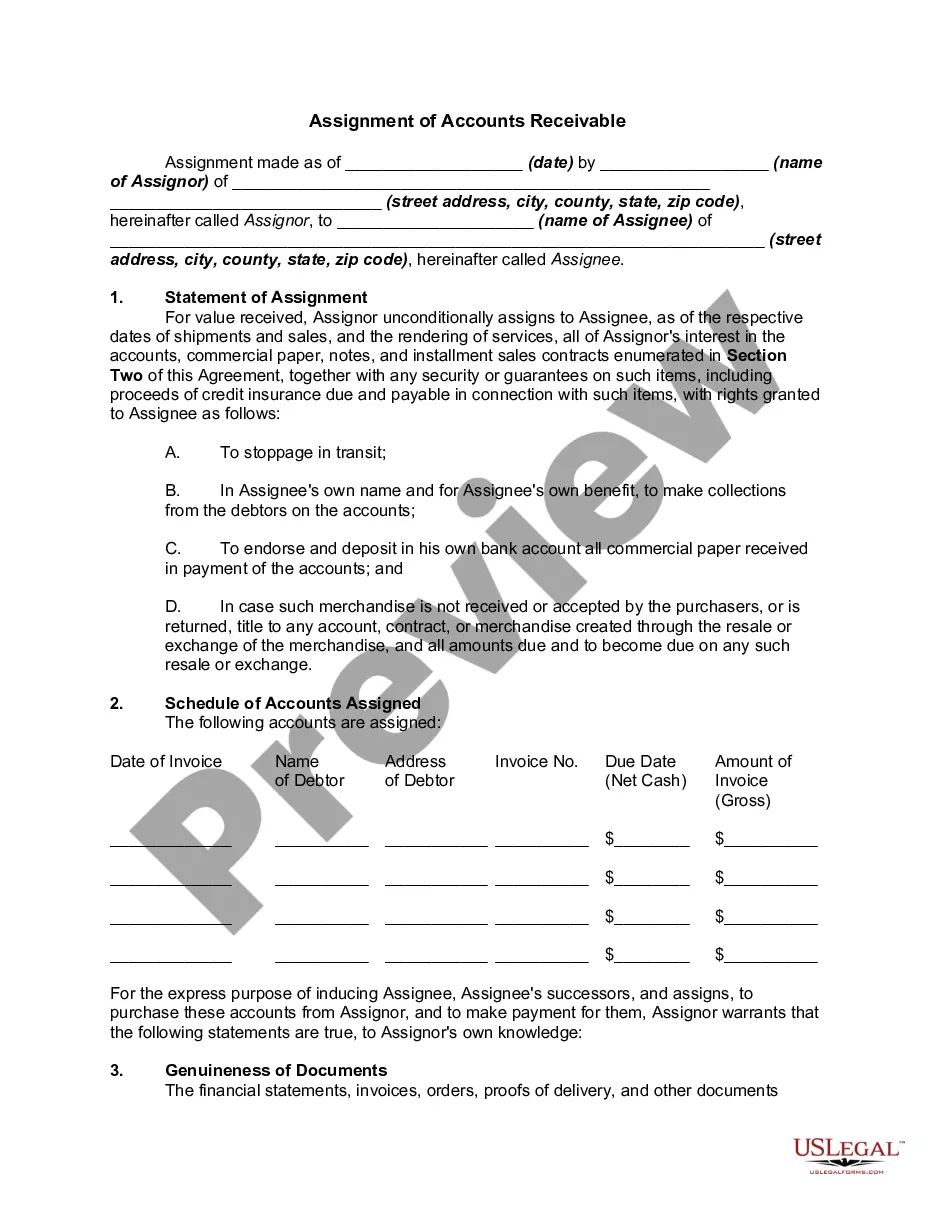
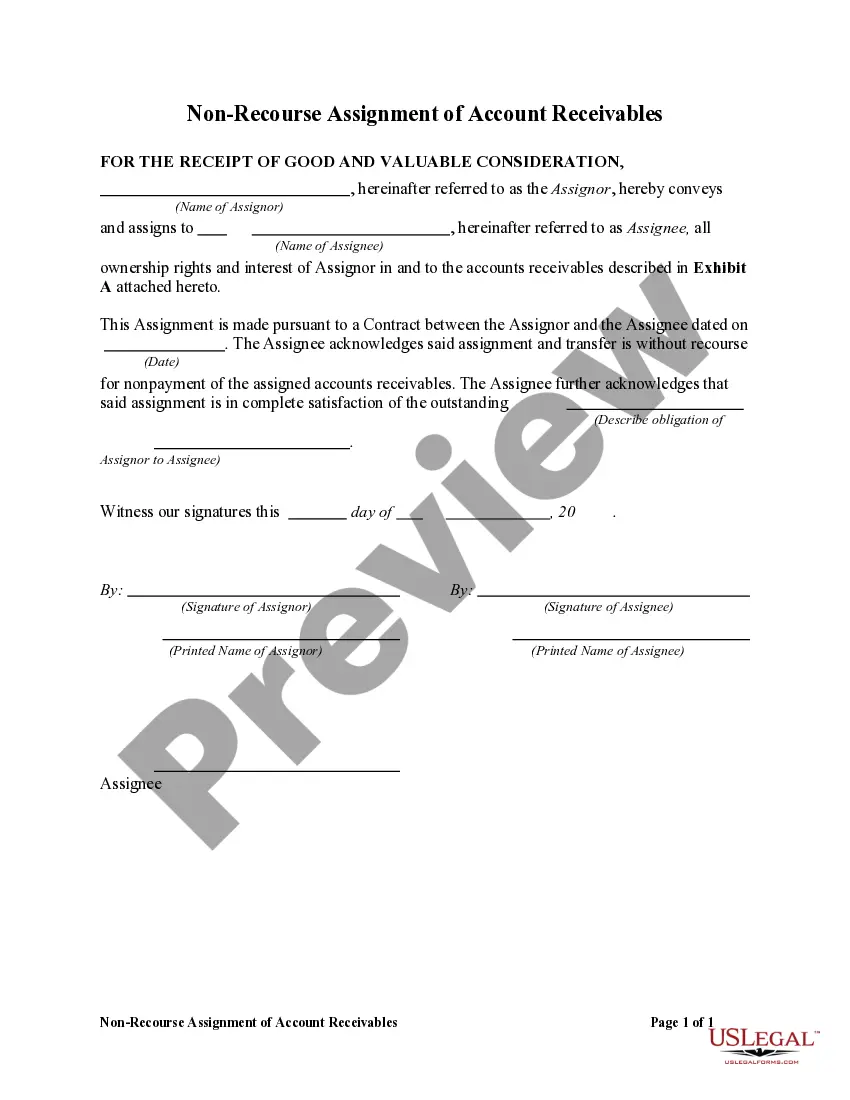
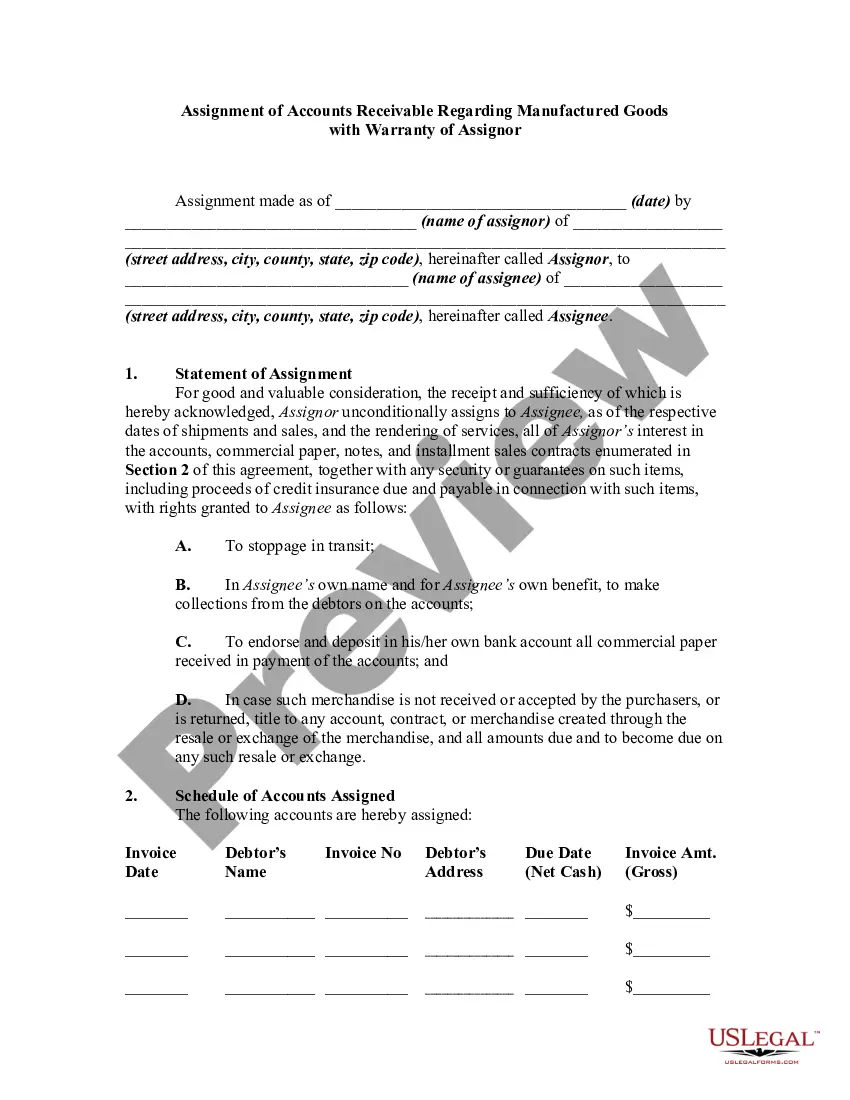
This form is an Assignment of Accounts Receivable. The assignor conveys all interest in the accounts listed on the Attachment included in the form. The accounts represent all outstanding accounts of the assignor from the sale of products or services.
Alaska Accounts Receivable - Assignment
Category:
State:
Multi-State
Control #:
US-00400
Format:
Word;
Rich Text
Instant download
Description
Free preview


Get your form ready online
Our built-in tools help you complete, sign, share, and store your documents in one place.
Built-in online Word editor
Make edits, fill in missing information, and update formatting in US Legal Forms—just like you would in MS Word.
Export easily
Download a copy, print it, send it by email, or mail it via USPS—whatever works best for your next step.
E-sign your document
Sign and collect signatures with our SignNow integration. Send to multiple recipients, set reminders, and more. Go Premium to unlock E-Sign.
Notarize online 24/7
If this form requires notarization, complete it online through a secure video call—no need to meet a notary in person or wait for an appointment.
Store your document securely
We protect your documents and personal data by following strict security and privacy standards.

Make edits, fill in missing information, and update formatting in US Legal Forms—just like you would in MS Word.

Download a copy, print it, send it by email, or mail it via USPS—whatever works best for your next step.

Sign and collect signatures with our SignNow integration. Send to multiple recipients, set reminders, and more. Go Premium to unlock E-Sign.

If this form requires notarization, complete it online through a secure video call—no need to meet a notary in person or wait for an appointment.

We protect your documents and personal data by following strict security and privacy standards.
Looking for another form?




How to fill out Accounts Receivable - Assignment?
You can spend hours online attempting to locate the legal document template that meets the federal and state standards you require.
US Legal Forms offers numerous legal forms that have been reviewed by professionals.
You can easily download or print the Alaska Accounts Receivable - Assignment from their service.
If available, use the Review button to view the document template as well. If you wish to find another version of the form, utilize the Search field to discover the template that fits your needs and requirements. Once you have located the template you want, click Buy now to continue. Select the pricing plan you desire, enter your details, and register for an account on US Legal Forms. Complete the payment. You may use your Visa or Mastercard or PayPal account to purchase the legal form. Choose the format of the document and download it to your device. Make changes to the document if needed. You can fill out, edit, sign, and print the Alaska Accounts Receivable - Assignment. Download and print thousands of document templates using the US Legal Forms site, which offers the largest selection of legal forms. Utilize professional and state-specific templates to address your business or personal needs.
- If you already have a US Legal Forms account, you can Log In and click the Download button.
- Then, you can fill out, modify, print, or sign the Alaska Accounts Receivable - Assignment.
- Each legal document template you acquire is yours permanently.
- To obtain another copy of a purchased form, navigate to the My documents tab and click the corresponding button.
- If you are visiting the US Legal Forms website for the first time, follow the simple instructions below.
- First, make sure you have chosen the correct document template for your county/town.
- Check the form description to ensure you have selected the right form.
Form popularity
FAQ
Consent to assignment of receivables is an agreement where the original debtor agrees to the transfer of their obligation to a third party. This consent is crucial to ensure that the assignee can collect payments without legal issues. In Alaska Accounts Receivable - Assignment, obtaining this consent protects the interests of all parties involved and facilitates smooth transactions.
To prepare an accounts receivable report, start by gathering data on outstanding invoices, including debtor names, amounts owed, and due dates. Organize this information into a clear format, highlighting overdue accounts. Utilizing tools available through uslegalforms can simplify this process, especially for businesses dealing with Alaska Accounts Receivable - Assignment.
General assignment of accounts receivable refers to the broad transfer of all receivables to a third party. This arrangement allows a business to leverage its entire accounts receivable portfolio for financing. In Alaska Accounts Receivable - Assignment, this is a common strategy for companies seeking to streamline operations and access funds quickly.
What are the journal entries for assigning Accounts Receivable as collateral for a loan? The entry to record assignment of Accounts Receivable as collateral would be a credit to cash, and a debit to assign Accounts Receivable. The cash account is debited because the company gave up the assigned receivables.
Assignment of accounts receivable is a lending agreement whereby the borrower assigns accounts receivable to the lending institution. In exchange for this assignment of accounts receivable, the borrower receives a loan for a percentage, which could be as high as 100%, of the accounts receivable.
What are the benefits of Assigning Receivables? Assigning receivables turns unpaid invoices into immediate working capital. The borrowing business can then cover day-to-day expenses like payroll or rent. The borrowing company still owns the accounts, but the assigned receivables serve as collateral.
Example of the Assignment of Accounts Receivable ABC Corp. approaches XYZ Bank to obtain financing using its accounts receivable as collateral. XYZ Bank agrees to provide a loan of 85% of the total accounts receivable value, which amounts to $170,000 (85% of $200,000).
What are the journal entries for assigning Accounts Receivable as collateral for a loan? The entry to record assignment of Accounts Receivable as collateral would be a credit to cash, and a debit to assign Accounts Receivable. The cash account is debited because the company gave up the assigned receivables.
Gross accounts receivable represents the total amount of outstanding invoices or the sum owed by customers. It's perhaps the easiest to calculate, too - you simply add up all the outstanding invoices at a given time! It's a raw figure without any adjustments and sets the stage for more nuanced metrics.
Firstly, factoring is a financial service of selling and purchasing, which implies consideration, unlike assignment, which may take place either with or without consideration. In addition, non-matured or future accounts receivable can be subject to factoring.