Alaska Waiver of Lien
Overview of this form
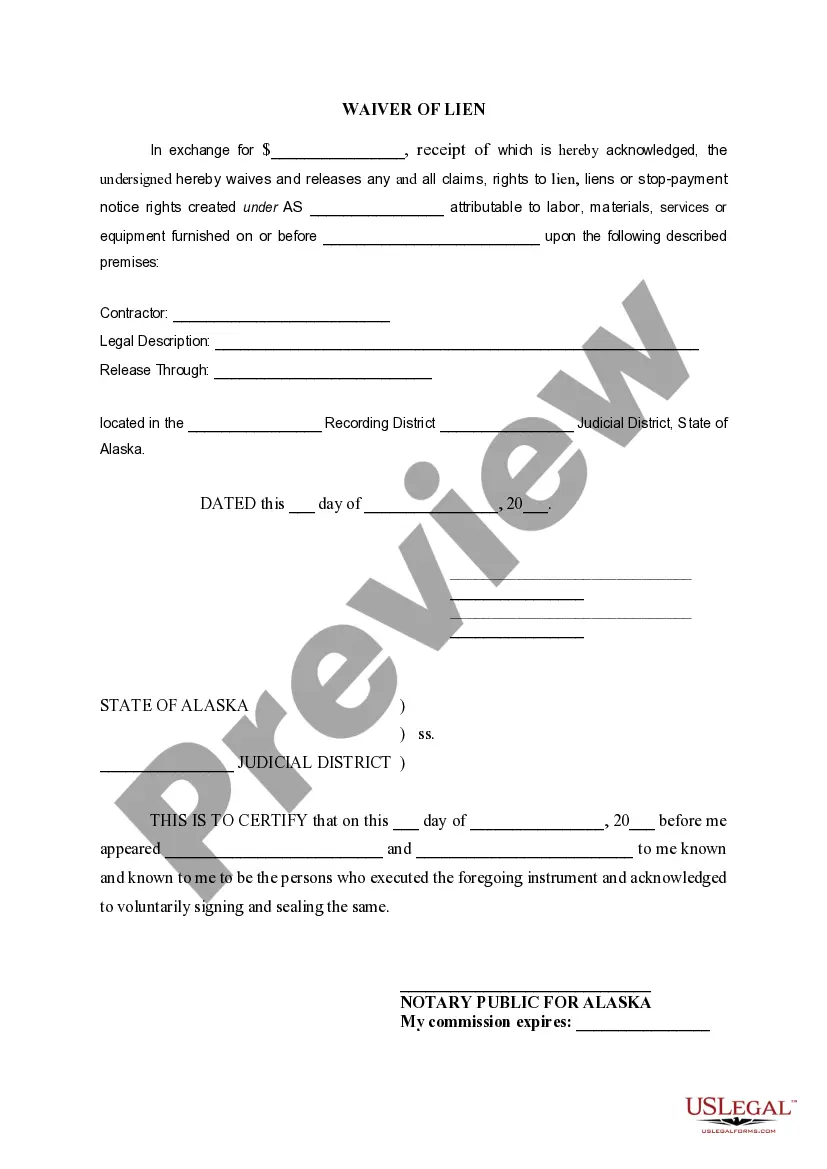
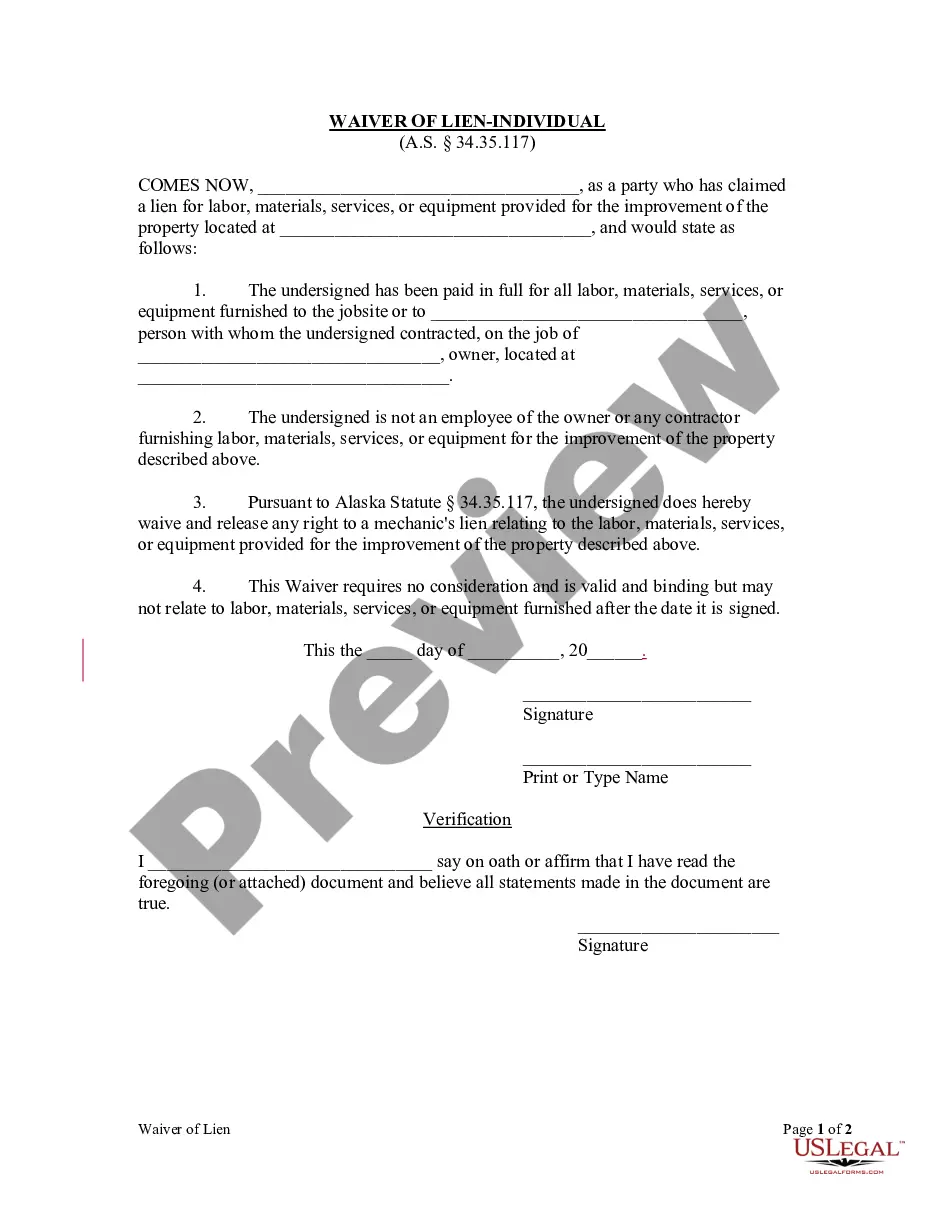
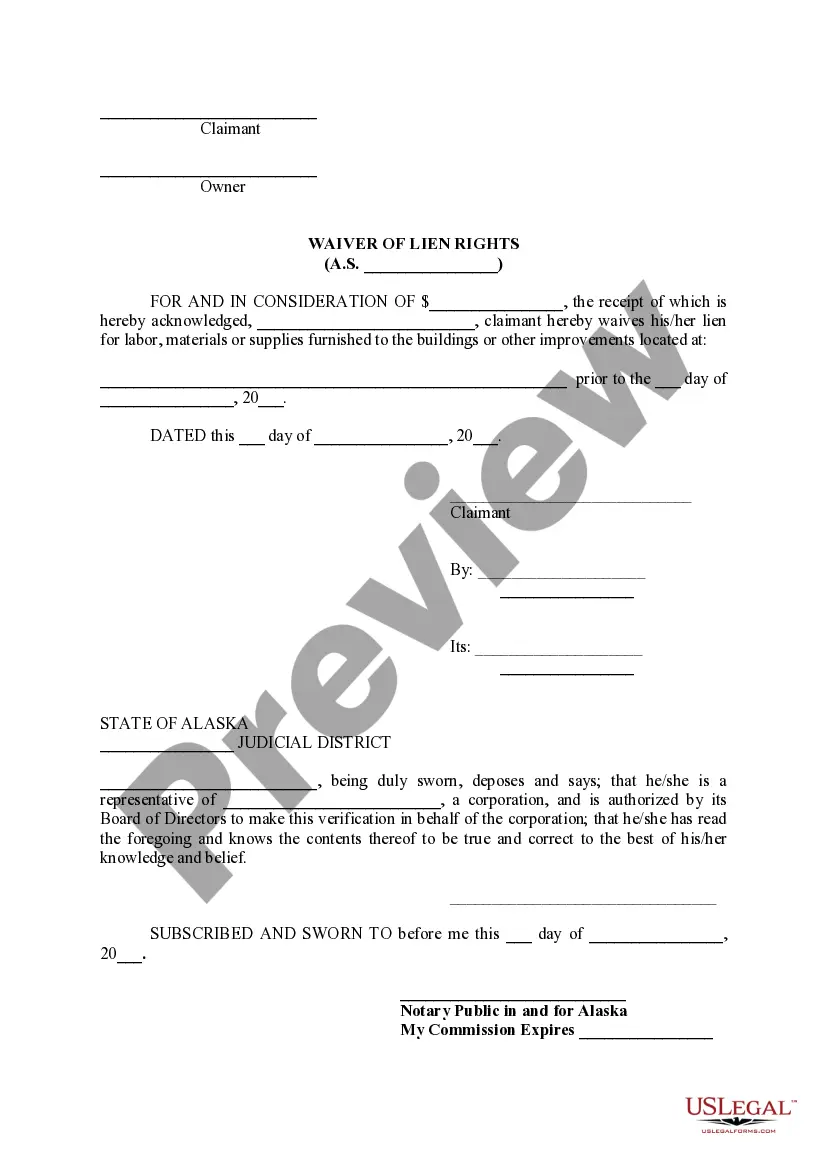
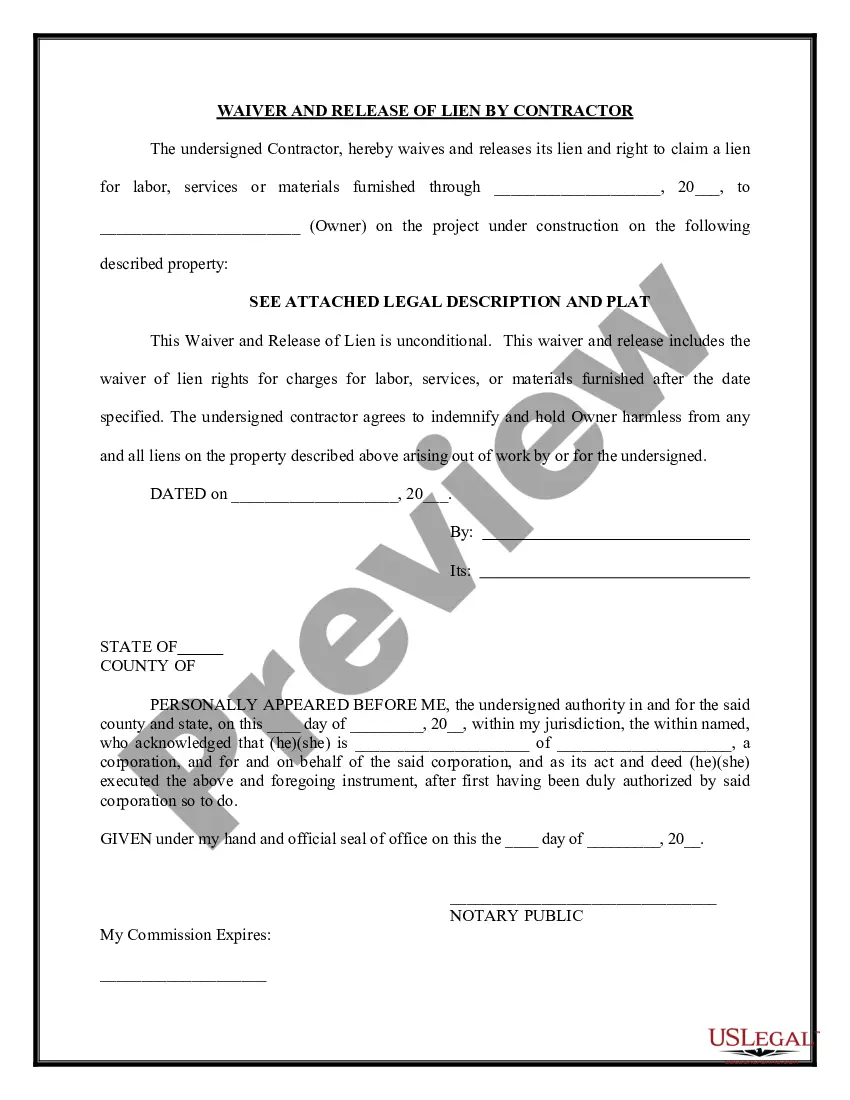
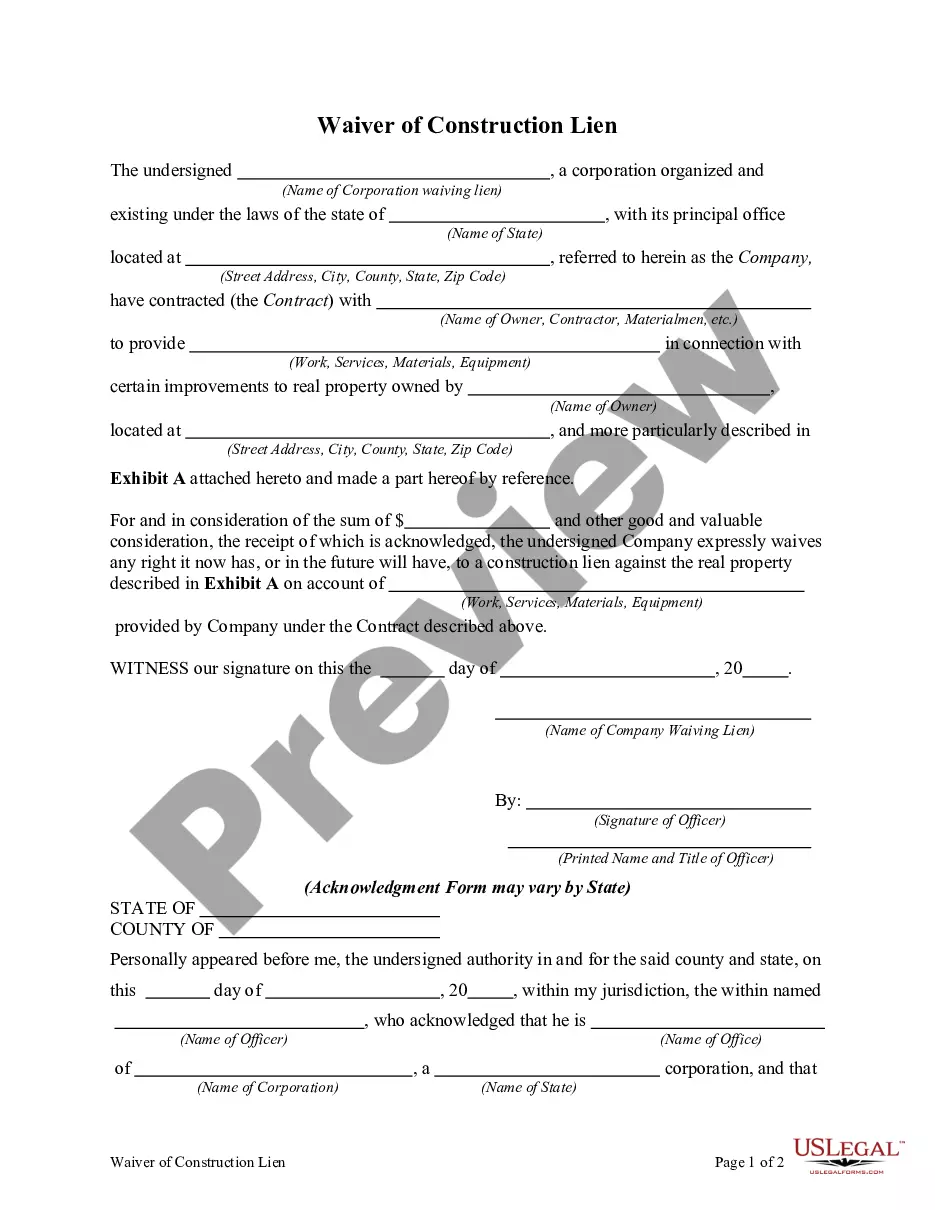
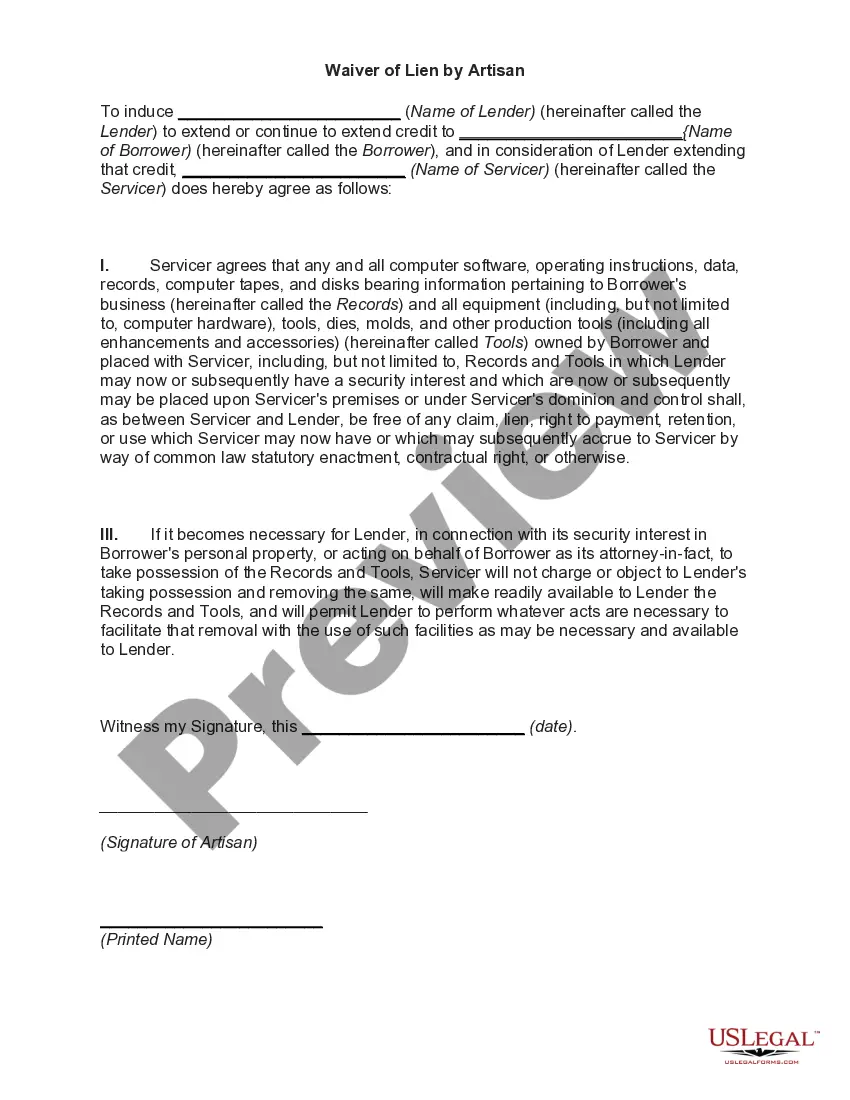
The Waiver of Lien is a crucial document commonly used in the construction industry. It is issued by contractors, subcontractors, suppliers, or any party holding a mechanic's lien, confirming they have received full payment for services rendered. By completing this waiver, the party relinquishes any future claims against the property concerning unpaid amounts. Unlike other financial agreements, this form is specifically tailored to protect property owners from potential claims related to unpaid labor or materials provided during a construction project.
What’s included in this form
- Payment acknowledgment: A section confirming the amount received in exchange for the waiver.
- Claim release: A clause where the signer waives future lien rights related to the labor, materials, or services provided.
- Property description: A detailed legal description of the premises affected by the lien.
- Identification of parties: Spaces designated for the names of the parties involved in the agreement.
- Notary section: An area for notarization, validating the signatures on the document.
When to use this document
This form should be used when a contractor or subcontractor has completed their work on a property and has been fully compensated. By providing a Waiver of Lien, the party ensures that they cannot later assert a lien against the property for that payment. This form is also useful when a property owner wants to confirm that they are not liable for any future lien claims related to the work performed, promoting transparency in financial transactions within construction contracts.
Intended users of this form
- Contractors who have completed work on a project and wish to confirm receipt of payment.
- Subcontractors and suppliers who have provided materials or services and have been compensated.
- Property owners who want to obtain peace of mind that no future liens will be filed against their property related to completed work.
Steps to complete this form
- Identify the parties involved: Fill in the names of the contractor and any relevant parties.
- Specify the payment amount: Enter the total amount received for the work completed.
- Enter the legal description of the property: Provide a clear and concise legal description of the premises where the work took place.
- Include the completion date: Fill in the date by which the work was performed.
- Sign and notarize the document: All parties should sign the waiver in the presence of a notary public.
Notarization requirements for this form
Yes, this form must be notarized to be legally valid. This ensures that the identities of the signers are confirmed and that they are signing the document voluntarily. US Legal Forms offers integrated online notarization, available twenty-four seven, ensuring secure video calls, legal equivalence, and eliminating the need for travel.
Get your form ready online
Our built-in tools help you complete, sign, share, and store your documents in one place.
Make edits, fill in missing information, and update formatting in US Legal Forms—just like you would in MS Word.
Download a copy, print it, send it by email, or mail it via USPS—whatever works best for your next step.
Sign and collect signatures with our SignNow integration. Send to multiple recipients, set reminders, and more. Go Premium to unlock E-Sign.
If this form requires notarization, complete it online through a secure video call—no need to meet a notary in person or wait for an appointment.
We protect your documents and personal data by following strict security and privacy standards.

Make edits, fill in missing information, and update formatting in US Legal Forms—just like you would in MS Word.

Download a copy, print it, send it by email, or mail it via USPS—whatever works best for your next step.

Sign and collect signatures with our SignNow integration. Send to multiple recipients, set reminders, and more. Go Premium to unlock E-Sign.

If this form requires notarization, complete it online through a secure video call—no need to meet a notary in person or wait for an appointment.

We protect your documents and personal data by following strict security and privacy standards.
Common mistakes
- Failing to include the exact amount of payment received.
- Not providing a complete legal description of the property.
- Neglecting to have the document notarized, which can affect its validity.
Benefits of using this form online
- Convenience: Easily download and complete the form from anywhere at any time.
- Editability: Customize the form to fit your specific needs and details.
- Reliable: The templates provided are drafted by licensed attorneys to ensure legal adherence.
Summary of main points
- The Waiver of Lien is important for verifying payment in construction projects.
- Ensure accurate details in the form for validity and enforceability.
- Notarization is a crucial step in completing this form effectively.
Looking for another form?
Form popularity
FAQ
Negotiate with the contractor who placed the lien (the "lienor" to remove it. Obtain a lien bond to discharge the lien, or. File a lawsuit to vacate the lien.
A lien waiver is signed before a lien is actually filed. The party submitting the lien waiver states that they waive the right to lien against the project. In some instances, the property owner or general contractor may request that you sign and deliver a lien waiver before payment is disbursed.
Colorado does not require lien waivers to be notarized in order to be effective.
A lien waiver is quite common in the construction business. Essentially, it is a document from a contractor, subcontractor, supplier, or another party who holds a mechanic's lien that states they have been paid in full and waive future lien rights to the disputed property.
It basically states that you've paid the subcontractor what is owed, they accept the payment in full, and they waive the right to put a lien on your property. Simply present this form to the subcontractor with your payment and ask them to sign it. Make sure you get their signature!
LIen waivers are not required to be notarized. The primary times that a document needs to be notarized is if it is going to be filed with the county recorder or it is an affidavit. There are some other documents that often use notarization, but lien waivers don't fall into any of those that "need to be notarized."
Lien waivers that are given after payment is received and which generally cover payments received in a prior pay period are considered trailing lien waivers.Lien waiv- ers are typically provided with each requisition during the course of the project and at final completion of the project.
The main purpose of a lien waiver is to provide protection to the paying party. In exchange for such payment, the lien waiver waives the payee's right to file a lien for the exact value of the payment they have received.